Organic traffic
Organic traffic is the visitors who arrive at a website through unpaid search engine results rather than through ads or other paid placements.
What organic traffic means
Organic traffic is the visitors who arrive at a website through unpaid search engine results rather than through ads, paid placements, or sponsored links. When someone searches a query, clicks a result that a site earned through relevance and authority (not by paying for the slot) that visit counts as organic. It is the default way most websites are discovered, and analytics tools report it as its own acquisition channel, separate from paid, direct, social, and referral traffic.
What sets organic traffic apart is its economics. A paid click costs money every time and stops the instant the budget runs out, while an organic visit is free at the margin once the page ranks. That makes organic traffic a compounding asset: a post that earns a ranking can keep drawing visitors for months or years with no further spend. In content marketing, growing organic traffic is usually the whole point of publishing, because it is the channel where good content keeps paying back long after it ships.
Why organic traffic matters
- It compounds instead of resetting. Unlike paid traffic, organic visits keep arriving after the work is done, so each ranking page adds to a base rather than renting attention.
- It is high-intent. Searchers actively typed a query, so they arrive looking for exactly what the page covers, which makes them more likely to convert than a passive ad impression.
- It is cost-efficient at scale. The cost sits in the upfront content and SEO work, not in a per-click fee, so the cost per visit falls as traffic grows.
- It builds durable authority. Ranking for a topic signals to both searchers and search engines that a site is a credible source, which makes the next page easier to rank.
- It is measurable end to end. Analytics ties each organic visit to a query and a page, so you can see precisely which content and which long-tail keyword targets are driving growth.
The contrast with paid traffic is easiest to see plotted over time:
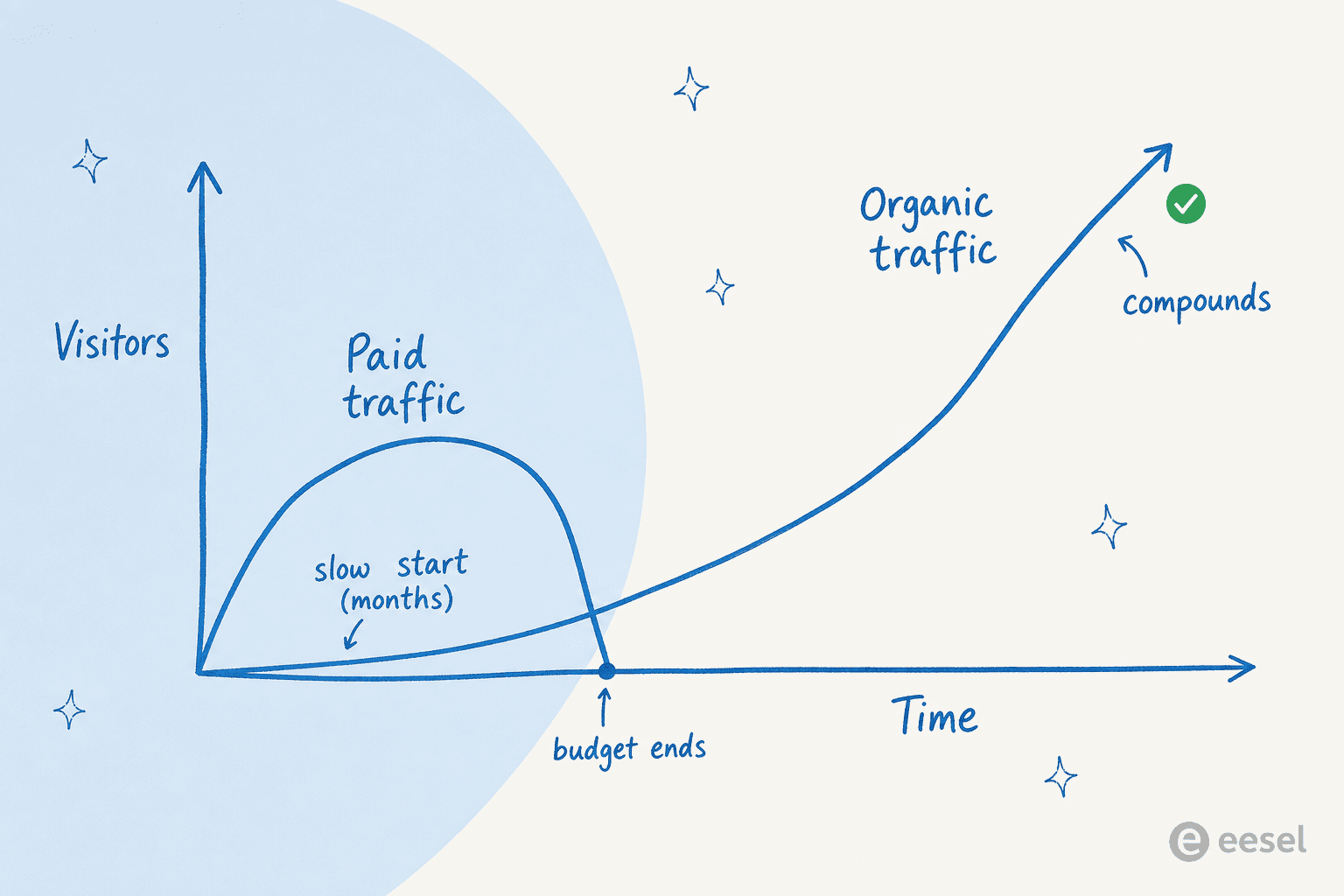
Paid traffic flattens to zero the moment spend stops, so its shape is a hill that ends. Organic traffic takes months to get going, which is why the curve hugs the axis early, but once pages rank it keeps climbing on work already done. That divergence is the whole case for the channel.
How organic traffic works
Earning organic traffic is a cycle of publishing, ranking, and refining:
- Find the queries. Keyword research surfaces what the audience actually searches for and how much demand each query holds.
- Publish content that answers them. Each page targets a query or cluster of related queries, matching the searcher's intent.
- Earn the ranking. Quality, internal links, backlinks, and clean technical health push the page up the results over time.
- Convert impressions to visits. A sharp title and description lift the click-through rate, turning rankings into actual traffic.
- Refresh and expand. Updating decaying pages and filling content gaps protects and grows the traffic already won.
This is the engine eesel's AI blog writer is built to feed: it researches a topic against real sources and drafts long-form posts aimed at the queries an audience is searching, so the published page has a real shot at ranking and pulling organic traffic rather than sitting unread.
Organic traffic in practice
The hard truth about organic traffic is that it lags effort by months and can be lost without a single bad decision. Content decays as competitors publish and search intent shifts, so a page that drove steady traffic last year can quietly slide without anyone touching it. Algorithm updates can also reprice a whole site's traffic overnight, which is why teams that rely on the channel diversify their query targets and keep refreshing existing pages rather than only chasing new ones. The operators who win here treat organic traffic as a portfolio to maintain, not a one-time campaign, and they watch the trend per page rather than celebrating a single good month.
For a hands-on playbook, read growing from zero traffic.
Build a compounding content engine
eesel's AI blog writer drafts researched, search-led posts that target real queries, the kind of content that earns organic traffic over time.