You just launched a new website. You've built this beautiful, fully-stocked shop and placed it in the middle of a cornfield. Now you're wondering why nobody's walking in the door. It's a frustrating feeling, and a very common one. You poured everything into creating something great, but the visitor count is stubbornly stuck at zero. What gives?
Getting people to your site isn't about some secret hack. Real growth comes from a one-two punch. You need a long-term foundation built on great content and smart SEO, plus some short-term promotional tactics to get the engine started.
We know this struggle because we lived it. It’s the whole reason we built a tool to fix it. Using our own eesel AI blog writer, we grew our daily impressions from 700 to over 750,000 in just three months. This guide is our playbook, breaking down the exact strategies we used so you can follow along.
Understanding website traffic
Here’s a quick breakdown of the main traffic sources:
| Traffic Type | How it Works | Best For |
|---|---|---|
| Organic | Ranking in search engines like Google. | Sustainable, long-term growth and building credibility. |
| Paid | Paying for ad placements on platforms like Google Ads. | Quick results, testing messages, and targeted campaigns. |
| Referral | Links from other websites pointing to yours. | Building authority and reaching new, relevant audiences. |
| Social | Posts on platforms like LinkedIn, Facebook, or Reddit. | Community building and direct brand engagement. |
| Direct | Visitors typing your URL directly into their browser. | Measuring brand awareness and customer loyalty. |
Building a foundation for organic growth
Organic growth isn't a quick fix. But it is, without a doubt, the most sustainable and cheapest way to build a business online. Think of it like investing: the work you do today might not pay off tomorrow, but it compounds over time, eventually bringing in a steady flow of visitors.
Master keyword research and search intent
Good keyword research is more than just finding words with high search volumes. The real goal is to figure out the problem someone is trying to solve when they type something into Google. We call this their "search intent."
Why does this matter so much? Because if you target a keyword but your content doesn't match what the user actually wants, you'll attract the wrong people. They'll land on your site, realize it's not what they were looking for, and bounce immediately. This tells Google your site isn't helpful, and you'll get nowhere.
Create high-quality content
Here's where most teams hit a wall: creating enough good content, consistently. It's a huge time sink. It takes research, writing skills, and a ton of coordination. This content bottleneck is where most growth plans die.
We hit this wall ourselves, and it’s the whole reason we built the eesel AI blog writer. It is a full-cycle platform designed to take a single keyword and turn it into a complete, publish-ready blog post.
Here’s how it helps you get over the content hurdle:
- Optimized for Search and AI Answers: The tool structures every post with the right headings, keywords, and formatting so it’s ready to rank on Google. It's also optimized for AEO, meaning it's designed to be a source for new tools like AI Overviews.
- Generates Rich Media Automatically: Text-only content can be less engaging. eesel AI automatically creates and includes AI-generated images, custom infographics, and data tables to break up the text. It even finds and embeds relevant YouTube videos and real Reddit quotes to add social proof and make your content more interesting.
- Writes with a Human-like Tone: The models have been refined to produce content with a natural, human-like tone that is enjoyable to read.
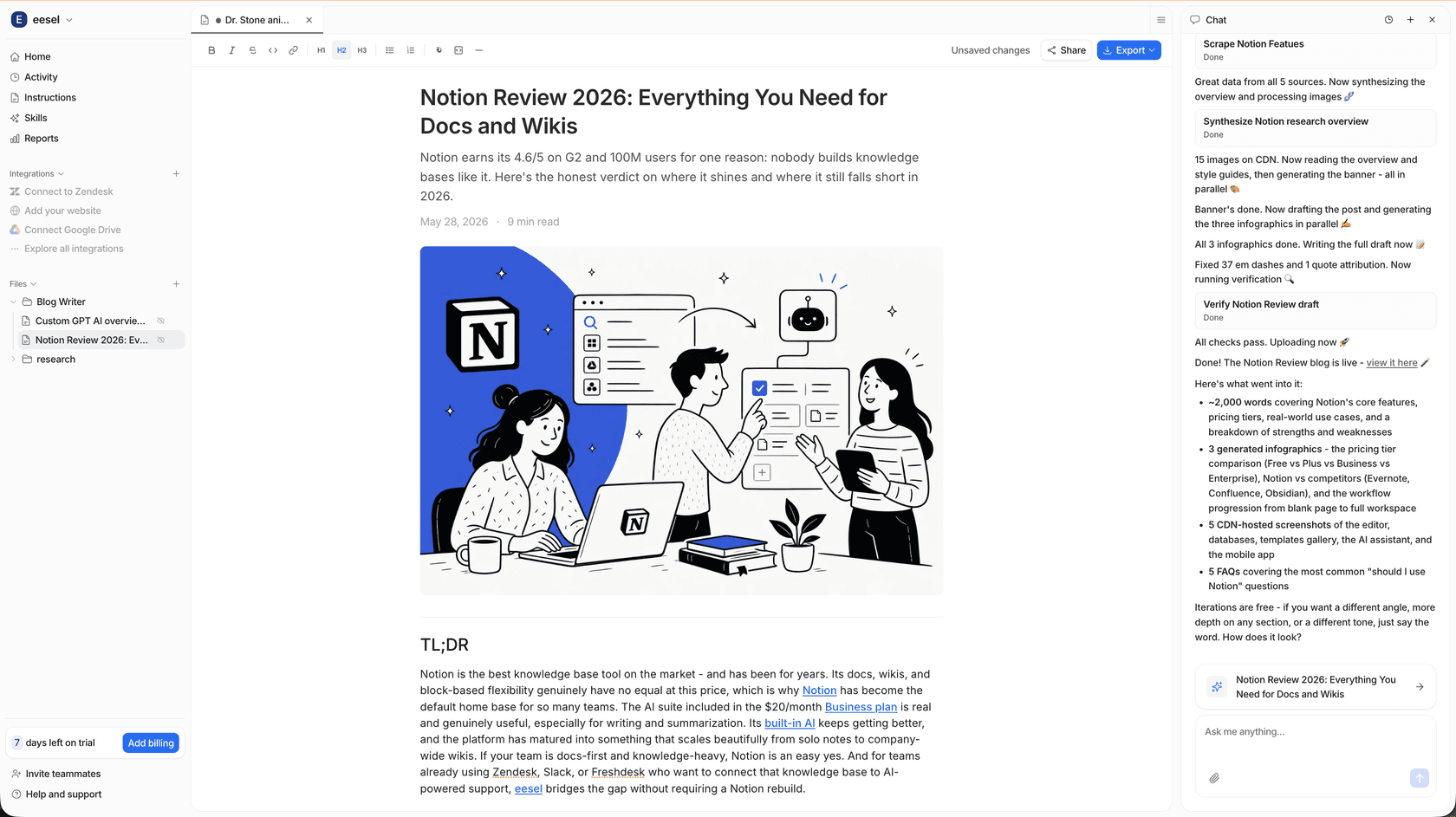
The eesel AI blog writer dashboard, a tool that helps with how to grow websites from zero traffic by automating content creation.
We used the eesel AI blog writer to publish over 1,000 blog posts, which is how we grew our daily impressions from 700 to over 750,000 in just three months.
Nail the technical SEO basics
You don't need to be a coding genius to get the technical basics right. Just a few simple checks can make a big difference in how search engines view your site.
- Set Up Your Tools: First, get your data sorted. Set up Google Analytics 4 to see how people behave on your site and Google Search Console to track your performance in Google Search. They’re both free and absolutely essential.
- Check Your Page Speed: Nobody likes a slow website. A site that takes forever to load will annoy users and hurt your rankings. Use a free tool like Google PageSpeed Insights to see how your site performs and get clear tips on how to fix it.
- Ensure Mobile-Friendliness: Most people are browsing on their phones, so your site has to work perfectly on a small screen. Google prioritizes mobile-friendly sites, so this isn't optional.
- Use Internal Linking: Whenever you publish a new post, look for chances to link to other relevant articles on your own site. This helps Google understand your site's structure and guides visitors to more of your content, keeping them around longer.
Build authority with backlinks
Think of backlinks as a thumbs-up from other websites. When a respectable site links to your content, it's telling Google, "Hey, this stuff is legit." The more of these high-quality links you get, the more authority your site builds with search engines.
So, how do you get them? The best way is to simply create awesome content that people want to share. When you publish something genuinely helpful or original, backlinks tend to happen on their own. You can also be more proactive by writing guest posts for other blogs in your industry, which usually includes a link back to your own site.
Getting early wins with paid strategies
While you're planting the seeds for long-term organic growth, you can use these strategies to get your first few visitors in the door. This isn't about faking it; it's about generating some early momentum and gathering useful data.
Using paid ads strategically
The point of paid ads, especially at the beginning, isn't just to buy traffic. It's to learn. Platforms like Google Ads are fantastic for testing which headlines and messages actually resonate with your audience. You get instant feedback that you can use to tweak your whole marketing strategy.
Paid ads can absolutely be a waste of money without a strategy in place. I always recommend to our clients to let us take them through at least a lightweight strategic exercise to determine what differentiates them from their competitors. You have to identify the 'reason to believe' in your product/website/service/etc. and leverage that as the core messaging in a way that will resonate with your target audience.

Pro tip
To get the most out of every ad dollar, your landing pages need to build trust instantly. One expert in the same thread recommends including social proof and an FAQ section on your landing pages to answer common questions and handle objections before a visitor has a chance to leave.
Leveraging online communities without spamming
Reddit, Facebook groups, and forums can be traffic goldmines, but you have to play it cool. If you just show up and start dropping links to your website, you'll get banned and everyone will think you're a spammer.
The key is to contribute first and market second. Find relevant communities, join the conversation, and provide real value. Answer questions, share what you know, and build relationships. Only mention your website when it directly solves a problem being discussed. When you do it right, people will be happy to check out what you've built.
Hearing from others who have successfully navigated this journey can be incredibly motivating. The video below shares five key strategies for growing a new website, echoing many of the principles we've discussed, from SEO to content creation.
The power of your email list
Social media algorithms are unpredictable, and search rankings can tank overnight. Your email list? That's the one marketing channel you actually own. It's a direct line to your most interested readers, and you're in complete control.
Getting started is simple. Add a newsletter signup form to your website. To encourage people to sign up, offer a small but valuable freebie, like a downloadable checklist, an ebook, or a short email course.
Once people subscribe, use the list to let them know when you publish new blog posts, share exclusive insights, and generally keep your brand on their radar.
A 90-day growth plan
Month 1: Foundation
- Do your keyword research and identify 10-15 core topics you want to write about.
- Set up your free Google Analytics and Search Console accounts. This is non-negotiable.
- Publish your first 5 cornerstone blog posts. Use a tool like the eesel AI blog writer to create this foundational content quickly without sacrificing quality.
Month 2: Promotion
- Pick one or two social media channels where your audience hangs out and start sharing your content.
- Find 3-5 relevant online communities (like subreddits or Facebook groups) and start participating authentically.
- Add an email signup form to your website to start building your list from day one.
Month 3: Analyze & Refine
- Dive into Google Analytics to see which of your blog posts are starting to get some traction.
- Double down on what's working. Create more content around the topics that are performing well.
- Be patient. Building significant organic traffic often takes 4-6 months, sometimes longer. The key is to stay consistent and not give up.
Your next steps for website growth
Growing a website from zero is a marathon, not a sprint. It takes a mix of strategies: building a solid organic foundation with great content, while using smart promotions to get those important early wins.
The single biggest factor that will determine your long-term success is publishing high-quality, genuinely helpful content on a consistent basis. But as we've discussed, that's also the biggest bottleneck for most people. The time, effort, and resources needed to create great content at scale are a huge challenge.
This is a challenge that tools like the eesel AI blog writer can help address.
Try the eesel AI blog writer for free and generate your first complete, SEO-optimized blog post in just a few minutes. It's the tool we used to scale our own traffic from 700 to 750,000 daily impressions.