7 proven strategies on how to show up in AI overviews SEO

Kenneth Pangan
Last edited January 5, 2026
You've spent ages crafting the perfect blog post, did the right keyword research, and published it. You watch it climb the ranks to the #1 spot, only to see a large, AI-generated summary appearing right above your link.
Welcome to the new world of search.
Google's AI Overviews are changing how we find information online. Gartner predicts that traditional search volume will drop 25% by 2026, so the rules have changed. This shift means a new SEO playbook is needed, one that's not just about ranking, but about being the source the AI trusts enough to feature. The infographic below illustrates this fundamental change in search strategy.
This guide will walk you through 7 practical, data-backed SEO strategies to get your content featured in AI Overviews, helping you stay visible and drive traffic from interested users.
What are Google AI Overviews and why do they matter?
First, what exactly are AI Overviews? AI Overviews are AI-generated summaries that appear at the top of Google's search results. The goal is to provide a quick, complete answer immediately by pulling information from several websites. They run on Google's Gemini model, which combines the most relevant information it can find.
The effect on traffic is complex. On one hand, they might lead to more "zero-click searches" where people get their answer and leave. On the other hand, getting cited in an AI Overview is a major advantage. Google itself has said that AI Overview links get more clicks than a standard #1 ranking. Those clicks tend to come from people who are more engaged and want to learn more.
It can be considered a direct endorsement from Google. It’s a significant sign of authority and can bring in high-quality traffic from users who've already seen the summary and want more detail.
They're also appearing more often. While not every search has one, a study found they appear for almost 30% of keywords researched. You'll see them most for complex, informational questions, the exact kind of query your audience is likely searching for.
Our criteria for choosing these strategies
Before getting into the tactics, it is important to understand how they were chosen. These strategies are grounded in a few key principles.
These strategies align with official recommendations from sources like Google Search Central. They also reflect what SEO professionals are observing, what kind of content is actually getting featured, and working backward from there.
Almost all of these points lead back to solid SEO. So, the short version of your post could be: 'If you want your website to show up in AIO, just focus on good SEO.'

Everything here is practical. You won't need a huge budget or a data science team to get started. These are actions you can take right away.
Finally, these strategies are built for the long term. They are not about short-term tricks. It's all about creating helpful, reliable, people-first content, which aligns with the direction of search.
Strategy comparison table
Here’s a quick overview of the strategies we're about to cover.
| Strategy | Primary Focus | Effort Level | Potential Impact |
|---|---|---|---|
| 1. Create People-First Content | Content Quality & Depth | High | Very High |
| 2. Structure for AI Readability | On-Page SEO & Schema | Medium | High |
| 3. Target Conversational Queries | Keyword Strategy | Medium | High |
| 4. Build Demonstrable E-E-A-T | Authority & Trust | High | Very High |
| 5. Integrate Rich Multimedia | User Engagement | Medium | Medium |
| 6. Nail Technical SEO Basics | Site Health | Medium | Foundational |
| 7. Manage Your Online Reputation | Off-Page Signals | Ongoing | High |
7 actionable strategies for appearing in AI Overviews
Alright, let's dive in. Here are the seven most effective SEO strategies to get your content cited by Google's AI.
1. Create people-first content
This is the bedrock of everything else. Google's entire system is designed to reward original, high-quality content that demonstrates expertise, experience, authoritativeness, and trustworthiness (E-E-A-T). And it doesn't matter if that content is produced by a human or AI; quality is what counts.
How to do it:
-
Go deep. Don't just define a term. Explain its context, share use cases, and discuss its implications. Try to answer follow-up questions before your reader thinks of them.
-
Be direct. Answer the main question clearly and concisely right at the start of your article. This is often the exact snippet AI models look for.
-
Offer something new. Add your own original insights, data, or personal experiences. This gives your content a unique angle that an AI can't just find on ten other sites.
This approach is timeless. It helps with all aspects of SEO AI, not just AI Overviews. It takes real time and expertise to create content that genuinely stands out.
2. Structure your content for AI readability
AI models need well-organized content to figure out what's important. A clear structure is like a roadmap, helping the AI understand the hierarchy and context of your information, which makes it much easier to pull into a summary.
How to do it:
-
Use clear, descriptive headings (H2s, H3s, etc.) to break your topic into logical sections.
-
Use bulleted and numbered lists whenever it makes sense. AI Overviews often use lists because they're easy for people to scan.
-
Use structured data (also known as Schema markup). This is more technical, but it's like giving Google a cheat sheet for your page. Adding
FAQPage,HowTo, orArticleschema tells search engines exactly what your content is about and how it's laid out.
Properly structuring your content is a technical SEO task that can lead to quick wins, as the AI can immediately parse your page better. The potential hurdle is that implementing schema can be tricky if you're new to it, but many plugins and tools can simplify the process.
3. Target conversational keywords
AI Overviews tend to appear for complex, multi-part questions, the kind of thing you'd ask a person. Research indicates AIOs show up for 74% of "Problem Solving" queries and 69% of "Specific Question" queries. Targeting these longer, more conversational keywords aligns your content with the types of questions AI is designed to answer.
How to do it:
-
Use keyword research tools to find question-based queries. Look for phrases like "how to," "what is," or "best way to."
-
Check out Google's "People Also Ask" and "Related searches" sections. They're a goldmine for discovering what real people are asking.
-
Create content that answers these questions directly and in a natural, helpful tone.
This strategy is effective for attracting people who know exactly what they need. The competition for these terms is usually lower than for broader keywords. The main challenge is that you have to understand your audience's intent.
4. Build E-E-A-T
E-E-A-T (Experience, Expertise, Authoritativeness, Trustworthiness) is a fundamental part of how Google evaluates content. Since AI Overviews rely on these same quality systems, they will naturally favor sources they view as credible and reliable.
How to do it:
-
Experience: Don't just report, share. Tell firsthand stories, create case studies, or offer a unique perspective. Google wants to know the "Who, How, and Why" behind your content.
-
Expertise: Show your credentials. Create detailed author bios with links to social profiles or other published work. If possible, have experts review your content and mention it.
-
Authoritativeness: This is about your reputation. Earn backlinks and mentions from other respected sites in your field.
-
Trustworthiness: Be transparent. Make your contact information easy to find, cite your sources, and link out to the data you reference.
Building strong E-E-A-T is a long-term play, but it creates a competitive advantage that's tough to copy. It requires consistent effort, but it's worthwhile.
5. Integrate rich multimedia
Content is more than just words on a page. Elements like images, videos, and charts make your content more engaging for readers and give extra context to AI. In fact, AI Overviews often pull images and videos directly into the summary.
How to do it:
-
Include high-quality, relevant images and always use descriptive alt text. This helps both users and search engines understand what the image is about.
-
Embed videos to explain complex topics. Since Google owns YouTube, it often favors video content from the platform.
-
Use tables and charts to present data. This makes information structured and easy to digest, which is perfect for an AI to pull from.
Multimedia is a great way to improve the user experience and can boost metrics like time on page. The only drawback is that creating good custom visuals and videos can take extra time and resources.
6. Nail the technical basics
This covers the foundational technical aspects. Your content won't get featured if Google can't find, crawl, and understand it. According to Google, there are no special technical requirements for AI features beyond standard SEO best practices.
How to do it:
-
Make sure your site is mobile-friendly and loads quickly (look into Core Web Vitals if you haven't already).
-
Use a logical site architecture with clear internal linking to help crawlers discover all your content.
-
Ensure your important content is in a text format that Google can read.
-
Keep an eye on Google Search Console for any crawl errors or other technical issues.
A technically sound website is the foundation for everything else. It performs better across the board. The only challenge is that if your site has deep-seated technical problems, you might need to bring in a developer to help fix them.
7. Manage your brand's online reputation
Google's AI doesn't just look at your website; it pulls information from all over the web. Studies have shown that AI Overviews often cite information from platforms like Reddit and Quora. This means positive reviews, forum discussions, and media mentions all contribute to your brand's authority.
How to do it:
-
Encourage customers to leave reviews on your Google Business Profile and other relevant sites.
-
Participate in conversations on platforms like Reddit and Quora. Be genuinely helpful, not spammy. These sites are often sourced directly in AI answers.
-
Work on your digital PR to get your brand mentioned in reputable industry publications.
A strong online reputation builds trust with both AI and human users. The tricky part is that, like E-E-A-T, a good reputation is earned over time. You can't build it overnight.
How to track performance in AI Overviews
How can you determine if these strategies are effective? Direct tracking can be challenging. Currently, Google Search Console doesn't offer a separate report for AI Overview data. Clicks and impressions from AIOs are just grouped into "Web" search type, which makes direct tracking difficult.
This is where third-party SEO platforms can help. They're the only direct way to measure your presence right now. A tool like Semrush, for example, is adding features specifically for tracking AI Overviews.
Here's how you could track it with a tool like Semrush:
-
Position Tracking: You can set up your keyword campaigns to see which terms trigger an AI Overview and if your domain is cited. Semrush records a citation as a #1 ranking in this specific report, making it easy to spot.
-
Semrush Sensor: This feature tracks how often AIOs appear across different industries, so you can see if they're common in your niche.
-
Organic Research: You can also check on your competitors to see which of their keywords are earning them AIO citations and learn from their success.
And of course, there's always the manual check. For your most important keywords, just open an incognito window and see for yourself if your site is showing up.
How to implement these strategies at scale
Implementing all seven strategies for every blog post, including deep research, structured writing, asset creation, social proof, and technical optimization, is a significant effort.
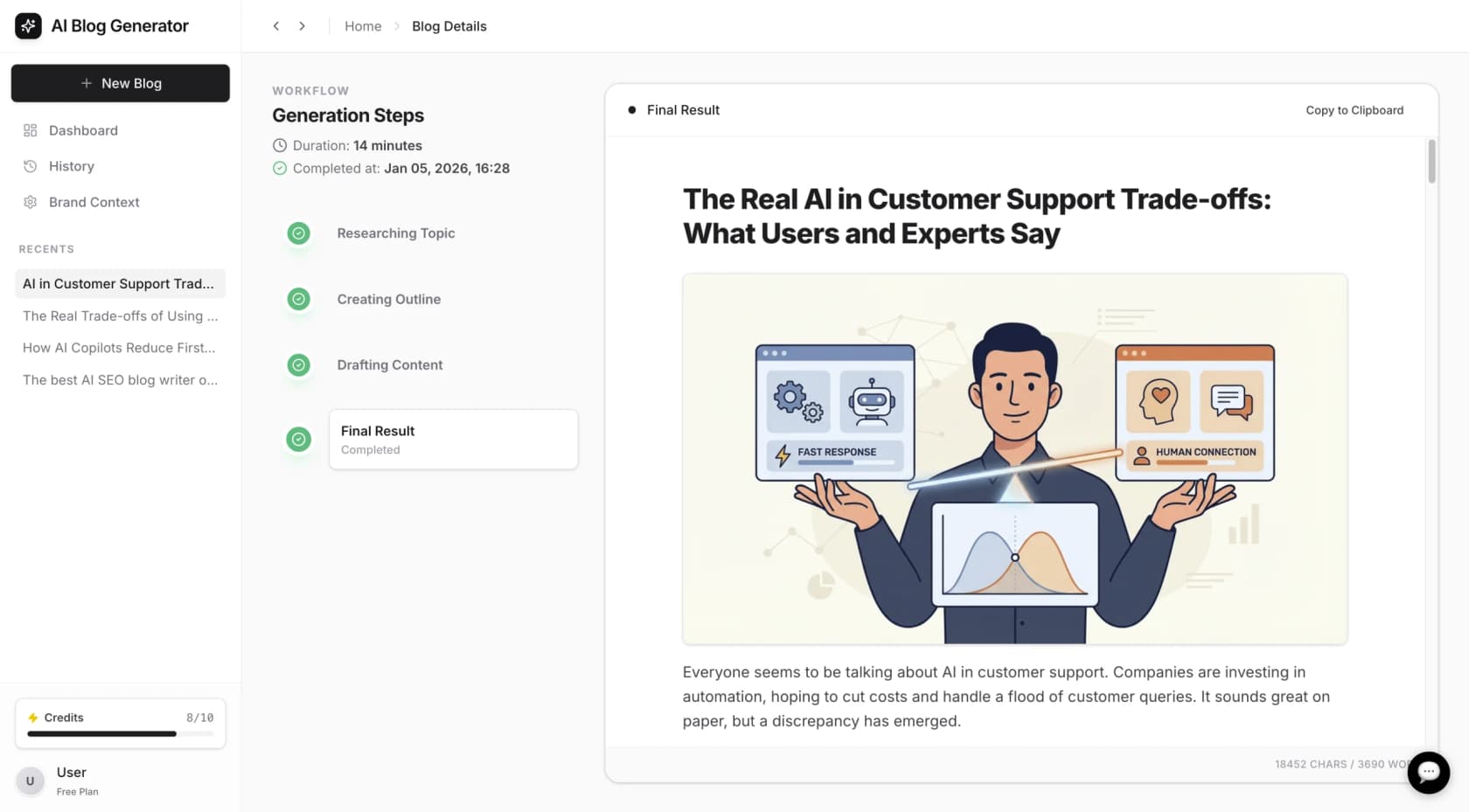
AI content platforms designed for modern SEO can help streamline this process. For example, the eesel AI blog writer is a tool built to assist with the new demands of search. It can help automate parts of the content creation workflow.
-
AEO-Optimized Structure: It can generate structured content with clear headings, lists, and tables that are easily parsed by search engine AI.
-
Automatic Rich Media: It can create a publish-ready post with AI-generated images, infographics, and relevant YouTube video embeds, addressing Strategy #5.
-
Social Proof Integration: It can pull relevant quotes from forums to build authenticity and provide first-hand experience signals (E-E-A-T) that are valued by search engines.
A playbook for appearing in AI Overviews
The rise of AI Overviews doesn't mean SEO is dead. It means the goalposts have shifted. The new aim isn't just to rank on a list of blue links; it's to become such an authoritative source that Google's AI trusts you enough to quote you directly.
The core principles are still the same. It all comes back to creating deep, helpful, people-first content, structuring it for machines to understand, building trust through E-E-A-T, and using smart AI SEO tools to do it all at scale.
For a deeper dive into how these strategies work in practice, the following video offers valuable insights on creating content that AI systems can easily understand and feature.
The future of content is about creating comprehensive, media-rich experiences that answer questions completely. The best way to understand the difference is to see it for yourself. Generate your first publish-ready blog post for free and see how the eesel AI blog writer creates content that's designed to show up in AI Overviews from the start.

Frequently asked questions
The most critical factor is creating comprehensive, people-first content that demonstrates strong E-E-A-T (Experience, Expertise, Authoritativeness, and Trustworthiness). Google's AI prioritizes high-quality, reliable information, so your content needs to be the best and most helpful answer available.
There's no set timeline, as it depends on your industry, competition, and how quickly you can implement these strategies. Building E-E-A-T and a strong reputation takes time, but technical and on-page improvements like content structure can yield results more quickly once Google recrawls your pages.
While not strictly required, using structured data like `FAQPage` or `HowTo` schema is highly recommended. It acts like a cheat sheet for Google, making it easier for its AI to understand the context and layout of your content, which can increase your chances of being featured.
Yes, as long as it's high-quality. Google has stated that it rewards helpful, reliable, people-first content, regardless of whether it was written by a human or AI. The key is to ensure the content is accurate, original, and demonstrates expertise.
Absolutely. Technical SEO is the foundation. While there are no special requirements beyond standard best practices, Google needs to be able to easily find, crawl, and understand your content. A fast, mobile-friendly site with a logical structure is essential.
Yes, high-quality backlinks are a key part of building authoritativeness, which is a component of E-E-A-T. When other reputable sites link to yours, it signals to Google that your content is trustworthy and valuable, making it a more likely candidate for an AI Overview citation.
Share this article

Article by
Kenneth Pangan
Writer and marketer for over ten years, Kenneth Pangan splits his time between history, politics, and art with plenty of interruptions from his dogs demanding attention.