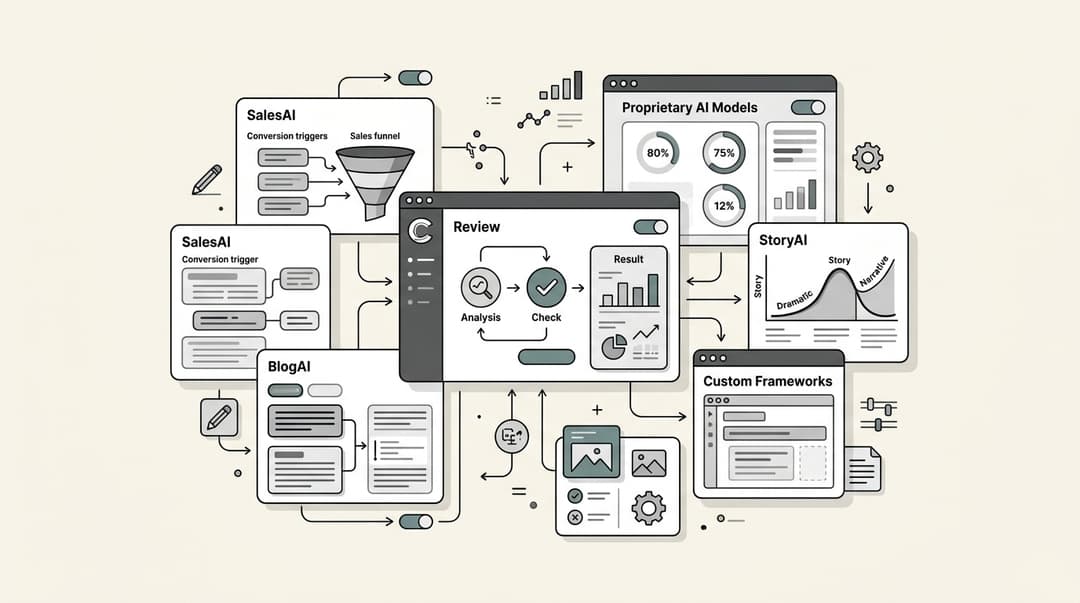
A practical guide to SEO AI: How to grow traffic in 2026

Kenneth Pangan
Last edited December 30, 2025

Search is changing. Fast. The days of just aiming for the "10 blue links" on Google are pretty much over. Now, it's all about AI-driven answers and summaries. You've probably seen those AI Overviews popping up at the top of your search results. They’re already in up to 17% of European search results, and that number is climbing.
As search engines use their own AI to understand what we're really looking for, our SEO tactics have to keep up. That's where SEO AI fits in.
And no, this isn't about AI replacing marketers. It’s about having a much better toolkit to work faster and get better results. Think of it as swapping a hand saw for a power saw.
In this guide, we'll get into what SEO AI is, how to use it for your daily tasks, look at some of the best tools out there, and give you a simple way to get started.
What is SEO AI?
So, what are we talking about?
SEO AI is just using artificial intelligence to make your search engine optimization work better and faster. It helps with everything from research and writing to the more technical stuff.
This whole thing is really a reaction to what search engines are doing. Google has been using its own AI, like RankBrain and BERT, for years to figure out what users mean, not just what they type. SEO AI is just us playing the same game.
You might hear a couple of new acronyms like GEO (Generative Engine Optimization) and AEO (Answer Engine Optimization). They sound a bit much, but the idea is straightforward. The goal isn't just to rank #1. It's to be the source that AI engines quote directly in their answers.
Since "zero-click searches" (where people get their answer without clicking a link) are more common, getting your brand featured in those AI summaries is the new top spot. It's a big chance to get seen and build trust. This visual breaks down the shift in focus:
How to use SEO AI for core tasks
You can weave AI into pretty much every part of your SEO workflow. It can be a massive time-saver and help you find opportunities you might have otherwise missed. Let's look at how it helps with the three main pillars of SEO.
Using SEO AI for keyword research and content strategy
Remember spending hours staring at spreadsheets, trying to find the right keywords? AI pretty much ends that.
These tools can go through huge amounts of search data in seconds to find topic clusters, understand user intent, and find long-tail keywords you'd never spot on your own. For instance, platforms like Semrush get their insights from a database of over 27 billion keywords. Instead of guessing what people want, you get a clear map of what to write about.
It’s also great for checking out the competition. AI can crawl your competitors' sites, see what content works for them, and show you where their strategy has holes. It gives you a ready-made list of topics you can use to get ahead.
Using SEO AI for content creation and optimization
The biggest complaint about early AI writers was that the content sounded, well, robotic. Most of it was generic and needed a lot of editing to be usable.
Luckily, things have improved. The newer AI writers can produce well-researched drafts that sound human right away.
For example, some platforms are designed to fix this specific problem. The AI Blog Writer from eesel AI was made to generate detailed articles that include things like data tables, infographics, and even Reddit quotes to make the content more interesting.
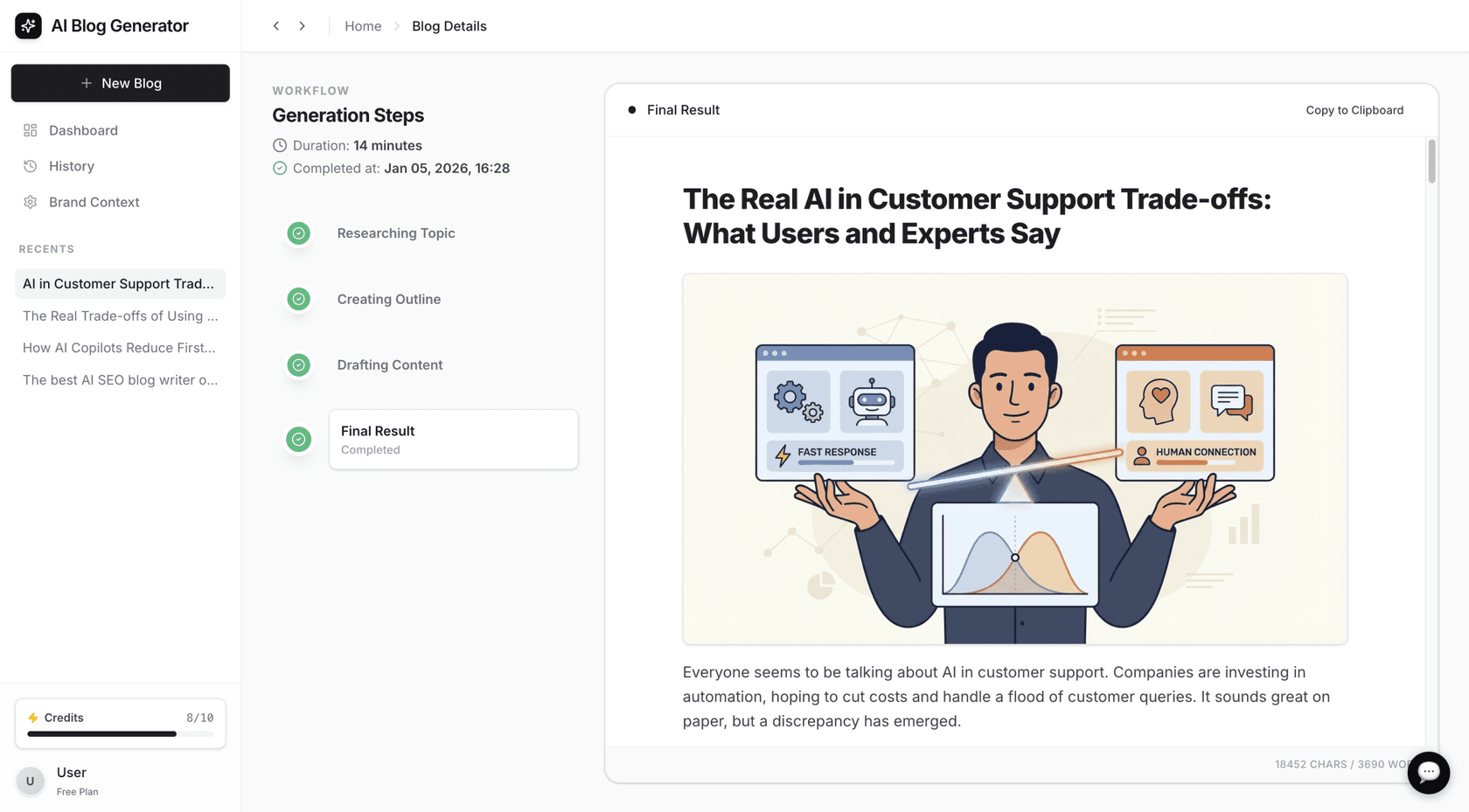
Besides writing the draft, AI is also good for optimization. Tools like SurferSEO give your content a "Content Score" by checking it against the top-ranking pages for your keyword. It offers suggestions on what terms to add, how long the article should be, and how to structure it to have a better chance of ranking.
Using SEO AI for technical SEO and link building
AI is also useful for the technical side of SEO. It can look at data from technical audits (like those from Semrush's Site Audit tool) and find patterns or big issues that a person might miss. It’s like having an assistant who can see the bigger picture across thousands of pages.
For link building, AI can find potential websites to contact and help personalize outreach emails. A better way to use it, though, is to create "link-worthy assets." This means things like free tools, original data studies, or cool infographics that other sites actually want to link to. It's about earning links instead of just asking for them.
A look at the top SEO AI tools in 2026
The market is flooded with tools, but they usually fit into three categories: all-in-one platforms, content specialists, and the new generation-first engines. Here’s a look at a key player from each.
Semrush: The all-in-one SEO AI platform
-
Description: If you've been in SEO for a while, you know Semrush. It’s an industry-standard platform that does pretty much everything, from keyword research and rank tracking to backlink analysis and technical audits. They’ve done a great job of integrating AI features across their entire toolkit.
-
AI Features: Their AI Visibility Toolkit is a big deal, designed to show you how visible your brand is in AI-generated answers. They also have ContentShake AI for helping you brainstorm ideas and generate SEO-focused drafts.
-
Pricing: To get access to the full suite of AI tools, you'll need the Semrush One plan, which starts at $165.17 per month when you pay annually.
-
Limitation: Semrush is a beast, but the price and all the features can be overwhelming for freelancers, small businesses, or teams that just want to create content without a steep learning curve.
SurferSEO: A specialist SEO AI tool for content optimization
-
Description: SurferSEO is a tool that’s laser-focused on one thing: on-page SEO. It analyzes the top-ranking pages for your target keyword and gives you a data-driven blueprint for how to write your own content to beat them.
-
AI Features: Its core feature is the Content Editor, which provides real-time suggestions as you write. More recently, they launched an AI Tracker to help you monitor how often your brand appears in AI search results from places like ChatGPT, Perplexity, and Google's AI Overviews.
-
Pricing: The Scale plan, which includes the AI Tracker, will run you $175 per month when billed annually.
-
Limitation: Surfer is great for optimization, but if you follow its advice too literally, your content can end up sounding a bit unnatural or stuffed with keywords. It's a helpful guide, but you still need to make sure the final piece reads well for a human.
I’ve used both - writers who have no knowledge of SEO will get some cues from Surfer. As to whether or not those cues are actually good ?♂️ I use SEMRush primarily now and it doesn’t really have any guided writing whatsoever. It’s more for people who at least have an idea what to do.

eesel AI Blog Writer: The SEO AI content generation engine
-
Description: While some tools assist with optimization or create initial drafts, the eesel AI Blog Writer is designed to handle the entire content creation process. It turns a single keyword into a near-complete, SEO-optimized blog post ready for publishing.
-
Key Differentiators: It was built from the ground up for both SEO and AEO (Answer Engine Optimization). This means it does context-aware research (it knows a comparison post needs a pricing table, for example) and automatically pulls in assets like AI-generated images, charts, and even real Reddit quotes to make the content feel more authentic and trustworthy.
-
Pricing: The pricing model is different, too. Instead of a monthly subscription that can add up, you can get 50 blog posts for $99. You can also try it for free to generate your first post and see the quality for yourself.
A practical framework for implementing SEO AI
Getting into SEO AI doesn't mean you have to scrap your current strategy. It's about making what you already do better with faster tools. Here’s a simple four-step way to get started.
-
Get the basics right first: AI is a great tool, but it can't fix a bad strategy. Things like E-E-A-T (Experience, Expertise, Authoritativeness, and Trust), solid technical SEO, and knowing your audience are still the most important things.
-
Use AI to help, not replace: The best approach is to let AI do the things that require speed and scale. Use it to analyze data, write first drafts, or summarize research. Save your own brainpower for strategy, final edits, and adding personal experiences that connect with readers.
-
Make your content easy for AI to read: For an AI engine to understand and quote your content, it has to be super clear. Use simple language, short paragraphs, descriptive headings (like in this article), and structured data like tables and lists. Make it easy for the machines to process.
-
Track what matters now: Your metrics need to change, too. Don't just track keyword rankings and traffic. Start looking at your visibility in AI Overviews, how often your brand gets mentioned in AI answers, and how often your content is cited. Tools like Semrush's AI Visibility score or Surfer's AI Tracker are made for this.
To see how these concepts come together in a real-world workflow, check out this video which demonstrates how several AI tools can be combined to achieve impressive ranking results quickly.
SEO AI is a partnership
SEO AI isn't a magic fix. It’s just the next step in how search works. Winning in 2025 and beyond will mean mixing solid SEO basics with good, clearly structured content that works for both people and AI.
The best way forward is a partnership between you and the machine. Let AI handle the scale, speed, and data. You bring the strategy, creativity, and real expertise that builds trust with your audience and the search engines connecting you.
The best way to understand the potential of high-quality AI content is to see it in action. Use our AI Blog Writer to turn your next keyword into a fully researched, structured, and SEO-optimized article in minutes. It's completely free to generate your first post.
Explore more SEO AI resources: SEO.ai alternatives, best SEO AI tools, free SEO AI tools, and Surfer SEO AI.

Frequently asked questions
The biggest benefit is efficiency. An SEO AI tool can handle time-consuming tasks like keyword research, competitor analysis, and first-draft writing in a fraction of the time it would take a human. This frees you up to focus on strategy and creative work.
Not really. The best approach is to see SEO AI as a partner. AI is great for data analysis and speeding up repetitive tasks, but it can't replace the strategic thinking, creativity, and genuine expertise that a human marketer brings to the table.
Instead of manually sifting through spreadsheets, SEO AI tools can analyze massive datasets to quickly identify topic clusters, find valuable long-tail keywords, and understand user intent. This gives you a much clearer, data-backed content strategy.
Yes, but the quality varies a lot between tools. Early AI content was often generic, but modern platforms like the eesel AI Blog Writer are designed to create deeply researched, well-structured articles that are optimized for both search engines and human readers. A final human review is always a good idea, though.
Traditional SEO focuses on ranking in the blue links. Answer Engine Optimization (AEO) is about getting your content featured directly in AI-generated answers and summaries, like Google's AI Overviews. Using SEO AI helps structure your content to be easily understood and cited by these new answer engines.
Along with traditional metrics like organic traffic and keyword rankings, you should start tracking your visibility in AI-generated results. Tools like Semrush and SurferSEO now offer features to monitor how often your brand is mentioned or cited in AI answers, which is a key metric for the new search landscape.
Share this article

Article by
Kenneth Pangan
Writer and marketer for over ten years, Kenneth Pangan splits his time between history, politics, and art with plenty of interruptions from his dogs demanding attention.