

The market for AI SEO tools is getting a little wild. It feels like every week a new platform pops up promising to run your entire content strategy, write flawless articles in seconds, and rocket you to the top of Google. The reality? Most of them are just hype. They churn out robotic text that takes more time to fix than it would’ve taken you to write the thing from scratch.
So, I decided to cut through the noise. I’ve spent the last few months personally testing dozens of these tools, trying to piece together a simple, effective workflow that actually saves time and gets results. I wasn't just looking at feature lists; I was trying to build a streamlined stack that could take me from initial research and drafting all the way to on-page optimization and tracking my visibility in this new world of AI search.
This article is what came out of that experiment. Below are my top 5 picks for 2025, the exact criteria I used to judge them, and a practical guide on how to build a modern content workflow that doesn’t suck.
What are AI SEO tools?
At their core, AI SEO tools are pieces of software that use artificial intelligence to help with all the little tasks that go into creating content. This covers everything from keyword research and writing first drafts to optimizing articles for search engines and tracking how your content is doing.
But things have changed recently. It’s not just about ranking on Google anymore. With AI assistants like ChatGPT and Perplexity becoming the new search bar for many, a different game has emerged: Answer Engine Optimization (AEO).
AEO is all about making your content easy for these AI models to find, understand, and cite in the answers they give to people. Here’s how I think about it: traditional SEO gets you on the list of blue links, but AEO gets your information into the answer itself. This shift is why having a modern stack of AI tools isn't just a nice-to-have anymore; it's quickly becoming essential.
How we conducted our AI content tools for SEO review
To give you a list that’s genuinely useful, I put every tool through a real-world test drive. I didn’t just sign up for a free trial and click around for an hour. I plugged them into my actual content workflow to see how they held up when things got busy.
When I was running this AI content tools for SEO review, here’s what I was really looking for:
-
Quality and Accuracy: Was the content or data any good? Did it sound like a human wrote it, or did I have to spend an hour chopping up robotic-sounding sentences?
-
Workflow Fit: Did it actually make my process smoother, or did it just add more steps? The goal is to make life easier, not more complicated.
-
Real SEO Impact: Did using the tool actually move the needle? I was looking for measurable results, like better content scores, improved rankings, or more mentions in AI chats.
-
Ease of Use: Could I figure it out right away, or did I need a PhD in prompt engineering? A good tool should just make sense.
-
Value for Money: Was the price tag worth the time it saved and the results it delivered?
A quick comparison of the top AI content tools for SEO
| Tool | Best For | Starting Price | Key Feature |
|---|---|---|---|
| eesel AI Blog Writer | Generating SEO-focused first drafts | Free to start, then $4/post | Uses your brand's existing content for tone |
| Surfer SEO | On-page optimization & briefs | $49/month (billed yearly) | Real-time content score against competitors |
| Semrush | Keyword research & strategy | $139/month | Deep SEO and market data |
| Indexly | Technical SEO & indexing | $99/month | Automated indexing submissions |
| Rank Prompt | Answer Engine Optimization (AEO) | $49/month | Tracks your visibility in LLM answers |
The best AI content tools for SEO in 2025
After all that testing, I settled on five tools that each nail a specific, critical part of the content process. No single tool does it all, but when you put them together, they form a pretty powerful system.
1. eesel AI Blog Writer
The biggest roadblock in content creation is usually just getting started. That blank page can feel pretty daunting, and that's where the eesel AI Blog Writer has been a lifesaver for us. It’s built to take you from a single keyword to a full, well-structured blog post in a couple of minutes, getting rid of that initial inertia.
What I really like is its ability to learn from your existing content. You can just give it a URL (like your homepage), and it scans your brand's tone and style to create a draft that actually sounds like you. It's not just another generic text generator; it's a writing assistant that gets your brand.
And we don't just recommend it; we use it every day. This is the exact tool that powers our own content strategy at eesel AI. It was the key that helped us reach 750k+ monthly impressions, with 10x traffic growth in 90 days. That’s the kind of result that makes you a believer.
What's good about it:
-
It spits out a complete first draft, including a meta title and description, a TL;DR, and five FAQs.
-
It uses your website’s context to write in a voice that feels natural and on-brand.
-
It’s pretty good at weaving in your product or service without it sounding like a clumsy sales pitch.
-
You can start free, then it's $4 per blog post.
What's not so good:
- It’s a specialized tool for writing content. You won’t get deep keyword analytics or other technical SEO features here.
Pricing:
The eesel AI Blog Writer is free to start, then $4 per blog post, with no platform fee.
2. Surfer SEO

Once you have a solid first draft from the eesel AI Blog Writer, the next step is to make sure it can compete with what's already out there. That’s where Surfer SEO comes in. It’s perfect for the refinement stage, helping you understand exactly what your content needs to do to rank.
Its best feature by far is the real-time Content Editor. It analyzes the top-ranking pages for your keyword and gives you a live "Content Score" as you edit. It’ll give you practical suggestions on keywords to add, the right word count to aim for, and how to structure your article for the best shot at ranking. Our workflow is simple: we paste our draft from eesel AI into Surfer and then polish it until the score is nice and green.
What's good about it:
-
The live content score is super motivating and gives you a clear target to hit.
-
It's fantastic for creating detailed, data-backed content briefs to hand off to writers.
-
It hooks right into Google Docs and WordPress, so it fits into most existing workflows.
What's not so good:
-
If you follow its suggestions too literally, your content can start to sound a bit robotic and keyword-stuffed. You still need a human touch.
-
Plans are sized by documents per month, and AI search tracking is a separate $82/month plan (billed yearly).
Surfer SEO has a few plans, and you save about 17% by paying yearly.
-
Discovery: $49/month (billed yearly) for 120 documents/month.
-
Standard: $99/month (billed yearly) for 360 documents/month, with Pro ($182) and Peace of Mind ($299, unlimited documents under fair use) above it.
-
Enterprise: Custom pricing.
3. Semrush
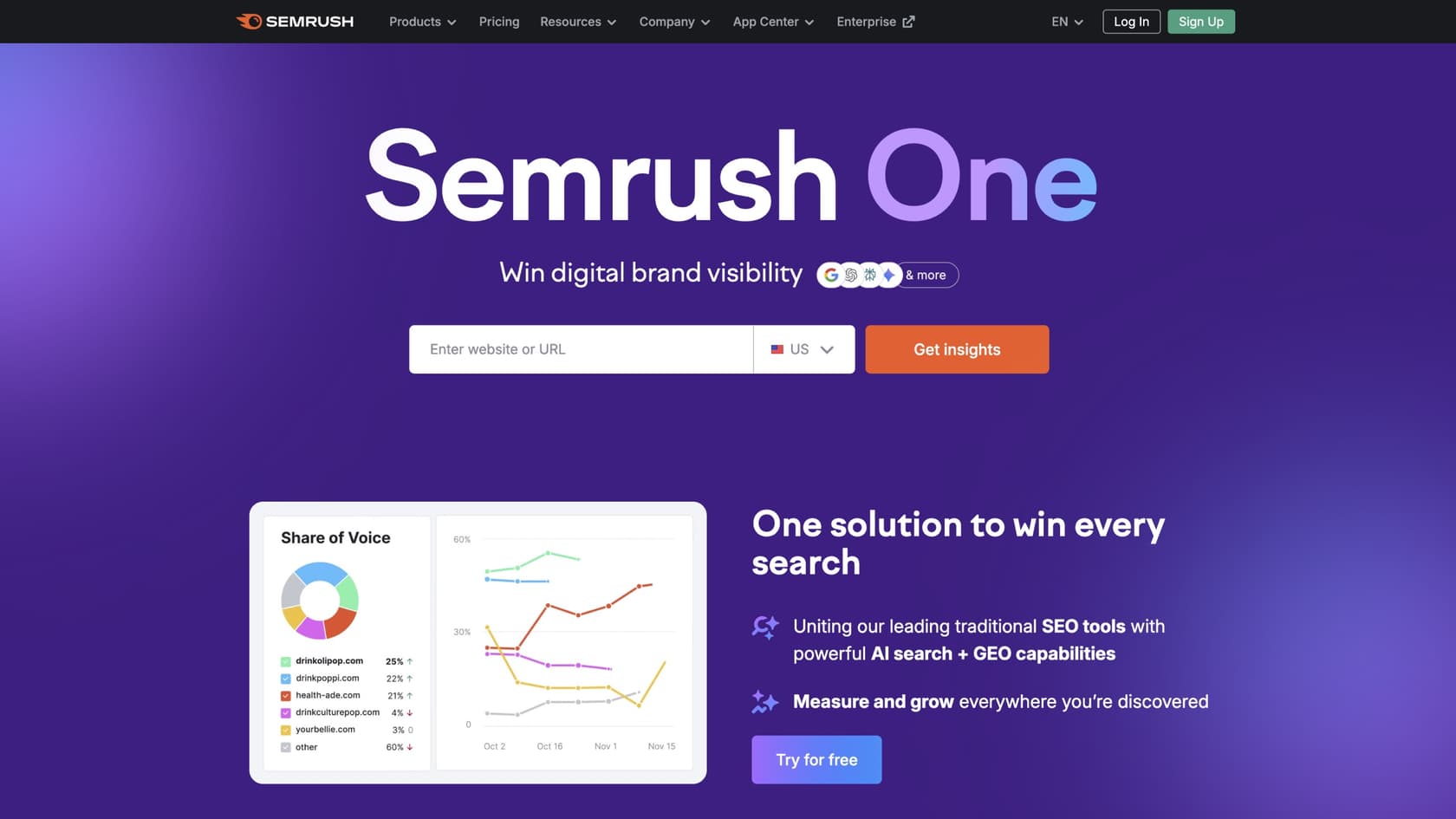
Before you write a single word, you need a plan. Semrush is the tool that helps us answer the most important question: "What should we actually write about?" It’s the foundation of our content strategy, giving us the data we need to make smart calls instead of just guessing.
While it does a million things, its real value for content creators is in the Keyword Magic Tool and Topic Research features. These are amazing for finding good keywords, figuring out what people are actually looking for, and building out topic clusters that show you know your stuff. Our process starts here: we find a primary keyword with decent search volume and beatable competition, then we pop that keyword straight into the eesel AI Blog Writer to get the ball rolling.
What's good about it:
-
It has a massive and pretty accurate keyword database.
-
The tools for checking out your competitors and finding content gaps are top-notch.
-
It's a full SEO suite, so it also covers technical SEO, link building, and a lot more if you need it.
What's not so good:
-
All the features can be a bit much if you're just starting out.
-
It's definitely pricier than tools that only do one thing.
-
SEO: $139/month ($117.33/month billed annually) for the core SEO toolkit, with Starter at $199/month.
-
Pro+: $299/month ($248.17 billed annually) adds historical SEO data.
-
Advanced: $549/month ($455.67 billed annually) adds API data integration.
4. Indexly
You can write and optimize the best article in the world, but it’s totally useless if search engines never find it. This is a super common and frustrating problem that Indexly is built to fix.
It’s designed to deal with that dreaded “Crawled , currently not indexed” status you sometimes see in Google Search Console. Instead of just waiting around for weeks for Google’s crawlers to hopefully find your new content, Indexly's Automated Indexing handles the submission process. It basically tells search engines to come have a look at new pages, getting your content into the search results faster. We use it to make sure every new blog post gets a fair shot to rank as quickly as possible.
What's good about it:
-
It automates a really boring but absolutely essential technical SEO task.
-
It’s a simple "set it and forget it" tool that just works in the background.
-
Every plan covers unlimited websites, which helps if you publish across several sites.
What's not so good:
-
It has grown into an AI search visibility platform, so indexing is one module among several and the entry price reflects that.
-
It can ask Google to index your page, but it can’t force it. Google still has the final say.
Indexly's pricing page lists paid plans, with a 17% discount for annual billing.
-
Starter: $99/month for 200 submissions per day and AI tracking across 3 models.
-
Growth: $299/month for 600 submissions per day.
-
Scale: $499/month for 1,000 submissions per day.
-
Enterprise: Contact sales.
5. Rank Prompt
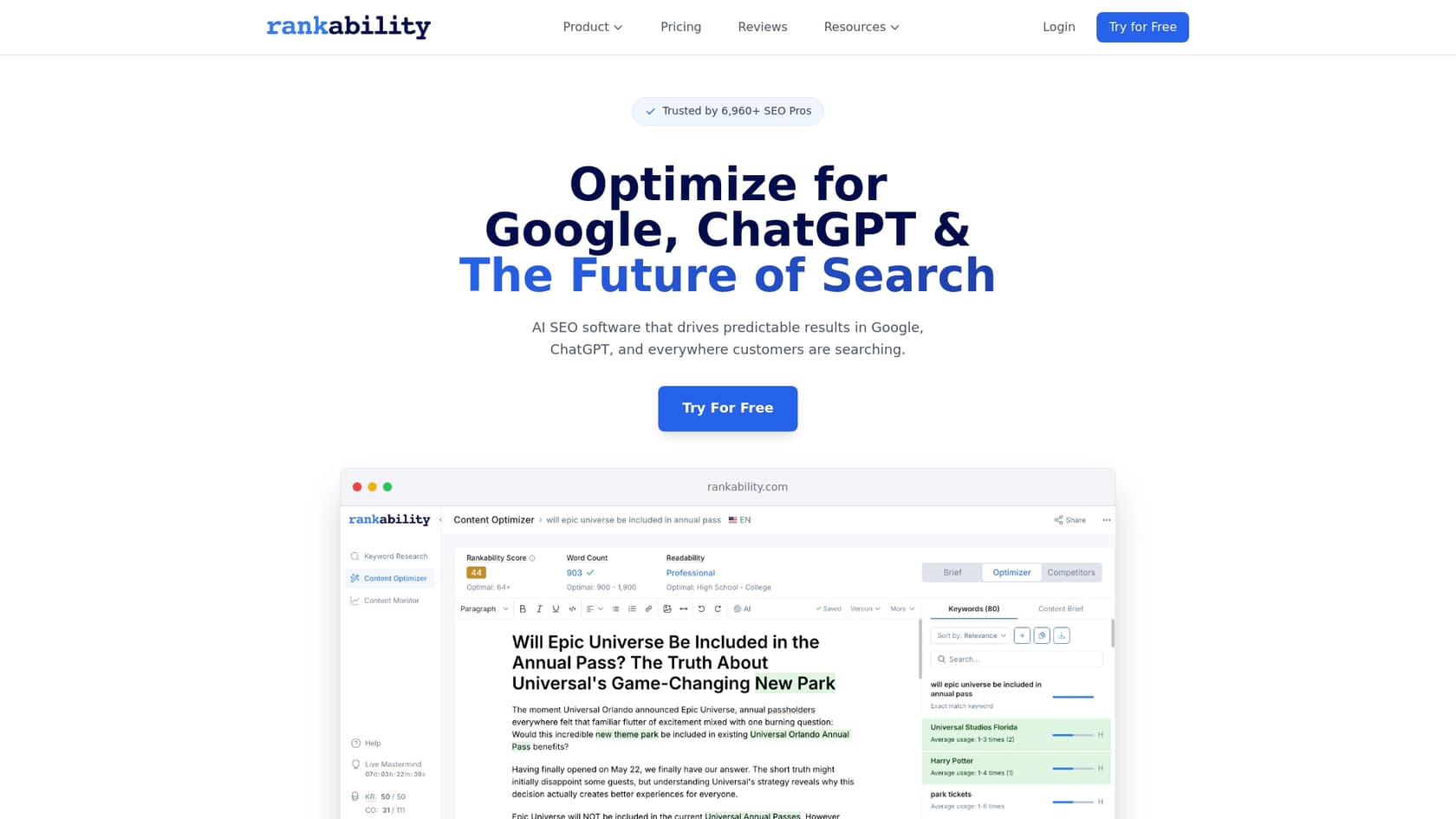
This brings us back to where we started, with Answer Engine Optimization. Once your content is written, optimized, and indexed, how do you know if it’s actually being used in AI-generated answers? Your old rank tracker can’t tell you that.
Rank Prompt is a tool built for this new age of search. It lets you keep an eye on how your brand, specific URLs, and even your competitors are showing up in LLMs like ChatGPT, Gemini, and Perplexity. It’s the last piece of the puzzle, giving you a performance metric that most SEOs aren’t even looking at yet. We use it to track our most important articles to see if they’re being used as sources. When they are, we know our AEO work is paying off.
What's good about it:
-
It tracks six AI engines, including ChatGPT, Gemini, Perplexity, Claude, and Grok.
-
It gives you interesting insights into how different AI models see your brand.
-
It's a must-have if you want to future-proof your SEO strategy.
What's not so good:
-
Credits reset monthly and don't roll over, and premium engines like Gemini and Grok cost extra credits per prompt.
-
AEO is still a new field, so the rules are changing all the time.
Rank Prompt is priced based on credits, which you use to run scans.
-
Starter: $49/month, or $39/month billed annually, for 150 credits.
-
Pro: $71/month billed annually ($855/year) for 500 credits.
-
Agency: $149/month, or $119/month billed annually, for 1,000 credits.
How to use AI content tools for SEO the right way
Having the right tools is half the battle, but how you use them is what really counts. Here are a few things to keep in mind to make sure you're using AI smartly.
Always start with a strategy AI is powerful, but it can't replace a real understanding of your audience and what they're searching for. Use a tool like Semrush to build a smart plan first, then let AI help you execute it.
AI is your assistant, not the author You absolutely need a human to look over every AI-generated draft. An expert needs to add unique insights, personal stories, and real-world examples. This is especially important for staying on the right side of Google's E-E-A-T (Experience, Expertise, Authoritativeness, Trustworthiness) guidelines.
Fact-check everything AI models are known to “hallucinate,” which is a nice way of saying they sometimes make things up that sound true but are completely wrong. Every statistic, claim, and fact has to be verified by a human before you hit publish.
Focus on quality, not quantity Don't fall into the trap of using AI to just pump out hundreds of generic, low-quality articles. The goal isn't just to make more content; it's to use AI to help you make better content, faster.
The takeaway: Building your modern content workflow with AI content tools for SEO
In 2025, there isn’t a single AI tool that can handle all your SEO content needs. The secret is to stop looking for one magic solution and instead build a smart workflow using a "stack" of specialized tools that work well together.
Based on all our testing, here’s the most effective workflow we’ve found:
-
Plan your content strategy with Semrush.
-
Create your first draft with the eesel AI Blog Writer.
-
Optimize that article with Surfer SEO.
-
Index your new page quickly with Indexly.
-
Track your AI visibility with Rank Prompt.
Ready to stop staring at a blank page and start publishing content that actually ranks? Give the eesel AI Blog Writer a try for free and see how we reached 750k+ monthly impressions. We're actively looking for feedback
Frequently asked questions
How do I determine which of the AI content tools for SEO in this review are best suited for my specific content goals?
Start by identifying your biggest content roadblocks, whether it's planning, drafting, optimizing, or indexing. Each tool in the review excels at a specific stage of the content workflow. Focus on the tool that addresses your most pressing need first, then expand your stack as your needs evolve.
Is it truly necessary to use multiple AI content tools for SEO, or can I get by with just one for my SEO content?
While one tool can certainly help, the blog emphasizes a "stack" approach for comprehensive results. No single tool currently covers all aspects of modern SEO and AEO effectively. Combining specialized AI content tools for SEO creates a much more powerful and efficient workflow.
Even with the top AI content tools for SEO, how important is human oversight for content quality and Google's E-E-A-T?
Human oversight remains absolutely critical for content quality. AI is an assistant, not a replacement for human authors, and experts are needed to add unique insights, personal experiences, and to fact-check everything to meet Google's E-E-A-T guidelines and ensure accuracy.
Do the AI content tools for SEO mentioned here specifically help with Answer Engine Optimization (AEO) beyond traditional SEO?
Yes, they do, especially Rank Prompt, which is explicitly designed for AEO tracking. The eesel AI Blog Writer helps create well-structured content that AI models can easily parse and understand. The overall workflow aims to make your content understandable and citable for AI assistants, which is a core aspect of AEO.
Can smaller teams or individual bloggers afford to use these AI content tools for SEO, or are they mainly for larger companies?
Many of the AI content tools for SEO offer tiered pricing, making them accessible to different budgets. For instance, eesel AI Blog Writer is free to start and then $4 per blog post, Rank Prompt starts at $39/month billed annually, and Surfer SEO's Discovery plan is suitable for smaller operations. Semrush is a larger investment but foundational for strategy.
What are the common pitfalls or limitations I should be aware of when using these AI content tools for SEO?
Key pitfalls include relying too heavily on AI without human review, which can lead to robotic or inaccurate content. Over-optimization can also occur if suggestions are followed too literally, and it's important to remember that not every tool can guarantee indexing. Always fact-check, focus on quality over quantity, and treat AI as an assistant.