Structured data (schema markup)
Standardized code added to a web page that describes its content to search engines in a machine-readable format.
What structured data means
Structured data is standardized code added to a web page that describes its content to search engines in a machine-readable format. Instead of leaving an engine to infer what a block of text means, structured data labels it explicitly: this is the author, this is the price, this is the cooking time, these are the questions and answers. Most of the web uses a shared vocabulary called Schema.org for these labels, which is why the practice is also called schema markup.
The markup is usually added in a format called JSON-LD, a small script embedded in the page that the search engine reads but the visitor never sees. In SEO, structured data sits firmly in the technical layer. It does not change what a reader sees on the page, but it can make the page eligible for rich results, the enhanced listings like star ratings, FAQ accordions, recipe cards, and event details that stand out on the search results page.
Why structured data matters
- It earns rich results. Valid markup can unlock star ratings, FAQ drop-downs, and other enhanced listings that take up more space on the SERP.
- It clarifies content for engines. Explicit labels remove ambiguity, helping the engine classify a page correctly rather than guessing.
- It lifts click-through, not rank. Schema does not raise rankings directly, but richer listings tend to win a higher click-through rate.
- It supports answer engines. Clearly labeled data is easier for AI and voice assistants to parse and quote accurately.
- It must stay accurate. Markup that misrepresents the visible page violates search guidelines and can trigger a manual penalty.
The payoff is easiest to grasp by comparing the same listing before and after the markup is in place.
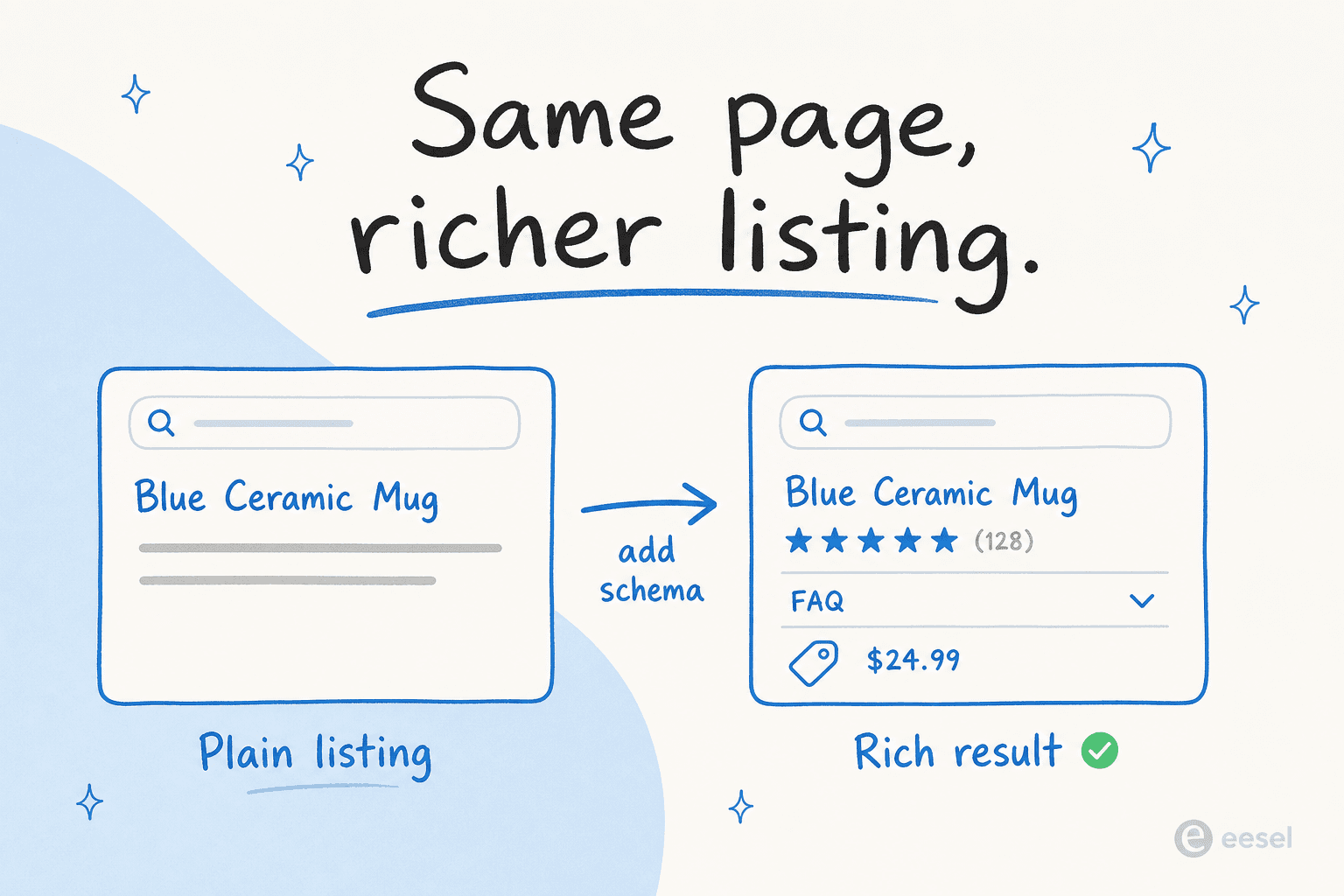
The page content does not change for the reader, but the listing in search gains stars, an FAQ accordion, or a price line that take up more room and pull more clicks. That visual upgrade, not a rank boost, is what schema actually buys you.
How structured data works
Adding structured data follows a consistent pattern:
- Pick the right type. Choose the Schema.org type that matches the content, Article for a blog post, Product for a listing, FAQPage for a question set.
- Mark up the content. Add the corresponding JSON-LD to the page, mapping each property (name, author, price, question) to the real on-page content.
- Validate it. Run the page through a testing tool to confirm the markup is well-formed and eligible for the intended rich result.
- Let the engine re-crawl. The engine reads the markup on its next crawl and may begin showing the enhanced listing if the page qualifies.
This is a technical SEO task that lives mostly in a site's templates and CMS rather than in the writing itself. The content side still matters, though: a post structured with a clear FAQ section and clean headings, the kind a tool like eesel AI drafts, maps cleanly onto FAQ and Article schema, so the markup has accurate, real content to describe.
Structured data in practice
The most common pitfall is treating structured data as a ranking lever rather than an eligibility signal. Adding schema does not push a page up the results, and adding it everywhere does not multiply the effect. The payoff comes from matching the right markup to genuinely relevant content, then keeping it accurate as the page changes. Markup that claims a five-star rating the page does not actually show, or FAQ schema on a page with no real questions, is exactly the kind of mismatch that gets flagged. Used honestly, structured data is one of the cleaner technical wins in SEO: it costs little, risks little, and quietly makes a page legible to the machines reading it.
Publish content ready for rich results
eesel's AI blog writer drafts clearly structured posts with FAQs and headings, the content shape that pairs naturally with schema markup.