Technical SEO
Technical SEO is the practice of optimizing a website's infrastructure so search engines can crawl, render, and index its pages efficiently.
What technical SEO means
Technical SEO is the practice of optimizing a website's underlying infrastructure so that search engines can crawl, render, and index its pages efficiently, and so that those pages load fast and work well for users. It is the layer beneath content and links: not what a page says, but whether a search engine can reach it, read it, and understand its structure in the first place.
The work covers things like site architecture, crawlability, indexability, page speed, mobile usability, secure connections (HTTPS), structured data, canonical tags, and clean URL structure. Where content SEO asks "is this page useful and relevant?", technical SEO asks "can a search engine actually access and process this page without friction?" In content marketing, it is the unglamorous foundation: you can publish the best post in your category, but if the page is blocked, slow, or duplicated, it will not rank.
Why technical SEO matters
- Crawlability gates everything. If a search engine cannot reach a page through links or a sitemap, the page is invisible no matter how good it is.
- Indexing decides what can rank. A crawled page still has to be indexed; duplicate content, noindex tags, or canonical conflicts can quietly keep pages out of results.
- Page experience is a ranking input. Loading speed, stability, and mobile usability feed search engines' page-experience signals and affect how users behave once they arrive.
- Structured data unlocks rich results. Marking up content with schema lets search engines display FAQs, ratings, and other enhanced listings that lift click-through rates.
- It compounds across the whole site. A single architecture or speed fix can lift hundreds of pages at once, which is why technical work scales differently from page-by-page content edits.
Think of a page as having to clear a series of gates before it can ever rank, with technical issues able to slam any one of them shut.
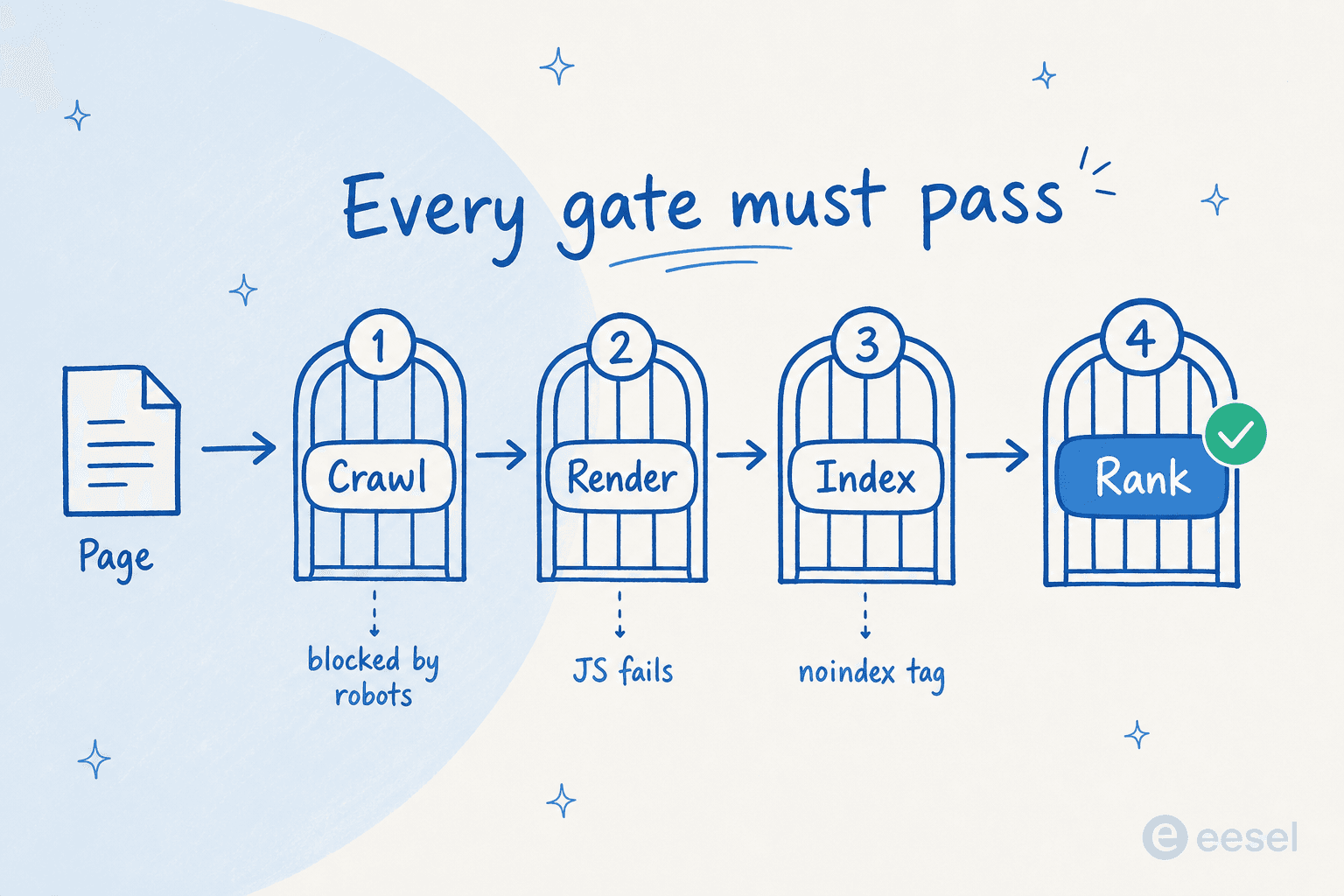
A page only ranks if it clears every gate in order, and most technical SEO problems are something quietly blocking one of the first three. A robots rule, a JavaScript that fails to render, or a stray noindex tag stops the page before it ever reaches the ranking stage.
How technical SEO works
Technical SEO runs as an audit-and-fix cycle rather than a one-off project:
- Crawl the site as a search engine would. A crawler maps the URLs, surfacing broken links, redirect chains, orphaned pages, and blocked resources.
- Check indexing and rendering. Tools confirm which pages are indexed, whether JavaScript renders correctly, and whether duplicate or canonical issues are splitting signals.
- Measure performance. Page speed and stability metrics flag pages that load slowly or shift around as they load.
- Fix and re-test. Engineers resolve the issues, then re-crawl to confirm the fixes held and did not introduce new ones.
For most content-led sites, the honest connection here is indirect: technical SEO makes sure the pages your content team publishes are reachable and fast. A blog draft from eesel's AI blog writer, for instance, still lives or dies by the site's crawl and index health; clean content does not rescue a page that a search engine cannot read.
Technical SEO in practice
The most common failure mode is invisible damage: a template change, a stray noindex, or a redirect loop that silently de-indexes pages while traffic erodes for weeks before anyone notices. That is why technical SEO is treated as continuous maintenance, not a launch checklist, and why the teams that take it seriously watch crawl stats and indexing reports the way an ops team watches uptime. It rarely wins rankings on its own, but it is the prerequisite that lets content and links do their job.
Want the full playbook? See our technical SEO audit checklist.
Sound technical SEO, content worth crawling
eesel's AI blog writer drafts clean, well-structured posts so the pages your technical SEO exposes are actually worth indexing.