SERP (search engine results page)
The page a search engine returns after a query, listing organic results, ads, and rich features like snippets, images, and answer boxes.
What a SERP means
A SERP, short for search engine results page, is the page a search engine displays in response to a query. It is what you see immediately after typing a search into Google, Bing, or any other engine: a ranked list of links, often mixed with paid ads, images, videos, and interactive boxes. The acronym is pronounced "serp" and is used as both a singular and plural noun in everyday SEO conversation.
Modern SERPs are far more than a plain list of links. A single results page can stack a featured snippet, a "People also ask" accordion, an image carousel, a local map pack, shopping results, and an AI-generated overview, all above or beside the standard organic listings. In content marketing and SEO, the SERP is the battleground: it is where a page either captures attention or gets buried, and its layout decides how much of the click traffic any given ranking position actually earns.
Why the SERP matters
- Position drives clicks. Click-through rate drops steeply with each lower position, so the gap between rank one and rank five is large.
- Features steal attention. A featured snippet or AI overview can absorb the click before a user ever reaches the first organic result.
- It reveals intent. The mix of features on a SERP (shopping, local, video, informational) tells you what the engine thinks a query means, which guides how you write for it.
- It is personalized. Location, device, and history mean there is no single universal SERP for a query, so rank tracking has to control for those variables.
- It is the audience for AEO. As answer engines pull from results, optimizing for SERP features overlaps with answer-engine optimization.
It helps to see the page the way attention actually flows down it, top to bottom, with each zone competing for the click.
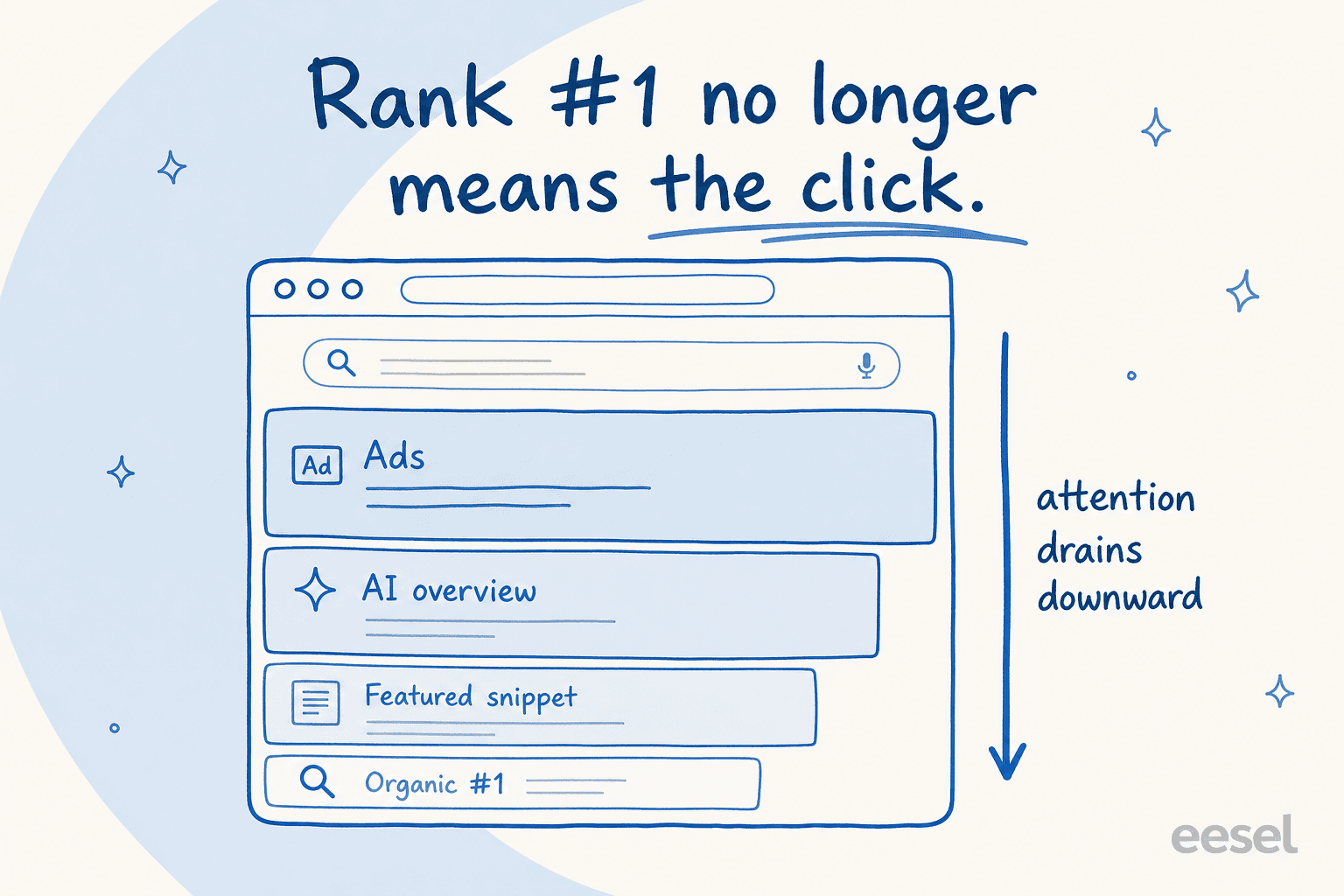
By the time a searcher's eye reaches the first organic listing, ads, an AI overview, and a snippet have already had their shot at the click. Ranking number one still matters, but the slot it sits in is smaller than it used to be.
How a SERP works
When someone runs a search, the engine assembles the SERP in real time:
- Interpret the query. The engine parses the words and infers the search intent behind them, informational, navigational, or transactional.
- Select candidate results. It pulls relevant pages from its index and ranks them by hundreds of signals, including relevance, quality, and links.
- Choose features to display. Based on intent, it decides which rich features fit, an answer box for a question, a map for a local query, a carousel for a how-to.
- Assemble and personalize. It lays out organic results, ads, and features, adjusting for the searcher's location and device.
A blog writer like eesel AI writes with the target SERP in mind: it structures a post so the section answering the core question is clean and direct enough to be lifted into a snippet, and it shapes headings around the related questions a SERP surfaces, so the page competes for more than just the standard blue link.
SERP in practice
The practical shift in the last few years is that ranking number one no longer guarantees the click. With answer boxes, AI overviews, and ad blocks pushing organic results down the page, the real question is not "where do I rank" but "how much of this SERP can I occupy." Smart teams study the actual results page for a target query before writing a word: which features appear, what the snippet currently says, what the "People also ask" entries reveal about intent. Then they write to win a specific slot rather than a generic position, because on a crowded SERP, the slot is what converts a ranking into traffic.
Write content built to win the SERP
eesel's AI blog writer drafts posts structured for snippets and answer boxes, the SERP features that capture clicks above the standard results.