Featured snippet
A short answer a search engine pulls from a web page and displays at the top of results, above the standard listings.
What a featured snippet means
A featured snippet is a short, highlighted answer that a search engine extracts from a web page and displays at the very top of the results, above the standard list of links. It is designed to answer a query directly, so a searcher can read the response without clicking through. Because it sits above the first ranked result, it is often called position zero.
Featured snippets come in a few common formats: a paragraph that defines or explains something, a numbered or bulleted list for steps and rankings, a table for structured data, and sometimes a video clip. In content marketing and SEO, the snippet is a high-value target because it captures the most prominent real estate on the page and frames your content as the authoritative answer. The trade-off is that a snippet good enough to fully answer a query can also reduce clicks, since the user got what they came for in the box itself.
Why featured snippets matter
- Top-of-page visibility. A snippet sits above every organic result, so it is the first thing a searcher reads on the SERP.
- It builds perceived authority. Being the source the engine chose to quote frames your page as the trusted answer for that query.
- It feeds AI answers. The same clean, structured answers that win snippets are what answer engines pull from, overlapping with answer-engine optimization.
- It can cut clicks. A fully self-contained snippet may satisfy the searcher without a visit, a "zero-click" outcome worth weighing against the visibility gain.
- You must already rank to win it. Snippets are almost always drawn from pages already on the first results page, so a snippet strategy starts with ranking.
A useful shortcut is to let the question shape the format, since the engine tends to reward the layout that fits the query.
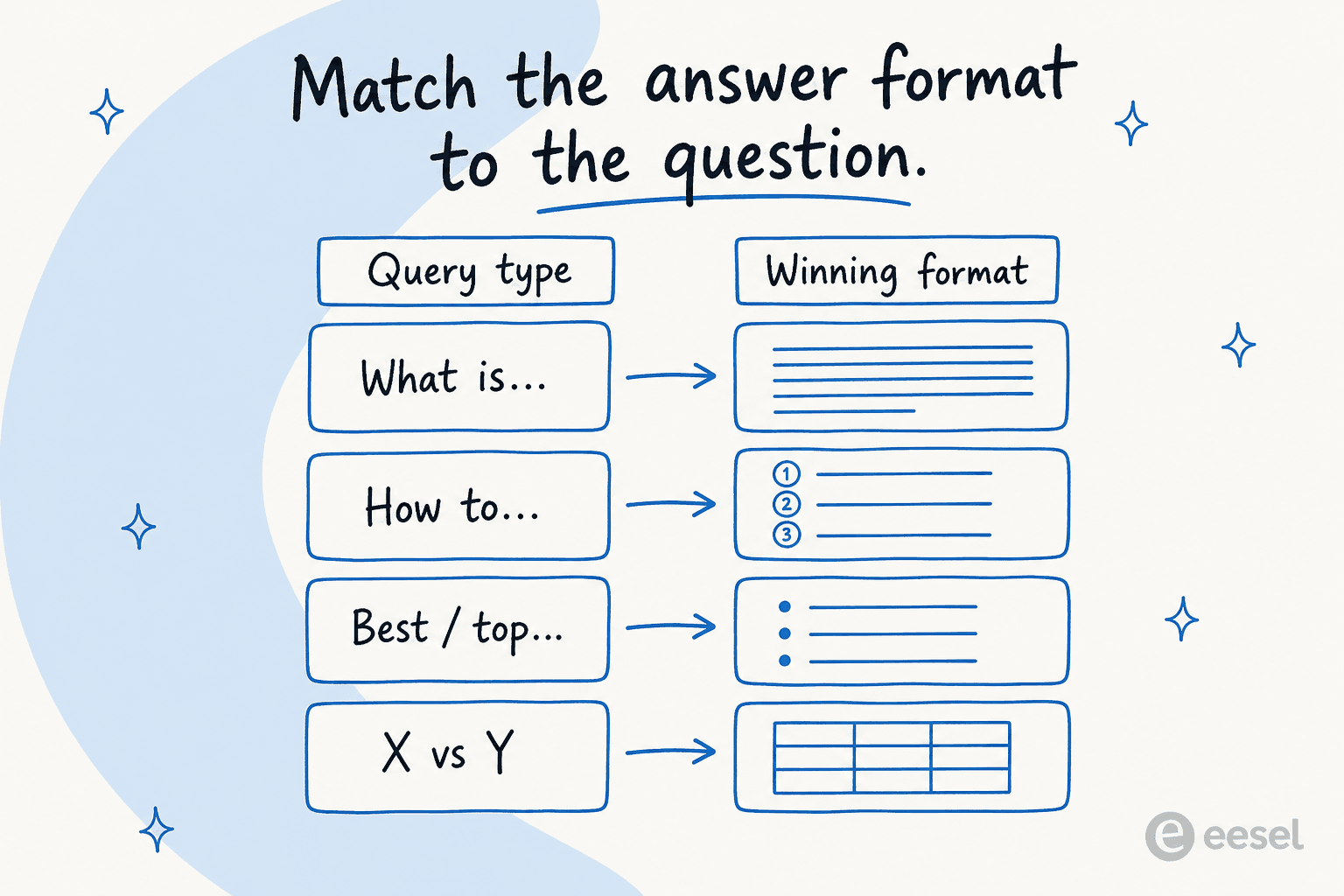
A "what is" query usually wins with a tight definition paragraph, a "how to" with a numbered list, a "best" query with bullets, and a comparison with a table. Drafting a section so it ranks for one of these tends to surface the right format automatically, which is part of how the eesel AI blog writer shapes answer-first sections.
How a featured snippet works
Search engines build snippets by finding the cleanest answer to a question among the pages that already rank:
- Detect a question intent. The engine recognizes that a query wants a direct answer, often a "what is," "how to," or "best" phrasing.
- Scan ranking pages. It looks across the first-page results for a passage that answers the question concisely and is formatted clearly.
- Extract and display. It lifts that passage, paragraph, list, or table, into the snippet box, with a link back to the source page.
- Re-evaluate over time. Snippets change as pages update and as the engine finds a better-formatted answer.
A blog writer like eesel AI drafts with this extraction in mind: it opens the section that answers the target question with a direct, self-contained definition, then follows with structured lists or tables where the query calls for steps or comparisons, so the passage is easy for the engine to lift cleanly.
Featured snippets in practice
The reliable way to win a snippet is to reverse-engineer the one currently showing. Look at the live result, note its format (paragraph, list, or table), and write a tighter, clearer version of that same answer on a page that already ranks. The most common miss is burying the answer: a post that meanders for three paragraphs before stating the definition gives the engine nothing clean to extract. State the answer in the first sentence or two under a heading that matches the question, then expand. That single discipline, answer first and then explain, is what turns a first-page ranking into the snippet above it.
Write answers built to be snippets
eesel's AI blog writer structures posts with clean, direct answers and lists, the format search engines lift into featured snippets.