Meta description
A short HTML attribute that summarizes a web page and often appears as the snippet beneath the title in search results.
What a meta description means
A meta description is a short HTML attribute that summarizes the content of a web page, written into the page's head as a meta tag. Search engines frequently display it as the snippet of text beneath the page title in a result, so it acts as a brief pitch for what the page offers. It is typically around 120 to 160 characters, the range most search engines show before truncating, and it is not visible on the page itself.
In SEO and content marketing, the meta description is a small but visible piece of a page's metadata: it does not move rankings on its own, but it heavily influences whether a ranked result gets clicked. A clear, specific description that matches what the searcher wants can lift click-through rate, while a vague or missing one leaves the search engine to stitch together its own snippet, often a less compelling one.
Why a meta description matters
- It shapes the click, not the rank. The description is the sales line in a search result, so it affects click-through rate even though it is not itself a ranking signal.
- It sets expectations. A description that accurately previews the page reduces bounces, because visitors arrive knowing what they will get.
- It is a controllable surface. Unlike many ranking factors, the description is fully in the author's hands when search engines choose to honor it, making it cheap to optimize.
- It doubles as a social and AI snippet. The same summary often feeds link previews and answer engines, so a good description works beyond classic search.
- It is one of the most-skipped fields. Many pages ship without one, which means writing a deliberate description is an easy way to stand out in a crowded result set.
One thing worth picturing before you spend time polishing the text: you do not get the final say on the snippet. The search engine picks one of two paths at query time.
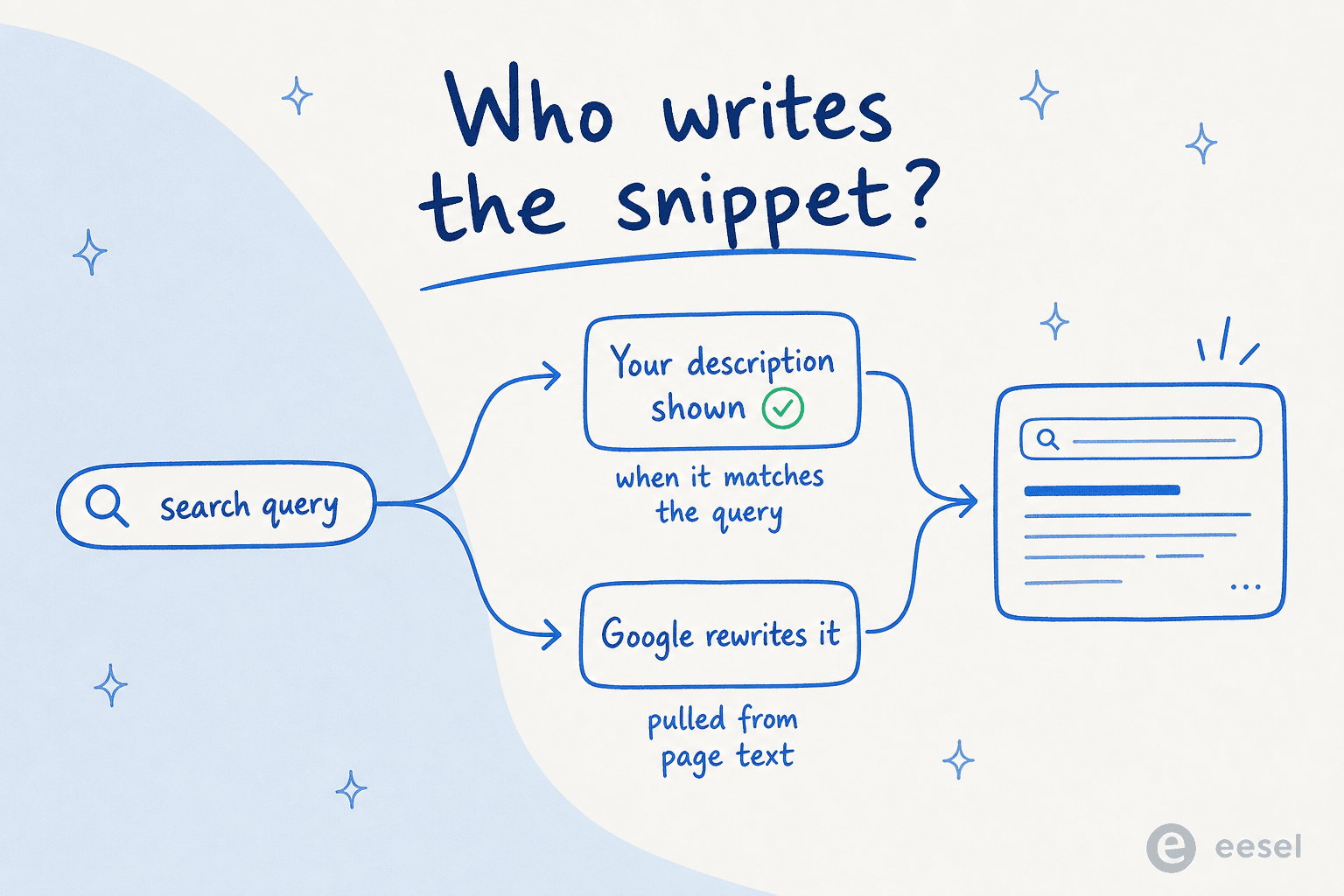
When your description matches the query well, it shows as written. When the engine thinks page text answers the query better, it swaps in its own line. Writing a strong description tilts that decision toward your version rather than guaranteeing it.
How a meta description works
The lifecycle of a meta description is short:
- The author writes it. A concise summary of the page is placed in the meta description tag, ideally including the main keyword and a reason to click.
- The crawler reads it. When a search engine indexes the page, it stores the description as a candidate snippet.
- The engine decides at query time. For each search, the engine either shows the written description or generates its own from the page if it judges that a better match for the query.
- The author refines it. Based on click-through performance, descriptions on important pages get rewritten over time.
For content teams, eesel AI handles step one as part of drafting. The eesel AI blog writer produces the article and a fitting meta description together, so the snippet is considered while the content is fresh rather than retrofitted later. Editors still trim it to length and check it matches the final page before publishing.
A meta description in practice
The most useful habit is to write descriptions for human eyes first and length limits second. A description that reads like a genuine one-line answer to the searcher's question tends to outperform a keyword-stuffed one, even though both fit the character budget. Front-load the important words, because truncation cuts from the end and varies by device. It also helps to accept that search engines will sometimes override the text; the description you write is the version shown when it is the best match, so writing a strong one raises the odds of that happening rather than guaranteeing it.
For a hands-on walkthrough, read writing meta descriptions.
Drafts with descriptions written in
eesel AI drafts long-form posts and a fitting meta description for each, so the snippet is handled alongside the content.