Metadata
Structured information that describes a web page to search engines, browsers, and social platforms rather than to the reader directly.
What metadata means
Metadata is structured information that describes a piece of content to systems rather than to the reader directly, summed up as data about data. On a web page, metadata tells search engines, browsers, and social platforms what the page is, who made it, what it is about, and how it should be displayed, all without appearing in the visible body. Most of it lives in the page's HTML head or in markup that crawlers read but humans do not see.
In SEO and content marketing, page metadata is the layer that controls how content shows up everywhere except the page itself: the clickable headline in a search result, the gray summary beneath it, the card that renders when a link is shared on social, and the machine-readable hints that help search engines understand and categorize the page. Get it right and a post is represented accurately across every surface; leave it to defaults and the platform guesses, often badly.
Why metadata matters
- It controls the search snippet. The title tag and meta description shape what users see and decide to click in search results, so they influence traffic before anyone reaches the page.
- It governs how links look when shared. Open Graph and similar tags set the title, image, and summary that render on social platforms and in chat apps, which affects whether a shared link gets clicks.
- It helps machines understand the page. Structured data and canonical tags tell search engines what the content is and which version is authoritative, reducing misclassification and duplicate-content problems.
- It is invisible but high-leverage. Because metadata never shows in the body, it is easy to forget, yet it directly steers presentation in the surfaces where discovery happens.
- It travels with the page everywhere. The same metadata feeds search, social previews, and increasingly AI answer engines, so one clean set of fields pays off across channels.
It helps to see metadata as a handful of distinct fields rather than one blob, since each one feeds a different surface.
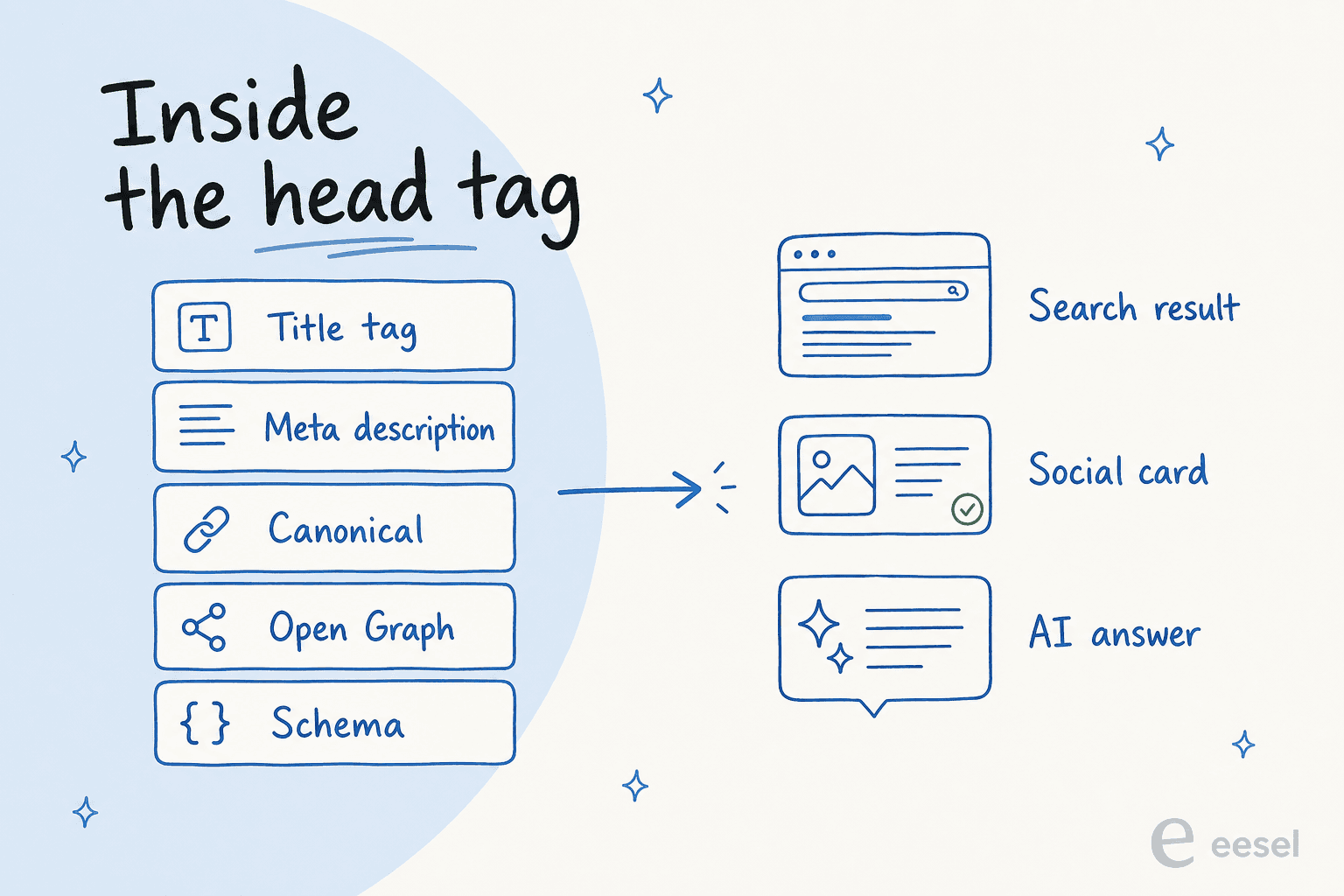
The five fields on the left all live in the page head, invisible to readers. Each one is read by a different consumer: the title tag and description build the search snippet, Open Graph builds the social card, and schema increasingly feeds AI answers.
How metadata works
Page metadata is assembled and read in a few steps:
- The page declares it. Title tags, meta descriptions, canonical tags, Open Graph tags, and schema markup are written into the HTML head, usually by the CMS or page template.
- Crawlers read it. When a search engine fetches the page, it parses these fields to understand the content and how to present it.
- Platforms render from it. Search engines build the result snippet, and social platforms build the share card, from the relevant metadata, falling back to guessed values when fields are missing.
- It is audited and updated. Because metadata drifts as titles and content change, teams review it as part of regular on-page maintenance.
eesel AI sits at step one for content teams. The eesel AI blog writer produces the article alongside the supporting fields like a title and description, so the metadata is drafted with the post rather than bolted on afterward. The team still reviews these fields for accuracy and length before publishing.
Metadata in practice
The most common metadata mistake is neglect: pages ship with auto-generated titles, missing descriptions, or duplicate canonical signals, and the platform fills the gaps with whatever it can scrape. The fix is unglamorous but reliable, which is to treat metadata as a standard part of the publish checklist rather than an afterthought. Well-written metadata is one of the cheapest SEO improvements available, because it changes how a page is presented in search and social without touching the content itself. Reviewing it on every page, especially during a content refresh, keeps the representation accurate as the underlying content evolves.
Get drafts with metadata sorted
eesel AI drafts long-form posts and the supporting page metadata, so each piece arrives closer to publish-ready.