Topic cluster
A set of related pages organized around one central topic, with a main pillar page linked to several supporting articles.
What a topic cluster means
A topic cluster is a set of related pages organized around one central topic, with a main pillar page linked to several supporting articles that each cover a subtopic in depth. The pillar gives the broad overview of the topic; each cluster page answers a specific question within it; and internal links tie the whole set together. The structure is also called the hub and spoke model, with the pillar as the hub and the supporting posts as the spokes.
In SEO, a topic cluster is how a site demonstrates that it covers a subject thoroughly rather than in a single shallow page. Linking many focused pages to one authoritative pillar signals depth of expertise to search engines, which is the foundation of topical authority. A reader, meanwhile, can land on any page in the cluster and navigate to the rest of the topic from there.
Why topic clusters matter
A topic cluster does several things a standalone post cannot:
- It builds topical authority, showing search engines that the site covers a subject from every relevant angle rather than once.
- It captures more search intent, because each spoke targets a specific long-tail query while the pillar holds the broad head term.
- It concentrates internal linking, so link equity flows between the pillar and its spokes through deliberate internal linking instead of scattered, accidental links.
- It improves the reader's path, letting someone who lands on one article find the rest of the topic without leaving the site.
- It makes content planning concrete, turning "write about X" into a defined map of one pillar plus a known set of supporting posts.
The thing that decides whether a cluster builds authority or quietly undercuts itself is whether the spokes are genuinely distinct. Put a healthy cluster next to a cannibalized one and the difference is hard to miss.
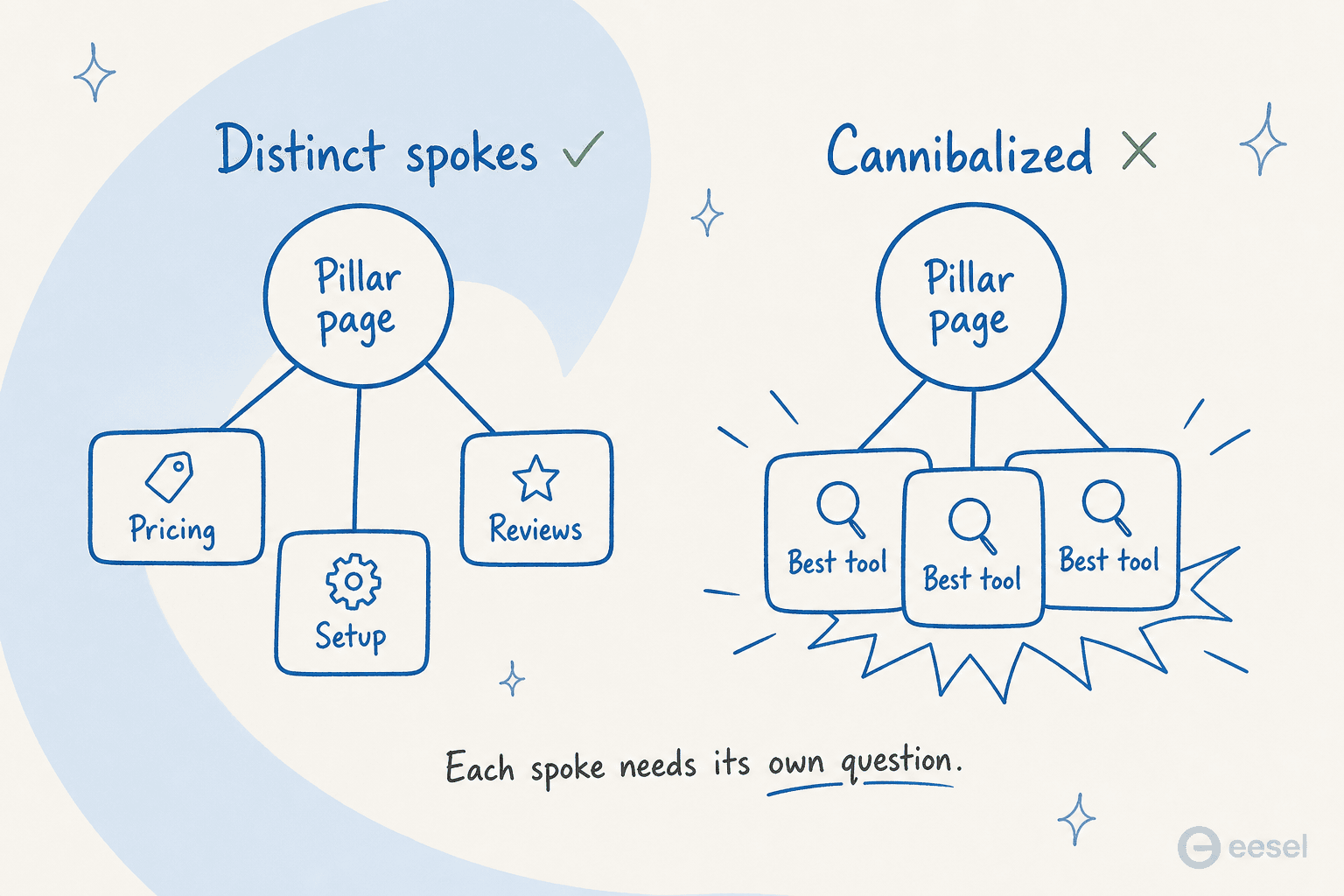
On the left, each spoke answers a separate question and the pillar gains authority from all of them. On the right, three near-duplicate spokes chase the same query and compete with each other, so the cluster cannibalizes its own rankings instead of compounding them.
How a topic cluster works
Building a cluster usually follows this sequence:
- Pick the core topic. Choose a subject broad enough to support a pillar and several spokes, grounded in keyword research.
- Map the subtopics. Identify the specific questions and long-tail terms within the topic, each one a potential spoke.
- Write the pillar. Create the pillar page that covers the topic broadly and links out to every spoke.
- Write and link the spokes. Produce each supporting article and link it back to the pillar and to relevant sibling pages.
This is where volume becomes the bottleneck: a cluster needs many posts, each researched and structured. The eesel AI blog writer helps here by drafting the supporting articles from a brief, each grounded in real sources, so a small team can fill out a cluster in the time it would otherwise take to write one or two posts by hand.
A topic cluster in practice
A cluster only works if the spokes are genuinely distinct. The common mistake is splitting one topic into near-duplicate posts that compete with each other for the same query, which dilutes rather than builds authority. Strong clusters start from a map of the real, separate questions a reader asks, give each its own page, and link them with intent. The result is a connected set that ranks as a whole, not a pile of overlapping articles that happen to share a tag.
For a hands-on walkthrough, read our guide to pillar pages.
Fill out a topic cluster faster
eesel AI drafts the supporting posts a cluster needs, each researched and grounded in real sources.