The real answer: Mavenoid is quote-only
Let me get the disappointing part out of the way. I tried every URL a pricing page usually lives at - /pricing, /plans, /product/pricing - and they all 404 or redirect straight to the demo page. There is no public number anywhere on mavenoid.com.
That's a deliberate choice, not an oversight. Mavenoid positions itself as "the only AI platform engineered to resolve complex, real-world product issues at scale," sold to "global brands in consumer electronics, appliances, industrial machinery, and medical devices." That's enterprise-sales language, and enterprise-sales products almost always hide price behind a demo so the quote can be shaped to your volume, your brands, and your integrations.
I get why they do it. The frustrating bit, if you're the one trying to build a budget, is that "request a demo" is the only path to a number - which means a sales call and a few weeks before you can compare it to anything else. If your timeline is "yesterday," that alone is worth weighing. It's the same reason a lot of teams gravitate toward self-serve AI support they can switch on without a procurement cycle, the way they'd shortlist any AI customer service software.
What we can actually piece together
Vendor silence doesn't mean zero signal. Between G2's catalog, a Salesforce listing, and an old Capterra entry, there's enough to sketch the shape of a Mavenoid contract - as long as you read each source for what it is.
The tier structure (priced by brand)
G2's pricing tab is the most useful primary-ish source. It lists two tiers, both "Contact Us":
| Plan | Brands covered | What's included | Price |
|---|---|---|---|
| MidMarket | 1 brand | Virtual Assistant + Live Agent; add-ons for Dynamic Help Center and Voice Assist; custom integrations and analytics | Quote only |
| Enterprise | 1-4+ brands | Same core, scaled to a multi-brand portfolio | Quote only |
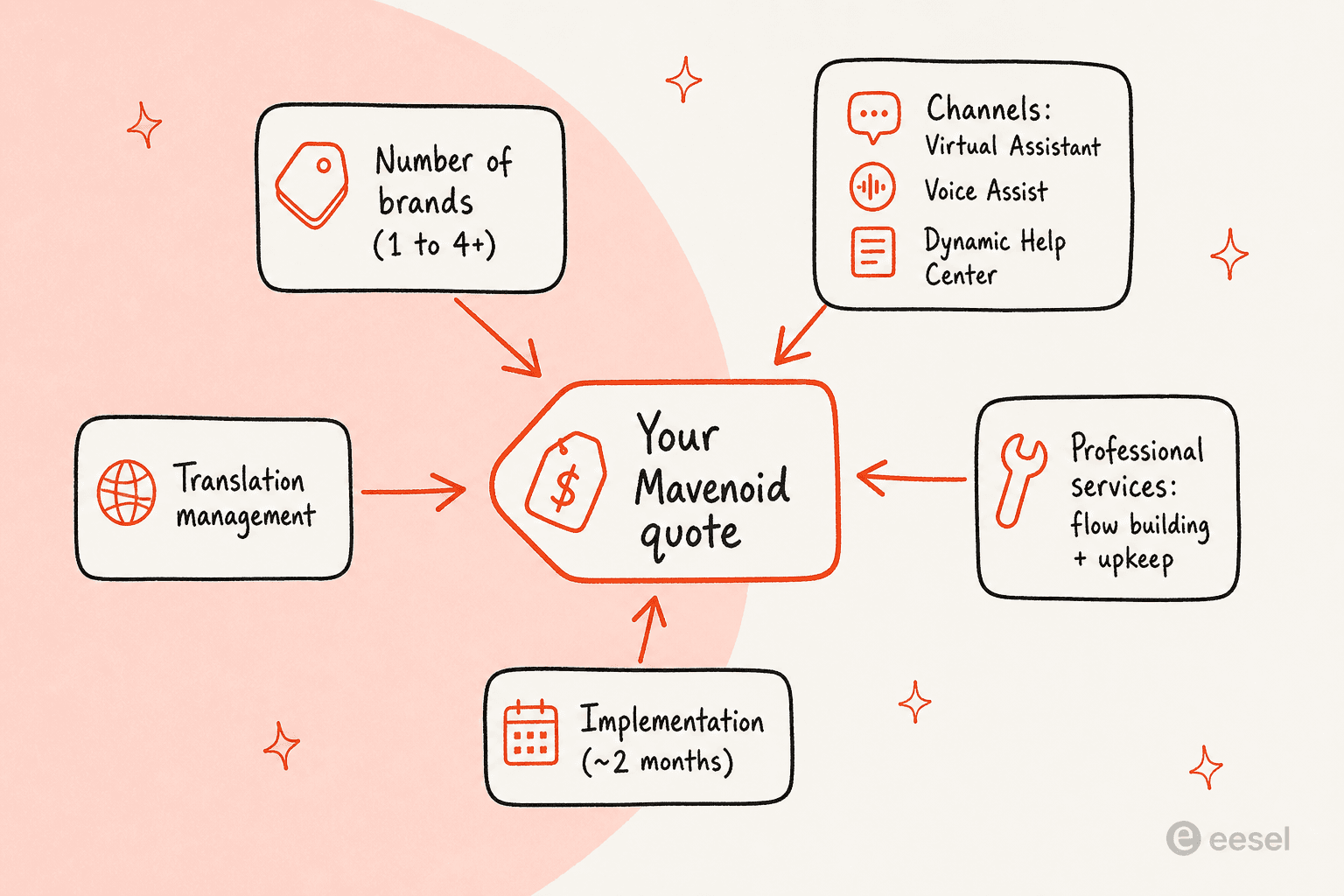
| Professional services | n/a | Flow building / upkeep and translation management, billed separately | Quote only |
The load-bearing detail: the main lever on your price is brand count, not seats or tickets. If you're one company with one product line, you're in MidMarket territory; if you're a holding company supporting four brands across a dozen markets, you're firmly Enterprise. Add-on channels (the Voice Assist phone agent, the search-indexed Dynamic Help Center) and professional services stack on top. It's a different cost shape from the per-ticket AI agents most support teams compare. (G2 pricing)
What users say they pay (and the payback)
G2 also aggregates "Pricing Insights" from real reviewers, and this is the closest thing to a straight answer you'll find:
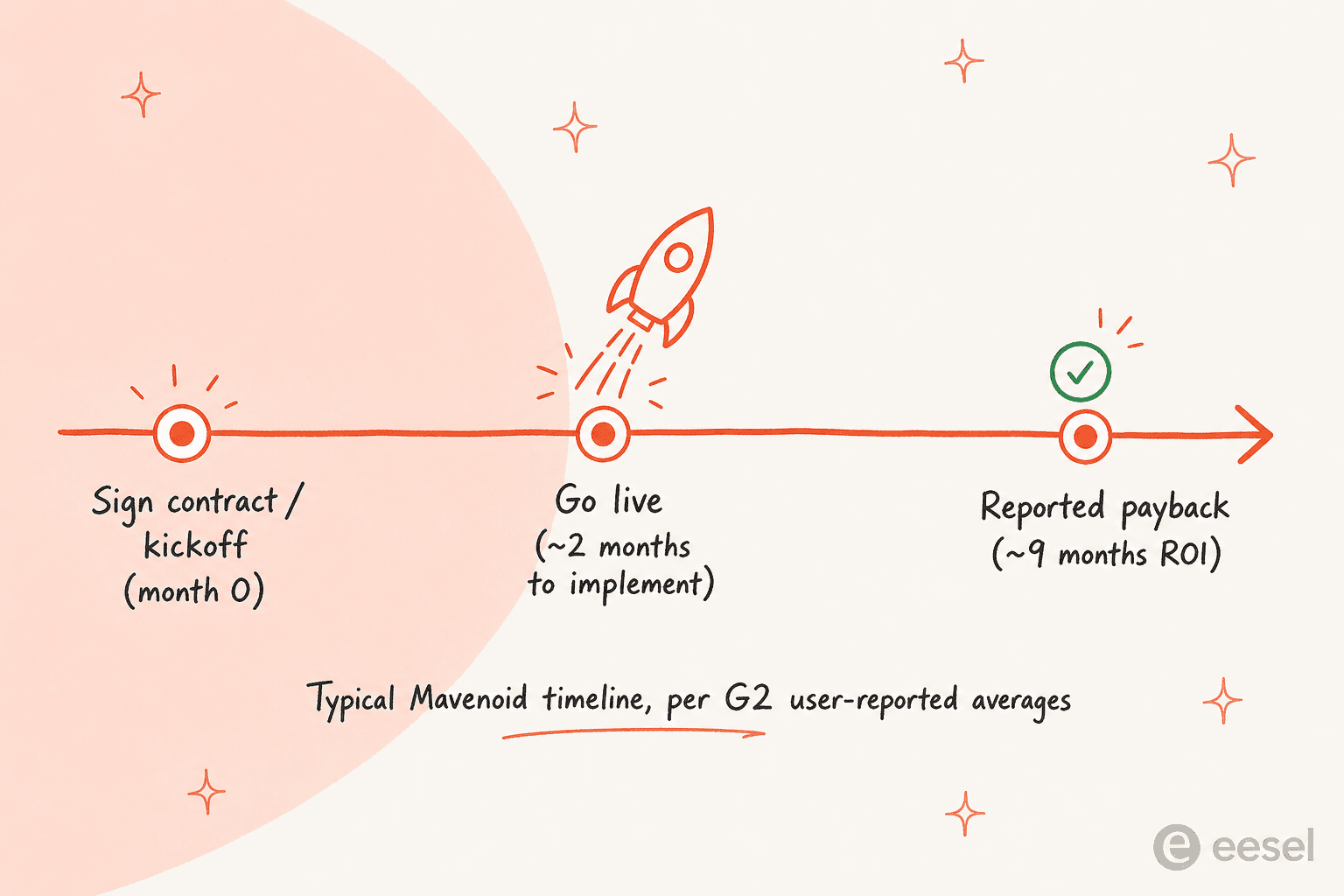
- Perceived cost: $$$$$ - the maximum on G2's five-dollar-sign scale.
- Return on investment: ~9 months to recoup the cost.
- Time to implement: ~2 months.
So the read is: it's not cheap, and it's not instant, but reviewers feel it pays for itself inside a year. (G2 pricing)
The stale numbers floating around (don't quote these)
Two public figures get cited a lot. Both are old, and they contradict each other:
- A Salesforce AppExchange listing shows "Starting at $300 USD/company/month." It points at a now-dead pricing URL, so it reads as a legacy placeholder.
- Capterra lists "SEK 150 per user/month" on a "Basic" plan - roughly $15 - but the only review backing it is from November 2020.
A $300-per-company floor and a $15-per-user "Basic" can't both describe the same 2026 enterprise contract. My take: treat both as evidence that a paid product exists and nothing more. The real number comes from the demo, and it will be a custom annual figure anchored to your brand count and volume.
What you're actually paying for
A high quote is only a problem if the product doesn't earn it. So here's where the money goes - the parts of Mavenoid that justify the contract, because this is genuinely a different animal from a generic support chatbot.
Mavenoid's whole pitch is "resolution, not deflection" - actually solving why a device won't work, not just keeping tickets out of the queue. For hardware and product support, that distinction matters, and it's where the platform's depth shows up.
Model-aware troubleshooting and Vision Assist
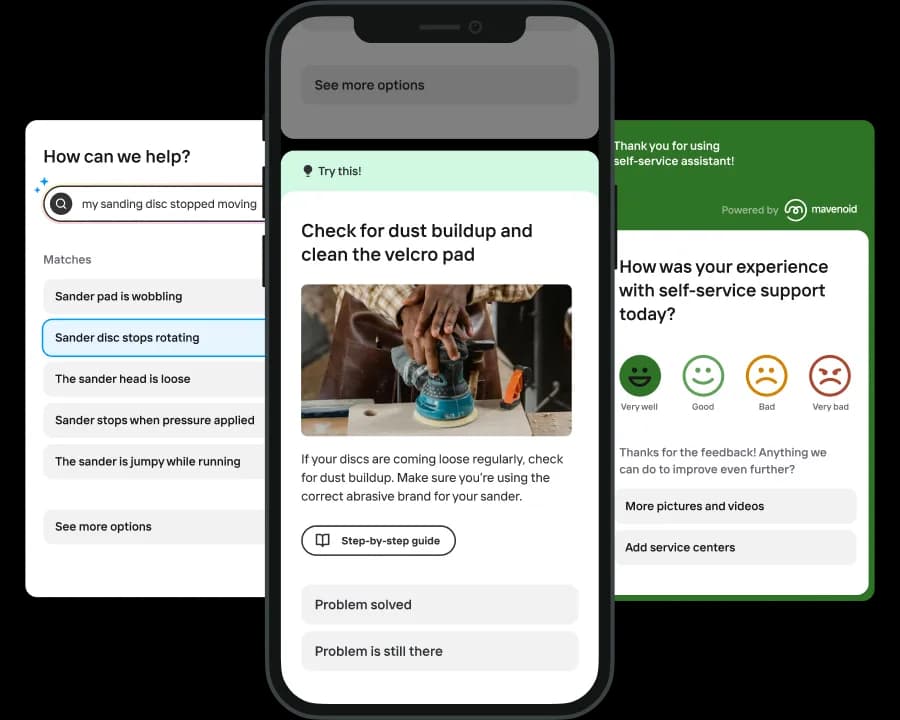
The standout feature is product identification. A customer can snap a photo of the label on their device, and Mavenoid reads the model and serial number, then drops them straight into the right troubleshooting flow - no "which model do you have?" guessing game.
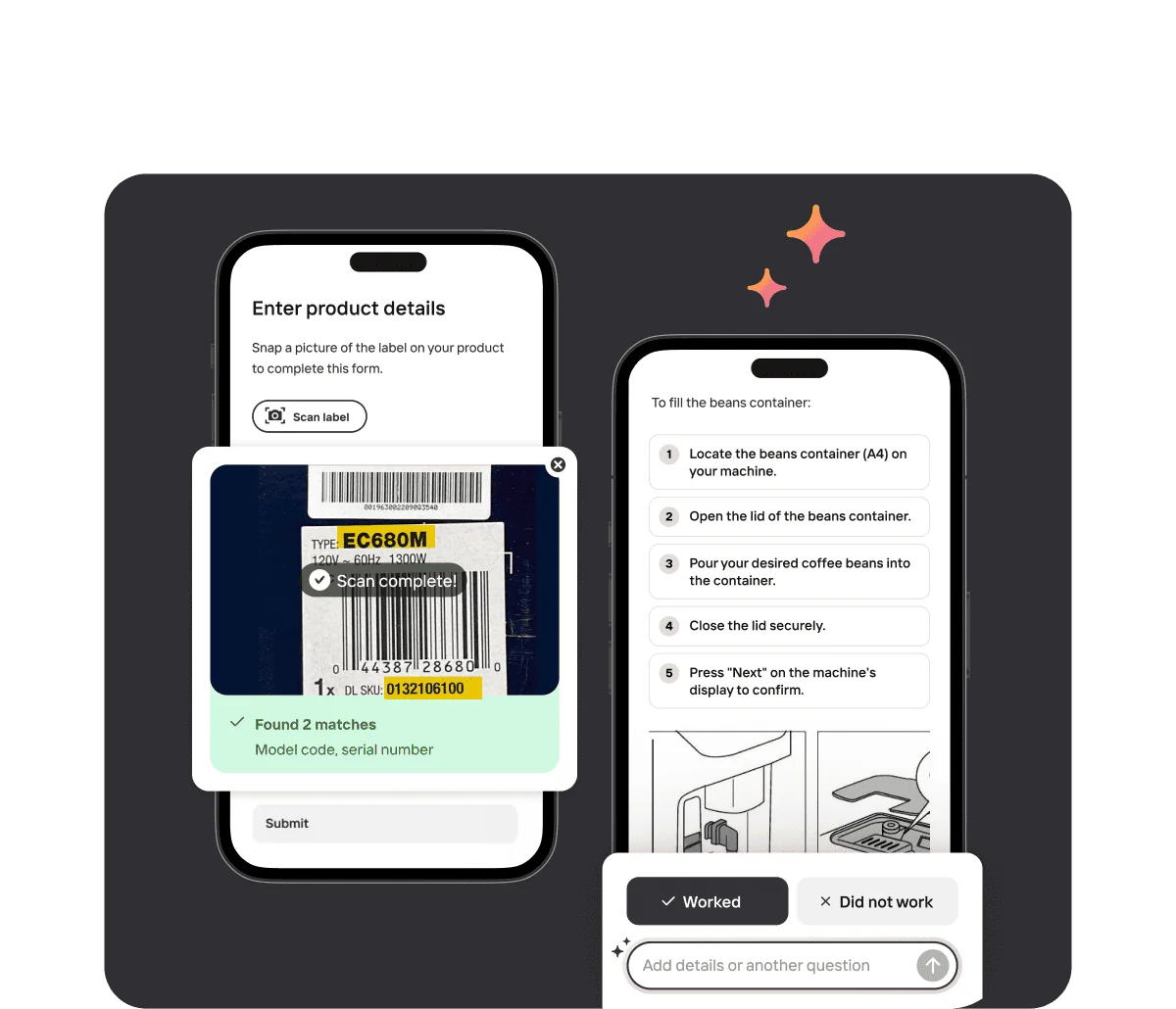
That's paired with two answer modes you mix per product: human-authored guided flows (built in a no-code visual builder) and generative answers restricted to your approved docs. Keeping the AI on a leash of approved content is the right call for preventing hallucinations - confidently telling a customer the wrong fix for a $2,000 appliance is worse than no answer at all.
Voice, live video, and agent handover
Mavenoid runs across channels. The Voice Assist agent fields phone calls ("my coffee machine is showing an orange light") and talks the customer through it. When automation hits its limit, it hands off to a live agent - with full context carried over - and that agent gets live video where the customer points their phone camera at the problem.
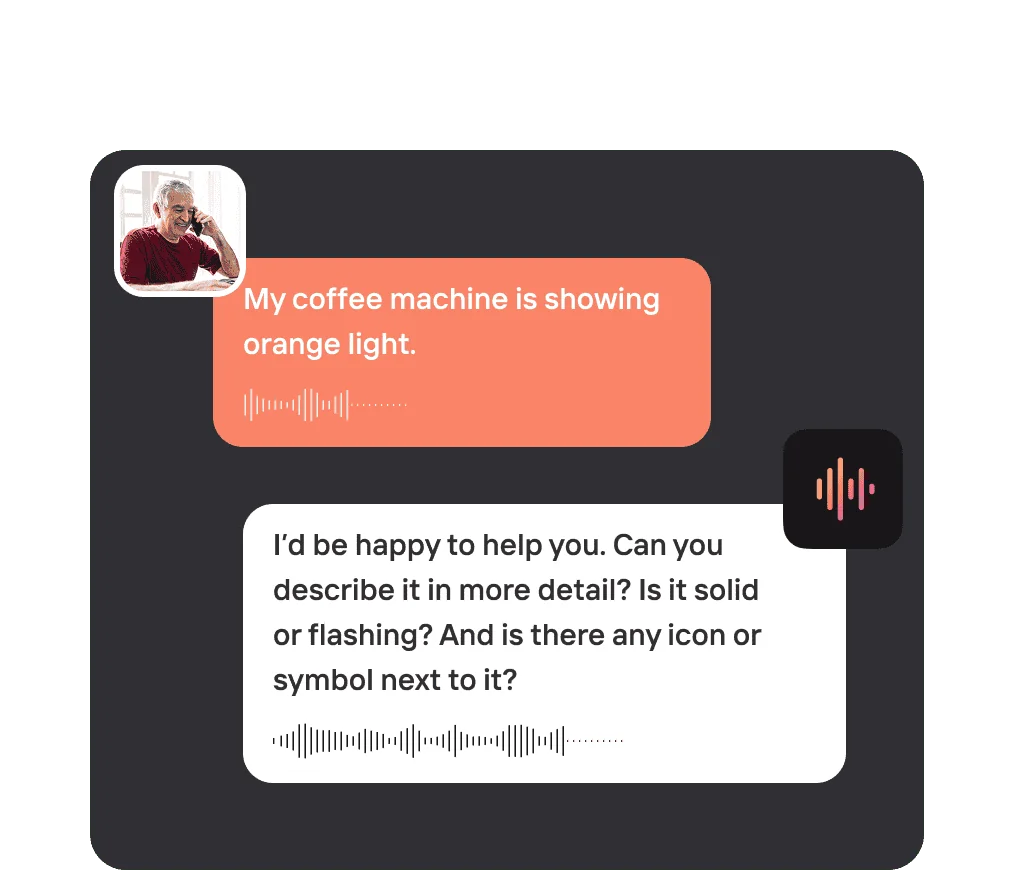
A clean escalation handoff that doesn't make the customer repeat themselves is one of those things that's easy to demo and hard to do well, and Mavenoid clearly invests in it. It's the kind of detail that separates a real agent from a rule-based chatbot.
The part that costs you time: content modeling
Here's the line item buyers underestimate. Before any of this works, someone has to "model" your products - sync content from Zendesk, Salesforce, manuals, and parts catalogs, then build and maintain the flows. Mavenoid's own AI Auto-Generation speeds this up, and its hands-on implementation team does a lot of it for you, but it's still the bulk of that 2-month ramp.
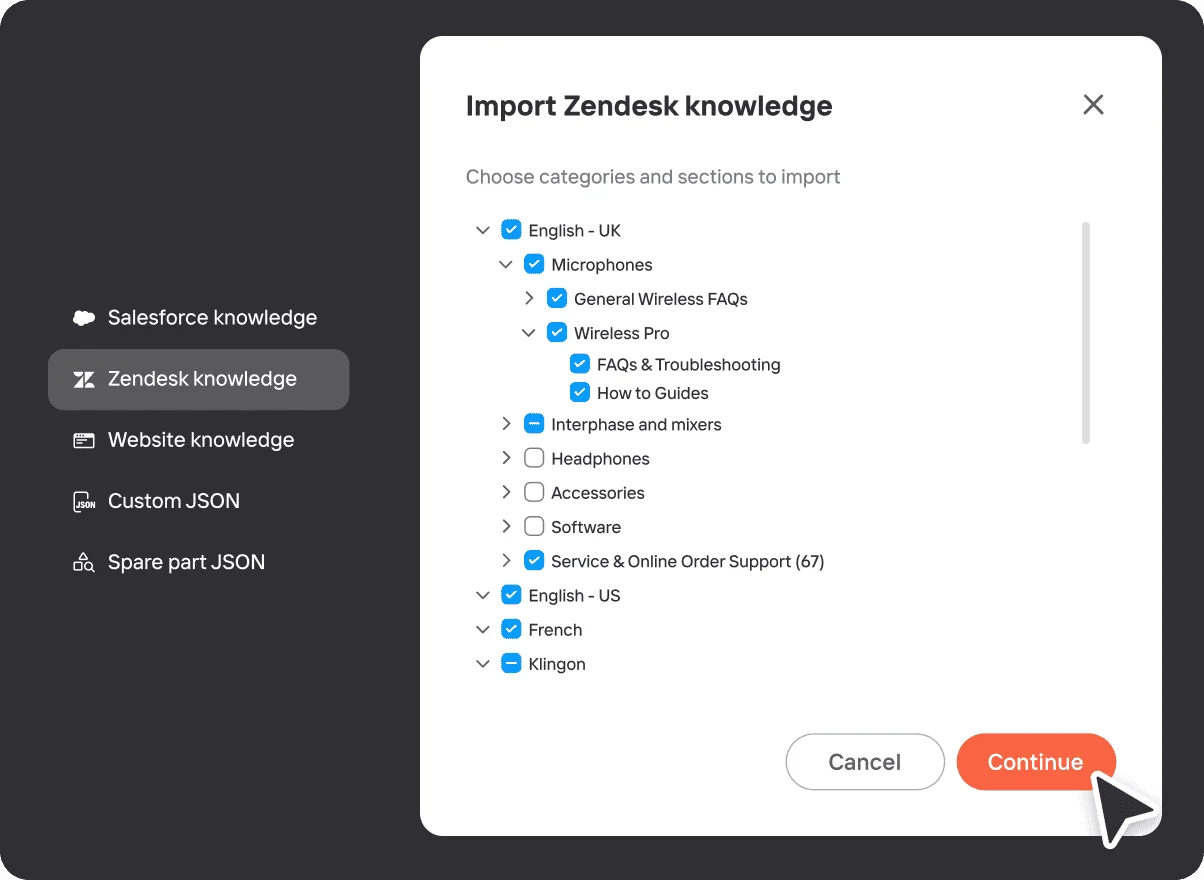
This is the real "cost" beyond the contract: the implementation effort of getting your knowledge into the system. Tools that learn directly from your past tickets cut that ramp down, which is a big reason teams compare ticket-trained agents when they're weighing the cost of an AI agent.
What transparent pricing actually looks like
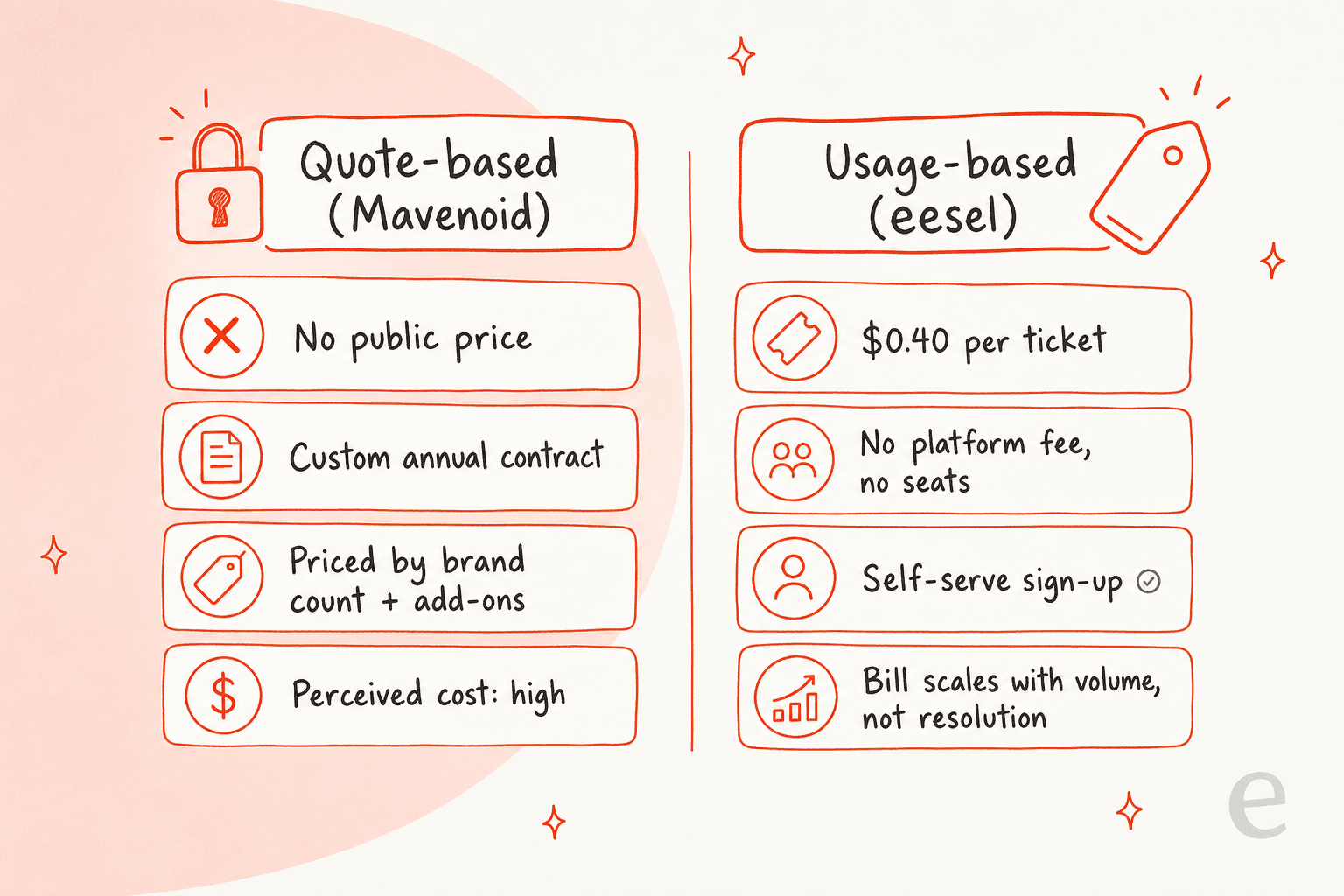
Since Mavenoid won't hand you a number, here's the flip side: a tool priced per ticket, where you can do the math yourself before a single sales call. Plug in your monthly volume and see what a transparent, usage-based model costs.
The difference isn't just transparency, it's the shape of the bill. A custom enterprise contract is a fixed annual commitment you negotiate once. A usage-based model flexes with your actual volume - and crucially, eesel charges per ticket handled, not per resolution, so getting better at support never inflates your invoice.
That gap is exactly where deals wobble. One pattern I see constantly: a buyer whose agent performed beautifully in testing visits the billing page, gets sticker shock, and tries to back out on the spot. Another, burned by a prior vendor whose price had more than doubled, wanted contractual price locks before they'd sign anything. When the number is hidden until the end, both of those reactions get more likely, not less.
Is Mavenoid worth it? What real users say
The reviews are genuinely good - just thin in volume, which is worth flagging for a purchase this size. Mavenoid holds 4.8/5 from 27 reviews on G2 (85% five-star, no negatives) and 4.0/5 from a single Capterra review. There's no real Trustpilot profile. So: small sample, but consistently positive - and worth reading alongside the AI customer service metrics that actually move the needle.
On value, even at a high price point, the sentiment holds up:
"Mavenoid has allowed us to improve efficiency, reduce costs, and elevate the customer experience - all while maintaining high support quality. It's become a core part of how we scale support operations without sacrificing personalization or responsiveness."
Shom D., Mid-Market, G2 review (Sep 2025)

The most-cited strength is the no-code visual flow builder and the hands-on implementation team. As one G2 reviewer put it, the builder is "incredibly user-friendly, allowing our team to create complex decision trees" without engineering help. A real customer thread on Reddit about Apollo Scooters' Mavenoid setup reported about 30% of sessions reaching an instant resolution - directional, but it lines up with the case-study numbers.
The complaints are mild and worth knowing before you sign:
"While the platform is powerful, the analytics and reporting capabilities still feel somewhat limited. It's sometimes hard to get granular insights... without exporting data and doing additional work outside the platform."
Shom D., Mid-Market, G2 review (Sep 2025)
Reviewers also flag a learning curve on advanced flows and limited control over the customer-facing widget's look. None of these are dealbreakers, but for a contract at this cost level, I'd push on analytics depth in the demo - your ability to prove that 9-month ROI depends on it.
Who Mavenoid is right for (and who it isn't)
After going deep on this, my honest read:
Mavenoid is a strong fit if you sell physical products - appliances, consumer electronics, power tools, smart-home, industrial machinery - and your support is full of model-specific, "why won't this device work" problems. The phone-camera product ID, the guided troubleshooting, and the field-service deflection are purpose-built for that world, and the case studies (DeLonghi, Husqvarna, Stanley Black & Decker at 41% resolution) are real hardware brands, not generic SaaS logos.
Look elsewhere if your support is mostly software, billing, orders, or account questions, your timeline is weeks not months, or you need a price you can budget today. A general-purpose AI helpdesk agent that learns from your existing tickets will cover most tier-1 deflection and live-chat questions without a 2-month modeling project - and it'll do it on your Zendesk, Freshdesk, HubSpot, or Shopify stack you already run.
Try eesel for support automation you can actually price
If the thing stopping you on Mavenoid is the not-knowing - no number until a demo, a quote shaped by brand count, a 2-month ramp before you see value - that's exactly the gap eesel AI was built to close. It plugs into your existing helpdesk, learns from your past tickets and help docs on day one, and starts drafting and resolving tier-1 tickets without a modeling project.
The pricing is the opposite of opaque: $0.40 per ticket, no platform fee, no per-seat charges, and billed by ticket handled rather than resolution - so a higher resolution rate never costs you more. You can also simulate a rollout against your historical tickets to see the coverage and the math before you commit, which is roughly the opposite of signing an annual contract on the strength of a demo. Whether your tickets live in Front, Salesforce, or a conversational AI platform, it slots in. It's free to try, no sales call required.

For most teams weighing the cost of AI customer service, being able to plan around a real per-ticket number - and prove the value in a simulation first - beats a hidden quote every time. Try eesel and see your own numbers before you decide.
Frequently Asked Questions
How much does Mavenoid cost?
Does Mavenoid have public pricing or a free trial?
How is Mavenoid priced - per resolution, per seat, or flat?
Is Mavenoid worth the price for product support?
What's a cheaper alternative to Mavenoid?


Article by
Kurnia Kharisma Agung Samiadjie
Kurnia is a software engineer and writer at eesel AI with two years of SEO experience, writing about AI tools, helpdesk software, and customer support. He pairs a developer's understanding of how these products are built with search-driven research into what actually ranks and resonates with the people searching for them.