
What Mavenoid is, and how I reviewed it
Mavenoid is an AI-powered product support and self-service automation platform. The one-line version from its own site is "the #1 AI agent for product support," and the key word is product. This isn't a horizontal chatbot you point at any help center. It's purpose-built for diagnosing why a physical device isn't working and guiding the owner through a fix.
I work the support queue every day, so my test for any tool like this is simple: does it actually help a stuck customer, or does it just demo well? To review Mavenoid I went deep on its product and docs pages, watched the assistants it runs live on customer sites, and cross-checked everything against the 28 verified reviews on G2 and Capterra. I can't claim I ran it in production for a year, so where I lean on outcomes I'm citing Mavenoid's own customers and real reviewers, not invented experience.
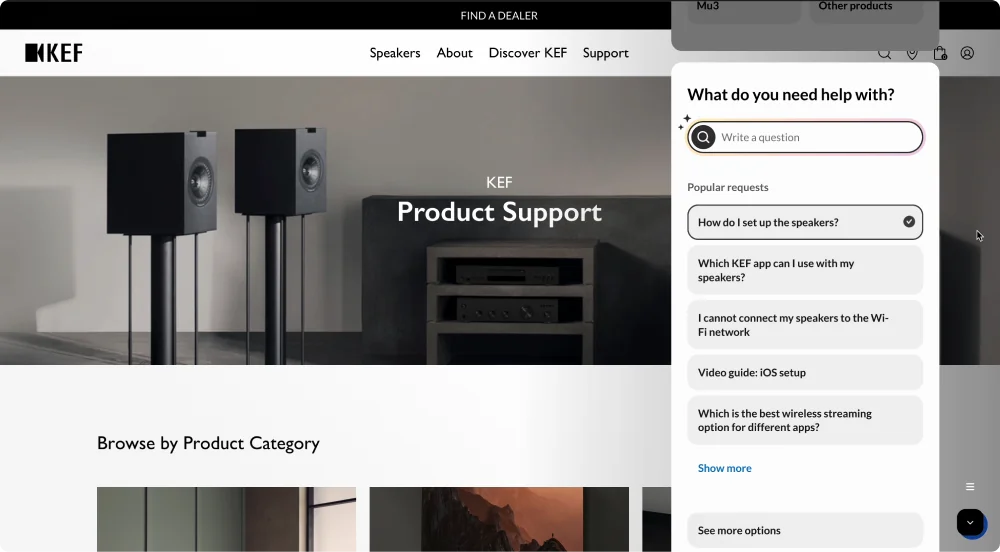
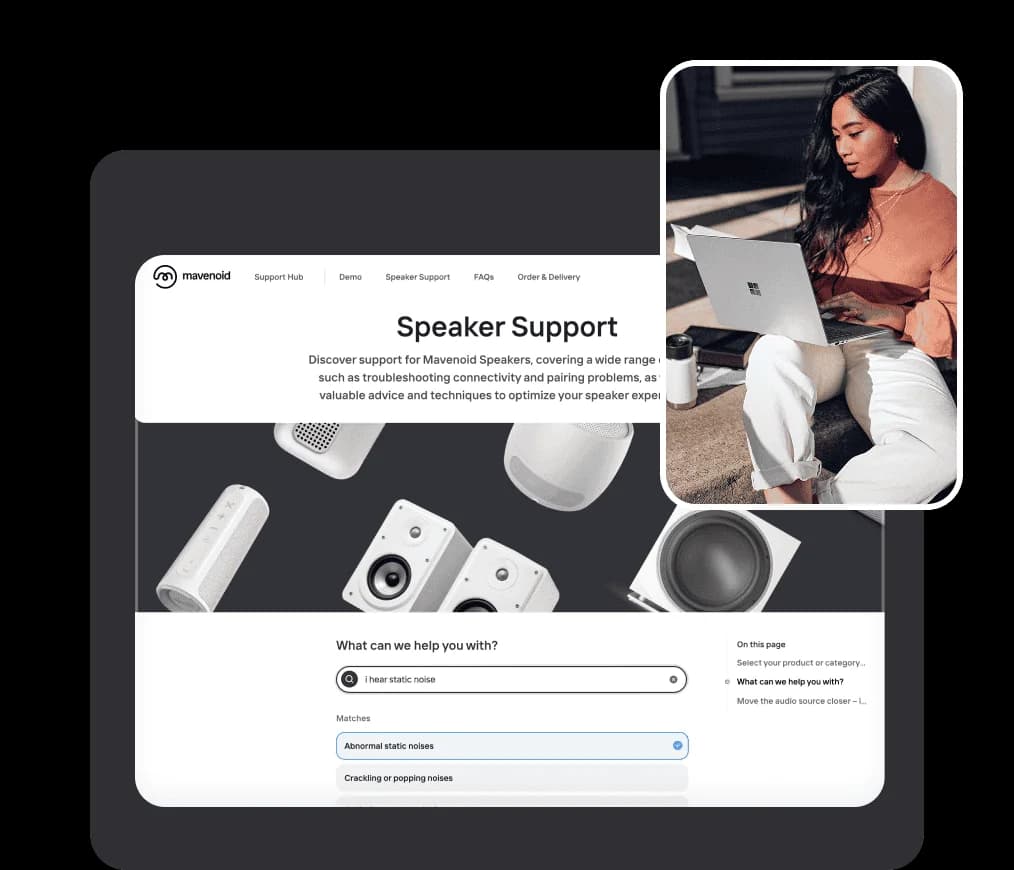
The cleanest way to see what "product support" means here is to watch the assistant deployed on a real brand. Here it is live on KEF's speaker support page:
For the record on who's behind it: Mavenoid is Stockholm-based, founded in 2017, and has raised $8M+ in Series A, with a later strategic investment from ABB. On compliance it ticks the enterprise boxes: ISO 27001, SOC 2 Type II, GDPR, and HIPAA.
My Mavenoid scorecard
Here's where I landed across the dimensions a buyer actually cares about. The pattern is consistent: it's excellent at the support job it was built for, and weaker on the things that come after go-live, reporting and pricing clarity.
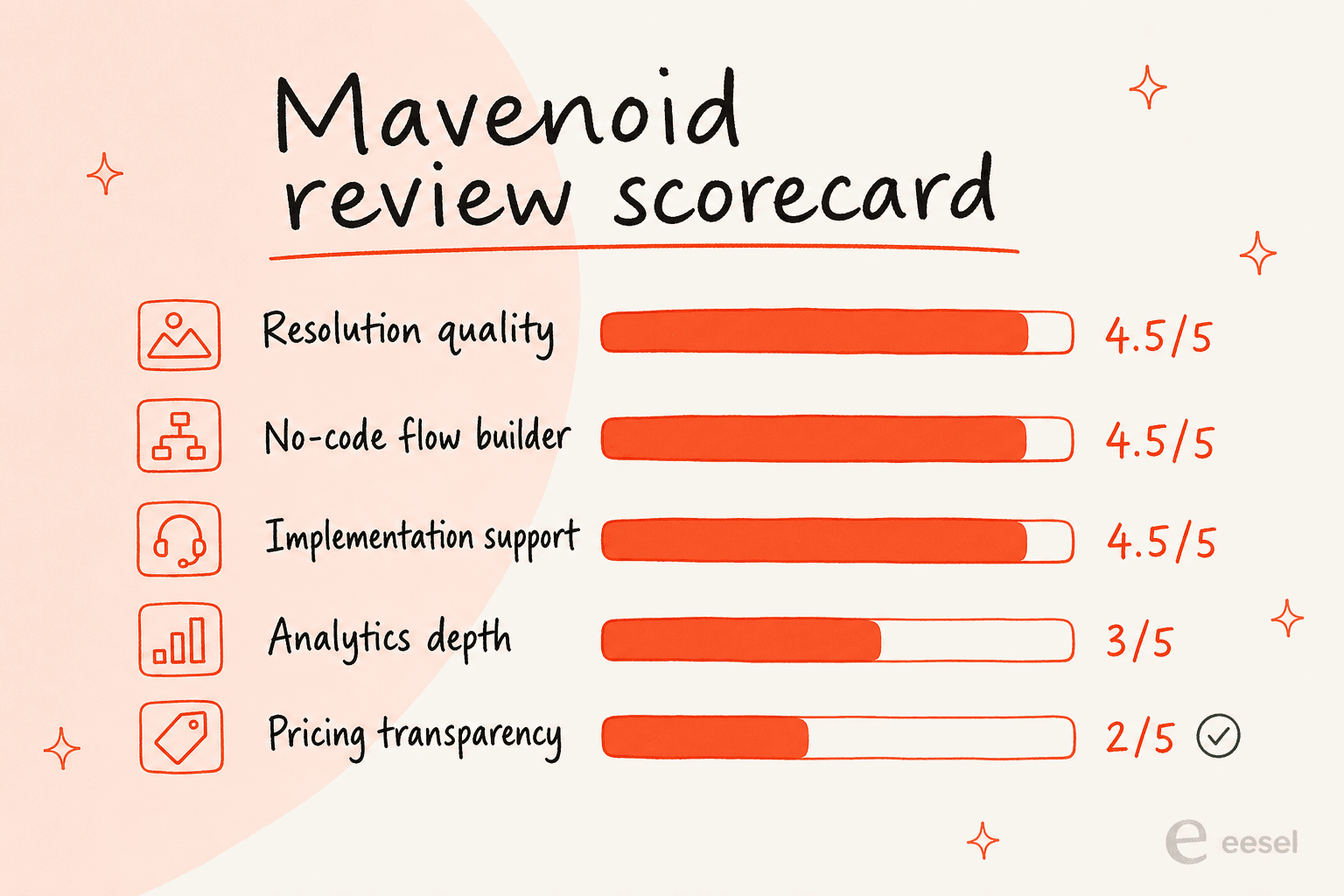
I'll walk through each of these below, the good first.
What Mavenoid gets right
Resolution, not deflection
The phrase Mavenoid repeats more than any other is "resolution, not deflection," and I want to slow down on it because the distinction is real, not marketing.
Most support automation is scored on deflection rate: the share of tickets that never reach a human. The problem is that deflection counts a win even when the customer gives up. Show someone a help article, they close the tab in frustration, and the dashboard still logs a deflection. Resolution counts only when the problem is actually solved. That's the right thing to optimize for, and it's the same lesson I've watched play out on our own queue: a confident bot that answers wrong is worse than no bot at all. Mavenoid leading with resolution tells me the people who built it have sat where I sit.
The Virtual Assistant and Vision Assist
The Virtual Assistant is the core product, an AI self-service widget that lives on a brand's site or app. Mavenoid markets self-service resolution rates of 58%+ on it, even for complex products. What I like is the honesty of the design: it mixes human-authored Guided flows for the genuinely tricky stuff with Generative Answers for routine questions, rather than pretending one AI handles everything.
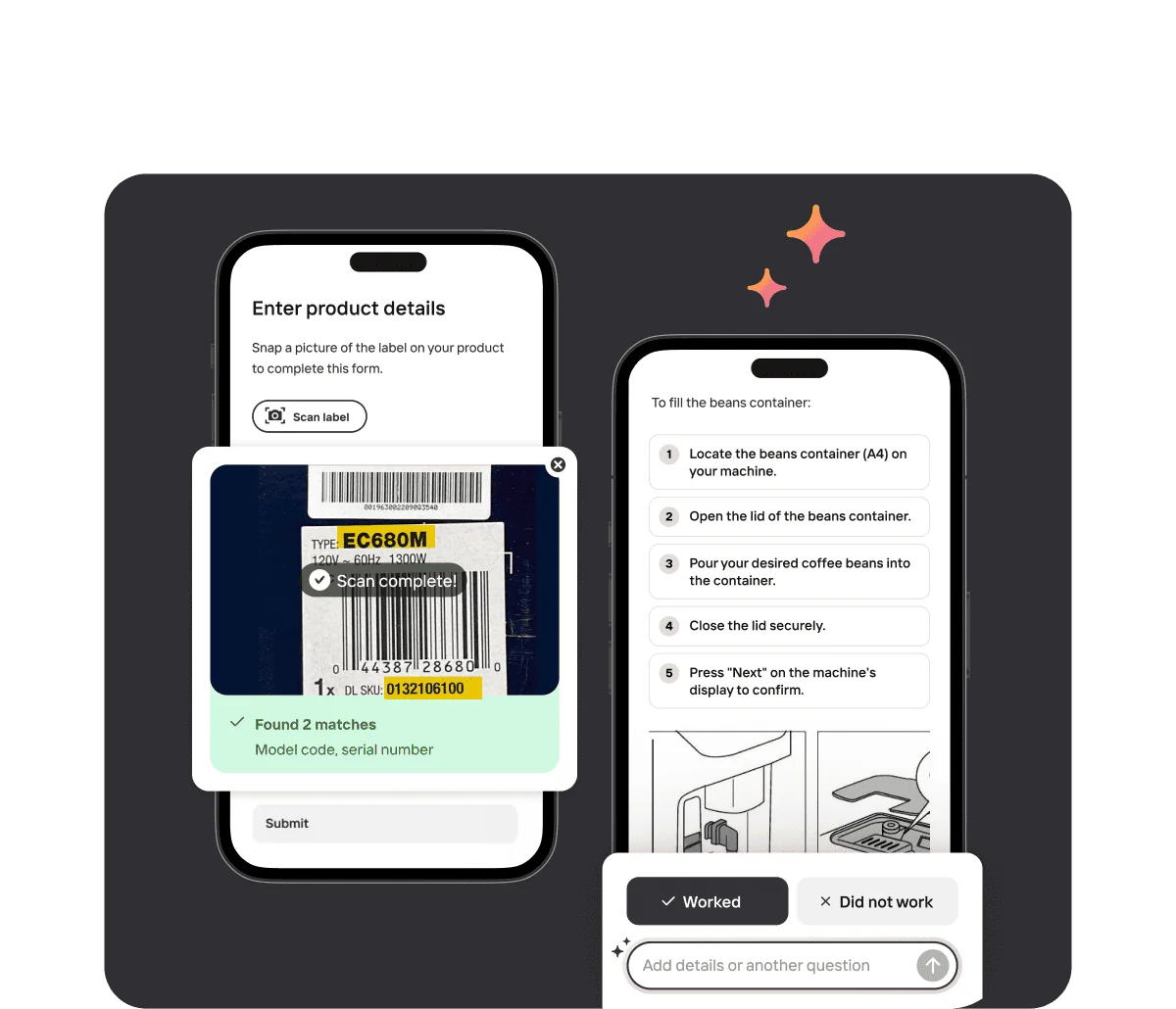
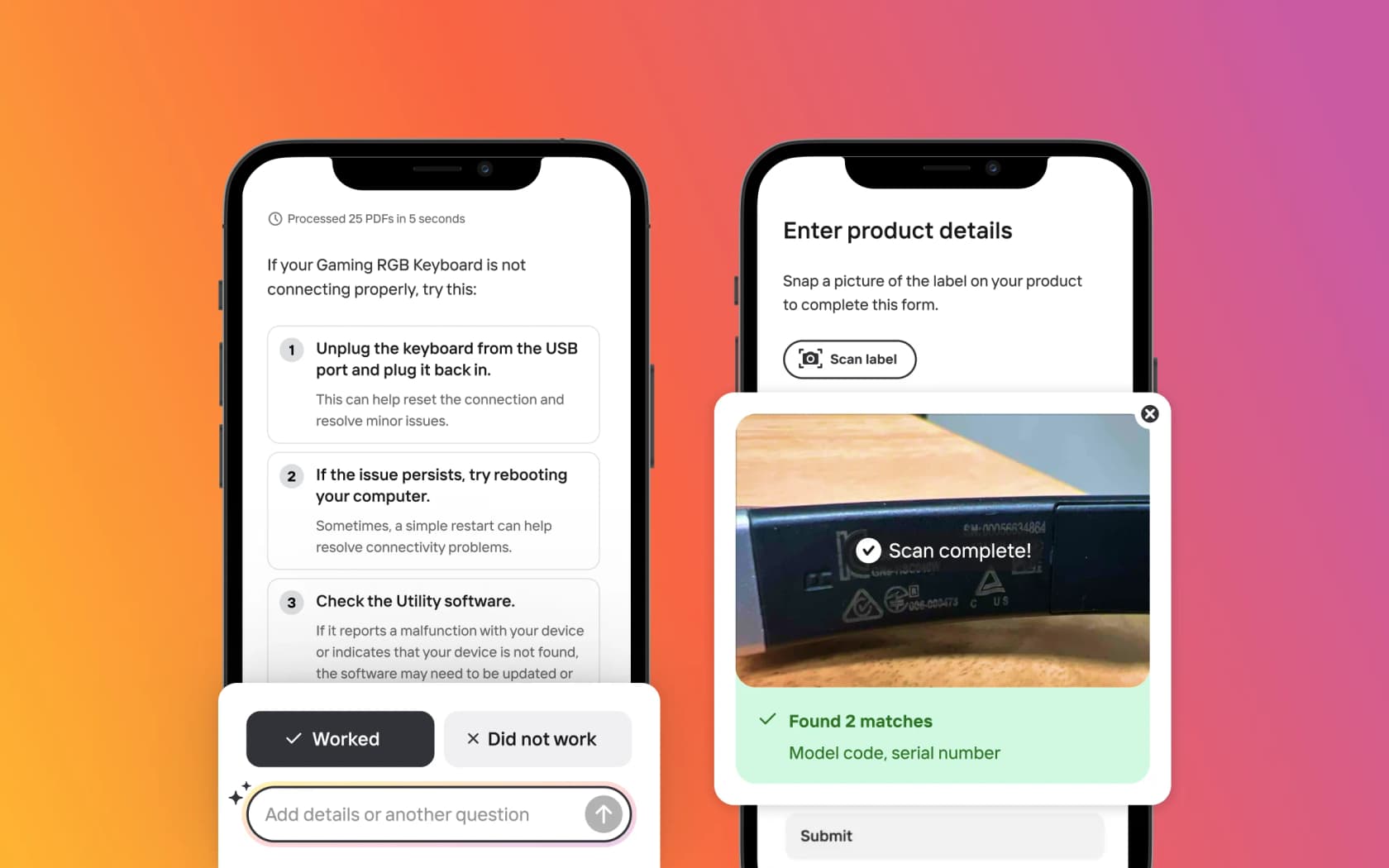
Vision Assist is the most distinctive trick in the box. The customer scans a product label with their phone camera and Mavenoid's vision AI auto-identifies the make and model, so the rest of the flow is accurate. In a category with dozens of near-identical SKUs, that fixes the very first place people abandon: not knowing which device they own. The companion Generative Answers feature answers using only the brand's approved support content, which is the correct guardrail for physical products where wrong advice can be a safety issue. It's the same principle behind any well-built AI knowledge base chatbot.
Voice Assist for after-hours
Voice Assist is the AI voice agent for phone support, aimed at after-hours and overflow. A G2 reviewer in transportation called it out directly:
"The AI voice assistant handles after-hours queries seamlessly... What really stands out is the quality of the generative answers. They're accurate, relevant, and have dramatically improved resolution times."
Verified User in Transportation, Mid-Market, G2

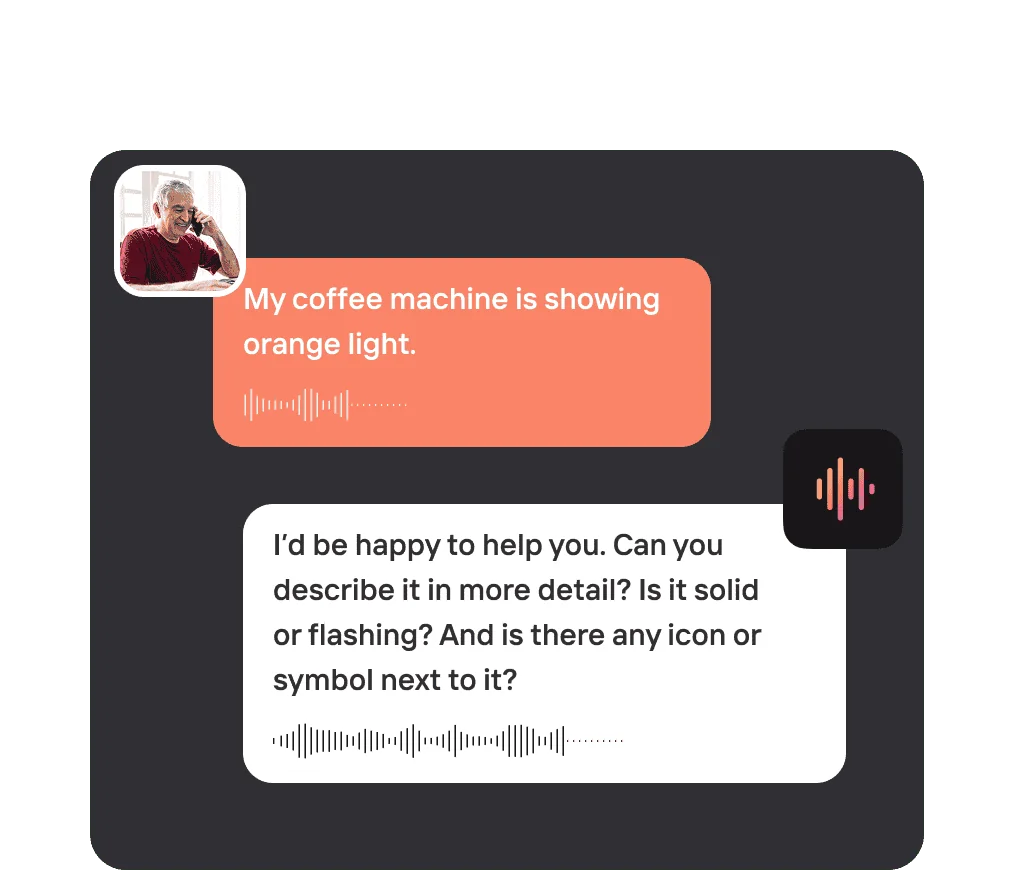
There's also a Dynamic Help Center that turns the same content into a searchable, branded support hub, so the self-service experience isn't trapped inside the chat widget.
The hands-on implementation team
This is the strength that surprised me most, because it's the one you can't see in a demo. Across G2, reviewers single out the people behind the product more than any single feature:
"The thing that impressed me the most about Mavenoid has been the people behind the product... Implementation was quick and painless. The integration and implementation was almost completely handled by the Mavenoid team."
Verified User in Retail, Mid-Market, G2
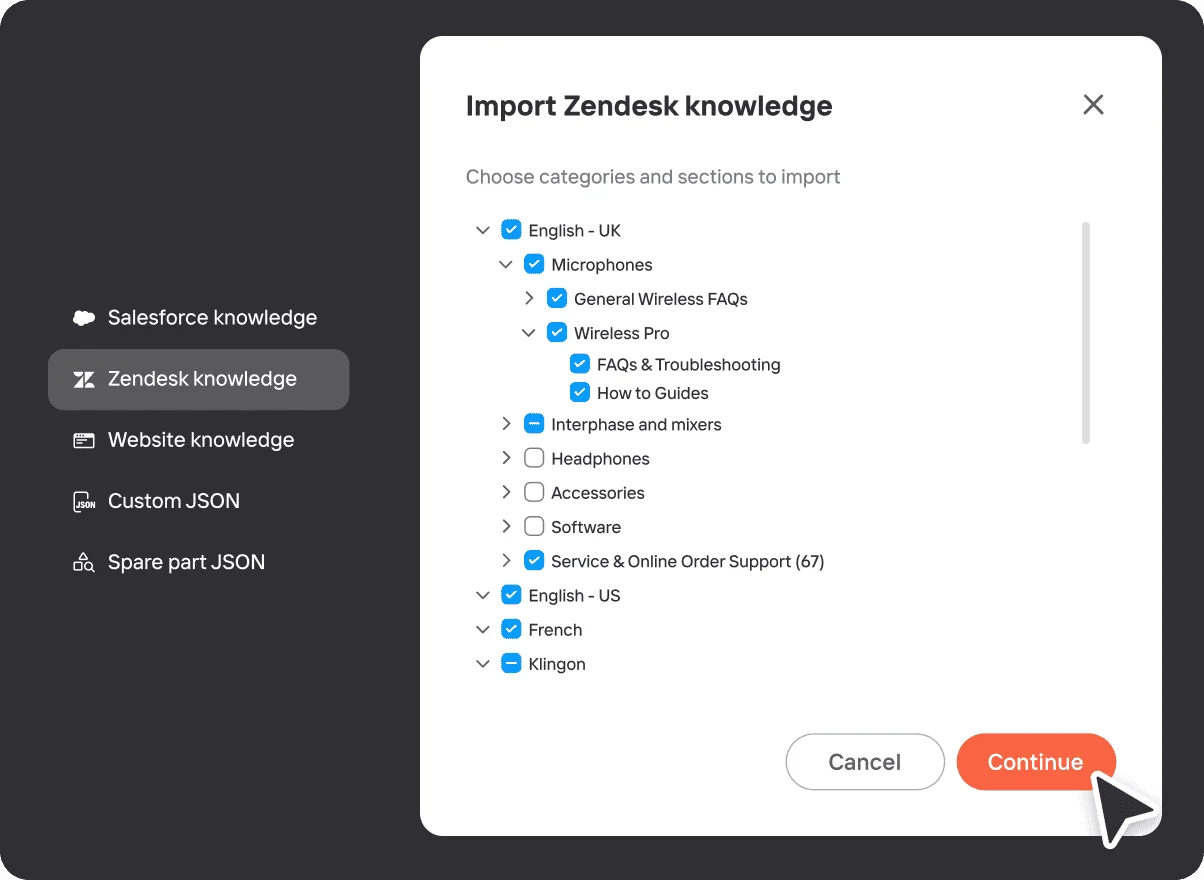
That matters, because the real work in a tool like this is the modeling: building the guided flows and syncing your content. Mavenoid lets you pull that content in from existing systems without rewriting it, which softens the lift.
Where Mavenoid falls short
No tool is all upside, and a fair review has to name the gaps. None of these are dealbreakers for the right buyer, but they're the things I'd push on in a demo.
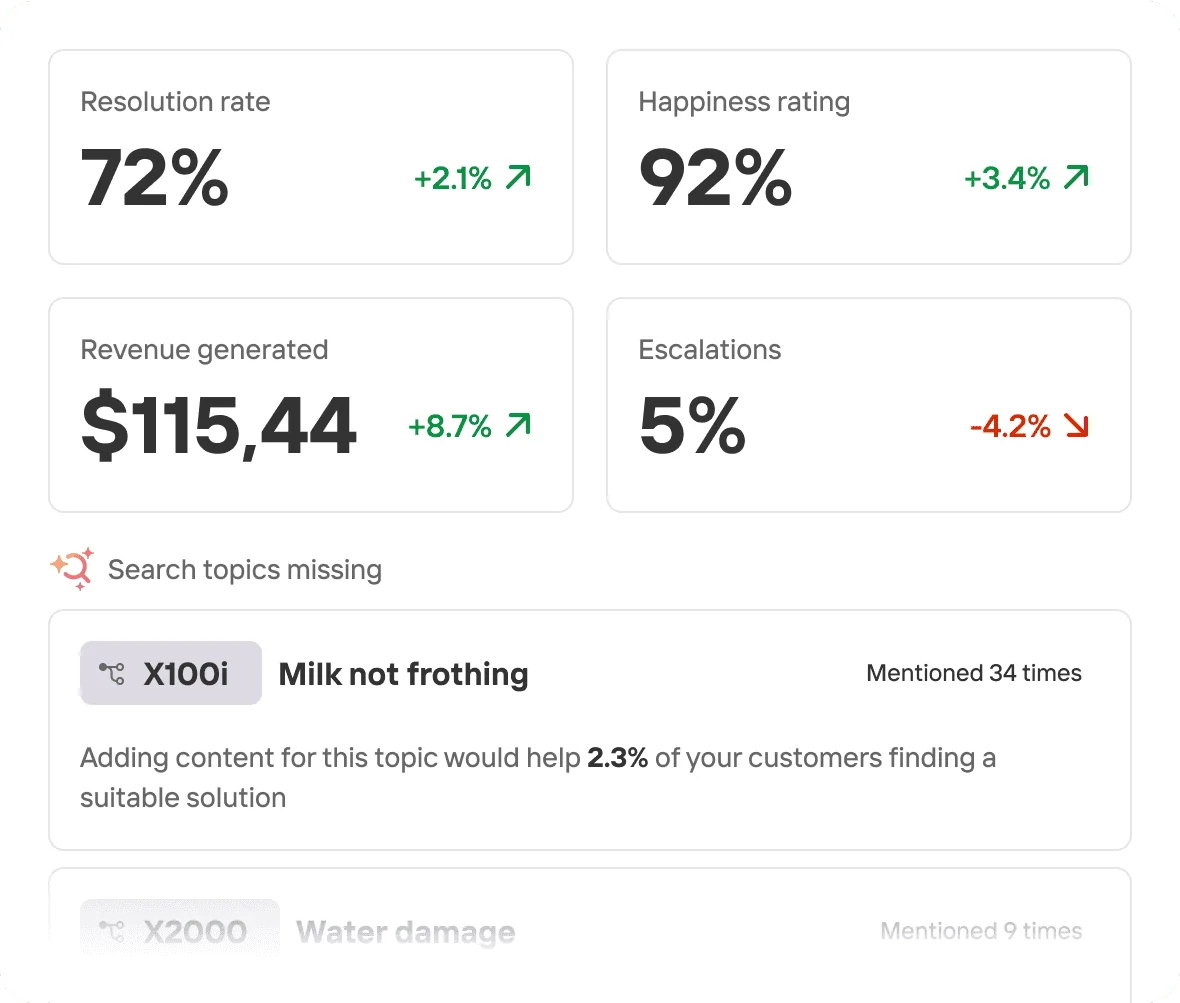
The most common complaint, by a clear margin, is analytics depth. Reviewers like the headline dashboard but want more underneath it:
"While the platform is powerful, the analytics and reporting capabilities still feel somewhat limited. It's sometimes hard to get granular insights, such as specific step drop-off points or detailed search query patterns, without exporting data."
Shom D., Recruitment Analyst, Mid-Market, G2
Three more came up consistently:
- A learning curve on the advanced stuff. The basics take about half an hour, but reviewers note the advanced flow-building "takes practice to fully understand."
- Limited widget customization. One retail reviewer wished for "more control over the 'look' of the widgets to better align the customer-facing parts of the product with our brand assets."
- Occasional retrieval misses. A product support manager noted it "doesn't always find the correct solutions even though the content is in there," the classic retrieval miss any conversational AI team will recognize.
And then there's the pricing opacity, which is its own section.
How much does Mavenoid cost?
Here's the part that frustrates buyers most: Mavenoid does not publish pricing. No pricing page, no rate card, no tier list. Every CTA funnels to "Get a demo." This is a standard enterprise contact-sales motion, but it means you can't size a budget without booking a call. Here's what the public sources actually tell us:
| Source | What it reports | How to read it |
|---|---|---|
| G2 plan structure | Two quote-only tiers, MidMarket (1 brand) and Enterprise (1-4+ brands), priced by brand count plus add-ons | The real buying motion |
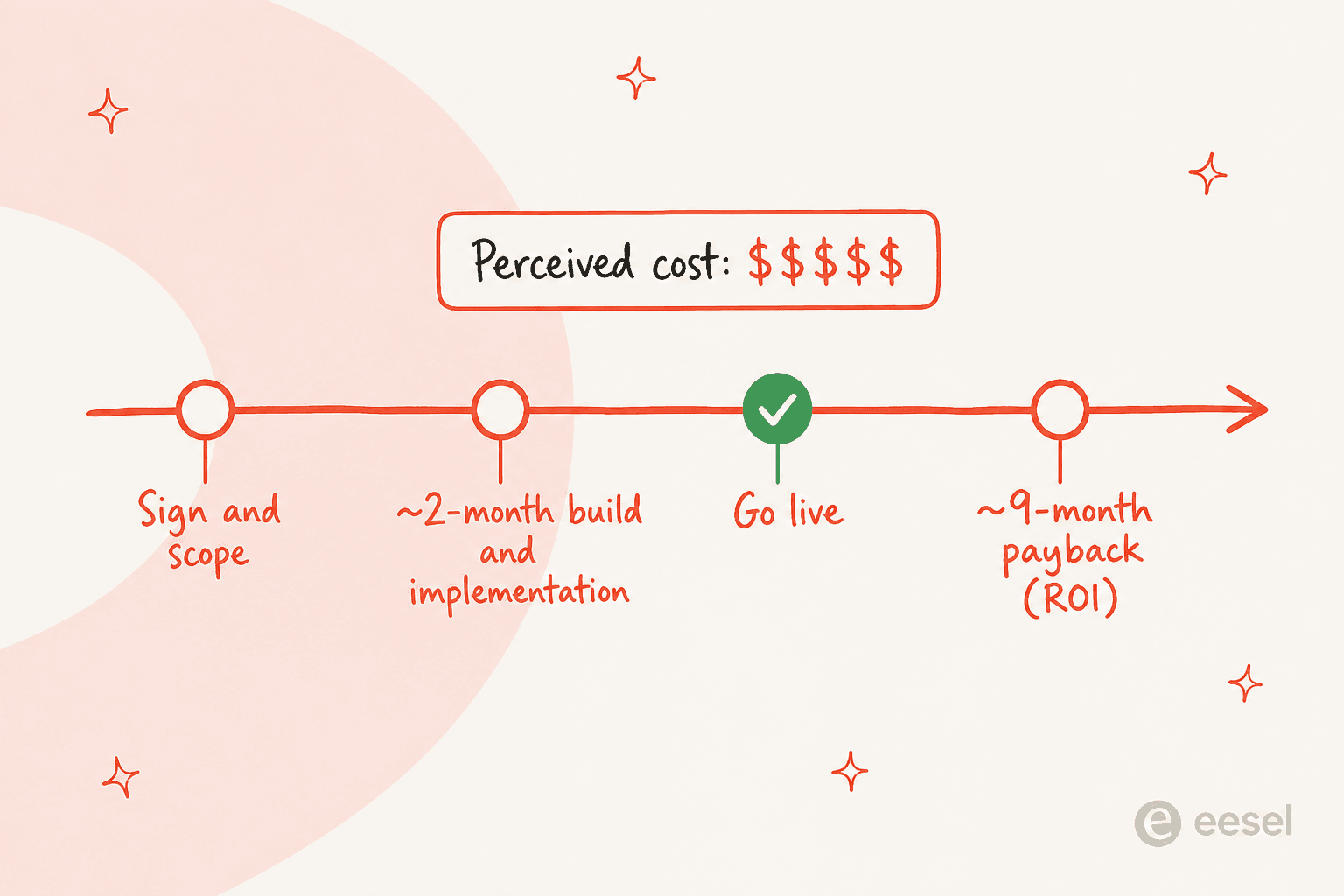
| G2 Pricing Insights | Perceived cost $$$$$, ~9-month ROI, ~2-month implementation | Honest user signal |
| Salesforce AppExchange | "Starting at $300 USD/company/month" | Stale listing placeholder |
| Capterra | "SEK 150/user/month, Basic" | Stale, backed by one 2020 review |
The two dollar figures contradict each other ($300/company/month versus roughly $15/user/month) and neither squares with an enterprise demo-led process, so I'd treat both as legacy catalog artifacts rather than a quote you'll actually get. The structure that matters is the G2 one: you're priced on how many brands you run, plus add-ons like Voice Assist and the Dynamic Help Center, plus professional services for flow building and translation.
The other thing the numbers tell you is the timeline. A roughly two-month implementation and a roughly nine-month payback means you should budget for the lag, not just the license:
If you want the full breakdown, including how the brand-count model bites as you scale, I wrote a dedicated Mavenoid pricing guide. The short version: budget for an enterprise contract, and ask early what counts as a "brand."
What real users say
Mavenoid sits at 4.8/5 on G2 across 27 reviews, with no negative reviews on the platform. That's a genuinely strong score. The honest caveat is volume: around 28 reviews across G2 and Capterra is a small base, and there's no real Trustpilot profile. That's normal for a specialized tool with a focused customer base, but it means you're reading a handful of detailed verdicts rather than a thousand, so weight the few you can read accordingly.
The value sentiment, where reviewers address it, is positive even though cost runs high:
"Mavenoid has allowed us to improve efficiency, reduce costs, and elevate the customer experience... It's become a core part of how we scale support operations without sacrificing personalization or responsiveness."
Shom D., Recruitment Analyst, Mid-Market, G2
Named customer outcomes back that up: DeLonghi at 47% self-service resolution, Jabra, Dometic, and ABB at 46%, Stanley Black & Decker resolving 41% of requests for its Robomow line, and Irrigreen's VP of CX saying that without Mavenoid handling half their case volume, "we could have easily had to double the staff of our technical support."
Who should buy Mavenoid, and who shouldn't
After all of it, the buy decision comes down to almost a single question. Mavenoid is unapologetically vertical, and that focus is both its strength and its limit.
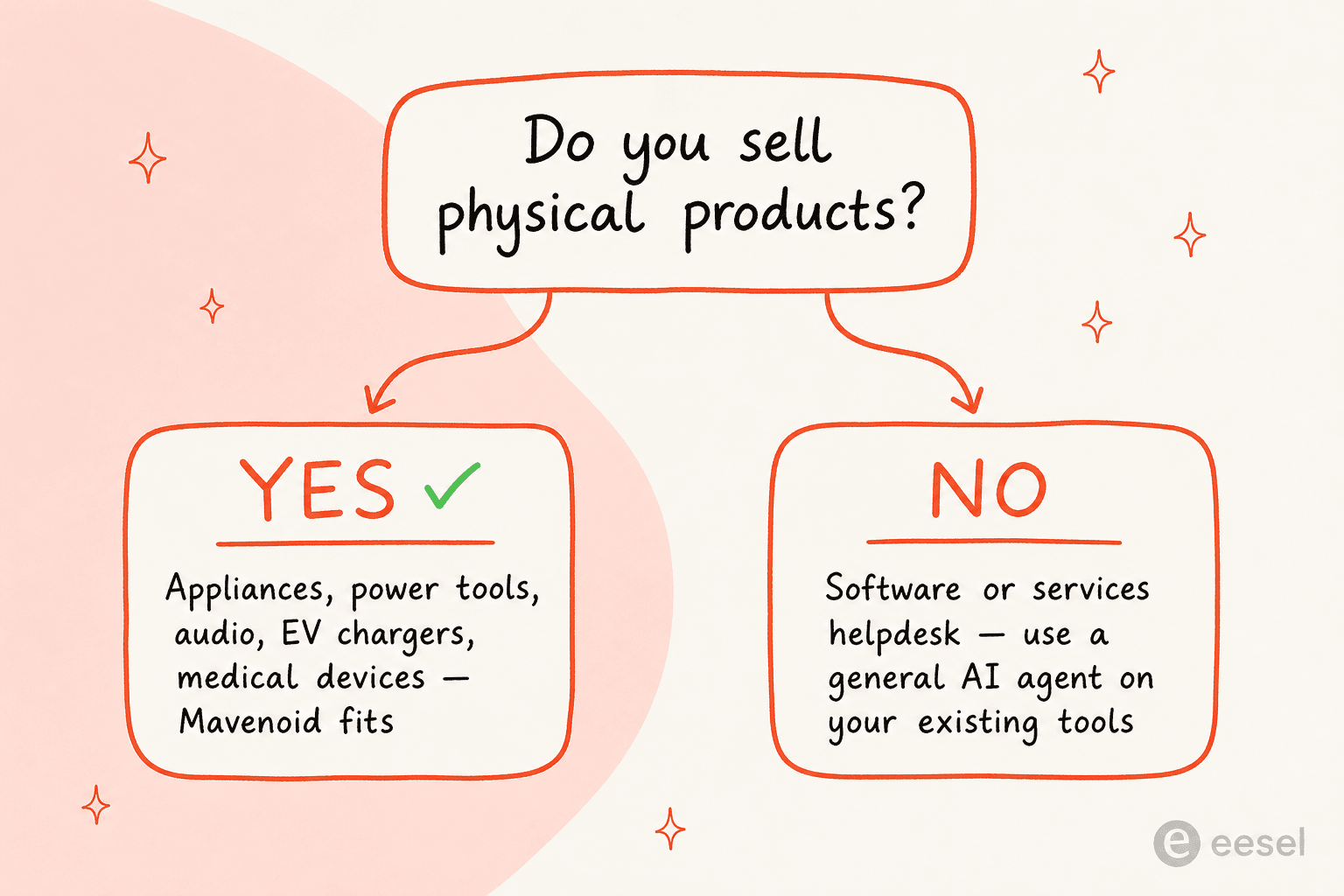
Buy it if you're a hardware or product brand with a broad, multi-model catalog and global, multilingual support needs. Vision-based model ID, live video on a chainsaw, and spare-parts checkout are real differentiators, and few tools do hardware troubleshooting this well.
Skip it if you run a SaaS helpdesk, a fintech support desk, or an agency inbox. Almost none of its best features apply to you, and you'd be paying enterprise money for a hardware engine to answer "how do I reset my password." That's the category where a general AI support automation platform is the right call.
Where eesel fits if you don't sell hardware
If you landed on this review because you're shopping for AI support but you don't sell physical products, this is the honest pivot. eesel AI is a general-purpose AI support agent that plugs straight into the helpdesk you already run, Zendesk, Freshdesk, Salesforce, Gorgias, or a shared inbox, and starts handling tickets without a multi-month modeling project.
Two differences matter most against Mavenoid. First, where Mavenoid hides its price behind a demo, eesel is self-serve with transparent, usage-based pricing and no per-seat fees, so you can size a budget today. Second is how you go live safely: before eesel auto-replies to a single customer, you can simulate it against thousands of your own historical tickets to see exactly what it would have said and what your resolution rate would be. That's the practical answer to the same "don't let a confident bot answer wrong" worry Mavenoid's resolution framing is built around, and it's why one team saw eesel resolving 73% of tier-1 requests in the first month.
Try eesel for your helpdesk
If you sell complex hardware, Mavenoid is a strong, specialized pick, and I'd happily point a power-tool or appliance brand its way. But if your support runs through a normal helpdesk and you want an AI teammate live this week instead of next quarter, eesel AI is the better shape. It connects to your existing tools in minutes, trains on your past tickets and macros, and keeps a human in the loop on anything it isn't confident about.

You can try eesel free, simulate it on your own ticket history, and see your real resolution rate before committing to anything.
Frequently Asked Questions
What is Mavenoid used for?
Mavenoid is an AI product support platform for companies that sell physical products: appliances, power tools, audio gear, EV chargers, medical devices. It diagnoses why a device isn't working and walks the customer through a model-specific fix across text, voice, image, and video. If you run a software or services desk instead, a general AI helpdesk agent is a closer fit.
How much does Mavenoid cost?
Mavenoid does not publish pricing. Every CTA leads to a demo, and a quote is built from the number of brands you run plus add-ons. G2 reviewers rate the perceived cost at the top of the scale with a roughly nine-month payback. We dig into the numbers in our Mavenoid pricing guide.
Is Mavenoid worth it in 2026?
For a hardware brand with a big catalog and global support, yes: this Mavenoid review found it is one of the most specialized resolution engines out there. For a SaaS or services team, probably not, since you'd pay enterprise money for troubleshooting machinery you won't use. Compare options in our support automation roundup.
What is Mavenoid's rating on G2?
Mavenoid holds 4.8 out of 5 across 27 reviews, with no negative reviews on the platform. It's a strong score, though the small total volume is worth weighing. Reviewers praise the no-code flow builder and flag analytics depth as the main gap.
What are the best Mavenoid alternatives?
It depends what you sell. Hardware brands have other vertical tools to weigh; everyone else is better served by a flexible agent that plugs into Zendesk, Freshdesk, or Gorgias. Our AI support automation guide is a good place to start.


Article by
Riellvriany Indriawan
Riell is a designer and writer at eesel AI with about two years of experience researching CX platforms, AI chatbots, and helpdesk software. She combines her design background with a sharp eye for how these tools actually look and feel in practice — making her comparisons unusually visual and user-focused.