
What an AI ebook writer actually does
I've spent the last couple of years mapping keywords to the questions people actually type, and at eesel the blog writer is our own content engine, so I've watched a lot of long-form get drafted from real customer knowledge bases. "AI ebook writer" is one of those searches where the gap between what people expect and what they get is wide, so it's worth being precise.
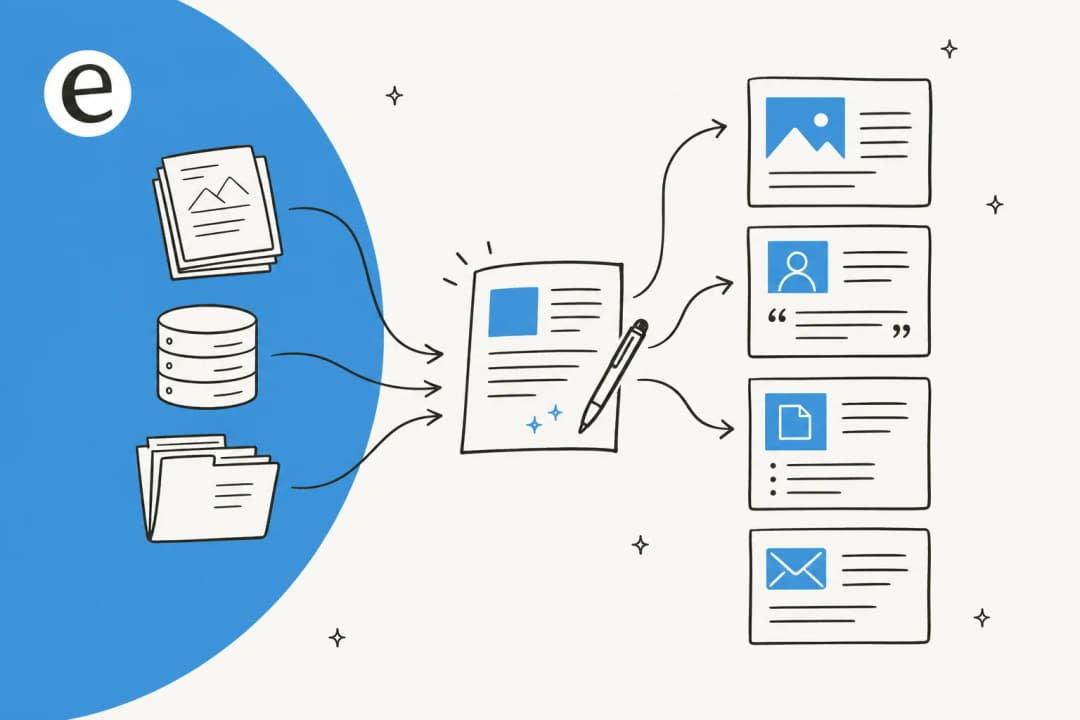
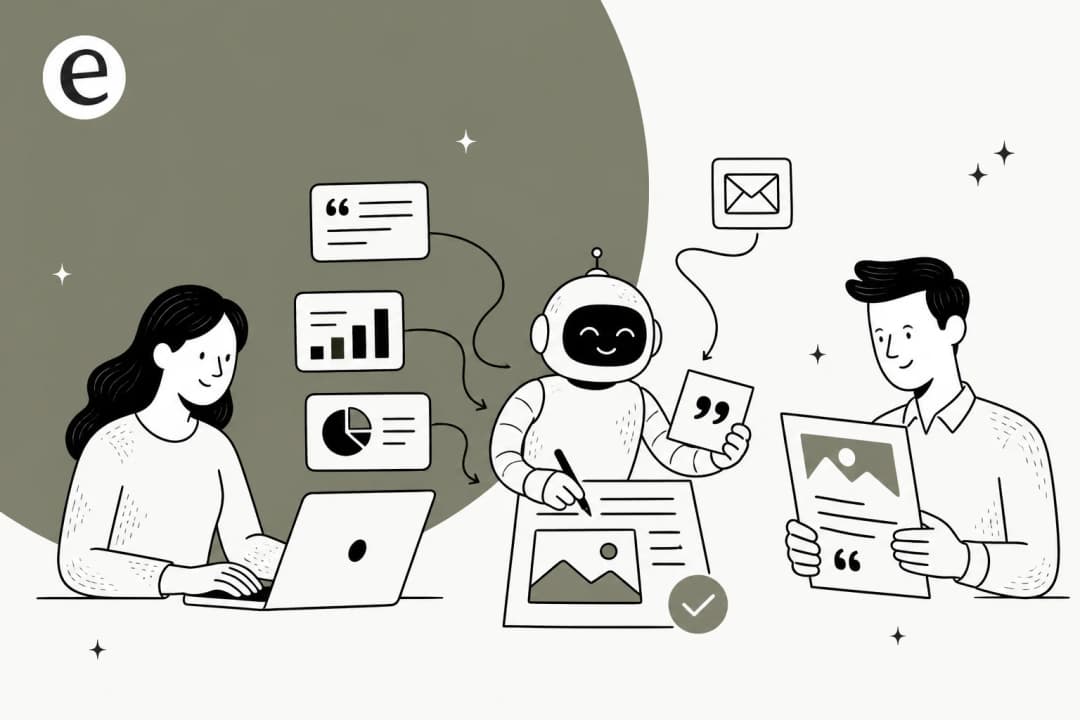
An AI ebook writer is an AI content writer pointed at book-length output instead of a single post. Hand it a topic and it returns the parts of an ebook you'd otherwise assemble by hand: a chapter outline, drafted prose for each section, and often the cover and page layout too. The tools cluster into three jobs, and they're different enough that picking the wrong one wastes a subscription:
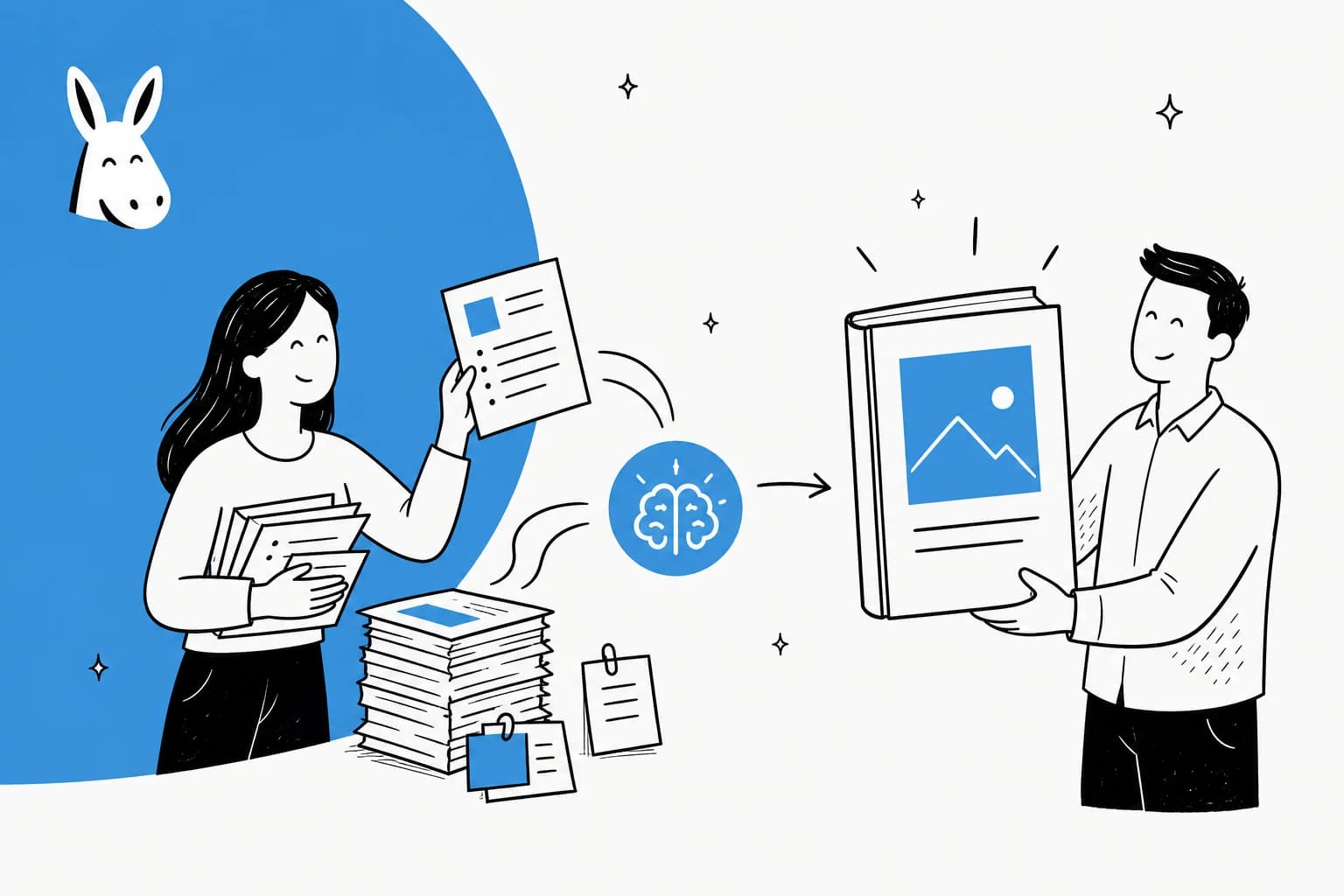
- Repurposing existing content into an ebook: reformatting blog posts, webinars, or docs you already own into a designed PDF.
- Drafting marketing ebooks and lead magnets: generating a gated asset from a brief, usually for content marketing and lead capture.
- Writing book-length fiction or nonfiction: the self-publishing case, where the output is a manuscript you sell.
The reason this matters is that an AI content generator handed a generic prompt will happily invent a statistic, a quote, or a chapter of filler to hit length. Length is the one thing these tools find trivial and the one thing a good ebook needs least. So before the tool, the question is which of those three jobs you're doing, and what you're going to feed it.
The two ways an AI ebook goes wrong
Both failure modes start the same way, an ebook spun from a thin prompt, and they fail in two different markets.
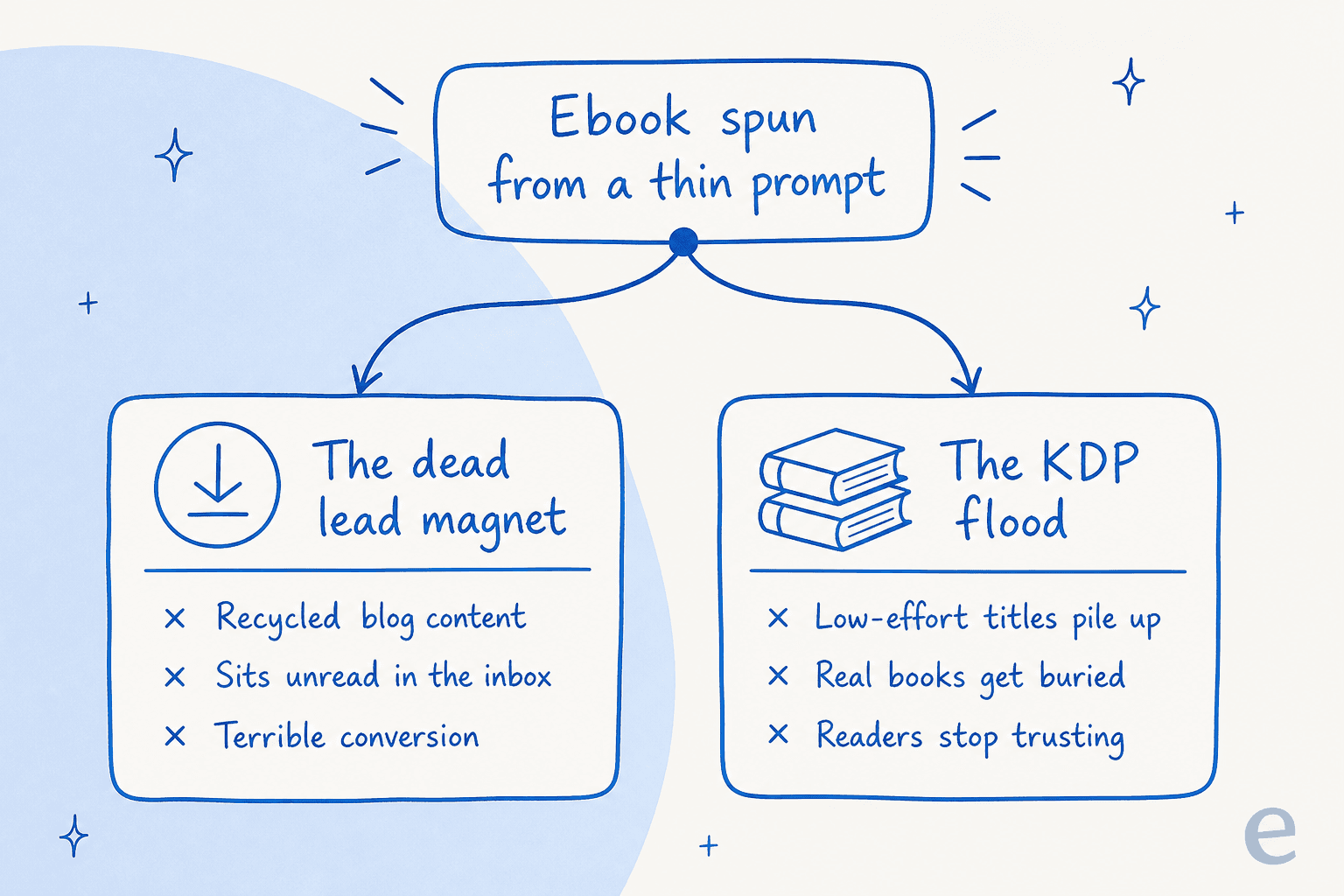
The first is the dead lead magnet. The pitch is seductive: generate a gated ebook in minutes, watch the emails roll in. The marketers actually running these campaigns tell a different story. An agency marketer on r/microsaas put the conversion problem bluntly:
"AI-generated ebooks for lead magnets are oversaturated as hell right now... our clients who try this approach usually see terrible conversion rates because the content feels generic and low-value... most people can tell when an ebook was churned out by AI in 10 minutes... Most businesses would rather spend 2 hours writing their own lead magnet than pay monthly for automated garbage."

The format itself was already struggling, and the AI flood made it worse. As demand-gen marketer Brandon Redlinger argued on LinkedIn, most ebooks were already going unread: "most just sit in my inbox for later (and later usually = never). And it's because it's generic content, not personalized and not immediately actionable." An ebook that reads like a stretched blog post loses to a tool, a template, or a five-minute interactive assessment. The bar for a lead magnet worth the email went up, not down.
The second failure is louder: the flood on Amazon's Kindle Direct Publishing. A self-published author on r/wroteabook described the cost to everyone writing real books:
"I've been self-publishing nonfiction for about 10 years, and the last couple of years have been by far the hardest. Even the best quality books seem to get buried under a flood of low-effort, AI-written titles. As a reader, I find it very sad that we can't trust books anymore."
A book marketer on r/selfpublish named the thing readers react to: "A writer has a voice. AI doesn't. People can feel it." The common thread is that readers detect the generic AI voice instantly, and once they do, the trade (their money or their email) stops feeling worth it. That's the problem an AI ebook writer has to solve, and most of them don't even try.
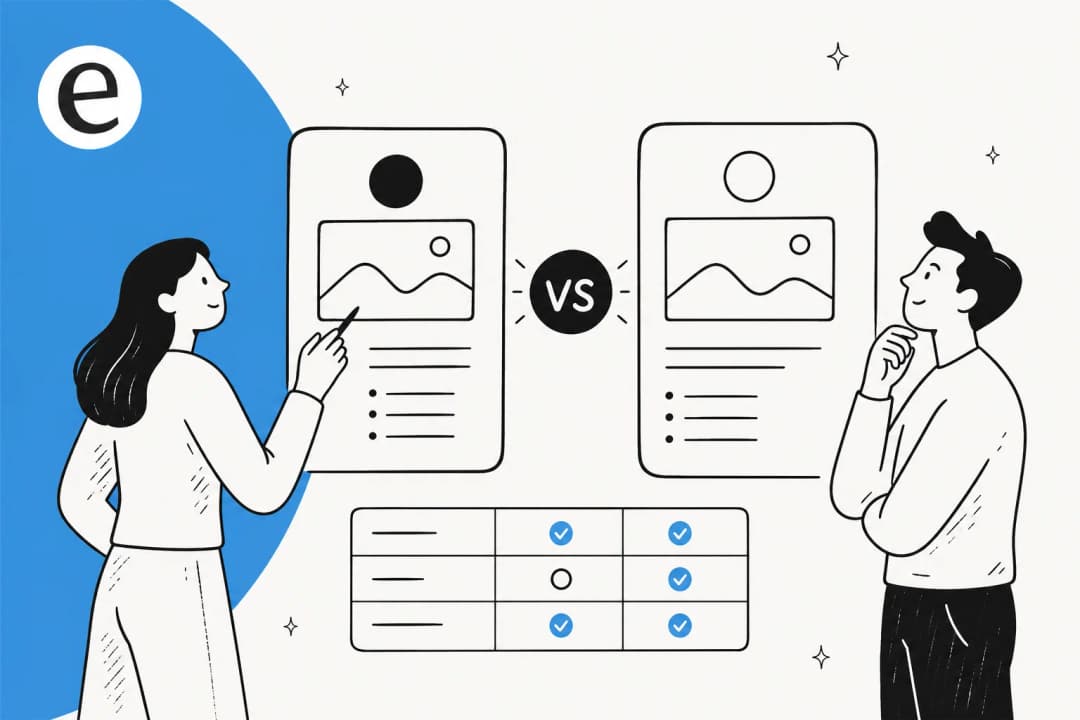
The AI ebook tools, and what each is really for
The tools split along exactly the three jobs above, so match the tool to the job. I'd never reach for a fiction-writing engine to make a B2B lead magnet, or a repurposing tool to draft a novel. Here's how the popular ones line up.
| Tool | Best for | Starting price | Top tier | Billable unit | Free option |
|---|---|---|---|---|---|
| Designrr | Repurposing blog posts, podcasts, and videos into designed ebooks | $29/mo (Standard) | $249/mo (Agency Premium) | Flat monthly, transcription hours by tier | No (paid only) |
| Sudowrite | Long-form fiction and creative manuscripts | $10/mo (Hobby & Student) | $44/mo (Max) | Credits (225k to 2M/mo) | Free trial, no card |
| Squibler | Generating full-length book and screenplay manuscripts | $29.99/mo (Plus) | $89.99/mo (Pro) | AI credits (1k free to unlimited) | Yes, 1,000 credits/mo |
Designrr is the repurposing specialist, and the one most relevant to marketing teams. It turns blog posts, podcasts, videos, and PDFs into ebooks, flipbooks, and transcripts, and reports over 320,000 customers. Its AI engine is called Wordgenie, and the higher tiers add automatic audio and video transcription plus a PDF-to-flipbook and 3D-cover generator. The job it does well is design and reformatting, not original thinking, which is the right division of labour for a team that already has the raw material.
Sudowrite sits at the other end. It's a fiction-first writing partner that runs its own models (Muse and Ballad) and bills itself as the #1 Creative Writing AI. Its Story Bible feature walks a novelist from idea to outline to drafted chapters, and its Write tool suggests the next ~300 words in your voice. Plans are credit-based, from $10/mo for 225,000 credits up to $44/mo for 2 million, with unused credits rolling over on the top tier.
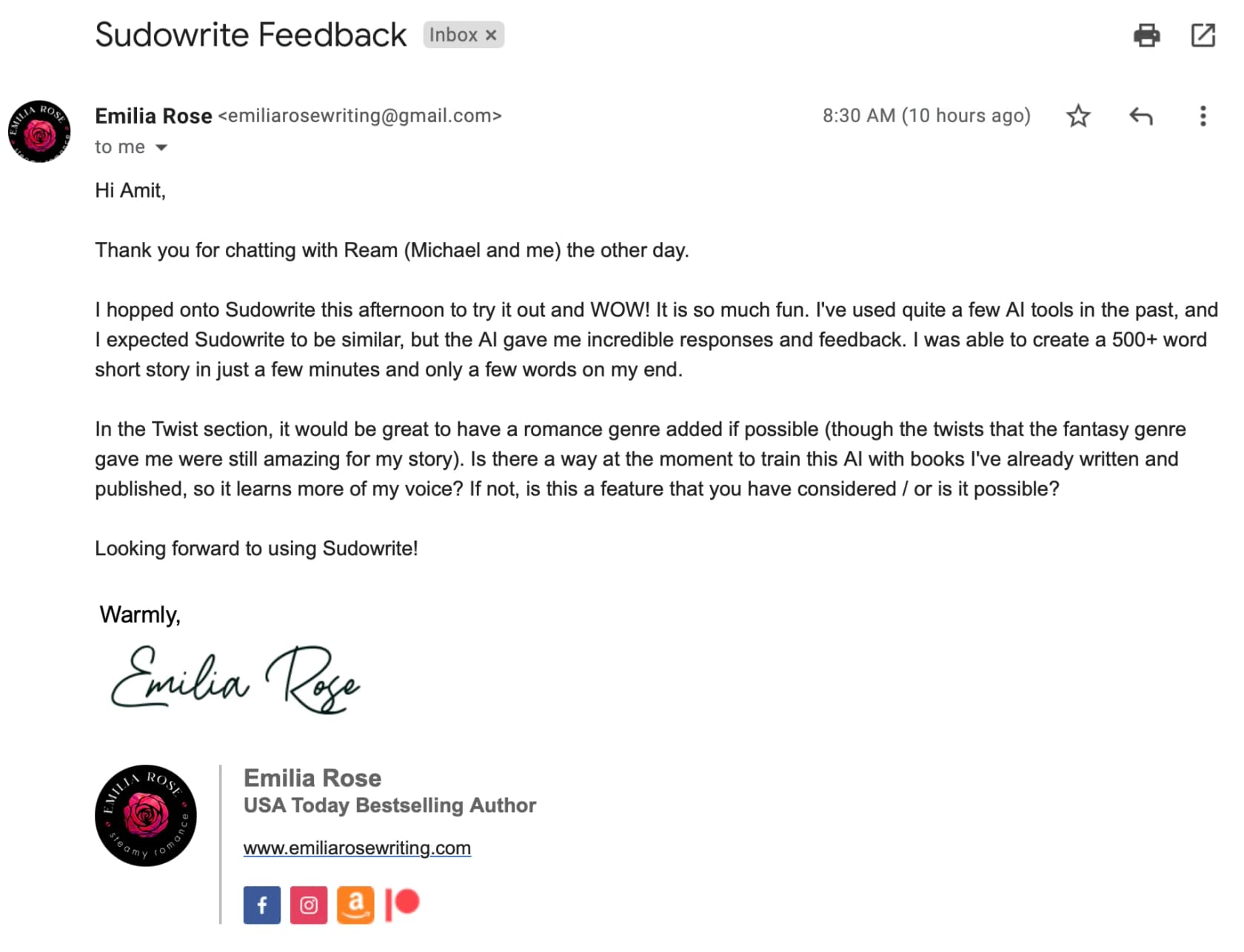
Squibler is the most aggressive of the three about volume: it generates a full 200 to 300 page manuscript and keeps characters and plot consistent across it. There's a free tier with 1,000 credits a month, then Plus at $29.99/mo (or $15.83/mo billed annually) and Pro at $89.99/mo with unlimited credits. It also notes that writers keep 100% of the rights to what they make. If you want the most book per dollar, this is it, with the obvious caveat from the last section: a manuscript generated wholesale is the exact thing readers and KDP are learning to filter out.
My take across the three: for B2B and content teams, repurposing tools like Designrr are the safe pick because the source material is yours, so the output is grounded by default. The manuscript generators are powerful and a lot of fun for fiction, but they make it very easy to produce the kind of book the r/wroteabook thread above is complaining about.
What separates an ebook worth gating from filler
Strip away the tool differences and one variable predicts whether an AI ebook works: how much of it the tool could have written about any company, versus how much only you could have written. That's the seam between the draft and the value.
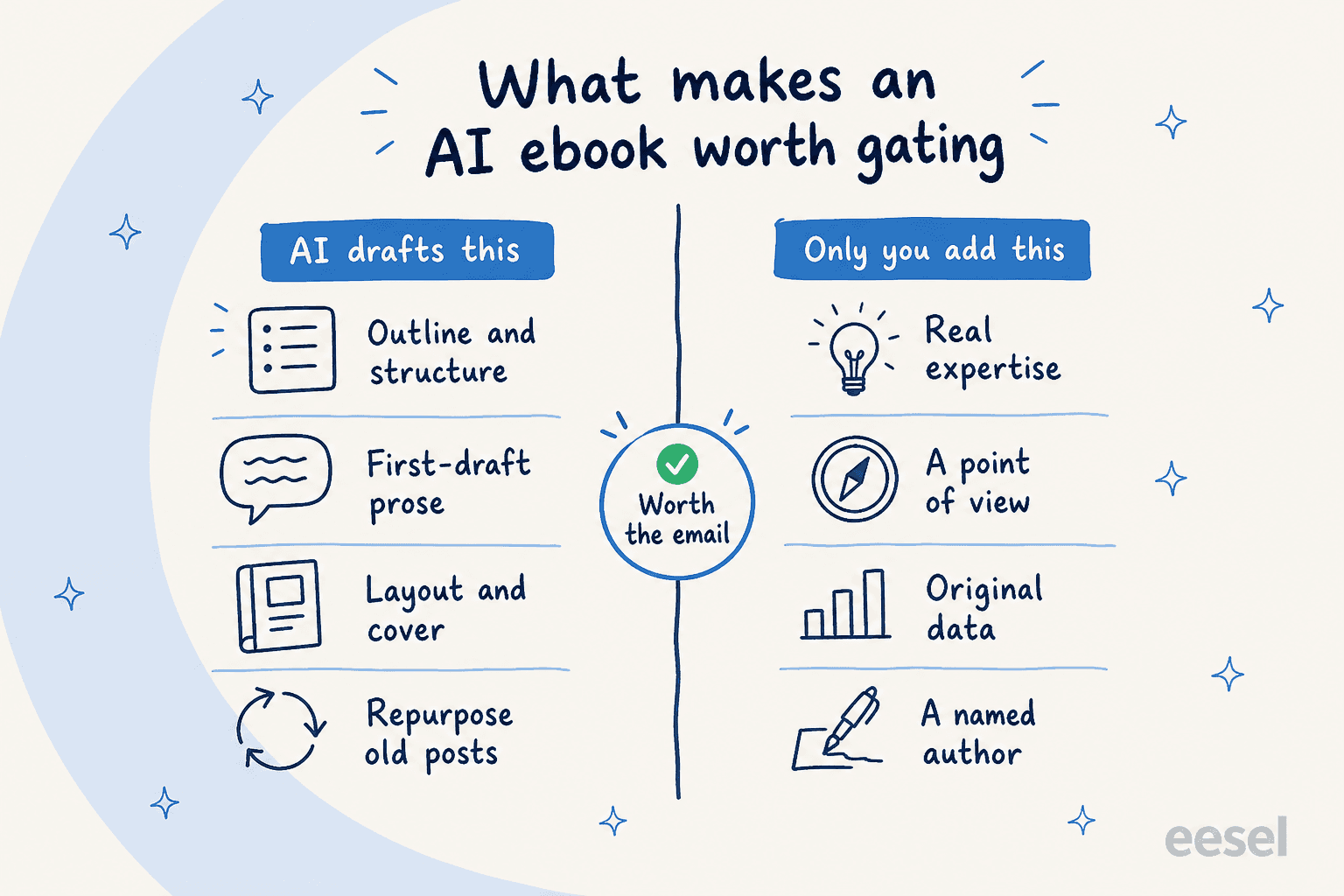
AI is good at the left side: outline, structure, first-draft prose, layout, and turning your existing posts into a clean PDF. It cannot produce the right side, your real expertise, an opinion, original data, a named author who stands behind it. This is the same standard Google sets for any content. Its helpful-content guidance asks content to "clearly demonstrate first-hand expertise and a depth of knowledge (for example, expertise that comes from having actually used a product or service)," and it strongly encourages a named author. An ebook's landing page lives or dies by the same E-E-A-T signals as a blog post.
The reassuring part, if you're nervous about the "AI penalty," is that authorship was never the issue. Google's spam policy targets "using generative AI tools... to generate many pages without adding value," and its own guidance on AI content says it focuses "on the quality of content, rather than how content is produced." So an ebook drafted with AI and grounded in real expertise is fine; a batch of spun ebook pages is not. If your AI content isn't ranking, thin value is almost always the reason, not the tool, the same pattern I see when scaling SEO content.
How to write an ebook with AI, step by step
Here's the workflow I'd actually use, whether the ebook is a lead magnet or a longer reference piece. The order matters, and the human pass at the end isn't optional.
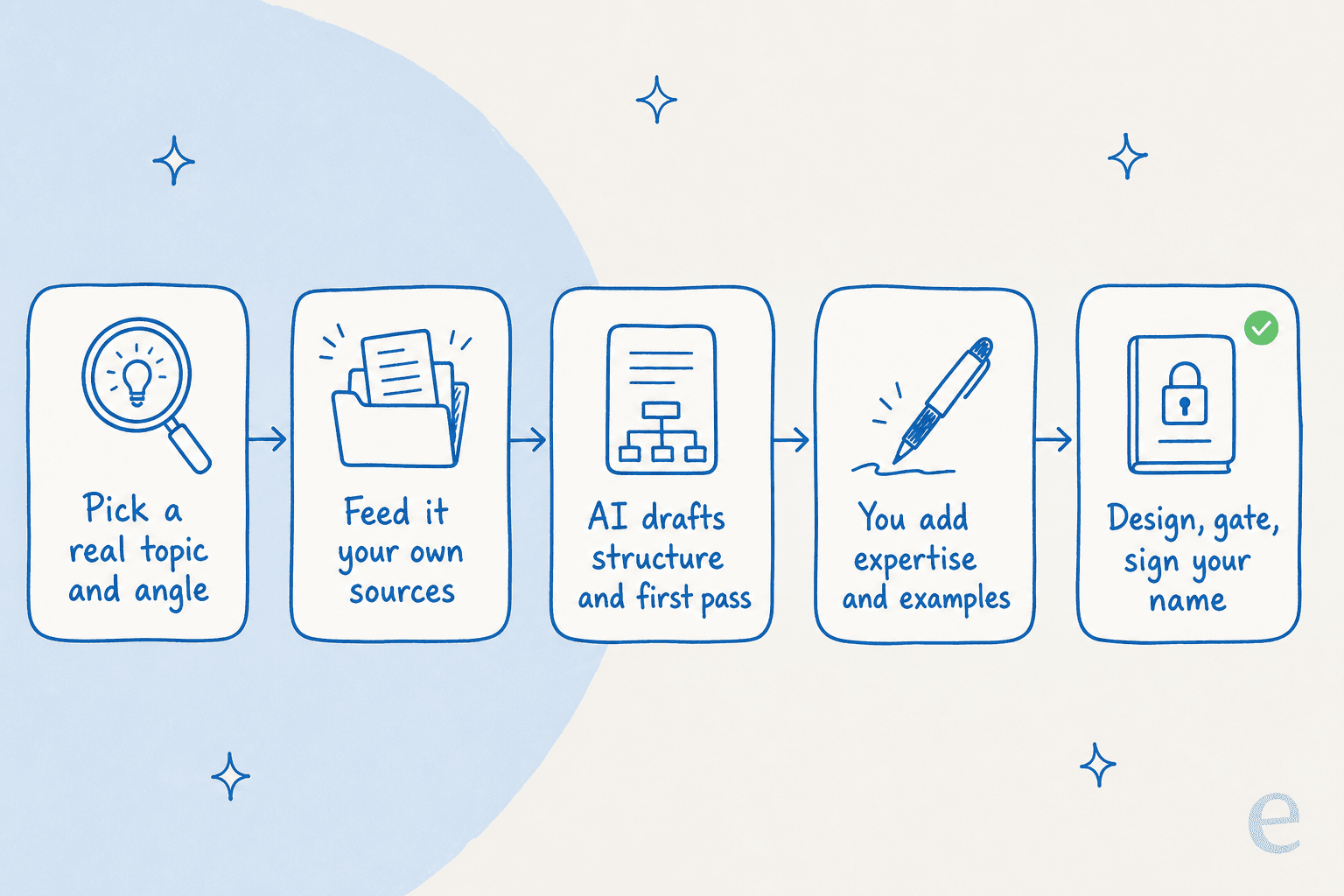
1. Pick a topic from real demand, not a whim. An ebook is a big asset, so start where there's pull. A keyword clustering tool or eesel's free keyword generator shows whether a topic has enough related searches to build a whole book around, so you're not gating a PDF nobody was looking for. The goal is topical authority, one ebook that owns a subject, not ten that skim.
2. Feed it your own sources. This is the step that decides everything. Handed the open web, an AI ebook writer guesses; handed your blog archive, your webinar transcripts, and your internal docs, it assembles. Point it at material you own and train it on your knowledge base so the draft is grounded, the same principle behind any knowledge-base-driven content.
3. Let AI draft the structure and the first pass. Now use the thing it's good at: the chapter outline, the parallel structure, the first draft of each section, the layout. A tight content brief per chapter keeps it from wandering into filler. This is where the week of work collapses into an afternoon.
4. Add the expertise only you have. Go back through and add the original data, the example from a real project, the opinion the model would never risk. This is the right-hand column from the section above, and it's what turns a competent draft into something worth an email address. It's also how you keep an AI ebook from sounding generic.
5. Design it, gate it, and sign your name. Reformat into a clean PDF, set up the landing page, and put a real author byline on it, the E-E-A-T signal that makes the whole thing credible. Build this human gate into your content pipeline as a hard requirement, not a nice-to-have, the same way you would for organic-ranking blog content.
If that workflow sounds a lot like writing a great long-form blog post and then formatting it, that's because it is. The ebook is a packaging decision; the content creation underneath is the same craft, which is why the strongest ebook tooling for a marketing team is the same tooling that drafts its blog posts.
Try eesel for long-form content
If your ebook is really a repackaging of what your team already knows, the bottleneck isn't a fiction model, it's getting a credible long-form draft out of your own material fast. That's what eesel's AI blog writer is built for: it's an AI teammate that finds the topics worth owning, drafts long-form in your voice, and grounds every claim in your own sources rather than guessing from the open web.
Two things make it fit ebook work specifically. It hits a 94% brand voice match from day one by learning from your past posts, so the chapters read like you and not a bot. And because it drafts from your knowledge base instead of the web, the specifics are real, which is the exact thing that keeps an ebook on the right side of Google's quality line. Draft the long-form, repackage it into the ebook, and add the one chart only you have. It's free to try, and you can see what it sounds like on your own content in a few minutes.
Frequently Asked Questions
What is an AI ebook writer?
Is there a free AI ebook generator?
Do AI-generated ebooks make good lead magnets?
Will Google penalise an AI-written ebook or its landing page?
What's the best way to write an ebook with AI?


Article by
Kurnia Kharisma Agung Samiadjie
Kurnia is a software engineer and writer at eesel AI with two years of SEO experience, writing about AI tools, helpdesk software, and customer support. He pairs a developer's understanding of how these products are built with search-driven research into what actually ranks and resonates with the people searching for them.