You’ve got a list of hundreds, maybe thousands, of keywords. Now what? If you’ve ever stared at a spreadsheet wondering how to turn all that data into a real content strategy, you're not the only one. Trying to sort keywords by hand takes forever, and it’s easy to mess up, leaving you with a disorganized plan that doesn’t get results.
This is exactly what a keyword clustering tool is for. It helps turn that keyword chaos into a clear, actionable content plan. Modern SEO isn't about targeting one keyword at a time anymore; it’s about building topical authority. A good tool groups related keywords so you can create comprehensive content that both Google and your readers will appreciate.
In this post, we’ll walk through the top 7 free and paid keyword clustering tools for 2026. We’ve actually used them all to help you find the right one. We’ll also show you how some platforms, like the eesel AI blog writer, are moving a step beyond clustering by automating the entire process, from topic to a finished article.
What is a keyword clustering tool and why do you need one?
Keyword clustering is just grouping keywords that are semantically related and share a similar search intent. Google’s Hummingbird update back in 2013 changed the game, shifting SEO from exact-match keywords to understanding the meaning behind a search. Now, search engines reward pages that fully answer a user's question and any related follow-ups. This is where topic clusters come in.
A keyword clustering tool automates this grouping, saving you a ton of manual work. By looking at search engine results pages (SERPs) or using natural language processing (NLP), these tools figure out which keywords should be targeted on the same page.
The benefits are pretty straightforward:
- Builds topical authority: When you create a network of content covering a topic from all angles, you show search engines you're an expert.
- Avoids keyword cannibalization: This stops you from creating multiple pages that end up competing with each other for the same keywords in search results.
- Streamlines content planning: Clustering gives you a natural blueprint for your main pillar pages and supporting blog posts, which makes managing your content calendar much simpler.
- Satisfies search intent: By grouping keywords that people search for together, you can create one solid page that covers everything they want to know.
How we chose the best keyword clustering tool options
To make this list, we didn't just read marketing copy. We got our hands on over a dozen tools to see how they actually work. We were looking for the options that give the best mix of power, ease of use, and value.
Here’s what we looked for:
- Accuracy: How well does the tool group keywords? We favored tools that use real SERP data, advanced NLP, or semantic relevance to create logical clusters you can actually use.
- Ease of use: Is the interface easy to figure out? A good tool should be simple enough for SEO beginners but still powerful for pros.
- Speed & Scalability: How fast can it handle a big list? We tested how quickly each tool could process a large set of keywords without grinding to a halt.
- Features & Data: What else does it give you? We gave extra points to tools that provide more data like search volume, keyword difficulty, and search intent to help prioritize clusters.
- Value for money: Is the price right? We looked at whether the cost makes sense for the features and results you get, for both free and paid tools.
Comparison of the top keyword clustering tool options in 2026
Here’s a quick look at our top picks. This table should help you quickly see which tool might be the best for you before we get into the detailed reviews.
| Tool | Best For | Pricing Model | Free Option |
|---|---|---|---|
| eesel AI blog writer | Generating publish-ready content from a single topic | Pay-per-use credits | Free to try |
| Semrush | All-in-one SEO and content strategy | Subscription | Free trial |
| Surfer SEO | Building comprehensive topic clusters and content hubs | Subscription | No |
| LowFruits | Finding low-competition topic clusters | Subscription & PAYG | PAYG credits available |
| Keyword Cupid | Accurate SERP-based clustering for large keyword lists | Subscription | $1 paid trial |
| KeySearch | Simple, free clustering for basic needs | Freemium | Free tool available |
| Zenbrief | The most powerful free NLP-based keyword clustering tool | Freemium | Free up to 5k keywords |
The 7 best keyword clustering tools to try in 2026
Now, let's get into what makes each of these tools a solid choice.
1. eesel AI blog writer
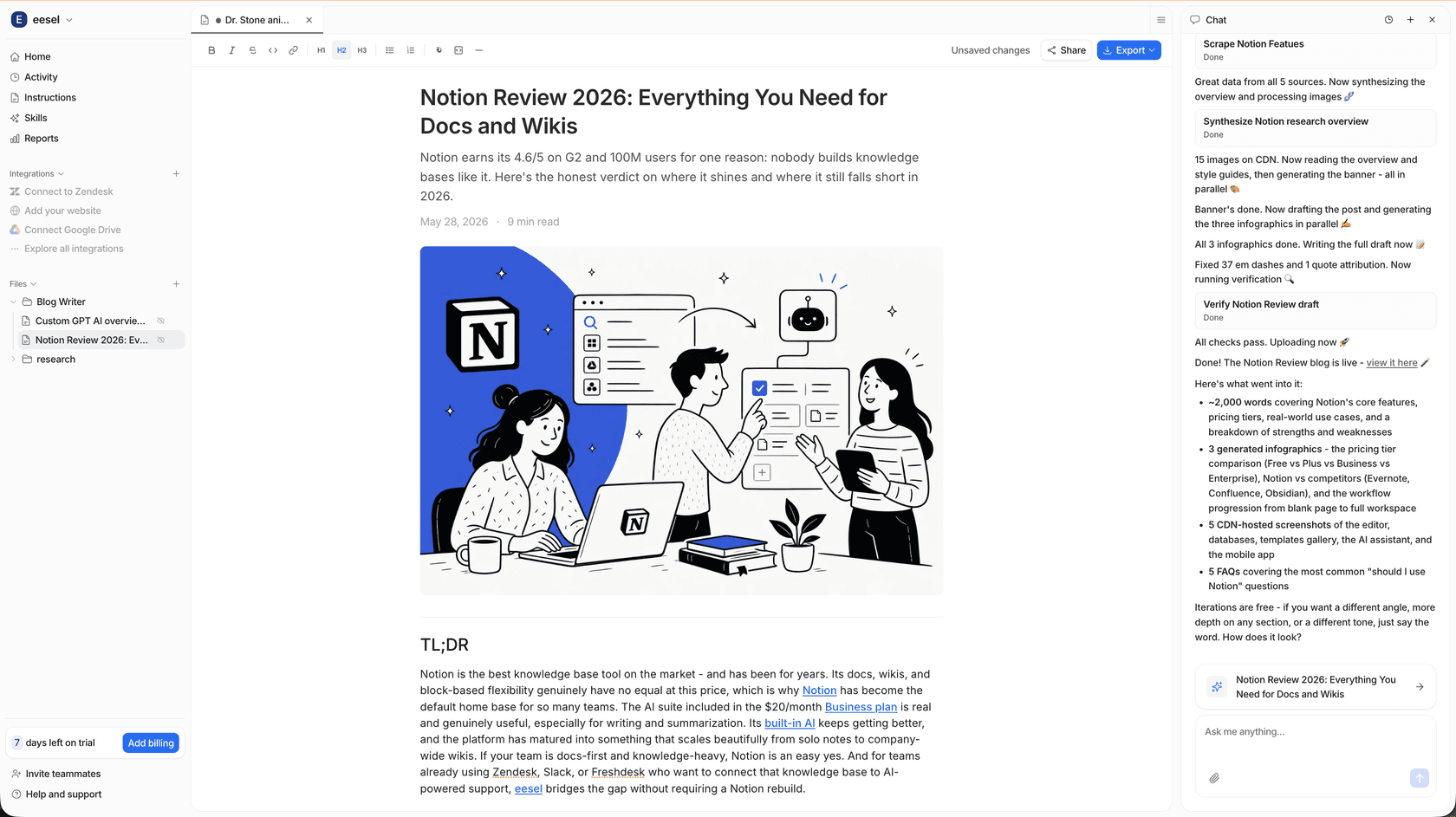
Pros: It’s a complete solution that takes you from an idea to a finished post instantly. The content is context-aware, meaning it automatically researches the topic to include relevant details. It also adds assets like AI-generated images and tables, and even embeds relevant Reddit quotes and YouTube videos to make the article genuinely helpful and readable. It's also optimized for AI Answer Engines (AEO), getting your content ready for the future of search.
Cons: It’s not made for users who want to upload and cluster an existing list of thousands of keywords. Its main job is to generate content from a single topic or keyword, not organize existing keyword lists.
Pricing:
- It's completely free to try.
- The Early Bird plan is $99 for 50 monthly blog generations (otherwise $4 per blog post).
Why we chose it: It addresses the end goal of keyword clustering, which is to create content at scale. By automating the steps of outlining, drafting, and formatting, it offers an efficient way to act on a content strategy.
2. Semrush
Semrush is a well-known name in SEO, and its Keyword Strategy Builder is a solid tool for clustering. You can start with up to five seed keywords, and it uses a mix of AI and SERP analysis to create a visual map of pillar pages and their related sub-topics. This makes it a great choice for building a full content strategy from the ground up, all inside one platform. It’s ideal for SEOs who want to see the big picture and plan their content hubs carefully.
Pros: The visual mind map of topic clusters is great for planning content hubs and seeing how topics relate. Since it's part of the broader Semrush toolkit, you get a smooth workflow from research and clustering to writing and tracking performance. Each cluster comes with data like search volume, keyword difficulty (KD), and search intent.
Cons: As a premium, all-in-one platform, the price can be steep for freelancers or small businesses. The amount of data and features can also be a bit much if you're new to SEO.
Pricing:
- Plans start at $165.17/month when billed annually.
- A free trial is available.
Why we chose it: It’s the best all-in-one solution for professionals who need clustering as part of a larger, data-driven SEO and content marketing strategy.
3. Surfer SEO
Surfer SEO is mostly known as a content optimization tool, but its Topical Map feature is a great way to handle keyword clustering. It takes a main keyword or analyzes your Google Search Console data to generate a complete blueprint of related sub-topics and supporting keywords. It then groups these into logical clusters, giving you a clear path to building topical authority on any subject. It’s built for content creators who want to make sure every article they write is as comprehensive as possible.
Pros: Surfer is excellent at visualizing an entire content ecosystem around a central topic. The interface is easy to use and turns complex SERP analysis into actionable content guidelines, making it simple to spot and fill gaps in your existing content.
Cons: It's not designed for uploading and clustering a standalone bulk list of keywords. The workflow is focused on building out a cluster from a single main topic or your domain's existing data. It can also be pricey if you're not creating new content all the time.
Pricing:
- The Essential plan starts at $79/month when billed annually.
Why we chose it: It's the best tool for planning and creating comprehensive content hubs that are designed to satisfy user intent from start to finish.
4. LowFruits
Just as the name implies, LowFruits is great at finding "low-hanging fruit" keywords and grouping them into clusters you can act on. Its main strength is identifying untapped topic clusters with real ranking potential. It does this by analyzing the SERPs for weak spots, like forums, Reddit threads, or sites with low Domain Authority. This helps you prioritize content that you can actually rank for quickly, instead of going after hyper-competitive terms.
Pros: It’s very effective for finding low-competition keyword clusters and can save a huge amount of time during content ideation. The "Weak Spots" feature is a big help for prioritizing what to write next, and the user interface is clean and simple.
Cons: It isn't mainly a bulk clustering tool for a list you've already made somewhere else. Its real power is in its discovery and SERP analysis workflow for finding new opportunities.
Pricing:
- Subscriptions start at $20.75/month when billed annually.
- Pay-as-you-go (PAYG) credits are also available, starting at $25 for 2,000 credits.
Why we chose it: It’s the fastest and most effective tool for finding new, low-competition topic clusters that you have a realistic shot at ranking for.
5. Keyword Cupid
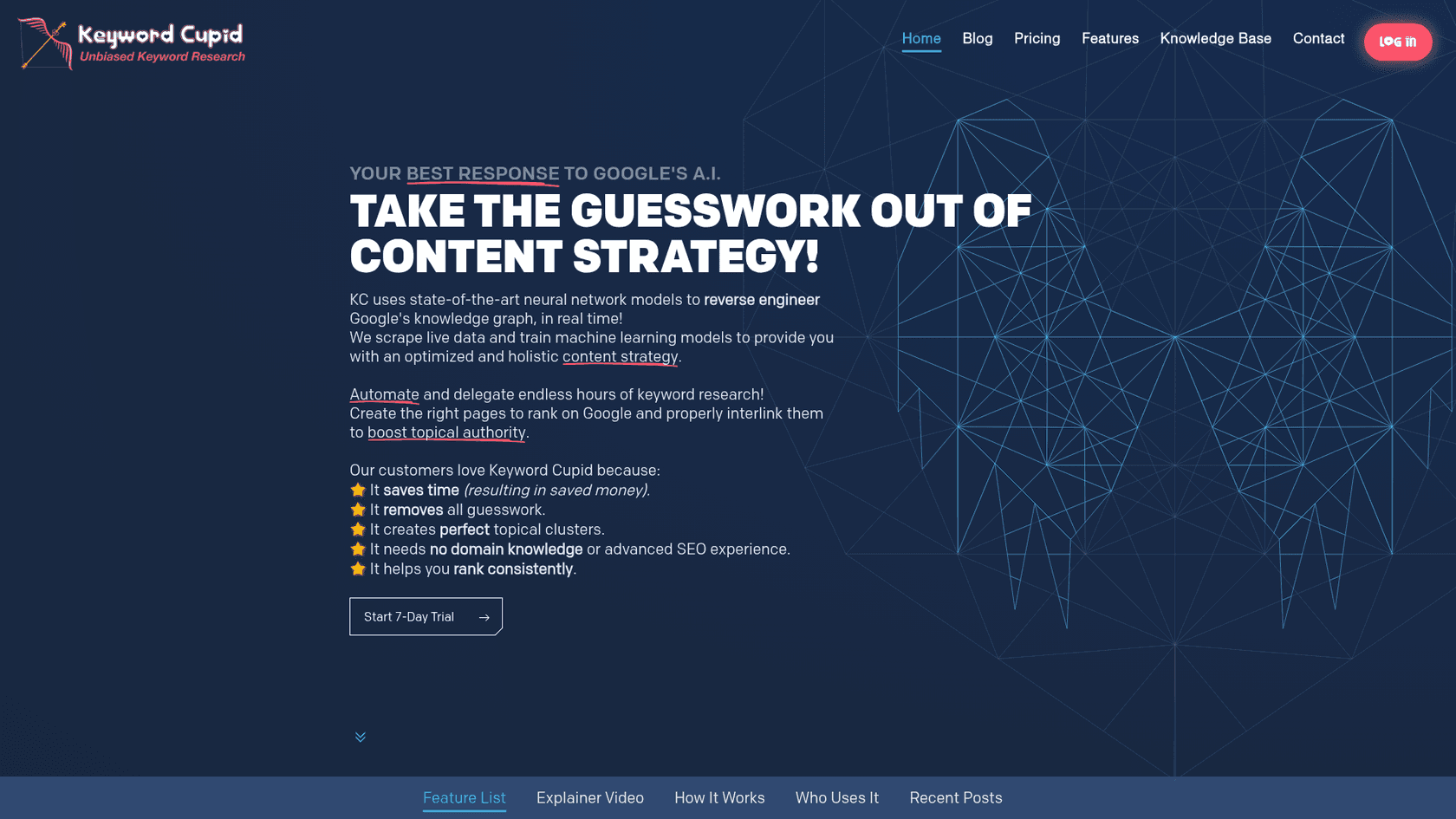
Keyword Cupid is a specialized tool that focuses almost entirely on SERP-based keyword clustering. The process is simple: you upload a list of keywords from a tool like Ahrefs or Semrush, and it groups them based on how many of the same URLs are ranking for them in the top search results. This method effectively reverse engineers Google's understanding of topics in real time, which leads to very accurate and practical clusters.
Pros: The SERP overlap method ensures the clusters are highly accurate and reflect what Google considers topically related. It's a massive time-saver when you have huge keyword lists, and it offers a unique mindmap visualization that's great for planning your site structure.
Cons: It's a specialist tool, so it doesn't have any features for finding keywords in the first place—you have to bring your own list. Because it scrapes live SERP data for every single keyword, it can be slow for very large reports.
Pricing:
- Plans start at $9.99/month.
- It offers a 7-day trial for $1 that includes 500 credits.
Why we chose it: It is one of the most accurate tools out there for clustering very large, pre-existing keyword lists based on live SERP data.
6. KeySearch
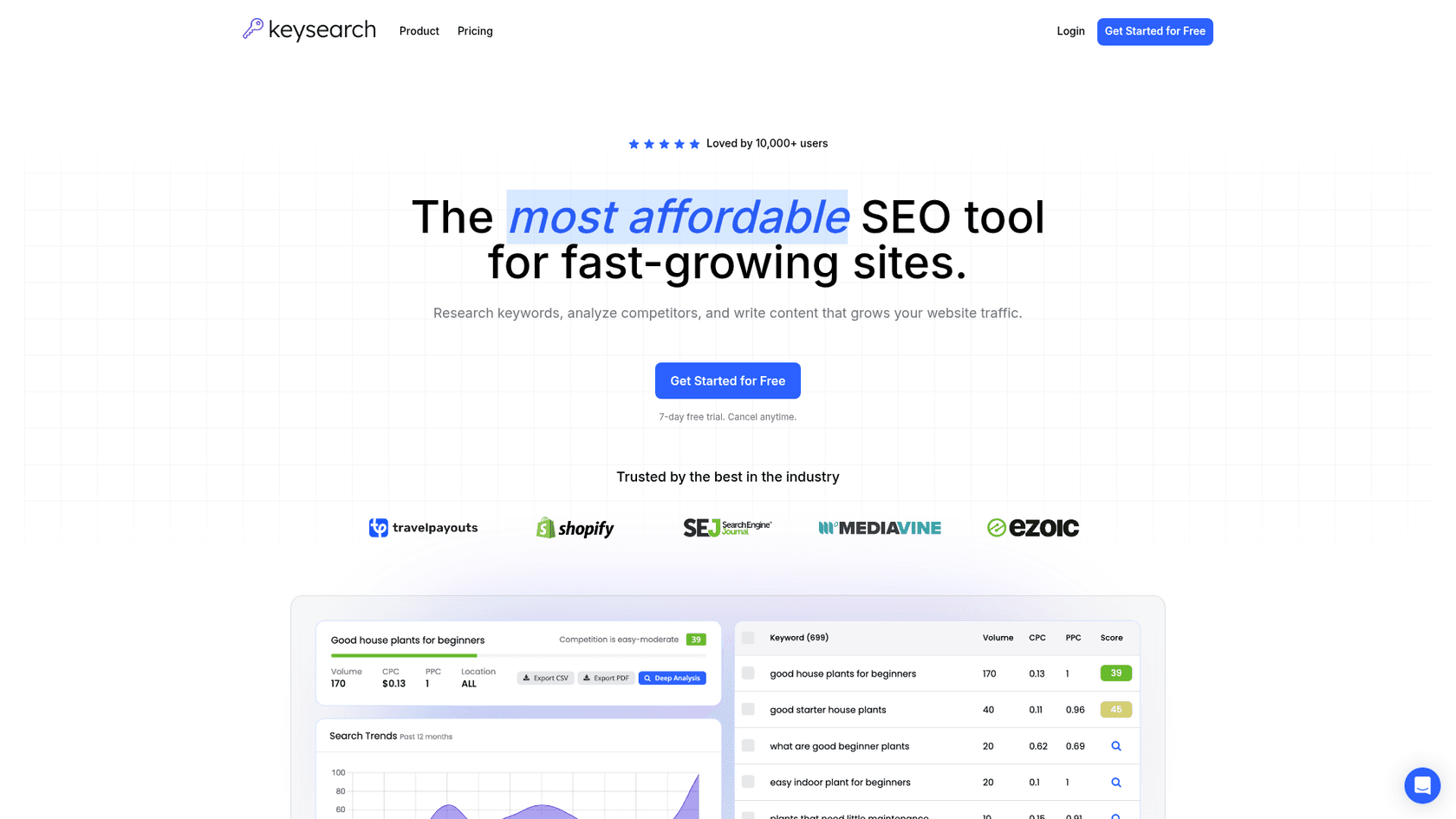
KeySearch offers a completely free keyword clustering tool that is simple, direct, and effective for basic tasks. You just paste in a list of keywords, and it uses lemma-based analysis (grouping words with a similar root or meaning) to organize them. While it's part of a larger, very affordable SEO toolkit, the clustering feature is available to anyone, even without an account.
Pros: It’s 100% free and very easy to use. There are no complicated settings, making it a perfect starting point for anyone new to keyword clustering. If you decide you need more, the full KeySearch suite is one of the most affordable on the market.
Cons: The clustering method is more basic since it relies on word matching instead of deep SERP analysis. This means the results might need a bit more manual review and tweaking. The "topics" it creates can sometimes be less precise than those from more advanced tools.
Pricing:
- The clustering tool is free to use.
- Paid plans for the full SEO suite start at $24/month.
Why we chose it: It’s the best free and simple option for getting a quick, no-cost organization of your keyword list.
7. Zenbrief
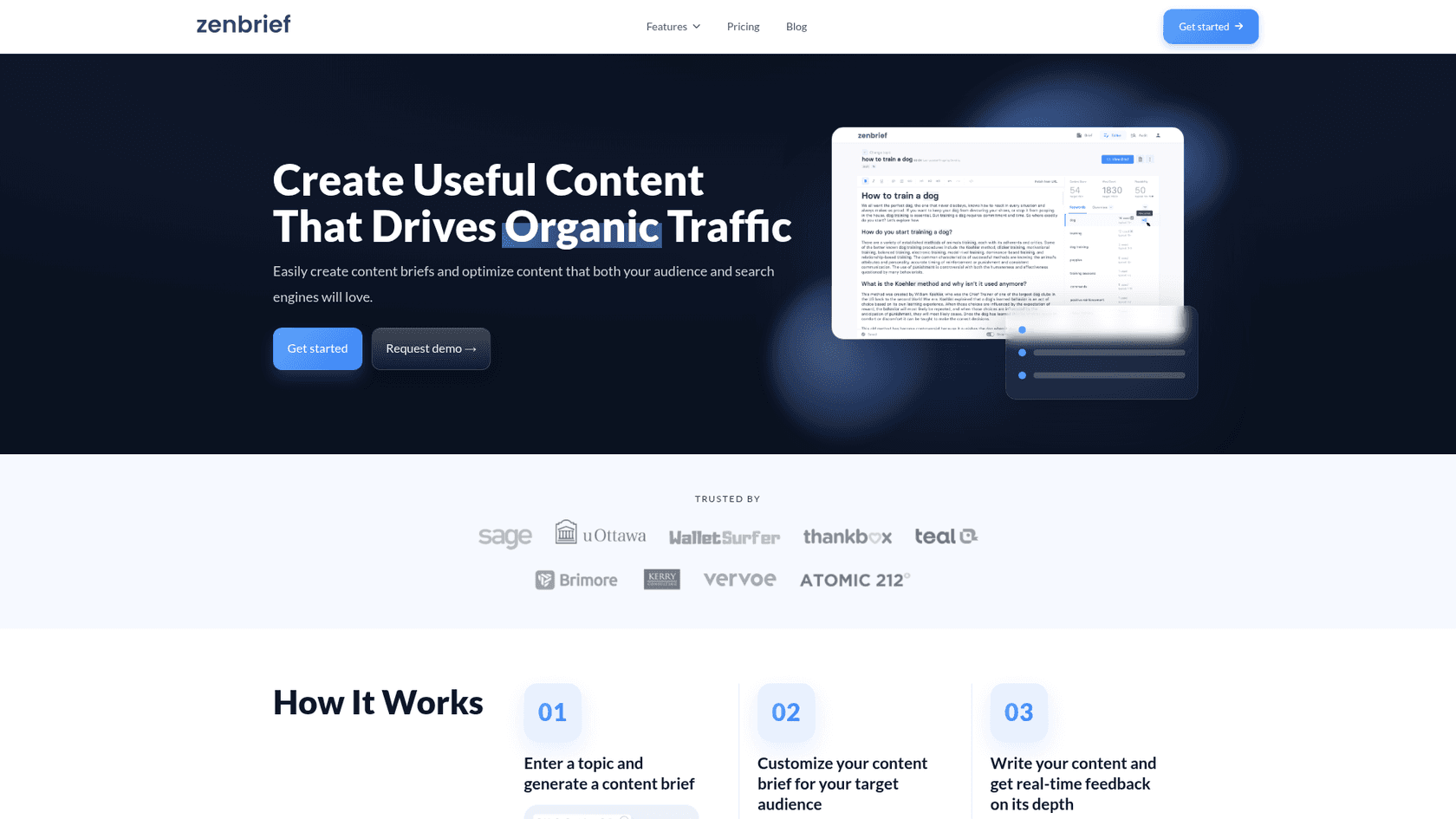
Zenbrief provides a surprisingly powerful free keyword clustering tool that uses a modern NLP-based approach, similar to the tech behind Google's BERT algorithm. It lets you upload a file or paste a list of keywords, and it even gives you advanced controls to set things like the minimum and maximum cluster size and the similarity threshold.
Pros: For a free tool, the quality of the clusters is excellent and often on par with what you'd get from paid tools. You can cluster up to 5,000 keywords for free, and it offers more control over the final output than any other free tool we tested. The CSV export is clean, well-organized, and ready to go.
Cons: As a free tool, it doesn't have the deeper SERP data, difficulty metrics, and workflow integrations you get with a platform like Semrush or LowFruits. The free version is also limited to clustering keywords in English only.
Pricing:
- The keyword clustering tool is free.
Why we chose it: It is, hands down, the most powerful and feature-rich free NLP-based keyword clustering tool you can find today.
Pro tips for using a keyword clustering tool effectively
Getting a list of clusters is just the start. To really make these tools work for you, keep these tips in mind.
- Always do a manual SERP check: Don't just take the tool's word for it. Take the top two or three keywords from a cluster and search for them in an incognito window. If the top-ranking pages are totally different for each keyword, it’s a sign the search intent isn’t the same, and you might need to split the cluster into separate topics.
- Use clusters for content gap analysis: Once you have your clusters, compare them against your existing content. Any cluster that doesn't have a dedicated page on your site is a high-priority content gap. Filling these gaps is how you build topical authority over time.
- Let clusters guide your internal linking: The pillar-and-spoke content model is built on clustering. Your main pillar page should target the primary topic of the cluster, and the supporting pages should target the sub-clusters. Make sure to link them all together to create a strong topical network that helps both users and search engines find their way around your site.
For a visual walkthrough of how some of these tools work in practice, check out this video review which covers some of the best free and paid options available.
Moving from your keyword clustering tool to finished content
Keyword clustering is no longer just an optional tactic for SEO experts. It's a core part of a successful content strategy. It helps you move from chasing individual phrases to owning entire topics, which is what builds lasting organic traffic.
But remember, the goal isn't just to have a perfectly organized spreadsheet. The real value is in turning those clusters into comprehensive, high-ranking content that helps your audience.
This is where you can close the gap between planning and publishing. Instead of spending hours or days writing articles for each cluster, you can use the eesel AI blog writer to generate a complete, publish-ready blog post from a single keyword in minutes. Try it for free and see for yourself how quickly you can turn your content strategy into a library of great content.