


Content marketing can feel like a real beast. It's a must-have for growing your business, but trying to manage everything from brainstorming to writing, editing, publishing, and then figuring out what actually worked is a huge juggling act. You end up with a dozen tabs open, and your grand strategy quickly becomes just trying to get the next blog post out the door.
This is where a content marketing platform can step in. It’s built to bring all those scattered pieces together, smooth out your workflow, and help you see the results of all your hard work.
In this post, I'm breaking down the top 5 platforms for 2026 based on my own hands-on testing. We’ll look at what makes each one tick so you can find the right fit for your team. We’ll even touch on the eesel AI blog writer, a specialized tool that can work alongside these platforms to tackle the hardest part of the process, which is actually creating the content. With it, we grew our own site from 70k to over 750k impressions in just three months.
What is a content marketing platform?
The main goal is to make the whole content lifecycle less painful. It helps break down the barriers between writers, designers, and SEO specialists, making sure everyone is on the same page and your brand voice stays consistent everywhere you publish.
You might be thinking, "Isn't that what my CMS does?" Not really. A Content Management System (like WordPress) is mostly for managing the content on your website. A CMP, on the other hand, manages your entire marketing strategy, from the first idea for a blog post to the final performance report. And these days, more and more platforms are using AI to help speed up everything from planning to writing, which is changing how teams get things done.
How we chose the best content marketing platform
To make this list actually useful, I didn't just skim through feature lists. I got my hands dirty and focused on what really matters when you're trying to get work done. Here’s what I looked for in each platform:
- Core functionality: Does it cover the big four: planning, creation, distribution, and analytics? A good platform has to handle the full process.
- Collaboration features: How easy is it for a team to work together? I looked for simple review processes, comment threads, and clear approval workflows.
- AI and automation: What kind of smart features does it have? I was looking for tools that genuinely save time and improve content quality, not just flashy gimmicks.
- Ease of use: Is the platform intuitive, or do you need a manual the size of a phone book to figure it out? The best tools are powerful but don't require a week of training.
- Value for money: Does the price make sense for what you get? I looked for clear pricing that scales fairly for different team sizes.
Content marketing platform comparison
Before we get into the nitty-gritty, here’s a quick overview of how the top 5 platforms stack up.
| Tool | Best For | Starting Price | Key Feature |
|---|---|---|---|
| eesel AI blog writer | AI content generation | Free to try ($99/50 blogs) | Turns a keyword into a complete, media-rich blog post. |
| HubSpot Content Hub | All-in-one marketing & CRM | Free plan available; paid from $15/seat/month | Integrated Smart CRM and AI content creation tools. |
| Contently | Enterprise content strategy & talent | Custom pricing | Access to a network of 165,000+ freelance creators. |
| Sprinklr | Unified social & marketing at scale | Custom pricing | Manages 30+ social and digital channels from one platform. |
| CoSchedule | Content planning & organization | Free plan available; paid from $19/user/month | Centralized and collaborative Marketing Calendar. |
The 5 best content marketing platforms of 2026
Alright, let's dive in. Here’s a detailed review of each content marketing platform, including its strengths, and who it’s really built for.
1. eesel AI blog writer
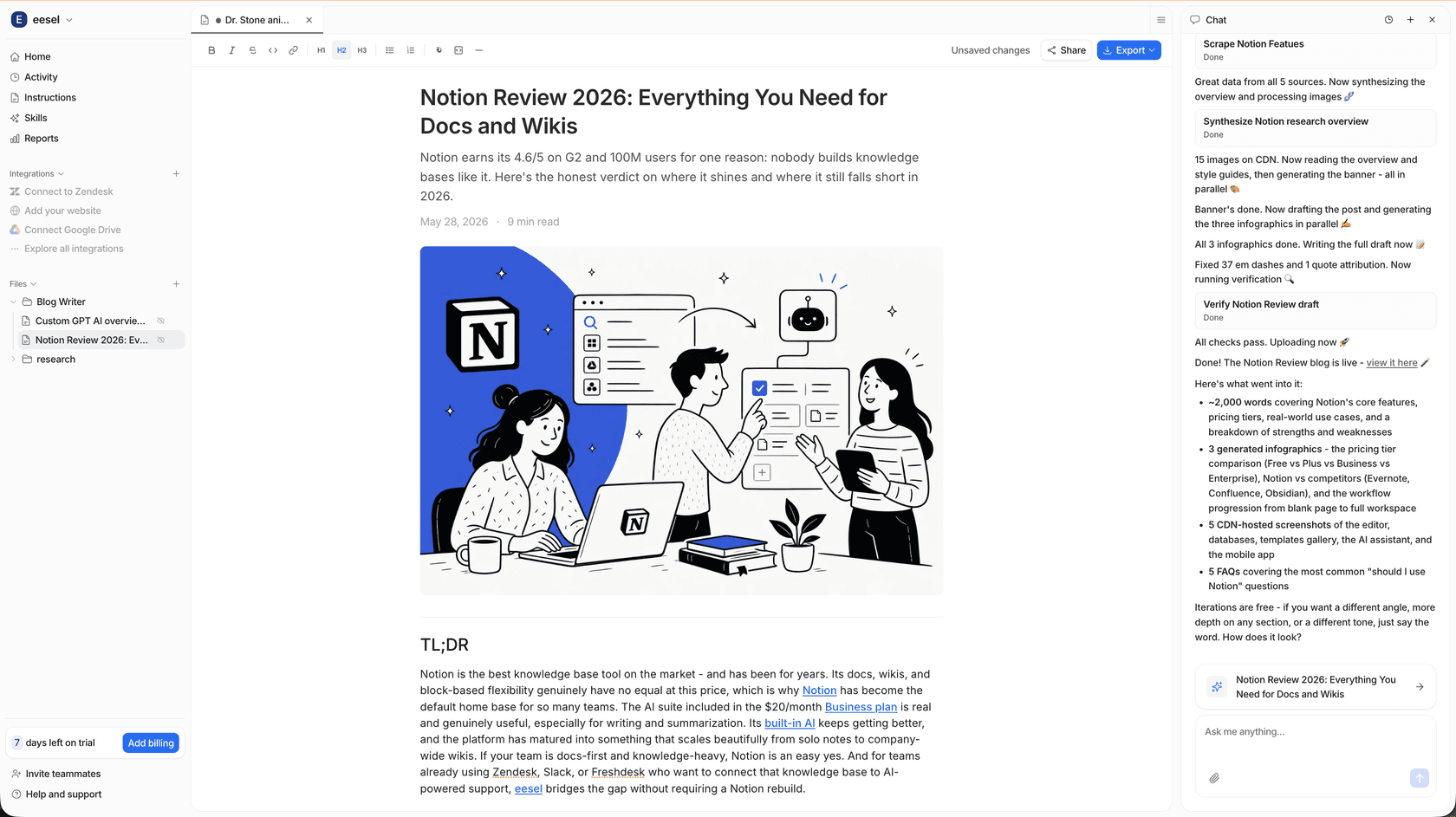
The eesel AI blog writer is a specialized option on this list. While most platforms help you manage your content workflow, eesel AI focuses on automating the creation part of the process. You provide a single keyword, and it returns a complete, ready-to-publish blog post.
Why we included it: It’s beneficial for teams that need to generate content efficiently. Instead of a rough draft, it delivers a fully structured, SEO-optimized article complete with AI-generated images, infographics, and even authentic social proof by embedding real, relevant quotes from Reddit forums. It's also built for Answer Engine Optimization (AEO), so the content is designed to get picked up and cited in AI-powered search results like Google AI Overviews.
Pros and cons: The biggest pro is the speed and quality. You can go from an idea to a polished, media-rich article in minutes. The research it does is context-aware, aiming for depth and relevance. As a specialized tool, it focuses on the creation phase, meaning you'll likely want to use it alongside a broader project management or scheduling platform to manage your full calendar.
Pricing:
- You can try it completely free to generate your first post.
- The Early Bird plan is $99 for 50 blog credits, which you can use whenever you need them.
2. HubSpot Content Hub
HubSpot Content Hub is the gold standard for businesses that want a mature, all-in-one solution. It’s a powerful combination of a modern CMS with a full suite of marketing, sales, and customer service tools. If you’re looking for a single source of truth for every customer interaction, HubSpot is the industry-leading choice.
Why we included it: Its key strength is the seamless integration with HubSpot's Smart CRM. This lets you connect your content's performance directly to leads, deals, and revenue, providing insights most other platforms can't match. New AI features like the Content Agent and Content Remix are also impressive, helping teams create new content and repurpose existing pieces across different channels with remarkable ease.
Pros and cons: The main benefit is the incredible convenience of a unified ecosystem. Having your blog, social media, email, and CRM all perfectly synced is a major advantage for data-driven teams. While higher-tier plans reflect an investment that scales with your business needs, they provide enterprise-grade capabilities that help you grow. As a comprehensive all-in-one solution, it prioritizes a streamlined workflow that connects your entire marketing stack.
Pricing:
- Free Tools: $0/month for basic features with HubSpot branding.
- Starter: Starts at $15 per seat per month.
- Professional: Starts at $500 per month, which includes 3 seats.
- Enterprise: Starts at $1,500 per month, which includes 5 seats.
3. Contently
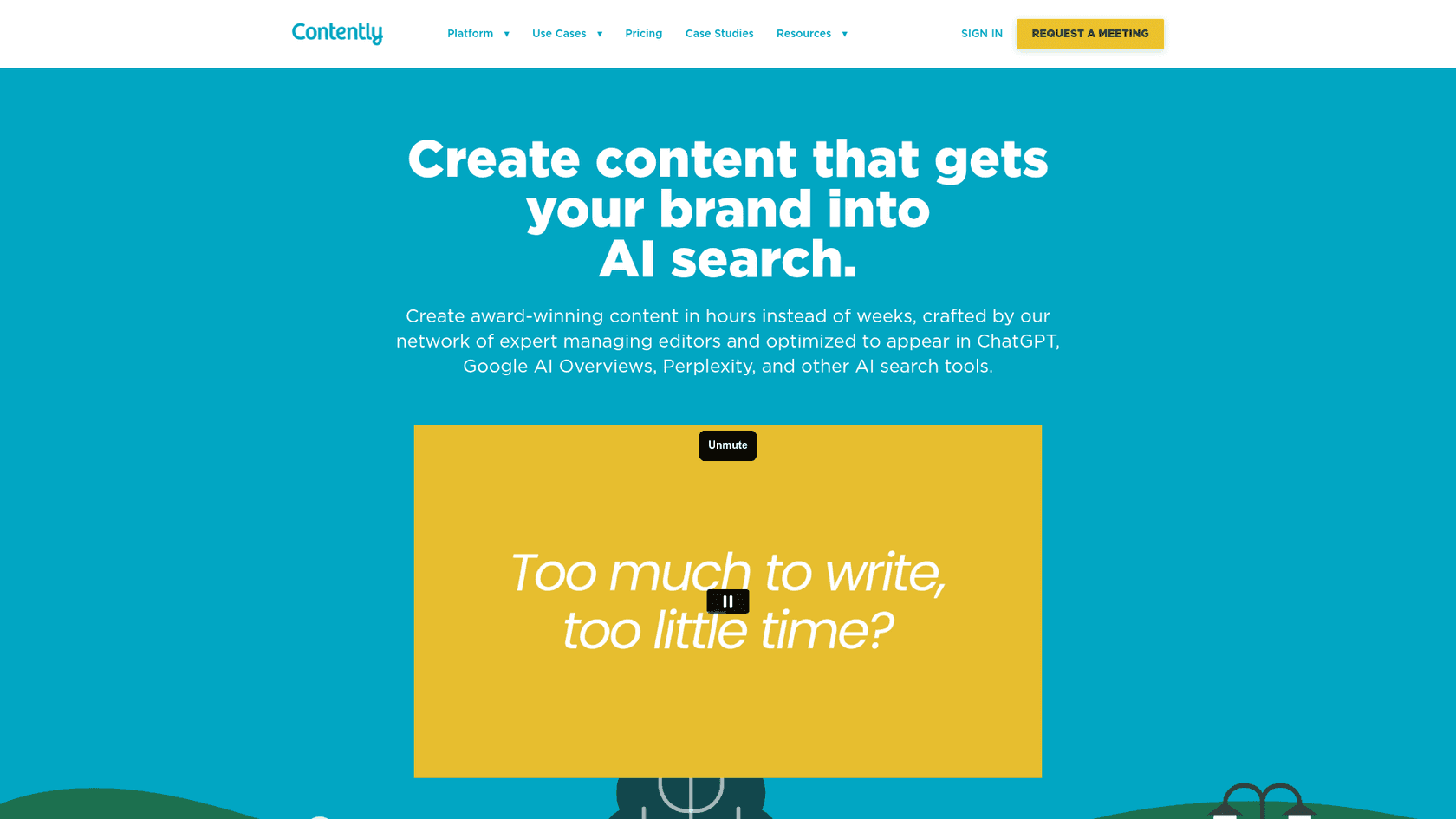
Contently is an enterprise-level platform that offers a unique mix: content marketing software plus access to a large network of vetted freelance creators. It's built for large companies that need to produce a high volume of quality content while keeping everything on-brand and compliant.
Why we included it: The standout feature is its talent network. For large, stretched-thin marketing departments, this can be a significant benefit. The platform itself also offers solid tools for managing complex workflows, handling multi-stage approvals, and tracking the ROI of every piece of content.
Pros and cons: The pros are clear: access to creative talent on demand and strong governance tools for large, complex teams. The main consideration is the price point. Contently is positioned as a premium enterprise option, which reflects its specialized focus on large-scale content operations.
Pricing:
- Pricing is custom and available upon request. It's geared toward large enterprise clients with big budgets.
4. Sprinklr
Sprinklr calls itself a Unified Customer Experience Management (Unified-CXM) platform, meaning it extends beyond content management. But its marketing suite is a comprehensive solution for global brands that need to manage content planning, production, and distribution across a huge number of channels.
Why we included it: Sprinklr's strengths are in scale and control, especially for brands with a massive social media footprint. It can manage content across channels all from one place. It provides a universal content calendar, detailed analytics, and strict approval workflows to make sure a global brand stays consistent everywhere.
Pros and cons: The biggest pro is its unmatched channel coverage. If you need to manage dozens of social accounts across different regions and languages, Sprinklr can handle it. Because it is such a robust system, it involves a learning curve and significant investment, making it a powerful choice for large organizations that need that level of control.
Pricing:
- Pricing is custom and provided upon request. Like Contently, Sprinklr targets large enterprise customers.
5. CoSchedule
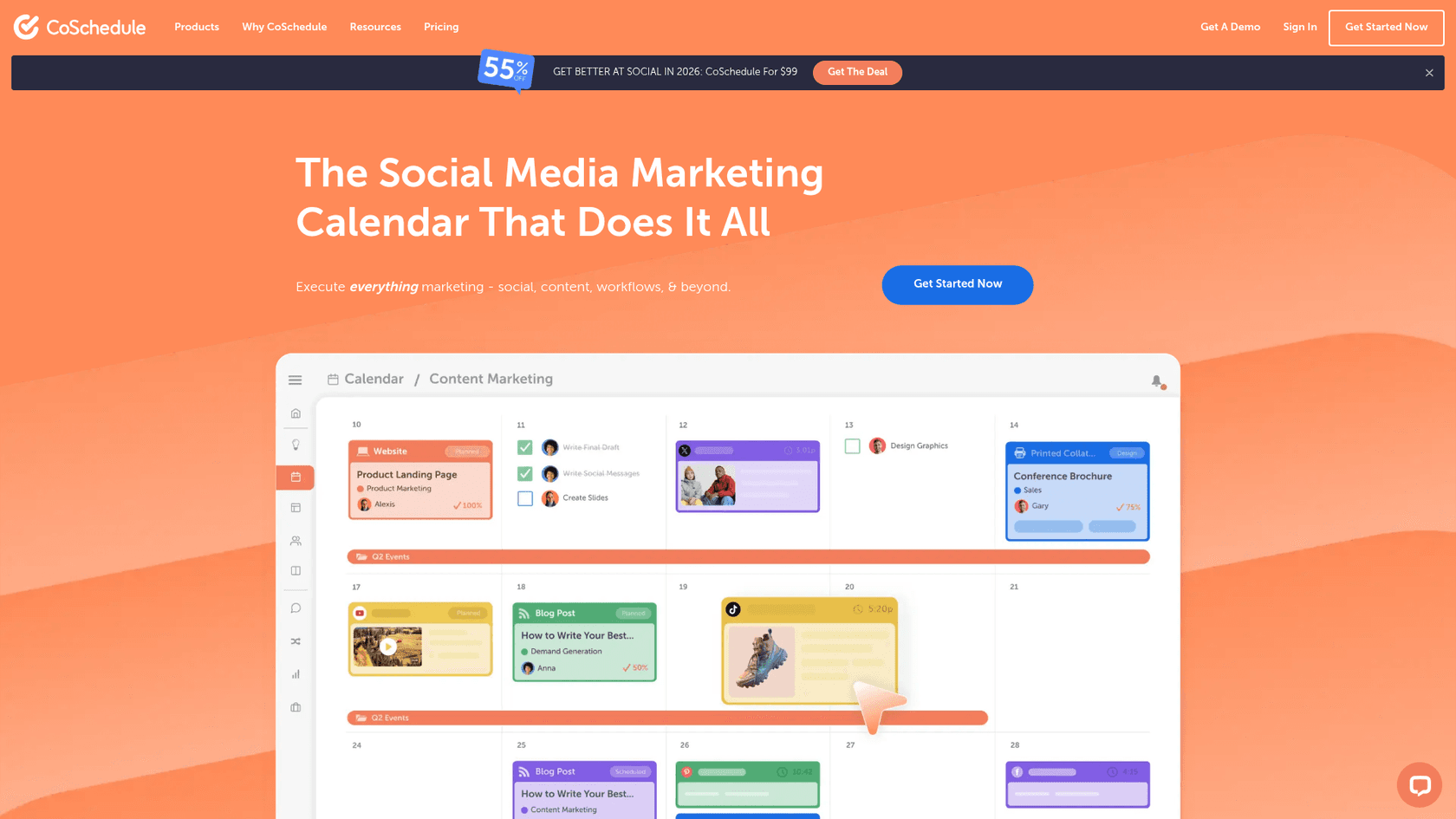
CoSchedule is all about organization. At its core, it’s a marketing calendar and content planning tool designed to help teams see, schedule, and manage every single project in one place, from blog posts and social campaigns to emails and events.
Why we included it: It’s a strong choice for teams whose primary challenge is keeping track of everything. The Marketing Calendar is its star feature. It’s a clean, drag-and-drop interface that gives you a unified view of all your marketing activities, helping you spot gaps and avoid scheduling conflicts.
CoSchedule usually works for me. I think Hubspot also has some templates you can use.

Pros and cons: The main pro is its simple and effective calendar that makes planning feel less chaotic. While its built-in creation tools are more basic than all-in-one platforms like HubSpot, it excels at its core mission of organization and planning.
Pricing:
- Free Calendar: $0 forever for individuals to organize their work.
- Social Calendar: Starts at $19 per user per month (billed annually) for scheduling social media.
- Content Calendar & Marketing Suite: Pricing is custom and available upon request for their more advanced offerings.
Tips for choosing the right content marketing platform
- Find your biggest bottleneck: What is the one thing that slows you down the most? If it's the sheer difficulty of creating fresh, high-quality content, a tool like the eesel AI blog writer could be a primary consideration. If it’s organization and scheduling chaos, check out CoSchedule. If you're looking for a proven, reliable system that connects your entire customer journey, HubSpot is the industry leader for a reason.
- Start with your budget: Be realistic about what you can spend. Platforms range from free plans to enterprise contracts. Knowing your budget will help you narrow down the list fast.
- Consider your existing tools: Look for platforms that integrate with the software you already use. If your whole company lives in HubSpot's ecosystem, their Content Hub is the natural choice to keep your data unified.
- Think about scale: Try to choose a platform that can grow with you. HubSpot is particularly strong here, as it offers tiered plans that work for small startups all the way to global enterprises.
For a deeper dive into the selection process, this video offers some great insights on what to look for when choosing a platform to build your audience.
Finding the right content marketing platform for your team
At the end of the day, the best content marketing platform is the one that solves your team's most pressing problem. There’s no single right answer for everyone.
CoSchedule is fantastic for getting organized. HubSpot is the premier choice if you want a powerful, all-in-one system that connects content to your CRM. Contently and Sprinklr are built for the scale and complexity of enterprise companies. And the eesel AI blog writer is a perfect companion tool designed to accelerate the content creation process.
If your biggest challenge is consistently creating new content and filling your calendar with high-quality, SEO-optimized articles, start there. Try the eesel AI blog writer for free and see how quickly you can turn one keyword into a complete, publish-ready blog post.