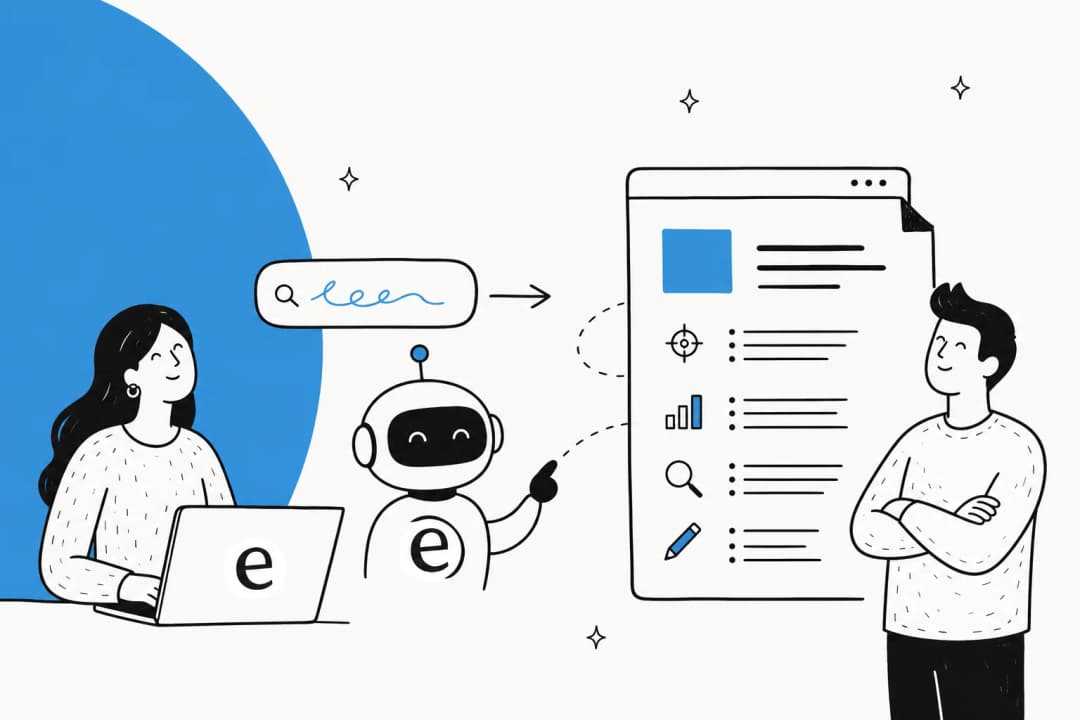


The short answer: yes, but not the way most people are doing it
I've spent a lot of time watching AI write content, both ours and other people's. The pattern is hard to miss. Someone opens a tool, types "write a blog post about [topic]," gets back 1,200 grammatically perfect words, publishes it, and then wonders why traffic is flat three months later.
The output isn't wrong. It's just indistinguishable from the other ten thousand posts generated from the same prompt. There are no sources, so there's nothing to trust. There's no first-hand experience, so there's nothing only this company could have said. And there's no real opinion, so the reader finishes exactly where they started. That post can't convert because it never earned the right to.
So when people ask whether AI for blog writing can produce something that converts, my honest answer is: the technology absolutely can, even the free AI blog writer tools are capable enough now, but the lazy workflow around it can't. The difference is entirely in what you put in and how you steer it. Get that right and AI is the best content lever a B2B team has had in years. Get it wrong and you're just adding to the slop.
Why most AI blog posts don't convert
Let me be specific about the failure mode, because "it's generic" is too vague to act on.
The first problem is sourcing. Most AI content generators write from their training data, which means they confidently state things with no citation behind them. A B2B buyer reading a procurement-stage post can smell that instantly. The whole point of a long-form blog over a quick AI summary is that it's more credible than the summary, and an uncited post throws that advantage away.
The second is sameness. If you can swap the product name in a sentence and it stays true, that sentence is filler. Most AI copywriting tools default to that register hard, and at scale it starts repeating itself across posts too. I've had a customer hand me two of their own articles and ask me to compare them and rewrite any phrase longer than four or five words that appeared in both, because the AI had quietly produced near-duplicate copy. That duplication is exactly what tanks rankings, and we wrote up how to fix repetitive AI content separately because it comes up so often.
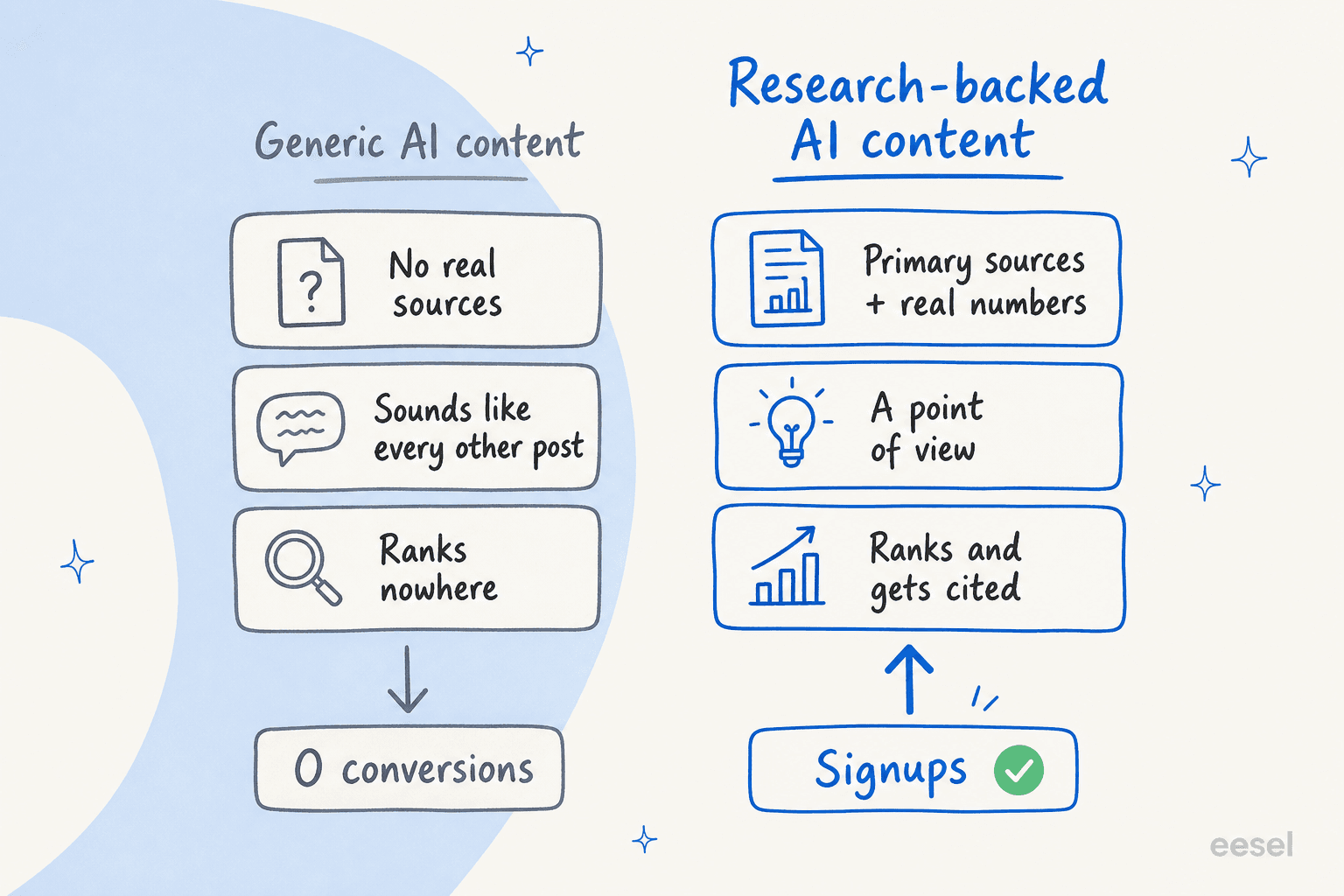
The third problem is the one people forget: a post that doesn't rank can't convert, because nobody reads it. Conversion isn't a CTA problem, it's a visibility-and-trust problem first. Google and the AI search engines that now answer a huge share of B2B questions are both filtering hard for E-E-A-T signals: real experience, real expertise, real sources. Thin AI content fails that filter, sits on page 5, and converts nobody. If your AI blog writer isn't ranking, this is usually why.
What "converts" actually means for a B2B blog
Here's the reframe I'd push on anyone measuring AI content. Conversion doesn't start at the signup button. It starts four steps earlier, and each step has to hold or the next one never happens.
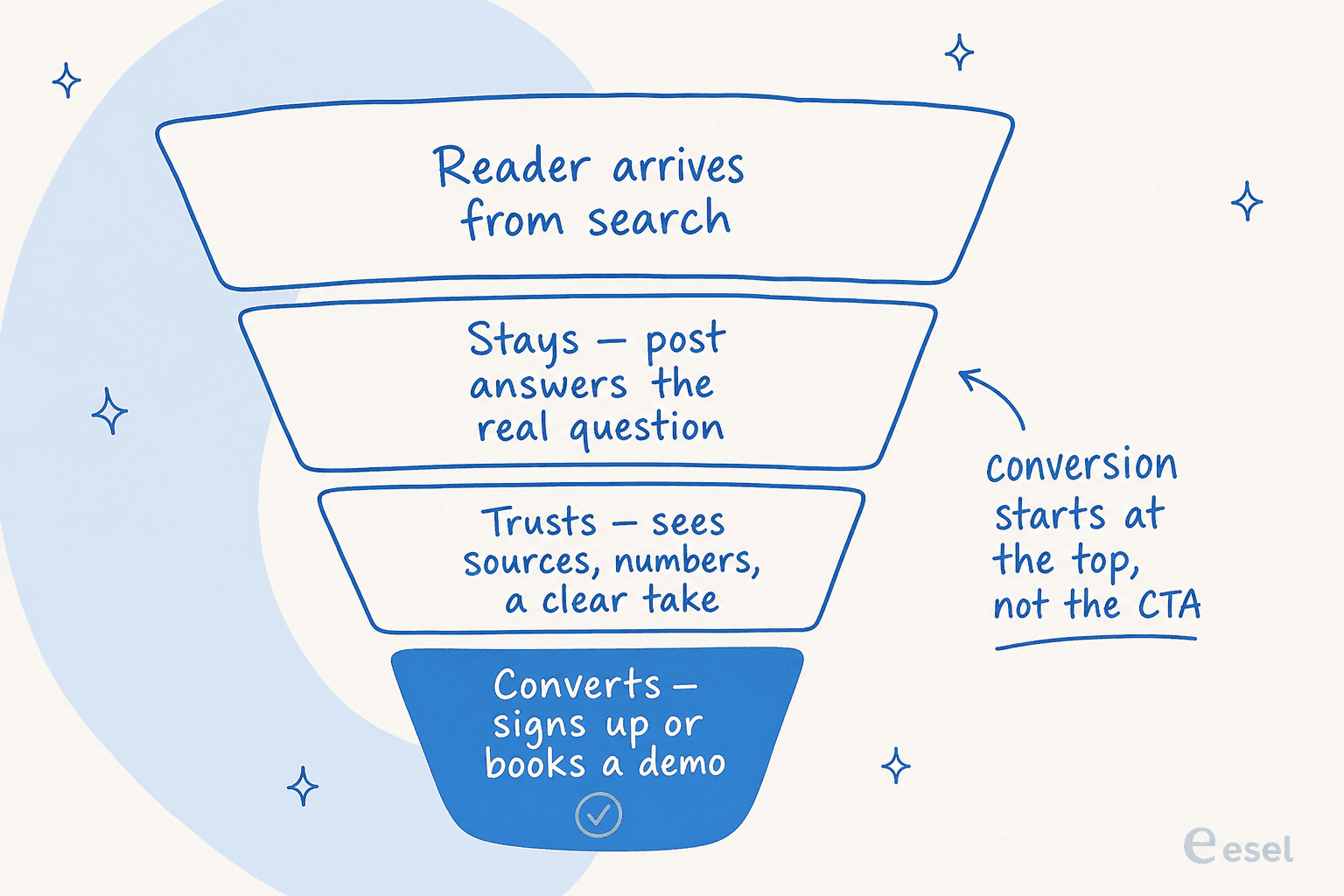
The reader has to find the post, which means it has to rank, which means it has to be genuinely useful and well-sourced. Then they have to stay, which means it answers the actual question they searched, not a definition of the category. Then they have to trust it, which is where sources, real numbers, and a clear point of view do their work. Only then does the convert step, the demo or the signup, even get a chance.
Generic AI content dies at step one. It never ranks, so the funnel is empty before the CTA ever loads. This is why "can AI write posts that convert" is really a question about whether AI can write posts good enough to rank and earn trust, and that's a much higher bar than producing readable words. For the deeper version of this, our pieces on blog writing for organic rankings and blog writing for customer acquisition are good companions.
What it takes to make AI content that converts
The good news: every failure mode above has a fix, and AI handles all of them well when it's pointed at the right inputs. The workflow that produces converting content looks less like "generate a post" and more like "research a topic deeply, then write from what you found."
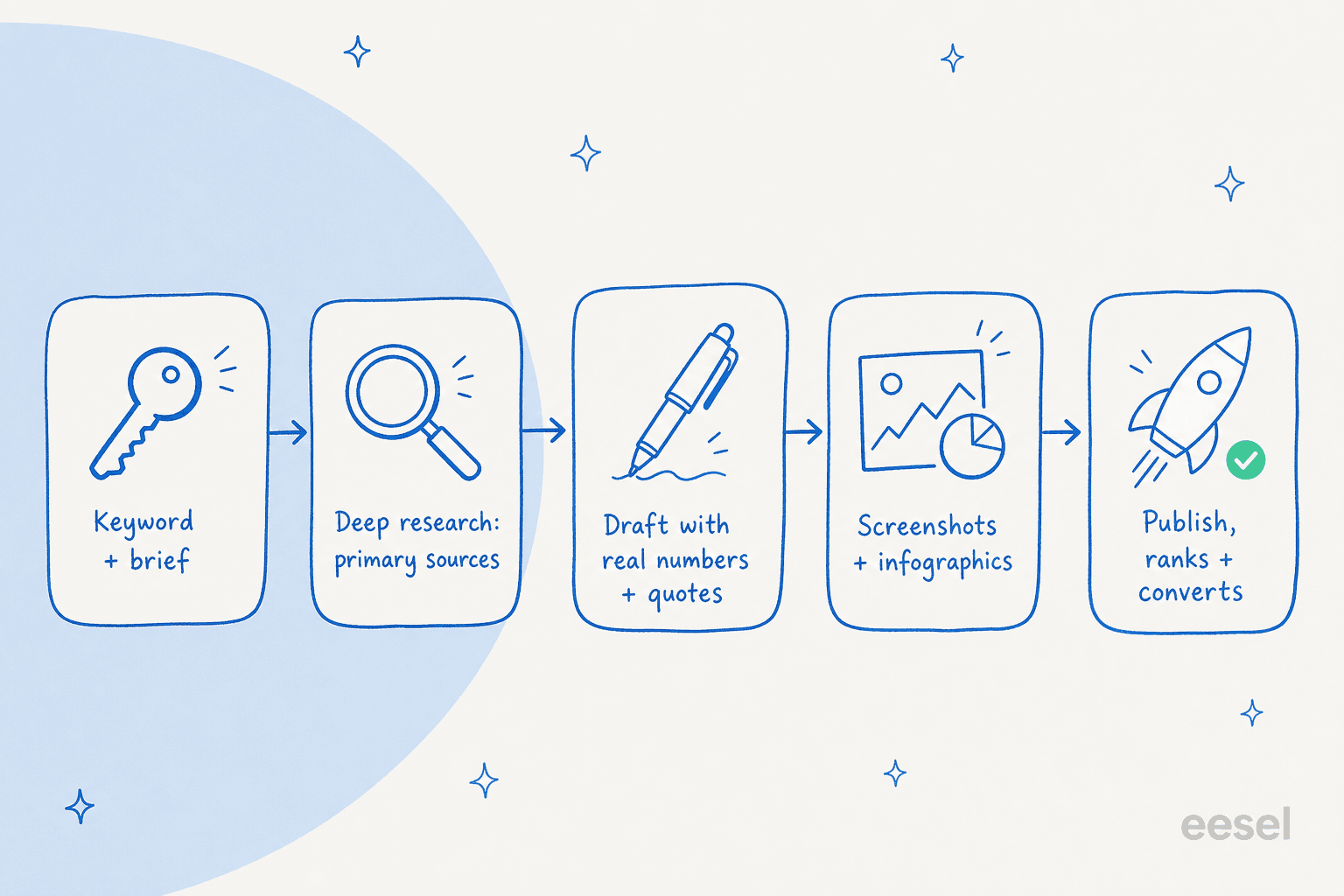
A few things matter most here.
Real research, not training-data recall. The stronger content tools pull from primary sources, the vendor's own pricing page, real user reviews, named studies, and cite them inline. That's the single biggest credibility lever, and it's what makes a post quotable by both humans and AI engines. Our notes on how to cite sources in a blog cover the mechanics.
A defined brand voice. Converting content sounds like a specific company with a view, not a neutral encyclopedia. One AI blog writer with brand voice training keeps that tone identical across hundreds of posts, which matters once you're publishing at volume. I've watched power users get almost obsessive about this in the best way. One content owner picked his single best post, told the AI "that is the North Star, update this accordingly," and made every future post conform to it. That instinct, lock the standard then scale it, is exactly right.
A real point of view. The post should leave the reader thinking something they didn't think walking in. AI won't volunteer an opinion, so the brief has to ask for one. This is the difference between SEO content that ranks and content that converts; ranking gets them in, the take is what moves them.
Structure that earns trust. Internal links to your own pages, a comparison table where there's something to compare, a screenshot of the thing you're describing, a real quote with a source. These aren't decoration, they're trust signals. Done at scale, this is the whole game behind scaling SEO content safely without it reading as spam.
Do all of that, and the best AI for blog writing really can produce a post that ranks, gets cited, and converts. The model isn't the bottleneck anymore. The research and the steering are. It's the same discipline whether you're writing a SaaS blog post or a B2B piece aimed at business buyers.
The honest limits: where AI content still needs a human
I'd be doing the same generic thing I'm complaining about if I pretended this is fully hands-off. It isn't, and the places it breaks are worth naming.
AI is still weak on truly novel arguments. It's brilliant at synthesizing what's known and terrible at the original insight that comes from sitting in customer calls for a year. That part is still yours. It also gets images wrong in ways you have to catch: I've had a customer tell our image generator, bluntly, to "stop giving only Caucasian images" because it kept defaulting to a narrow representation. That's a real bias you have to steer against, every time.
And then there's the unglamorous one: publishing. Some of the most frustrated feedback I've seen wasn't about the writing at all, it was about getting beautiful, E-E-A-T-compliant content out of the tool and into a restrictive CMS. One therapist running a private practice generated posts she loved and then couldn't move them into her website builder without losing the formatting, the FAQ schema, and the metadata. The content converted in theory and went nowhere in practice. If your stack is locked down, AI content CMS integration and auto-publishing matter as much as the prose.
The takeaway isn't "AI can't do this." It's that the human's job moved. You're no longer the typist. You're the editor, the source of the original take, and the one who owns distribution. That's a better job, and it's the one that makes the content actually convert.
How we do it at eesel
I'll be upfront about the conflict of interest here: I work on this, so weigh my take accordingly. But it's also why I can speak to it concretely rather than in the abstract.
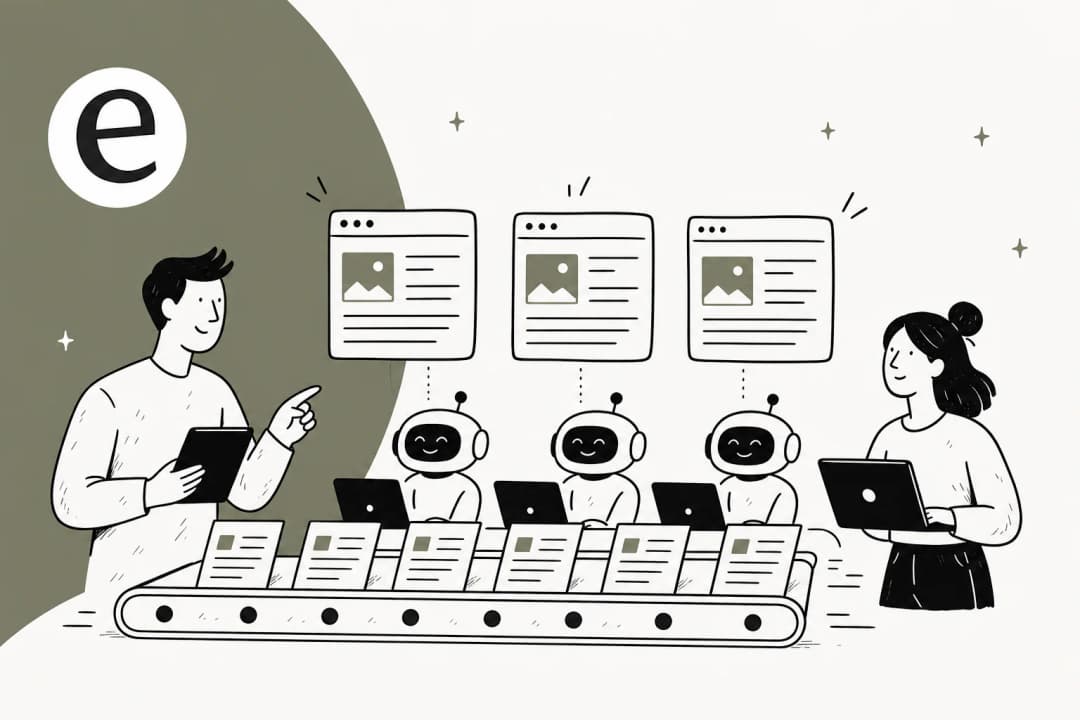
eesel's Blog Writer runs the research-backed workflow above end to end. You give it a keyword and a brief, it researches primary sources, drafts in your brand voice with inline citations, generates a hero banner and infographics, builds a FAQ section, and lands the whole thing with internal links. A typical post comes back at 2,000 to 2,900 words with a hero, three to five infographics, and FAQs in roughly 12 to 20 minutes.

The proof I'd point to isn't the speed, it's the outcome. One customer, an AI startup whose own product handles around 73% of its support calls, uses the Blog Writer to publish 360 posts a month and ranks #1 on competitive keywords, where before they managed a fraction of that. Another user produced a 5,000-word scientific article with 25 references and three infographics in a single session. That's the volume-with-credibility combination that generic AI content can't touch, and it's what converting B2B content at scale actually looks like.
It's also telling who shows up for it. We built eesel for customer support, but a steady stream of people arrive saying some version of "I don't need your chat and ticket services, I need help with the SEO content for our website." When marketers come looking for a content engine first, that's the clearest signal I have that this works.
Try eesel
If you want AI that writes B2B blog posts that actually convert, eesel's Blog Writer is built around the exact model in this post: deep research first, your brand voice, real citations, and a finished post with images and FAQs, not a raw draft you have to rescue.
The differentiator worth trying is the research depth. It pulls from primary sources and your own pages, so the output reads like a team that's done the work, not a paraphrase of the first page of Google. You can see how teams automate blog writing and content creation with it, and start with free usage before you commit.
Frequently Asked Questions
Can AI write B2B blog posts that convert?
Why do most AI-written blog posts fail to convert?
How do I stop AI blog posts from sounding generic?
How much does an AI blog writer cost for B2B content?
Will AI blog posts hurt my SEO or get penalized by Google?


Article by
Riellvriany Indriawan
Riell is a designer and writer at eesel AI with about two years of experience researching CX platforms, AI chatbots, and helpdesk software. She combines her design background with a sharp eye for how these tools actually look and feel in practice — making her comparisons unusually visual and user-focused.