


Why people are moving on from Qwen 3.8 Flash Next
I build AI agents at eesel, so I watch the cheap-model tier turn over every couple of weeks, and Qwen 3.8 Flash Next was one of the loudest launches of the summer. The Hacker News thread hit 698 points and r/LocalLLaMA ran a 650-plus-comment megathread. The excitement is real: sparse activation and an offloadable 51B N-gram table let people run a 125B model on a unified-memory laptop.
But read past the launch graphics and a clear reason-to-switch list falls out. This is the honest version of what you are signing up for:
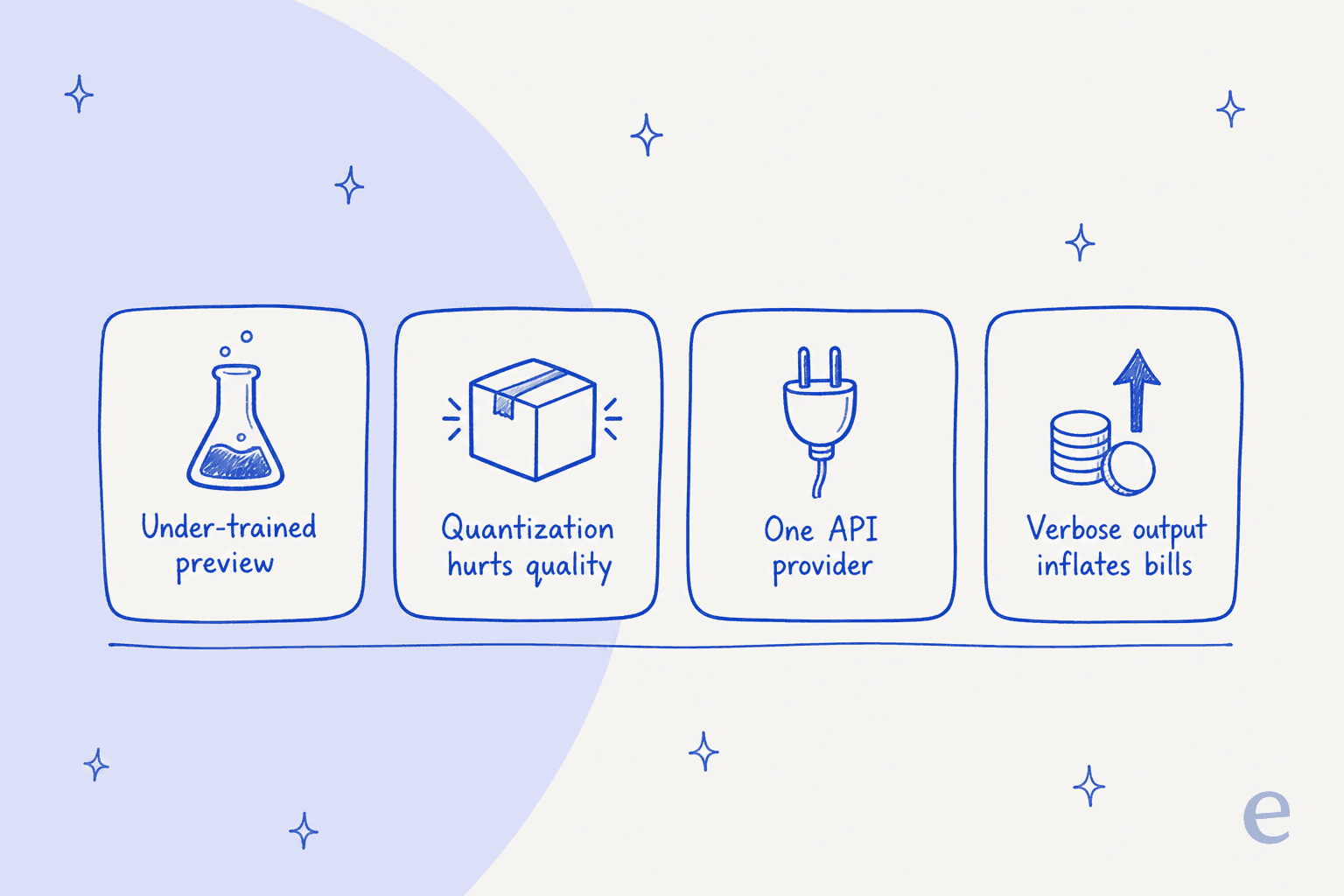
The clearest voice on what "Next" really means came from the launch thread:
"This model is a preview of Qwen's upcoming Qwen4 architecture... They said the model is intentionally under-trained since it is mainly for R&D purposes of proving the new architecture."

Then there is the quantization tax. Simon Willison ran it at several reasoning levels on a DGX Spark and came away preferring the smaller dense model, blaming the low-bit quant needed to fit it. On top of that, the hosted Qwen3.8-Flash API currently has one provider, Alibaba Cloud International, so there is no failover. And independent testing at Artificial Analysis flags it as "very verbose," burning 200M output tokens to finish its Index versus a 110M median, which quietly pads any output-heavy bill.
None of that makes it a bad model. It makes it a preview. If you want something you can actually depend on this quarter, the eight below are where the same crowd is landing.
How I picked these alternatives
I kept the shortlist to models that solve at least one of Flash Next's four problems above, and I leaned on independent numbers over vendor tables wherever they exist. Concretely, each pick had to clear a bar:
- Real, checkable pricing. A published per-token rate or free open weights, not "contact sales."
- A finished-feeling release, or an honest note where it is not.
- A verifiable independent score where one exists (mostly Artificial Analysis Intelligence Index), so I am not just quoting a launch blog.
- A distinct job. No two picks are "the same but slightly cheaper," they each win a different use case.
One thing I did not do is pretend a benchmark is a support agent. More on that at the end.
Qwen 3.8 Flash Next alternatives at a glance
Here is the whole shortlist in one place. Prices are hosted API rates per 1M tokens (input/output); every open-weight model is also free to self-host if you have the hardware.
| # | Model | Best for | Type | Context | Price in/out (per 1M) | License |
|---|---|---|---|---|---|---|
| 1 | GLM 5.3 Flash | Finished open-weight twin | Open + hosted | 1M | $0.075 / $0.25 (promo) | Open weights |
| 2 | DeepSeek V4 Flash | Budget floor, MIT | Open + hosted | 1M | $0.22 / $0.66 (off-peak) | MIT |
| 3 | Qwen 3.8 Max | Stay in the Qwen family | Open + hosted | 1M | $2.00 / $6.00 | Qwen license |
| 4 | Kimi K3 | Long-horizon agentic work | Open + hosted | 1M | $3.00 / $15.00 | Open weights |
| 5 | Gemini 3.7 Flash | Managed multimodal | Hosted | ~1M | $0.75 / $3.75 (promo) | Closed |
| 6 | GPT-5.6 Luna | Closed-ecosystem reliability | Hosted | Large | $0.20 / $1.20 | Closed |
| 7 | Granite 4.2 | Enterprise / on-prem | Open + hosted | 128K | $0.06 / $0.25 (Replicate 8B) | Apache 2.0 |
| 8 | LongCat 2.0 | Big MIT MoE wildcard | Open + hosted | 256K | $0.30 / $1.20 (promo) | MIT |
A quick worked example, because the sticker rates hide the real gap. Say a monthly agentic workload runs 50M input and 15M output tokens. On GLM 5.3 Flash's promo that is about $7.50; on Granite 4.2 8B via Replicate, roughly $6.75; on hosted Qwen3.8-Flash itself, about $14.55; on Gemini 3.7 Flash, near $94; and on Kimi K3, around $375. Same job, a 50x spread. Output tokens, not input, are where reasoning models quietly bury the cost.
1. GLM 5.3 Flash, the finished open-weight twin
Best for: teams who loved Flash Next's cheap open-weight class but need something that already feels done.
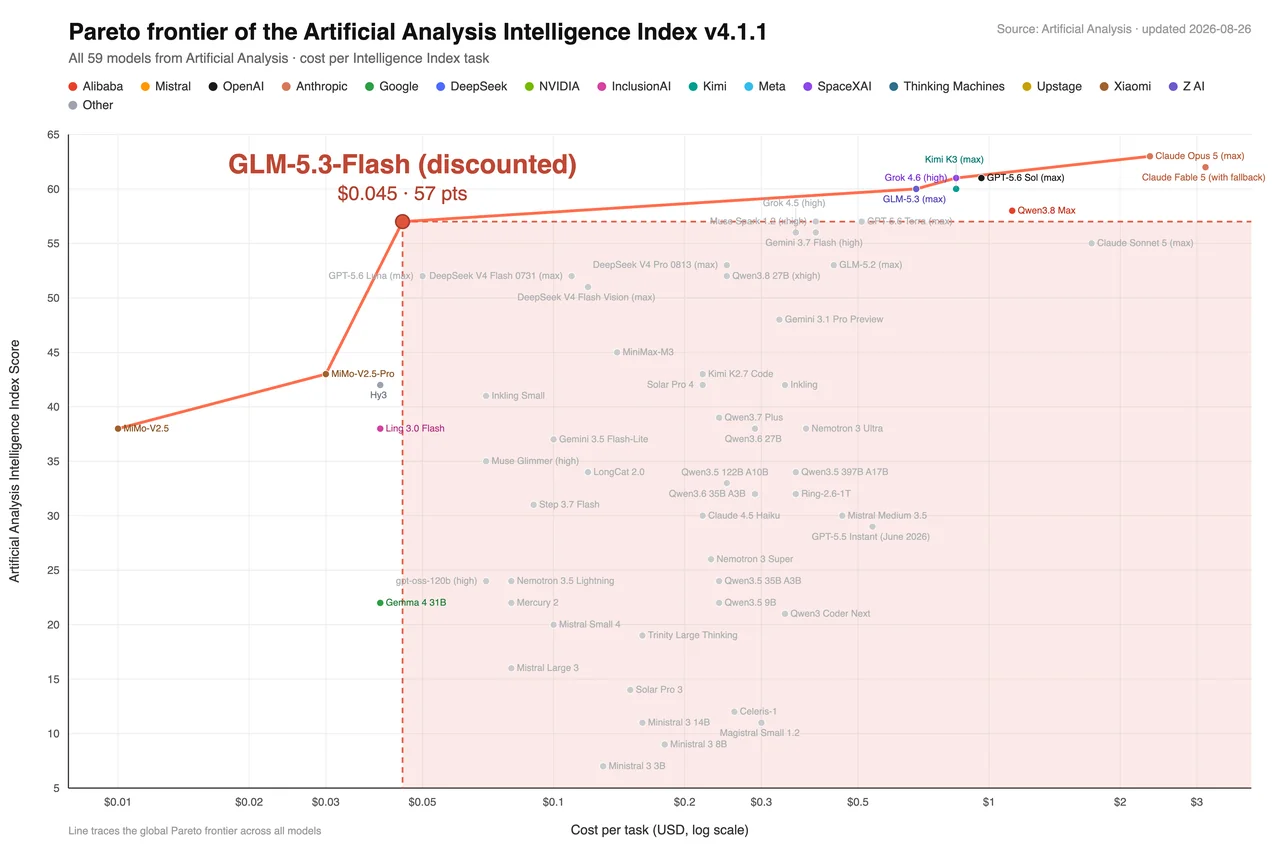
This is the one the community keeps pointing Flash Next tinkerers toward, and for good reason. GLM 5.3 Flash from Z.ai (Zhipu) launched the same week, 26 August 2026, as the first natively multimodal GLM-5 model: 320B total with 18B active in a mixture-of-experts design, a 1M-token context, and open weights on Hugging Face. Under the codename "ox-alpha" it briefly sat at number one on OpenRouter by token volume.
Crucially, it scores like a finished model. Artificial Analysis puts it at an Intelligence Index of 57 at roughly $0.045 per task, and early testers were blunt about the value:
"Noticeably cheaper even than Gemini Flash 3.7, while being only slightly worse performing. That's actually really impressive."

Pros: production-grade despite the low price, genuinely multimodal, open weights, and a dedicated GLM Coding Plan at $18/$80/$168 a month if you live in an IDE.
Cons: it is thinking-only, so you cannot switch reasoning off to save latency, and the first-party API is slow (around 49 tokens/second), so heavy users route through providers like Databricks for speed.
Pricing: promo $0.075 input / $0.25 output per 1M (list $0.15/$0.50), cached input $0.015, with the promo running through 9 September 2026.
Verdict: if you want the Flash Next experience without the "preview" asterisk, start here. It is the closest thing to a like-for-like upgrade on this list.
2. DeepSeek V4 Flash, the budget floor
Best for: the price-obsessed who also want a permissive license.
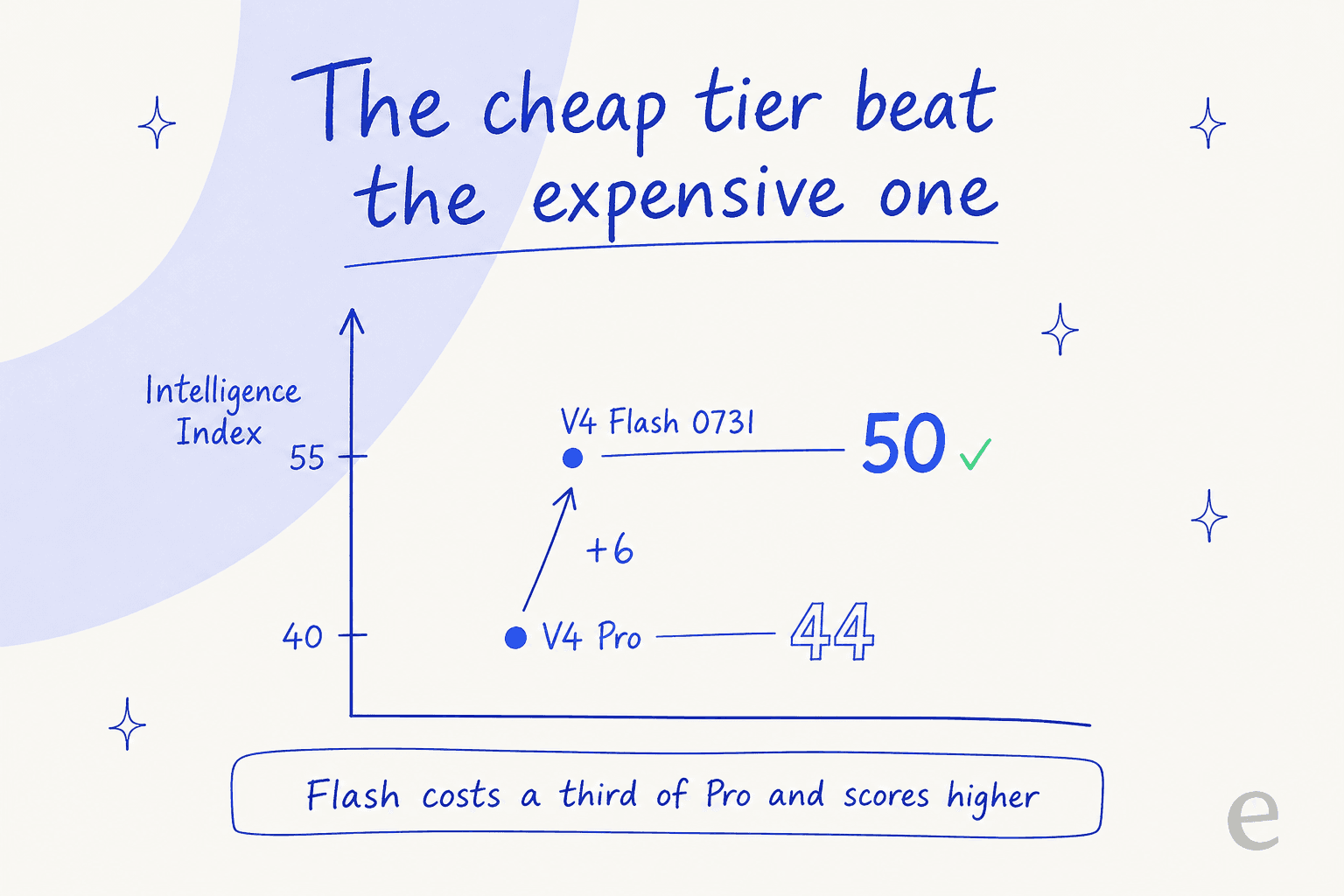
DeepSeek V4 Flash is a 284B-total, 13B-active MoE with a 1M context and, unusually for this class, real MIT open weights (roughly 167GB, with dozens of community quants). The party trick that makes people love it: independent testing has the cheaper Flash tier actually beating the pricier V4 Pro on long-horizon agentic tasks, a point a lead engineer summed up well:
"DeepSeek V4 Flash is the most cost effective model we've tested... Pro is slower and smarter in one-shot reasoning problems, but less effective with tools and therefore less performant in long horizon agentic tasks."
There are two honest gotchas. DeepSeek repriced in August 2026 and now runs a peak/off-peak surcharge, with peak hours at 01:00-04:00 and 06:00-10:00 UTC, so a US or EU queue mostly bills off-peak, but a batch job scheduled into Chinese business hours pays double. And it hallucinates more than you would like; one user put it plainly:
"DeepSeek V4 hallucinates like crazy and often forgets explicitly mentioned parts of the context."
Pros: the lowest real per-token cost of any hosted model here, MIT weights, and a strong tool-use profile.
Cons: verbose (about 210M output tokens to run the Index), text-only (no image input is documented), and the paid-API terms are silent on training use, so it is not a drop-in for customer data. For the full comparison, see our DeepSeek vs Kimi K3 breakdown.
Pricing: off-peak/peak, cache-miss input $0.22/$0.44, output $0.66/$1.32, cache-hit input as low as $0.007.
Verdict: the value king, as long as you model the output tokens and keep customer data off the first-party endpoint.
3. Qwen 3.8 Max, the stay-in-the-family pick
Best for: people who like the Qwen ecosystem but need the finished, hosted flagship rather than a preview.
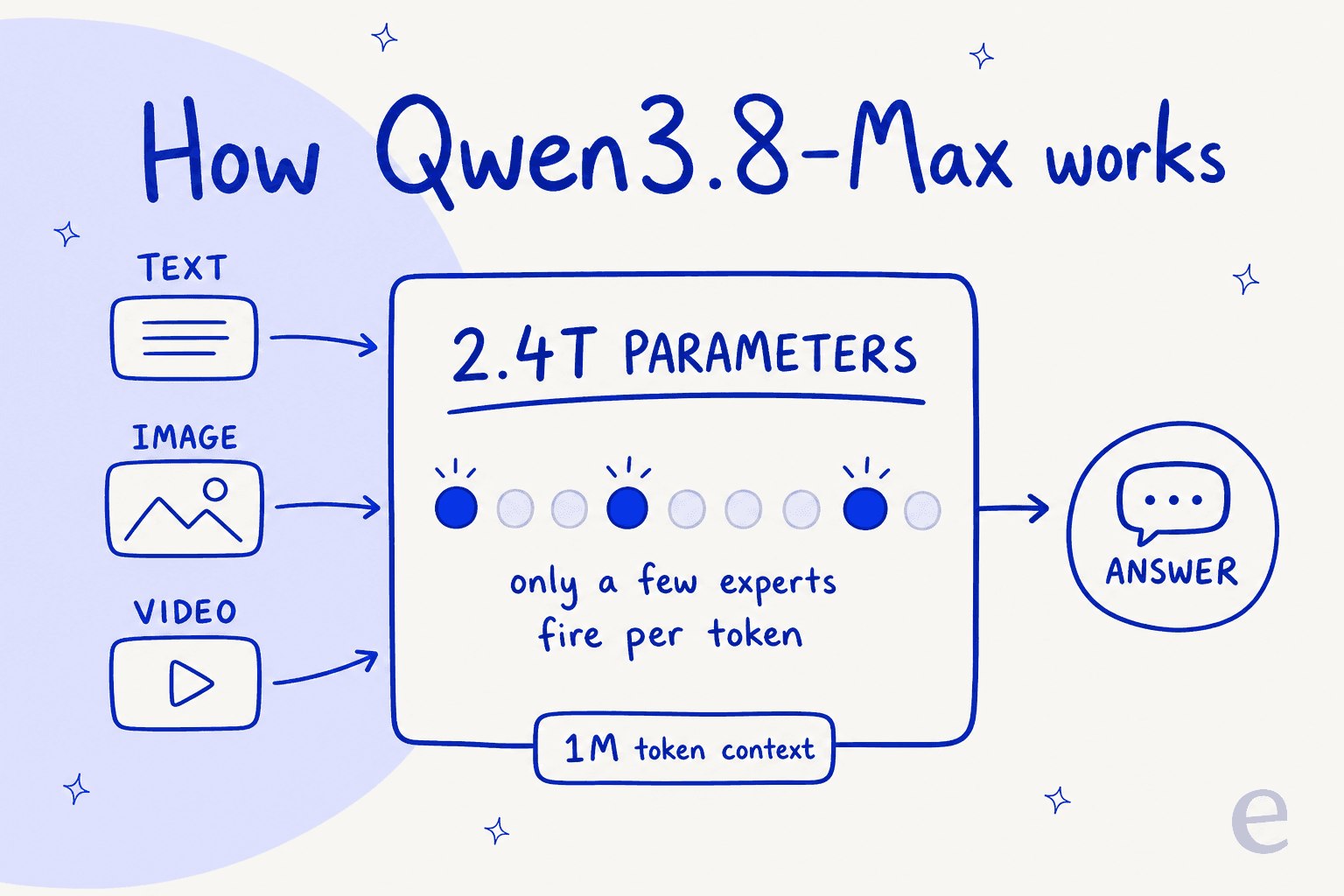
If Flash Next is the research preview, Qwen 3.8 Max is the shipped product. It went GA on 2 August 2026: a 2.4T-total, 95B-active MoE with a 1M context, 131,072 max output, and hosted extras the open base lacks (vision input, a non-thinking mode, and built-in tools). Weights shipped in August too, though under the Qwen license rather than Apache.
On the independent board it holds up: Artificial Analysis lists it at rank 6 with an Intelligence Index around 58 at about $1.13 per task, and on LMArena it sits top-five for text and second for vision. If you want a single number, don't; the automated composite and human preference point slightly different ways, which is itself a useful reminder not to trust one benchmark.
Pros: stable, hosted, genuinely multimodal, and it keeps you inside tooling you may already use with Flash Next.
Cons: an order of magnitude pricier than the Flash tier, and the open weights are not feature-equivalent to the hosted version.
Pricing: $2 input / $6 output per 1M, with implicit cache reads at $0.25.
Verdict: the low-drama choice for Qwen loyalists who need production stability more than the rock-bottom Flash price. If you are torn, our access guide walks the routes.
4. Kimi K3, the long-horizon agentic pick
Best for: complex, multi-step agent runs where capability matters more than cost.
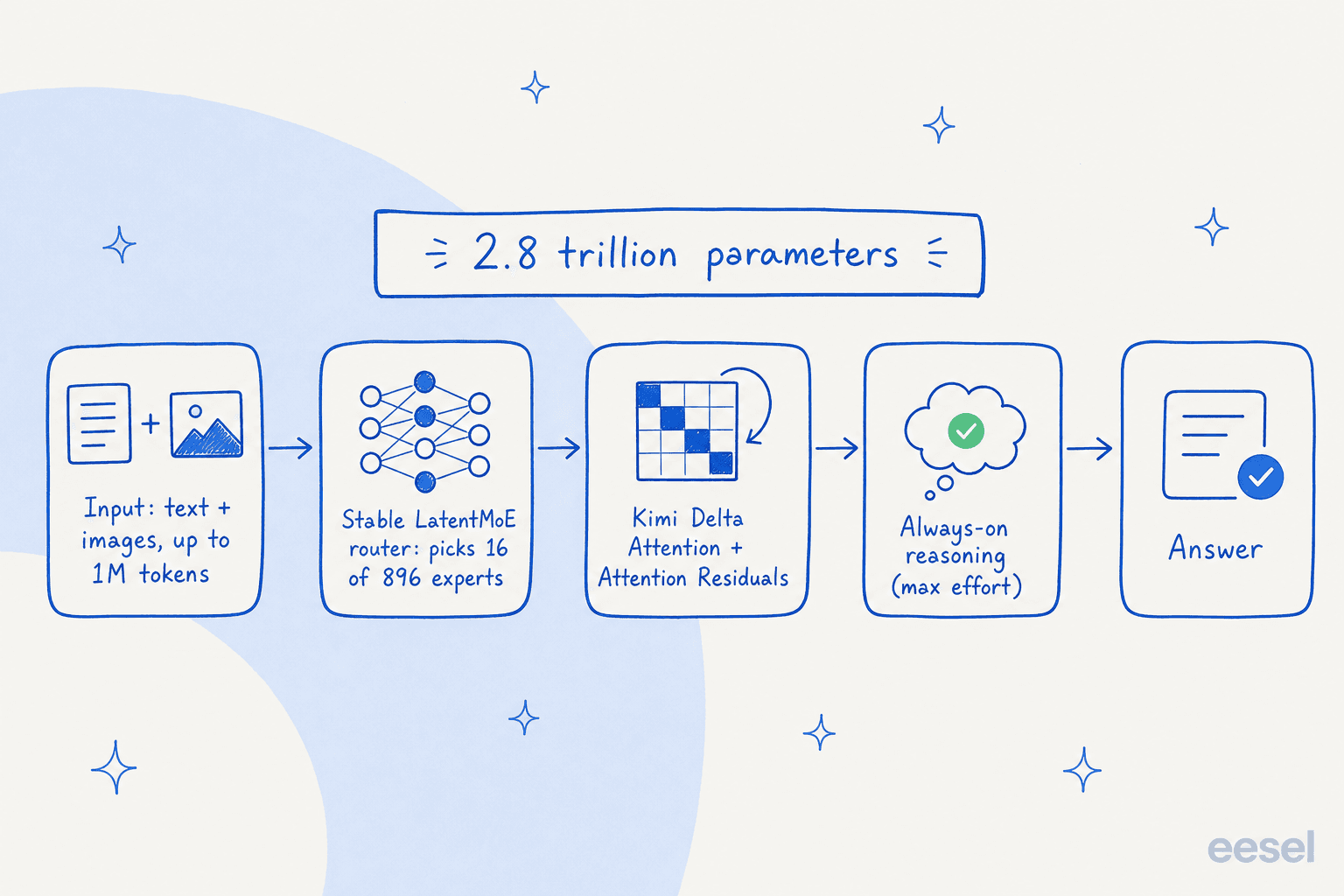
Moonshot's Kimi K3 is the heavyweight of this list: 2.8T total parameters with 104B active, a 1M context, native vision, and open weights that shipped on time on 27 July 2026. Its Artificial Analysis Intelligence Index of 57 puts it fourth overall, and it is a genuinely strong agentic and coding model.
The catch is price. K3 runs at $3 input / $15 output per 1M, the same band as a frontier closed model and roughly 50x DeepSeek V4 Flash's output rate. Reasoning also cannot be turned off, so even a simple call pays the thinking tax; the lowest effort level still scores worse and costs more per task than DeepSeek. This is not a budget alternative to Flash Next; it is a capability alternative.
Pros: top-tier agentic performance, a huge context, open weights, and native vision.
Cons: frontier-model pricing, always-on reasoning, and the vision API refuses public image URLs (base64 or a file ID only).
Pricing: $3 input / $15 output per 1M, cache-hit input $0.30.
Verdict: reach for K3 when the task is hard enough to justify the bill. For everyday cheap-and-fast work, it is the wrong tool.
5. Gemini 3.7 Flash, the managed multimodal pick
Best for: teams who want a big provider's reliability, strong multimodal input, and no self-hosting.
If the whole self-hosting story feels like a hobby you don't have time for, Gemini 3.7 Flash is the managed answer. It went GA on 13 August 2026 and is the fastest model Artificial Analysis has measured at 340 tokens/second (rank #1 of 188). The buying insight worth knowing: the reasoning effort you pick swings both cost and quality hard. At low it scores 50.9 on the Index at $0.16 per task; at high it hits 56.0 but jumps to $0.40. Leaving the default at medium is usually overpaying.
Two caveats keep it honest. Google removed the minimal thinking level that made older Flash models the cheapest floor for OCR and classification. And the hallucination rate actually regressed to 64.5% from 3.6 Flash's 55.6%, even as accuracy improved, which is exactly the kind of thing you want to catch before it ships.
Pros: managed and reliable, fastest-in-class throughput, strong long-context and computer-use scores, and promo pricing that matches 3.6 Flash today.
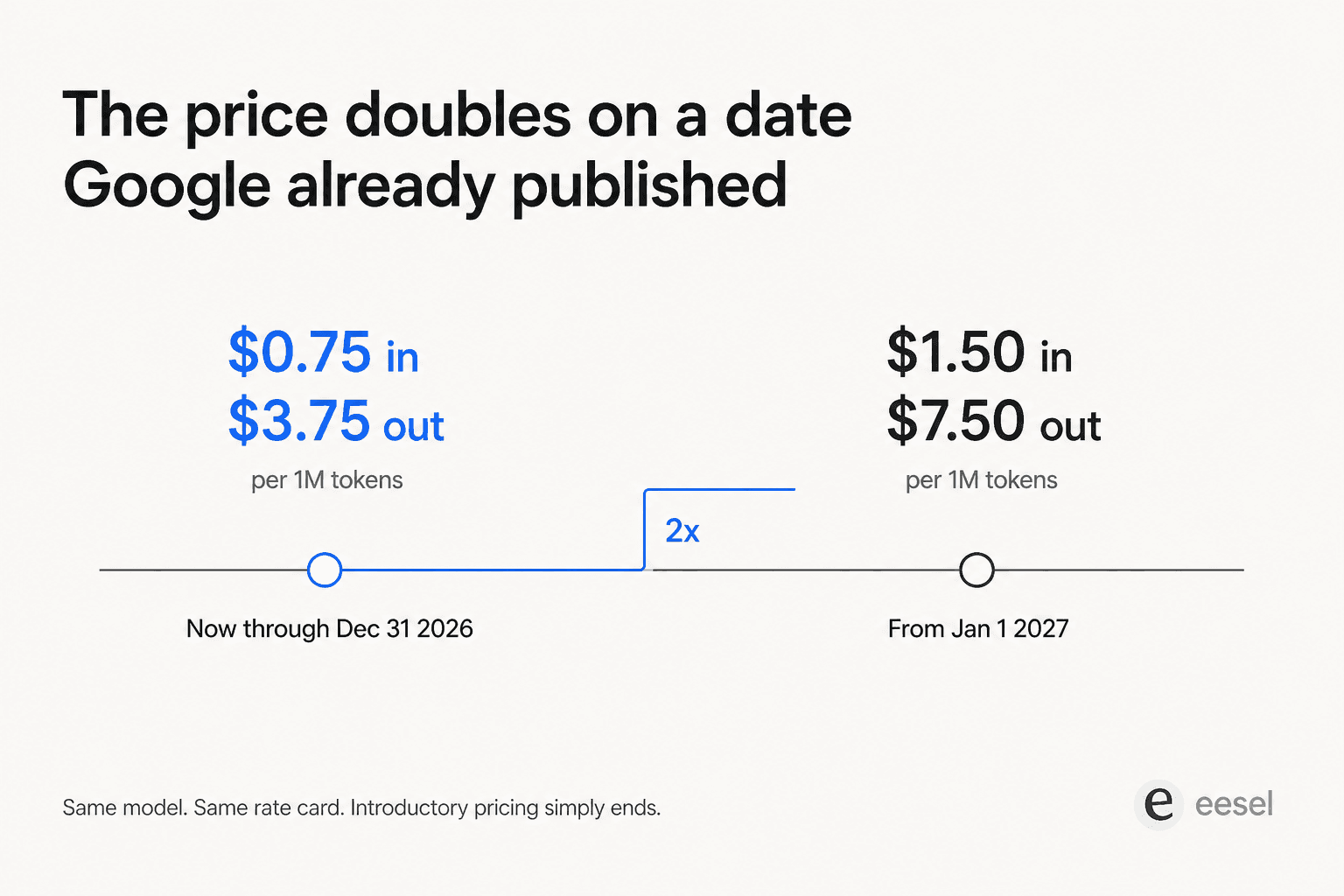
Cons: closed weights, a higher hallucination rate than its predecessor, and pricing that doubles in January 2027.
Pricing: $0.75 input / $3.75 output per 1M introductory through 31 December 2026, then $1.50 / $7.50.
Verdict: the pick when you would rather pay a platform than babysit a GPU. Just don't leave the effort dial on the default.
6. GPT-5.6 Luna, the closed-ecosystem reliability pick
Best for: teams already standardized on OpenAI who want a cheap tier without leaving the stack.
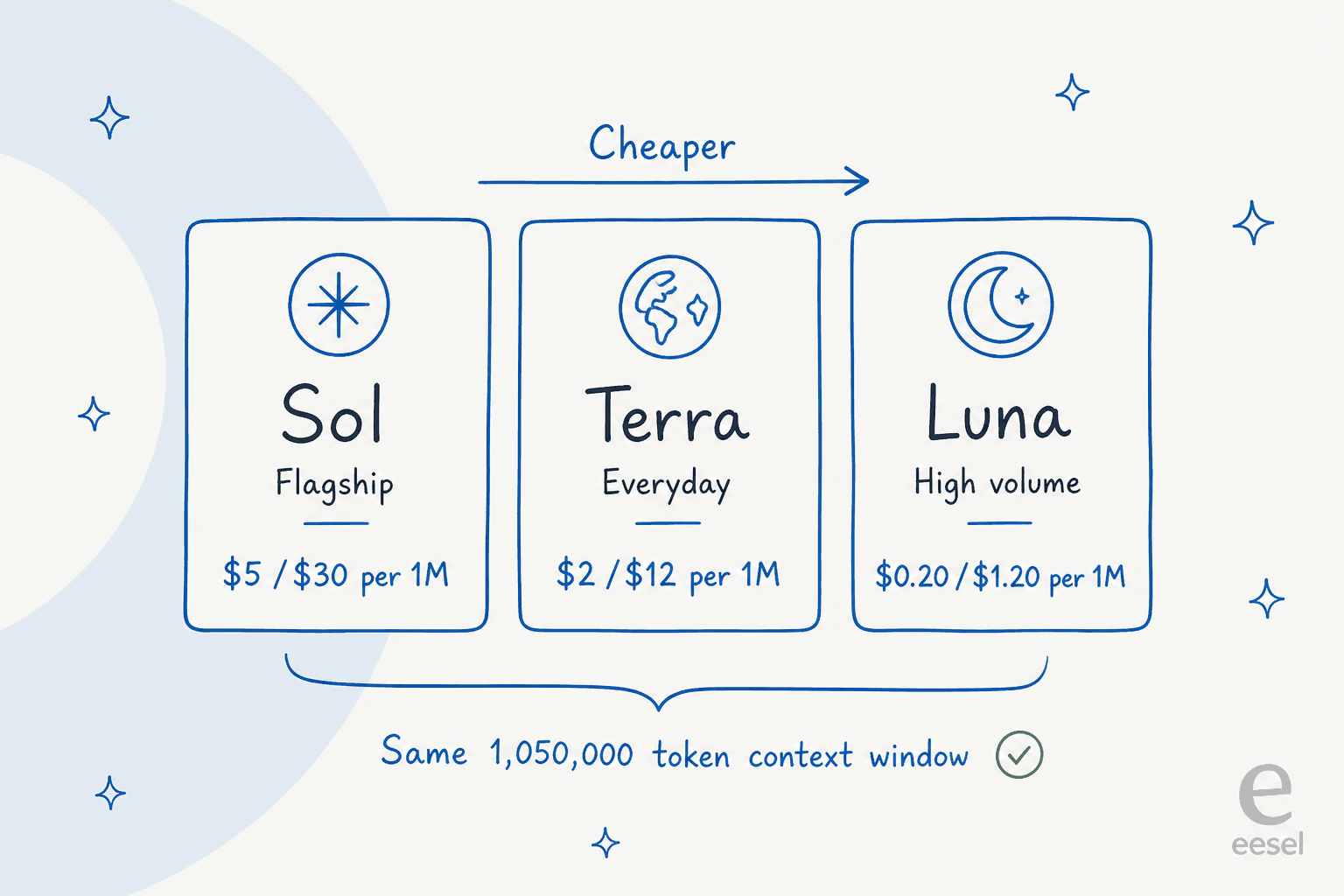
Luna is the budget rung of the GPT-5.6 ladder (the other two being Terra and the flagship Sol). At $0.20 input / $1.20 output per 1M it is competitive with the Chinese open-weight models on price while giving you OpenAI's tooling, SDKs, and reliability. For a team whose infra already assumes the OpenAI API, that switching cost saved is real.
The trade-off is the one every closed model carries here: no weights, no self-hosting, and OpenAI charges a long-context tier that doubles the rate past the short-context window (Luna goes to $0.40/$1.80). Anthropic and Google do not charge that step, so it is worth checking whether your context lengths cross the line.
Pros: a trusted provider, mature ecosystem, and a genuinely cheap entry tier.
Cons: closed weights, a 2x long-context surcharge, and less raw openness than the models it competes with on price.
Pricing: $0.20 input / $1.20 output per 1M short context; $0.40 / $1.80 long context; cached input $0.02.
Verdict: the sensible cheap default if you are already an OpenAI shop and value the ecosystem over open weights.
7. IBM Granite 4.2, the enterprise / on-prem pick
Best for: enterprises that need permissive licensing, commodity hardware, and grounded tool-calling.
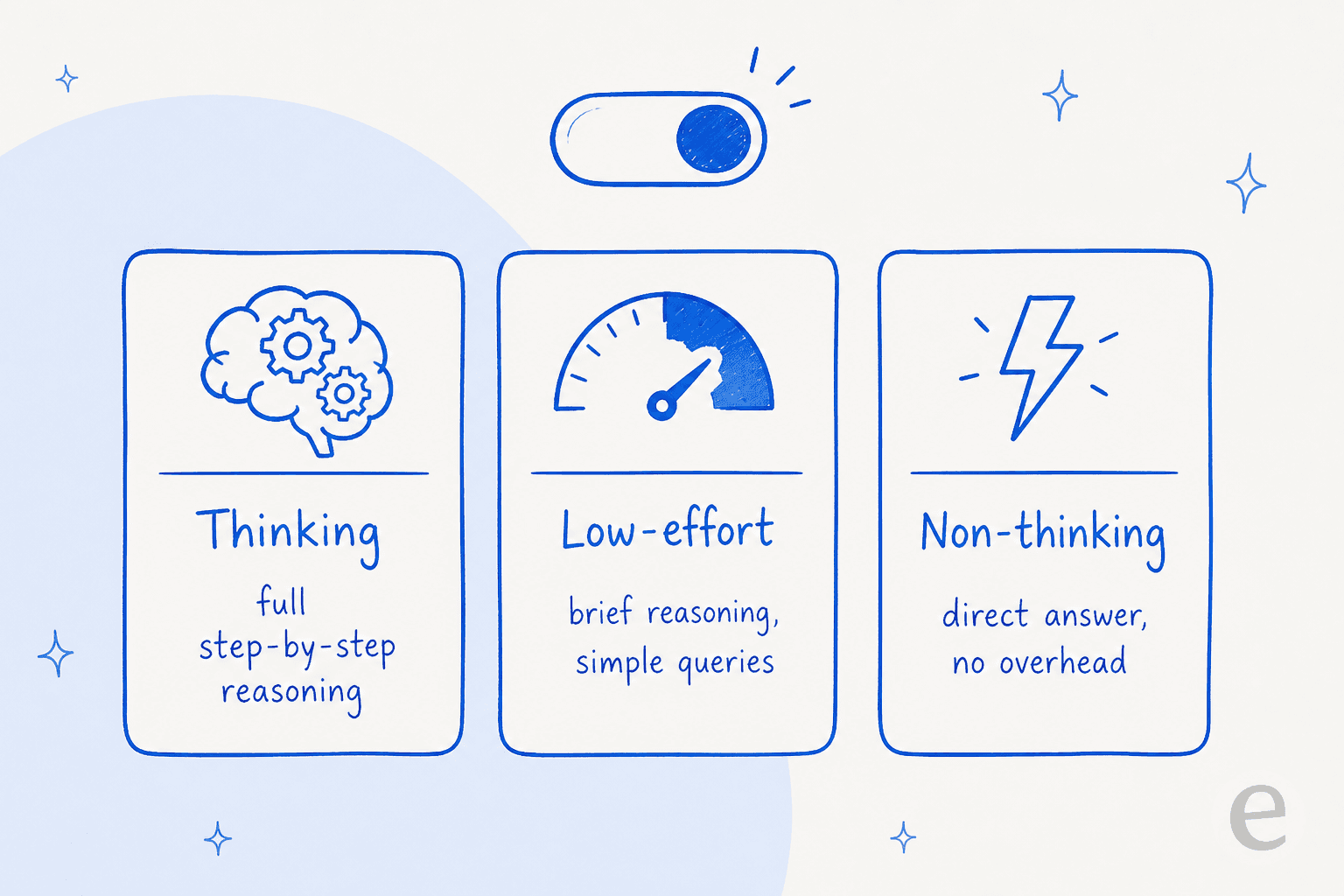
Granite 4.2 is the model your legal and security teams will actually sign off on. IBM shipped it on 25 August 2026 as three dense, Apache 2.0 models (3B, 8B, and a 30B flagship) with a 128K context and, unlike Flash Next, switchable reasoning: full thinking, low-effort, or off entirely. It is tuned for grounded extraction and tool-calling rather than headline benchmark wins, and testers like the practicality:
"I test drove it yesterday. It's pretty impressive at 8b. Runs on commodity hardware quickly ... Granite has recent training data which is nice."
Be clear-eyed about what it is not. It does not top raw coding leaderboards, and the same community says so directly: "Qwen still wins on raw capability, especially for coding." There is also a memory quirk where the 8B model's 5.3GB download balloons to about 27GB once the KV cache loads, so size your GPU accordingly.
Pros: true Apache 2.0 (not "weights available"), switchable reasoning, recent training data, and it runs fast on modest hardware.
Cons: it trails Qwen on raw coding, IBM's benchmarks mostly compare against prior Granite rather than the Chinese leaders, and the load-time memory balloon surprises people.
Pricing: self-host free (8B is a 5.3GB download); cheapest confirmed hosted is Replicate's 8B at $0.06 input / $0.25 output per 1M.
Verdict: the enterprise-safe pick. If licensing and on-prem control outrank the last few benchmark points, Granite is hard to beat.
8. LongCat 2.0, the big MIT MoE wildcard
Best for: the adventurous who want a very large MIT-licensed MoE and can stomach the tooling.
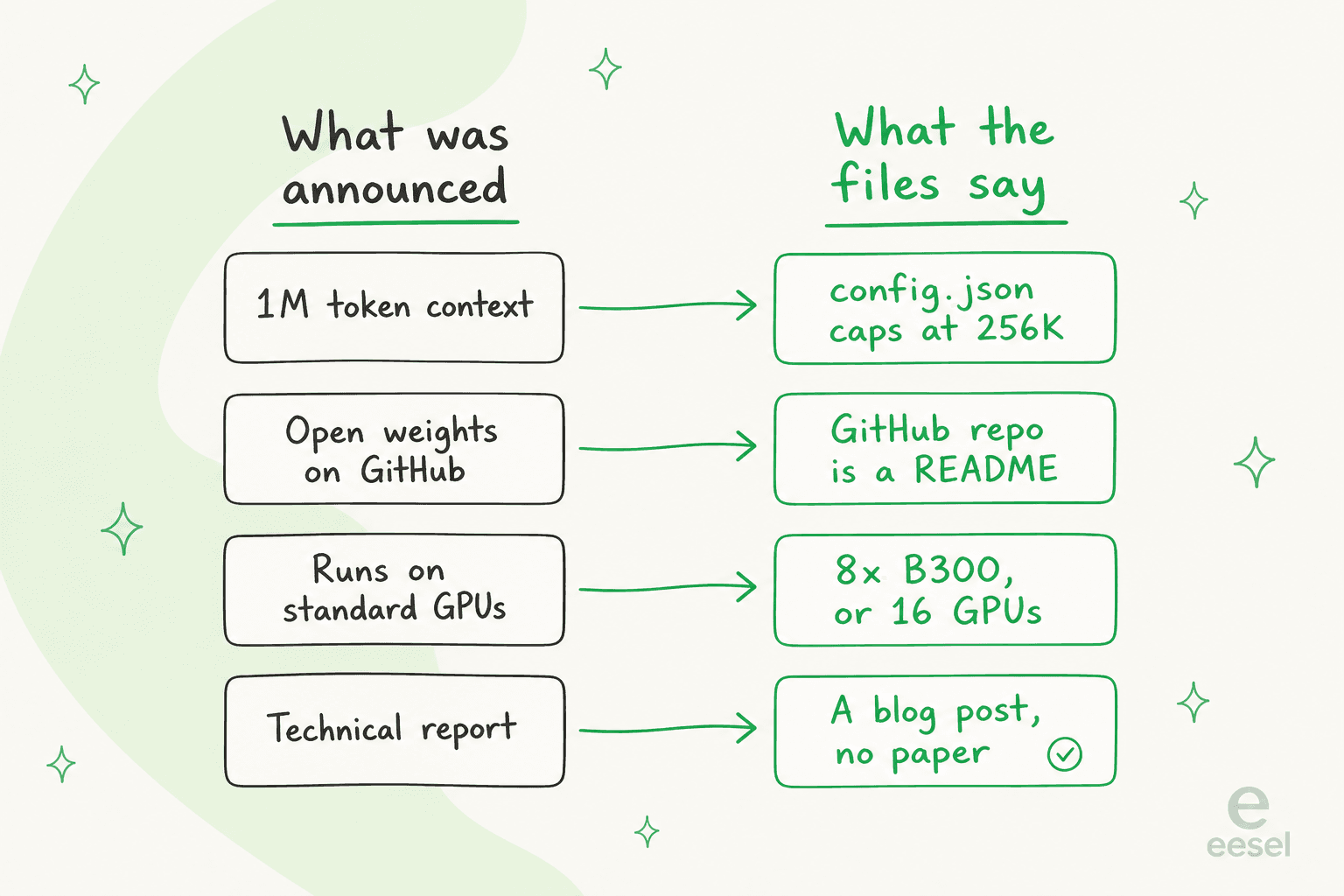
Meituan's LongCat 2.0 is the architectural cousin of the DeepSeek family: a 1.6T MoE with about 48B active per token, plain MIT weights, and promo pricing that undercuts most of this list. It is genuinely capable, with a self-measured SWE-bench Pro of 59.5 that edges GPT-5.5.
But it comes with the most asterisks of anything here, and they are all checkable. The advertised "1M context" is a training claim; the shipped config caps positions at 256K. The GitHub repo is README-only with no paper, SGLang is the only engine, and self-hosting realistically needs 8x B300 GPUs since there is no GGUF for Ollama or LM Studio. Payment outside mainland China runs through Alipay or WeChat Pay, not a card. And for support specifically, the platform FAQ is silent on data retention and training, which is the real blocker, not the price.
Pros: genuinely large and capable, clean MIT license, and aggressive promo pricing.
Cons: thin tooling, a real 256K context (not 1M), a brutal self-hosting footprint, awkward payment, and no data-handling commitments.
Pricing: promo $0.30 input / $1.20 output per 1M (list $0.75/$2.95), no context-length tiering.
Verdict: a fascinating wildcard for researchers, but the tooling and data-silence gaps make it the hardest of these to put into production.
Which alternative should you pick?
If you map these against the two things that actually drove you off Flash Next, "is it finished?" and "do I want to run it myself?", the shortlist sorts itself out fast.
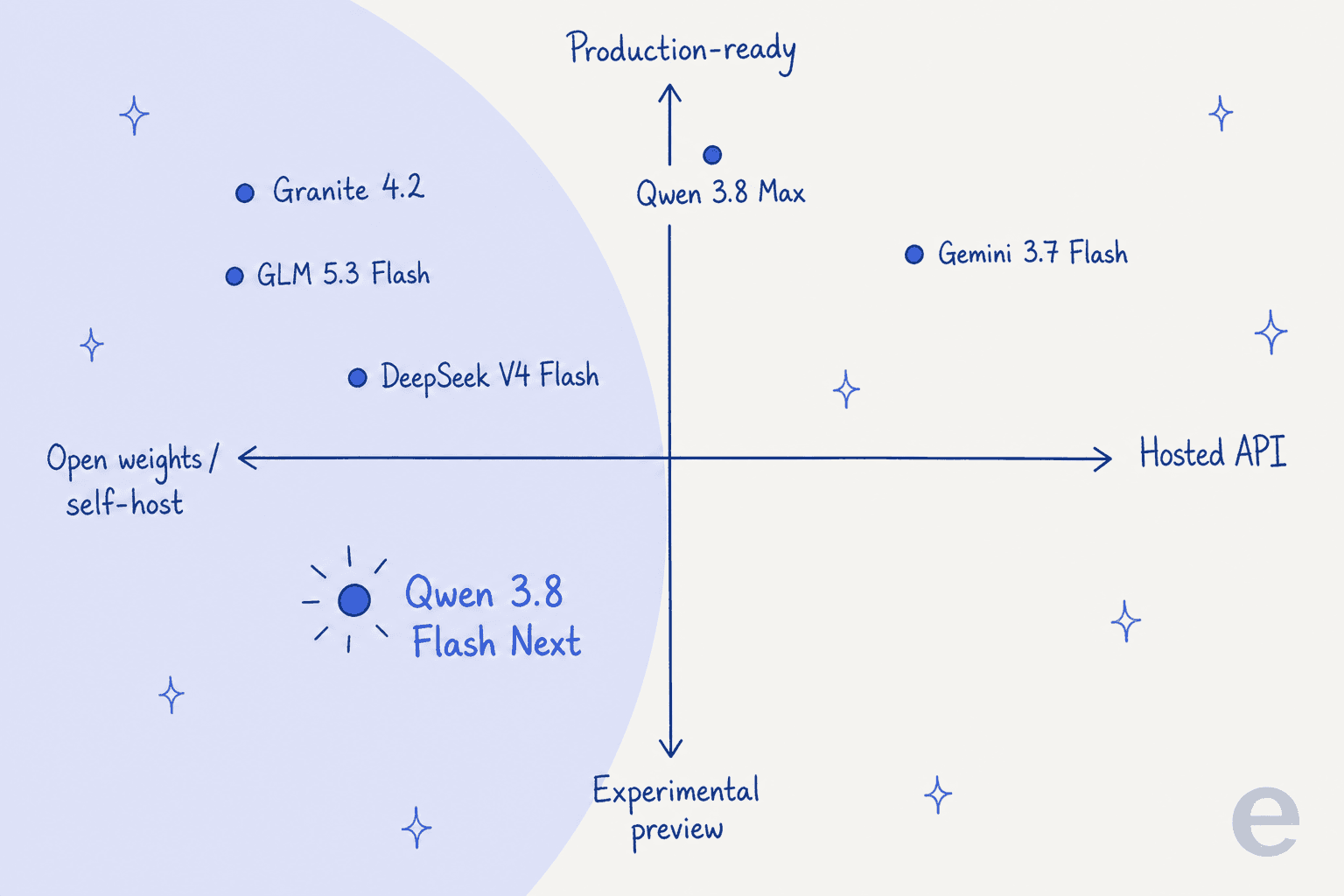
Quick decisions:
- Want the same thing, just finished? GLM 5.3 Flash.
- Want the cheapest real bill? DeepSeek V4 Flash, or self-hosted Granite 4.2.
- Want to stay in Qwen's world, but stable? Qwen 3.8 Max.
- Don't want to touch a GPU? Gemini 3.7 Flash or GPT-5.6 Luna.
- Need enterprise licensing and on-prem? Granite 4.2.
The pattern behind all of this
Here is the thing I keep having to say to teams who arrive at a post like this. Every model above is a component. A raw model takes tokens in and gives tokens out. It does not know your refund policy, cannot read a customer's order history, will not draft a reply inside your helpdesk, and has no idea whether its confident answer is correct. The model is infrastructure; the thing that does the job is the employee.
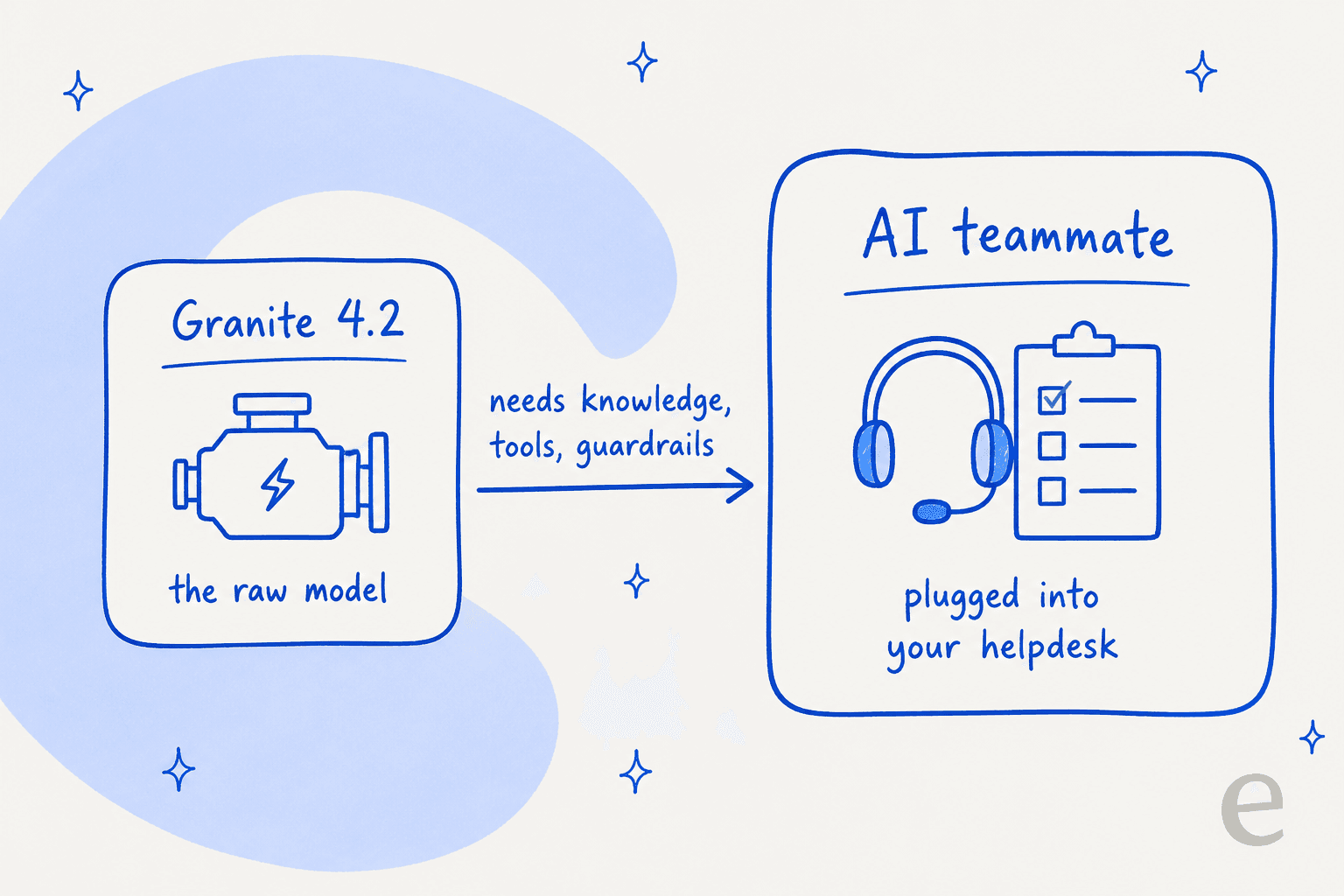
That is why "which cheap model should I use for support?" is the wrong first question. Picking the model is the easy 10%. The 90% that decides whether tickets actually get resolved is the layer around it: retrieval over your knowledge base, actions inside your helpdesk, guardrails, and testing against real history before anything reaches a customer. That is true whether the model underneath is Flash Next, GLM 5.3 Flash, or an AI employee you build in-house.
Try eesel
If you came here weighing a cheap model for a support workload, the honest advice is to stop shopping for a model and start testing on your own tickets. That employee layer is what I build at eesel: it is an AI teammate platform where you hire ready-to-work teammates for specific jobs, currently an AI helpdesk teammate and an AI blog writer. Each one arrives with the skills, integrations, and company context for its role, so which model runs underneath becomes an implementation detail rather than your problem.
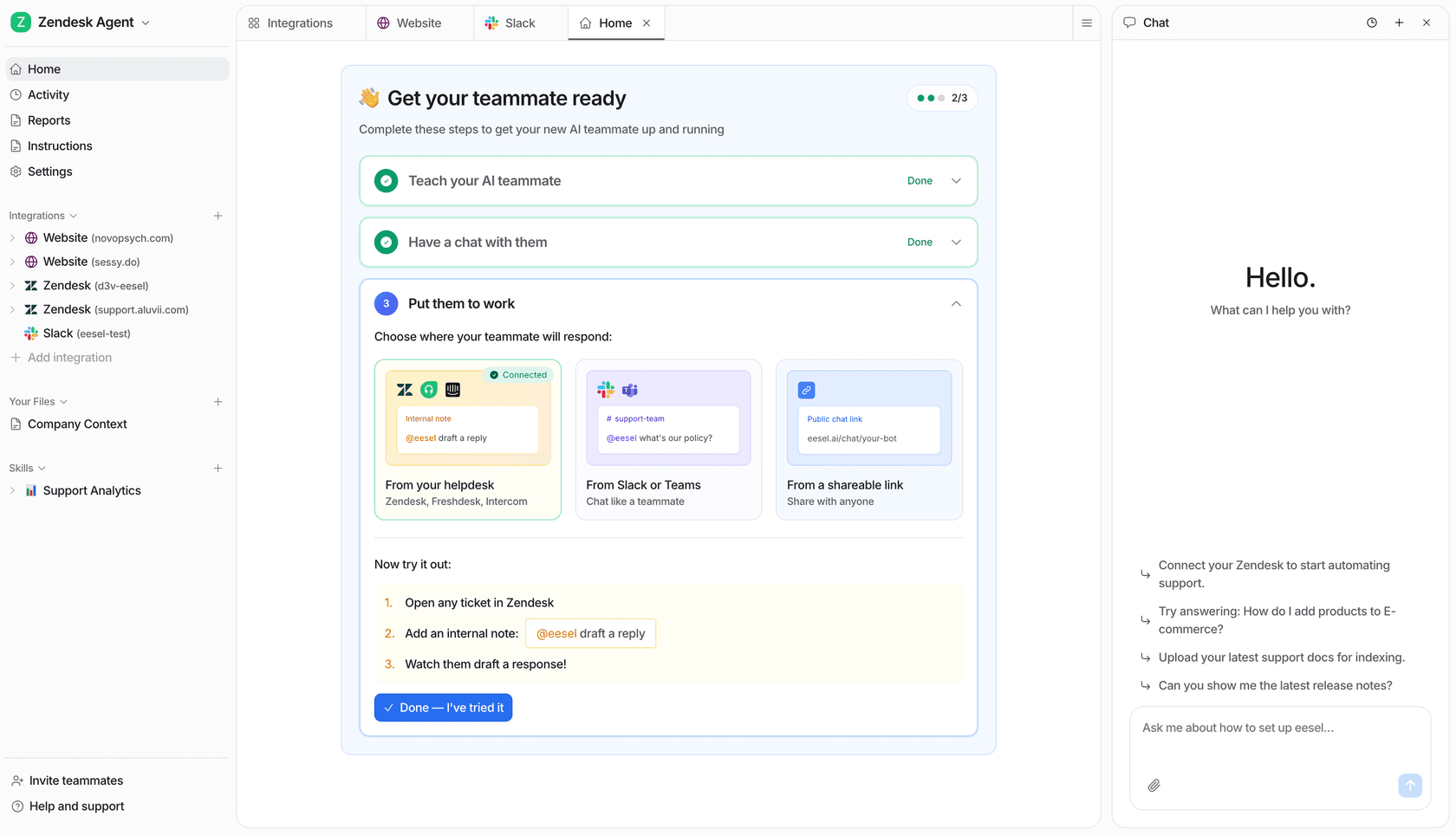
The part I would flag hardest is testing, because a brand-new preview model like Flash Next is exactly the kind of thing you want behind a gate. The eesel helpdesk teammate simulates every rollout against your historical tickets before it ever touches a live customer, so you see the resolution rate and the exact replies it would have sent on real past conversations, then decide what to automate. Pick whichever model wins your benchmark; just prove it on your own tickets first. It is free to try.