


What I was actually reviewing
I build AI agents at eesel, so a model launch is a work problem, not a spectator sport: the question is always "would I put this in front of a real workload." When the Qwen team dropped Qwen 3.8 Flash Next on 26 August 2026, the first hour went to untangling the name, because it trips people up.
Here is the clean version. Qwen3.8-Flash-Next is the open-weight preview you self-host; Qwen3.8-Flash is the forthcoming hosted API with 1M context and built-in tools. "Next" is not a bigger Flash. It is the label Qwen puts on an architecture preview, released so the community can poke at the new plumbing before the full Qwen4 family is built on top of it. Every verdict below hangs on that one word.
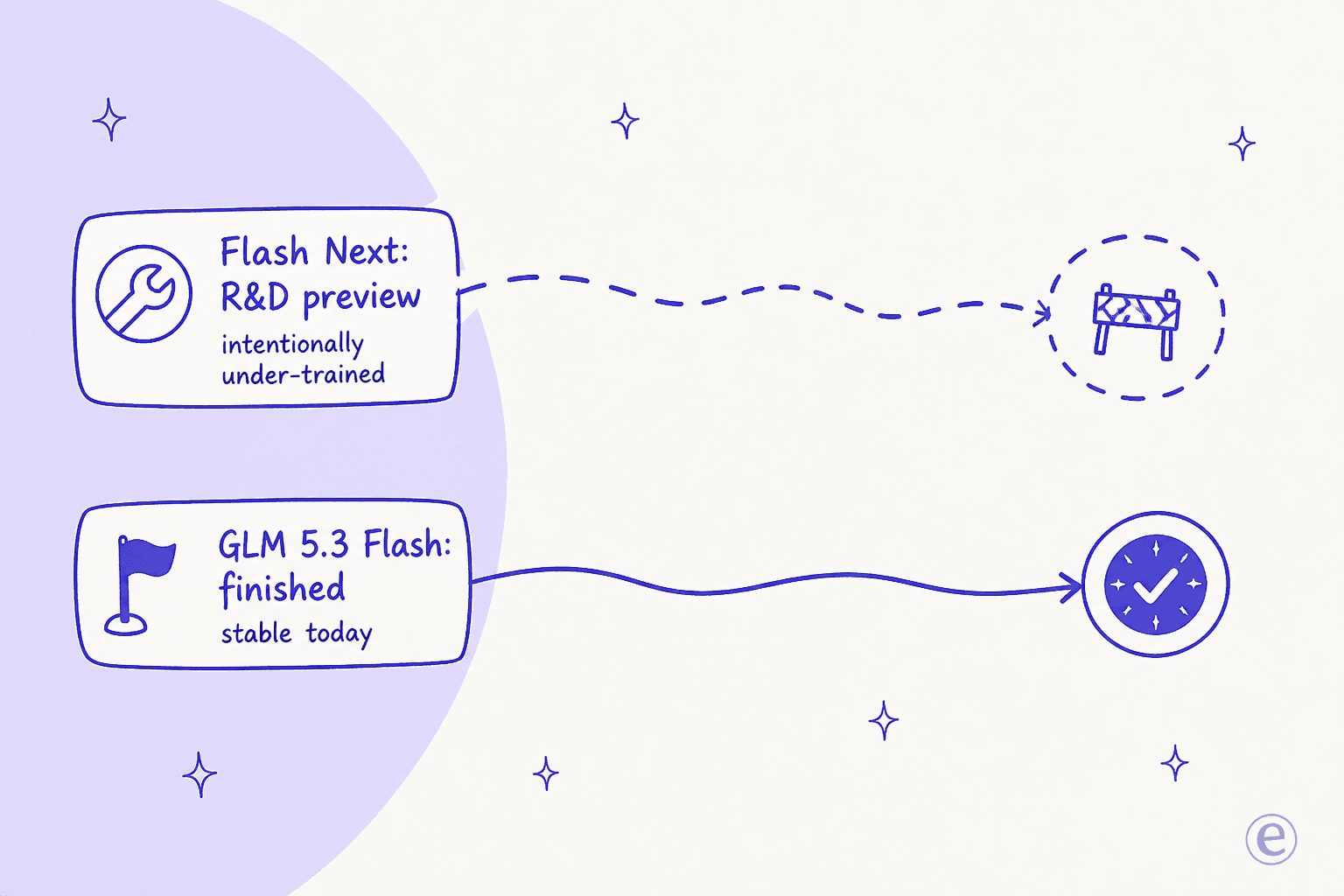
That framing matters because "under-trained preview" is not a knock I invented. It is Qwen's own description, echoed everywhere the community gathered. The clearest explanation came from the Hacker News launch thread:
"This model is a preview of Qwen's upcoming Qwen4 architecture... They said the model is intentionally under-trained since it is mainly for R&D purposes of proving the new architecture."

So the fair way to review it is not "is this the best model," but "is the architecture bet paying off, and is this specific checkpoint worth running." Different questions, different answers.
What is actually good
The headline number holds up under independent scrutiny, which is rarer than it should be. Artificial Analysis scores Flash Next at 56 on its Intelligence Index, ranking it #5 of 111 in its class against a median of 29. Their verdict is that it is "amongst the leading models in intelligence and reasonably priced." At roughly $0.10 per Index task, the value story is not hype.
On Qwen's own benchmark table, which you should read as vendor-reported, it is especially strong on coding and agentic work:
| Benchmark | Qwen3.8-Flash-Next | Qwen3.7-Plus | DeepSeek-V4-Flash | Claude-Opus-4.6 |
|---|---|---|---|---|
| SWE-bench Pro | 62.5 | 55.8 | 56.0 | 53.4 |
| LiveCodeBench v6 | 91.9 | 89.6 | 90.6 | 88.8 |
| GPQA Diamond | 91.7 | 90.3 | 90.8 | 91.3 |
| IFBench (instruction following) | 81.3 | 79.1 | 79.2 | 62.5 |
| CoWorkBench (long office tasks) | 73.9 | 65.1 | 45.1 | 68.2 |
| Humanity's Last Exam | 35.9 | 34.7 | 33.8 | 40.0 |
Source: Qwen's benchmark tables. Two honest reads. It edges out much larger models on SWE-bench Pro, which is a real result at this size. And it is not a clean sweep: Claude Opus 4.6 still takes Humanity's Last Exam, and DeepSeek V4 Flash beats it on repo-level generation.
The second real strength is the hardware efficiency, and this is the part the community actually cares about. Because only 6B parameters are active per token and the 51B N-gram lookup table can be offloaded to ordinary system RAM, people are running a ~180B-class model on modest machines. The tooling crowd set the tone fast:
"Qwen3.8-Flash can now be run locally! The 125B MoE model outperforms Claude-Opus-4.6 (Max). Run on 75GB RAM via Unsloth GGUFs. Qwen3.8-Flash-Next enables CPU RAM / unified mem setups to deliver near VRAM speeds."
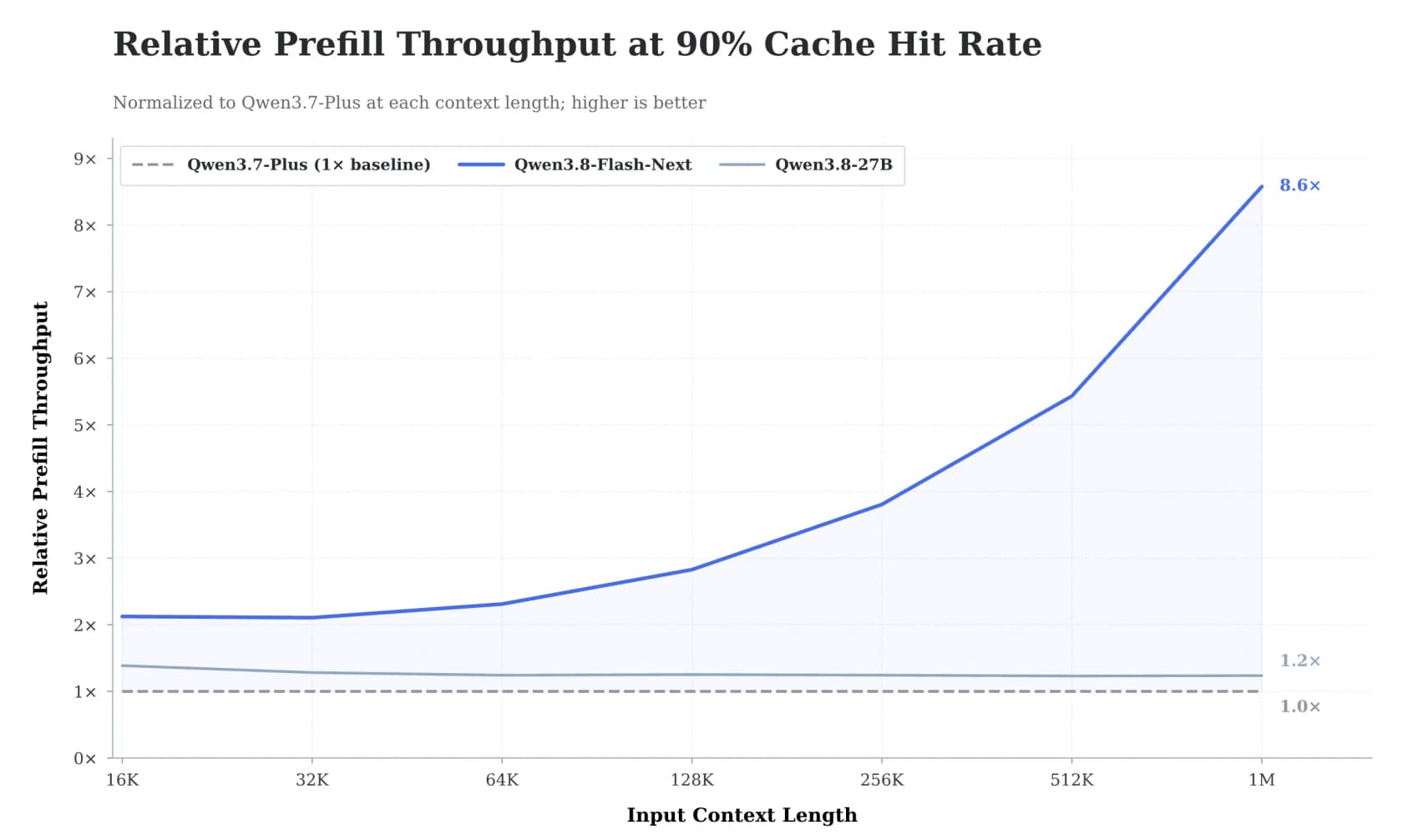
Treat the "outperforms Opus 4.6" line as enthusiasm, not a benchmarked fact, since it is theirs and unverified. But the speeds-on-cheap-hardware claim is real and repeated. At long context the payoff is largest: Qwen reports its sparse-attention kernel hitting up to 7.6x prefill and 4.9x decode speedups at 1M tokens.
Where the preview shows
Now the parts that keep this out of a production slot.
Quantization hurts, visibly. To fit a ~180B-class model on consumer hardware you quantize hard, and the quality cost is not subtle. Simon Willison ran it at several reasoning levels on a DGX Spark and came away preferring the smaller dense model:
"I ran some pelicans at the four different reasoning levels... Surprised I didn't get one I liked as much as the Qwen 3.8 27B one, maybe because of quantization."
That is the recurring theme in every local thread I read. The architecture lets you run it cheaply; it does not promise the checkpoint you squeeze onto your box matches the benchmark table.
It overthinks. Like most Qwen reasoning models, Flash Next is a heavy thinker, and it shows in the traces.
"It's definitely a heavy thinker, like most Qwens. I see strings like 'write, now.' in the thinking traces then it goes on to think for a lot longer, so it's kind of weird."
This connects to the sharpest practical warning in the whole review.
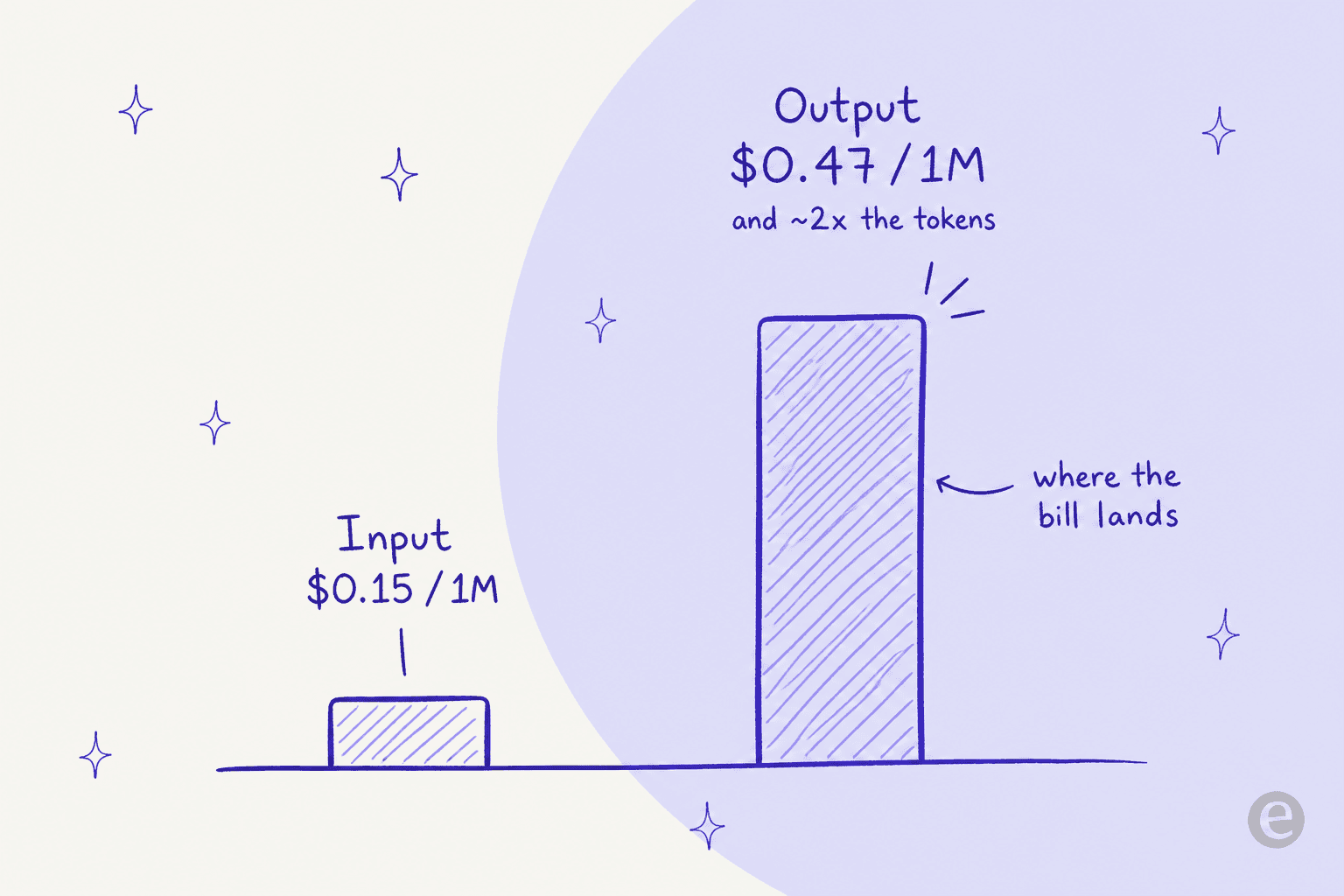
The verbose-output cost trap. Artificial Analysis flagged it as "very verbose," burning 200M output tokens to finish its Index versus a 110M median. That is nearly double. On the hosted API, output is billed at $0.47 per million, so the cheap-input headline hides a real output bill on long agentic runs. For a short support reply it is a rounding error; for a multi-step agent loop it is the number that actually decides your cost. Model the output tokens before you trust the sticker.
What it actually costs
The open weights are free. If you have the hardware, you pay compute and nothing else, which is the entire appeal for the self-hosting crowd.
For the hosted Qwen3.8-Flash API, pricing is flat, with no context-length brackets like Qwen 3.7 Flash had:
| Meter | Rate (USD / 1M tokens) |
|---|---|
| Input | $0.15 |
| Output | $0.47 |
| Input, cached read | $0.016 |
| Explicit cache creation | $0.20 |
That cached read is about 89% cheaper than fresh input, and it is not theoretical: OpenRouter observed a 91.1% cache-hit rate in live traffic, dragging the effective input price down to roughly $0.028 per million. One asterisk beyond the verbosity point: for now there is only one API provider, Alibaba Cloud International, so there is no multi-provider failover yet. Weigh that against Kimi K3 or Qwen 3.8 Max if resilience matters more than the last cent.
So should you run it?
Here is where I land after a week. Walk the two questions below and it sorts itself out.
I want to run models on my own hardware
Strong yes. A unified-memory Mac, a DGX Spark, or a box with plenty of system RAM is exactly the setup this design rewards. Expect near-VRAM speeds, and expect to lose some quality to quantization. Pick your reasoning-budget flags to tame the overthinking.
I want a cheap, coding-heavy hosted API
Yes, with eyes open. The SWE-bench numbers are real and the cached-input price is excellent. Model the output tokens first, because the verbosity is where the bill actually lands, and remember there is a single provider today.
I need a stable model for production right now
Hold off. Qwen calls this an under-trained preview, and it behaves like one. Reach for GLM 5.3 Flash, a Claude Opus 5 tier, or Qwen 3.8 Max until the full Qwen4 line lands.
Reach for it if you are a local-inference tinkerer, you want an early look at the Qwen4 architecture, or you have a cache-friendly coding workload where the low price and strong SWE-bench numbers pay off. Hold off if you need a production-grade model today, since it is an under-trained preview by Qwen's own admission, quantization hurts, and the hosted API has a single provider.
Either way, the more useful point is what a model actually is: a component. Which is the thing I keep having to explain to teams shopping for "cheap AI."
Where a model like this fits into real support work
A lot of people read a launch like this and think "great, I will point my support inbox at Qwen 3.8 Flash Next and cut my AI bill." That is a category error. A raw model takes tokens in and gives tokens out. It does not know your refund policy, cannot read a customer's order history, and has no idea whether its confident answer is actually correct. The model is infrastructure; the thing that does the job is the employee.
I have watched that gap bite in the worst way. Early on with one customer, the bot cheerfully told shoppers "yes, we support your car model" for brands that were nowhere in their database, because the knowledge base said "we support all models." The fix was not a better base model. It was better retrieval, tighter grounding, and testing against real history before going live. The team's own summary of that phase was "trial and error in the beginning," and that is exactly the phase a brand-new, under-trained model would drop you back into if you trusted it raw.
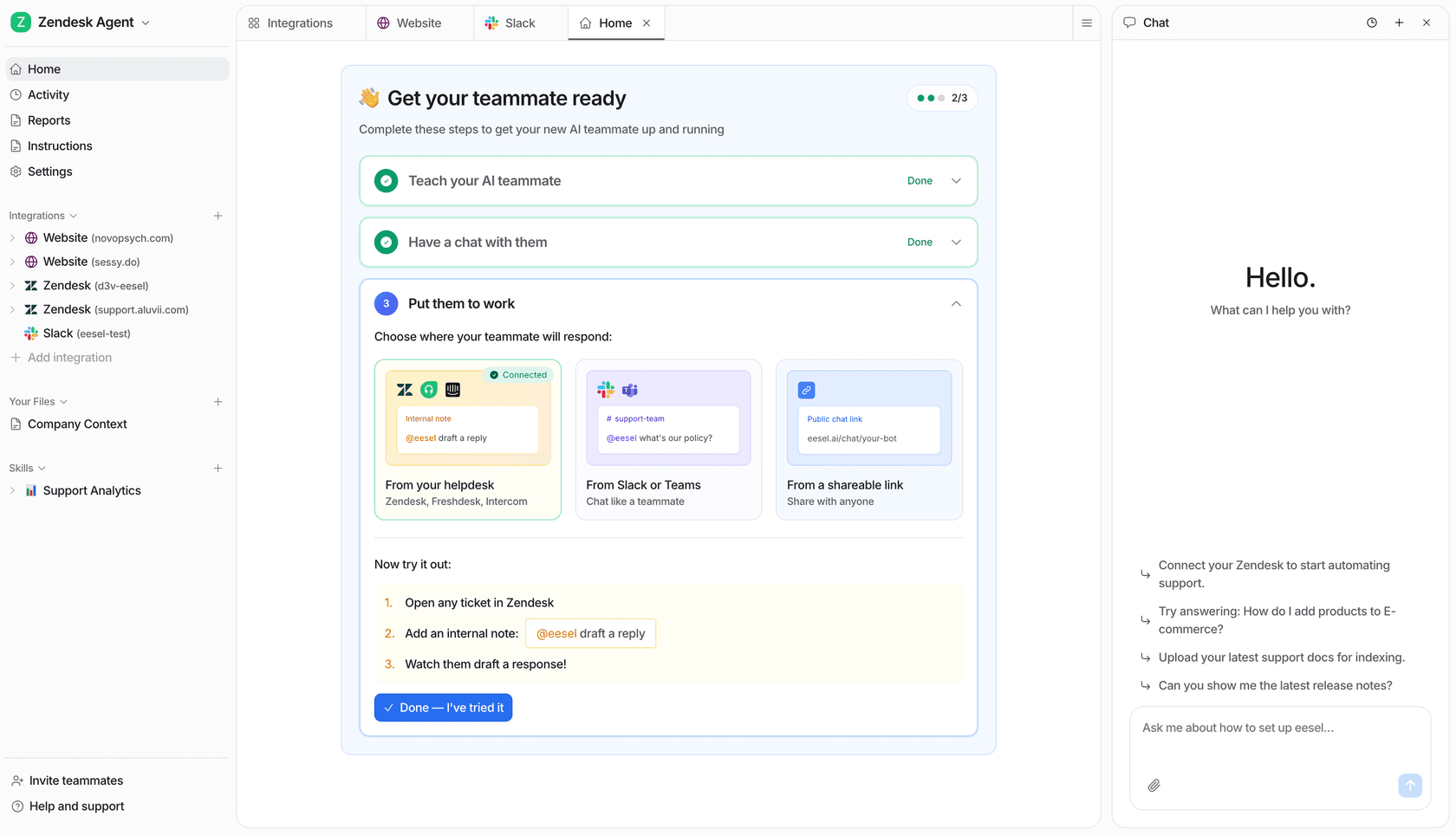
That employee layer is what we build at eesel. The frame is simple: eesel is an AI teammate platform, and you hire ready-to-work teammates for specific jobs, currently an AI helpdesk teammate and an AI blog writer. Each arrives with the skills, integrations, and company context for its role, so which model runs underneath becomes an implementation detail rather than your problem.
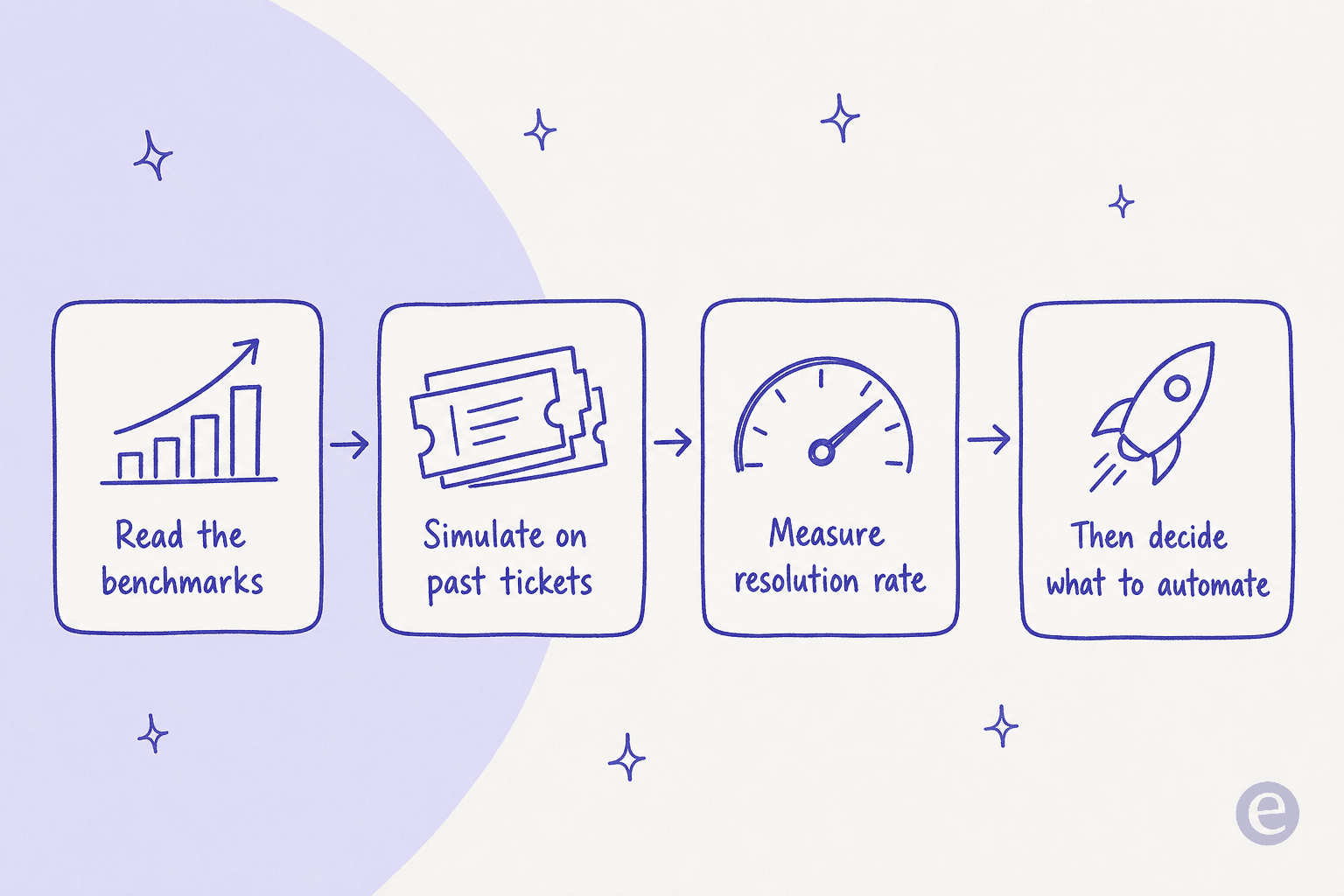
The part I would flag hardest is testing, because I have watched it save people. The eesel helpdesk teammate simulates every rollout against your historical tickets before it ever touches a live customer, so you see the resolution rate and the exact replies it would have sent on real past conversations, then decide what to automate. An under-trained preview model is precisely the kind of thing you want to run through that gate rather than trust on a benchmark table. And because eesel reads from your existing knowledge base and past tickets, the context problem a raw model can never solve on its own is handled.
The short version: models like Qwen 3.8 Flash Next are getting cheap and capable fast, which is great news, but picking one is the easy 10% of the job. The other 90% is turning it into a teammate that resolves tickets, and that is the layer worth your time.
Try eesel
If you came here weighing Qwen 3.8 Flash Next for a support workload, the honest advice is to stop shopping for a model and start testing on your own tickets. eesel plugs into your existing help desk, learns from your knowledge base and past conversations, and simulates every rollout against historical tickets so you see the real resolution rate before anything goes live. It is free to try, and the model underneath stays our problem, not yours.