

What is Moveo.AI?
I spend my days on a support queue, so I review these tools by asking one question: would this actually help an agent on a busy Tuesday, or does it just demo well? Moveo.AI is one of the more serious answers I've looked at this year.
It calls itself a "Customer-to-Cash platform," and the current homepage is built around a sharp idea: "memory travels with the customer, not the ticket." Instead of replacing your stack, Moveo layers over it and keeps one shared customer memory across every channel. The company says it's trusted by 100+ enterprises, processes 10M conversations a month, and is "Purpose-built for Financial Complexity," with named customers like Alpha Bank and Betano.
The founders give it real credibility. CEO Panos Karagiannis is a Forbes 30 Under 30 honoree who worked on the IBM Watson Assistant core algorithms team, and co-founder George Karagiannis leads the proprietary LLM work. This is not a thin GPT wrapper.
How Moveo.AI actually works
The mental model is worth getting right, because it's what separates Moveo from a basic rule-based chatbot. Moveo connects to the helpdesks and channels you already run, builds one persistent memory of each customer, and answers from a private, CX-fine-tuned LLM rather than a generic public model. The pitch is "no migrations," with native connectors plus an API that go "live in weeks, not quarters."
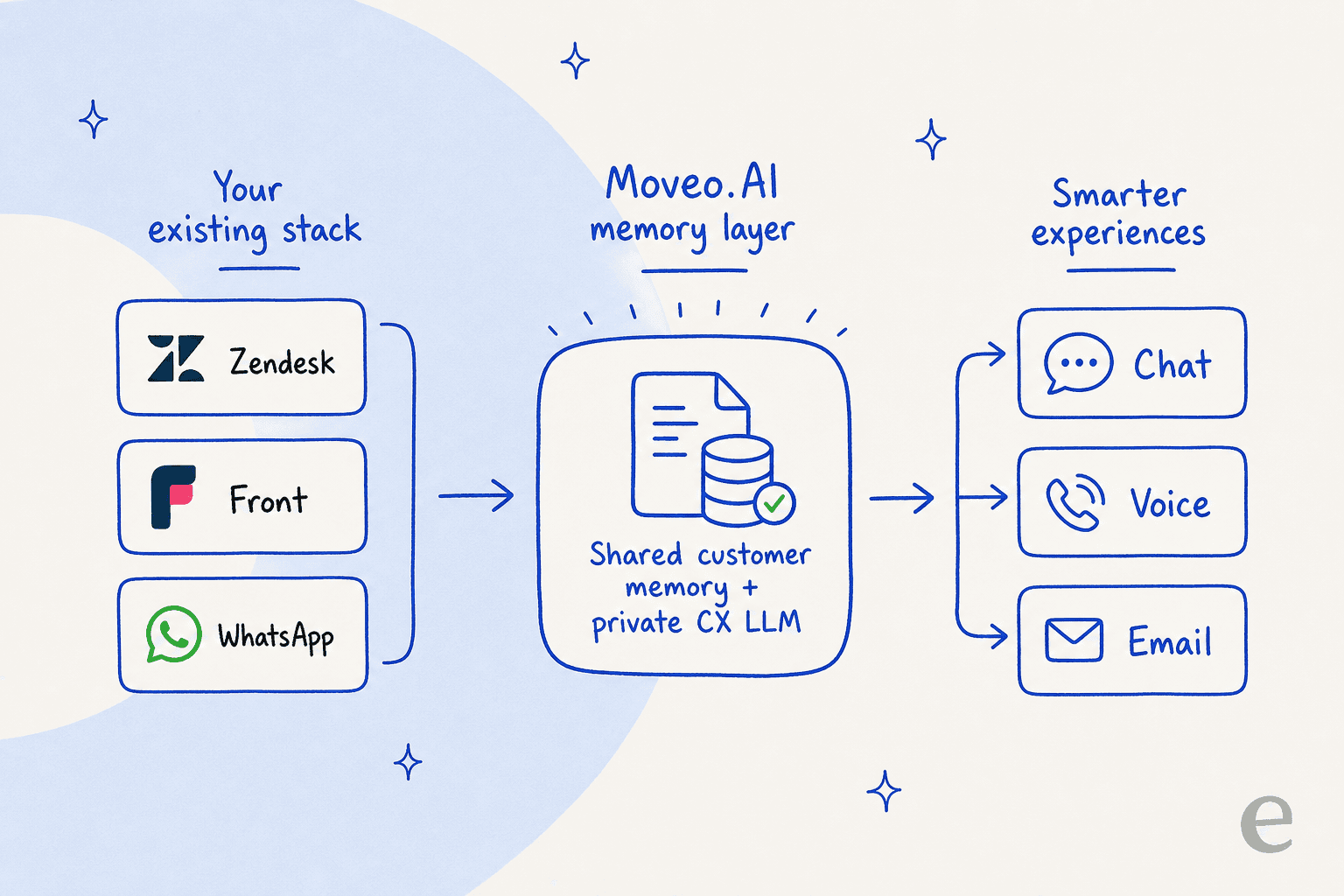
That architecture is the most interesting part. A shared memory layer over Zendesk, Front, and WhatsApp means a customer who started on chat and called back the next day doesn't have to repeat themselves. It's a thoughtful answer to the context-loss problem that plagues most AI customer service software.
The Moveo.AI features that matter
Underneath the positioning, the product is a full conversational-AI builder. Here are the pieces I'd actually evaluate.
Auto Builder (text-to-agent)
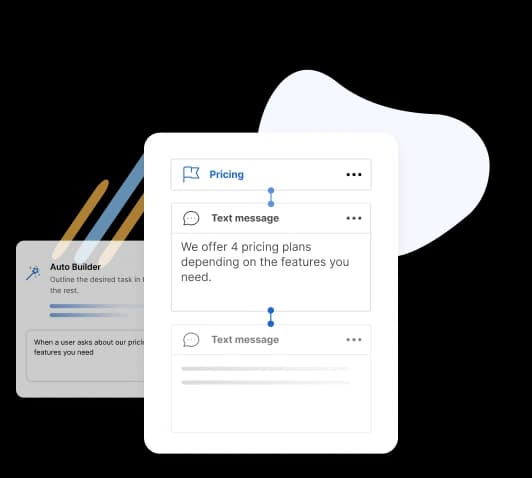
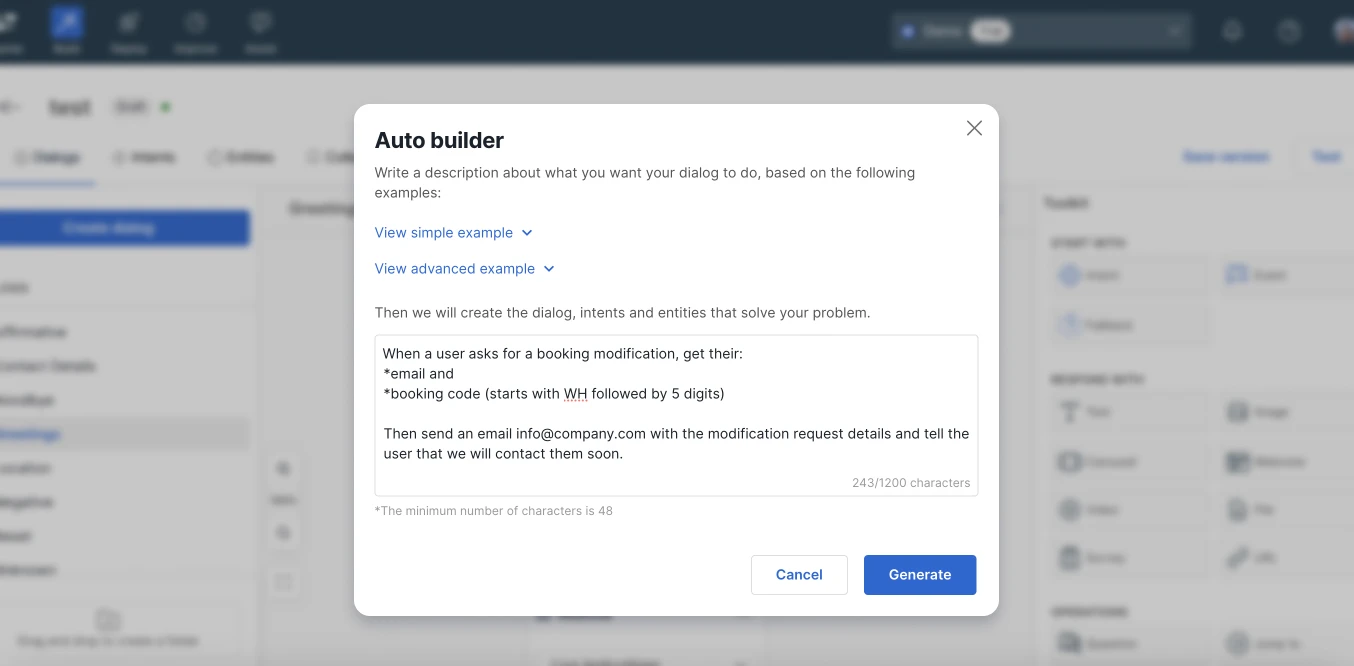
Auto Builder is the headline feature: describe a process in plain text "just like in ChatGPT," and Moveo's LLM generates the conversation flow, which the company claims builds journeys "10x faster." You then refine it in the visual editor.
No-code conversation builder
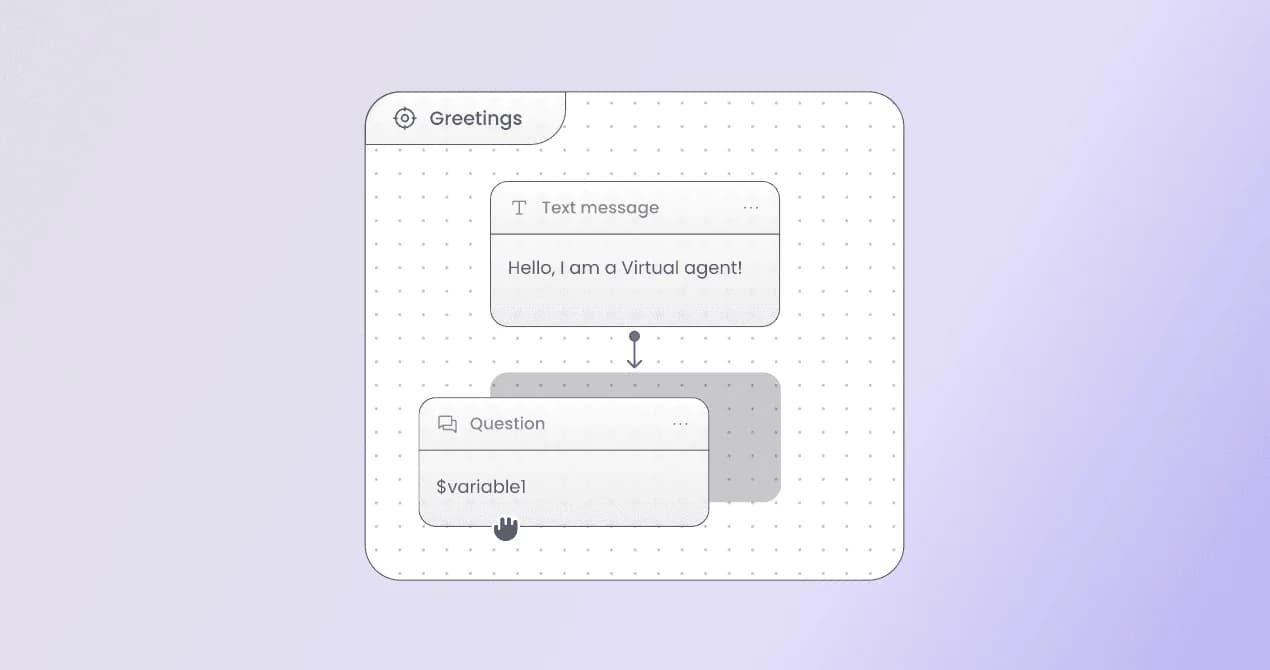
For hands-on control, the no-code builder is a drag-and-drop canvas of intents, text nodes, questions, and rich responses like carousels and videos. It's backed by intent recognition, entity extraction, and webhooks so the agent can fetch data or trigger actions. This is the part reviewers consistently praise, and also the part that takes time to master.
Collections (the knowledge base)
Collections is Moveo's RAG layer. You add data sources, a website (re-crawled every 24 hours), a help center, or CSV/PDF/HTML documents, and the agent answers from them using the private LLM. If you've evaluated any AI knowledge base chatbot, the setup will feel familiar, and the 24-hour re-crawl is a nice touch for keeping answers current.
Live chat and human handoff
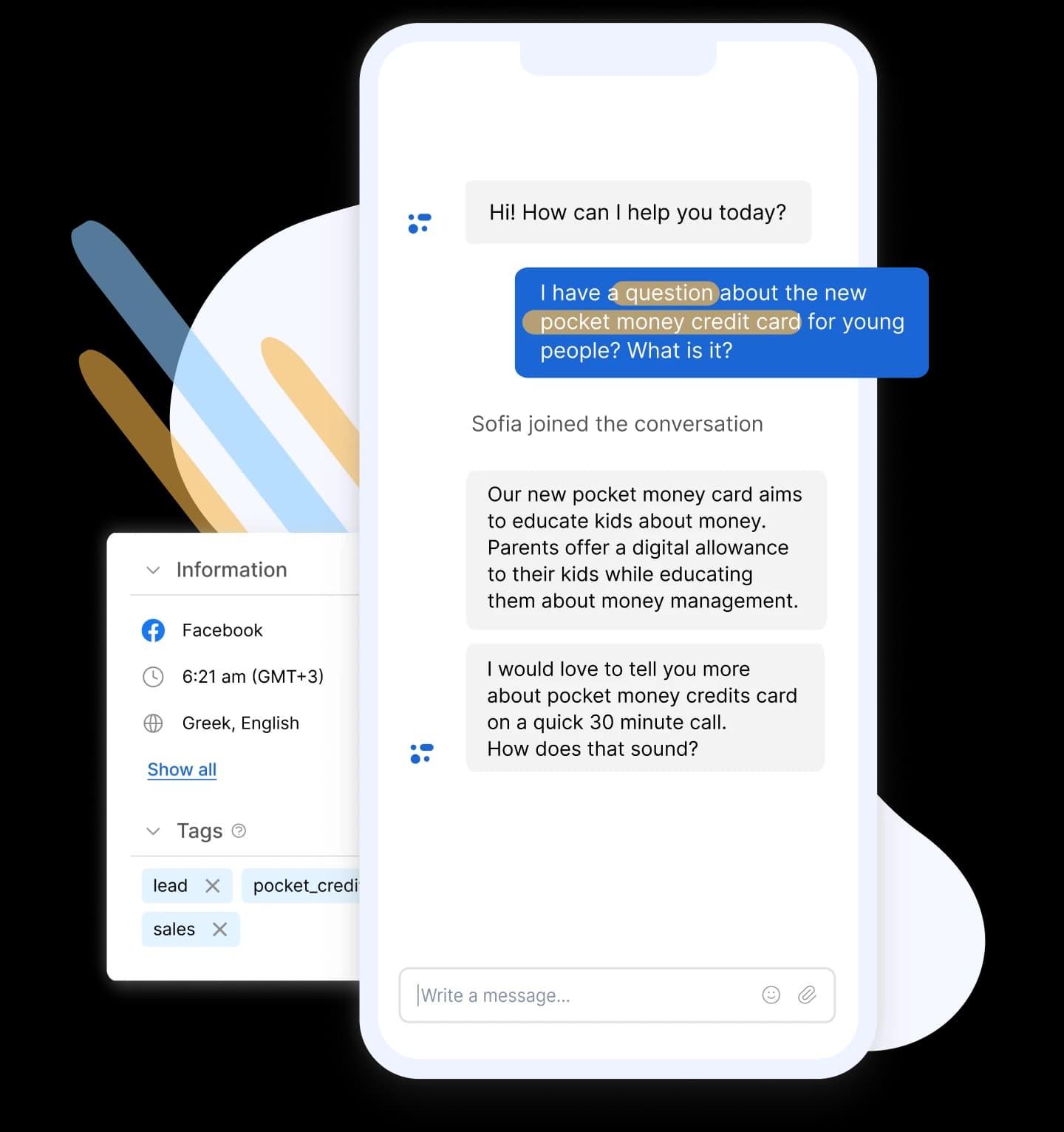
Live chat is where my frontline brain perks up. It blends the AI with human agents, claims to automate over 70% of interactions, and hands off complex cases with full cross-channel context. The agent desk has a clean inbox, departmental routing, and saved quick-responses, the bits that actually make an AI copilot for customer service usable on a busy shift.
Conversational analytics
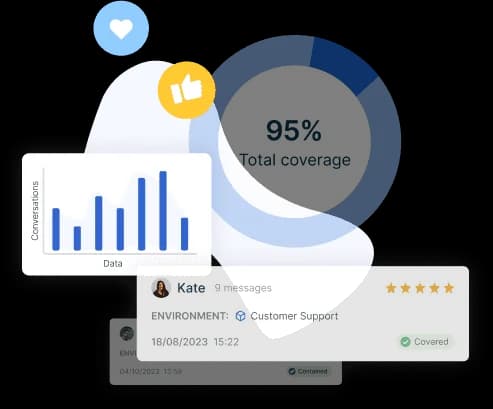
The analytics dashboards track CSAT, % coverage, % containment, and "meaningful conversations." These are the right AI customer service metrics to watch. My one honest caveat: they're retrospective. Coverage you read in a monthly report tells you what already happened, not whether the bot should answer the ticket in front of it right now. More on why that distinction matters below.
The proprietary private LLM
Moveo's differentiator is its own CX-fine-tuned LLM, which it claims "outperforms GPT-4" in a published comparison. The real selling point isn't the benchmark, it's deployment: cloud or on-premise, with data kept out of third-party systems. For a bank or an insurer, that's often the whole ballgame. The platform is also model-flexible if you'd rather bring your own.
Moveo.AI pricing: what it actually costs
Here's the part buyers care about most, and where Moveo is least transparent. There is no public price. The pricing page redirects to "Our Plans," and all three tiers show a "Talk to sales" button. Billing is metered on the "meaningful conversation" rather than per seat, per resolution, or per ticket.
| Plan | Price | Meaningful conversations/mo | AI agents | Seats | Analytics retention |
|---|---|---|---|---|---|
| Pro | Talk to sales | 100 | 2 | 2 | 30 days |
| Growth (most popular) | Talk to sales | 1,000 | 5 | 5 | 90 days |
| Enterprise | Talk to sales | 10,000 | 100 | 10 | 180 days |
The only hard number anywhere is the $40/user add-on for extra live-agent seats. One community data point on r/SaaS pegs Moveo at "$999/month, 1000 conversations" (roughly the Growth tier), but that's user-reported, not published, and overage rates aren't disclosed.
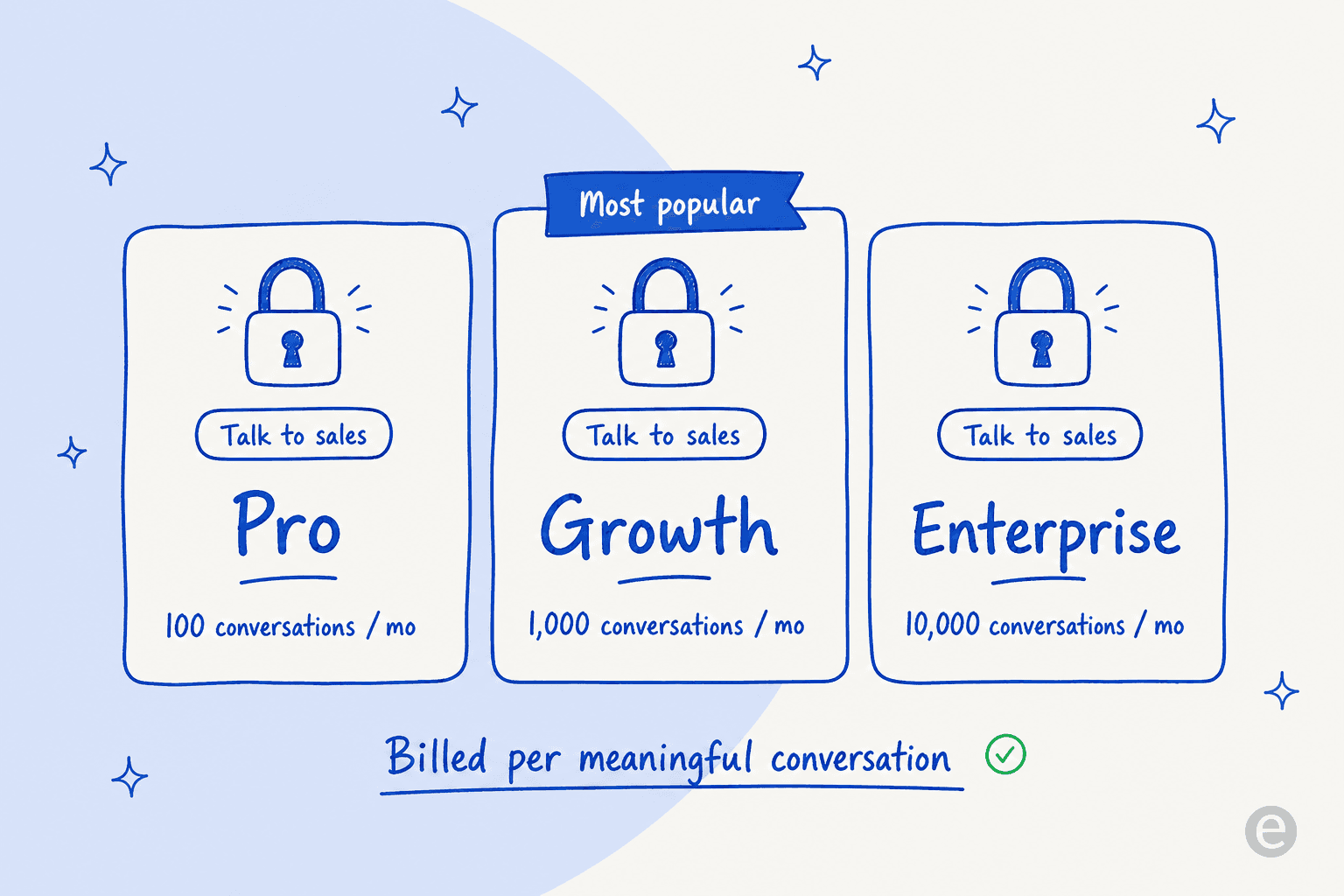
My take on the model: metering on conversations is reasonable for enterprise, but "meaningful conversation" is a fuzzy billable unit, and a contact-sales wall makes it hard to budget. This is the single biggest place a leaner team feels the gap. eesel bills a flat $0.40 per ticket with no seat fees and no platform minimum, so you can model your cost before you ever talk to a human. If you're weighing the broader cost of AI customer support, that predictability matters as much as the headline rate.
What real Moveo.AI users say
I always discount the marketing and go straight to reviews. The honest summary: independent sentiment is thin, about 14 reviews across G2 (4.0/5), Capterra (5.0/5), and Gartner Peer Insights (5.0/5), and a chunk of the Capterra batch is older and vendor-referred. Treat the scores as directional, not consensus.
The praise is consistent, and it's about the build experience and cost:
"The Moveo AI Chatbot is an excellent tool, since it can replace a customer support agent only at 1/10 of the cost. You need to dedicate some time in order to build the conversation behind the AI chatbot. But that is more than acceptable."
Vassilis G., Head of Business Development, Capterra

"Môveo.AI uses state of the art NLP algorithms that have managed to answer even the most complicated customer requests. Citizens often make spelling and grammatical mistakes, but the VA is always able to detect them... we have deployed a virtual assistant in 125 Greek Consulates all over the world."
Vagelis B., System Architect, Capterra
The criticism is just as consistent, and more useful. The recent Gartner and G2 reviews keep circling the same three things: version management, onboarding, and complex logic hitting template limits.
"It strongly stands out from the competition in terms of intuitiveness... It is not possible to easily manage versions for direct deployment. The initial training on the concepts and functionalities was not good. The integration with Sunshine Conversations results in different and mismatched message formatting compared to Moveo's native chat."
Group Product Manager, Gartner Peer Insights
"Best thing I like is it delivers no-code conversational agents, specialized for financial services... Some complex scenarios and custom logic beyond its templates may require more engineering effort, and causes manual fallback."
Verified user, Oil & Energy, G2

That last point is the one I'd weigh hardest. "More engineering effort" and "manual fallback" is exactly the friction that makes an automation project stall after the demo.
Where Moveo.AI is a strong fit, and where it isn't
After all that, here's my actual verdict. Moveo is a strong, specialized product, and specialization cuts both ways.
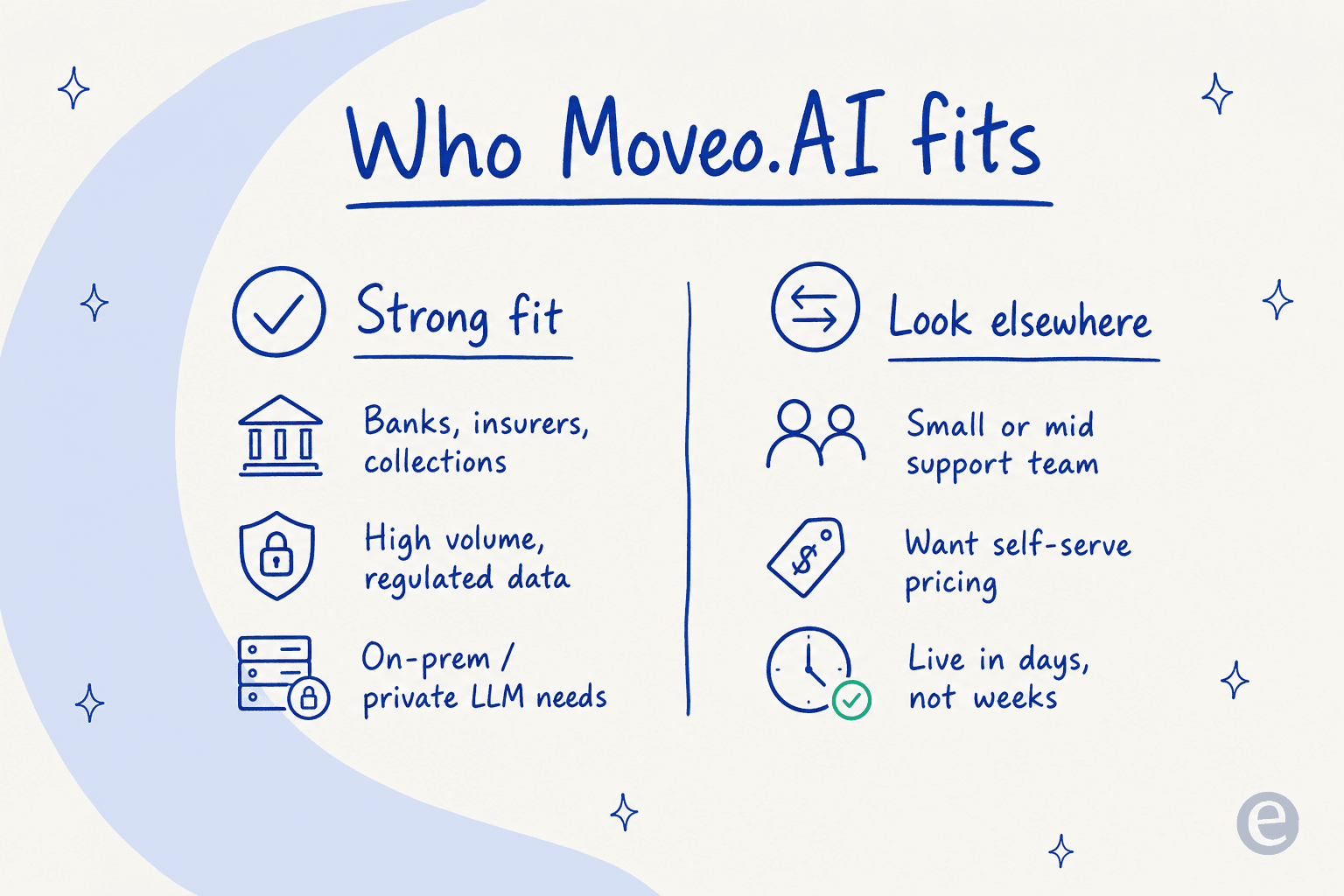
Buy Moveo.AI if you're a bank, insurer, telecom, or collections operation that needs finance-tuned flows, on-prem deployment, and a private LLM, and you have the engineering time to build and maintain the conversation logic. For that buyer, Moveo is well-suited.
Look elsewhere if you're a small or mid-market support team that wants clear pricing, a setup measured in days, and an agent you can supervise without a developer on call. The contact-sales wall and the build curve are real costs for you, even if they're rounding errors for an enterprise.
Use the quick check below if you're not sure which camp you're in.
Security and compliance
Credit where it's due: this is an area Moveo takes seriously, which fits its finance focus. The Trust Center lists SOC 2 Type 2, ISO 27001, ISO 9001, and a HIPAA self-assessment, alongside GDPR compliance and a DPA. Combined with on-prem deployment and the private LLM, it's a strong compliance posture for regulated buyers, and a fair reason that vertical leans on Moveo.
A note on control, from someone who works the queue
The reason I keep coming back to confidence-based routing is that I've seen what happens without it. On a real queue, the failure mode isn't the bot saying "I don't know." It's the bot sounding certain and being wrong, then a human discovering it three days later in a monthly report. One CX lead at a DTC brand running about 7,000 tickets a month put the objection better than I can:
"I need an AI who is only handling the tickets that it's confident to handle and all the other ones, leave them alone... the customer doesn't want to wait for me to do my monthly report."
a CX lead at a DTC supplements brand (~7,000 tickets/month), from one of our own sales calls
That's the gap between retrospective coverage analytics and live, per-ticket confidence. It's also the design choice I'd push any buyer to interrogate, whether they're looking at Moveo or anyone else. Good AI for customer service earns autonomy on the easy tickets and quietly steps back on the rest, instead of guessing and hoping.
Try eesel as your Moveo.AI alternative
If you read the "look elsewhere" column above and recognized your team, this is the part for you. eesel AI is the AI support agent I'd point a mid-market or growing team to instead of a contact-sales enterprise platform.
The difference is in how fast you get to a real answer. eesel plugs straight into helpdesks like Zendesk and Front, learns from your past tickets and help docs on day one, and routes by confidence so it only auto-replies to what it's sure of. Crucially, you can run it in simulation mode against thousands of your historical tickets to see exactly what it would have answered, before a single customer sees it. Gridwise saw eesel resolve 73% of tier-1 requests in the first month, and Smava runs a fully automated agent on 100,000+ tickets a month.
And the pricing is the opposite of a sales wall: a flat $0.40 per ticket, no per-seat fees, no minimum, free to try. You can have it live and simulating today.

eesel won't deploy a private on-prem LLM to a bank, that's Moveo's turf, and I'd happily send that buyer their way. But for the much larger group of teams that just want accurate, controllable tier-1 deflection without a quarter-long project, try eesel and judge it on your own tickets.
Frequently Asked Questions
What is Moveo.AI used for?
How much does Moveo.AI cost?
Is Moveo.AI good for small businesses?
What do users say about Moveo.AI?
What is a good Moveo.AI alternative?


Article by
Riellvriany Indriawan
Riell is a designer and writer at eesel AI with about two years of experience researching CX platforms, AI chatbots, and helpdesk software. She combines her design background with a sharp eye for how these tools actually look and feel in practice — making her comparisons unusually visual and user-focused.