Does Gorgias AI Agent learn from past tickets? How to set it up

Kira

Katelin Teen
Last edited November 20, 2026
Gorgias AI Agent does not use your past tickets as a training source. Its documented sources are your Shopify store, help center, public pages, guidance, uploaded documents and actions. What it does do is mine tickets it could not resolve into Opportunities, beta suggestions you edit and approve, and let you thumb-rate sources on closed tickets. You test fixes one ticket at a time in the Playground. If you want an AI that reads your ticket history first, eesel's Gorgias integration trains on past tickets, macros and your help center, and replays drafts against old tickets before going live.
With the eesel CLI, a coding agent can upload approved knowledge, such as exported Gorgias macros, then ask test questions and check the answers before anything goes live. Connecting Gorgias itself still needs someone with admin access.
What does "learn from past tickets" actually mean?
It means four different things, and Gorgias answers each one differently. I build AI agents for a living, so I read a doc like this the way I read a data pipeline: what goes in, what changes the output, and who approves the change.
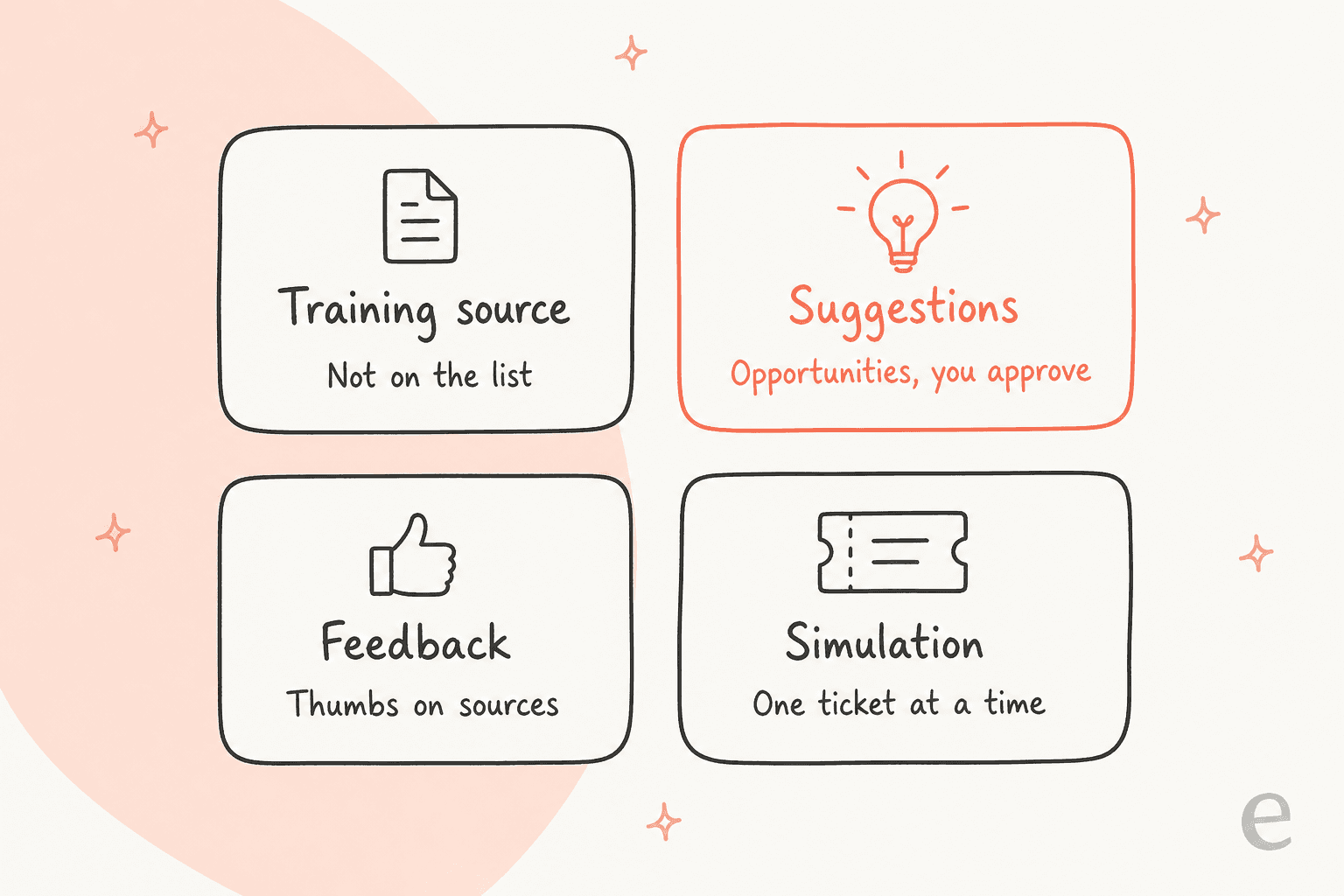
| What you might mean | What Gorgias does | Source |
|---|---|---|
| Training on ticket history | Not a listed source | How AI Agent works |
| Suggestions mined from tickets | Opportunities (beta): fill a gap or resolve a conflict | Opportunities |
| A feedback loop | Thumbs on the skills and knowledge used in closed tickets | Coach AI Agent |
| Replaying old tickets | Playground can re-simulate one existing ticket | Test conversations |
Most merchants asking this question mean the first row. Past-ticket training is the single most requested capability in eesel's sales calls, and I hear it in almost every Gorgias and Shopify evaluation: teams with years of replies and a pile of out-of-date macros want the AI to just read them. That is a fair want, and it is the row where Gorgias is thinnest.
What sources does Gorgias AI Agent use today?
The AI Agent explainer says it is tailored to your brand and trained on a short list:
- Your Shopify store: orders, customer data and products.
- Your help center articles.
- Your public website and product catalog.
- Your custom guidance, such as how returns or cancellations work.
- Your uploaded documents.
- Your actions, meaning tasks in third-party apps.
Past tickets and macros are not on it. The knowledge doc fills in the mechanics: knowledge is created in Gorgias (guidance and help center articles), synced from where it lives (store website, public URLs, documents), or imported from another platform's help center. AI Agent pulls the content most relevant to the shopper's question, and guidance carries the most weight among knowledge types.
Two limits matter for anyone hoping to feed history in. Synced pages must be public, so a login-gated wiki is out. And you can have up to 100 guidance enabled at once, per the add your content doc. Gorgias also says plainly that skills should cover your highest-volume conversations, so the answer is not left to a relevance search across everything.
Does Gorgias mine your tickets for suggestions?
Yes, and this is the closest thing to learning from history. Opportunities, now in public beta, highlight improvements based on unresolved conversations. There are two types:
- Fill knowledge gap. A topic AI Agent keeps handing over. The card summarizes what is missing and sends you to create or update guidance.
- Resolve knowledge conflict. Two pieces of content that disagree, shown side by side, so you can edit, disable, hide or delete one.
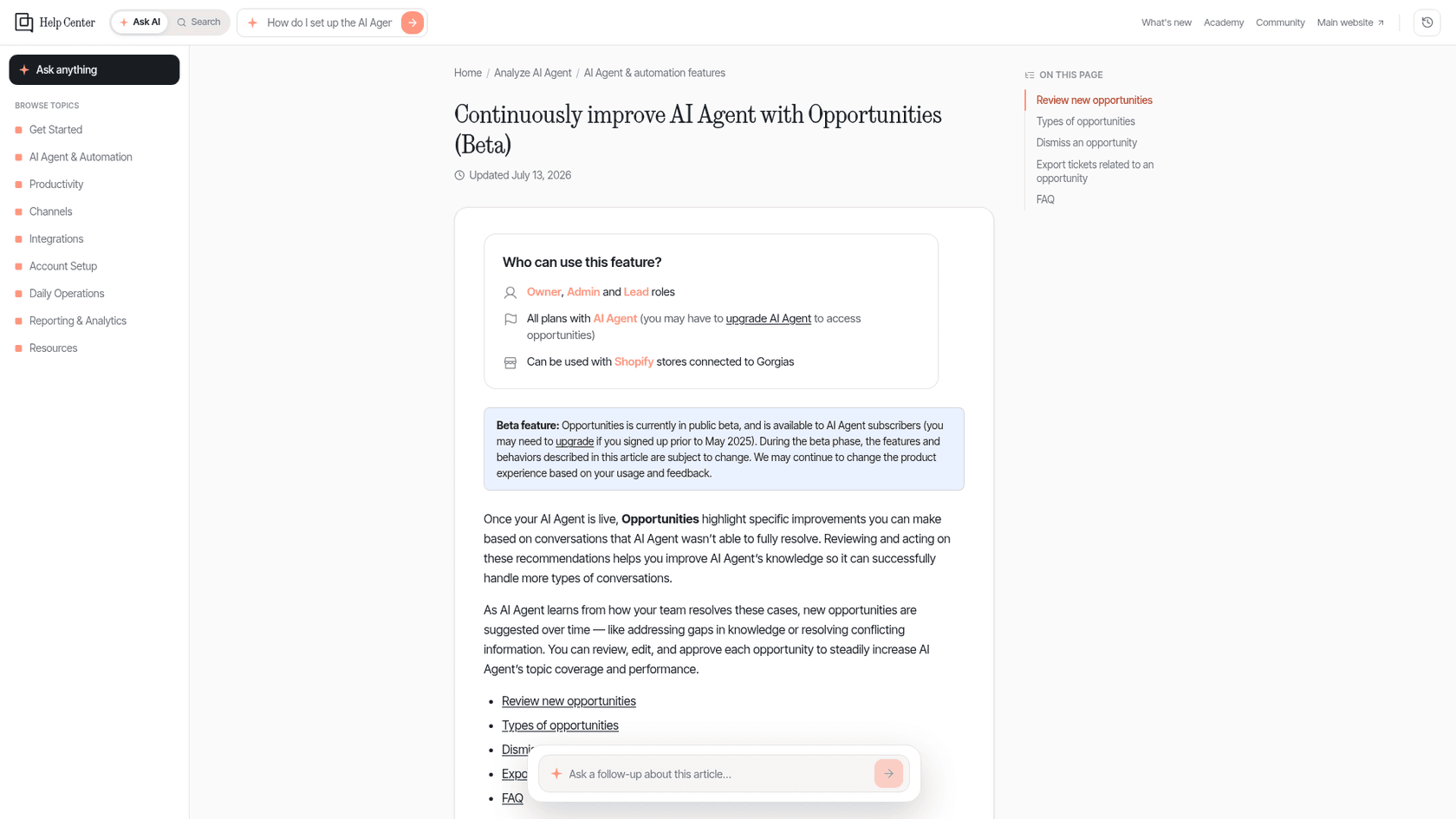
Each opportunity shows how many tickets sit behind it and lets you export them as a .csv, which is a useful way to judge whether a gap is worth an afternoon. New ones appear periodically, depending on your volume. Dismissed opportunities do not come back. They are also snapshots: the doc says they are generated from past conversations and do not update when you change your knowledge, so check against your current setup before acting.
Nothing is applied for you. The doc's own wording is that you "review, edit, and approve each opportunity". I like that for a customer-facing bot, because a model that silently rewrites its own instructions from raw tickets would also learn your worst replies. If you want my longer take on that failure, it is in training AI on past tickets.
One plan detail to check. The Opportunities doc says all plans with AI Agent, though accounts that signed up before May 2025 may need an upgrade. The pricing page, meanwhile, lists proactive knowledge-gap detection among the custom-plan extras. I would confirm in your own account before counting on it.
What does rating tickets change?
Less than the name suggests. On closed tickets, you open AI Feedback from the To review view and rate the conversation Bad, Okay or Good. The coaching doc is explicit that this rating goes to Gorgias to help improve AI Agent over time and does not immediately change how it behaves with your customers.
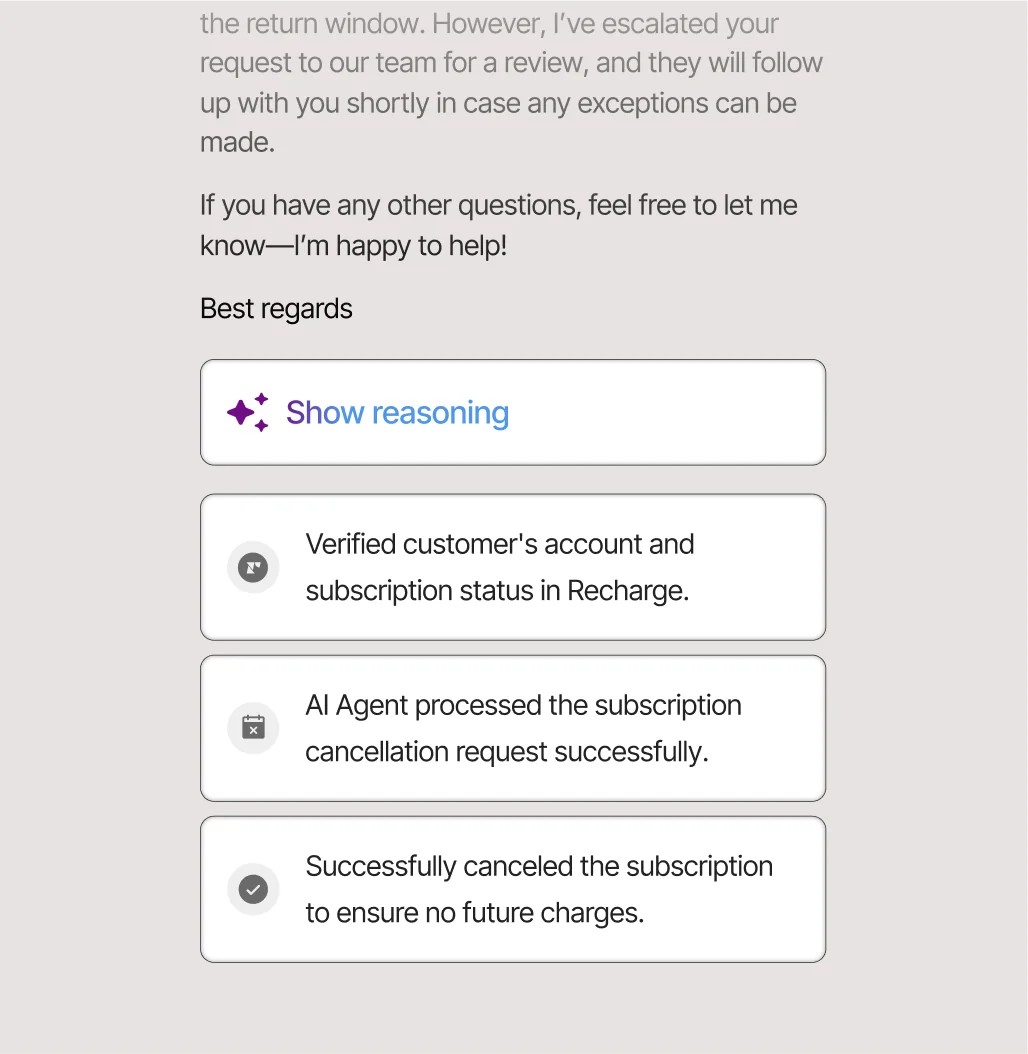
What does change behavior is rating the sources. Under Sources used, a thumbs up or down on knowledge coaches AI Agent to prioritize or deprioritize that source for similar tickets. If something was missing, Add source under Was something missing? coaches it to retrieve that source next time. You need Lead or Admin permissions to give feedback, per the doc and the roles guide.
A docs conflict worth knowing about: the improvement cycle page says rating responses on closed conversations influences how it handles similar ones. The coaching page narrows that to source ratings. I would trust the narrower page and treat the conversation rating as a signal for Gorgias, not for your store.
There is one more tool, and Gorgias markets it with the past-tickets idea. Gaia is the in-helpdesk assistant, and for AI Agent coaching it reads your skills, knowledge and recent ticket data, per the Gaia doc. Its product page says it is trained on your help center, catalog, policies and past conversations. Note the subject: that is Gaia, the assistant that drafts changes for you to approve, not the AI Agent that answers shoppers. Gaia does not draft or send customer replies.
How do I set it up step by step?
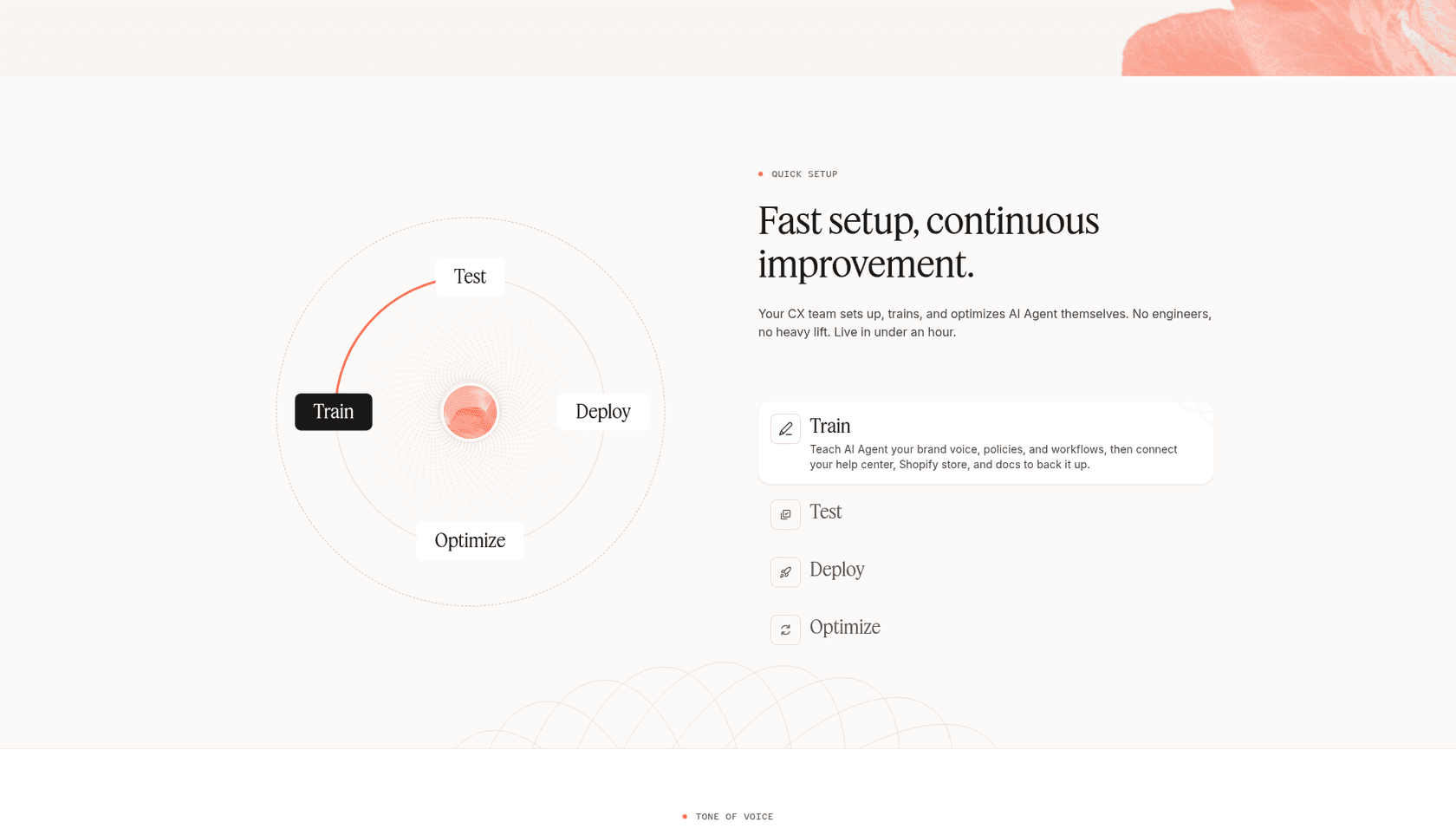
Plan on about an hour for the first loop. Gorgias frames the cycle as train, test, deploy, analyze, and I follow the same order.
- Add the sources it can read. Go to AI Agent, then Knowledge, then Create content. Sync your store website, add key public URLs, upload policy documents, and write guidance for your top topics. Your existing help center articles are already part of knowledge.
- Convert your best past replies into guidance. Pull the 10 to 20 answers your team gives most, strip customer details, and paste them in as guidance or help center articles. This is the manual version of training on tickets. My macros from tickets walkthrough covers the mining step, and your Gorgias macros are the obvious starting pile.
- Write skills for the highest-volume intents. Returns, order status and cancellations first. I cover the build in Gorgias AI Agent skills.
- Test before you publish. Open the Playground from AI Agent. Under Settings, pick the channel and a target: new customer, existing customer, or existing ticket. Test conversations are free, do not count toward ticket usage and do not touch reporting. Actions are off by default, and turning them on can change real order data, so use a fake customer.
- Re-simulate a bad ticket. Choose the existing ticket target to replay a conversation where AI Agent got it wrong, after you edit the knowledge it used.
- Work the Opportunities queue weekly. Accept the ones with many tickets, edit the draft guidance, dismiss the rest.
- Rate sources on the To review view. Thumbs on the sources that mattered, Add source for the ones it missed.
- Watch handover rate per skill. The Skills page shows ticket volume, handover rate and average CSAT, as the improvement cycle doc describes. Pair it with your Gorgias analytics and CSAT report.
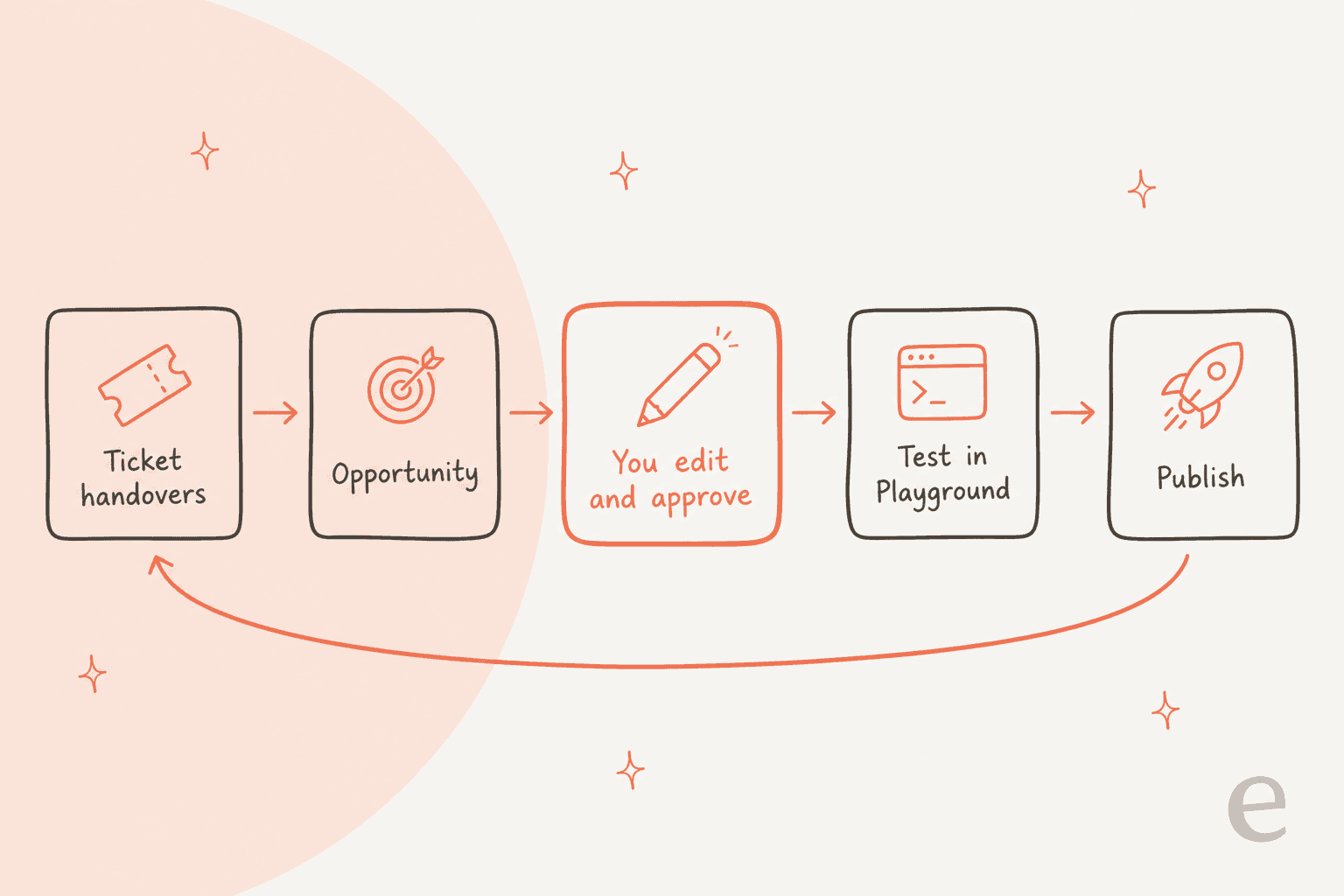
The human step in the middle is the point. Handovers become Opportunities, you edit and approve, you test, you publish, and the next batch of handovers tells you whether it worked.
Where are the limits?
I would plan around these, all from the docs:
- No ticket-history source. The source list is closed, so replies your team wrote in 2023 only help if you turn them into guidance or articles.
- No macro import I could find. The knowledge list has no macro option, so macro text has to be rewritten into guidance or a help center article.
- Public pages only. Synced content must be publicly accessible, and re-syncs are limited to once every 24 hours. Embedded PDFs, video and images on a page are not extracted.
- One ticket at a time. Re-simulation targets a single existing ticket. I found no way to replay a month of history and see a score.
- Beta suggestions. Opportunities depend on handover volume, and a quiet store may see few of them.
- Shopify. AI Agent is documented for Shopify stores connected to Gorgias.
None of that makes it a weak product. Its actions, order data and skills are strong for a Shopify team, which I cover in AI Agent actions. The gap is narrow: it is built around knowledge you write, not history you already have.
What does it cost to run?
The Gorgias pricing page puts AI Agent on every plan, and you pay for each automated interaction. Prices below are the monthly figures on that page when I checked on 2026-11-20.
| Plan | Monthly price | Tickets included | Automated interactions included | Extra, per interaction |
|---|---|---|---|---|
| Starter | $40 | 50 | 30 | $1.00 |
| Basic | $90 | 300 | 30 | $0.90 |
| Pro | $550 | 2,000 | 190 | $0.90 |
| Advanced | $1,430 | 5,000 | 530 | $0.85 |
A worked example, my math: a Pro store where AI Agent resolves 600 conversations in a month pays for 410 over the 190 included, so 410 x $0.90 = $369 on top of the plan. Test conversations in the Playground do not add to that. For the full model, see my Gorgias AI Agent pricing breakdown and the plans comparison.
Where does eesel fit?
If the thing you want is an AI that reads your ticket history, that is what eesel's AI helpdesk teammate does. It joins your Gorgias queue like a new hire and learns from your past Gorgias tickets, macros and help center, then pulls Shopify order data into a reply. Before it touches a live ticket, you can run it against past tickets, see where it is strong on where-is-my-order, returns and product questions, and fix the gaps first. I wrote how it compares in Gorgias AI Agent vs eesel.
Two Gorgias merchants show the shape of it. Rúngne, a Norwegian climbing apparel brand, runs three eesel agents on its Gorgias queue and handled about 2,100 tickets in a month, leaving about 580 drafts as internal notes for the team. Its agents work from the Shopify catalog, orders, past Gorgias tickets and a written policy reference, and ran about 630 searches across the catalog and past tickets. ClutchLoop uses an agent that reads the whole thread and any earlier tickets from the same customer first, then answers returns and product questions and steps back when a person is already replying.
My honest split: stay on Gorgias AI Agent if your answers live in a clean help center and you want native actions on Shopify orders. Add a teammate that trains on history if your real knowledge sits in thousands of old replies and macros. The two can share a queue, since eesel drafts as internal notes you control. Current eesel pricing is credit based: the pricing page lists a 7-day free trial with 100 credits, then plans from $299 a month for 500 credits, where a ticket or chat is 1 credit.
Try eesel for Gorgias
If your Gorgias AI Agent keeps missing answers that your team already wrote down in old tickets, eesel is the quickest way I know to put that history to work. It connects to Gorgias in a few minutes, reads past tickets and macros, and lets you test drafts on old tickets first.
Try eesel free for 7 days, no card needed. If you are weighing helpdesks, my notes on Gorgias alternatives and AI for Shopify support cover the rest.
Frequently asked questions
Does Gorgias AI Agent learn from past tickets?
Not as a training source. The how it works doc lists your Shopify store, help center, public website, guidance, documents and actions, and no ticket history. Gorgias does mine unresolved tickets into suggestions you approve, which I cover in my Gorgias AI setup guide.
How do I make Gorgias AI Agent learn from my agents' replies?
Do it by hand, through knowledge. Turn your best past replies into Gorgias guidance or help center articles, then accept the Opportunities Gorgias suggests. My post on macros from past tickets shows how to mine replies.
What are Gorgias AI Agent Opportunities?
Opportunities are beta recommendations built from conversations AI Agent could not fully resolve. Per the Opportunities doc, each one is either a knowledge gap or a conflict between two pieces of content. Compare it with AI Agent skills.
Can I test Gorgias AI Agent on old tickets?
One ticket at a time. The Playground can target an existing ticket to re-simulate it after you change knowledge, per the test conversations doc. I found no bulk replay over your history. For that idea, see AI support simulation testing.
How much does Gorgias AI Agent cost to run?
The Gorgias pricing page shows AI Agent on every plan at $0.85 to $1.00 per automated interaction beyond the allowance. Test conversations are free. My Gorgias AI Agent pricing breakdown has worked examples.
Does Gorgias AI Agent work without Shopify?
The docs I read say AI Agent is used with Shopify stores connected to Gorgias. If your store runs elsewhere, an add-on teammate such as eesel's Gorgias integration is one route. See also best AI for Gorgias.
Is there an AI that trains on Gorgias ticket history?
Yes. eesel reads past Gorgias tickets, macros and help center articles, then replays its drafts against old tickets before going live. My Gorgias AI Agent vs eesel comparison covers where each fits.
Which past tickets should I train an AI on?
Start with resolved, recent tickets that a person you trust answered well, and skip outdated policies. My guide on training AI on past tickets and the note on what data to train on go deeper.