
What an AI knowledge base for fintech actually is
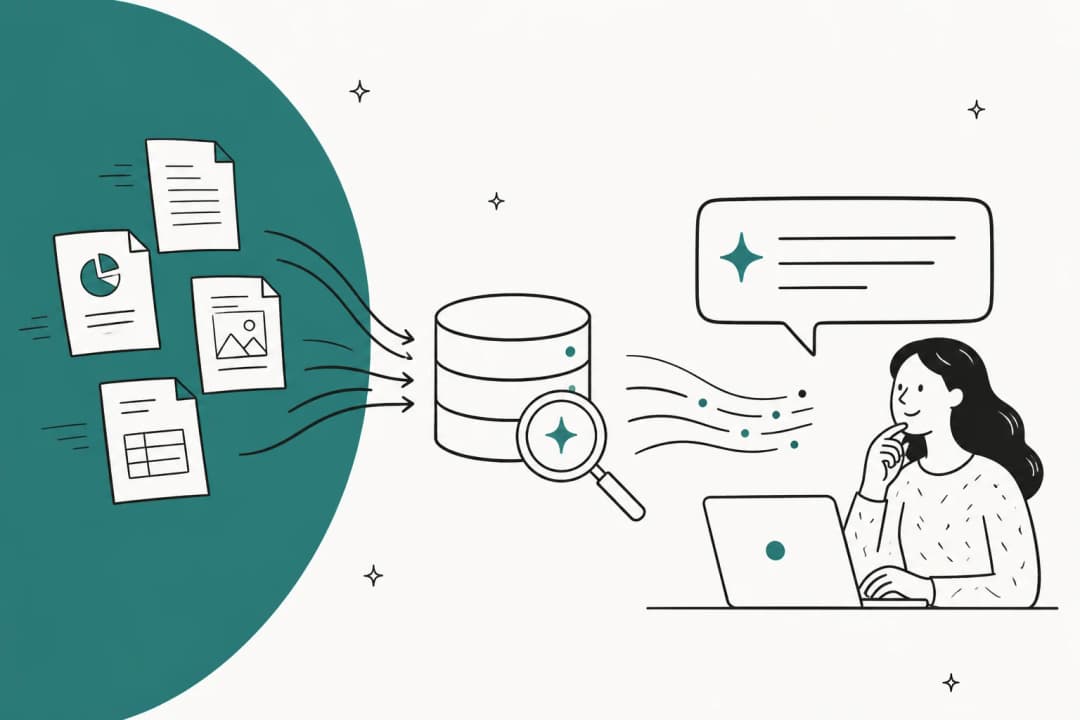
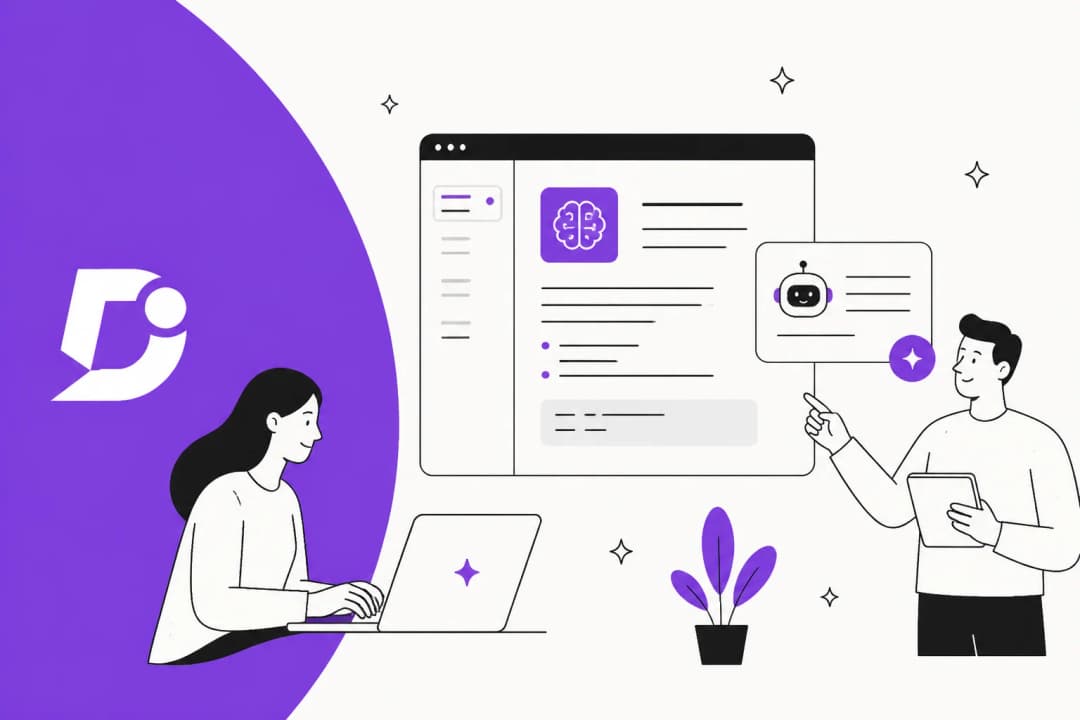
A plain knowledge base is a pile of help articles a human searches. An AI knowledge base puts a model on top of that pile so a customer or an agent can ask a question in plain language and get an answer drawn from the docs, instead of ten blue links. Under the hood it is usually retrieval-augmented generation: the system retrieves the most relevant passages from your knowledge using semantic search, then has the model write an answer from them.
In fintech, the same machinery carries a lot more weight. A wrong answer in an e-commerce store is an annoyed customer. A wrong answer about a failed transfer, a card freeze, a KYC hold, or whether a fee applies is a compliance incident, a chargeback, or a regulator's question. So a fintech-grade AI knowledge base is the same core idea with four extra jobs bolted on: it answers only from sources you approved, it redacts sensitive data, it shows its work with a citation, and it logs every reply so you can reconstruct what was said and why.
I work the support queue, and the difference is something you feel ticket by ticket. The generic version optimises for "did it sound helpful." The fintech version optimises for "can I defend this answer if someone asks me to."
Why a generic AI knowledge base breaks in fintech
Here is the failure mode I think about most. Early on, we watched an AI confidently tell customers it supported things it didn't, simply because someone had written "we support all models" in the help center. The team behind it, a B2B vehicle-telematics support group scaling from a couple hundred tickets a month toward thousands, summed up the early setup as "trial and error in the beginning." The AI wasn't broken. It was doing exactly what a generic knowledge base tells it to do: trust the document, sound certain.
Now move that same behaviour into fintech. The doc says "transfers clear instantly," but it really means domestic transfers on a verified account. A generic AI knowledge base will tell a customer their international transfer clears instantly, and you find out when the complaint lands. The core problem is that a generic setup has no concept of "I'm not sure, so I shouldn't answer", and that humility is the single most important property in regulated support.
There is a money side too. The teams I hear from are usually drowning in repetitive, easily-answered questions ("where's my statement," "why was I charged," "reset my 2FA") while the genuinely tricky ones pile up behind them. The promise of AI here isn't to replace the team. It's to reduce ticket volume on the safe tier-1 questions so humans can spend their attention on the cases that actually need judgment. But that only works if you trust the line between the two, which brings us back to grounding and routing.
What a fintech-grade AI knowledge base is built from
If you strip it down, a knowledge base you can put in front of regulated customers has four layers, and skipping any one of them is where teams get burned.
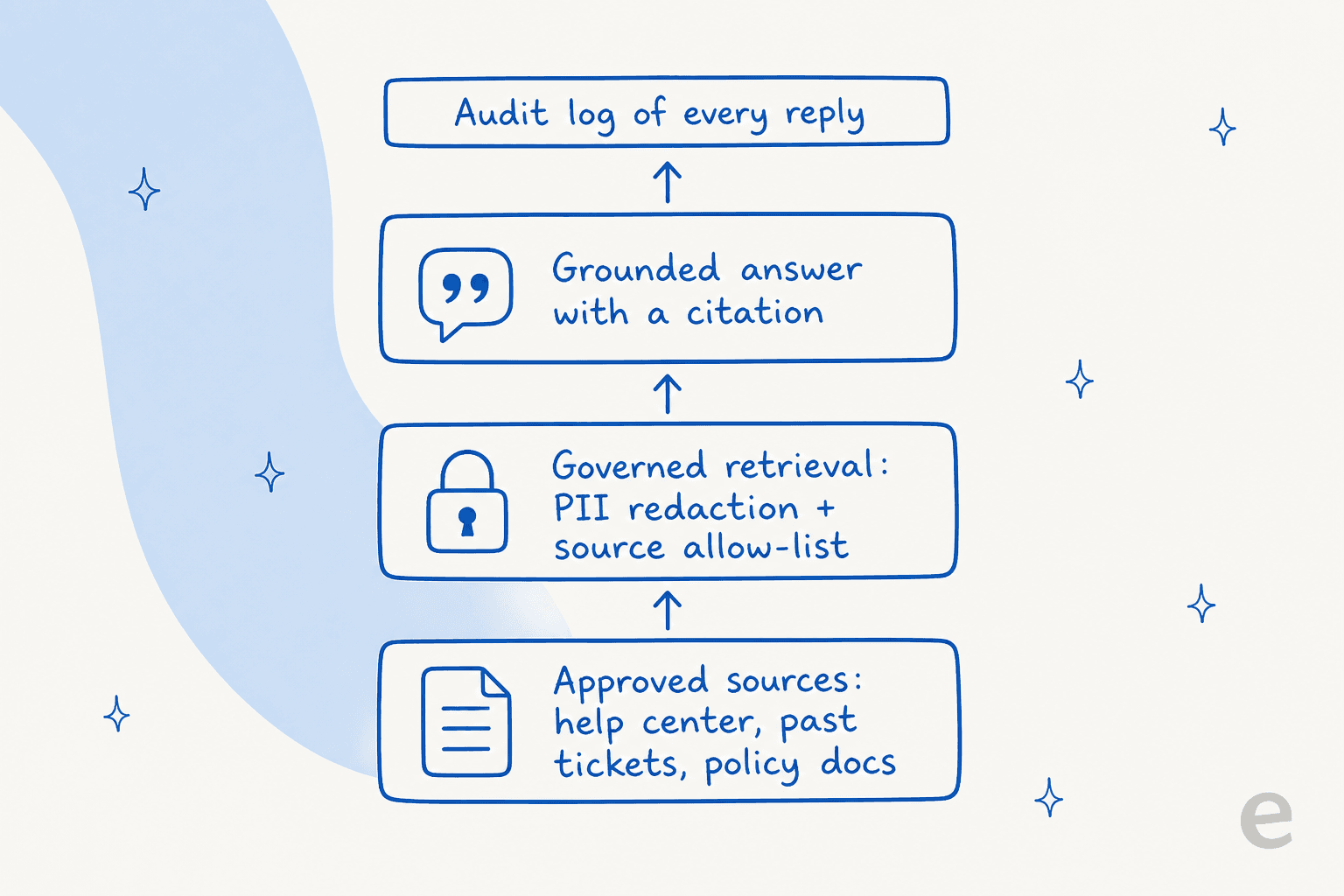
- Approved sources. Not "the whole internet," and not even "anything in Confluence." A curated set: your help center, your solved past tickets, internal policy docs, and the specific Notion or Google Docs pages your compliance team signs off on. The single biggest accuracy lever is learning from resolved tickets, not just help-center content, because that is where the real, approved answers live.
- Governed retrieval. Between the question and the answer sits a layer that strips PII (card numbers, account numbers, passwords) and enforces the source allow-list, so the model never sees raw sensitive data and never reaches for a document you didn't sanction.
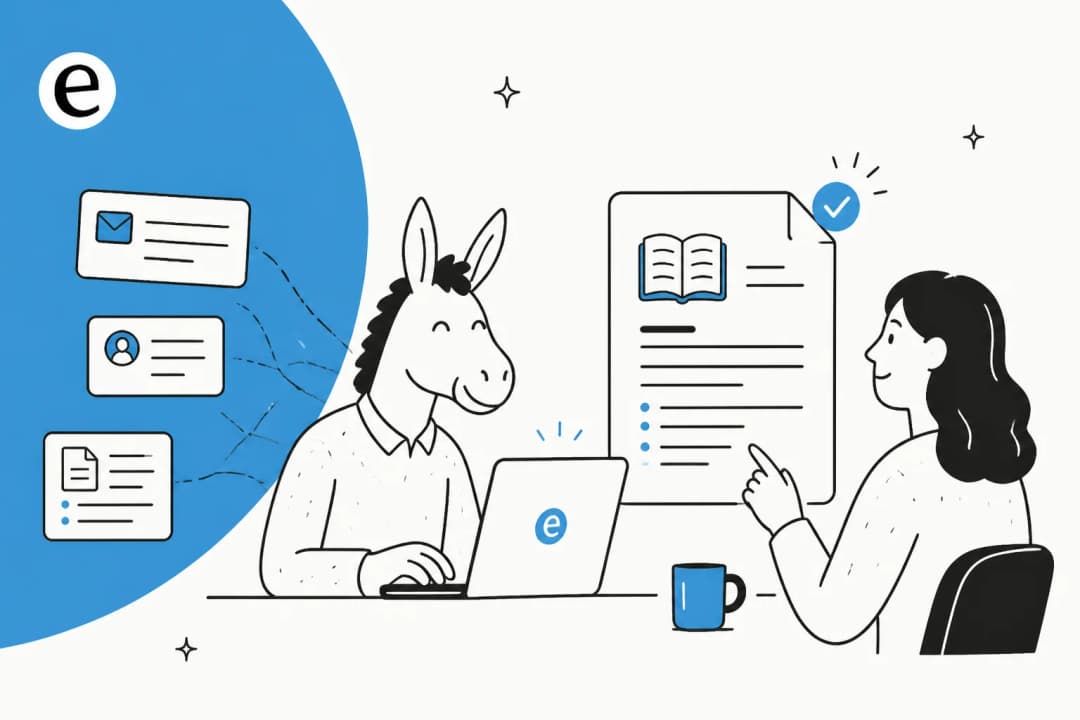
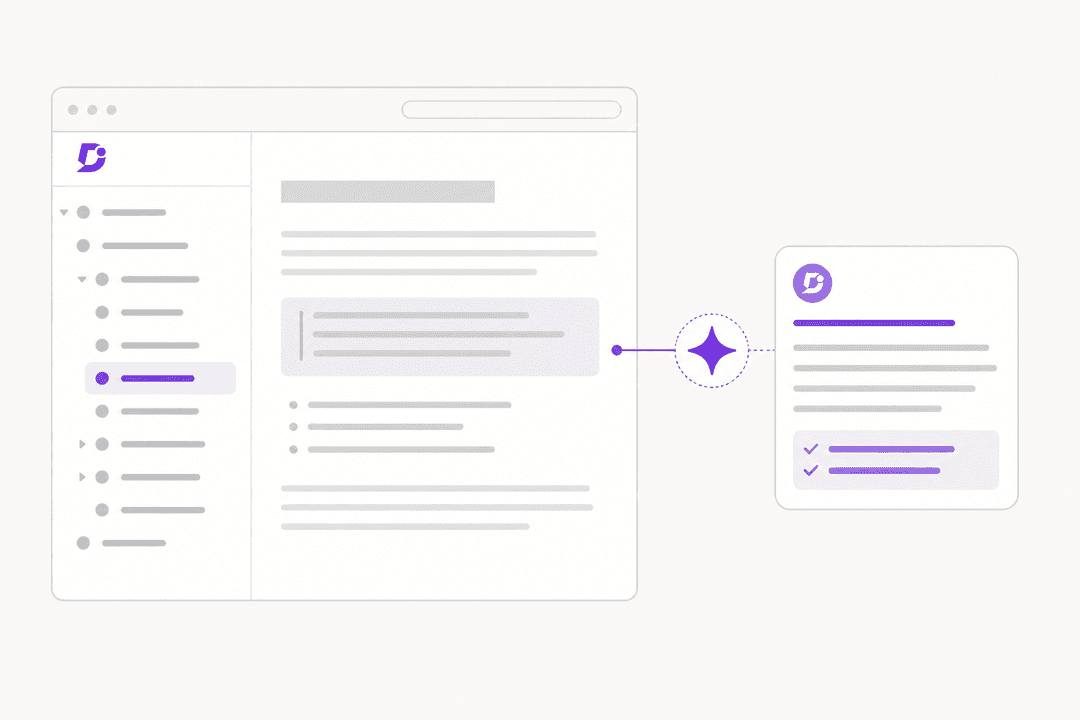
- A grounded answer with a citation. Every reply points back to the source it came from. As one legal-tech founder put it about their own regulated setup, you can "set exact guardrails on sourcing and it always provides transparent citations." That citation is what turns "trust me" into "check for yourself."
- An audit log of every reply. Who asked, what the AI answered, which source it used, and whether a human reviewed it. This is the layer auditors and risk teams care about, and it is the one generic tools quietly skip.
A regular knowledge base gives you the first layer. A fintech one needs all four, and a good AI knowledge base tool treats them as the default, not an enterprise upsell you discover later.
How it answers a ticket without making things up
This is the part that separates a toy from something you can actually deploy. The mechanism is confidence-based routing, and it is the direct answer to the "we support all models" problem from earlier.
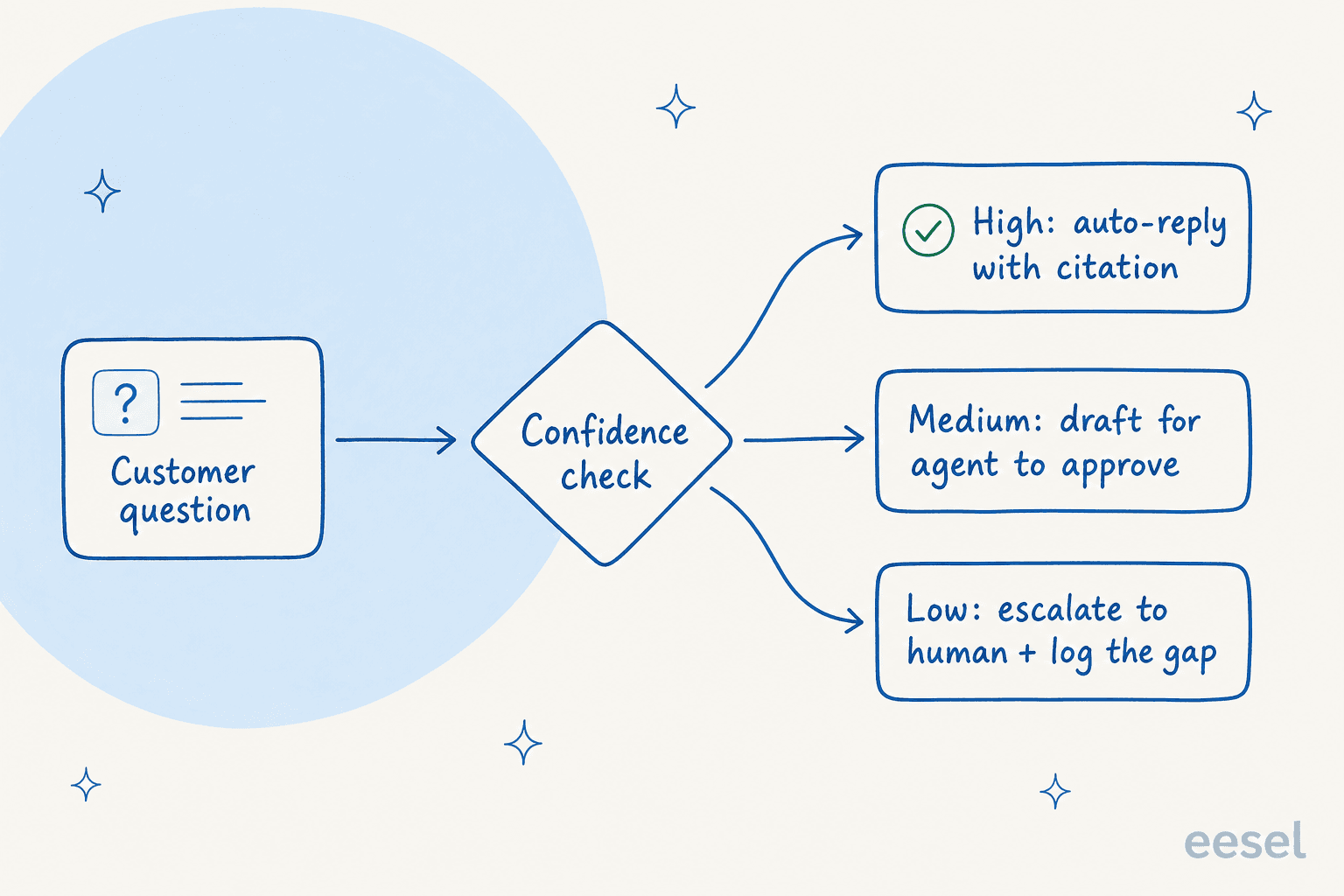
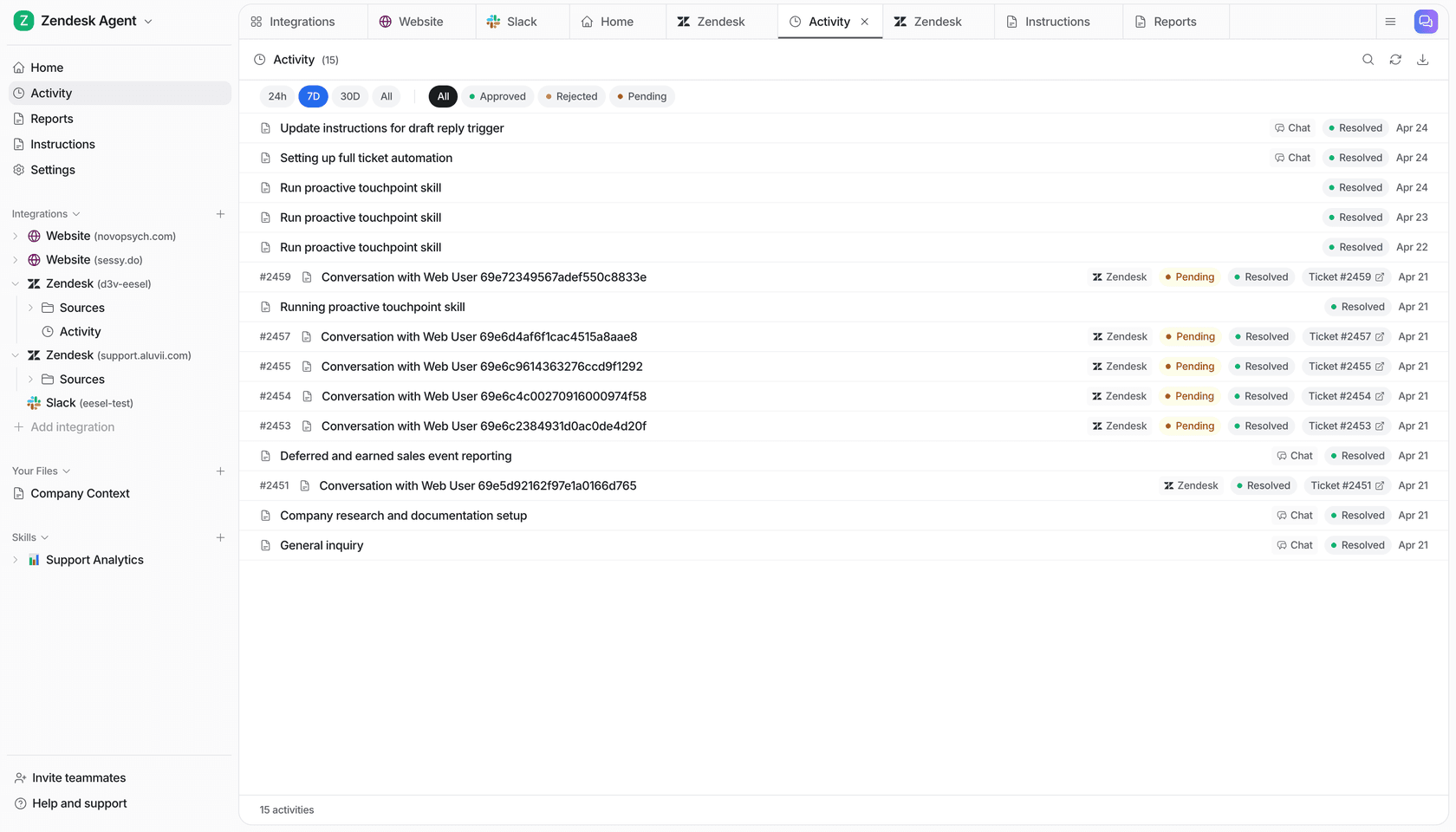
When a question comes in, the system scores how well its approved knowledge actually covers it. High confidence, with a clear source? It can answer directly, with the citation attached. Medium? It drafts a reply and leaves it for an agent to approve before anything sends. Low confidence, or a topic you've fenced off entirely (disputes, account closures, anything legally loaded)? It does not guess. It hands the ticket to a human and logs the gap so you can decide whether to teach it later.
The best framing of this I've heard came from a DTC support lead describing what they actually wanted from AI: "I need an AI who is only handling the tickets that it's confident to handle and all the other ones, leave them alone." That is the whole philosophy in one sentence, and it matters double in fintech. You are not trying to automate everything. You are trying to automate the safe slice perfectly and route the rest cleanly.
This is also why hallucination prevention in support is less about a smarter model and more about discipline: ground the answer, demand a citation, and give the system permission to say "I don't know."
Security and compliance: the part that actually gates the deal
In most verticals, security is a checkbox near the end. In fintech, it is the first conversation, and it kills deals that look great on paper. I've watched buyers walk because a tool had no SOC 2, no HIPAA/BAA for the regulated slice of their business, or couldn't pass an internal ISO review. These are hard gates, not soft preferences, and they sink otherwise-strong customer support automation projects.
So before you fall in love with any AI knowledge base, get clear answers on:
- Where does the data live and go? EU data residency if you serve EU customers, signed DPAs, and a flat, written guarantee that your customer data is never used to train anyone's model. For reference, eesel silos data per account and the underlying models retain it for a maximum of 30 days purely for abuse monitoring, with no training on your data.
- PII handling. Tickets in fintech are full of card numbers and account details. You want redaction before anything is processed, plus custom retention rules. This is something eesel does specifically for finance and healthcare clients, where standard retention isn't enough.
- The certifications themselves. SOC 2, ISO 27001, GDPR, and HIPAA/BAA where relevant. Be honest with yourself here and ask vendors for current status in writing rather than trusting a logo on a marketing page. If a certification is "in progress," treat it as not-yet-done for procurement purposes.
The credibility point that lands with risk teams is the audit log again: if you can show exactly what the AI said and which approved source it used, "the AI handled it" stops being a scary sentence.
How to roll one out without betting the queue on it
The mistake is flipping AI on across every ticket type on day one. The safe path is to prove it against reality first. This is where simulation earns its keep.
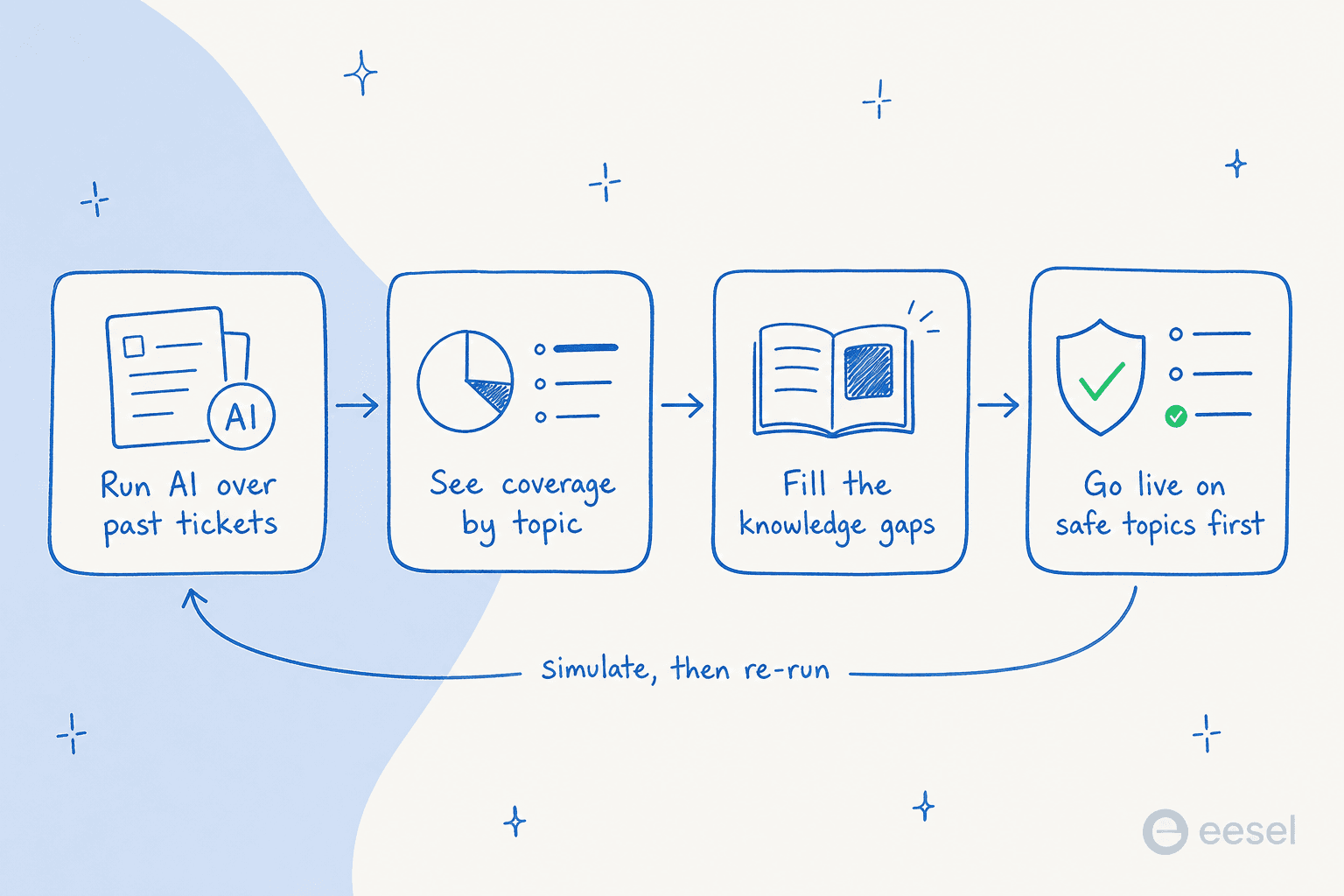
Run the AI over thousands of your historical tickets and look at what it would have said, broken down by topic. You'll see exactly where coverage is strong (statement questions, password resets) and where it is thin or risky (anything touching disputes or limits). Fill the obvious gaps, fence off the risky topics, and only then go live, starting with the categories you trust and widening from there. Between every change, re-run the simulation so you're never guessing at the impact.
The payoff when this is done right is real and quick. For one team, eesel AI resolved 73% of tier-1 requests in the first month, with results showing up inside a 7-day trial.
On the scale end, Smava, a German lending marketplace, runs a fully automated Zendesk agent processing over 100,000 German-language tickets a month, per eesel, and a major payments company reported up to 80% time savings just on finding answers across documentation. Those are fintech-shaped numbers, from fintech-shaped companies, because the grounding-and-routing discipline is exactly what regulated support needs. If you're still building the business case, it's worth reading how much AI can save in support before you set targets.
Keeping the knowledge base from going stale
A fintech knowledge base rots faster than most, because fees, policies, and product rules change and the docs lag behind. A static knowledge base is a slow-motion source of wrong answers, which is why the better knowledge management setups treat it as something that updates itself.
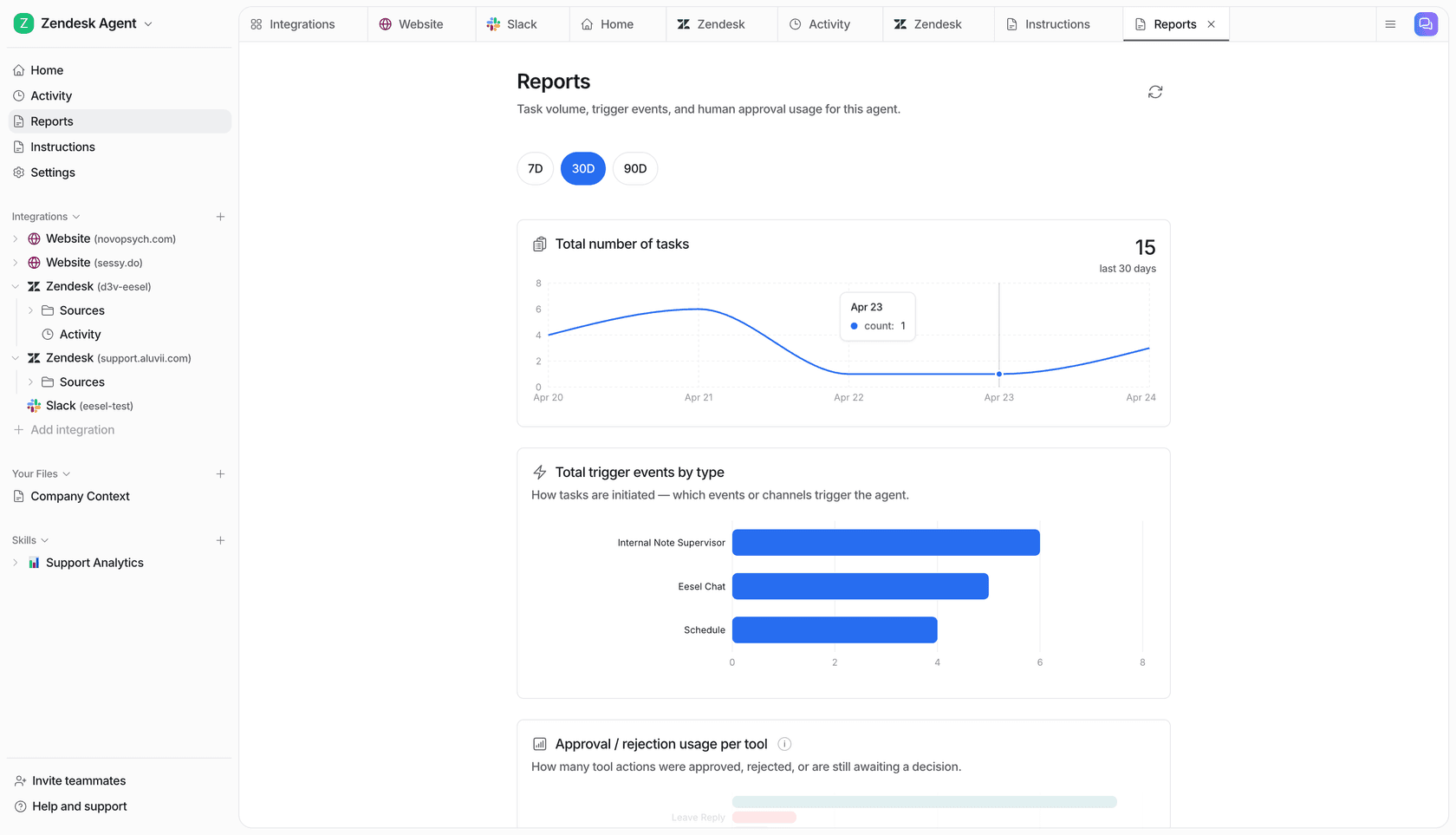
The fix is a knowledge base that maintains itself. The AI should flag the topics it couldn't answer (those are your real content gaps, ranked by how often customers ask), draft articles to fill them for a human to approve, and learn from every correction an agent makes so the same miss doesn't repeat. Pair that with ticket triage, support tagging, and theme analysis, and the knowledge base becomes a live picture of what your customers are actually confused about, instead of a folder nobody has opened since the last audit. It also quietly improves customer service overall, because the gaps get closed while they're still small.
Try eesel for fintech support
If you want an AI helpdesk agent built around exactly this discipline, eesel is worth a look. It learns from your past tickets and approved docs on day one, routes by confidence so it only auto-answers what it's sure of, redacts PII with custom retention for finance clients, and lets you simulate the whole thing against your history before a single customer sees it.
It plugs into Zendesk, Freshdesk, Salesforce, and the rest of your stack, and pricing starts at $0.40 per ticket with no per-seat fee, so the cost stays predictable when volume spikes.

You can try eesel free, point it at a slice of your real tickets, and see the resolution rate for yourself before you commit. In regulated support, "show me, don't tell me" is the only standard that counts.
Frequently Asked Questions
What is an AI knowledge base for fintech?
How do I stop an AI knowledge base from giving wrong answers about accounts or payments?
Is an AI knowledge base for fintech secure enough for compliance?
How much does an AI knowledge base for fintech cost?
Can an AI knowledge base handle support in multiple languages?
How do I keep a fintech knowledge base from going stale?


Article by
Riellvriany Indriawan
Riell is a designer and writer at eesel AI with about two years of experience researching CX platforms, AI chatbots, and helpdesk software. She combines her design background with a sharp eye for how these tools actually look and feel in practice — making her comparisons unusually visual and user-focused.