What an AI chatbot for SaaS actually is
Strip away the marketing and there are two very different things wearing the same "chatbot" label.
The old kind is a rule-based chatbot: a scripted decision tree with buttons and canned replies. It works until a customer phrases their question in a way the script didn't anticipate, then it dead-ends into "I didn't get that, here's our help center." SaaS customers, who are usually mid-task and mildly annoyed, hate it.
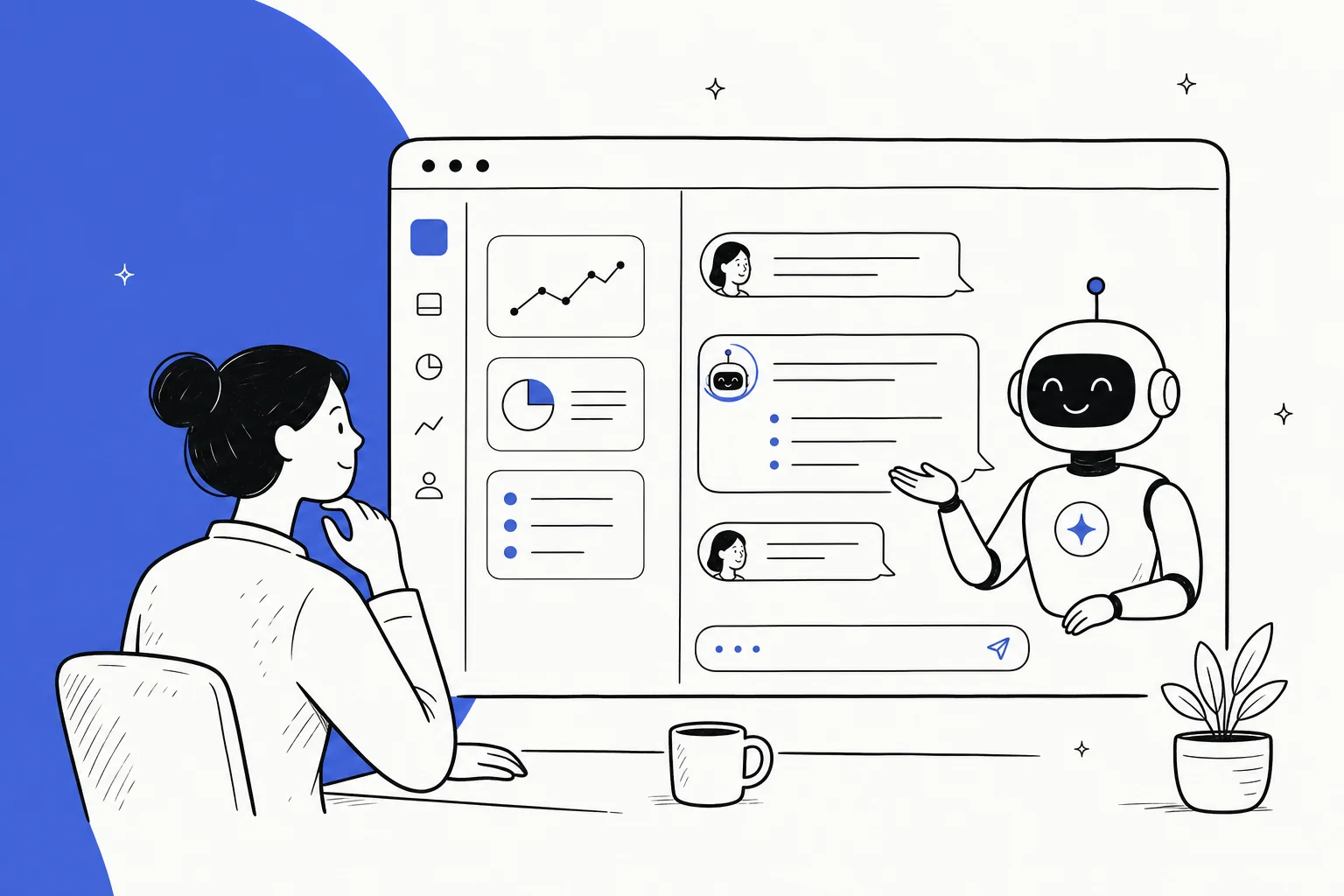
The new kind is an AI customer service chatbot built on a large language model. It reads what the customer actually meant, finds the answer in your knowledge, and writes a reply in plain language. It can pull a customer's plan from your billing system, walk them through an API setup, or explain why a webhook isn't firing, without a human touching it. That's the difference between deflection and resolution, and for SaaS support it's the whole ballgame.
If you want to see the range of what these can do, our roundup of AI chatbot examples has concrete ones, and common chatbot problems covers where the older generation still trips up.
Why SaaS support is its own kind of hard
SaaS support isn't retail support with a different logo. A few things make it distinctly awkward, and they're exactly the things an AI chatbot is good or bad at depending on how you set it up.
The questions are technical and repetitive at the same time. A huge share of SaaS tickets are the same handful of "how do I" questions asked a thousand different ways: reset a password, find a setting, connect an integration, understand a plan limit. That repetition is what makes tier-1 deflection such a clean fit for AI, and it's why measuring the right customer service metrics matters, most of that volume never needed a human.
Your product changes every week. A chatbot trained on a static FAQ goes stale the moment you ship a feature. The ones worth using learn continuously from your live help center and ticket history, so the answers move when the product moves. An AI knowledge base chatbot that syncs with your docs is the baseline here, not a nice-to-have.
There's always an engineer who wants to build it instead. This is the SaaS-specific one. You have developers, you have API access to the models, so why not just build your own on the Claude or OpenAI API? It's a real fork in the road, and worth being honest about.
We heard this from an engineering lead at a technical company who'd weighed exactly that before choosing to buy:
"We could try to write our own LLM application but we didn't want to invest our time into that. We wanted something that we would not have to maintain."
That's the quiet cost nobody prices in: a homegrown bot is a prototype in a weekend and a maintenance project forever. Retrieval quality, hallucination guards, helpdesk sync, analytics, multilingual handling, someone owns all of it, every sprint. For a prototype, build. For anything customers actually rely on, most SaaS teams find buying beats building.
How an AI chatbot resolves a SaaS ticket
Under the hood, a modern support bot runs the same loop every time, and it's worth understanding because it's where accuracy comes from.
- It learns your knowledge first. Before it answers anything, it ingests your help center, past tickets, internal docs, and connected tools. Good tools turn years of ticket history into usable knowledge on day one, so it already sounds like your team.
- It reads the customer's actual intent. Not keywords, meaning. "My integration stopped syncing last night" and "why won't Slack connect anymore" route to the same answer.
- It retrieves the answer from your knowledge, not from the open internet. This is what keeps it grounded in your product instead of a plausible-sounding guess.
- It checks its own confidence. If it's sure, it resolves the ticket. If it isn't, it hands off. That single decision is what separates a trustworthy bot from a liability.
This is also where a conversational AI assistant earns its keep over a scripted flow: every step adapts to the specific customer instead of forcing them down a fixed path. If you want the deeper mechanics, our guide to the benefits of conversational AI goes further.
What to automate, and what to leave to a human
The single biggest mistake is aiming for 100% automation. You don't want that, and neither do your customers. The goal is to let the AI clear the repetitive volume so your humans get their time back for the tickets that actually need a person.
Here's a rough split that holds up for most SaaS teams:
| Ticket type | Best handled by | Why |
|---|---|---|
| Password / login resets | AI | High volume, single correct answer |
| "Where is X feature" | AI | Answer lives in your docs |
| Billing and plan questions | AI | Pulls from your billing data |
| Basic API and setup help | AI | Repetitive, well-documented |
| Angry or churn-risk accounts | Human | Needs judgement and empathy |
| Custom contract terms | Human | Not in any knowledge base |
| A confirmed product bug | Human (AI triages) | Needs engineering, but AI can tag and route |
| Anything low-confidence | Human | Never guess at a customer |
The mechanism that makes this safe is AI escalation: the bot decides, per ticket, whether it's confident enough to answer. Low confidence means it drafts a reply for an agent to approve instead of sending it, or routes the whole ticket to a human. You get the volume relief without the "the bot told a customer something wrong" horror story.
Rolling it out without breaking trust
The fastest way to lose faith in an AI chatbot is to switch it on for every customer at once and hope. Do it the boring, safe way instead.
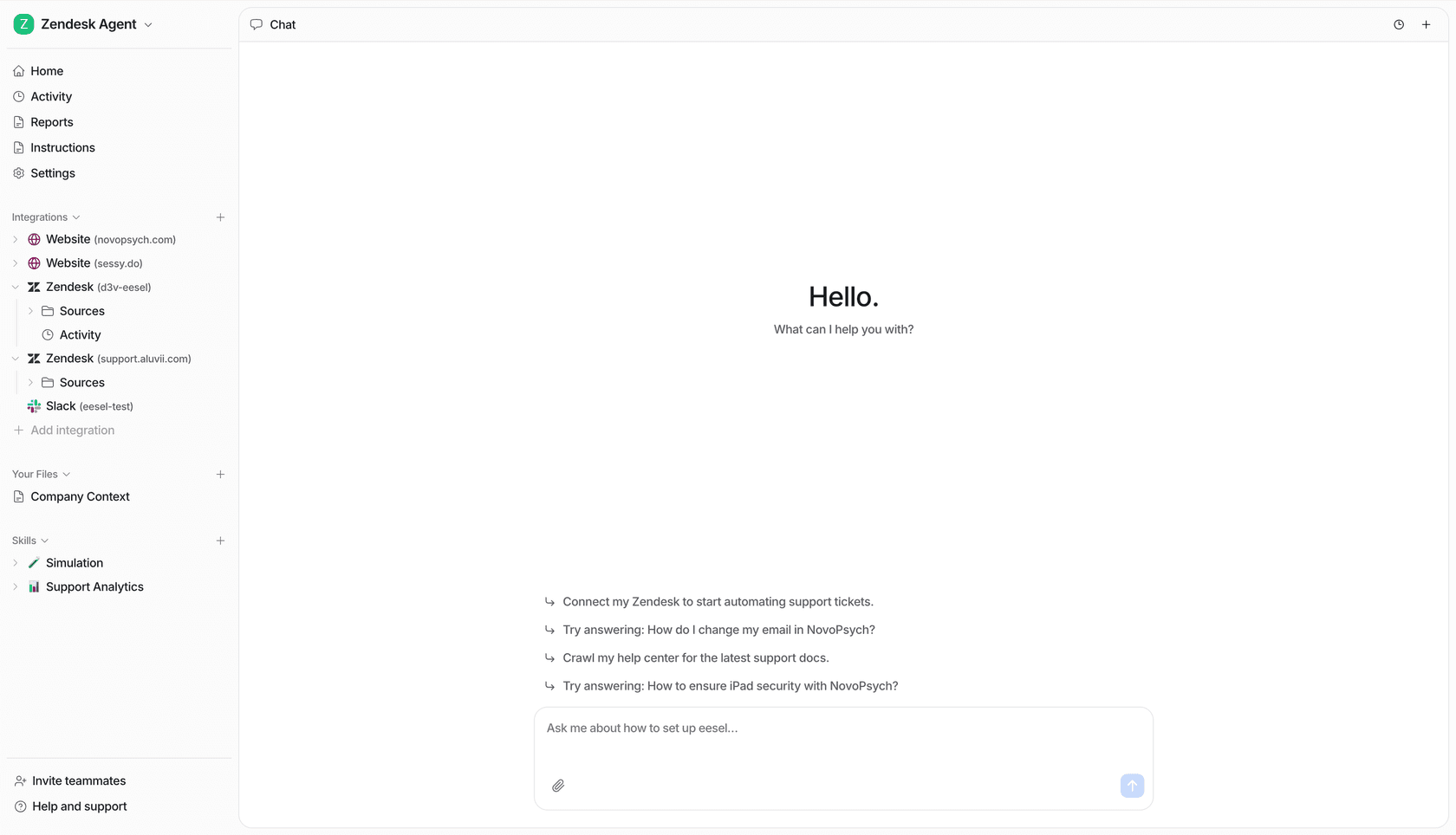
- Simulate on past tickets first. Before a single customer sees a reply, run the AI against thousands of your historical tickets and read what it would have said. eesel AI's simulation mode reports coverage by topic so you can see exactly where it's strong and where it's guessing.
- Start in draft mode. Let it write replies your agents approve before sending. Every correction teaches it, and your team builds trust by watching it get things right.
- Auto-reply to easy topics only. Turn on full autonomy for the safe, high-volume categories (password resets, doc lookups) and keep everything else supervised.
- Widen autonomy as trust grows. As the numbers hold, hand it more. This is the opposite of the flip-a-switch approach, and it's why it sticks.
This gradual model is also how you avoid the classic AI chatbot problems, most of them come from over-automating before the tool has earned it.
What it costs, and why the model matters
Sticker price is the wrong thing to compare. The pricing model is what actually decides your bill.
Per-seat tools charge for every support agent on the plan, whether or not they touch the AI, which punishes you for having a team. Per-resolution or per-conversation pricing scales with actual work done. eesel AI is usage-based: from $0.40 per resolved ticket, no per-seat fees, no platform fee, and you're never charged for tickets your humans handle.
Here's what that looks like at real SaaS support volumes:
| Tickets per month | Monthly cost (at $0.40/ticket) |
|---|---|
| 100 | $40 |
| 500 | $200 |
| 1,000 | $400 |
| 2,500 | $1,000 |
Compare that to the cost of a human agent handling the same tier-1 load, or the fully-loaded cost of engineers maintaining a homegrown bot, and the "just buy it" math usually wins for anything past a prototype. If you're still weighing options, our list of support automation platforms lays out the field.
Try eesel for SaaS customer support
If you're running SaaS support and drowning in the same tier-1 questions, this is exactly what eesel AI is built for. It plugs into the helpdesk you already use (Zendesk, Freshdesk, HubSpot, Front, and 100+ others), learns from your existing docs and ticket history in minutes, and resolves tier-1 tickets in 80+ languages without you writing a single flow.

The part SaaS teams tend to like most: you can simulate it against your past tickets before it ever touches a live customer, then widen its autonomy at your own pace with confidence-based escalation catching anything it's unsure about. One customer, Gridwise, saw eesel resolve 73% of tier-1 requests in the first month. It's free to start with $50 of usage and no credit card, so you can run a simulation and see your own numbers before committing.
Frequently Asked Questions
What is an AI chatbot for SaaS customer support?
How much does an AI chatbot for SaaS cost?
Should we build our own AI chatbot or buy one?
How is an AI chatbot different from a rule-based chatbot?
Will an AI chatbot give customers wrong answers?
How long does it take to set up an AI chatbot for SaaS support?


Article by
Alicia Kirana Utomo
Kira is a writer at eesel AI with a Computer Science background and over a year of hands-on experience evaluating AI-powered customer service tools. She focuses on breaking down how helpdesk platforms and AI agents actually work so that support teams can make better buying decisions.