What an "AI cold email generator" actually is
I work on the SEO side at eesel, which means I spend a lot of my week looking at what people actually type into a search box. "AI cold email generator" is one of those queries that looks simple and hides a real problem underneath it. People search it expecting a tool that fixes outbound. What they get is a tool that fixes one slice of it, the slice that was never really the bottleneck.
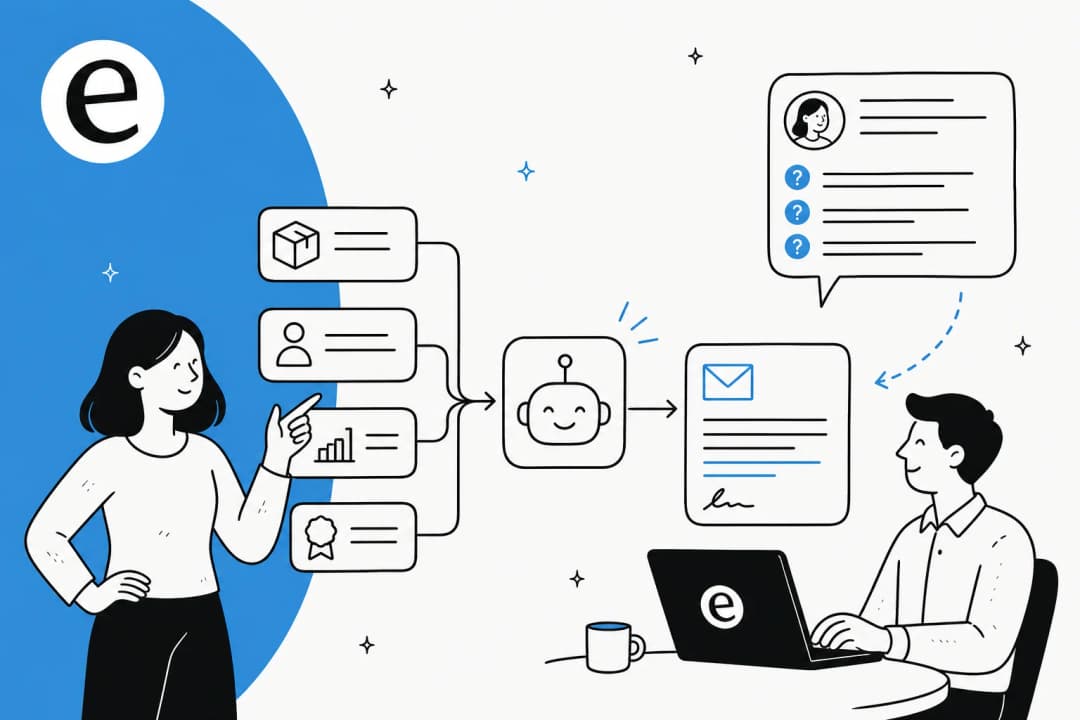
A model can write you forty cold-email variations in ten seconds. The hard parts, who you email and what you say when they write back, are the parts no generator touches. So it helps to split the phrase into the two jobs hiding inside it.
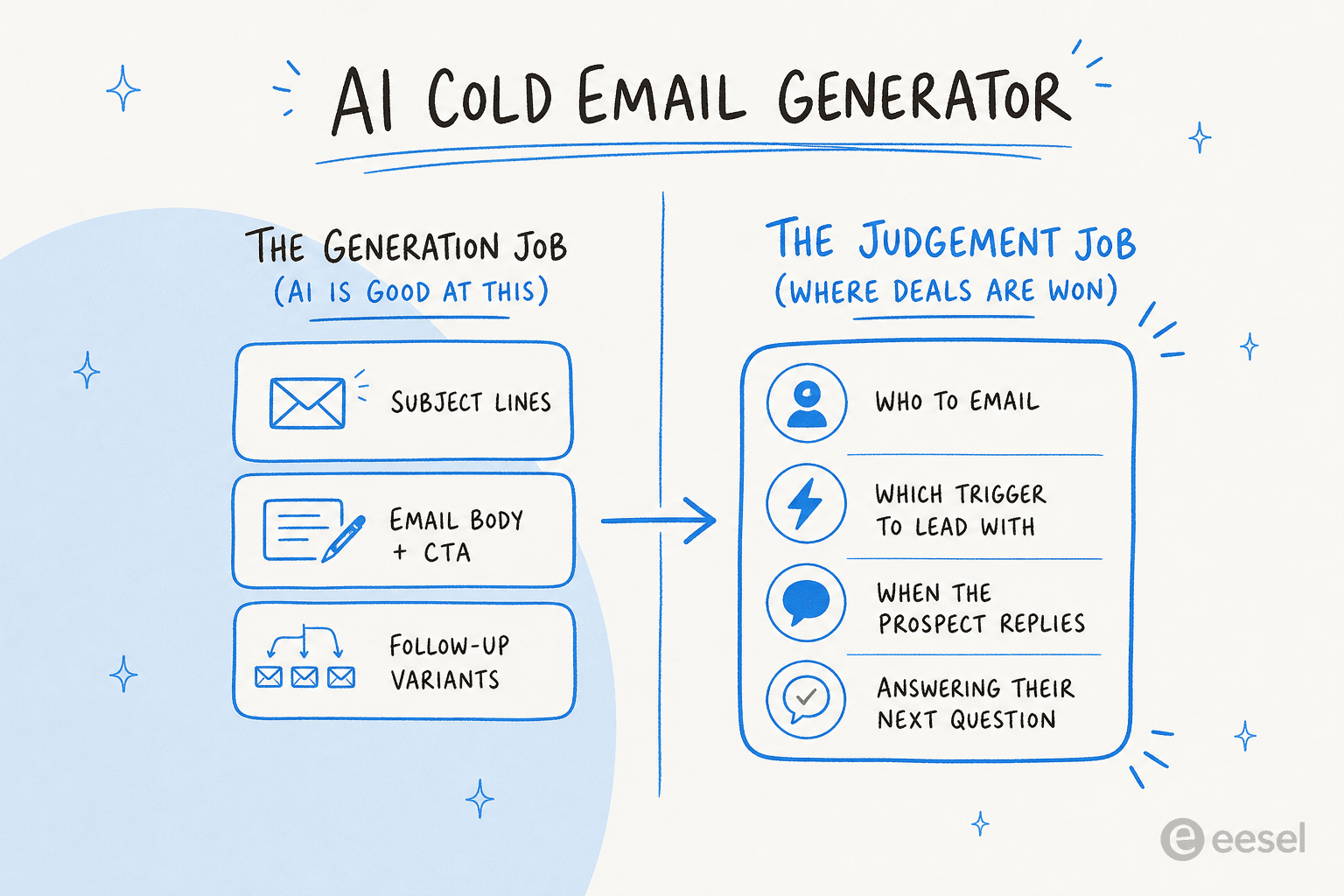
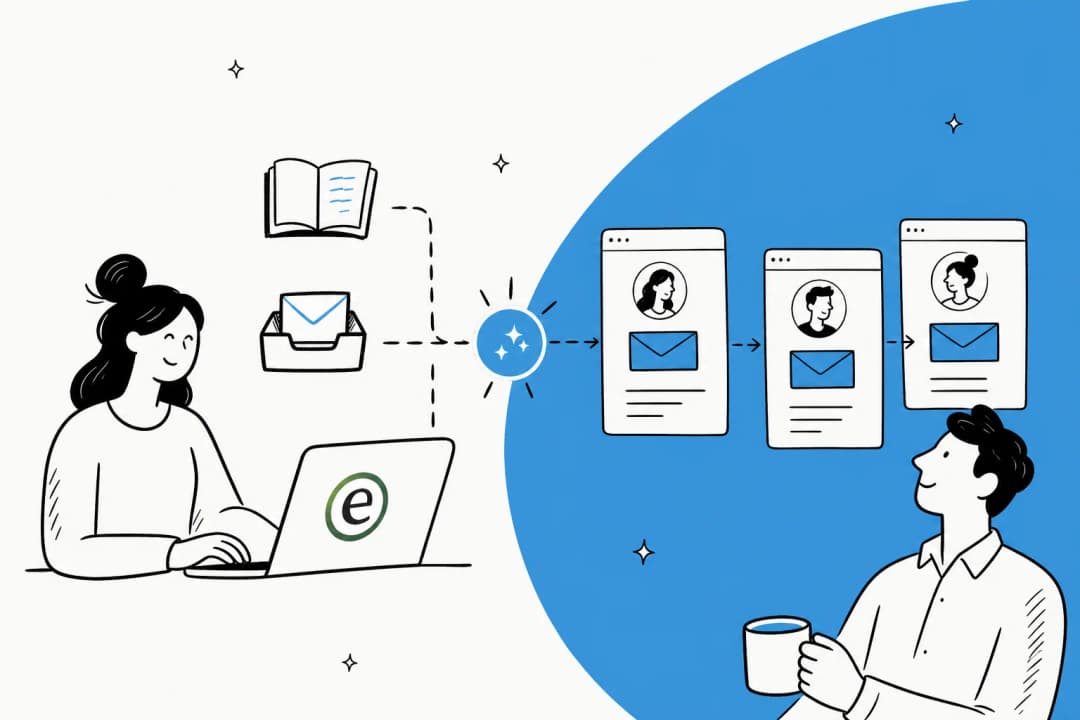
The generation job is writing the words: the subject line, the body, the CTA, the follow-ups, in enough variations that you can test. This is what people picture when they hear "AI cold email generator," and it's the part AI is actually good at.
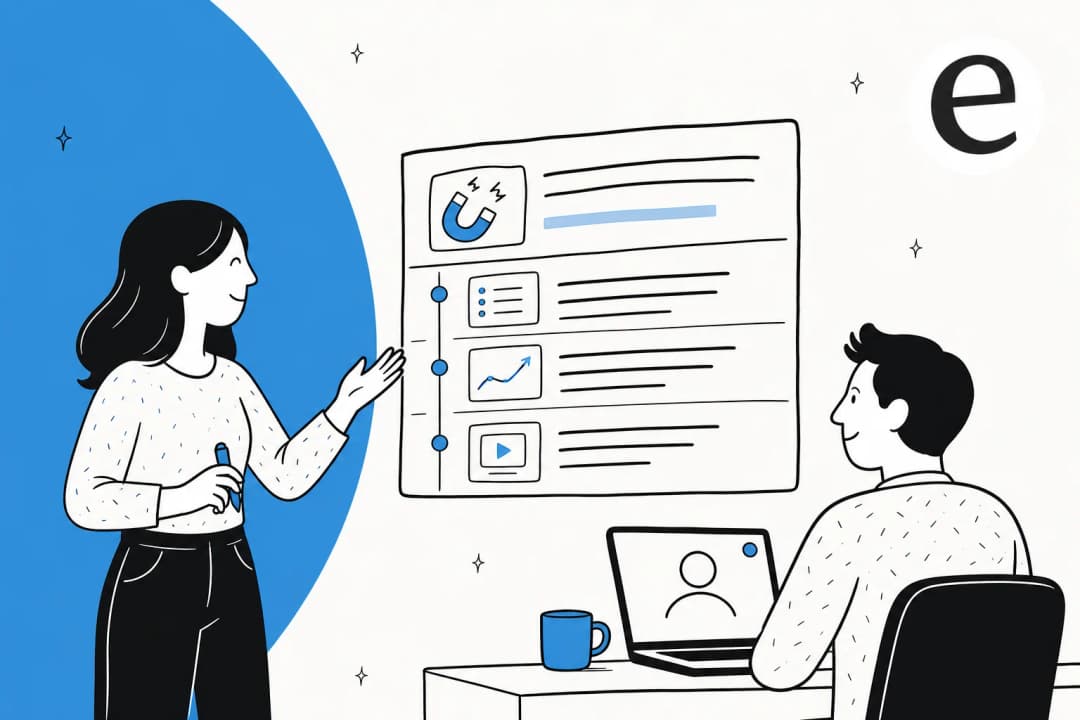
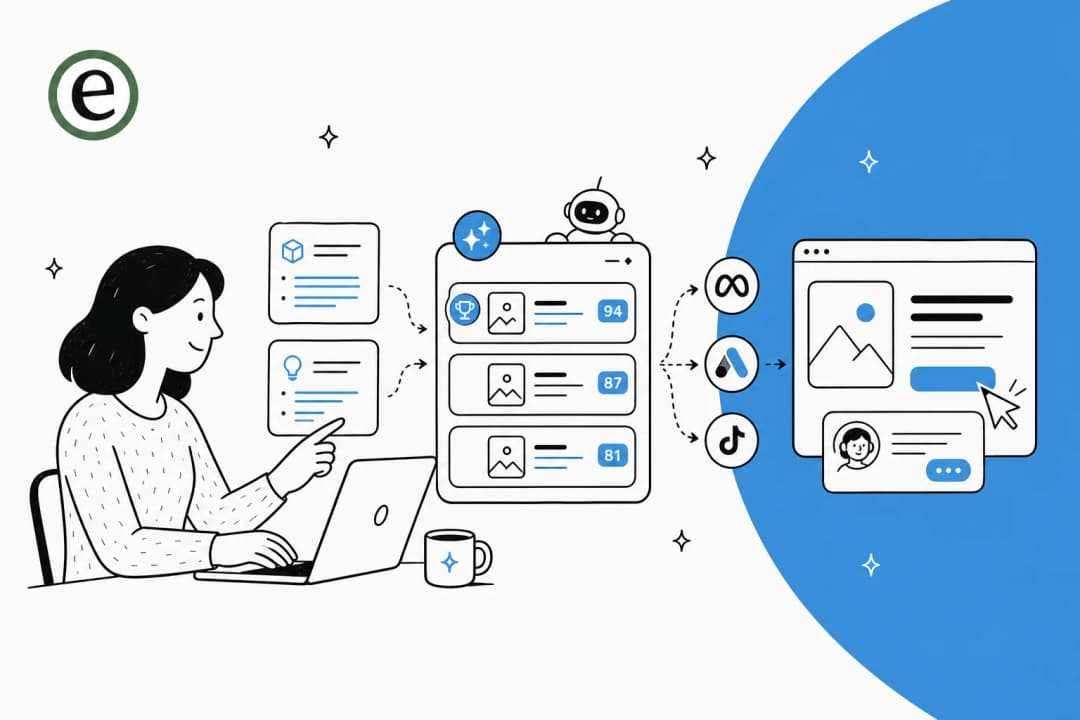
The judgement job is everything around the words: which list to email, which trigger to lead with, which subject line is actually worth sending, and what to say the moment someone replies. This is the part that decides whether you book the meeting, and a generator can hint at it (with scoring) but can't do it for you.
Most teams over-index on the first job. They generate a wall of polished variations, fire the prettiest one at a cold list, and wonder why the reply rate won't move. The copy was rarely the problem.
How AI cold email generation works
Under the hood, every one of these tools runs on the same kind of large language model that powers any AI content generator. You give it inputs (a product, a tone, a goal, sometimes a prospect's details), it predicts the most likely next words, and it hands back an email. The differences between tools are almost entirely about what they wrap around that core: how much context they let you store, whether they enrich the prospect with real data, whether they score the output, and whether they actually send.
That's why the category is so confusing to shop for. A budget AI copywriting tool and a $500-a-month outbound platform both call themselves "AI cold email generators," and they're solving completely different parts of the chain. One writes; the other writes, enriches, sends, and warms your inboxes. Knowing which problem you actually have is most of the decision.
The tools that actually generate cold emails
There's no single best pick, only the right category for your job. I went through each tool's own pricing and docs, plus what real users say on Reddit and G2, and they sort into three buckets: coaches that improve your writing, data platforms that personalize at scale, and sending platforms that wrap AI copy around deliverability.
| Tool | Best for | Standout | Pricing (entry) | The catch |
|---|---|---|---|---|
| Lavender | Coaching your own writing | Real-time 0-100 email score in your inbox | Free, then $29/user/mo | It's a coach, not a sender |
| Clay | Data-grounded personalization | Claygent researches each prospect | Free, then $185/mo | Steep learning curve, credits stack |
| lemlist | Multichannel personalization | Liquid syntax + personalized images | $55/user/mo annual | Headline price is email-only |
| Smartlead | Sending at volume | Unlimited mailboxes + warmup | $39/mo | Infrastructure-first, real learning curve |
| Instantly | Deliverability + lead data | Large warmup network, 450M+ lead DB | $94/mo bundle | Shared infra, deliverability varies |
A quick read on each. Lavender is the odd one out, and the most interesting: instead of generating sequences, it grades a draft as you write it inside Gmail or Outlook, flagging reading level, length, and spam words, then suggesting rewrites in place. There's no public pricing page (it routes to a demo), so the $29 per user figure comes from its G2 listing, with a free tier capped at five emails a month.
Clay sits at the other end. Its AI research agent, Claygent, scrapes the web to answer free-text questions about each prospect ("do they use Shopify?", "what did they just raise?") and writes copy grounded in those findings, rather than mail-merge tokens. It's powerful and unlike anything else here, which is why I keep a separate guide on Clay AI for teams weighing it up. The catch is real: it's credit-based from $185 a month past the free tier, and the learning curve is steep.
lemlist, Smartlead, and Instantly are the sending platforms, where AI writing is a layer on top of deliverability plumbing. lemlist leans into multichannel and personalized images from $55 per user a month (email-only at that tier). Smartlead's pitch is unlimited mailboxes and warmup for $39 a month, paying only for what you send. Instantly bundles a 450M+ lead database with its warmup network from $94. I've gone deeper on the last one in my Instantly review, with the numbers broken out in the Instantly pricing guide.
Here's how I'd place them if you're choosing.
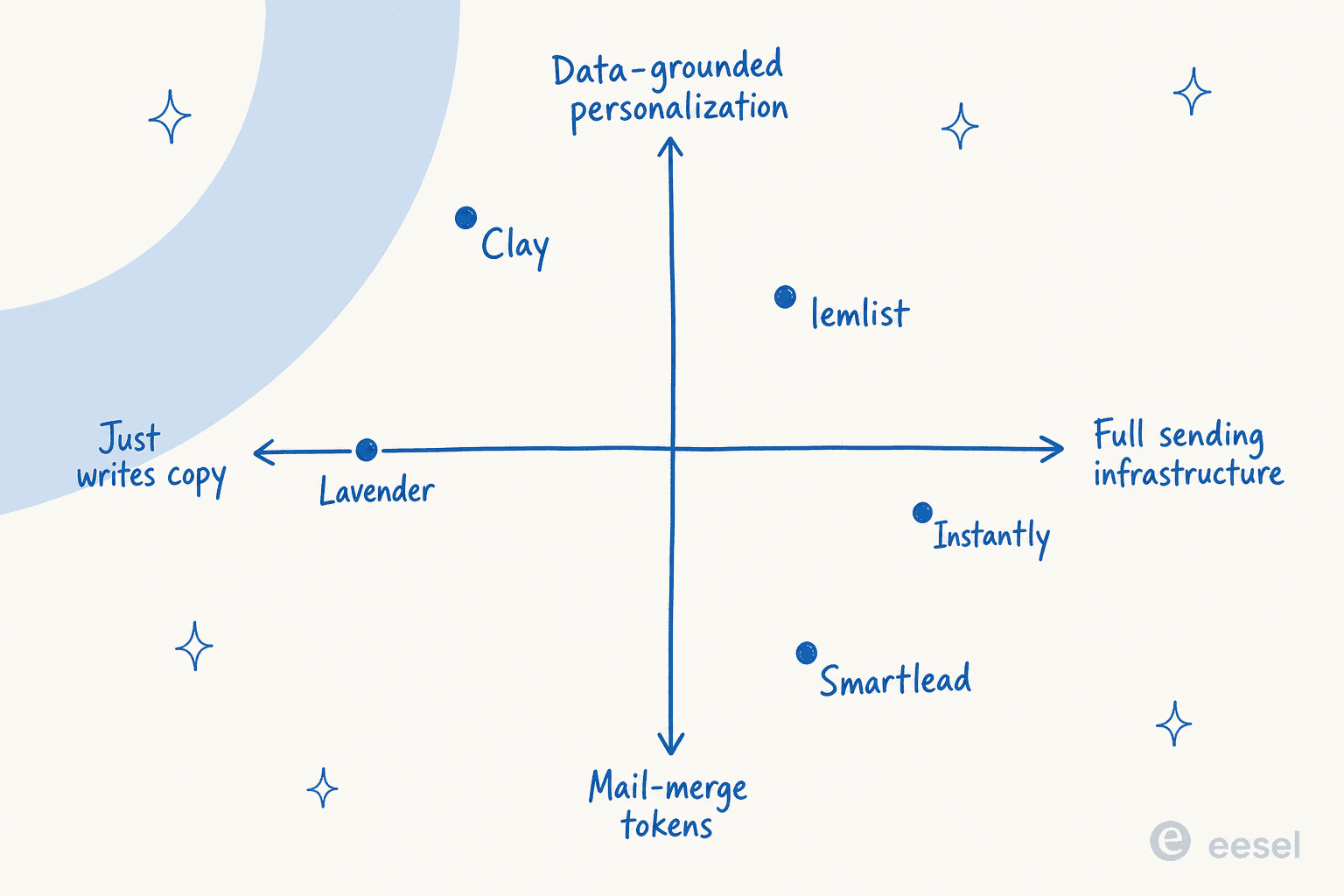
The left side is about words; the right side is about getting them delivered at scale. If you only need better copy, you're shopping the left and shouldn't pay for a sending platform. The moment you need volume, warmup, and lead data, you're in the right-hand column, and that's a real budget decision, not a feature checkbox. For the writing side specifically, my roundup of the best free AI email writers goes deeper, and the HubSpot AI email writer guide covers the CRM-native option.
Why blank-prompt cold emails get ignored
The single most common complaint about AI cold emails is that they read like AI: smooth, confident, and completely interchangeable. "I hope this email finds you well." "I wanted to reach out about our solution." Copy a prospect has deleted a hundred times this week.
That's almost never the model's fault. It's an input problem. Fed nothing, a language model reaches for the statistical average of every cold email it's ever seen, which is exactly the bland template you're trying to escape. The fix is to stop prompting from a blank box and start feeding context: the actual offer, a real trigger about the prospect (a funding round, a new tool in their stack, a job posting), the specific person you're emailing, and a sample of how you sound. This is the same discipline behind maintaining brand voice with AI anywhere else, and it's why data-first tools like Clay tend to produce sharper emails: they hand the model real research instead of asking it to guess.
You can hear the right division of labour in how people talk about the tools that work. One Lavender user on r/sales put it plainly:
"I used lavender for a few months. Gave me a solid idea of how to write successful emails. Such as lowering the reading level, asking a question, making it mobile friendly. I canceled it after a few months bc I felt like I had an understanding of it."
u/feelingoodfeelngrape, r/sales

The tool taught them the principles; once they had them, they wrote the emails. That's the healthy version. And expectations matter too, the same thread set a realistic bar: "more like 10-15%" reply rates, not the 30% the hype promises. On the platform side, an r/EmailProspecting user running lemlist for six months reported "60-70% open rates and somewhere between 7-12% reply rates," which is strong, and notice it came after six months of tuning, not on day one.
What actually wins the deal: the reply
Say you nail the inputs and send a great email. You've still only done the first half. The email earns you a reply. Then a real person writes back, and they have questions.
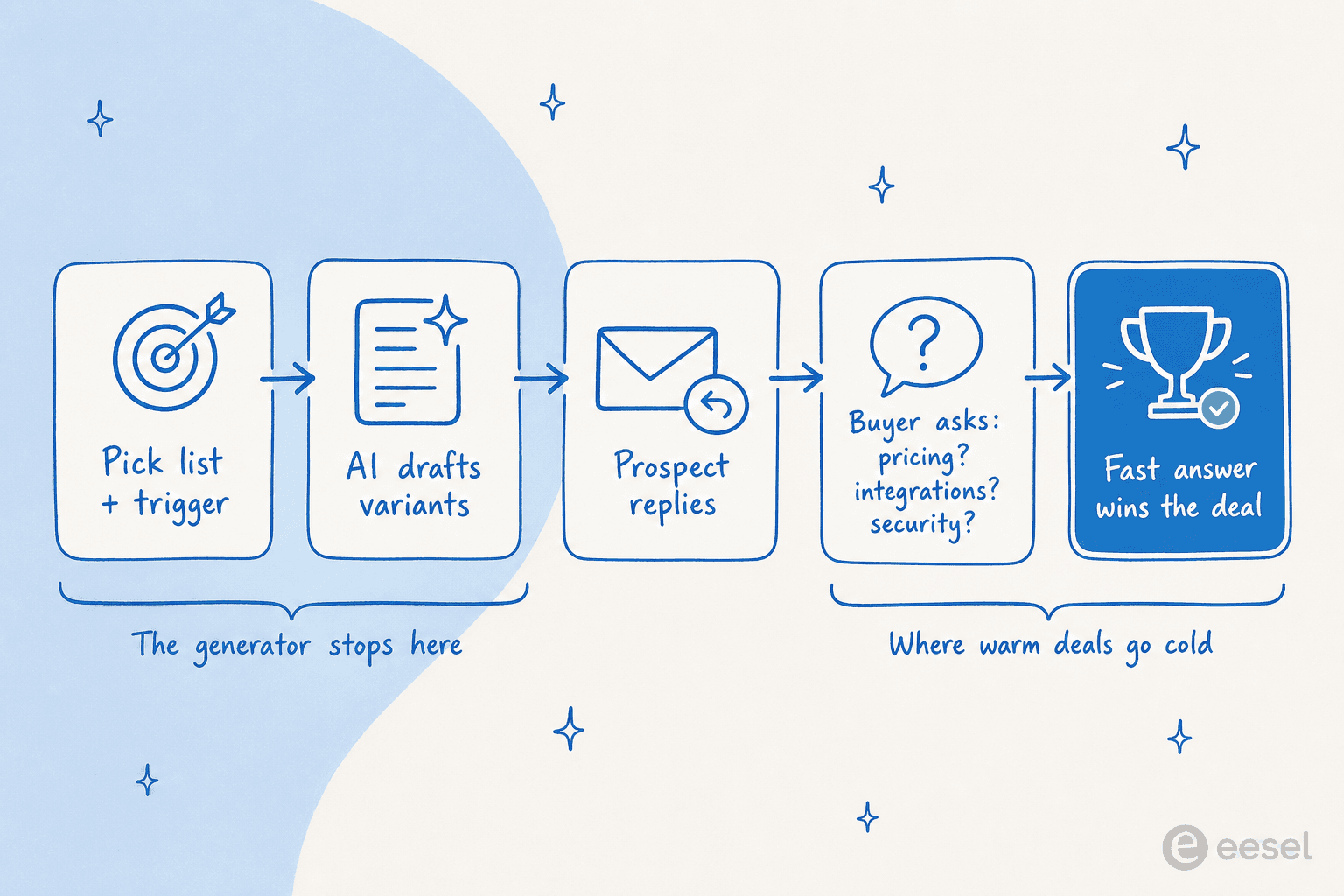
This is the part of the funnel I watch closely at eesel, because the inbound queue and the sales reply are the same moment seen from two desks. When outbound scales, the questions scale with it: "does this integrate with my helpdesk?", "what does it cost at my volume?", "is my data safe?". A cold email generator can't answer any of those. Worse, an over-promising cold email actively creates the gap, because the prospect replies expecting something the product doesn't quite do, and now your best subject line is manufacturing disappointment at the exact moment intent is highest.
That's where the work shifts from writing to answering. An AI support agent trained on your help center, past tickets, and docs can field those pre-sales questions instantly, in the prospect's language, the second they ask. The cheapest part of outbound is the email; the most wasteful is a warm reply that cools off because nobody answered the next question fast enough. Plenty of teams build a slick AI content pipeline for outbound and leave the reply to whoever happens to be online.
Where AI gets cold emails wrong
To be fair to the tools, they're good at what they do, and the limitations are predictable rather than dealbreaking. Worth knowing before you lean on them:
- It confabulates specifics. Ask for a cold email and a model will happily invent a stat, a case study, or a feature you don't offer. This is the same failure mode as AI hallucinations in support: the output sounds confident whether or not it's true, so every claim needs a human check before it sends.
- It optimises for the open, not the meeting. A model writes the highest-open-rate subject line it can, which is sometimes the one that over-promises. The metric that matters is downstream, in the reply, and the tool can't see it.
- Tone drifts without a stored sample. Re-prompting voice every session produces a sequence where email one sounds nothing like email three. The same principle that keeps an AI blog writer on brand applies here: store the voice once.
- Volume is a deliverability risk. Blasting raw, near-identical AI emails at a cold list is how you land in spam. As one r/coldemail thread put it about shared sending pools, deliverability "is a bit unreliable" when spammers use the same infrastructure. Warmup and sending limits are still on you.
None of that means skip the generator. It means treat its output as a first draft from a fast, slightly unreliable junior SDR, which is exactly how I'd treat any AI content generation tool on the go-to-market stack.
Try eesel for the questions your cold emails create
eesel doesn't write your cold emails, and I'm not going to pretend it does. What it does is own the half of the deal the generator can't touch: the moment after the reply, when a prospect your outbound just earned has a question and wants an answer now.
eesel's AI support agent trains on your help center, past tickets, and docs, then answers pre-sales and support questions across your helpdesk, chat widget, email, and Slack, in 80+ languages. You can run it in simulation mode against your real past conversations first, so you see exactly what it would have answered before it goes live, and it routes anything it isn't confident about to a human instead of guessing.
For Gridwise, that meant resolving 73% of tier-1 requests in the first month, with results showing inside a 7-day trial. Pricing is usage-based at about 40 cents per resolved conversation, with no per-seat fees, so it scales with your pipeline instead of punishing you for traffic. If you're running outbound, the cheapest win left on the table is usually not a better subject line, it's answering the question the email created before the prospect loses interest. And if you also want help drafting the outbound itself, eesel's AI Writer is free to try and built on the same context-first approach this whole post argues for.
Frequently Asked Questions
What is an AI cold email generator?
What is the best AI cold email generator?
Why do AI cold emails sound generic?
How much does an AI cold email generator cost?
Can AI write a whole cold email sequence?
Do AI cold email tools help after the prospect replies?
Will an AI cold email hurt my deliverability?


Article by
Kurnia Kharisma Agung Samiadjie
Kurnia is a software engineer and writer at eesel AI with two years of SEO experience, writing about AI tools, helpdesk software, and customer support. He pairs a developer's understanding of how these products are built with search-driven research into what actually ranks and resonates with the people searching for them.