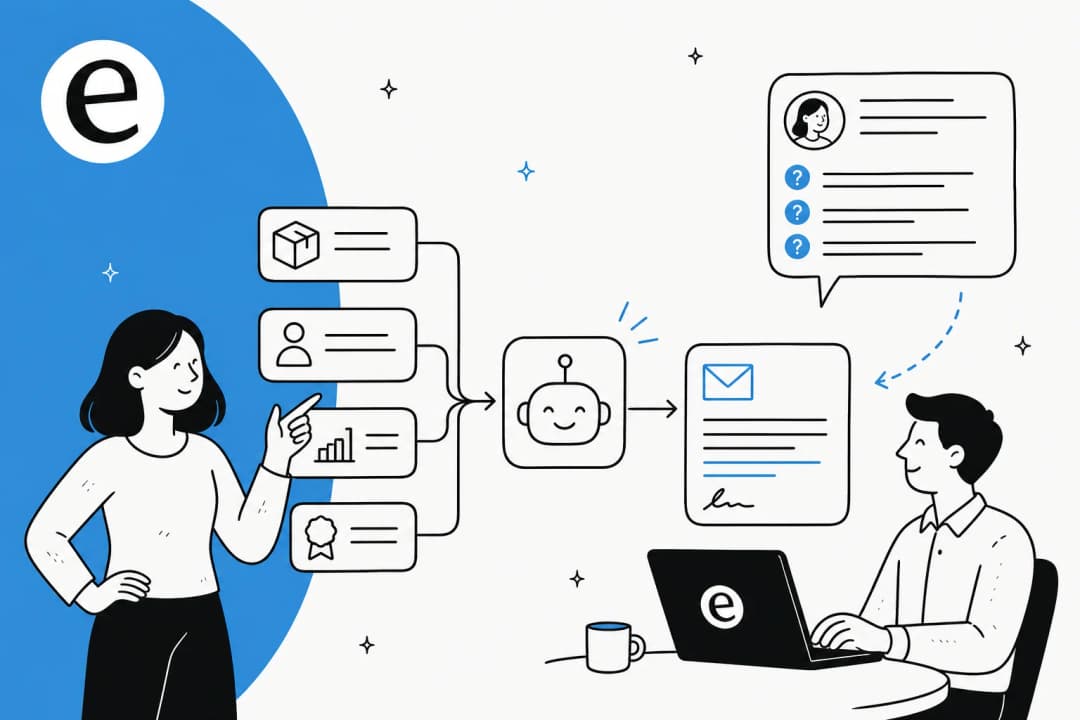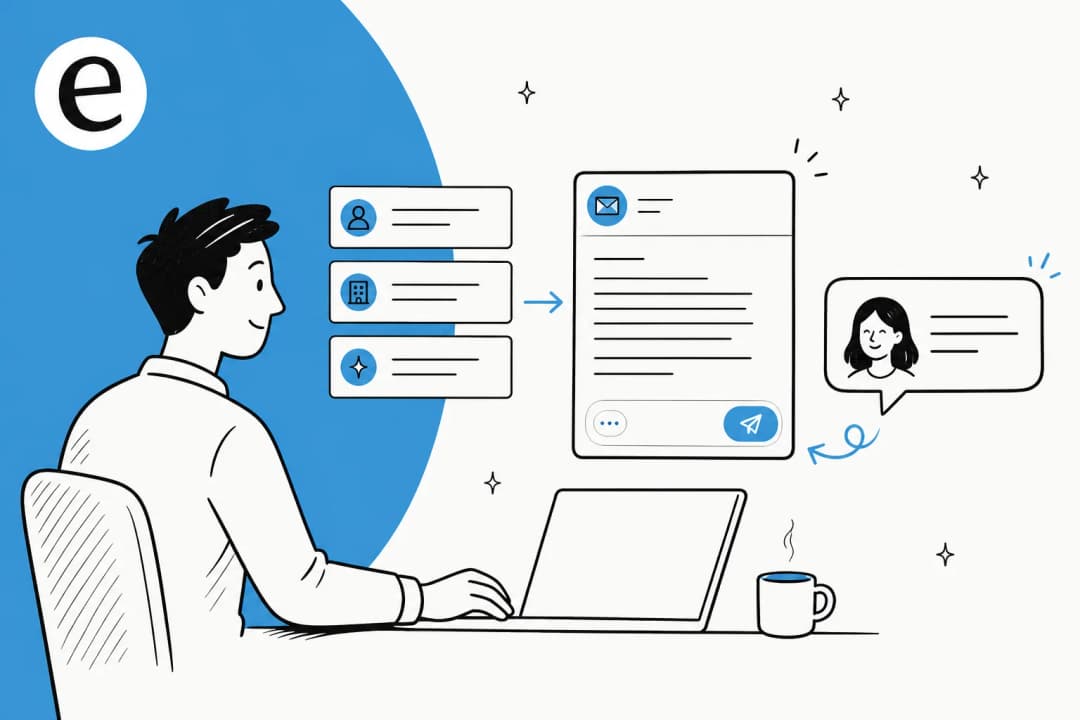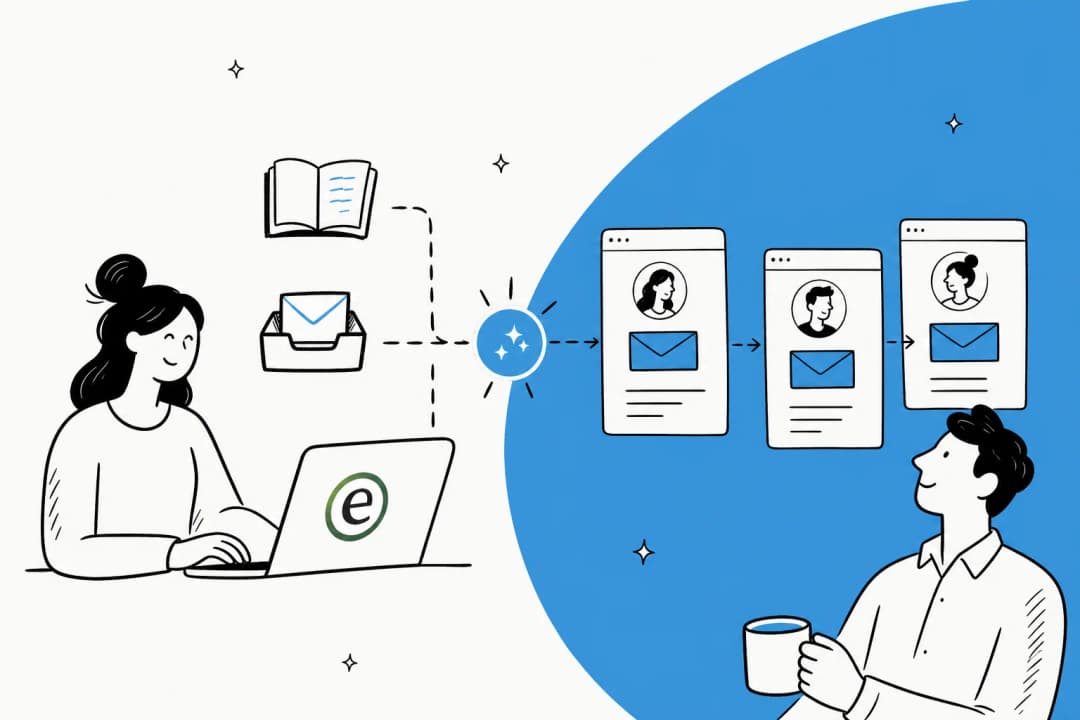


So, can AI actually write a sales email?
I've spent the last couple of years on the SEO and content side of eesel, which means two things sit on my desk at once: what people actually type into Google, and what eesel's AI does when it's pointed at a real inbox. "Can AI write sales emails" is one of those searches where the literal answer is an easy yes, and the useful answer is the half nobody asks for.
So let me give you both. Yes: a model will write you a perfectly competent cold email, a follow-up, a breakup email, and twenty variations of each, faster than you can open your sequencer. If you've never seen one work, the short version of what an AI content writer is covers the basics. The text is rarely the problem. The thing that decides whether any of it lands is everything wrapped around the text, and that's where it pays to be precise about what AI does and doesn't do.
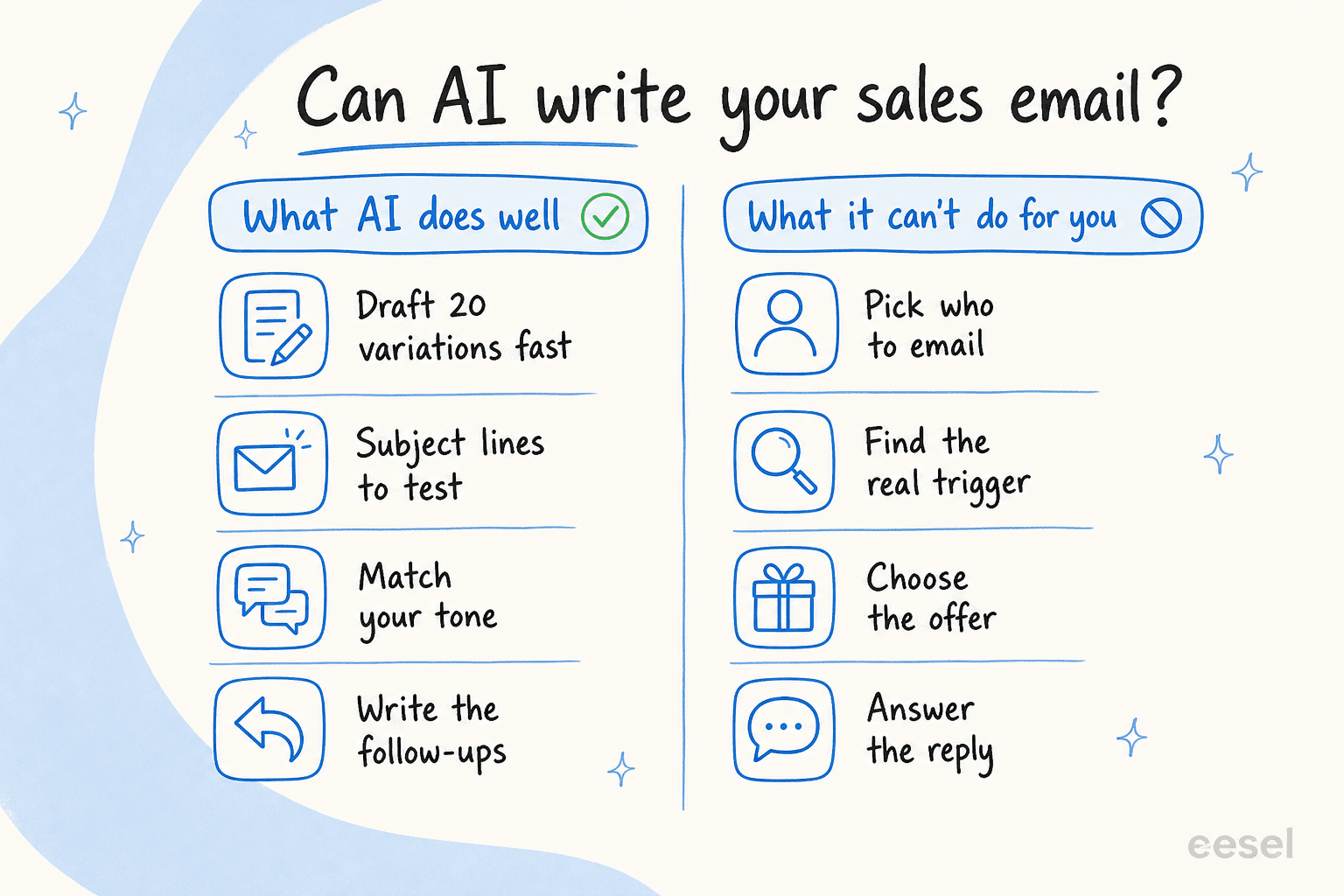
The cleanest way to think about it: AI owns the generation job and you keep the judgement job. Generation is the words. Judgement is the strategy and the timing. Most teams over-invest in the first and wonder why their reply rate won't move, when the copy was never the bottleneck.
What AI is actually good at
Start with the good news, because it's real. On the generation side, AI does work that used to eat an SDR's morning.
It kills the blank page. A model goes from "write a cold email to a VP of Support at a Series B SaaS who just switched to Zendesk" to a finished draft instantly, which is the same trick any AI content generation tool pulls off. It writes variations, so you can test five subject lines and three openers instead of agonising over one, the same volume play that makes any AI content scaling tool worth it. It writes the whole sequence, the first touch and the three follow-ups, in one pass. And it matches a tone if you show it one, the way an AI blog writer with brand-voice training keeps a team's posts on-key.
This is the part worth leaning into. For fast drafting you can use a general writer like eesel's AI Writer or Copy.ai; for brand-consistent copy across a team, Jasper stores a reusable voice; for predicting which line converts before you send, Anyword scores variations against its own data. I go through the trade-offs between them in my roundup of the best AI writing tools, with a B2B-specific cut in AI writing tools for B2B SaaS, and for the budget end there's a separate piece on free AI copywriting tools.
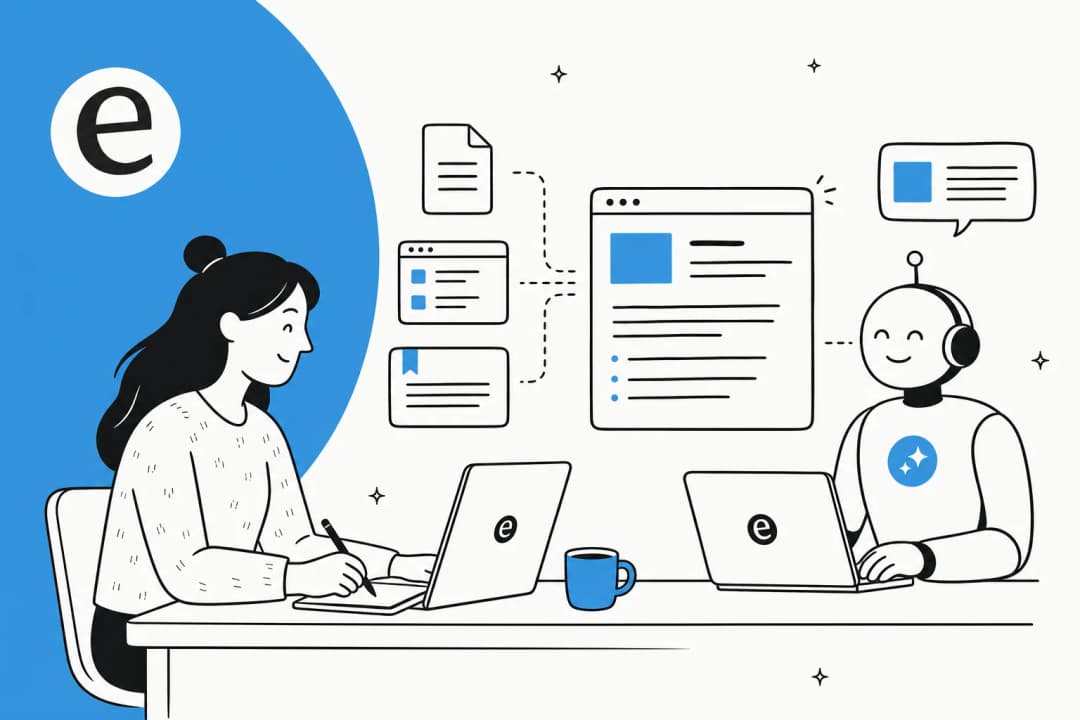
The honest framing is that AI is a junior copywriter who never gets tired and never gets precious about a draft, the same role it plays as an AI content writer anywhere else. That's real leverage. It's just not the same thing as a salesperson.
Where AI falls down (the four calls it can't make)
Here's where the easy "yes" needs an asterisk. Four decisions sit outside what any sales email generator can do for you, and they're the four that actually move pipeline.
It can't pick who to email. The model has no idea which 200 names on your list are worth the send and which are tyre-kickers. A beautiful email to the wrong person is still the wrong email.
It can't find the real trigger. The thing that makes a cold email work is a specific, true reason you're reaching out now, a funding round, a new tool in their stack, a job posting. AI can format a trigger you hand it; it can't go discover one that's real.
It can't choose your offer. What you're actually selling, and the angle that makes it land for this buyer, is a positioning call. Get it wrong and no amount of polish on the sentence saves it.
And it can't answer the reply. This is the big one, and I'll come back to it.
When people complain that AI sales emails "sound generic," what they've usually done is skip all four of these and prompt from an empty box. The model fills the vacuum with the average of every cold email on the internet, which is exactly the template your prospect has deleted a thousand times. It's the same trap that makes a lazy AI copywriting prompt spit out filler: garbage context in, average copy out.
How to get a sales email actually worth sending
The fix isn't a better tool, it's better inputs. Stop prompting from a blank box and start feeding the model the same context a good rep would carry into the email.
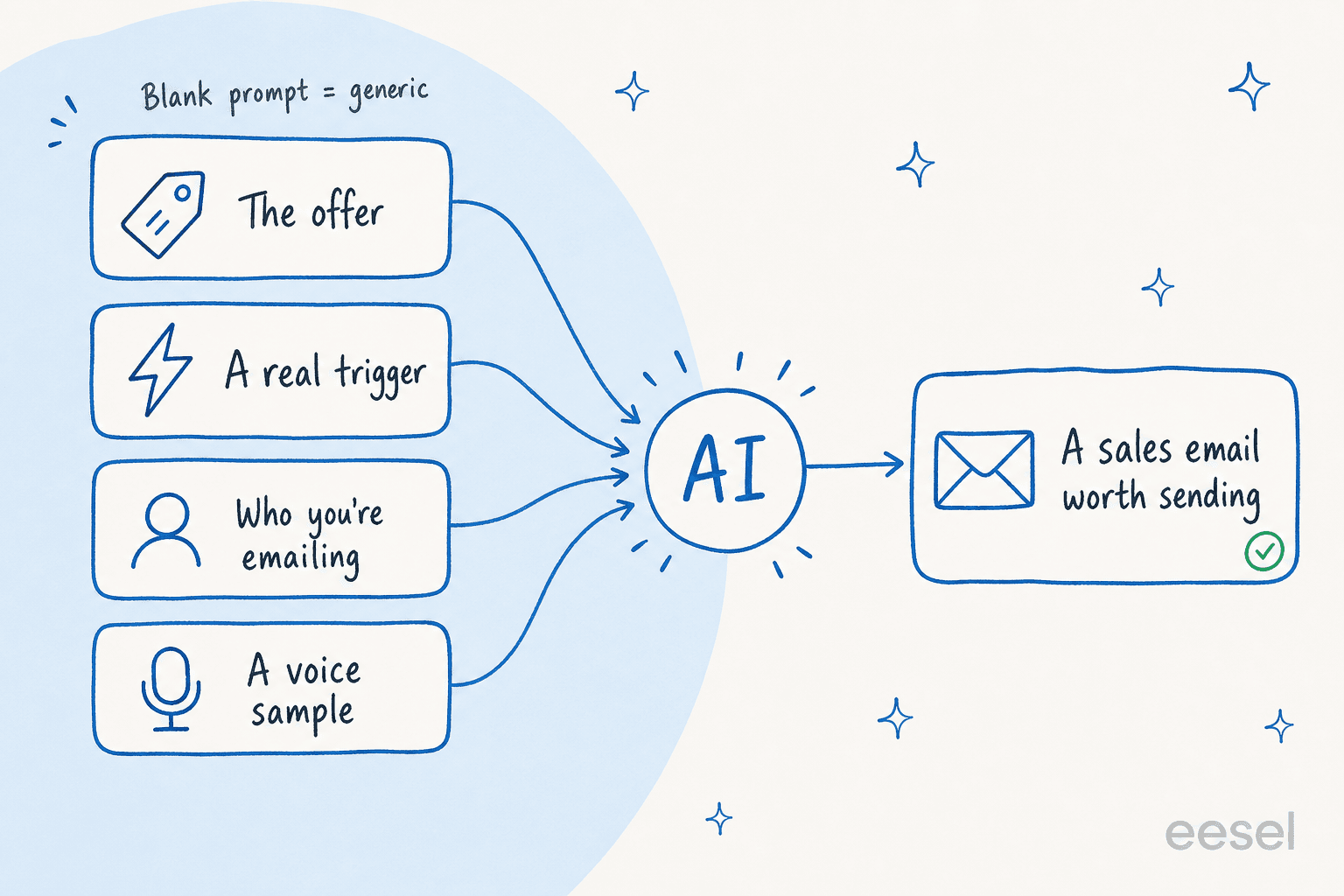
In practice that's four things:
- The offer. Not "we do AI support," but the specific outcome for this buyer: "cut first-reply time without adding headcount."
- A real trigger. One true, recent reason you're emailing them today.
- The person. Role, seniority, and what they actually care about, a VP of Support and a founder want different emails.
- A voice sample. Paste in two emails that sound like you. This is the single biggest lever on whether the output reads human, and it's the same discipline behind maintaining brand voice with AI in any other channel.
Then edit what it writes. The tool kills the blank page; it doesn't replace your read on the buyer. Tools that store a reusable voice, rather than asking you to re-describe your tone every session, get better over time, which is why this overlaps so much with the broader AI content creation workflow. If you want the deeper cold-outreach version of this, my AI cold email generator guide and the AI sales email generator breakdown both go further on sequencing.
Do this and the "is it any good" question answers itself. A specific, well-fed email reads like a person who did their homework. A blank-box email reads like a bot, because it is one.
The part no sales email tool covers: the reply
Now the part I care about most, because it's the half of the question that never gets asked.
Every sales email tool's job ends the moment the prospect replies. That reply is the whole point, it's the "tell me more," the flicker of intent you spent all that effort to create. And then what? The prospect asks the real questions: does this integrate with our stack, what does it actually cost at our volume, are you SOC 2. A slow, vague, or copy-pasted answer here is where a warm deal cools to room temperature.
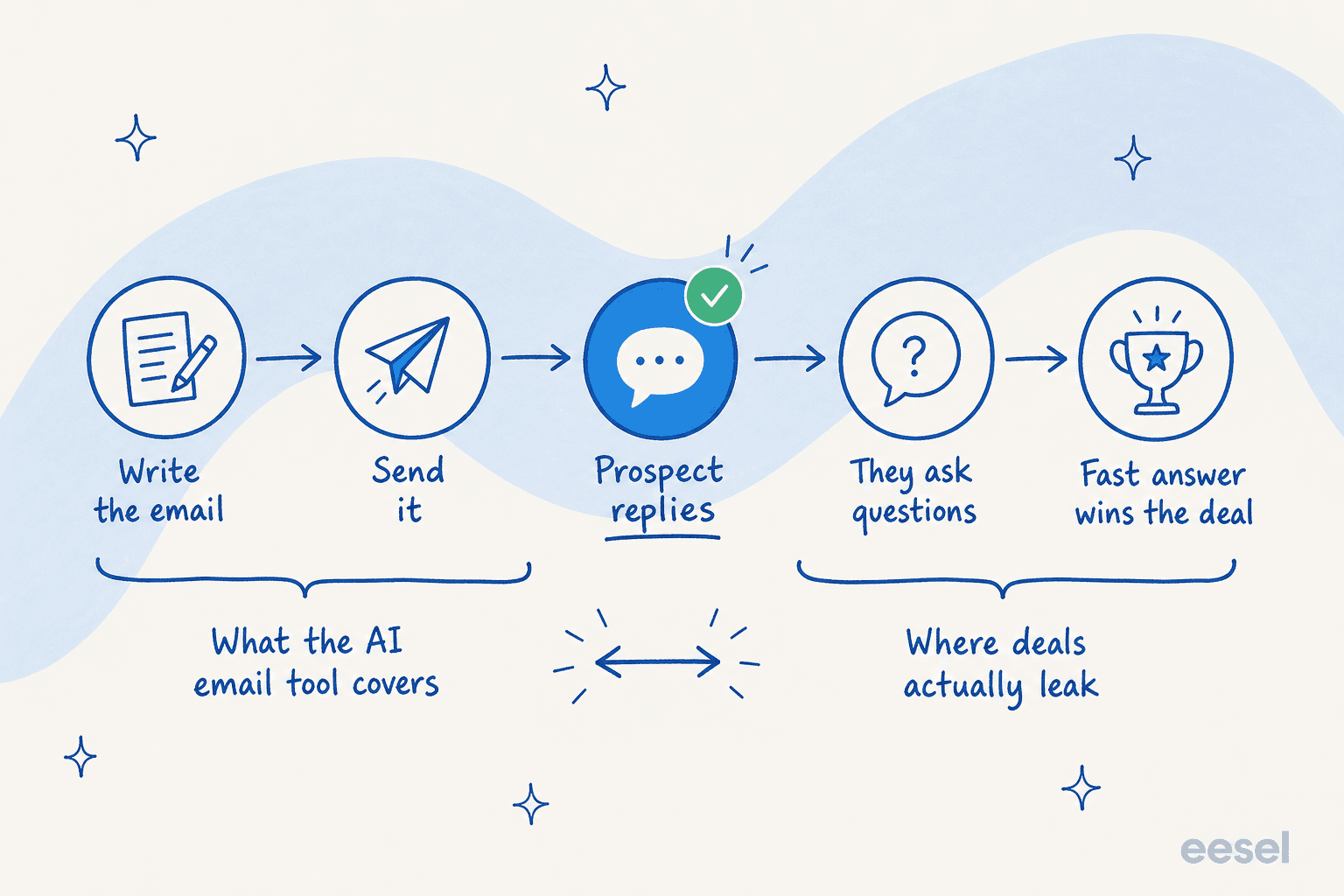
This is the same problem I watch play out on the support side at eesel, just pointed at a different inbox. eesel has spent years putting AI on live queues, and the lesson that shows up again and again is that the value isn't in writing the first message, it's in answering the next one accurately, instantly, in your voice, from your own knowledge. A support team at a meeting-productivity SaaS put the feeling well:
"Our agents can instantly draft replies to customers. We don't have to look through all our documentation on Notion, Google Docs or our help center anymore because eesel AI does it for us."
Support team at a meeting-productivity SaaS, eesel customer story
Swap "customers" for "prospects" and that's the gap a sales email generator leaves wide open. The reason it matters: an AI knowledge base chatbot trained on your docs, pricing, and past conversations can draft the answer to the prospect's follow-up the second they ask it, on-brand, with the human still in the loop to hit send.
Try eesel for the half that wins the deal
AI can write your sales emails, and you should let it, the drafting is a solved problem. But the email is the cheap part. The deal is won in the reply.
eesel is an AI teammate that plugs into the tools you already use, Gmail, your helpdesk, Slack, Notion, your docs, and learns from your own knowledge and past conversations so it can draft accurate, on-brand answers the moment a prospect or customer writes in. One service desk lead described the on-brand result as "well-formed responses with consistent, on-brand tone, still keeping our own style and still keeping that human touch." You can simulate it against your real history before it ever touches a live thread, and it's free to try.
So yes, AI can write your sales emails. Just don't let the tool stop at "send" when the deal is decided at "reply."
Frequently Asked Questions
Can AI write sales emails?
Are AI-written sales emails any good, or do they sound robotic?
What is the best AI for writing sales emails?
How do I stop AI sales emails from sounding generic?
Can AI write a whole cold email sequence?
Does AI help after the prospect replies to a sales email?
Will using AI to write sales emails hurt my deliverability?


Article by
Kurnia Kharisma Agung Samiadjie
Kurnia is a software engineer and writer at eesel AI with two years of SEO experience, writing about AI tools, helpdesk software, and customer support. He pairs a developer's understanding of how these products are built with search-driven research into what actually ranks and resonates with the people searching for them.