Artificial intelligence has made creating content faster and easier than ever. But there's a downside. The more we rely on generic AI, the more our content sounds like everyone else's. And a consistent brand voice is a big deal; studies show it can directly boost revenue.
The real test is figuring out how to produce more content without losing the unique personality that builds trust and makes you stand out. After all, robotic, off-brand content can seriously damage customer trust.
What is brand voice and why it gets lost in AI content
This is where most AI tools fall short. They're trained on the entire internet, so their goal is to find the most average, safest word to use next. The result is usually bland, generic AI content, which means it rarely excites anyone.
No matter how much you train an AI model there are things about it that just ring synthetic. Good writers/editors make all the difference.

The real problem is a lack of context. An AI doesn't automatically know your company's backstory, your inside jokes, or the specific issues your customers bring up in support tickets. Without that information, it can only copy your style on the surface, not the substance.
And that generic feel has a real cost. Research shows that over 80% of customers say an authentic brand voice is key to building trust. When your content sounds generic, it doesn't just get lost in the noise, it actively hurts your brand by chipping away at that trust.
Common methods for maintaining brand voice with AI (and their limitations)
Method 1: The human editor approach
This is the default for many teams. Let the AI generate a rough draft, then have a human writer or editor rewrite it to match the brand voice. On paper, it seems like the safest option.
Pros: You can be sure the final version is high-quality and perfectly on-brand.
Limitations:
- It doesn't scale. This approach creates a huge bottleneck. Your content production slows down, which defeats the purpose of using AI for speed.
- It's expensive. You're still paying for a lot of human hours on every single piece of content. The cost-saving promise of AI starts to disappear.
- It's inefficient. Your editor's time is spent fixing basic tone and phrasing instead of focusing on high-level strategy and storytelling.
Method 2: Advanced prompt engineering
This involves writing incredibly detailed prompts for the AI, packed with style examples, tone instructions, and audience details. Then you go back and forth with follow-up prompts to get it just right.
Pros: You can definitely get a much better first draft this way than with a simple one-line prompt.
Limitations:
- It requires a specialized skill. Not everyone on your team is a "prompt engineer," so results can be inconsistent. One person might get great output while another gets something completely off-base.
- The context is temporary. The AI’s memory is limited to the current conversation. You have to feed it the same detailed context every single time, which is tedious and easy to mess up.
- It can't access your private knowledge. No matter how good your prompt is, the AI can't pull information from your internal documents, past support conversations, or your private knowledge base.
Method 3: Using built-in "brand voice" features in AI writers
Many AI writing platforms now offer a "Brand Voice" feature. You upload a style guide or provide a URL, and the tool tries to apply that voice to new content.
These features are decent at catching surface-level style points, like using contractions ("we're" instead of "we are") or avoiding certain jargon. But they miss the substance. They don't really understand your product's specific features or your company's mission because they're working from a static snapshot of your content. The "voice" is based on a sample you gave it once, so it doesn't learn from new support tickets or updated marketing campaigns.
Example Platforms:
- Jasper: Offers a "Brand Voice" feature where you can upload text, a file, or a URL. The Pro plan ($59/mo, billed annually) gives you two Brand Voices, while you need a Business plan for unlimited voices. This is based on a one-time scan, not a live, evolving understanding of your business.
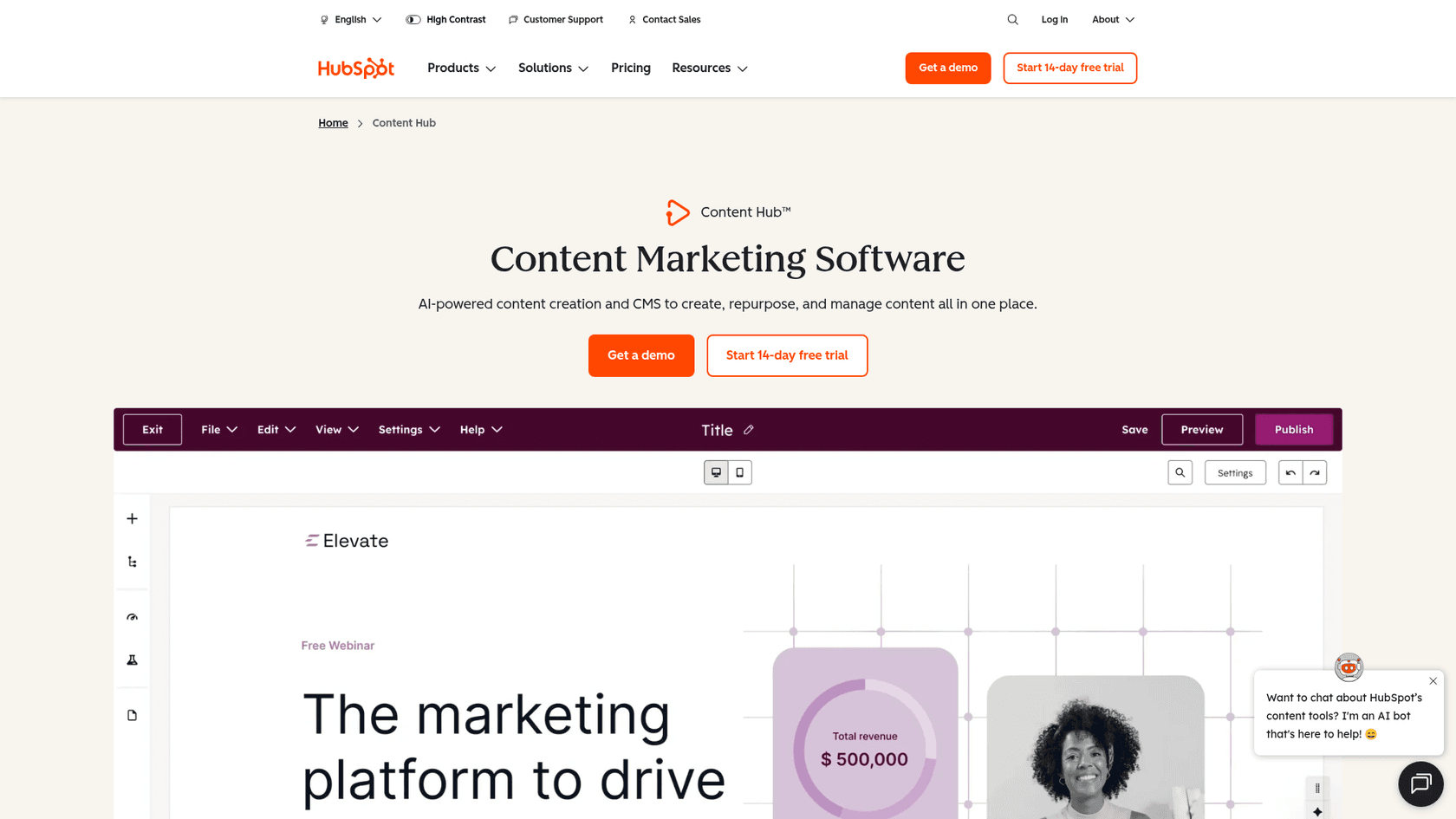
- HubSpot: Their Brand Voice feature is part of the Content Hub, which is included in Professional plans that start at $450/month (when billed annually). It works by analyzing a writing sample of at least 500 words. Again, it's a static picture, not a live feed.
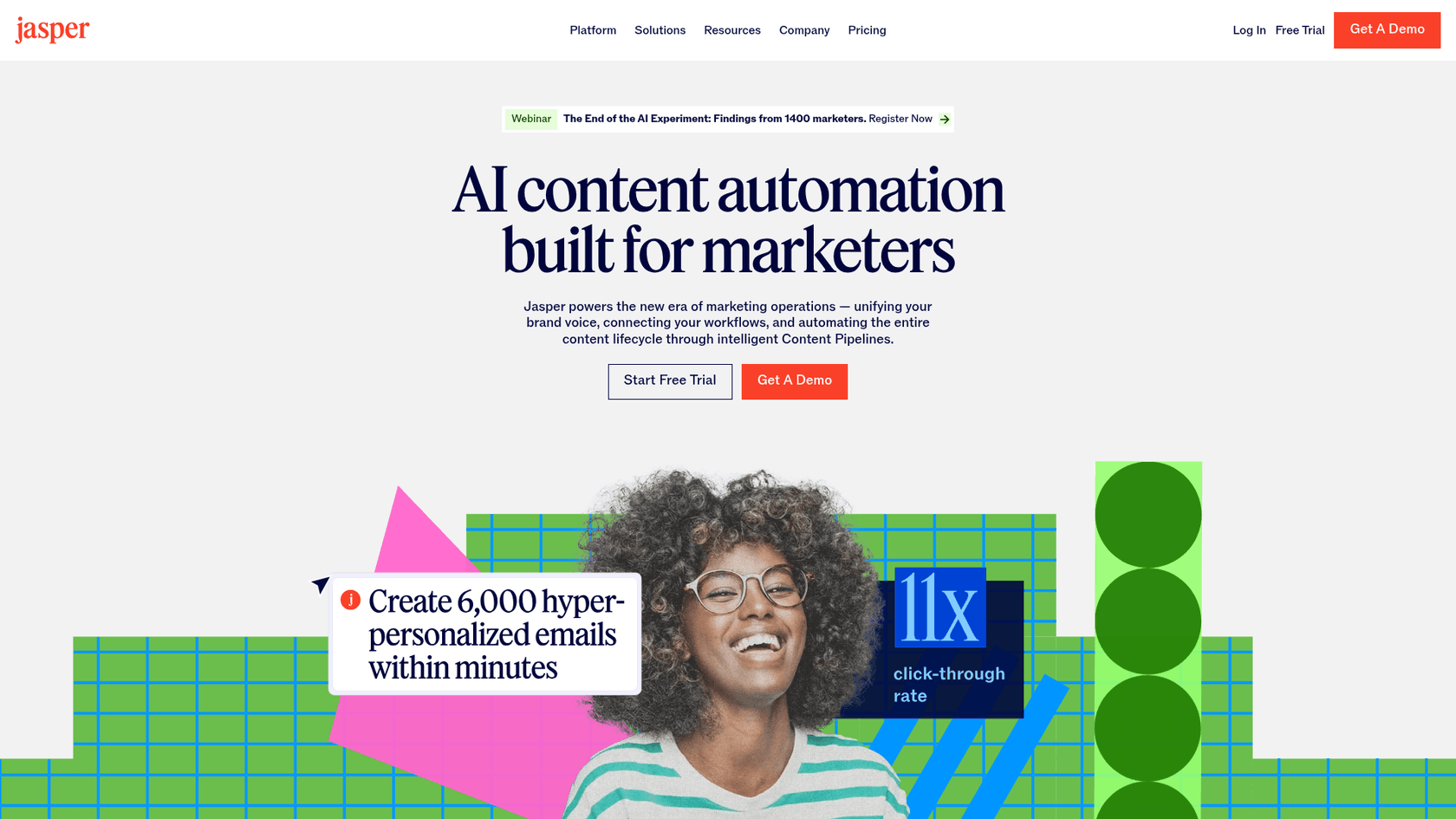
The landing page of Jasper AI, an AI writing platform that helps users maintain brand voice with AI.
The modern approach to maintaining brand voice with AI
How the eesel AI blog writer learns your true brand identity
The eesel AI blog writer looks at more than just tone. It learns the actual substance of your brand by connecting to where your company knowledge is stored.
Its "Brain" integrates with your help desks (like Zendesk and Intercom), your knowledge bases (Confluence and Notion), and other internal documents. This means it understands:
- Your product features and how they work.
- The language you use to solve real customer problems.
- Your official messaging, pulled from live, up-to-date sources.
This deep context allows the AI to generate content that's not just on-brand in style, but also factually accurate and relevant to your business. This provides a different level of context compared to tools that rely on a static document uploaded previously.
Generating a complete, on-brand blog post from a single keyword
- Enter a target keyword or topic.
- Add your website URL to fetch brand context automatically.
- Generate a complete, publish-ready blog post in minutes.
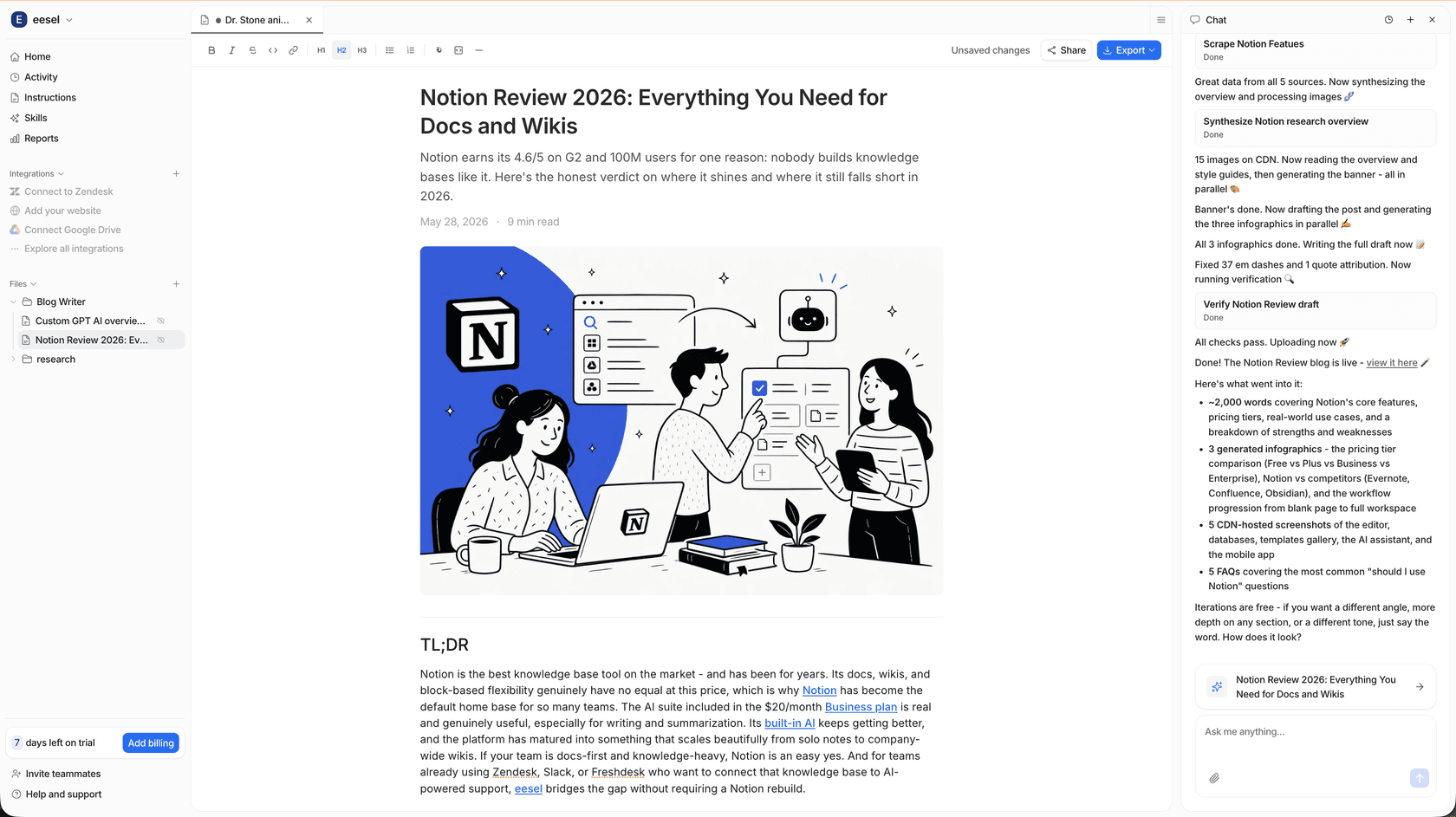
What you get back isn't just a wall of text. It's a fully-formed article with some key differentiators:
- Context-Aware Research: It knows that a "vs" keyword probably needs a pricing table. If it's a "how-to" guide, it will generate step-by-step instructions.
- Complete Assets Included: It produces a fully formatted post with AI-generated images, infographics, and even pulls in social proof with Reddit quotes and YouTube video embeds.
- AEO (Answer Engine Optimization): The content is structured to rank well in things like Google's AI Overviews and other AI-powered answer engines.
Comparing the process: eesel AI vs. other tools
Here’s a quick breakdown of how this new approach stacks up against the standard methods.
| Feature | Standard AI Writers (Jasper, HubSpot) | eesel AI blog writer |
|---|---|---|
| Context Source | Manual prompts, static style guides from file/URL uploads. | Live integration with your knowledge base & help desk. |
| Asset Generation | Text only; visuals require separate tools or processes. | Fully integrated (images, tables, infographics, videos). |
| Research Type | General web scraping based on prompt. | Context-aware research tailored to the blog type. |
| Final Output | A text draft that may require further editing and formatting. | A complete, publish-ready, SEO-optimized blog post. |
| Scalability | Limited by user's prompting skill and time for each generation. | Highly scalable; consistent, on-brand output across the team. |
Practical tips for maintaining brand voice with AI
Ready to try this out? Here are a few practical tips to build a system for generating on-brand content.
Create and maintain a centralized brand voice guide
Even with a great tool, having a single source of truth for your brand voice is a must. This should be a living document in a tool your team uses, like Notion or Confluence, not a PDF that gets lost in a forgotten folder.
What to include:
- Personality: 3-5 adjectives that describe your brand (e.g., "Confident, approachable, witty").
- Tone Matrix: A simple guide on how your voice adapts to different channels (e.g., more casual on social media than in a technical whitepaper).
- Vocabulary: A list of "always use" terms (like official product names) and "never use" terms (like corporate jargon).
- Examples: A few "do this, not that" examples can make things clear for everyone.
Establish a human-in-the-loop workflow
The process looks something like this:
- AI Generates: The AI creates a complete, 90%-there first draft that's already on-brand.
- Human Elevates: A human editor reviews it for strategic alignment, adds unique insights or personal anecdotes, and ensures the narrative flows perfectly.
- Publish: The content goes live in a fraction of the time.
Start small and measure the impact
Don't try to change your entire content strategy overnight. Pick one channel, like your blog, to run a pilot program. Test the workflow, get feedback, and refine it.
A few key metrics to track:
- Time-to-Publish: How much faster are you getting content from an idea to a live post?
- Content Quality Score: Create a simple internal score (say, 1-5) on how well each piece aligns with your brand voice.
- Engagement Metrics: Are the AI-assisted posts performing as well as your purely human-written ones?
Visualizing these concepts can help. The following video offers more practical advice on how to integrate AI into your content workflow without losing the human touch that defines your brand.
Scale your content, not your compromises
Using generic AI without deep context means you're always making a compromise. You get speed, but you risk diluting your brand and sounding like everyone else.
The real solution isn't about writing more complex prompts; it's about giving your AI better context. When you move from manual fixes and static style guides to a platform that's integrated with your business, AI can become a true extension of your team.
Instead of wasting time rewriting robotic drafts, you can equip your AI with the knowledge it needs to create content that actually sounds like you. The eesel AI blog writer is the same tool we used to take our own blog from 700 to 750,000 impressions in just three months.
Generate a blog for free and see for yourself what a difference deep brand context makes.