A practical guide to using AI for on-page SEO

Katelin Teen
Last edited February 2, 2026
On-page SEO has always been one of those tasks that is important but also time-consuming. It involves juggling keyword research, writing content, tweaking meta tags, hunting for images, and building internal links. Often, each step requires a different tool, which can create a disconnected workflow.
A common topic in any SEO community on Reddit is the challenge of using AI effectively. Many find that while AI can help, it sometimes produces generic, robotic-sounding content and still requires piecing together a bunch of different tools just to get one article out the door.
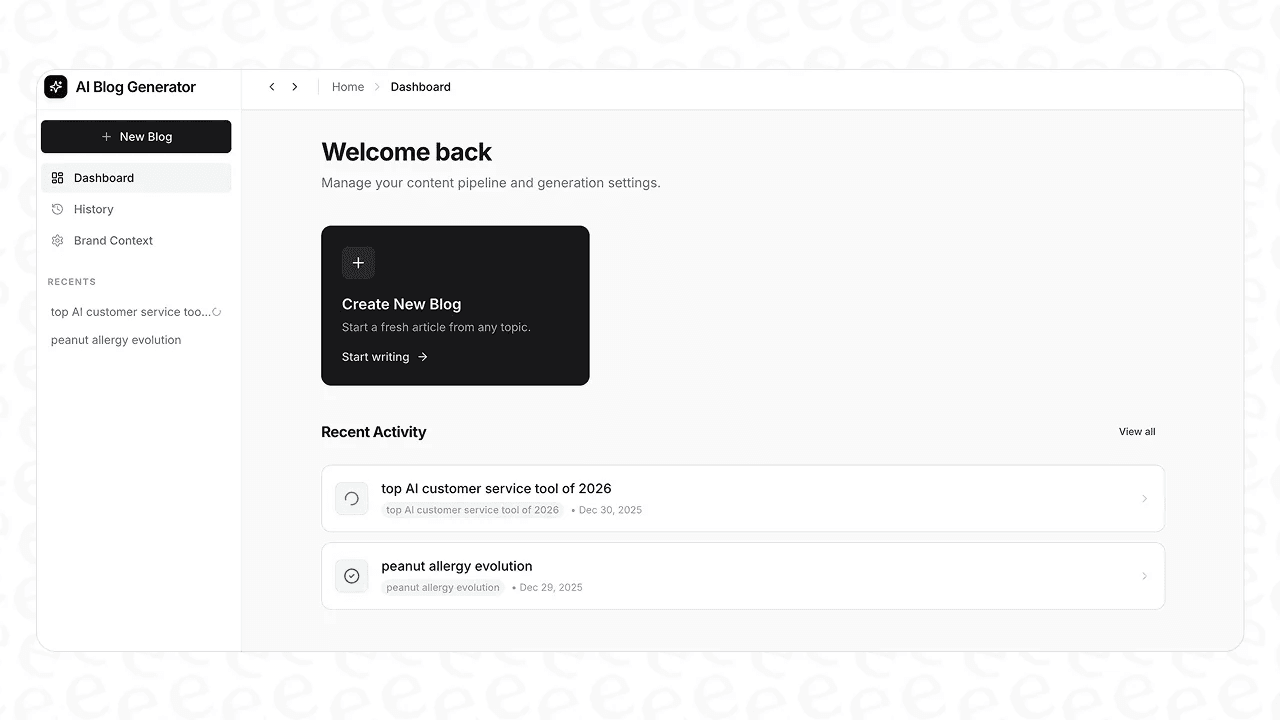
This guide explores how modern AI tools can automate the entire on-page SEO workflow, from start to finish. We’ll cover everything from finding the right keywords to creating content that’s ready to publish. We will also show you how integrated platforms like the eesel AI blog writer can handle all of this starting with just a single keyword.
What is AI-powered on-page optimization?
On-page SEO is the work you do on your web pages to help them rank higher and get more relevant traffic. This includes content optimization, HTML tweaks, and similar activities.
AI's role is to give this whole process a boost. Instead of manually digging through data and ticking off checklists, AI can analyze huge amounts of information, determine what people are truly looking for (their search intent), and handle optimization tasks with a precision that's difficult to match manually.
The old way involved stuffing keywords into text and hoping for the best. The new, AI-powered way is about creating content that has semantic relevance, perfectly matches user intent, and is structured in a way that search engines appreciate. Since Google itself uses complex AI to rank content, using AI on your end is a way to keep up.
How AI streamlines keyword research and analysis
Good on-page SEO starts with knowing what your audience is searching for and why. AI has changed this process significantly. It goes beyond simple metrics like search volume to give you a clearer picture of which keywords are worth your time. This infographic visually breaks down the evolution from basic keyword metrics to the deeper insights AI provides.
Uncovering search intent and long-tail keywords
Knowing a keyword's search volume is one piece of the puzzle, but understanding the intent behind it is what counts. Is the user looking to buy, learn, or compare? AI algorithms in tools like Semrush are proficient at this. They analyze top-ranking content for a query to figure out what users want.
These tools also use AI to show you metrics that help set priorities. For instance, Semrush can reveal a keyword's "Potential Traffic" and a personalized "Keyword Difficulty" score, so you can focus on terms you can realistically rank for. This data-first approach helps you build out topic clusters: groups of related content that show search engines you're an authority on a subject.
Performing automated competitive analysis
AI can help explain why your competitors are outranking you. Modern SEO platforms can crawl competitors' websites to see what they're doing effectively.
For example, with Ahrefs' Site Explorer, you can quickly see which of their pages get the most traffic, what keywords are sending people there, and how their content is laid out. This is not about copying them; it's about getting a data-driven roadmap to create content that is even better.
Using AI for content creation and optimization
This is where AI can save a huge amount of time, but it’s also where you need to be careful. Not all AI writers are made for SEO. While general models can help with brainstorming, specialized platforms are built to handle the entire content process.
The role of generic tools like ChatGPT
ChatGPT is a useful tool for brainstorming or drafting a quick outline, but it was not designed specifically for SEO content generation. Many users find that while it's helpful for specific tasks, it doesn't replace a dedicated SEO tool.
This can lead to a fragmented workflow where you're constantly switching between tools: one for research, another for prompting, a third for editing, and then you still have to find your own images and media. It's an improvement over writing from scratch, but it's not the most efficient process.I usually use it for quick keyword ideas, coming up with blog topics, and tweaking meta titles/descriptions. It’s not a replacement for proper SEO tools, but yes, it helps me get a solid starting point way faster.

Creating publish-ready posts with the eesel AI blog writer
Integrated platforms are designed to address this challenge. The eesel AI blog writer, for instance, is built to take a single keyword and turn it into a complete, publish-ready blog post that is already optimized for search.
Instead of just generating text, it manages the whole on-page SEO workflow with several features:
- Context-aware research: It understands the type of blog post you need. For a product comparison, it pulls pricing data. For a review, it finds technical specs. This ensures the content is well-researched, not just surface-level AI filler.
- Automatic asset generation: On-page SEO is more than just words. The tool automatically creates and embeds relevant images, infographics, charts, and tables to make the content more engaging and easier to read.
- SEO & AEO optimization: It naturally includes your target keywords and structures the content for both traditional SEO and Answer Engine Optimization (AEO), getting it ready for new formats like Google's AI Overviews.
- Social proof integration: To build authority and add a human element, it automatically finds and embeds relevant YouTube videos and real quotes from Reddit discussions about your topic.
This approach brings that multi-tool process into a single, straightforward workflow.
Balancing automation with human expertise
AI is a powerful assistant, not a replacement for a human expert. The goal is not to click "generate" and forget about it. It's to let AI handle the tedious work, like research, drafting, structuring, and asset creation, so your team can focus on the final strategic input.
This frees up your content strategists and writers to spend their time on high-value tasks like adding unique insights, refining the brand voice, and doing a final quality check. When you use a tool like the eesel AI blog writer, the first draft often sounds human, which makes the final review much faster.
Automating technical SEO elements
Good on-page SEO isn't just about the words you write. Many technical elements help search engine crawlers understand your content, and AI can help automate these as well.
Optimizing metadata at scale
Writing unique, compelling title tags and meta descriptions for every page on your site is a big job, especially for larger websites. AI tools can generate keyword-rich metadata that fits character limits and encourages users to click. For simple tasks like this, a tool like the eesel AI Meta Description Generator can get it done in seconds.
Improving content structure and readability
Search engines and human readers both appreciate well-structured content. AI can analyze your text and suggest improvements to your heading hierarchy (H2s, H3s), making sure your content has a logical flow and is easy to scan. Tools like Semrush even provide real-time AI suggestions on readability and structure based on what's already ranking well on Google.
Automating internal linking
A smart internal linking strategy helps spread page authority across your site and guides users to other relevant content. But finding and adding these links by hand can be a pain.
There are specialized AI tools like LinkWhisper that scan your site and suggest relevant internal linking opportunities. An even better approach comes from integrated platforms. For example, the eesel AI blog writer automatically adds relevant internal links to your existing content as it generates a new blog post, making this critical step part of the creation process.
As search engines evolve, staying ahead means optimizing for AI-driven platforms like Google's AI Overviews and other large language models. The video below explains how to adapt your on-page SEO strategy for the future of search.
Putting it all together: A new workflow
The biggest change AI brings to on-page SEO is the shift from a scattered, multi-tool process to a single, unified workflow.
Consider the old way:
- You'd start with keyword research in a tool like Ahrefs.
- Then you'd switch to ChatGPT or Google Docs to write the content.
- Next, you might use Semrush to check for SEO optimization.
- Finally, you’d have to find or create all your images and videos yourself.
This infographic illustrates the difference between that fragmented process and a modern, integrated AI workflow.
With an integrated AI platform, the process becomes much simpler. One tool can handle everything from start to finish. You give it a keyword, and it gives you back a fully optimized, media-rich article that's ready to publish.
This is the same workflow we use at eesel. By using the eesel AI blog writer to scale our content, we grew our daily search impressions from 700 to over 750,000 in just a few months by publishing over 1,000 optimized blog posts. That is what an integrated workflow can do.
Streamlining your on-page SEO workflow
Using AI for on-page SEO is a practical way to work more efficiently, build smarter content strategies, and scale up your content without letting quality slide.
The role of an SEO professional is changing. It is becoming less about manual, repetitive tasks and more about strategic oversight. You let AI handle the heavy lifting so you can focus on the big picture. The key is choosing tools that create genuinely helpful, high-quality content that people will actually want to read.
Ready to turn a keyword into a complete, optimized post in minutes? Try the eesel AI blog writer for free and generate your first article today.

Frequently Asked Questions
Share this article

Article by
Katelin Teen
Katelin is an operations specialist at eesel where she uses her psychology training and education experience to optimize B2B SaaS processes. Outside of work, she unwinds with story-driven games, writing, and keeping up with latest tech innovations.