Content calendar
A content calendar is a schedule that maps out what content a team will publish, when, and on which channels.
What a content calendar means
A content calendar is a schedule that lays out what content a team plans to publish, when each piece goes live, and where it will appear. It captures the topics, formats, owners, and dates for upcoming work in one place, usually as a spreadsheet, a board, or a dedicated planning tool. The point is to turn a backlog of ideas into a sequenced, accountable plan rather than a pile of someday-maybe titles.
In content marketing, a content calendar is the operating layer that keeps publishing predictable. It connects strategy (which topics matter, which keywords to target) to execution (who is writing what, and when it ships), so a team can see at a glance whether it is on pace and whether coverage is balanced across themes.
What makes a content calendar useful
A working calendar does more than list dates. A good one lets a team:
- See coverage gaps, so you notice that a whole topic cluster has one article when the strategy called for eight.
- Assign clear ownership, naming the writer, editor, and reviewer for each slot so nothing stalls because no one owns it.
- Tie each piece to a target keyword and intent, linking out to the keyword research and the brief so the writer starts with direction, not a blank page.
- Track status through a pipeline, from idea to brief to draft to review to published, so bottlenecks are visible.
- Balance new versus refresh work, reserving slots for a content refresh of decaying pages instead of only chasing new topics.
A useful way to think about a calendar is that certainty should fade the further out you look.
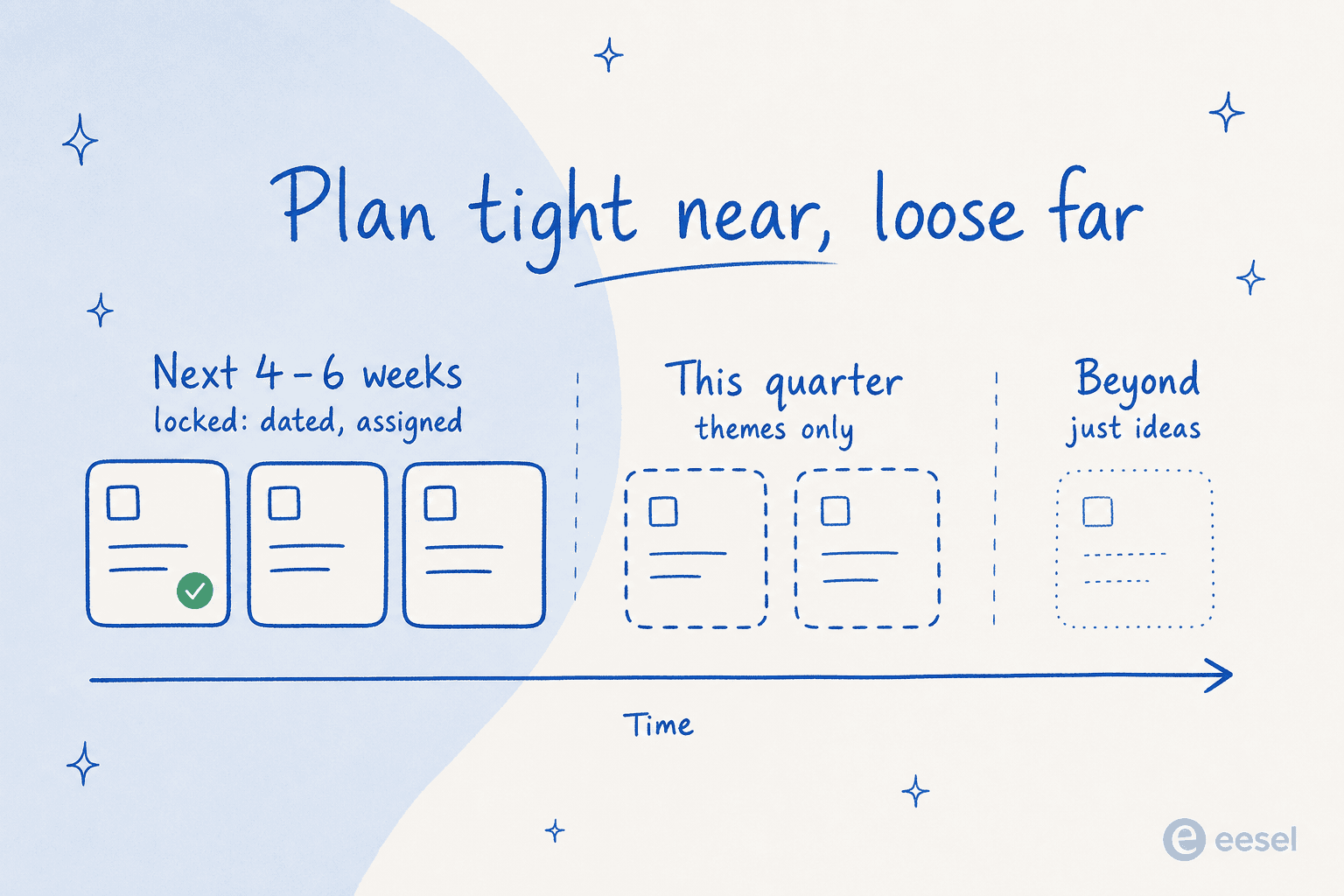
The next few weeks are locked with dates and owners, the current quarter holds themes rather than firm slots, and anything beyond is just ideas. Planning every month in equal detail is the usual trap, since search demand and priorities shift faster than a packed twelve-month calendar can survive.
How a content calendar works
Most teams run a content calendar through a repeatable cycle:
- Plan the themes. Decide the clusters and pillars to cover this quarter, grounded in keyword research and business goals.
- Slot the pieces. Place individual articles on dates, each tagged with format, keyword, and owner.
- Brief and draft. Each slot gets a content brief, then a draft from the assigned writer.
- Review and publish. The draft moves through editing and goes live on its scheduled date.
- Loop in refreshes. Pages that start to slip get scheduled back onto the calendar for updating.
An AI blog writer like eesel AI plugs into step three: given a slotted topic and its target keyword, it researches the subject and produces a grounded long-form draft, which means a calendar slot can carry a real draft into review rather than waiting on a writer to start from scratch.
A content calendar in practice
The calendars that hold up are the ones a team actually looks at every week, not the ones built once and abandoned. The most common failure is over-planning: a calendar packed twelve months out looks organized but breaks the moment search demand shifts or a product launch reshuffles priorities. The teams that publish consistently tend to keep the near-term weeks detailed and assigned, leave the far quarter loose, and treat the calendar as a living view that gets pruned and re-sequenced rather than a contract set in stone.
Want the full build guide? See building a content calendar.
Fill your content calendar faster
eesel AI researches a topic and drafts a grounded, SEO-oriented blog post, so each slot on your calendar can ship a real draft instead of a title.