Content velocity
The rate at which an organization plans, produces, and publishes new content over a given period.
What content velocity means
Content velocity is the rate at which an organization plans, produces, and publishes new content over a given period, usually expressed as pieces per week or per month. It captures throughput rather than quality: a team publishing twelve articles a month has higher velocity than one publishing three, regardless of how each piece performs. The metric is most useful as a trend line, showing whether a content operation is speeding up, holding steady, or stalling.
In content marketing and SEO, velocity matters because search visibility tends to compound with coverage. A site that publishes consistently across a subject gives search engines more pages to crawl, more chances to rank for long-tail queries, and a clearer signal that it covers the topic in depth. The catch is that velocity only pays off when the output stays useful, so the real goal is sustainable speed, not raw page count.
Why content velocity matters
- It compounds with topical coverage. Each new, relevant post adds another entry point and another internal-linking target, so steady output builds topical authority instead of leaving one-off articles stranded.
- It sets the ceiling on test-and-learn speed. More published pieces means more data on what ranks and converts, so a faster cadence shortens the loop between an idea and evidence it worked.
- It exposes the real bottleneck. Tracking velocity over time shows whether the constraint is research, drafting, review, or publishing, which is the first step to fixing throughput.
- It must be balanced against quality. Velocity divorced from standards produces thin content that can drag a whole domain down, so it should always be read next to performance and editorial checks.
- It is a planning input, not a vanity target. Used well, velocity informs staffing and a realistic content calendar rather than becoming a number to inflate.
To see where velocity actually gets stuck, it helps to look at how the time per piece is split across stages.
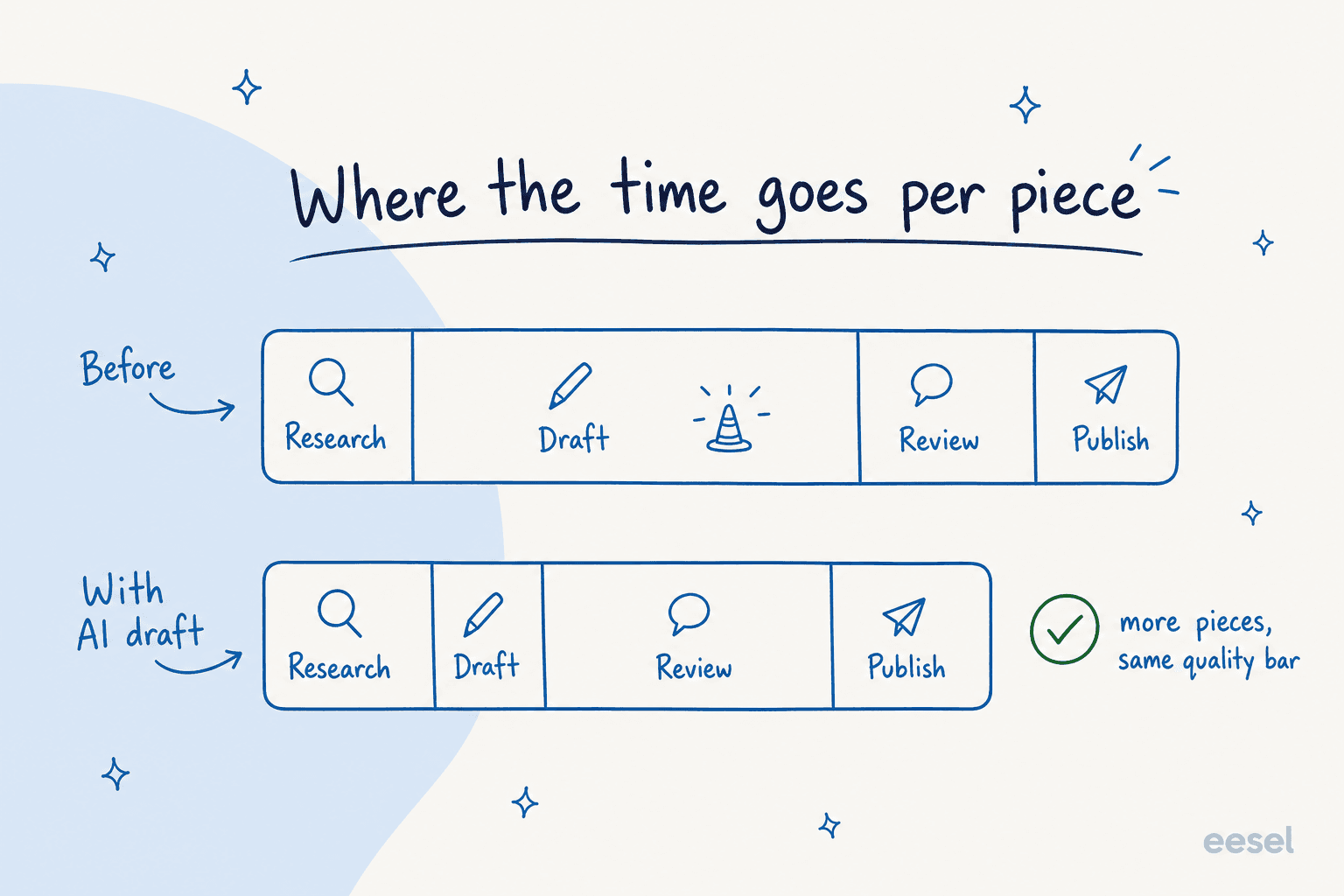
The first draft is usually the widest part of the bar, so shrinking that stage is what lifts throughput. Moving the saved time into review keeps the quality bar intact while more pieces ship.
How content velocity works
Raising content velocity usually follows a pattern:
- Measure the current baseline. Count what actually ships in a typical month and note where pieces stall, so improvement is measured against a real number.
- Standardize the inputs. A repeatable research step, a consistent content brief, and a fixed structure remove decisions that slow every piece down.
- Automate the slowest stage. First drafts are often the bottleneck, so this is where automation buys the most time.
- Keep a human review gate. Speed only holds value if accuracy and voice survive, so an editor still signs off before publish.
eesel AI fits at step three. The eesel AI blog writer researches a topic, pulls real sources, and produces a long-form draft, which lets a small team move from idea to reviewable draft in minutes rather than days. The editor still owns the final pass, so velocity rises without the output turning into filler.
Content velocity in practice
The teams that sustain high velocity treat it as a system, not a sprint. They set a cadence they can actually maintain, build a backlog of briefed topics so writers are never starting cold, and watch quality signals alongside the count so a fast month does not quietly become a thin one. Velocity is only valuable when paired with standards: a steady stream of well-sourced pieces builds a moat, while a burst of shallow ones invites a correction. The right number is the highest output the team can hold without dropping below its quality bar.
We go deeper on this in AI content production speed.
Raise content velocity without dropping quality
eesel AI researches a topic and drafts a source-grounded long-form blog post, so a small team can publish more without thinning out each piece.