


Shelf pricing in 2026: the page that isn't there
Let me start with the thing that makes this post necessary. There is no Shelf pricing page anymore.
I went looking for it the way any buyer would, and shelf.io/pricing returns an HTTP 301 redirect straight to the homepage, served by the WordPress Redirection plugin. This is not a table that failed to load or a paywall. The page has been deliberately pointed at the homepage. Shelf's own page sitemap lists 44 pages, and not one of them is a pricing, plans, or cost page.
What you land on instead is a positioning page. Every button on it funnels to the same Talk to an Expert form, which Shelf describes in its own words as scheduling "a discovery call with our team." There is no "start free," no trial link, and no dollar sign anywhere in the rendered page.
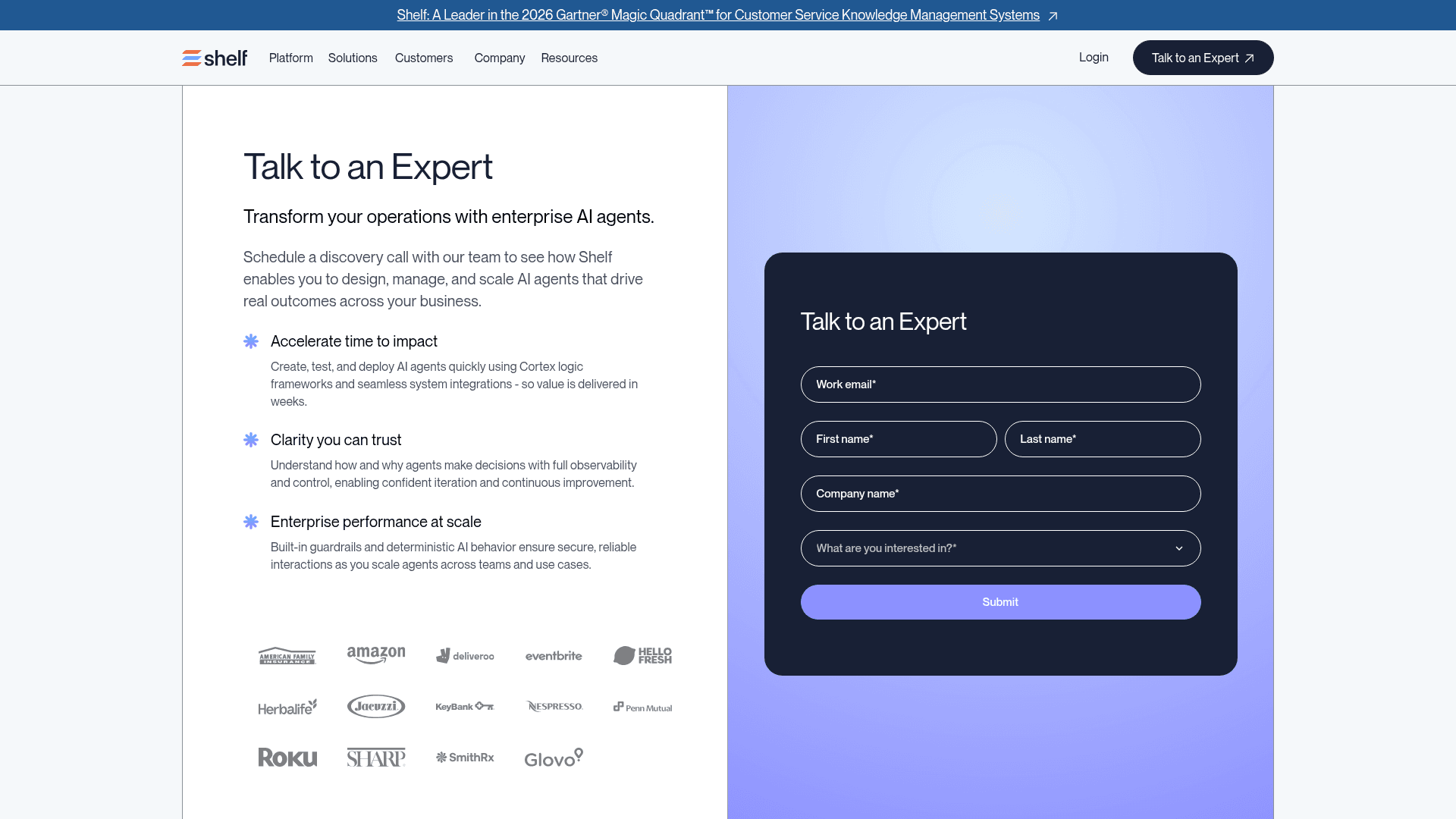
The form itself carries a small tell. Its one required qualifying field asks "What are you interested in?" and splits leads into Shelf Knowledge Management Solution and Shelf AgenticOS. Two product lines, routed separately, which usually means two rate cards sitting behind the gate with no published boundary between them.
None of this makes Shelf a bad product. Plenty of enterprise software is sold this way. But it does mean that if you want to know what Shelf pricing looks like before a sales call, you have to reconstruct it from the numbers that leaked out. So let me do that.
The three numbers you'll find, and why none is the price
Quote-only vendors always leak figures into marketplaces and directories. Shelf leaked three, and every one of them is a trap if you read it as the platform's price.
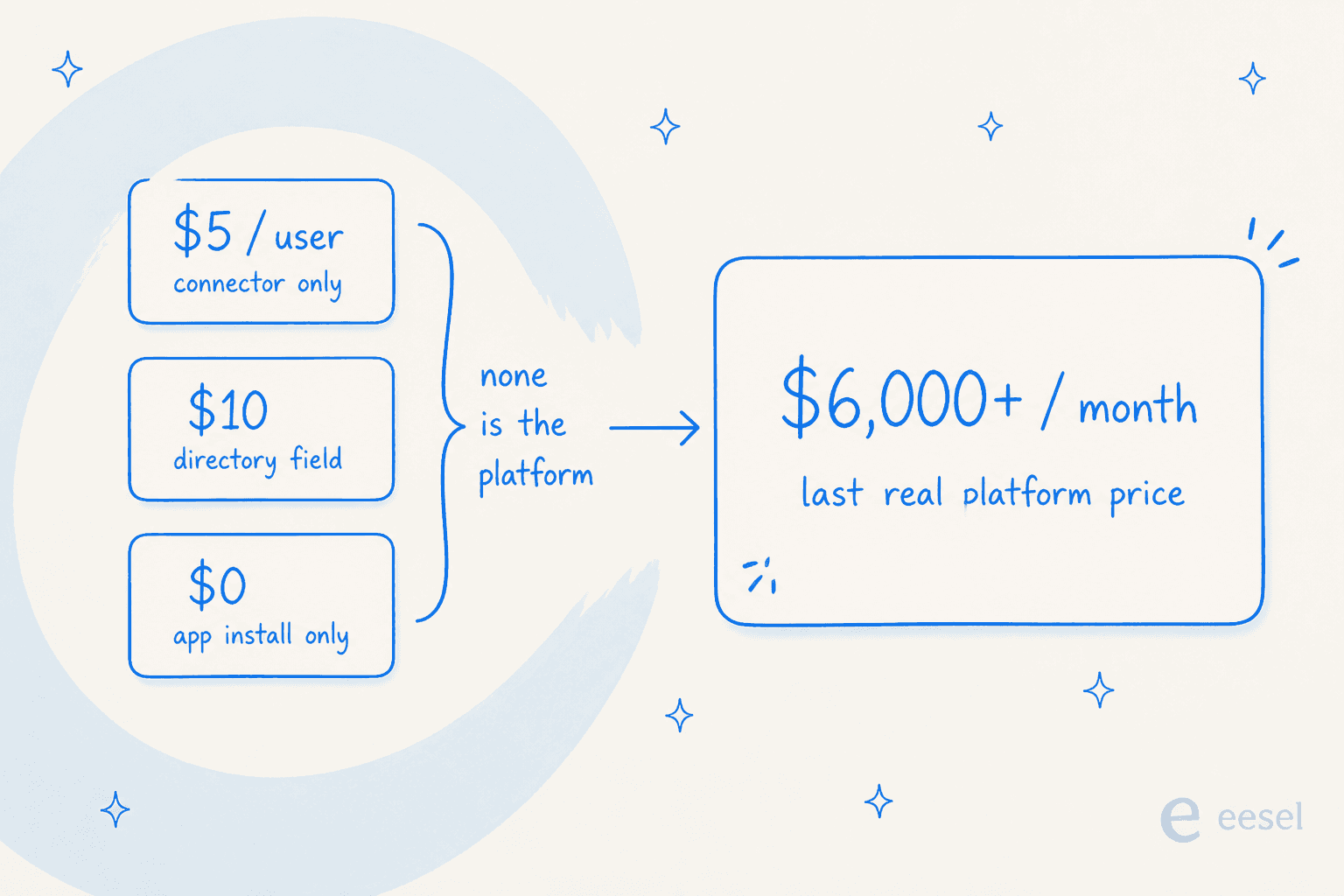
The $5 on Salesforce. The Shelf AppExchange listing publishes a "Salesforce Integration" line item at $5 USD/user/month, labelled "Lowest Starting Price." It looks like an entry price, and it is not. The same listing states, verbatim, "Paid Add-On Required. You must pay for a product or service that is external to Salesforce for this solution to work." The $5 buys the connector; the actual Shelf subscription is bought separately and priced elsewhere. What this listing does give you, usefully, are three real contract terms in Shelf's own words: one-year contracts, annual payment, and a 25-user minimum. Those are the only committed-spend numbers Shelf publishes anywhere.
The $10 on Capterra. The Capterra listing shows a $10 starting price with the billing unit "Per Feature, Per Month." Two problems: "Per Feature, Per Month" is a Capterra taxonomy option rather than a meter Shelf describes anywhere, and the $10 has no tier name attached, so it maps to nothing. It is a directory field, not a quote.
The $0 on Zendesk. Shelf ships several Zendesk apps that are all "free to install." The newest one says plainly that it "requires an active Shelf subscription purchased separately." So the app is free and the money is, again, entirely in the gated platform subscription. For what it is worth, eesel integrates with Zendesk the same way at the app layer, but bills for the tickets it resolves rather than the seats who log in.
Add it up and the pattern is clear: the visible numbers are all peripheral SKUs. The platform price is deliberately not among them.
The last real Shelf price: $6,000 a month
Here is the number that actually matters, and the good news is that Shelf published it itself, not so long ago.
The Internet Archive's December 2023 snapshot of shelf.io/pricing shows a full, live rate card, headed "Shelf Software Pricing." This is the last platform pricing Shelf ever put on its own site.
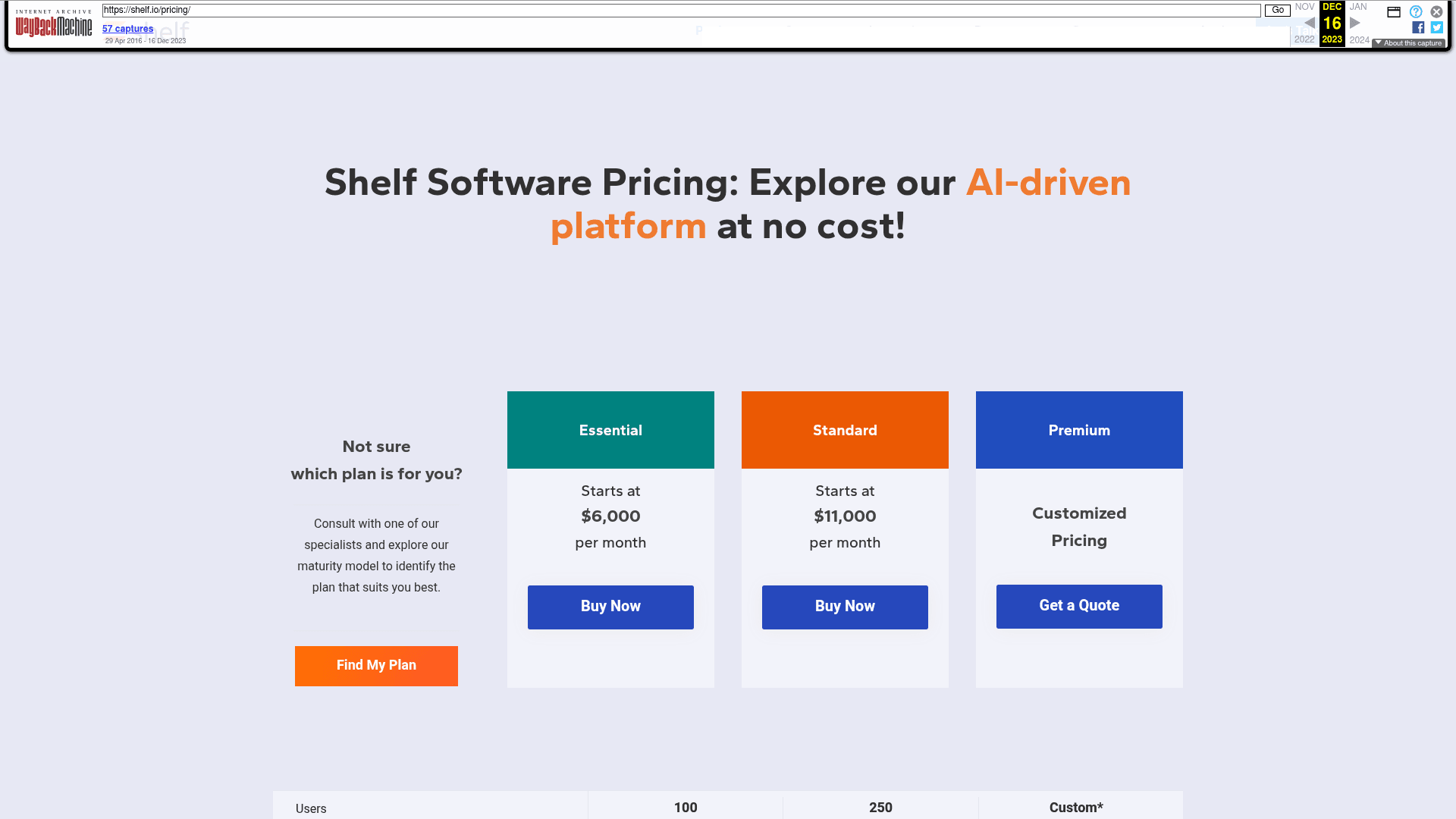
| Tier | Price | Users included | Self-service portals | Content connectors |
|---|---|---|---|---|
| Essential | $6,000/month | 100 | 1 | 2 |
| Standard | $11,000/month | 250 | 3 | 5 |
| Premium | Custom (get a quote) | Custom | 5 | Unlimited |
A few things worth pulling out of that table. First, this was a flat monthly platform fee with a bundled seat allotment, not per-seat pricing. Second, all three tiers included the same core features (the knowledge base, Answer Assist, Search Copilot, reporting). The tier gated seat count, portal count, and connector count, not capability. Third, the entry point was $6,000/month, which is $72,000/year before you add anything.
If you divide the flat fee by the bundled seats, Essential works out to an effective $60/user/month and Standard to about $44/user/month. Those are my numbers, not Shelf's, but they tell you the shape: a modest volume discount for buying more seats, and a floor that starts well into enterprise territory.
Is that still the price? Honestly, nobody outside a Shelf sales call knows, and prices set in 2023 rarely survive unchanged into 2026. But it is the most recent real platform figure, it is Shelf's own published number, and it lines up with everything the buyer signals say. When a rep quotes you, this is the anchor to hold it against.
How Shelf's pricing changed over time
The disappearing pricing page makes more sense once you see the trajectory. Shelf did not just go quiet; it climbed a ladder from a $99 self-serve tool to a five-figure enterprise contract, and hid the numbers roughly at the point where they stopped being reassuring.
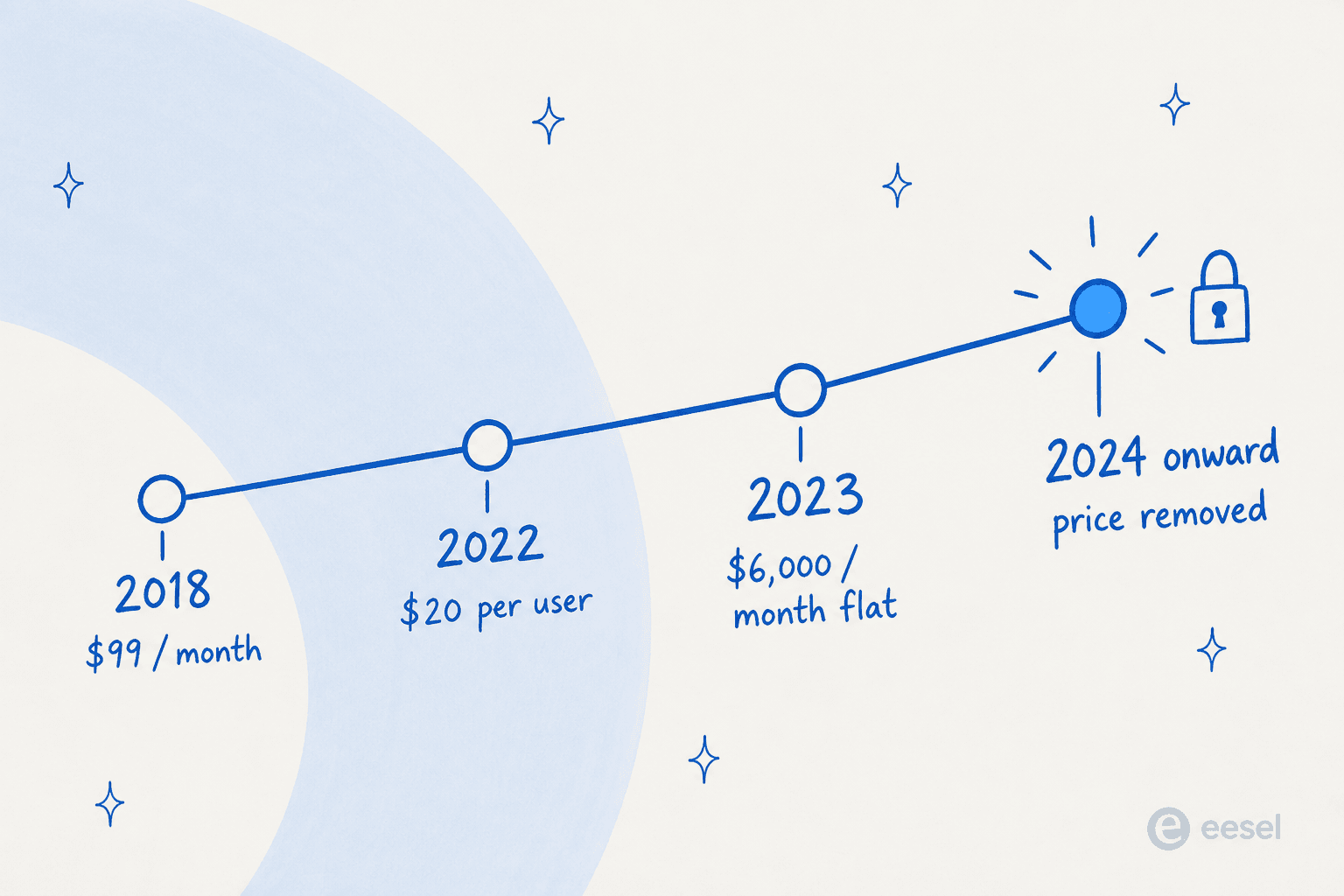
In January 2018, Shelf sold Team at $99/month, Group at $199, and Workplace at $499 (annual, with a 20% monthly surcharge). By November 2022, it had moved to per-user pricing at $20 and $30 per user per month.
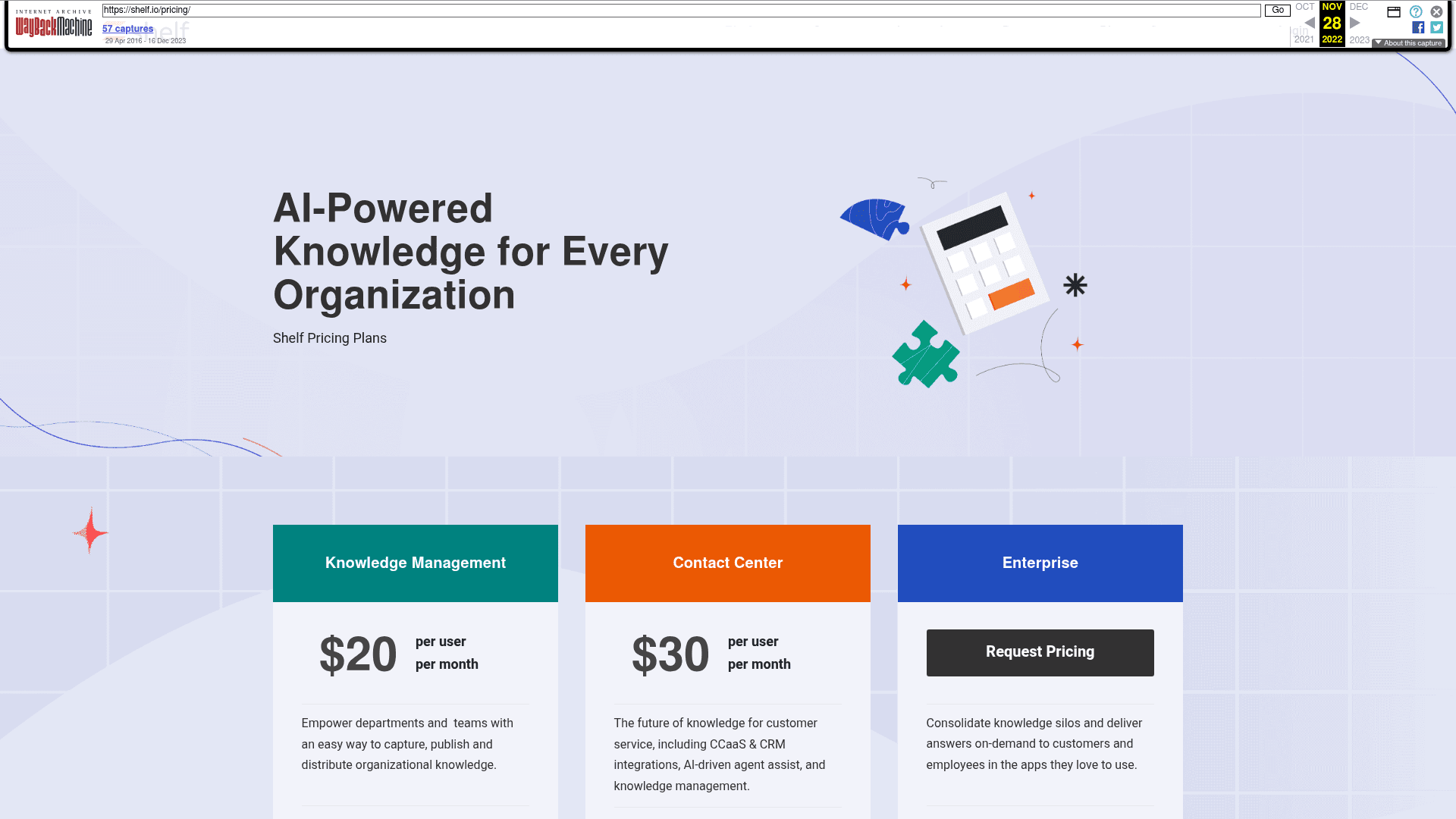
Then came the December 2023 jump to flat $6,000 and $11,000 tiers, and after that, silence. The Wayback CDX index shows continuous captures through December 2023 and then nothing in 2024, 2025, or 2026. Combined with the live redirect, that dates the removal to 2024, right around Shelf's repositioning toward the "AgenticOS" enterprise story.
The takeaway for a buyer is simple: Shelf pricing has moved firmly upmarket, and the era where you could read a number off the site and sign up is over.
The costs the sticker price hides
Even if a rep quotes you a clean monthly figure, that figure is the smallest part of what a Shelf deployment costs. The buyer-side signals on G2 are unusually specific about the rest.
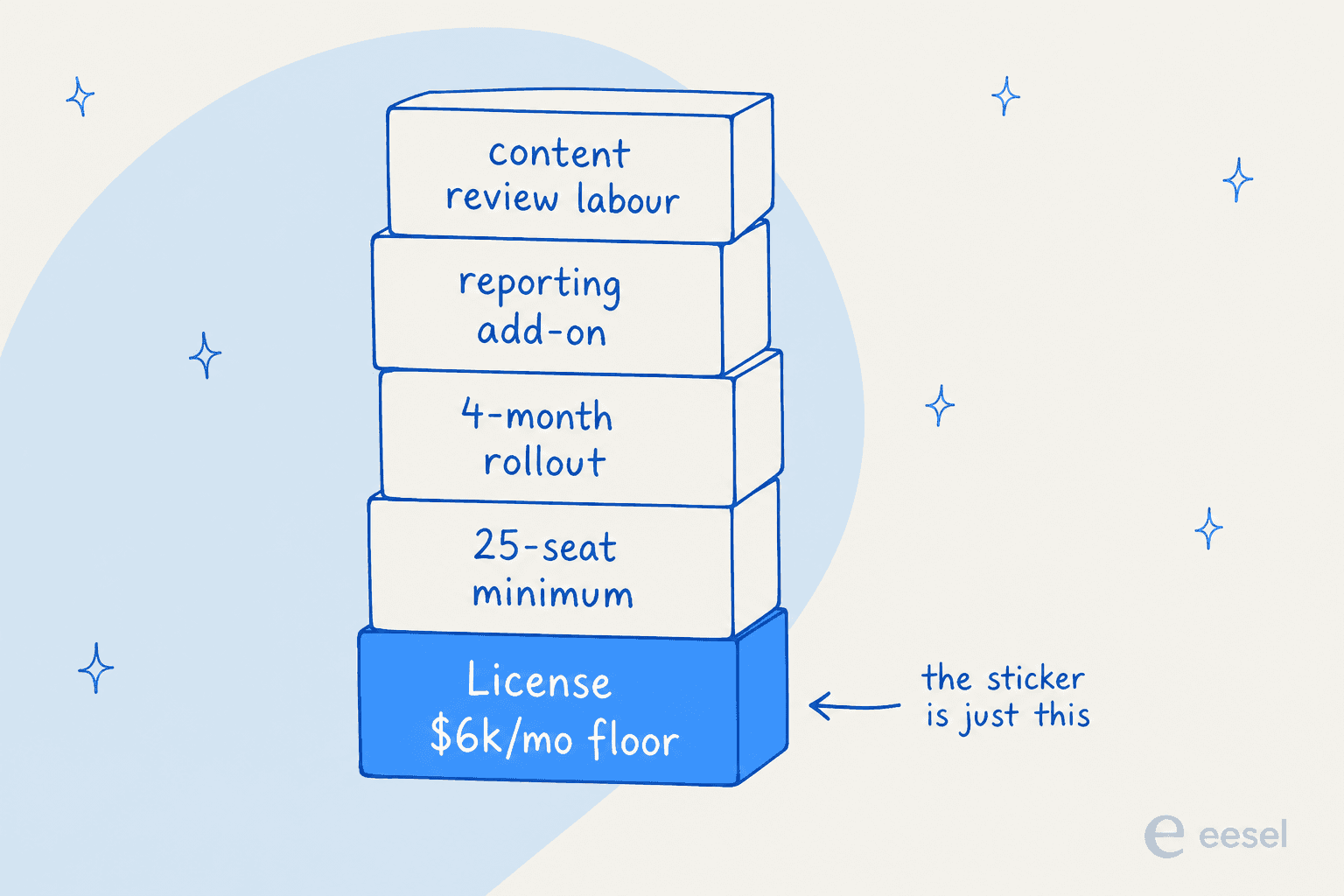
G2's pricing insights, averaged from real user reviews, put Shelf's time to implement at 4 months and its return on investment at 13 months. Pair that with the AppExchange terms (annual prepay, 25-seat floor) and you get the real timeline: you sign, you pay for the full year up front, and the platform is not delivering value for the first four months of it.
Then there is the labour. Shelf's whole pitch is content governance, which means someone on your side has to do the governing. One knowledge management specialist described the review workload directly:
"The review process is something we as a credit union struggle with... when assigning content reviews it is only possible to assign them one at a time. We sometimes have 120-200 pieces of content to review, per quarter, so this can be a very time consuming process."

And reporting, which most buyers assume is included, is something reviewers flag as a separate line:
"Lacks robust and in-depth reporting in GUI without the requirement of pulling APIs. Beta for additional reporting is available but when available to GA it will be a paid product. Believe all reporting capabilities should be a part of the tool and not a paid add-on."

None of this is a knock on Shelf's quality; these are 4- and 5-star reviewers. It is just the honest total cost of ownership, and the license line is the part that shows up on the sticker.
What you're actually buying
It is worth being precise about what the $6,000-a-month platform does, because it changes whether the price is reasonable for your situation.
Shelf is a knowledge governance and management layer. Its strongest feature is content intelligence: it scans your library and counts what is wrong with it. On a real customer instance, its Quality Assessment screen tallied hundreds of document duplicates, thousands of section duplicates, past-dated documents, and thousands of undefined acronyms.
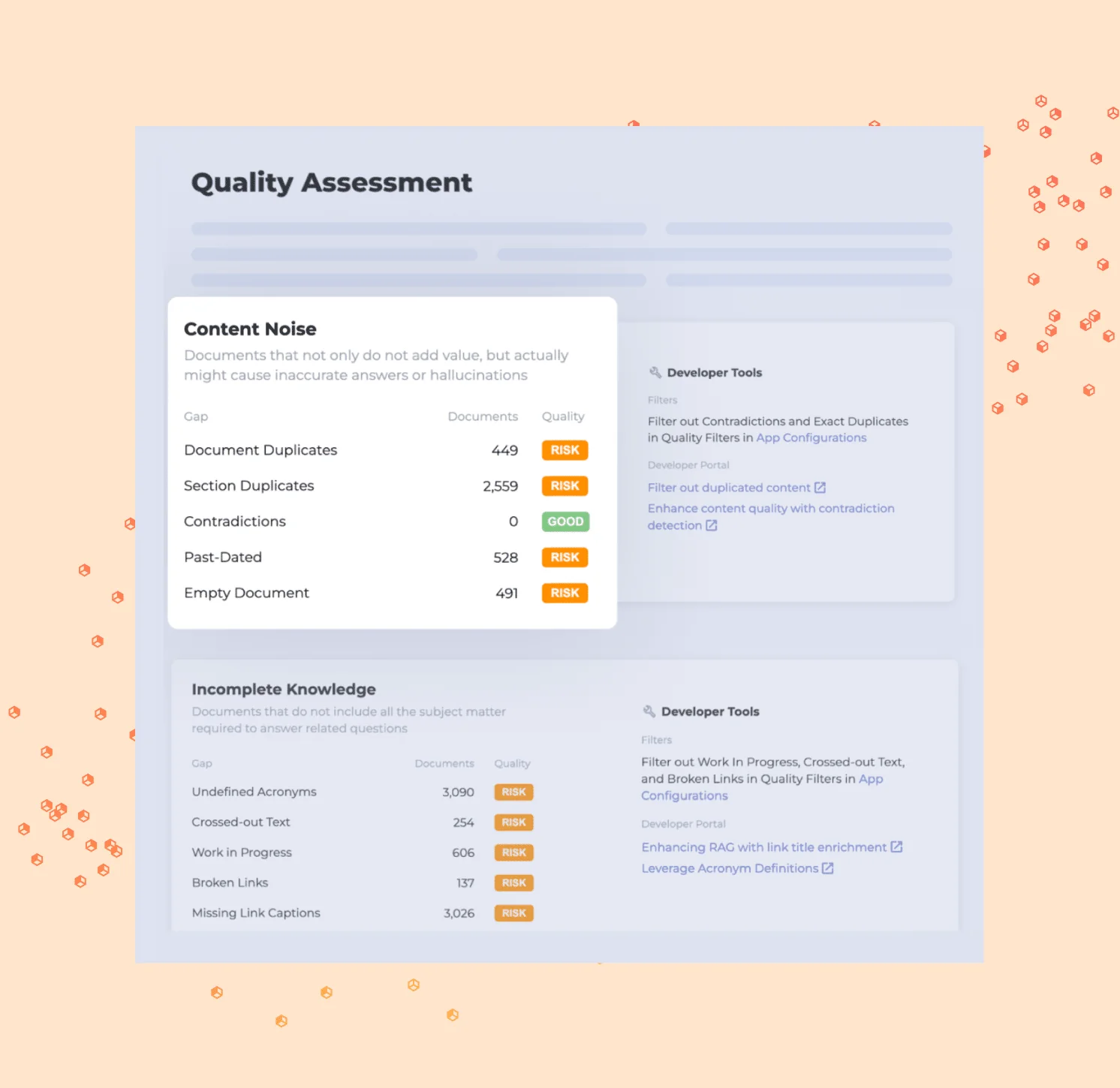
That is genuinely useful if you run a large, messy enterprise knowledge base and need to clean it up. What it is not is a ticket resolver. Shelf's own contact-center page says it is "agnostic to whatever agent assist, copilot, bot, or AI agent you choose," and its Answer Assist feature puts an article snippet in front of a human agent who then clicks copy or send. A person is still closing the ticket.
So the pricing question has a hidden second half. If you are paying five figures a month, are you paying to organise knowledge or to deflect tickets? Those are different jobs, and a lot of buyers discover after signing that they bought the first when they wanted the second. If ticket deflection is the goal, compare Shelf's number against a tool priced on tickets resolved, not seats governed.
Flat fee vs volume-sized plan: who carries a quiet month
Here is the part of Shelf pricing that a tier grid never shows you. A flat $6,000/month means your cost per ticket swings wildly with volume, and you carry the whole fee in a slow quarter. A plan sized to your volume does the opposite: you pick a monthly batch of credits that matches your tickets, and you can move up or down any time.
I built a small calculator so you can see where the lines cross. It compares Shelf's last-published flat platform floor against eesel's published monthly plans (from $299 for 500 credits, 1 credit per ticket or chat, see eesel pricing). Pick your monthly volume:
The honest read is that neither model wins everywhere. Up to 5,000 tickets a month, eesel's published plans are dramatically cheaper than a $6,000 flat fee, and you can step down a plan when volume drops. Above 5,000 tickets a month you would compare Shelf against a custom eesel quote, and a flat fee can make sense if your volume never dips. What the flat fee removes is your ability to pay less when you handle less, and for most support teams volume is seasonal, not steady.
There is one more difference the calculator can't show. The eesel figure covers every ticket or chat the agent actually works on. Shelf's $6,000 is for governing knowledge while a human still closes the ticket. So even at high volume, you are not comparing like for like unless you add the cost of the agents doing the resolving on top of Shelf.
Try eesel for ticket deflection
If you got here comparing Shelf pricing because you want AI to take work off your support queue, that is worth naming directly: Shelf is a knowledge layer, not a resolver, and the price you are weighing buys you a cleaner library, not a smaller queue.
eesel is the other half of that. It is an AI helpdesk teammate that plugs into Zendesk, Freshdesk, Confluence and the rest of your stack, learns from your past tickets and help docs, and actually closes front-line tickets rather than handing an article to an agent. The pricing is the opposite of Shelf's: one fixed monthly price sized to your volume, at 1 credit per ticket or chat, with no 25-seat minimum, no required annual prepay, and no sales call required to see a number.
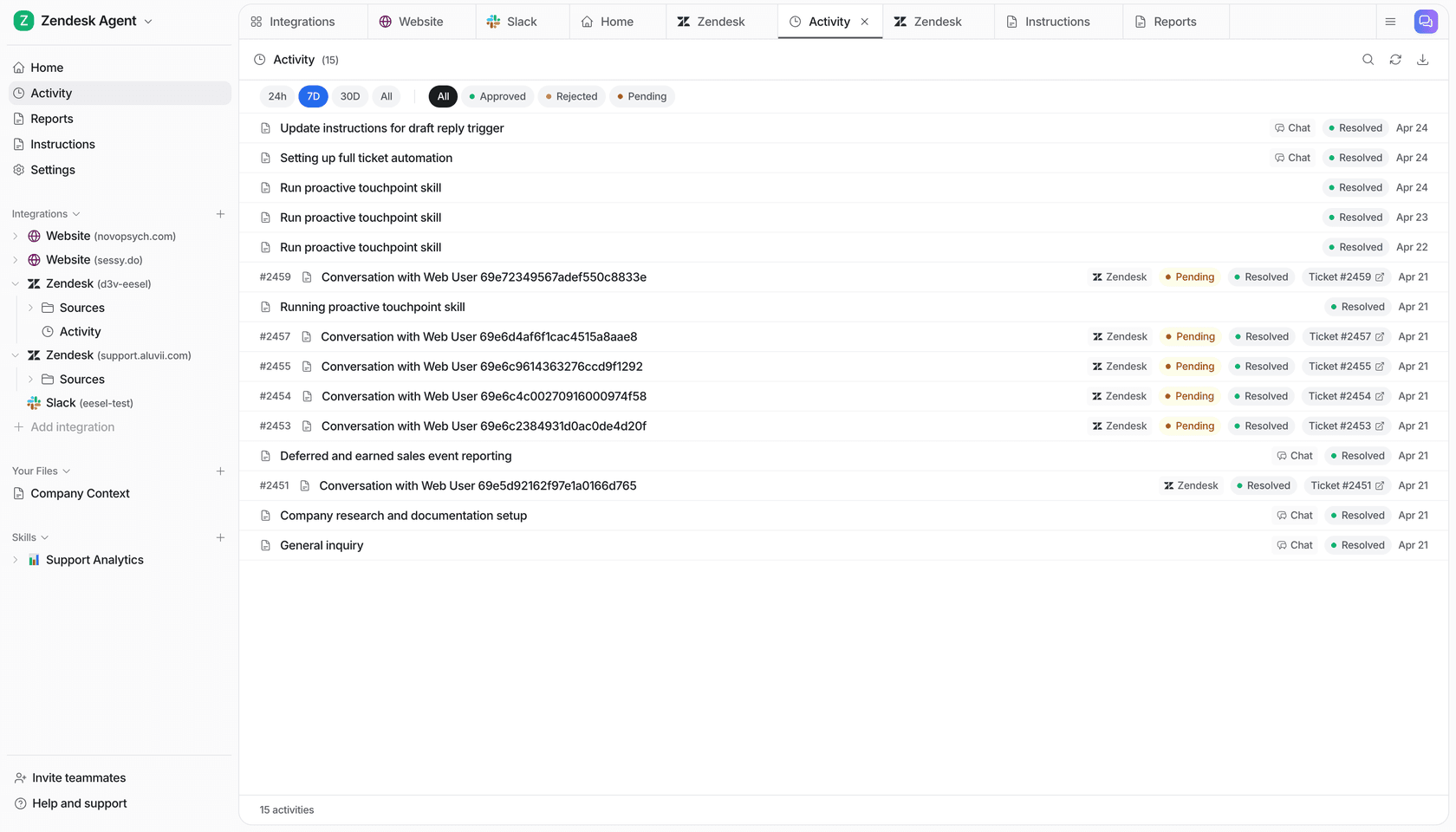
The part I would actually lean on before signing anything, Shelf or otherwise: eesel runs a simulation on your own historical tickets before you pay a cent, so you see the real deflection rate on your data instead of a 4-month rollout and a 13-month wait to find out. You can try it for free and get a number the same day.
Frequently Asked Questions
How much does Shelf cost in 2026?
/pricing page now redirects to the homepage, and the only conversion path is a sales call. The last figure Shelf published for the platform itself was $6,000/month for the Essential tier (100 users), archived in December 2023. Buyer reviews on G2 rate its perceived cost at the top of the scale, so plan for an enterprise-sized quote rather than a card-swipe subscription.