


Why you'd look past Groq 3 LPX in the first place
Let me start by being fair to the incumbent, because it is a serious piece of engineering. Groq 3 LPX is NVIDIA's inference accelerator for Vera Rubin, built on Groq's LPU design under a non-exclusive license. Each rack packs 256 LPU chips that work next to Rubin GPUs, and NVIDIA cites a benchmark of 3,400 tokens per second on Gemma 4 31B at 100K context. It is fast, and the architecture is clever.

So why look elsewhere? A few very practical reasons:
- You can't just buy it. LPX is a rack-scale extension of Vera Rubin NVL72, not a card you drop into a server. It is a data-center commitment, not a purchase decision for most teams.
- Availability is thin. NVIDIA announced full production in August 2026, but Nebius is only the first cloud to deploy it. If you want capacity today, the queue is short and the list of providers is shorter.
- The numbers are NVIDIA's own. The headline 35x throughput-per-megawatt figure is measured against NVIDIA's previous generation. It is a coherent claim, but it is a vendor claim, and independent tests are still landing.
- Lock-in. LPX only makes sense inside a Vera Rubin build. If your stack, your cloud, or your budget points elsewhere, that is a hard dependency.
None of that makes LPX bad. It just means "should I use Groq 3 LPX?" is the wrong question for most people. The better one is "where should I get fast inference from," and that has a lot of good answers.
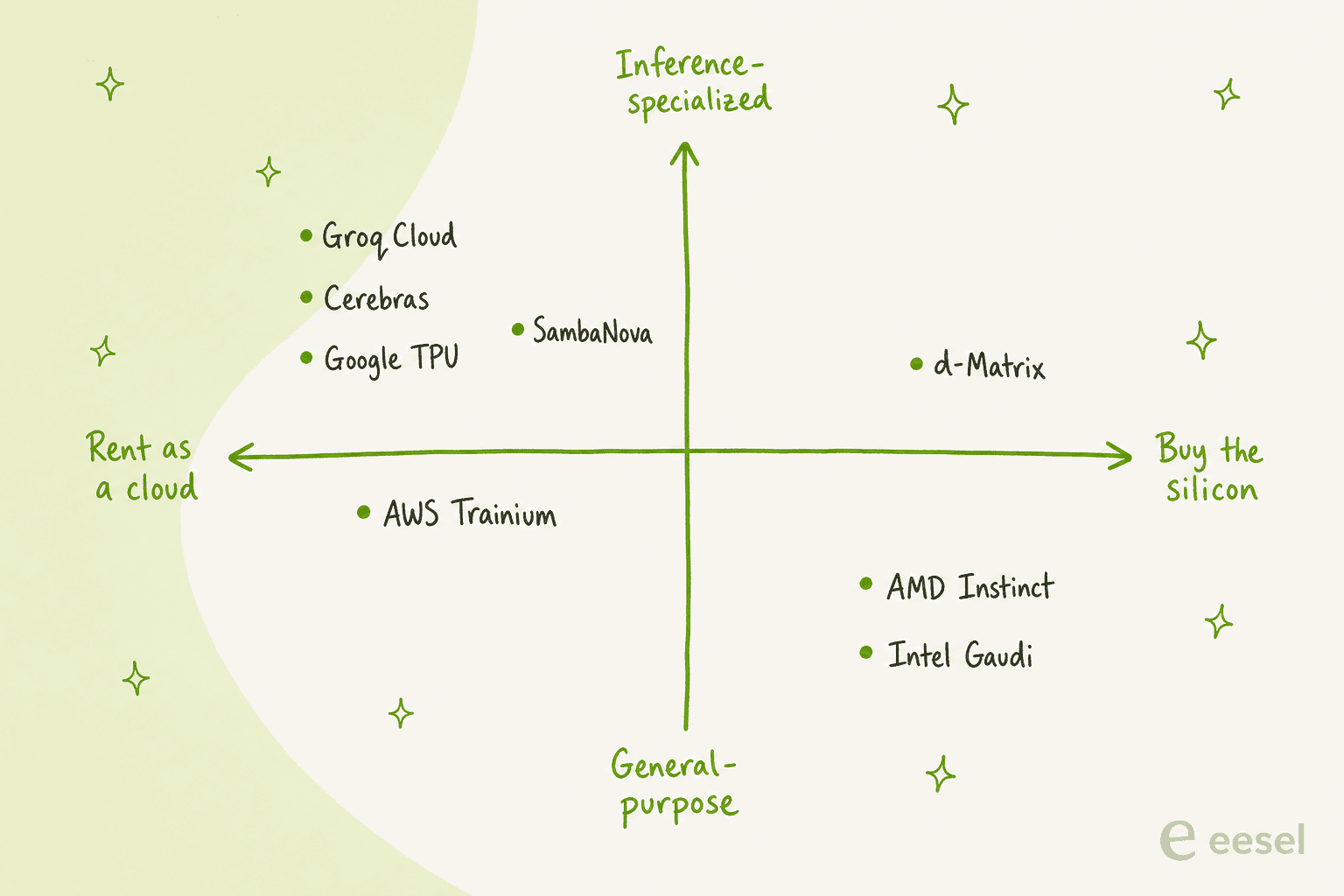
How I picked, and how to read this list
I build on the product side, so my bias is toward what you can actually adopt, not what benchmarks best on a slide. I read each vendor's own docs, pricing, and spec sheets, and where a speed number exists I have used the vendor's figure and said so. Three things shaped the ranking:
- Can you use it now? An API you can hit this afternoon beats a rack you will queue for. Accessibility is weighted heavily.
- What is the real workload? Fast single-stream chat, huge open models, or cheap batch serving are different jobs that reward different chips.
- What does it cost to live with? Rent-versus-buy, the software you are locking into, and the total cost of ownership matter more than peak FLOPS.
One caveat worth stating plainly: community sentiment on this exact generation of hardware is still thin, because almost none of it has been in the wild long. So the takes below lean on primary specs and the handful of real benchmarks that exist, not on years of user reviews. Where a real voice exists, I have quoted it.
Here is the whole field at a glance before we go deep.
| Alternative | Type | How you access it | Headline inference number (vendor-stated) | Rough cost signal | Best for |
|---|---|---|---|---|---|
| Groq (GroqCloud) | LPU inference cloud + chips | API today, per-token | Fastest on small/mid models | Per-token, published | Groq LPU speed without waiting for NVIDIA racks |
| Cerebras | Wafer-scale (WSE-3) | API + buy CS-4/CS-3 | ~3,000 tok/s (GPT OSS 120B) | $0.35 in / $0.75 out per M | Raw single-stream speed |
| SambaNova | RDU, three-tier memory | API + on-prem racks | ~850 tok/s (MiniMax M2.7) | $0.22 in / $0.59 out per M (gpt-oss-120b) | Largest open models, agents, on-prem |
| Google TPU (Ironwood) | Custom ASIC | Rent on Google Cloud only | 4,614 FP8 TFLOPs/chip | From $12.00/chip-hour | Teams already on GCP, hyperscale serving |
| AWS Trainium | Custom ASIC | Rent on AWS only | Trn2: 30-40% better price-perf vs H200 | Inf2 from $0.76/hr | Cheaper tokens inside AWS |
| AMD Instinct | GPU (CDNA) | Buy, or via cloud partners | MI355X: 288 GB HBM3E, 8 TB/s | Capital purchase / quote | Owning silicon, memory-heavy models, no lock-in |
| Intel Gaudi 3 | AI accelerator | Buy, or via IBM Cloud | 128 GB HBM, 1,200 GB/s Ethernet | "Half the cost" positioning | Value buyers, Ethernet-native shops |
| d-Matrix Corsair | In-memory compute (DIMC) | Buy hardware only | 60,000 tok/s (Llama3 8B, server) | Capital purchase | Latency obsessives betting early |
| Groq 3 LPX (incumbent) | LPU + GPU rack | Via clouds (Nebius) | 3,400 tok/s (Gemma 4 31B) | Data-center scale | Hyperscale agentic inference |
Not sure which row is you? This picker gets you to a shortlist in one click.
1. Groq (GroqCloud): the Groq LPU you can actually use today
Best for: teams who want the Groq LPU's low-latency speed through an API right now, without waiting for NVIDIA's racks to reach their cloud.
Here is the plot twist that trips a lot of people up. The company Groq still exists, still runs GroqCloud, and still sells the same LPU speed that made it famous. When NVIDIA licensed Groq's technology, it was a non-exclusive deal plus a team move, not a shutdown. Groq stayed independent under a new CEO, and GroqCloud kept operating without interruption. One reaction on X caught the confusion perfectly:
"so groq the company is now also an nvidia product line, that's going to confuse people for months"
So if what drew you to LPX was the LPU's speed, the most direct "alternative" is often just the original: GroqCloud. You get an OpenAI-compatible API, deterministic low-latency token generation, and you can start today instead of waiting for a Vera Rubin deployment near you. On Hacker News, one of the sharper takes read the LPX benchmark as a continuation of Groq's known strength:
"Gemma 31B dense at 3k TPS seems like a pretty big deal. Groq has always been more efficient than Cerebras at running very small models and this release seems to be no exception."

Pros: available today, familiar API, strong on small and mid-size models, and the same LPU lineage that NVIDIA licensed. Cons: the brand confusion is real, and the largest models are better served elsewhere. If you want the full cost picture, we broke down Groq pricing and the wider set of Groq alternatives separately.
Pricing and access: self-serve, pay-per-token via GroqCloud. Verdict: if "Groq 3 LPX" caught your eye because of the LPU, start here before anything else. It is the shortest path to the actual thing.
2. Cerebras: the closest thing to a pure speed rival
Best for: raw single-stream token speed on small and mid-size models, whether via API or your own system.
Cerebras is the other name that always comes up in the "fastest inference" conversation, and for good reason. Its Wafer-Scale Engine is a single chip the size of a dinner plate: 4 trillion transistors, 900,000 cores, and 125 petaflops on one piece of silicon. Cerebras calls it 19 times more transistors than an NVIDIA B200. The whole design philosophy is the opposite of a cluster of small chips talking over a network.
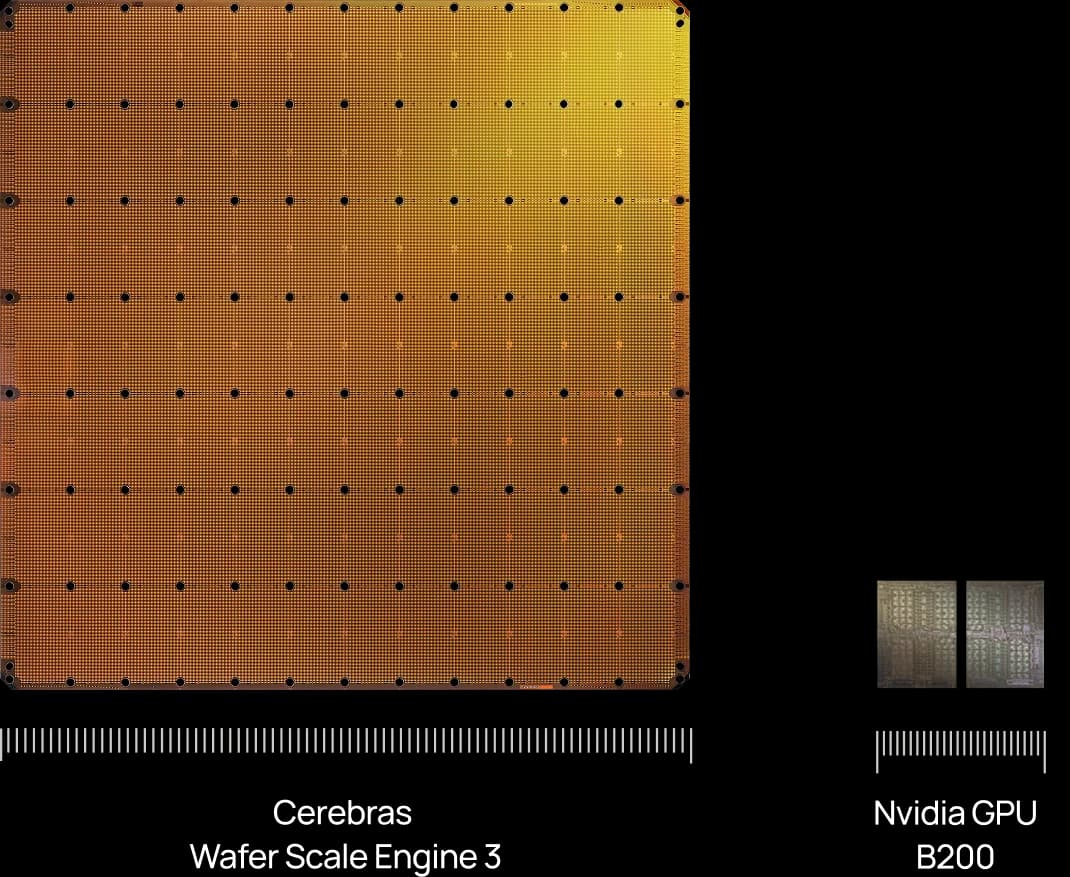
The part you actually use is Cerebras Inference, an OpenAI-compatible cloud that leans hard on speed: the pricing page claims it is 20 times faster than OpenAI and Anthropic, and the new CS-4 system pushes "up to 30x faster inference compared to GPUs." Concretely, Cerebras cites around 3,000 tokens per second on GPT OSS 120B and roughly 1,800 on Gemma 4 31B.
Pros: genuinely category-leading single-stream speed, a clean pay-per-token API, and named users including OpenAI, Meta, and Perplexity. Cons: wafer-scale systems are a heavy purchase if you go on-prem, and the public rate card only lists a couple of models, so budgeting for a specific workload takes a sales conversation.
Pricing and access: $5 in free credits to start, then a Developer tier from $10 with published per-token rates (GPT OSS 120B at $0.35 input / $0.75 output per million tokens), plus Enterprise and CS-4/CS-3 systems for sale. Verdict: if the single thing you care about is tokens-per-second on a model Cerebras serves, it is the strongest alternative on this list, and it competes with Groq head-on.
3. SambaNova: built for big open models and agents
Best for: running the largest open models fast, keeping many models resident for agent workloads, or serving inference inside your own data center.
SambaNova's whole 2026 pitch is "premium inference," and its differentiator is memory. Where Groq's design bets on huge SRAM bandwidth with tiny per-chip capacity, the SN50 RDU uses three tiers, 432 MB of on-chip SRAM, 64 GB of HBM2E, and up to 512 GB of DDR5. That lets multiple large models stay loaded and switch with minimal latency, which co-founder Kunle Olukotun calls the "Goldilocks Zone" for agents.
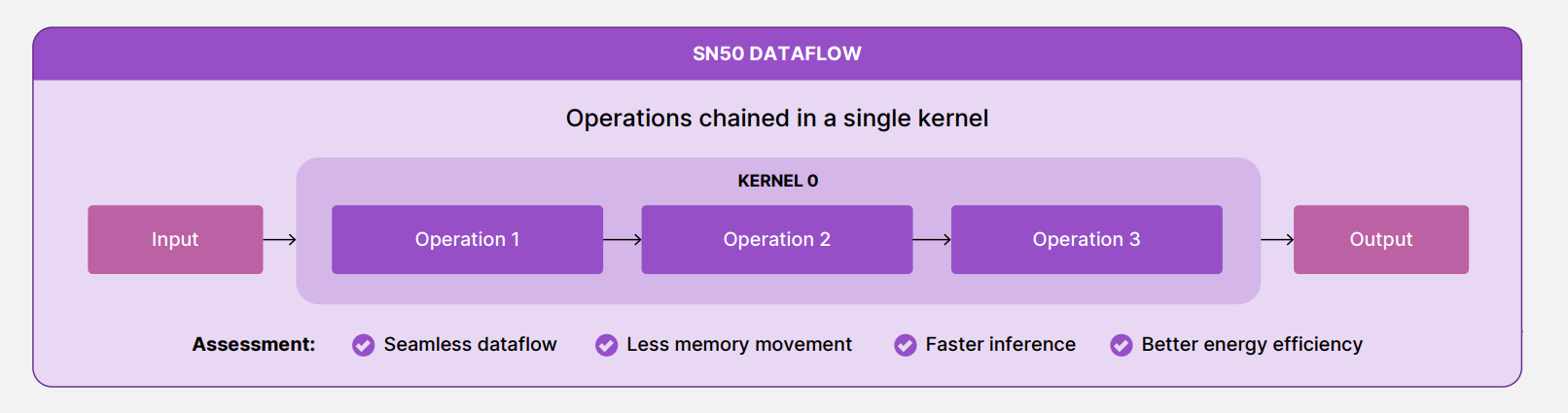
The speed proof point I trust most is third-party: Artificial Analysis clocked the SN50 running MiniMax M2.7 at up to 850 tokens per second on short context and over 450 on long context, calling it the fastest MiniMax in the world. There is also a smart nuance here: SambaNova increasingly pairs with NVIDIA rather than fighting it, using GPUs for the compute-heavy prefill phase and RDUs for the memory-bound decode phase.
Pros: three-tier memory suits huge models and multi-model agent workloads, published open-model rates, a real on-prem story for sovereign and enterprise deployments, and a fresh $1B raise at an $11B valuation. Cons: it is less of a pure "fastest tiny model" play than Groq or Cerebras, and the biggest deployments are contact-sales.
Pricing and access: SambaNova Cloud is a pay-per-token API (gpt-oss-120b at $0.22 input / $0.59 output per million tokens; DeepSeek-V3.1 at $3.00 / $4.50), with SambaRack systems for on-prem. Verdict: the pick when your workload is big open models or an agent that juggles several models at once, and doubly so if you need it in your own data center.
4. Google TPU (Ironwood): the hyperscaler answer
Best for: teams already on Google Cloud, and anyone who needs hyperscale serving capacity rather than a single low-latency box.
If Groq 3 LPX represents "NVIDIA's inference-first chip," Ironwood is Google's version of the same idea. Google calls Ironwood its seventh-generation TPU and "the first designed specifically for inference," built for the "age of inference" and reasoning models. Each chip delivers 4,614 FP8 TFLOPs and 192 GB of HBM at about 7.37 TB/s, and a full superpod links 9,216 liquid-cooled chips into 42.5 ExaFLOPs sharing 1.77 petabytes of HBM.
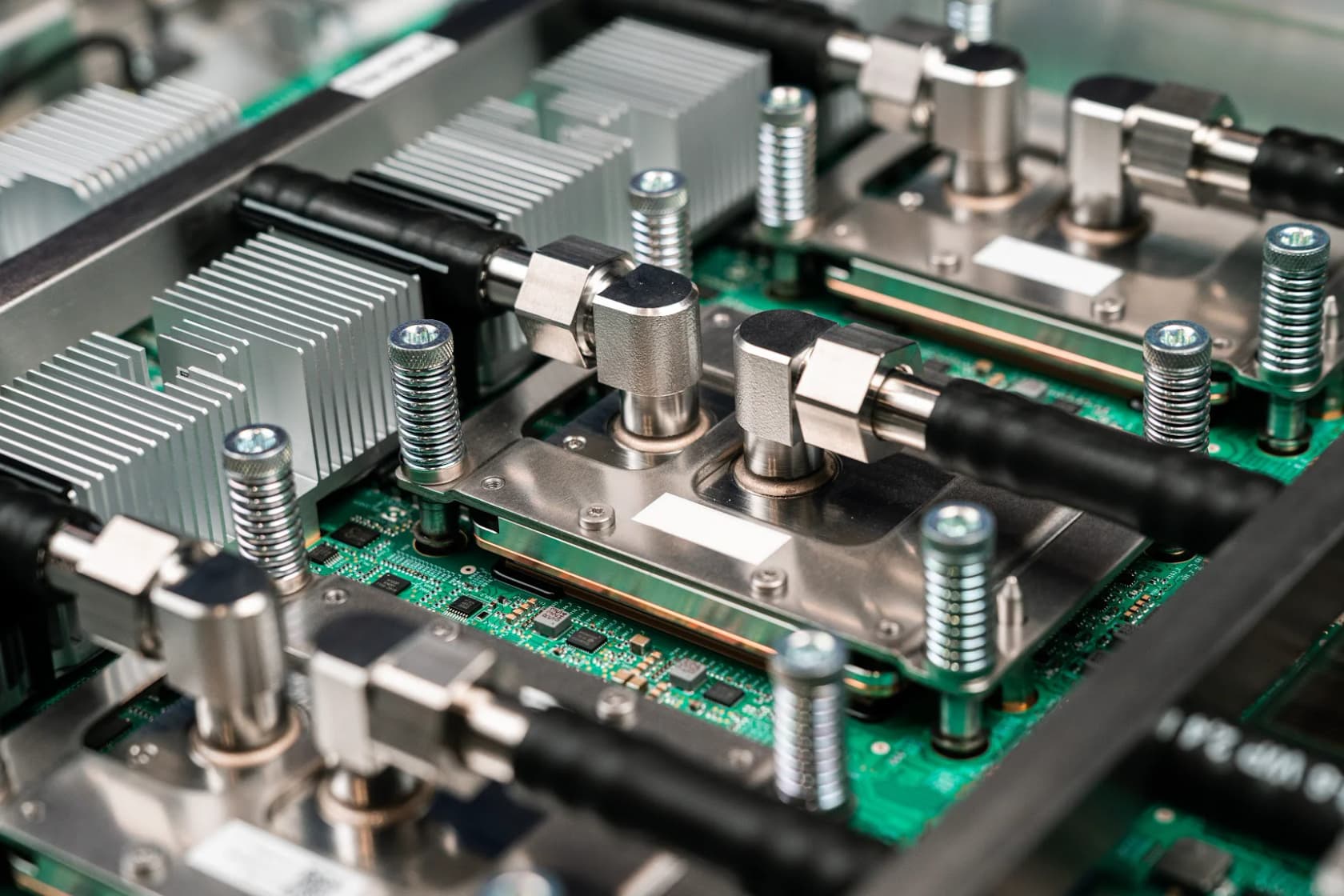
The sharpest contrast with Groq is the buying model: you cannot buy a TPU. It is rent-only, Google-Cloud-only, billed by the chip-hour. The scale story is real, though. Google's headline customer is Anthropic, which plans to access up to 1 million TPUs to train and serve Claude.
Pros: inference-first design, enormous pod scale, strong price-performance at scale, and a portability path (vLLM on TPU lets you move between GPU and TPU with minor config changes). Cons: total lock-in to Google Cloud, no card to buy, and on-demand Ironwood is not cheap.
Pricing and access: rented per chip-hour, from $12.00 on-demand in us-central1, dropping to $5.40 on a three-year commitment. Verdict: if you already live on Google Cloud or you need a serving fleet rather than a fast single box, Ironwood is the natural alternative. If you want silicon you control, it is the opposite of that.
5. AWS Trainium: the best token economics inside AWS
Best for: teams on AWS who want cheaper tokens and are happy to serve through Bedrock or EC2 rather than chase peak speed.
AWS's pitch is not "fastest," it is "cheapest per token," and that is a genuinely different axis. Trainium is now positioned for inference as well as training: AWS claims Trn2 instances deliver 30-40% better price-performance than its NVIDIA H200-based P5e and P5en instances, and the announced Trainium3 (its first 3nm AI chip) promises up to 4.4x the performance of Trn2 UltraServers. The older Inferentia2 line claims 40% better price-performance and 50% better performance-per-watt on Inf2 instances.
The marquee proof point is Anthropic, quoted directly on the Trainium page: a latency-optimized Claude 3.5 Haiku that runs 60% faster on Trainium2 via Bedrock, and Project Rainier, a cluster of hundreds of thousands of Trainium2 chips.
Pros: real cost savings inside AWS, deep integration with Bedrock and SageMaker, and rack-scale UltraServers (64 chips on Trn2, 144 on Trn3) for the largest jobs. Cons: AWS-only and rent-only, and it runs on the Neuron SDK rather than CUDA, so mainstream PyTorch and vLLM work move over easily but hand-written CUDA kernels need porting.
Pricing and access: rent via EC2 or consume through Bedrock. Inf2 has published hourly rates from $0.76 to $12.98 on-demand; Trn2 and Trn3 UltraServers are quote-based. Verdict: if your infrastructure already lives on AWS, this is the price-performance play, especially for steady serving where cost-per-token matters more than the last few milliseconds.
6. AMD Instinct: own the silicon, keep more memory
Best for: teams that want to buy merchant silicon, keep large models resident in memory, and avoid an NVIDIA-only stack.
If you want an actual GPU you can own, AMD is the main alternative to NVIDIA, and its whole argument for inference is memory. The shipping MI355X carries 288 GB of HBM3E at 8 TB/s and 10.1 PFLOPs of MXFP4, and the announced MI400 series pushes up to 432 GB of HBM4 at 23.3 TB/s. AMD claims its MI455X and MI430X offer 50% more memory capacity than NVIDIA's Vera Rubin GPU, which matters when a bigger model or a longer KV cache can sit on one chip instead of being split.
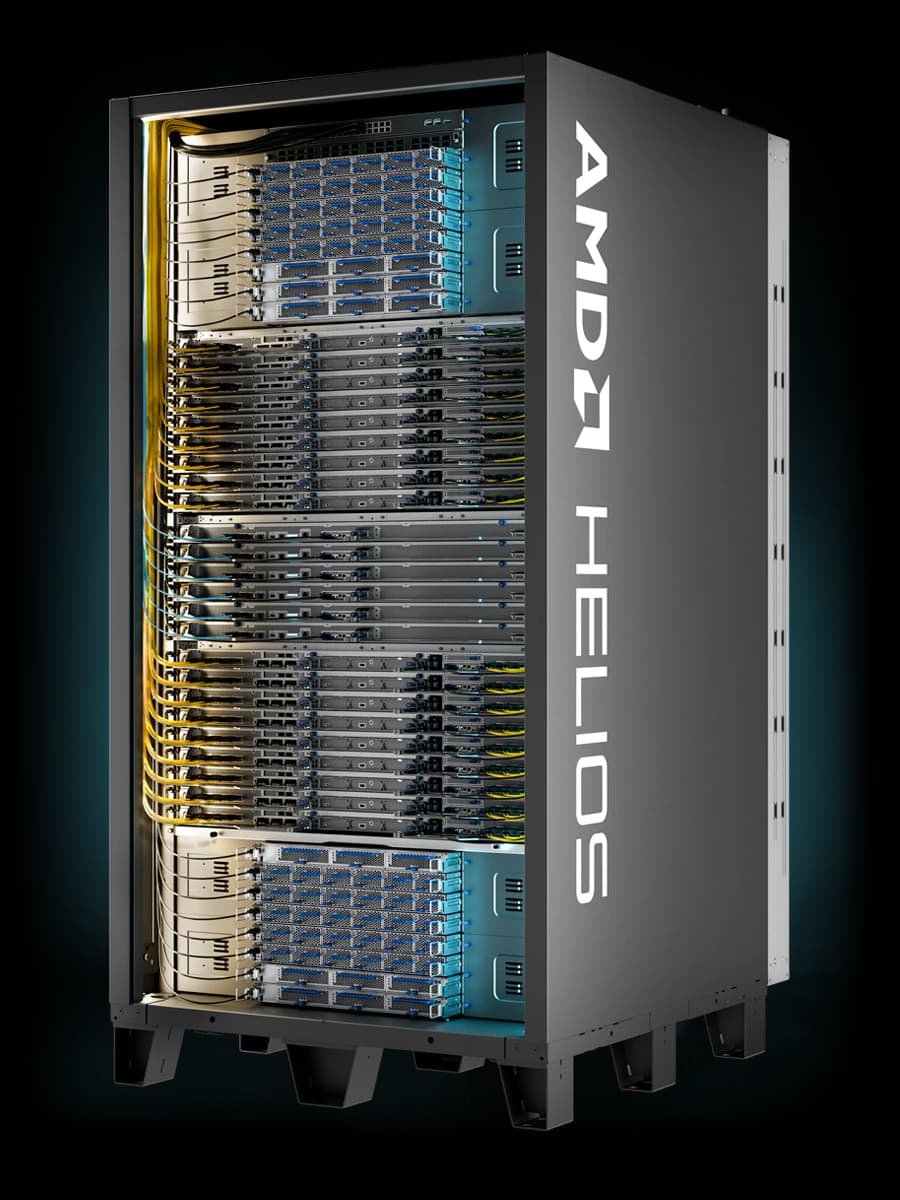
At rack scale, the AMD Helios system packs 72 MI455X GPUs for up to 2.9 exaFLOPS of MXFP4 and 31 TB of HBM4. The software side runs on the open ROCm stack, now at ROCm 10.0, with vLLM and SGLang for serving.
Pros: more HBM per GPU than the NVIDIA equivalent, an open software stack, real rack-scale options, and no proprietary-fabric lock-in. Cons: ROCm has closed a lot of ground but the honest knock is still ecosystem maturity relative to CUDA, and some of the strongest specs are on the not-yet-shipping MI400 generation.
Pricing and access: buy through OEMs, or test-drive MI300X on the AMD Developer Cloud via partners like DigitalOcean and Vultr. Verdict: the default choice if you want to own inference silicon, run memory-hungry models, and keep your options open on software. It competes on capacity and openness, not on being the fastest single stream.
7. Intel Gaudi 3: value and standard Ethernet
Best for: cost-sensitive buyers who want a capable accelerator and would rather scale over standard Ethernet than a proprietary fabric.
Intel's Gaudi 3 plays the value card, and its signature bet is networking. Every Gaudi 3 accelerator has 24 ports of 200 GbE RoCE built onto the card, for 1,200 GB/s of bidirectional bandwidth over standard Ethernet. Intel's framing is blunt about the trade it wants you to make: avoid "locked, proprietary technologies such as NVLink, NVSwitch, and InfiniBand" and use the network gear you already own. On the compute side it brings 128 GB of HBM at 3.7 TB/s and 1.8 PFLOPS of FP8.
Worth knowing for the roadmap: Gaudi 3 is late in its line. Intel's stated go-forward inference chip is a new GPU, "Crescent Island", built on the Xe3P architecture with 160 GB of LPDDR5X and air cooling, with customer sampling expected in the second half of 2026. So if you are buying Gaudi 3 today, buy it for value now rather than a long roadmap.
Pros: aggressive price positioning, big HBM per card, and standard Ethernet that sidesteps proprietary interconnect lock-in. Cons: it competes on cost rather than raw speed, and the roadmap clearly moves to a different chip line, so it is a value buy, not a long-term bet.
Pricing and access: buy via OEMs like Dell, HPE, and Supermicro, or use it on IBM Cloud, which pitches it under a "half the cost" line. Verdict: a sensible pick if the budget is tight and your data center is Ethernet-native. Just go in knowing Crescent Island is Intel's real inference future.
8. d-Matrix Corsair: the specialist betting on memory
Best for: latency-obsessed teams that can deploy their own hardware and want to bet early on a purpose-built inference architecture.
d-Matrix is the wildcard, and it is aiming at the exact problem LPX targets: ultra-low-latency, small-batch token generation for agentic and reasoning workloads. Its Corsair card uses Digital In-Memory Compute, placing compute right next to on-chip SRAM to dodge the memory wall. The headline numbers are eye-catching: 60,000 tokens per second at 1 ms per token for Llama3 8B in a single server, and 30,000 tokens per second at 2 ms for Llama3 70B in a rack, with d-Matrix claiming roughly 10x the interactive speed and up to 5x the energy efficiency of an H100 (its own projections).
Corsair entered full production in June 2026, and the company raised a $275 million Series C in November 2025 (reported at a roughly $2 billion valuation), with backers including Microsoft's M12 and Temasek.
Pros: an architecture designed from scratch for low-latency inference, strong efficiency claims, and serious funding behind it. Cons: it is hardware-only with no public API, its numbers are vendor projections rather than independent tests, and betting on a startup's silicon is a different risk than renting from a hyperscaler.
Pricing and access: buy the cards, servers, or SquadRack systems; there is no self-serve cloud endpoint. Verdict: the most interesting long-shot on this list. If you have the team to stand up silicon and you want to be early on in-memory compute, it is worth a serious look. For everyone else, it is one to watch.
The real difference between these chips is the memory bet
If you step back from the marketing, the eight alternatives sort into three camps by one decision: how they handle memory. That single choice explains most of the spec-sheet differences you have just read.
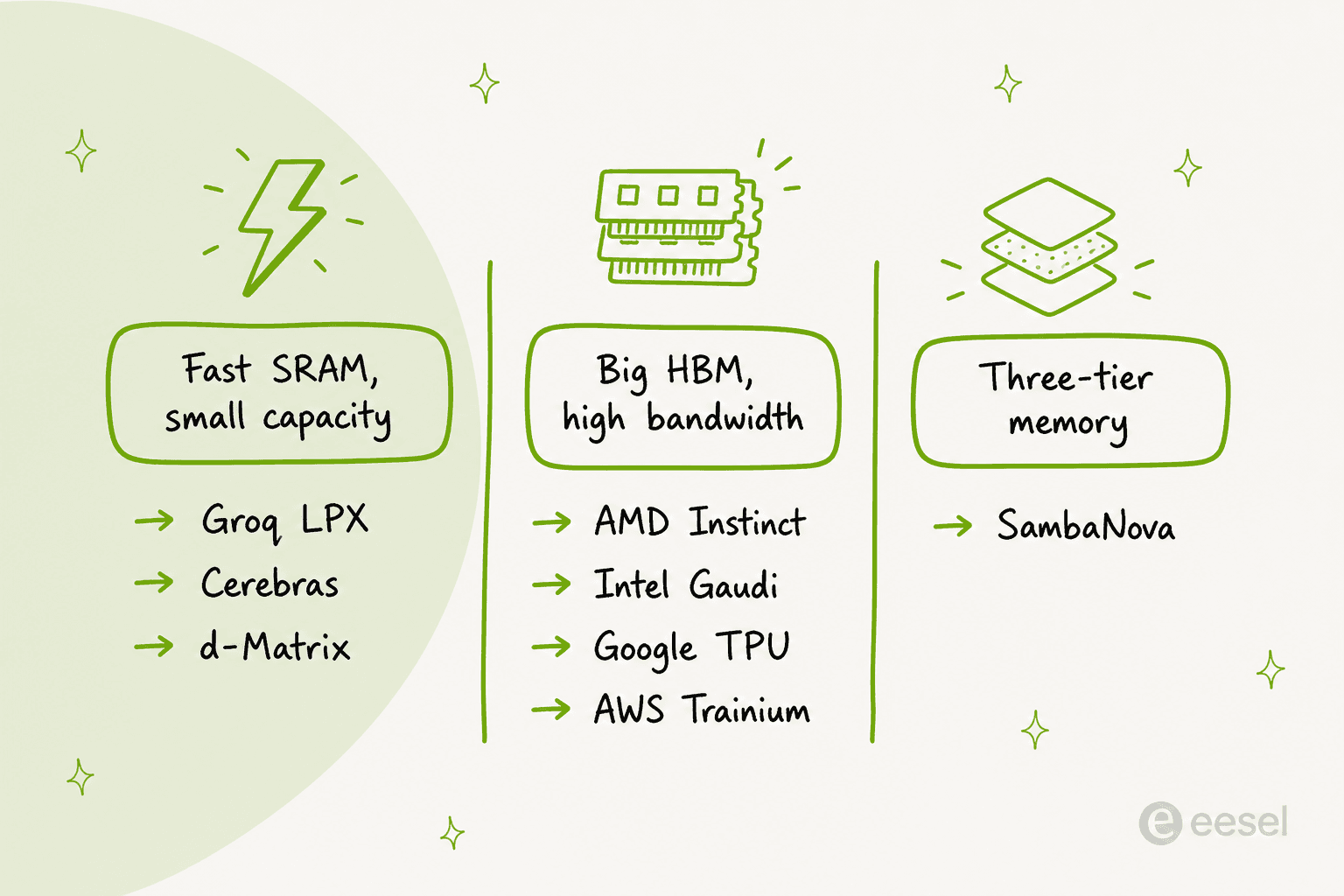
- Fast SRAM, small capacity. Groq, Cerebras, and d-Matrix keep the working data on ultra-fast on-chip SRAM. That is what makes token generation feel instant, but each chip holds very little, so you need many of them to fit a big model.
- Big HBM, high bandwidth. AMD, Intel, Google, and AWS load up on high-bandwidth memory per accelerator. That lets a large model and a long KV cache sit on fewer chips, which is why AMD leans so hard on its memory-per-GPU advantage.
- Three-tier memory. SambaNova splits the difference with SRAM, HBM, and DDR5, so it can keep many large models resident and switch between them fast, which is the property agent workloads reward.
There is no universally right answer here. If your workload is fast chat on a small model, the SRAM camp wins. If it is a giant model or a many-model agent, capacity wins. Naming which camp you are in tells you which of the eight to shortlist faster than any benchmark will.
The bigger question: you're probably not buying a rack
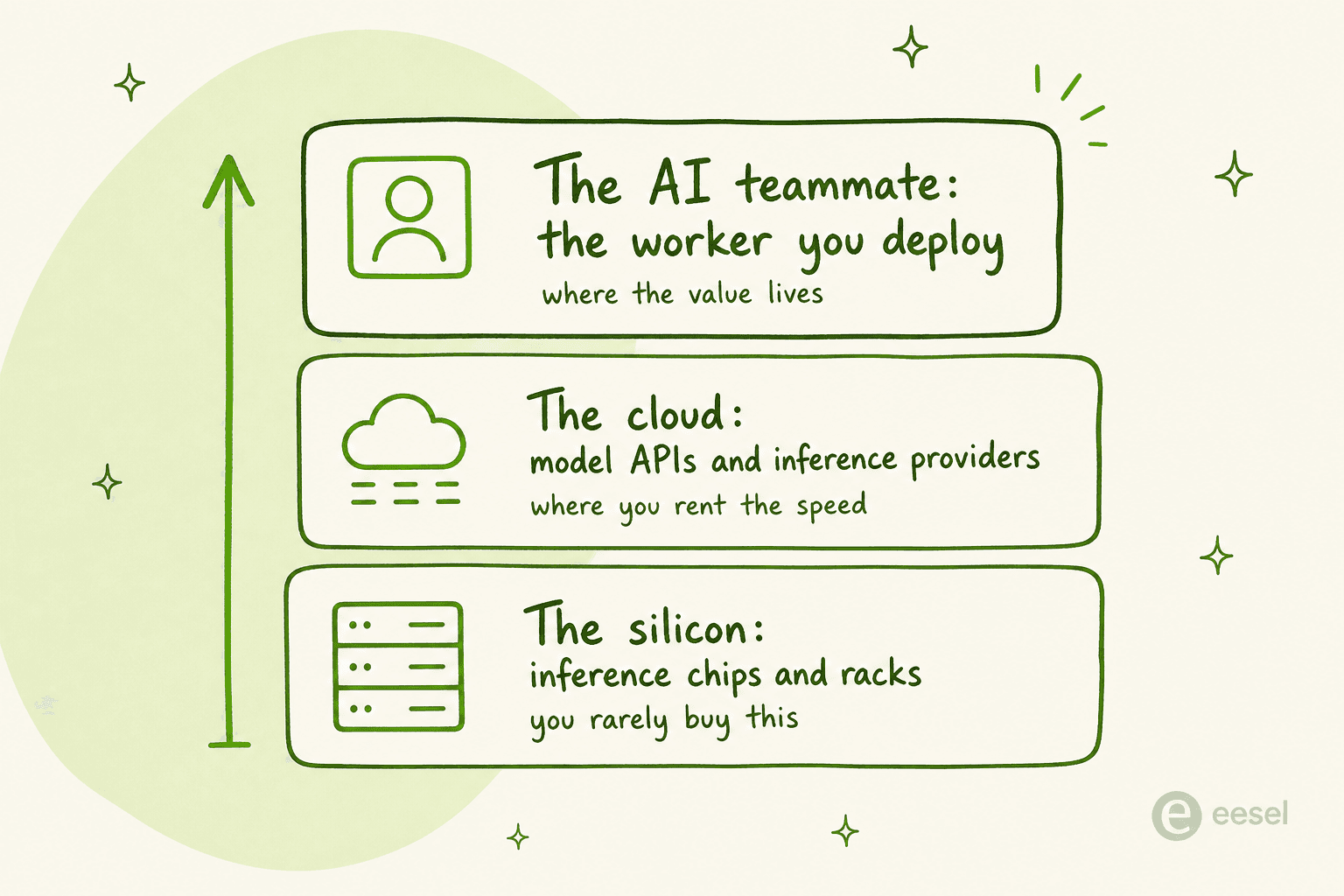
Here is the part I most want to be straight about, because it is easy to get lost in petaflops. Unless you run a cloud or a very large AI platform, you are not going to buy Groq 3 LPX or most of its alternatives. This is infrastructure that sits several layers below where the work actually happens. You will feel it as faster, cheaper tokens showing up in the model APIs and clouds you already use, the same way you never bought a GPU to use an AI agent.
And that shift in workloads is exactly why all this silicon exists in the first place. As one analyst put it on X:
"Nvidia moving its Groq 3 LPX inference accelerator into full production signals a key shift from model training to continuous agentic AI workloads."
The useful reframe is that the chip is the engine, and the thing you actually deploy is the worker riding on top of it. Faster inference makes agents snappier and cheaper to run, which lowers the bar for putting real automation into production and shifts the cost math against doing the work by hand, whether that is a coding agent, a research agent, or an AI helpdesk agent working your support queue. The hardware race is about making that layer viable at scale. The value still lives in the layer. If you want to understand why latency is so sensitive in the first place, we dug into LLM inference costs separately.
Where eesel fits, and why it doesn't care which chip you picked
Every chip on this list is plumbing. eesel is what you hire to do the job on top of it. eesel is an AI teammate platform: instead of provisioning inference or wiring up a pipeline, you bring on a ready-to-work teammate for a specific role and plug it into your apps. The current roster is an AI helpdesk teammate that joins your support queue as far more than a basic support chatbot, and an AI blog writer that produces content like this piece.
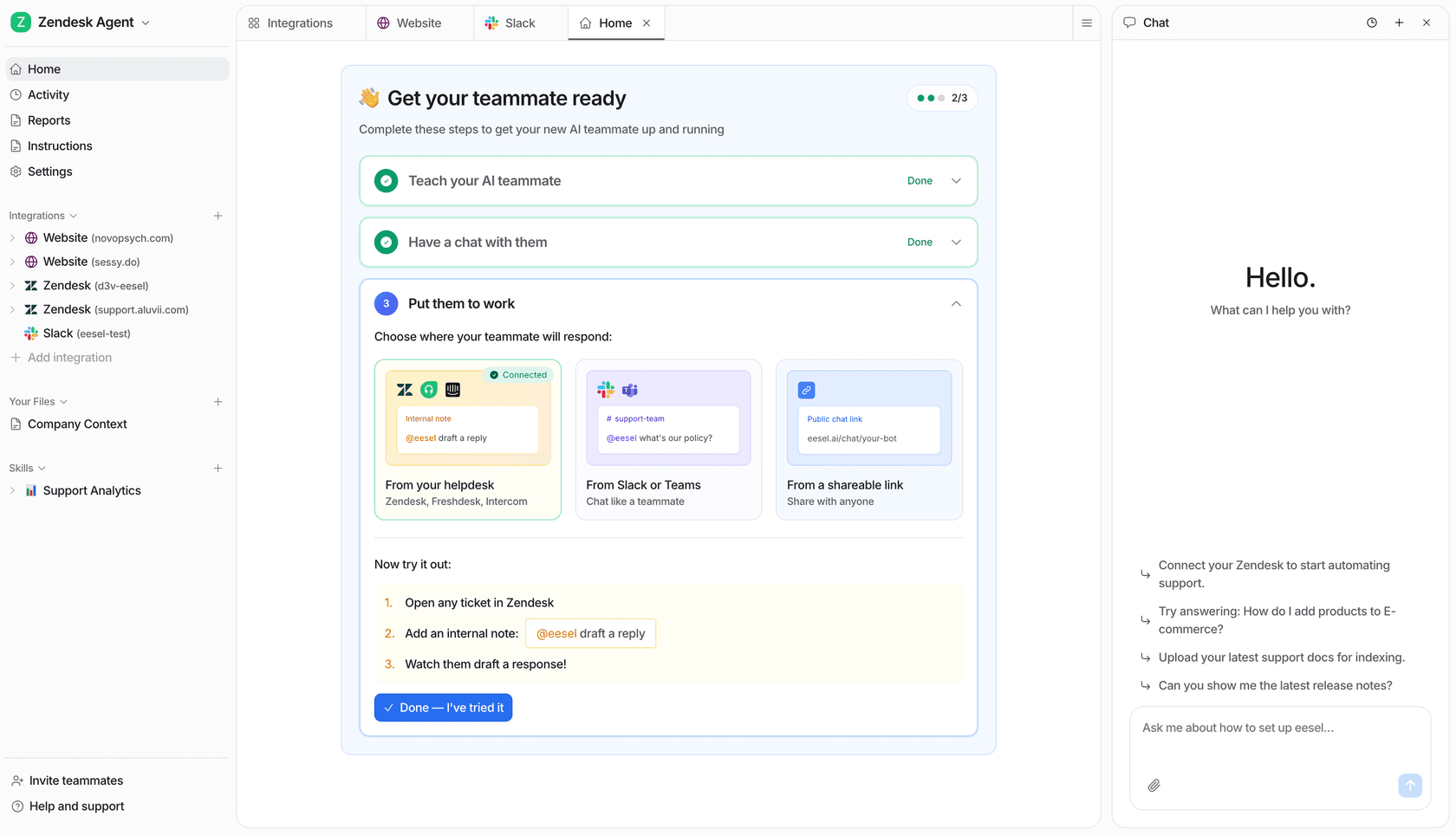
The reason the chip choice does not really touch you is that eesel runs on whatever inference sits underneath, and the thing that actually decides whether it is good is not tokens-per-second. It is accuracy. The years we have spent running AI on live support queues taught us the unglamorous half of this: a support teammate that answers in one second instead of eight is the whole experience for the customer waiting, but speed only helps if the answer is right. That is the difference between an agent that actually deflects tier-1 tickets and one that just frustrates people, which is why eesel simulates a rollout against your past tickets before it ever replies to a live customer. All the silicon in the world does not fix a confident wrong answer. If you would rather deploy the teammate than shop for a rack, you can try eesel for free.