Customer success vs customer service: what's the difference?

Riellvriany Indriawan

Katelin Teen
Last edited July 6, 2026

What customer service actually is
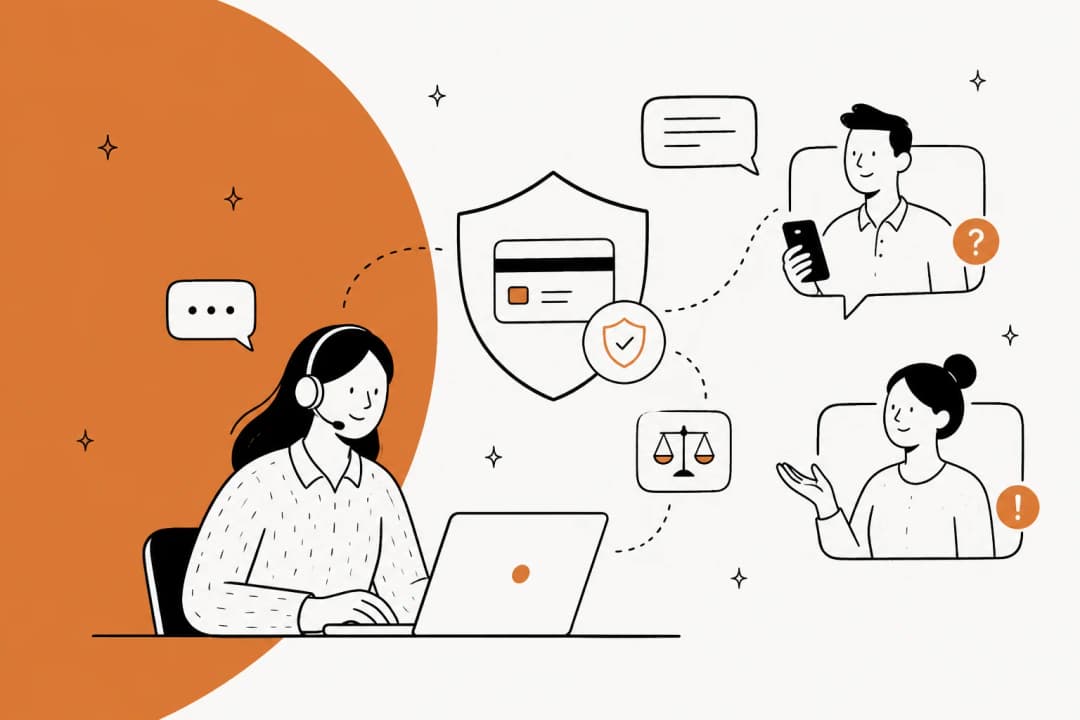
Customer service is the reactive front line. A customer runs into something they can't figure out, a broken checkout, a confusing setting, a charge they don't recognise, and they reach out. Your job is to resolve it, fast and well. That's it, and it's harder than it sounds.
I work eesel's support queue, so this is the part I live in every day. The whole discipline of customer service management is built around inbound volume: routing tickets to the right person, hitting a first-response target, keeping the tone right when someone's already annoyed, and closing the loop. Good service is invisible, the customer barely remembers it. Bad service is the story they tell three friends.
The work is transactional in the honest sense: each ticket has a start and an end. It flows through a helpdesk (Zendesk, Freshdesk, Gorgias, Front), and it's judged on speed and resolution. The customer service mindset is "make this right, now." A big chunk of that volume is repetitive, the same twenty questions over and over, which is exactly why AI in customer service landed here first.
What customer success actually is
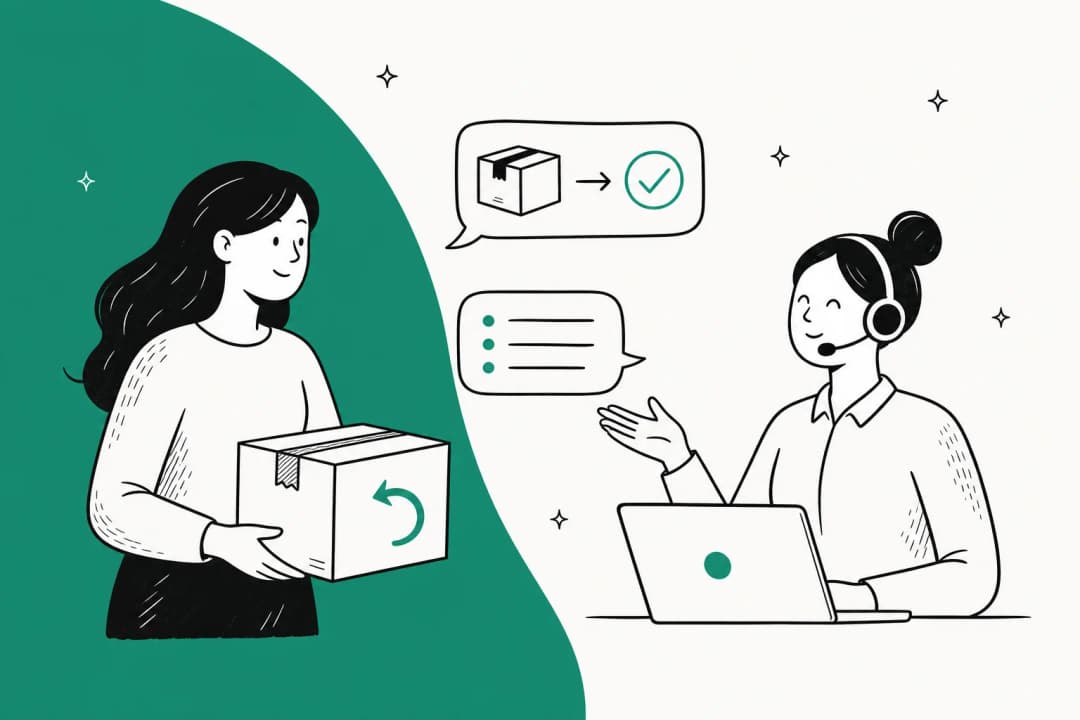
Customer success flips the direction. Instead of waiting for a customer to hit a wall, it works ahead of the wall. The goal isn't "resolve this ticket," it's "make sure this customer reaches the outcome they bought us for, so they renew and grow."
That means owning the relationship across its whole life: onboarding a new account so they actually adopt the product, checking in before a renewal instead of after a cancellation, spotting the account that's gone quiet, and nudging the customer toward the feature that'll make them stick. It's relationship work, not ticket work. A customer success manager measures their week in proactive outreach and account health, not in tickets closed.
This is why customer success is a big deal in SaaS and B2B specifically: when revenue is recurring, keeping a customer is worth far more than winning a new one, and a single churned enterprise account can outweigh a month of new signups. Success is the team that owns that number.
Customer service vs customer success: the differences at a glance
Here's the fastest way to see the split. Same customer, same company, two very different jobs.
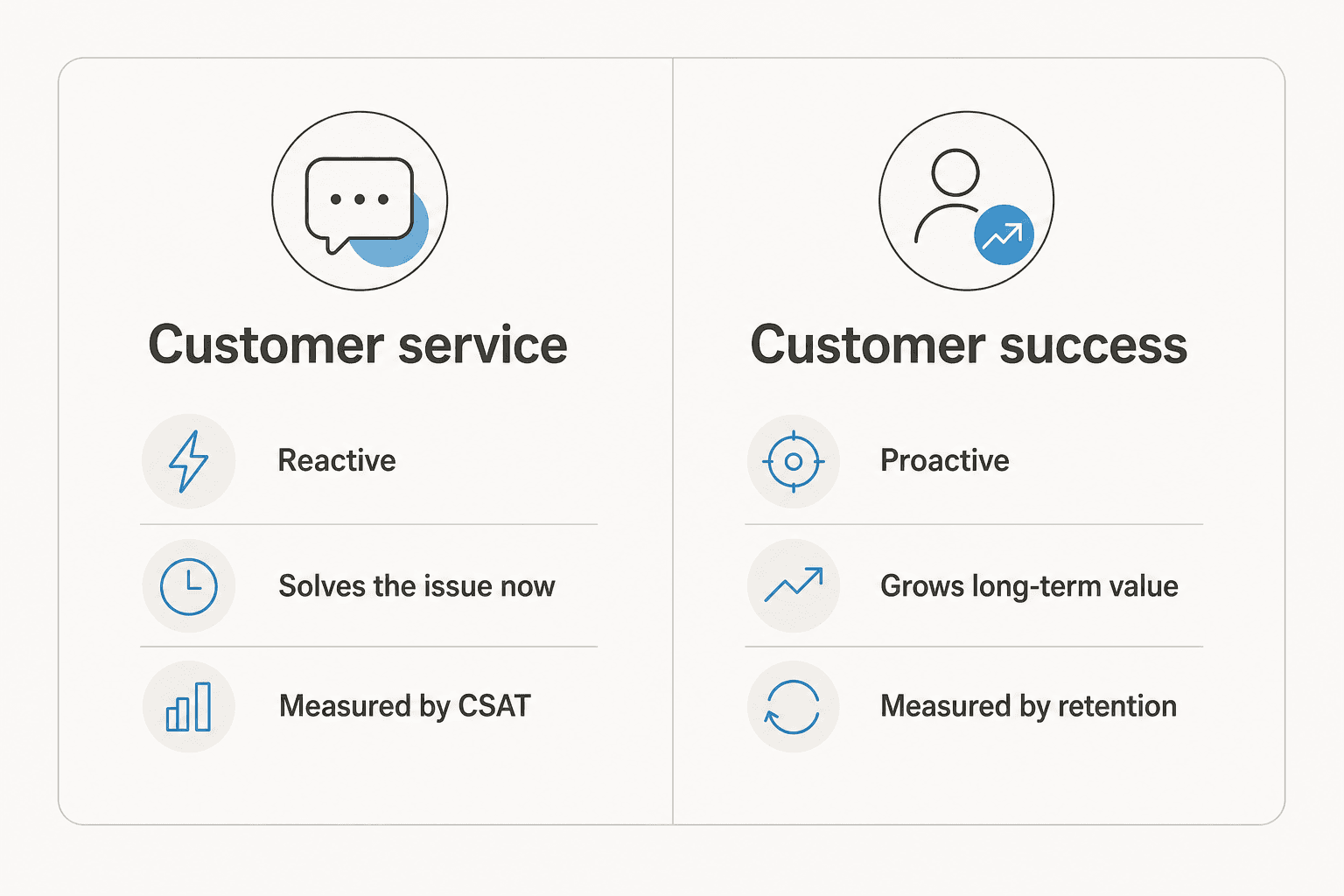
| Dimension | Customer service | Customer success |
|---|---|---|
| Posture | Reactive, responds to requests | Proactive, works ahead of problems |
| Trigger | Customer reaches out | Team reaches out (or a signal fires) |
| Time horizon | The single issue, right now | The whole customer lifecycle |
| Unit of work | The ticket or conversation | The account or relationship |
| Core question | "How do I fix this?" | "How do I make this customer win?" |
| Primary metrics | CSAT, first response time, resolution rate | Retention, net revenue retention, churn |
| Owns | Support quality | Renewal and expansion revenue |
| Typical tooling | Helpdesk / ticketing | CS platform, health scores, CRM |
| Shows up | Day one, every company | Later, mostly SaaS and B2B |
The row that matters most is the last metric one. Service is judged on how well it handles what comes in; success is judged on whether customers stay and grow. You can score a perfect CSAT and still churn an account, because a customer can be happy with your replies and still not be getting value from the product. That gap is the entire reason customer success exists.
Where the two roles overlap
For all the clean lines above, the two blur in practice, and pretending they don't is how teams end up with silos that point fingers at each other.
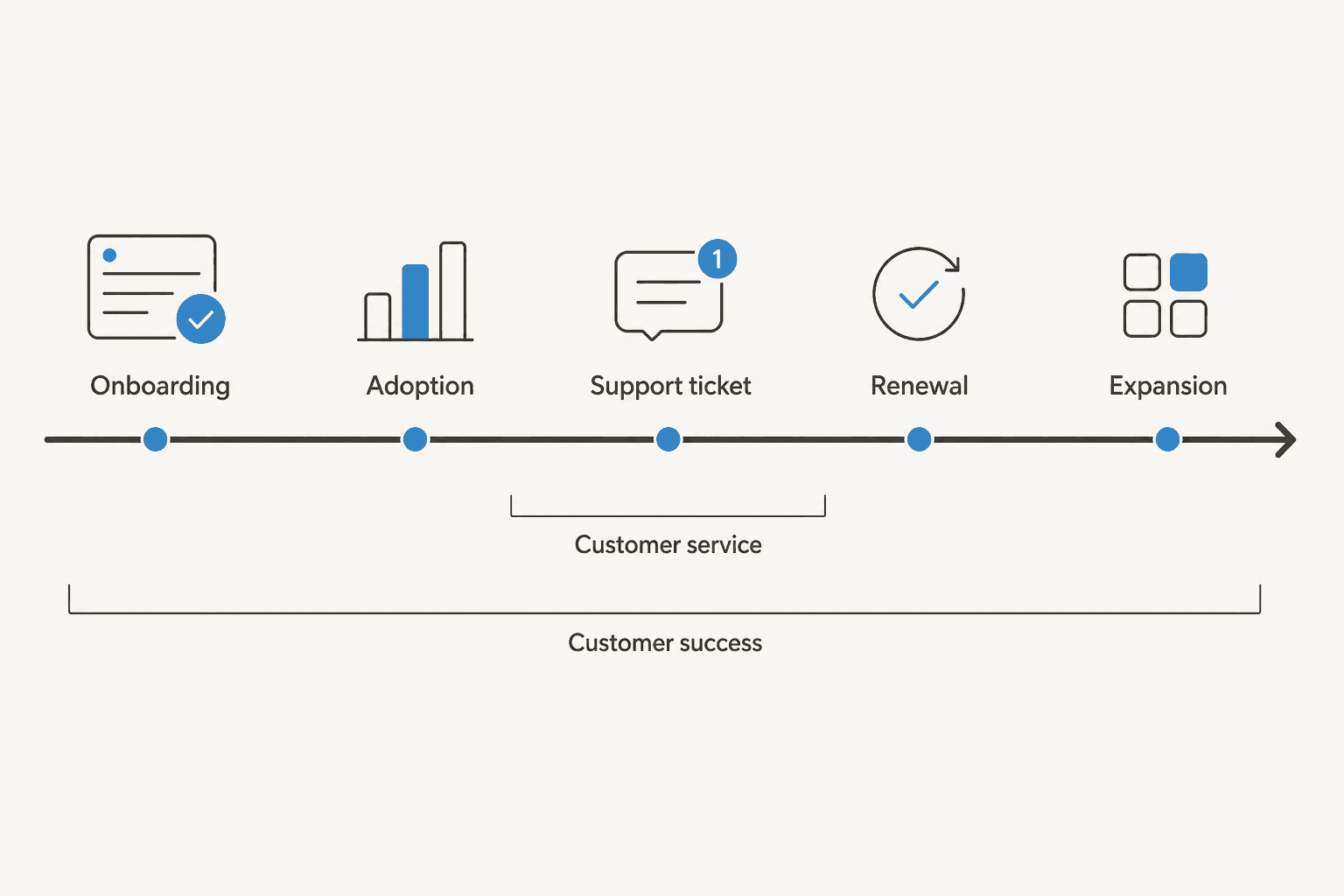
Look at the lifecycle and you see it: customer service owns one recurring moment (the support ticket), but that moment sits inside the longer arc that customer success owns. Every service interaction is a data point about account health. A customer who's filed five frustrated tickets this month is a churn risk whether or not anyone in success has noticed yet. A support escalation handled badly is a renewal conversation gone wrong three months early.
The best teams treat this as one continuous signal, not a handoff between departments. The customer service problem-solving that happens in the queue is raw material for success: recurring pain points, feature confusion, the exact wording customers use when they're stuck. When service and success share that context, service stops being a cost centre and starts being the earliest warning system success has.
How the metrics actually differ
If you want to know which discipline a team is really running, look at what they measure. It's the cleanest tell.
Customer service metrics are operational and short-cycle. CSAT after a resolved ticket, first response time, average handle time, resolution rate, and customer effort score, which asks how hard the customer had to work to get helped. These tell you whether the queue is healthy this week. They're the service KPIs a support lead watches daily.
Customer success metrics are outcome and long-cycle. Gross and net retention, churn rate, renewal rate, product adoption, and account health scores. These tell you whether the relationship is healthy this quarter. The trap is that the two can disagree: a strong week of CSAT doesn't guarantee a strong quarter of retention. That's why a mature team reads them together, using feedback signals from the service side as a leading indicator for the success side, rather than waiting for the churn number to confirm the bad news after it's too late to act.
Where AI changes the equation
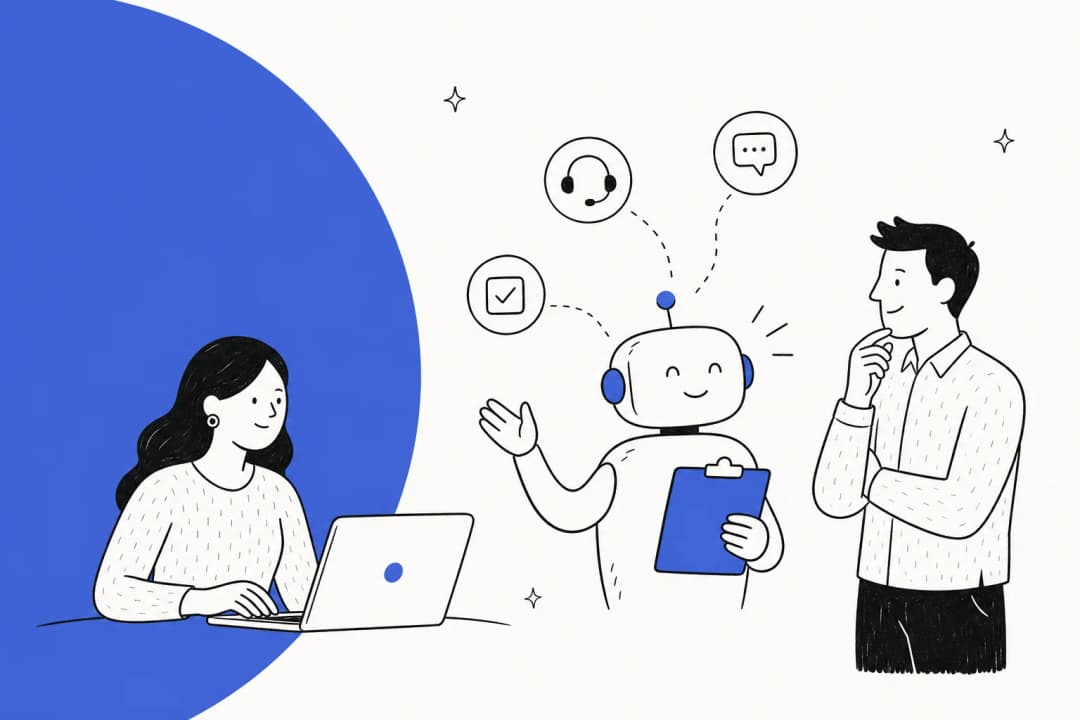
Here's the shift that makes the service-versus-success debate feel a little dated. For years the two were separate because the work was separate: different tools, different teams, different data. AI collapses a lot of that, because the same layer that handles service tickets is sitting on exactly the signals success needs.
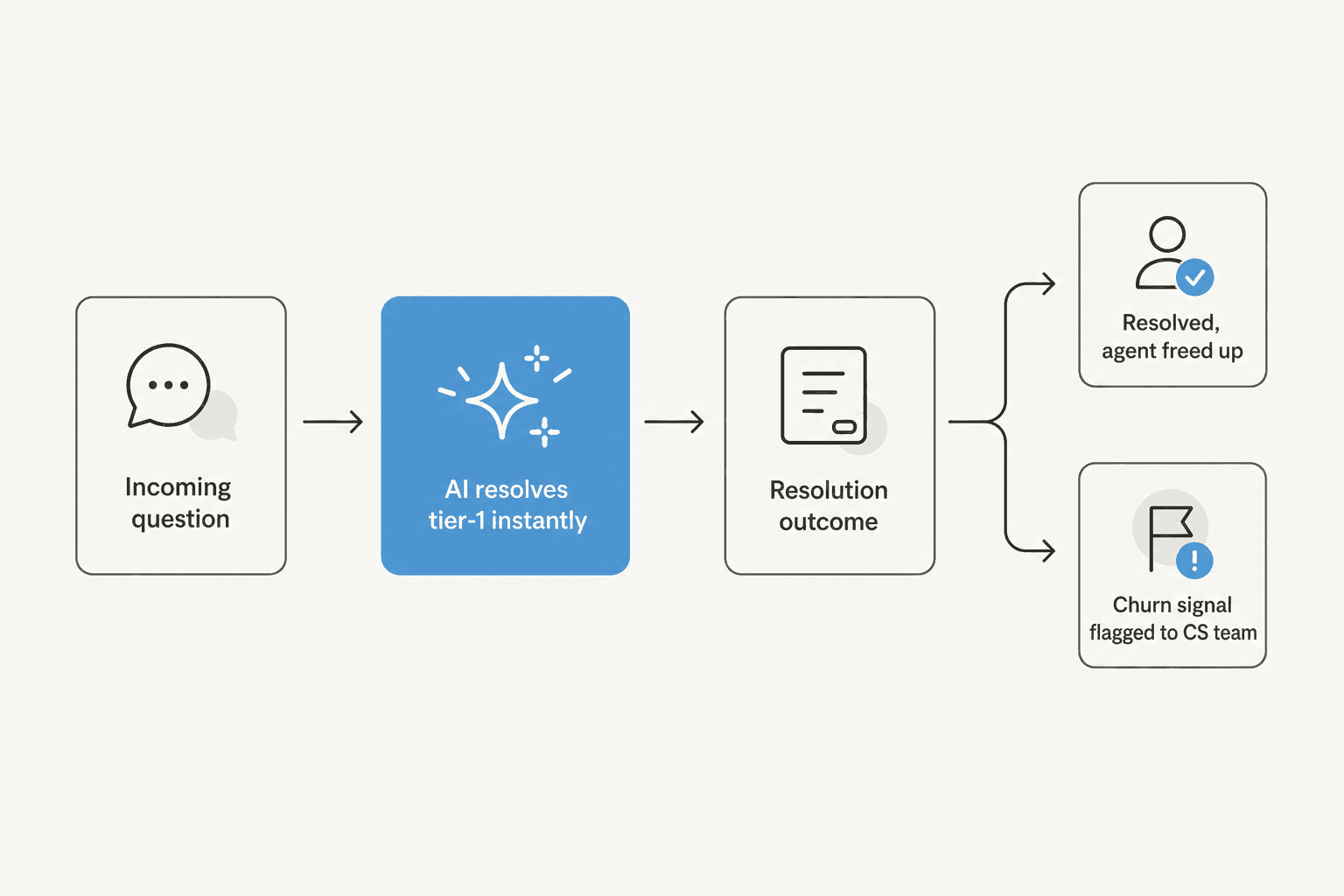
We've spent years putting AI agents on live support queues, and the pattern is consistent: an AI agent trained on your real ticket history resolves a big share of tier-1 volume instantly, which is a pure service win, and in doing so it's reading every conversation for the churn language, repeated frustration, and product confusion that a success team would kill to see earlier.
One of our customers put the crossover better than we could. As Jon Miron described it in the Yellowdig case study:
"It feels like a partnership, rather than a vendor relationship... Recently, a new customer success hire joked that our eesel AI bot was their best friend during onboarding and interviewing."
Jon Miron, Director of Support & Operations, Yellowdig
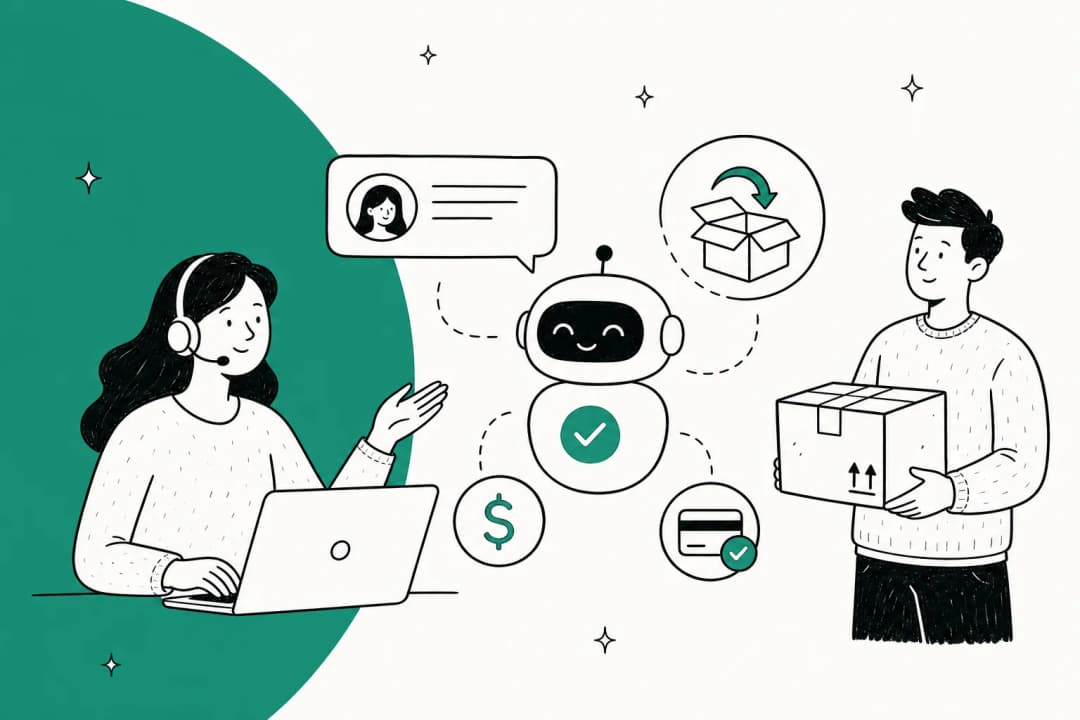
That's the whole point in one sentence: a tool built to handle service tickets became the thing a customer success hire leaned on. When the AI detects a churn risk buried in a support chat, or handles the cancellation-and-retention moment with the right tone, service work is doing success work. The teams stay distinct, but the system underneath them doesn't have to be.
Which one does your team need first?
Practical answer, since that's usually the real question hiding under "what's the difference."
If you're early, or you sell a lower-touch product, you need customer service dialled in first. Tickets arrive whether or not you're ready, and a slow, messy queue poisons everything downstream, including retention. Get response times and resolution right, set clear service standards, and automate the repetitive tier-1 volume so your humans handle the hard stuff.
If you sell recurring, higher-value contracts, especially B2B or SaaS, you need a real customer success function on top of solid service, and you needed it a quarter ago. The best customer success tooling won't save you if the underlying service experience is broken, so the order still holds: service is the foundation, success is the floor you build on it. And the smartest teams don't buy two disconnected stacks, they run one AI layer that serves both, so a signal caught in the queue reaches the person who can act on it.
Try eesel for the service half (and the success signals)
If the takeaway is "get service right first, then let it feed success," that's the exact job eesel was built for. It's an AI agent that plugs into your existing helpdesk, Zendesk, Freshdesk, Gorgias, Front, and learns from your past tickets, help docs, and macros on day one, then resolves tier-1 volume and drafts replies for the rest.

What makes it useful for the success side too is the simulation mode: before you go live, you run the agent against your real historical tickets to see exactly what it would have handled and where the gaps are, so you're reading account patterns, not guessing. One customer, Gridwise, saw eesel resolve 73% of tier-1 requests in the first month. You can start free with 100 credits, no credit card, and simulate against your own tickets before it ever touches a customer. That's the closest thing to running both disciplines off one system.
Frequently Asked Questions
What is the difference between customer success and customer service?
Is customer success just a rebranded name for customer service?
Which comes first, customer service or customer success?
What metrics does each team own?
Can one AI tool support both customer service and customer success?


Article by
Riellvriany Indriawan
Riell is a designer and writer at eesel AI with about two years of experience researching CX platforms, AI chatbots, and helpdesk software. She combines her design background with a sharp eye for how these tools actually look and feel in practice — making her comparisons unusually visual and user-focused.