If you’re a Customer Success Manager, you probably feel like you're trying to be everywhere at once. Your day is a constant juggle of customer calls, logging notes, digging for answers, and tackling an admin list that never seems to shrink. It makes sense that most of us are looking for a smarter way to get things done.
AI isn't some sci-fi concept anymore; it's here and it’s genuinely useful. More than half of CS teams (per Gainsight) are already using it in some way. The problem is, many are stuck with basic tools that don't do much more than scratch the surface.
The real shift happens when AI starts handling the tedious parts of your job, freeing you up to focus on what actually matters: building relationships and thinking about the bigger picture. This article cuts through the noise and gives you a straight-up look at six of the best AI tools that customer success teams are using to make their work easier and more impactful.
What are AI tools for customer success?
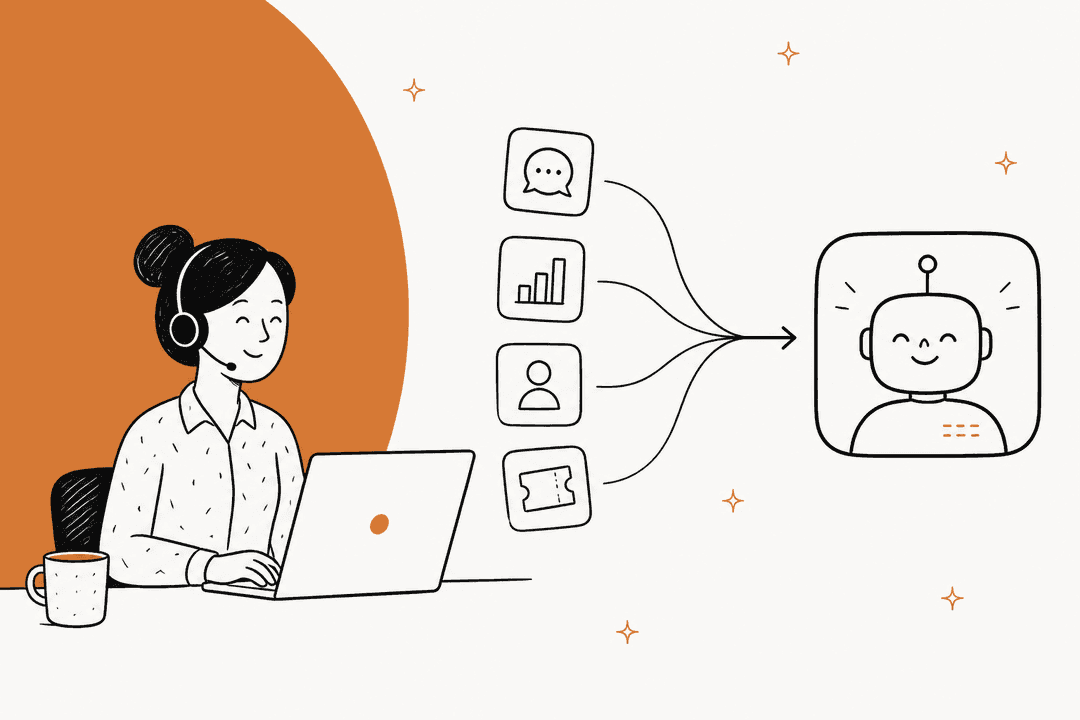
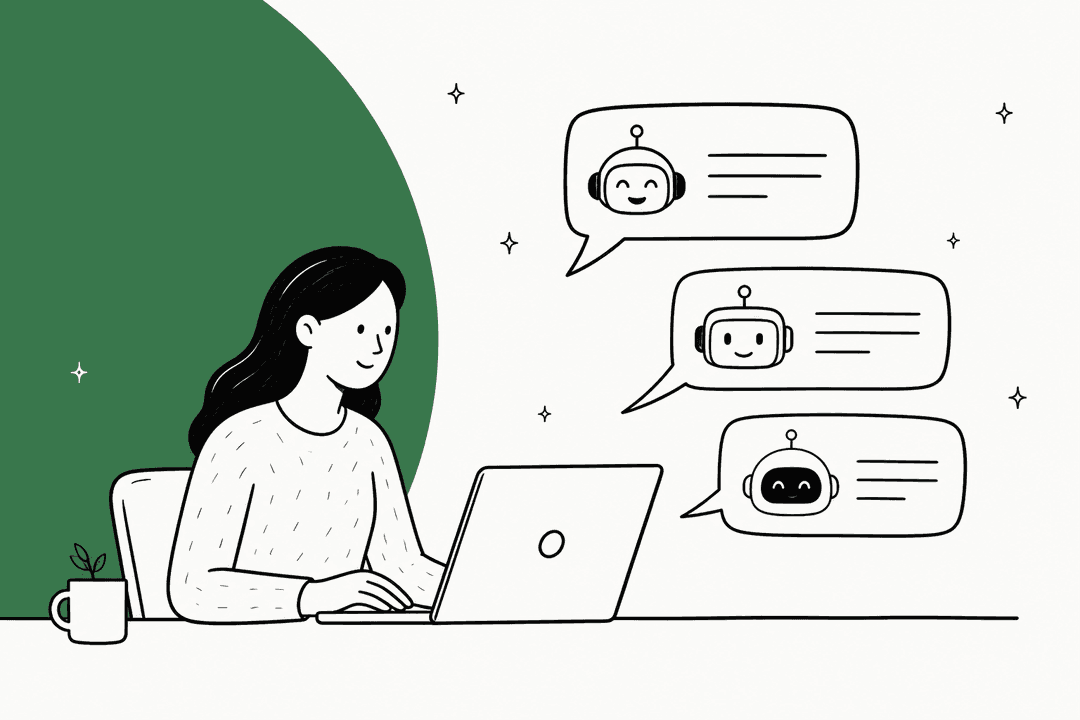
When we talk about AI tools for customer success, we’re not just talking about your average chatbot. These are platforms that connect to the places you keep your data (think CRM, helpdesk, and call recordings) to help in a few key ways, as illustrated in the graphic below:
-
Automate the repetitive stuff like summarizing calls, drafting emails, and answering the same questions for the hundredth time.
-
Analyze customer data to spot risks and opportunities you might otherwise miss.
-
Personalize how you talk to customers at scale, so you don't lose that human touch.
The point isn't to replace you. It’s to help you move from being a reactive problem-solver to a proactive advisor by giving you back time and offering up better insights. The best tools handle the grunt work so you can do the high-value work that builds relationships.
How we chose the best AI tools for customer success
I’ve spent a lot of time in the trenches with different platforms. To put this list together, I focused on what really makes a difference for a busy CS team. Here’s what I looked for:
-
Getting started: How quickly can you actually get it up and running? I picked tools that don’t require a six-month implementation project before you see any value.
-
Core job: Does the tool solve a real, specific problem for CS teams? Whether it’s automating meeting notes or predicting churn, it needs to do its main job well.
-
Plays well with others: Does it connect easily with the tools you already use, like Zendesk, Salesforce, or Slack? A tool that lives on its own island is just more work.
-
Cost and growth: Can the tool grow with your team? And is the pricing clear and predictable, or are you going to get hit with a surprise bill?
Comparing the best AI tools for customer success
For anyone who just wants the highlights, here’s a quick breakdown of how the top tools compare.
| Tool | Best For | Key Feature | Pricing Model | Integrates with Helpdesk? |
|---|---|---|---|---|
| eesel AI | Self-serve automation for existing helpdesks | AI agent, draft replies & triage | Free plan, then $299/mo | Yes (Zendesk, etc.) |
| Gong | Conversation intelligence & coaching | AI call analysis & topic tagging | Custom Quote | Limited (syncs data to CRM) |
| ChurnZero | All-in-one CS platform | Customer health scoring & journey automation | Not Publicly Available | Yes |
| UpdateAI | CS-specific meeting assistance | Voice of Customer (VoC) topic tracking | Acquired by Gainsight | N/A |
| Lantern | Proactive expansion & retention | Agentic AI for champion & intent tracking | Free plan; Growth $300/mo | Yes (via CRM) |
| ChatGPT | General-purpose task assistance | Versatile content & email generation | Free & Paid Tiers | No (Manual copy/paste) |
The 6 best AI tools for customer success teams in 2025
Let's get into the details of what makes each of these tools a solid pick for any customer success team trying to level up.
1. eesel AI
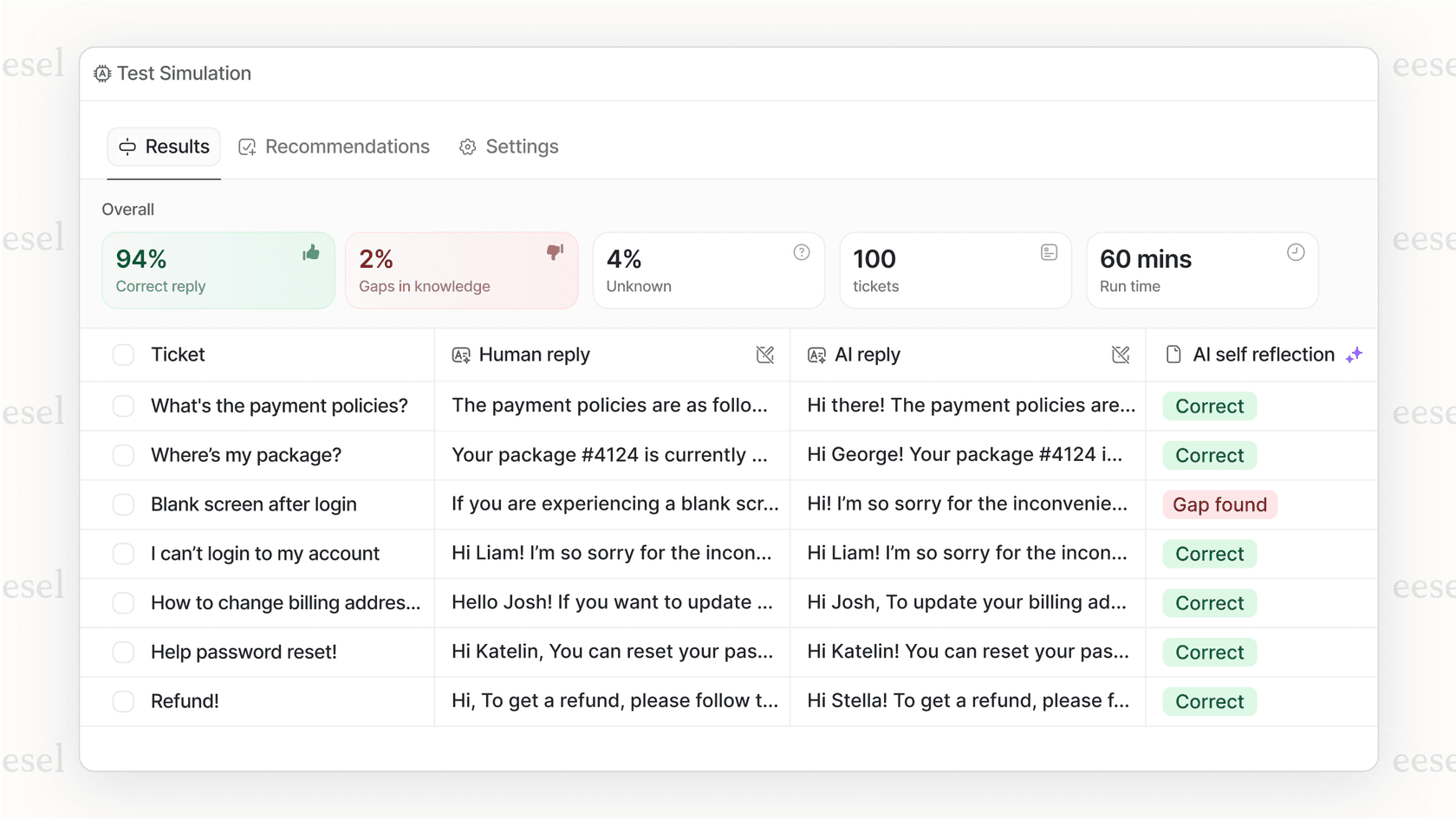
eesel AI is an AI platform that hooks right into the tools you’re already in all day, like Zendesk, along with your chat and knowledge sources. It’s got a few main parts that work together: an AI Agent that automatically answers frontline support questions, draft replies for your human agents, and triage that automatically routes and tags tickets. It learns from your past conversations, help articles, and internal docs, so it sounds like you.
-
Why it's on the list: Its biggest plus is how easy it is to set up yourself. A lot of enterprise AI tools can take months to get going, but you can get an eesel AI agent live in just a few minutes from its dashboard, no sales call required.
-
Pros:
- The setup is incredibly fast and self-serve, with one-click integrations.
- It works inside the tools your team already knows, so you don’t have to switch helpdesks or mess up your workflow.
- The pricing is clear and predictable (fixed monthly credit batches from $299/mo), without per-resolution fees.
- You get a lot of control over what gets automated using simple rules you can write in plain English.
-
Cons:
- It’s laser-focused on support automation, triage, and knowledge. If you need broader CS features like health scoring or journey mapping, you’ll need to look elsewhere.
-
Pricing: Paid plans start at $299/month for 500 credits, where a ticket or a chat is 1 credit. There's a free plan with 100 credits and no card needed, giving you plenty of room to kick the tires.
2. Gong
Gong has become the standard for understanding what’s really being said in customer conversations. It records, transcribes, and analyzes every call, meeting, and email. Then, its AI digs through all that conversation data to pull out key insights, track topics, and flag risks that were mentioned.
-
Why it's on the list: Its AI features, like Call Spotlight, are really impressive. They automatically create summaries and highlight action items, saving your team from having to re-listen to hours of calls. The AI Topic Tagger can even pick up on when topics like "Pricing" or "Next Steps" are discussed, helping you see trends across all your customers.
-
Pros:
- Gives you deep, data-backed insights into customer chats that you just can't get otherwise.
- Great for training, coaching, and seeing how your team is performing.
- The AI automatically points out recurring topics and at-risk deals, so you can be more proactive.
-
Cons:
- It's mainly for analysis and coaching, not for directly automating your follow-up tasks or handling support tickets.
- The price can be steep, especially for smaller teams that might not need everything it offers.
-
Pricing: Custom quote only. Pricing is usually per user plus a platform fee, so you have to talk to their sales team to get a real number.
3. ChurnZero
ChurnZero is built to be the main hub for a customer success team. It’s a big platform that pulls together all your customer data, customizable health scores (they call them ChurnScores), automated customer journeys, and communication tools into one spot.
-
Why it's on the list: It's the "full suite" approach. With 70+ integrations for tools like Salesforce and Zendesk, its goal is to put all customer info in one place, which is a massive headache for most teams.
-
Pros:
- Has powerful automation for managing the whole customer lifecycle, from onboarding to renewal.
- You can customize it a lot to fit your team's specific processes.
- It’s a well-established tool, with customers reporting things like a 60% drop in churn.
-
Cons:
- Getting an all-in-one platform like this up and running can be a long and complicated project.
- The price isn't public, so you have to go through a full sales cycle to get a quote.
- It might be too much if you're just trying to solve one specific problem, like deflecting common support questions.
-
Pricing: Not public. You have to book a demo to get a custom quote.
4. UpdateAI
UpdateAI was a conversation intelligence tool made just for customer success teams. People loved it for its ability to automate meeting notes, pull out action items, and track customer feedback themes over time. It was a great example of a tool that solved a very specific, annoying problem for CSMs.
-
Why it's on the list: I'm including UpdateAI here as a bit of a case study. It was a fantastic niche tool that turned messy meeting conversations into clean, structured data. But in July 2025, it was acquired by Gainsight, one of the giants in the CS world.
-
Pros:
- Its features were perfectly built for CSMs, like tracking customer mood and feature requests.
- It automated one of the most draining parts of a CSM's job: all the admin work after a call.
-
Cons:
- You can't buy it as a standalone tool anymore. New sign-ups are paused while its tech gets absorbed into Gainsight's larger platform.
-
Pricing: No longer available. Its features are being rolled into Gainsight's enterprise platform, which has a custom pricing model aimed at big companies.
5. Lantern
Lantern is a newer kind of AI platform that connects to your data sources (like your CRM or Gong) to keep an eye on your customer relationships for you. Its AI agents automatically track important signals, like when your main contact at a company changes jobs or when someone from a target account visits your pricing page, showing they might be ready to buy (intent).
-
Why it's on the list: This tool points to the future of proactive CS. AI agents do the research and tell you where to focus your energy to stop churn before it happens and find expansion opportunities. It’s all about getting ahead instead of just reacting.
-
Pros:
- It automates the manual work of tracking key contacts and accounts, something most CSMs struggle to keep up with.
- Helps you spot churn risks early and find warm leads for expansion.
- Connects to CRMs like Salesforce and HubSpot, and its Lantern MCP works with Claude and ChatGPT.
-
Cons:
- Pricing is credit-based, so cost tracks how many accounts and signals you run rather than how many seats you add.
- It's mainly focused on finding revenue signals for sales and CS teams, not on direct support automation. Its pricing page now also lists marketing and RevOps use cases, so it reads as a broader go-to-market tool than a CS-only one.
-
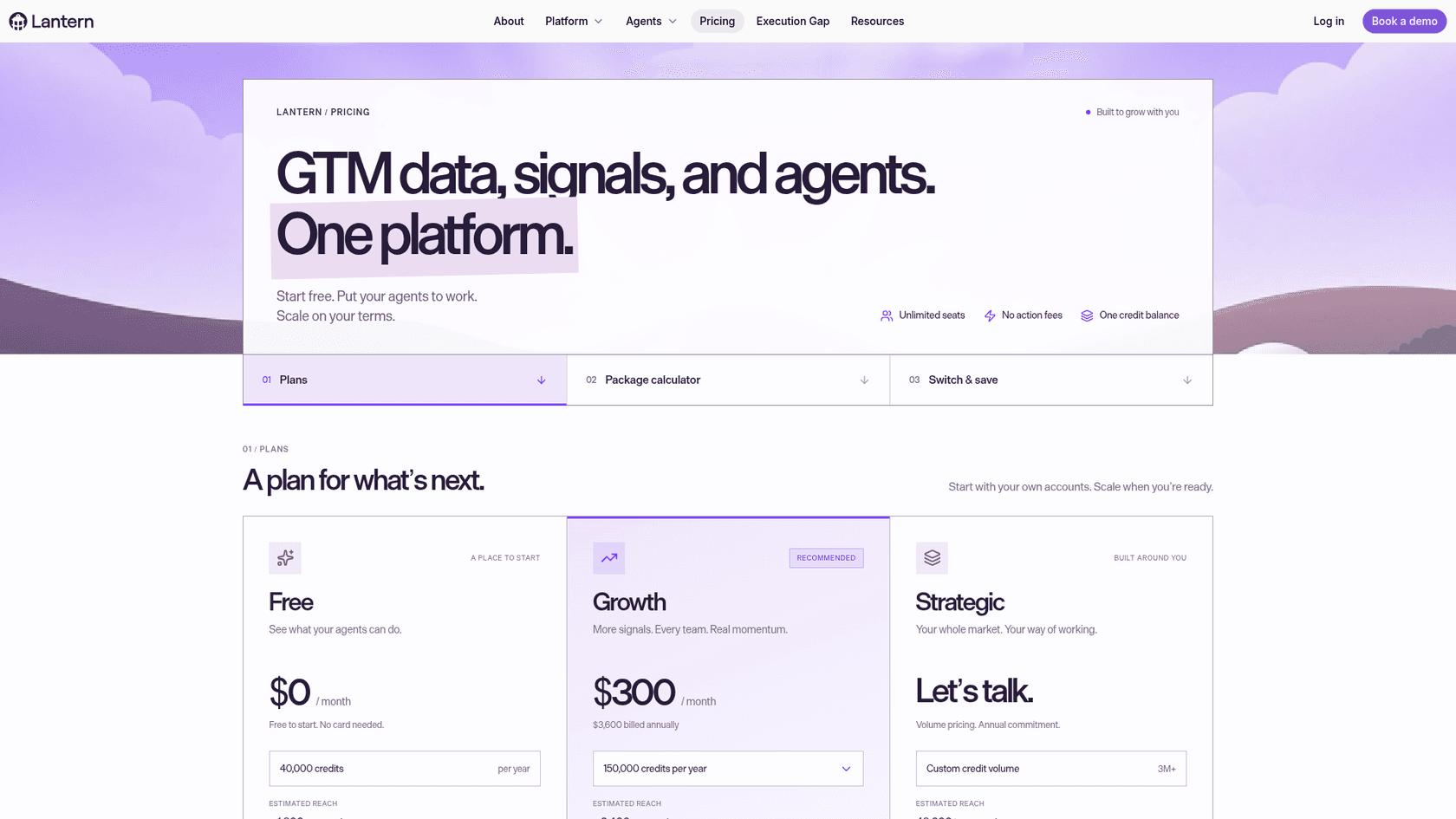
Pricing: Lantern's pricing is public. A Free plan includes 40,000 credits a year, and Growth is $300/month billed annually ($3,600). Seats are unlimited on every plan, and Strategic is custom.
6. ChatGPT
You know this one. ChatGPT is the famous AI from OpenAI that can write emails, summarize text, and brainstorm ideas. A lot of CSMs are already using it for quick, one-off tasks to speed up their day.
-
Why it's on the list: For most people, this is their first step into AI. It’s super versatile, easy to use, and genuinely helpful for getting over writer's block on a tricky email or whipping up a quick report draft.
-
Pros:
- Extremely flexible and useful for a huge range of content tasks.
- The free version is often good enough for many daily needs.
-
Cons:
- It’s completely disconnected from your customer data, so you’re always copying and pasting information back and forth.
- Pasting sensitive customer info into a third-party tool can be a big security risk.
- Out of the box it doesn't know your company's specifics. Connected apps can pull in context from tools like Google Drive or Slack, but without them it can give you generic (or wrong) answers to product questions.
-
Pricing: There’s a solid free plan, with paid plans like Plus ($20/month) for more power.
How to choose the right AI tool for your team
Feeling a bit overwhelmed by the options? Don't sweat it. Here are a few simple tips to help you pick the right tool.
-
Start with your biggest headache. Don't buy an AI tool just to have one. Are you drowning in support tickets? Buried in meeting notes? Struggling to see churn signals? Pick a tool that solves your most immediate problem first.
-
Look for a quick win. The best tools start helping you right away. Be wary of solutions that need a multi-month onboarding project. Self-service platforms, like eesel AI, let you test out their impact almost immediately.
-
Make sure it plays nice with your other tools. A new tool should feel like an add-on to your current workflow, not a whole new system. If it doesn't connect smoothly with your helpdesk and CRM, it’s just going to cause more problems.
-
Watch out for hidden pricing. Models that make you sit through multiple sales calls just to get a price are often hiding extra costs. Clear, public pricing from companies like eesel AI or Lantern is usually a sign of a more straightforward product.
Automate tasks, not relationships
The real point of using AI in customer success isn't to replace human connection, it's to make more room for it. By handling the repetitive admin tasks that eat up our time and energy, these tools free up CSMs to do what they do best: build trust, understand customer goals, and give smart advice.
If your team's biggest bottleneck is the time you spend answering the same questions and hunting for information across a dozen different places, a tool built for fast, simple automation inside your existing helpdesk is the smartest place to start.
Ready to stop answering the same questions over and over? Start free with eesel AI and see how quickly you can get your support workflows running on their own.
Frequently asked questions
What exactly makes certain platforms the "best AI tools for customer success" can use to improve their workflow?
The best AI tools for customer success excel at automating repetitive tasks, analyzing customer data for insights, and personalizing interactions at scale. They connect with your existing systems like CRMs and helpdesks to free up CSMs for high-value work and relationship building.
How easy is it to integrate the "best AI tools for customer success" into our current tech stack, especially with CRMs and helpdesks?
Many of the best AI tools for customer success are designed for quick and easy integration with popular CRMs and helpdesks. Look for platforms with one-click integrations that can start providing value quickly without requiring a lengthy setup project.
What are the common pricing models for the "best AI tools for customer success", and how can we predict the overall cost?
Pricing for the best AI tools for customer success typically ranges from per-user/per-month fees to custom quotes for enterprise solutions. Some offer clear, public pricing, while others require a sales call. Always clarify potential hidden fees or interaction-based charges when evaluating costs.
Can the "best AI tools for customer success" truly help us proactively prevent churn and identify expansion opportunities?
Yes, some of the best AI tools for customer success offers specialize in predictive analytics. They monitor customer data and signals to identify at-risk accounts or potential upsell opportunities, allowing CSMs to intervene proactively rather than reactively.
Is there a risk that implementing the "best AI tools for customer success" could depersonalize our customer interactions?
On the contrary, the best AI tools for customer success aims to enhance personalization by automating routine tasks, giving CSMs more time for meaningful human connection. AI handles the mundane, freeing agents to focus on complex issues and relationship building.
What's the most important factor to consider when choosing among the "best AI tools for customer success" for our team?
The most important factor is identifying your team's biggest pain point and choosing a tool that directly addresses it. Prioritize solutions that offer a quick return on investment, integrate seamlessly with your existing tools, and have transparent pricing.


Article by
Rama Adi
Rama is a software engineer at eesel AI with two years of experience writing about B2B SaaS, AI tools, and customer support technology. Based in Bali, Indonesia, he brings a developer's perspective to product comparisons — cutting through marketing copy to what the integrations and APIs actually do.