Customer onboarding can make or break your retention rates. Research shows that 63% of users now research a company's onboarding process before committing to a purchase. Get it wrong, and you've got churn. Get it right, and you've built the foundation for long-term customer relationships.
The shift from manual onboarding to AI-powered experiences is happening fast. But here's the challenge: most "AI onboarding tools" are really just automation with a chatbot slapped on top. They handle simple tasks but fall apart when customers ask nuanced questions or need personalized guidance.
This guide cuts through the noise. We've reviewed seven leading AI customer onboarding tools based on what actually matters: real AI capabilities, integration with your existing stack, pricing transparency, and whether they can handle both onboarding and ongoing support. Let's dive in.
What is AI customer onboarding?
AI customer onboarding uses artificial intelligence to automate and personalize the journey new customers take when they start using your product or service. Unlike traditional onboarding (static email sequences, generic help docs, manual check-ins), AI-powered onboarding adapts to each customer's behavior, answers questions in real time, and escalates intelligently when human help is needed.
The key difference between employee onboarding and customer onboarding tools is the focus. Employee onboarding centers on HR processes, paperwork, and internal training. Customer onboarding is about getting external users to value quickly, reducing time-to-first-success, and setting them up for long-term retention.
Here's what true AI onboarding capabilities look like:
- Personalization at scale Tailoring the experience based on user role, behavior, and past interactions
- 24/7 intelligent support Answering questions anytime without human agents
- Smart escalation Knowing exactly when to bring in a human and routing to the right person
- Continuous learning Improving responses based on corrections and new content
Traditional onboarding tools (checklists, basic email automation, static knowledge bases) fall short because they can't adapt to individual customer needs or handle the complexity of real-world questions.
AI customer onboarding tools comparison
| Tool | Best for | Starting price | Key strength | AI capabilities |
|---|---|---|---|---|
| eesel AI | AI teammate for support and onboarding | $0.40 per ticket | Learns from past tickets, progressive rollout | Autonomous agent, copilot, triage |
| Moxo | Complex multi-stakeholder workflows | Custom | Process orchestration with compliance | Review Agent, Prepare Agent, Chat Assistant |
| Rocketlane | SaaS implementation projects | $19/user/month | Project transparency and delivery | Nitro AI for execution and resourcing |
| Userpilot | In-app product onboarding | $299/month | No-code in-app guidance | Lia AI agent for product growth |
| Dock | Transparent client collaboration | $350/month | Shared workspaces and AI enablement | AI documents, workspace templates |
| Chameleon | Product-led onboarding | $279/month | Native-feeling in-app experiences | AI-powered adoption platform |
| Appcues | Behavioral engagement | $300/month | Cross-channel personalization | Appcues AI growth engine |
1. eesel AI
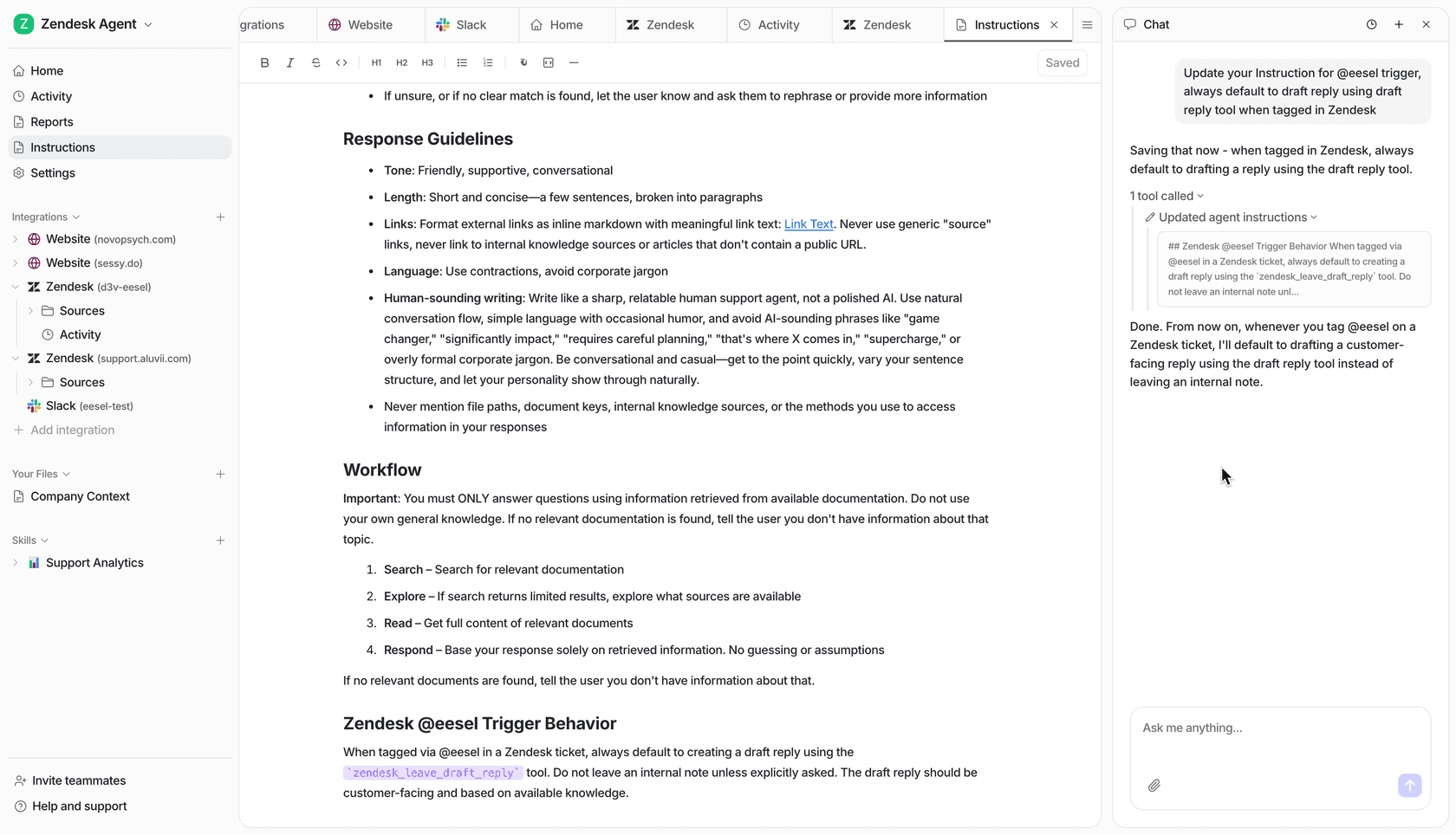
Best for: Teams that want an AI teammate for customer onboarding and ongoing support
eesel AI approaches onboarding differently. Instead of treating it as a one-time workflow, eesel acts as a teammate that learns your business from day one and handles both onboarding conversations and ongoing support.
Here's how it works. You connect eesel to your help desk (Zendesk, Freshdesk, Gorgias, or others). It immediately learns from your past tickets, help center articles, macros, and any connected documentation. No manual training, no uploading documents, no configuration wizards. Within minutes, eesel understands your tone, policies, and common issues.
The AI capabilities go beyond simple chatbots. eesel can:
- Draft replies for human review (copilot mode) or send autonomously (agent mode)
- Handle frontline onboarding questions 24/7 across email, chat, and messaging
- Escalate intelligently based on rules you define in plain English
- Run simulations on past tickets to verify quality before going live
- Take real actions like looking up orders, processing refunds, and updating tickets
The progressive rollout model is what sets eesel apart. You start with copilot mode where eesel drafts replies for your team to review. As it proves itself, you level up to autonomous mode where it handles full conversations. You control the pace based on actual performance, not guesswork.
Pricing:
| Plan | Monthly price | Annual price | Key limits |
|---|---|---|---|
| Team | $299 | $239/month | Up to 3 bots, 1,000 interactions/month |
| Business | $799 | $639/month | Unlimited bots, 3,000 interactions/month |
| Custom | Contact sales | Custom | Unlimited interactions, custom features |
All plans include AI copilot, AI agent, AI triage, and integrations with 100+ tools. A 7-day free trial is available.
Integrations: Zendesk, Freshdesk, Intercom, Gorgias, Jira, ServiceNow, Front, Slack, Microsoft Teams, Shopify, Salesforce, Confluence, Google Docs, Notion, and more.
2. Moxo
Best for: Complex, multi-stakeholder client onboarding with compliance requirements
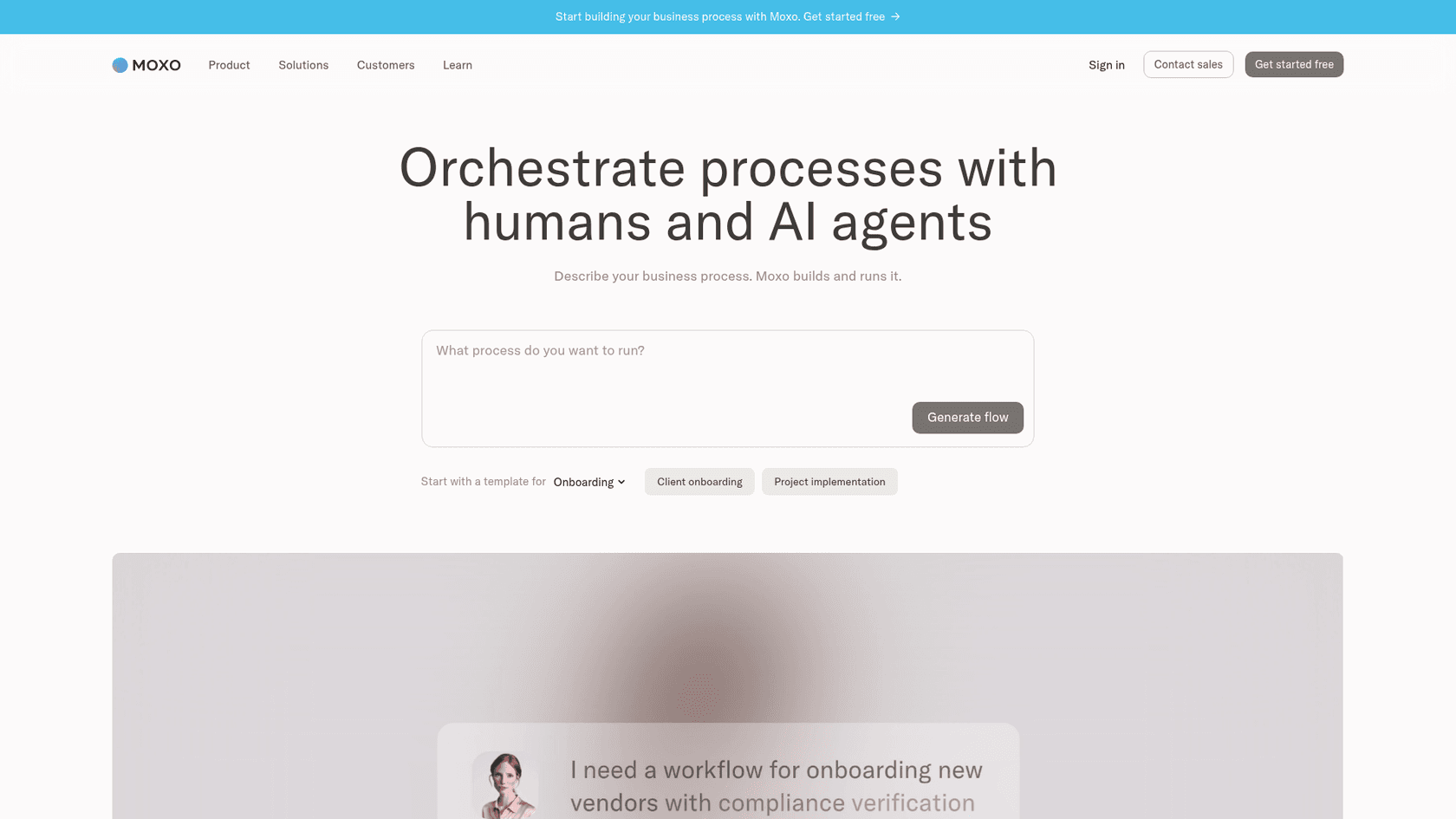
Moxo is an AI orchestration platform designed for complex business processes that span multiple departments, external stakeholders, and compliance requirements. While many tools automate tasks in isolation, Moxo orchestrates coordination across entire workflows.
The platform separates human judgment from coordination work. Humans stay accountable for approvals, exceptions, and risk decisions. AI agents handle the preparation, validation, routing, and follow-up that bogs down operations teams.
Moxo's AI agents include:
- Review Agent Validates documents against your actual requirements
- Prepare Agent Handles preparation and coordination tasks
- Chat Assistant Provides intelligent support within workflows
The platform shines in compliance-heavy industries. It provides complete audit trails, multi-party approval engines, e-signatures, and process portals where all stakeholders can collaborate. Notable customers include Citi, Global Payments, Procore, and Scotiabank.
Pricing: Custom enterprise pricing based on team size and requirements. Contact sales for a quote.
Limitations: Moxo's strength is also its constraint. The platform is built for complex, compliance-heavy workflows. If you're looking for simple customer onboarding without multi-party approvals or regulatory requirements, Moxo may be more than you need.
3. Rocketlane
Best for: SaaS companies with structured implementation projects
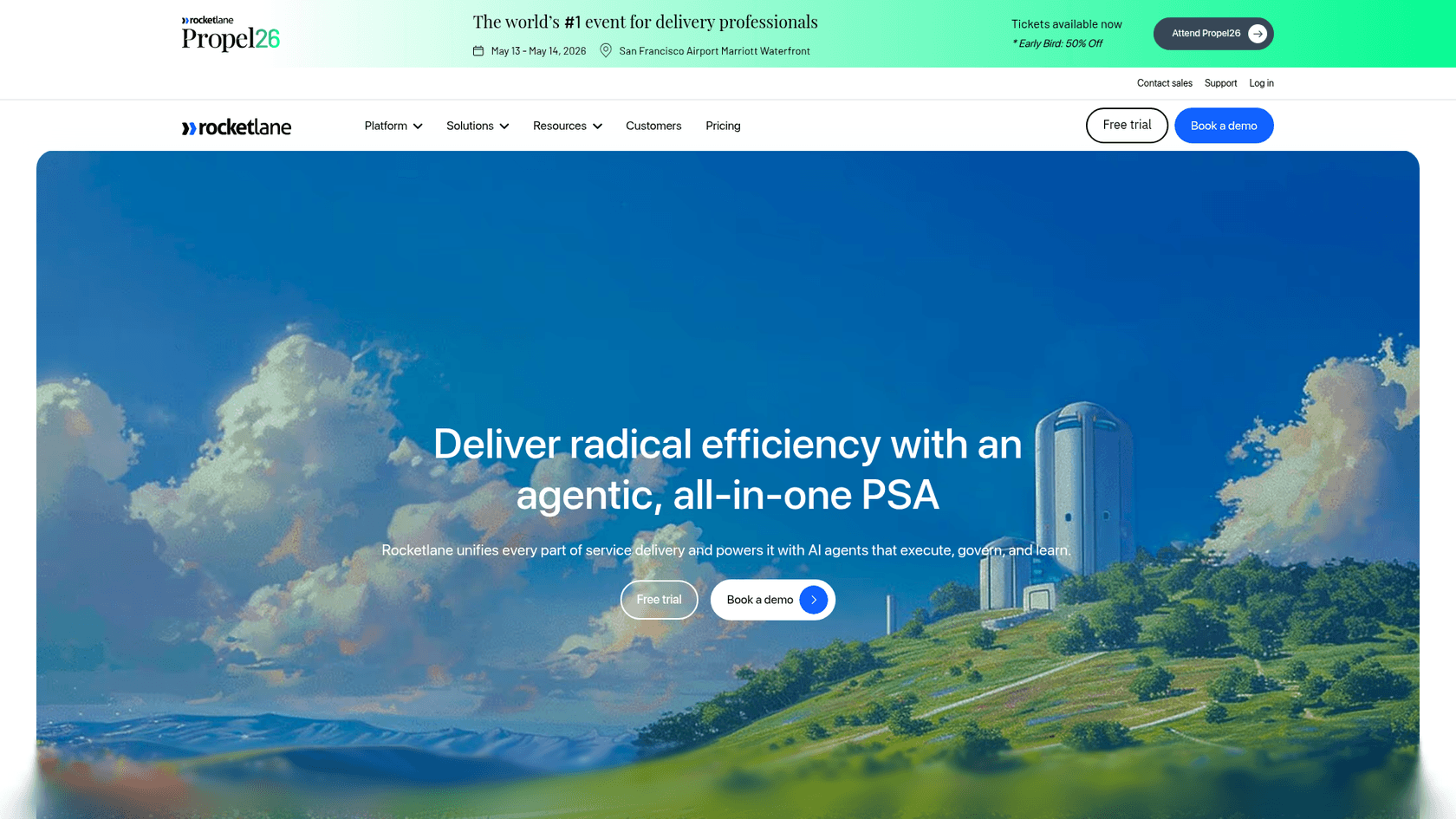
Rocketlane is an agentic PSA (Professional Services Automation) platform purpose-built for customer onboarding and implementation. It combines project management, resource planning, and customer collaboration into one platform powered by AI agents.
The platform's Nitro AI agents automate the entire delivery lifecycle. They can auto-create project plans from SOWs and discovery calls, monitor timelines and allocations, and mine customer interactions for risks and opportunities.
Key capabilities include:
- Project delivery Templates, task management, and milestone tracking with AI assistance
- Resource management Dynamic resourcing that rebalances in real time as projects shift
- Customer portal Shared workspace where clients see progress and collaborate
- Profitability tracking Real-time margins visible to delivery teams
Rocketlane customers report significant efficiency gains. Gamify reduced implementation timelines from over six months to 30 days. Actabl reduced time-to-kickoff by 88% and doubled their ARR.
Pricing: From $19 per team member per month, billed annually. Enterprise pricing available for larger teams.
Integrations: Salesforce, HubSpot, Slack, Jira, Asana, Monday, Zapier, and Workato.
Limitations: Rocketlane's AI capabilities focus on project execution and resource optimization rather than direct customer conversation. It's primarily a project management platform with onboarding templates, not a conversational AI for handling customer questions.
4. Userpilot
Best for: In-app user onboarding for SaaS products
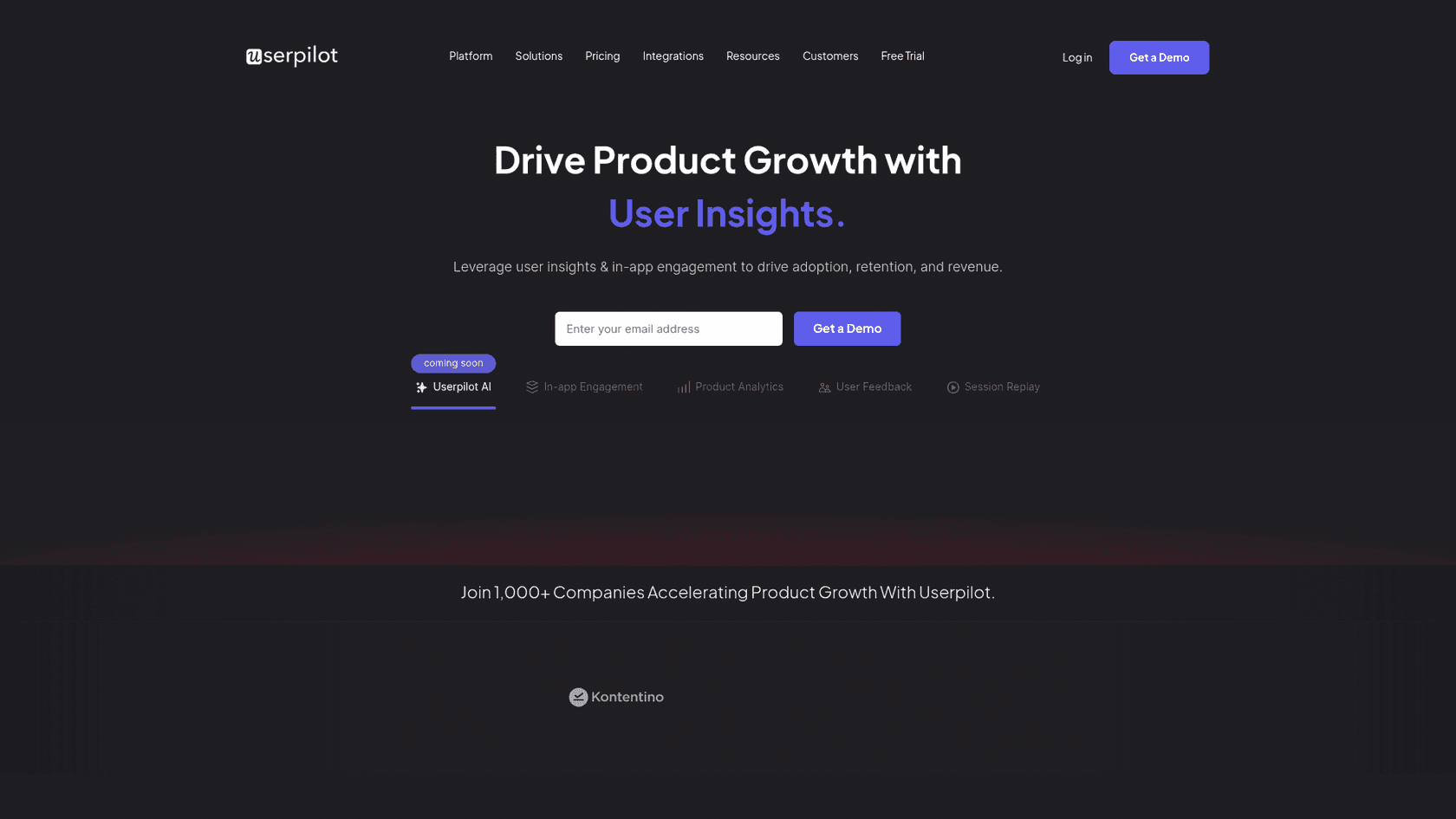
Userpilot is a product growth platform that helps teams deliver personalized in-app experiences. If your onboarding happens primarily inside your application, Userpilot provides the tools to guide users to their "aha moment" faster.
The platform offers a no-code builder for creating:
- Interactive product tours and walkthroughs
- Onboarding checklists with progress tracking
- Tooltips and modals for contextual guidance
- Microsurveys for feedback collection
- Session replay to see how users interact
Userpilot's Lia AI agent analyzes user behavior and launches personalized campaigns at optimal moments. The platform supports both web and native mobile apps (iOS and Android).
Pricing: From $299 per month, based on monthly active users. A 14-day free trial is available with no credit card required.
Integrations: Segment, Mixpanel, HubSpot, Salesforce, Amplitude, and more.
Limitations: Userpilot only works for in-app onboarding. It doesn't handle email, chat, or ticket-based support. If your customers need help outside your application (or before they log in), you'll need additional tools.
5. Dock
Best for: Transparent client collaboration during onboarding
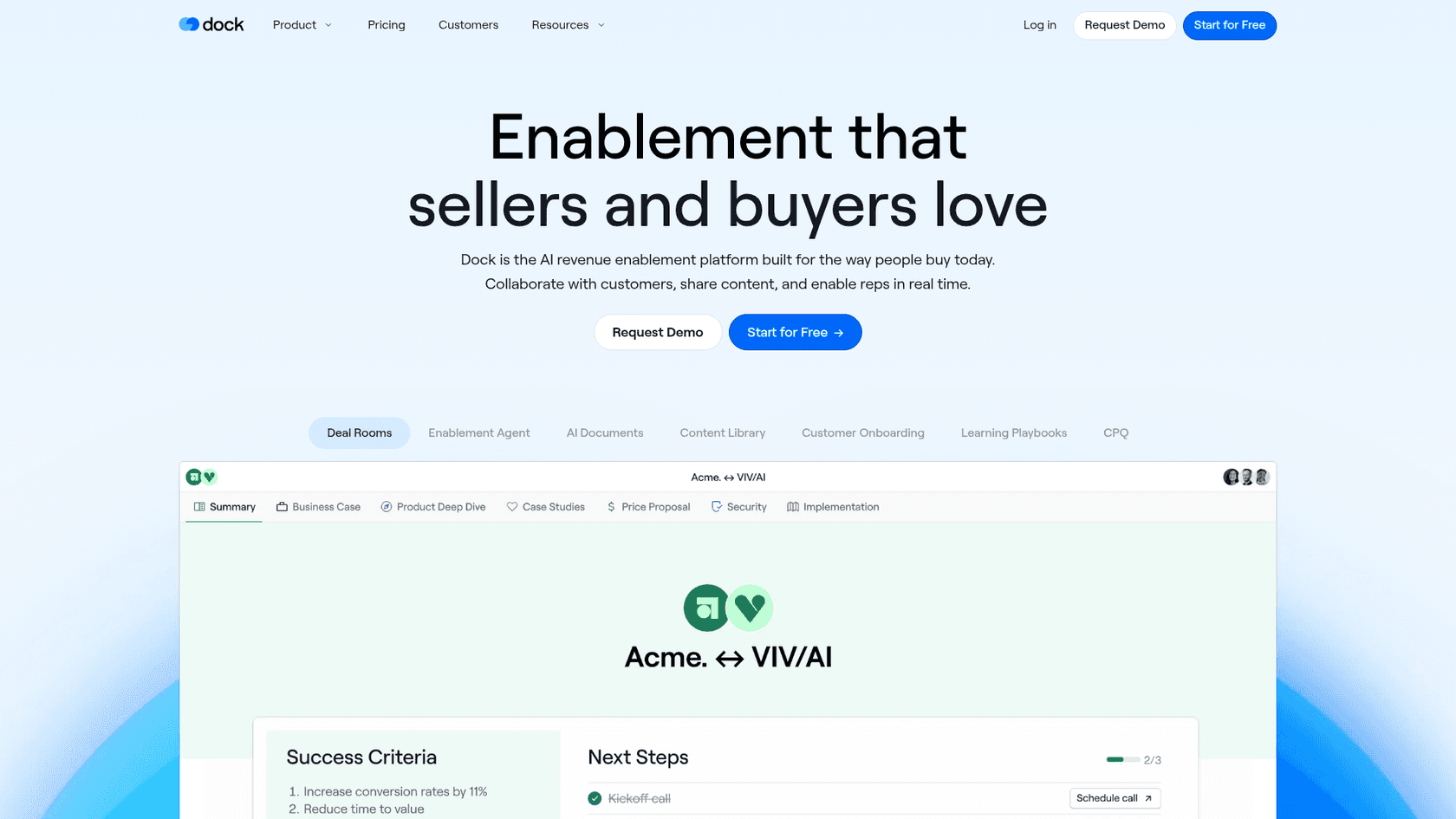
Dock is an AI revenue enablement platform built for sales and customer success teams. It creates shared workspaces where your team and customers collaborate on onboarding tasks, documents, and updates in one place.
The platform centers on client-facing workspaces that can be customized for different stages of the customer journey:
- Deal rooms for sales collaboration
- Onboarding plans with tasks and milestones
- Client portals for ongoing engagement
Dock's AI capabilities include:
- AI documents Generate proposals, business cases, and follow-up emails
- AI tagging Automatically tag content for better discoverability
- Workspace templates Auto-personalize based on CRM data
- Meeting summaries AI-generated summaries of calls
The two-way transparency is a key differentiator. Customers see which tasks they own versus what your team handles. This visibility reduces the "what is happening with my onboarding?" questions that bog down customer success teams.
Pricing: From $350 per month for up to 5 users. A free plan with limited features is available.
Integrations: Salesforce, HubSpot, Google Drive, SharePoint, and call recording tools.
Security: SOC 2 Type II certified and GDPR compliant.
Limitations: Dock may overlap with existing project management tools, adding another subscription to your stack. Layout customization is limited; you control content but the portal format is standardized.
6. Chameleon

Best for: Product-led onboarding without coding
Chameleon is an AI product adoption platform that creates in-app experiences feeling native to your product. It's designed for product teams who want to improve onboarding without relying on engineering resources.
The platform breaks down into six products:
- Tours Step-by-step onboarding experiences
- Tooltips Contextual in-app messages
- Launchers Customizable widgets for resources
- Microsurveys Contextual feedback collection
- HelpBar In-app spotlight search of your content
- Embeds Non-intrusive in-product communication
Chameleon's AI creates experiences that launch at the right moment and never overwhelm users. The platform offers user segmentation, behavior-based targeting, and mobile optimization.
Pricing: From $279 per month, based on monthly users. A 30-day free trial is available.
G2 rating: 4.4/5
Limitations: Like Userpilot, Chameleon focuses on in-app guidance. It doesn't handle email, chat, or external support channels. Teams needing omnichannel onboarding will need to integrate with other tools.
7. Appcues
Best for: Behavioral onboarding flows
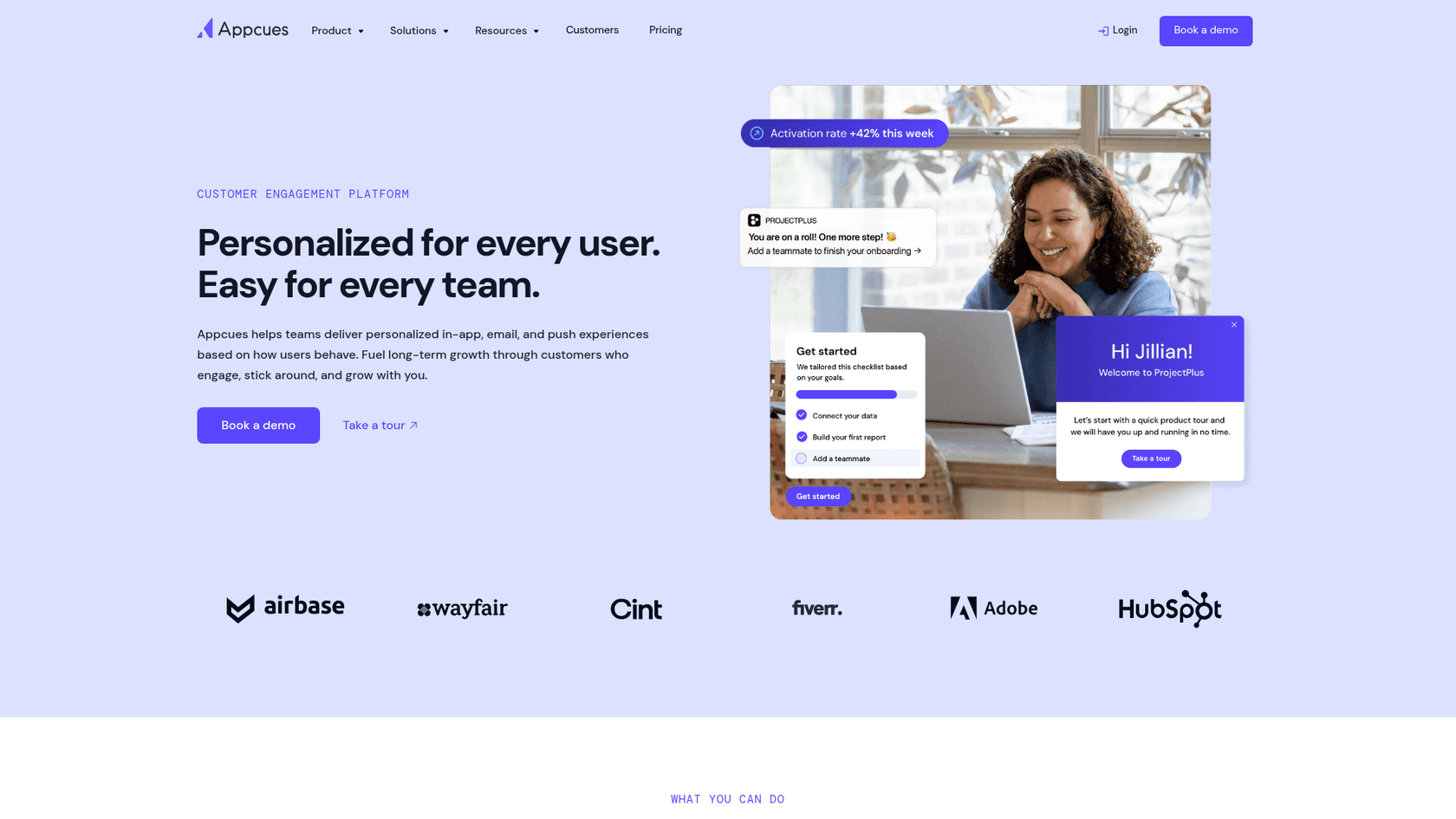
Appcues is a customer engagement platform that delivers personalized in-app, email, and mobile experiences based on user behavior. It helps teams scale onboarding, adoption, and retention without adding headcount.
The platform's Appcues AI is building an engine that:
- Understands Listens to user behavior signals
- Decides Chooses the best next action for each user
- Acts Delivers experiences across in-app, email, and push
- Learns Continuously improves based on results
Appcues supports web and native mobile (iOS and Android), making it suitable for companies with multi-platform products. Notable customers include Airbase, Wayfair, Adobe, HubSpot, and Fiverr.
Pricing: From $300 per month, billed annually, based on monthly active users.
Limitations: Appcues offers limited advanced customization options. Optimizing onboarding flows takes time and ongoing refinement. Pricing increases with user count, which can become expensive for growing products.
How to choose the right AI onboarding tool
Selecting the right tool depends on your specific situation. Here's a framework to help you decide:
Consider your onboarding type:
- High-touch (white-glove) onboarding needs collaborative workspaces and project management
- Low-touch (self-serve) onboarding benefits from in-app guidance and automated flows
- Hybrid approaches require tools that handle both human and automated touchpoints
Evaluate integration needs:
Your onboarding tool should connect seamlessly with your existing help desk, CRM, and communication tools. Look for native integrations with the platforms you already use. The goal is to add capability, not create new silos.
If you're using Zendesk, Freshdesk, or Intercom, consider how eesel AI integrates with your help desk to provide a unified onboarding and support experience.
Assess AI sophistication:
Not all "AI" is equal. Ask these questions:
- Does it learn from your existing data, or require manual training?
- Can it handle conversations, or just automate tasks?
- Does it escalate intelligently, or just pass everything to humans?
- Can you test it before going live?
Check for progressive rollout:
The best AI onboarding tools let you start with guidance (human review) and level up to autonomy based on performance. This reduces risk and lets you verify quality before customers see AI-only responses.
With eesel AI's progressive rollout, you can run simulations on past tickets to measure quality before going live. Start with copilot mode where eesel drafts replies for review, then expand to autonomous responses as confidence grows.
Watch pricing transparency:
Some tools hide pricing behind "contact sales" forms. Others have low starting prices that escalate quickly with usage. Understand the total cost of ownership including per-seat fees, usage limits, and overage charges.
Why eesel AI is different
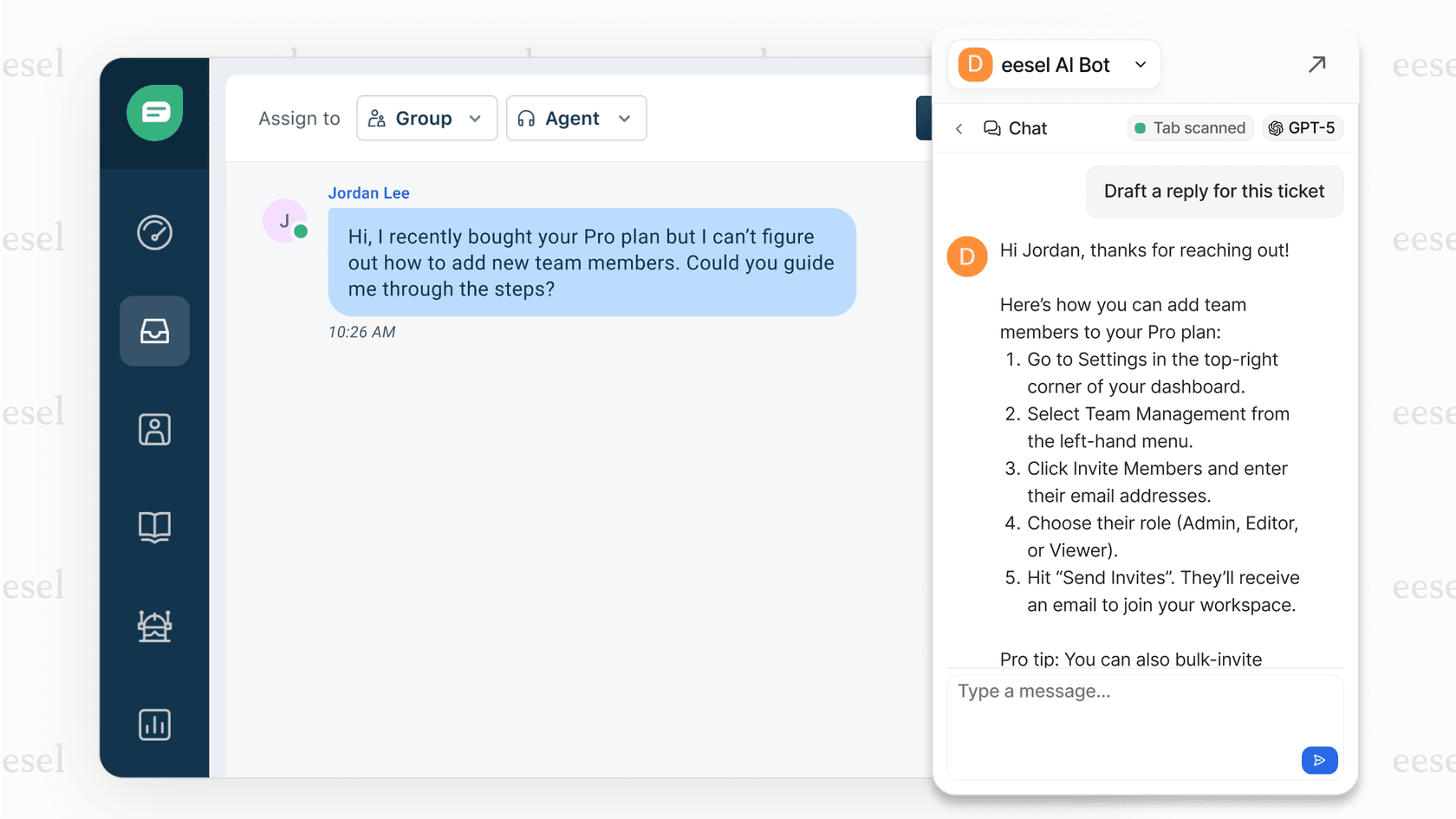
Most onboarding tools automate tasks. We've taken a different approach: eesel acts as a teammate you hire and level up.
Here's what that means in practice:
You don't configure eesel. You hire it.
Like any new team member, eesel learns your business from existing data (past tickets, help center, macros), starts with guidance, and earns more responsibility as it proves itself. The difference is that what takes a human weeks to learn, eesel learns in minutes.
Progressive rollout, not risky big bang.
Start with copilot mode where eesel drafts replies for your team to review. Run simulations on past tickets to measure quality. When you're confident, expand to autonomous mode for specific ticket types. You control the pace.
Handles onboarding AND ongoing support.
Most tools focus on the first 30 days. eesel stays with your customers, handling support questions throughout their lifecycle. This continuity means eesel learns from every interaction and gets better over time.
Plain-English control.
Define escalation rules, tone, and behavior in natural language. "Always escalate billing disputes to a human" or "For VIP customers, CC the account manager." No code, no complex workflows.
If you're looking for an AI teammate that learns your business, handles both onboarding and support, and lets you level up from copilot to autonomous based on actual performance, try eesel AI free for 7 days.
Start improving your customer onboarding today
The right AI onboarding tool can transform how you welcome new customers. Whether you need in-app guidance, project management for implementations, or an AI teammate that handles conversations end-to-end, the tools we've covered offer solid options.
The key is matching the tool to your specific needs:
- Choose eesel AI if you want an AI teammate for both onboarding and ongoing support
- Choose Moxo if you have complex, compliance-heavy multi-stakeholder workflows
- Choose Rocketlane if you're a SaaS company with structured implementation projects
- Choose Userpilot or Chameleon if you need in-app product onboarding
- Choose Dock if you want transparent client collaboration workspaces
- Choose Appcues if you need behavioral, cross-channel engagement
Remember: the best onboarding tool is the one your team will actually use and your customers will actually benefit from. Start with a clear understanding of your onboarding goals, test before committing, and choose a tool that can grow with you.
Ready to see how an AI teammate can transform your customer onboarding? Book a demo and we'll show you eesel in action.