
What Claude Tag actually is
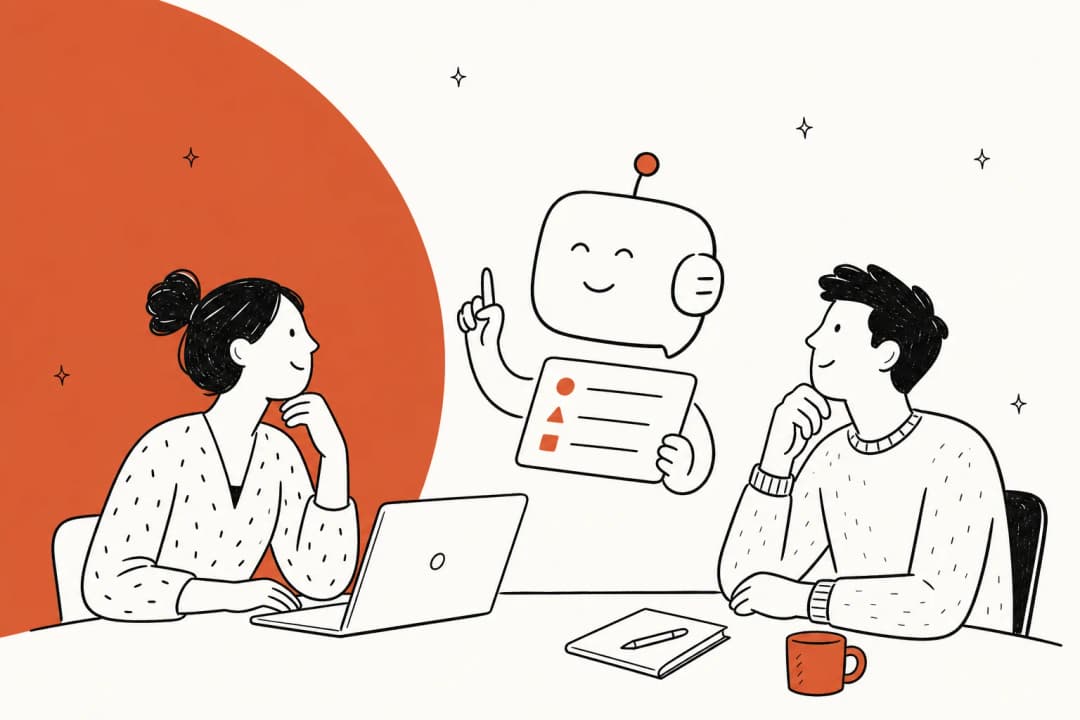
The pitch is on the product page: "Tag it in, and it tags you back." Claude joins your Slack workspace as a member. An admin grants it access to specific channels, connects it to your tools, data, and "even codebases," and from then on anyone in a channel can tag @Claude with a plain-language request and delegate the work.
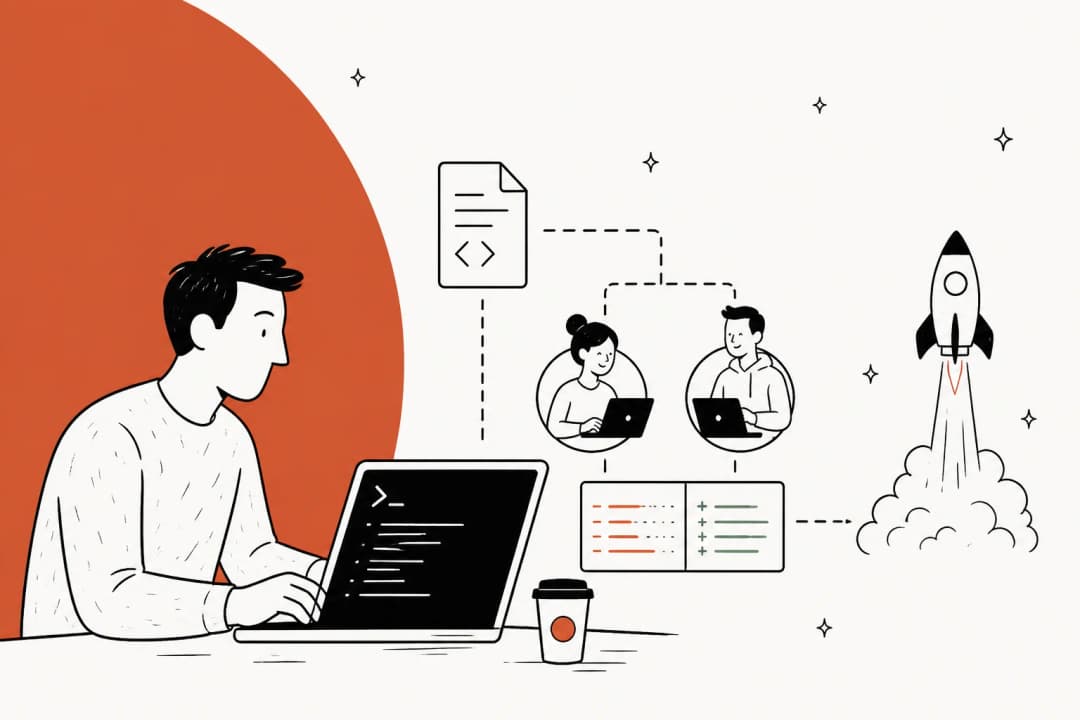
Anthropic frames it as "the beginning of an evolution of Claude Code", the same agent, made "more proactive" and able to work "better with a full team." The Claude Code team's own shorthand was blunter: "Claude Code made multiplayer, async, and proactive across your whole team."
Plenty of people clocked it as more than a feature drop. Andrej Karpathy called it the "3rd major redesign of LLM UIUX", after the web chat box and the desktop app: an LLM reimagined as "a persistent, asynchronous entity with org-wide tools and context." That's a useful frame for what follows, because every part of Claude Tag is about turning a chat assistant into something that sits in your org and keeps working.
How @Claude works
It's multiplayer
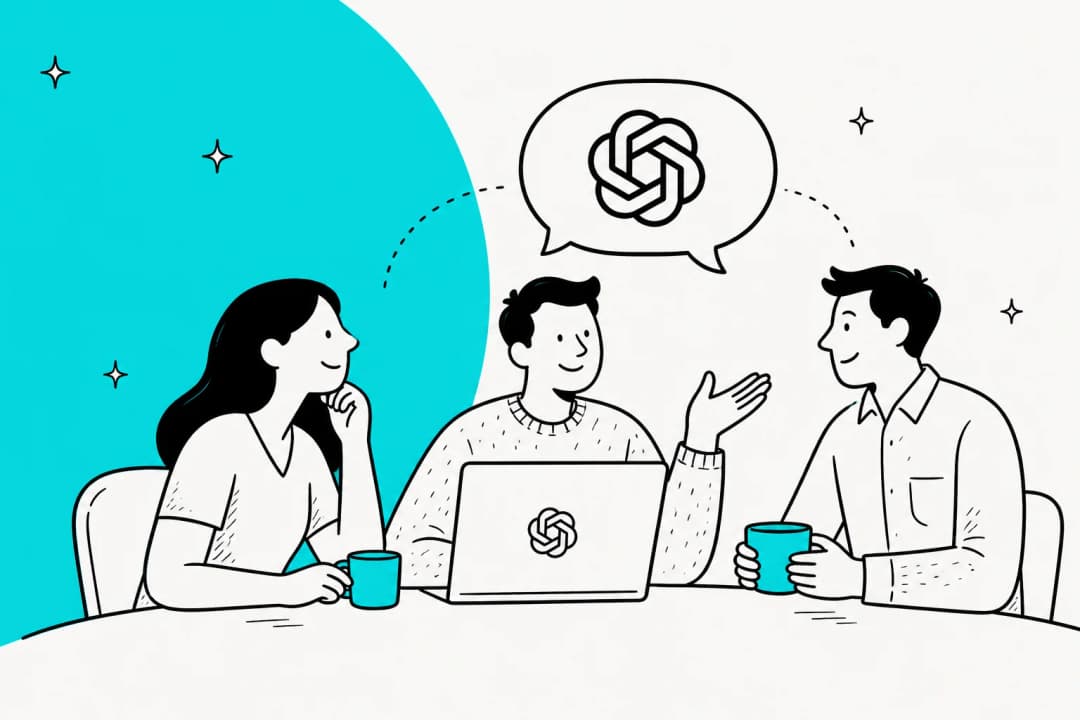
This is the part Anthropic leads with, and the part one Hacker News commenter called "the most important difference from other products." "@Claude is multiplayer. Within a given Slack channel, there's one Claude that interacts with everyone." Anyone can see what it's working on and pick up where the last person left off, more like a teammate than a private chat session.
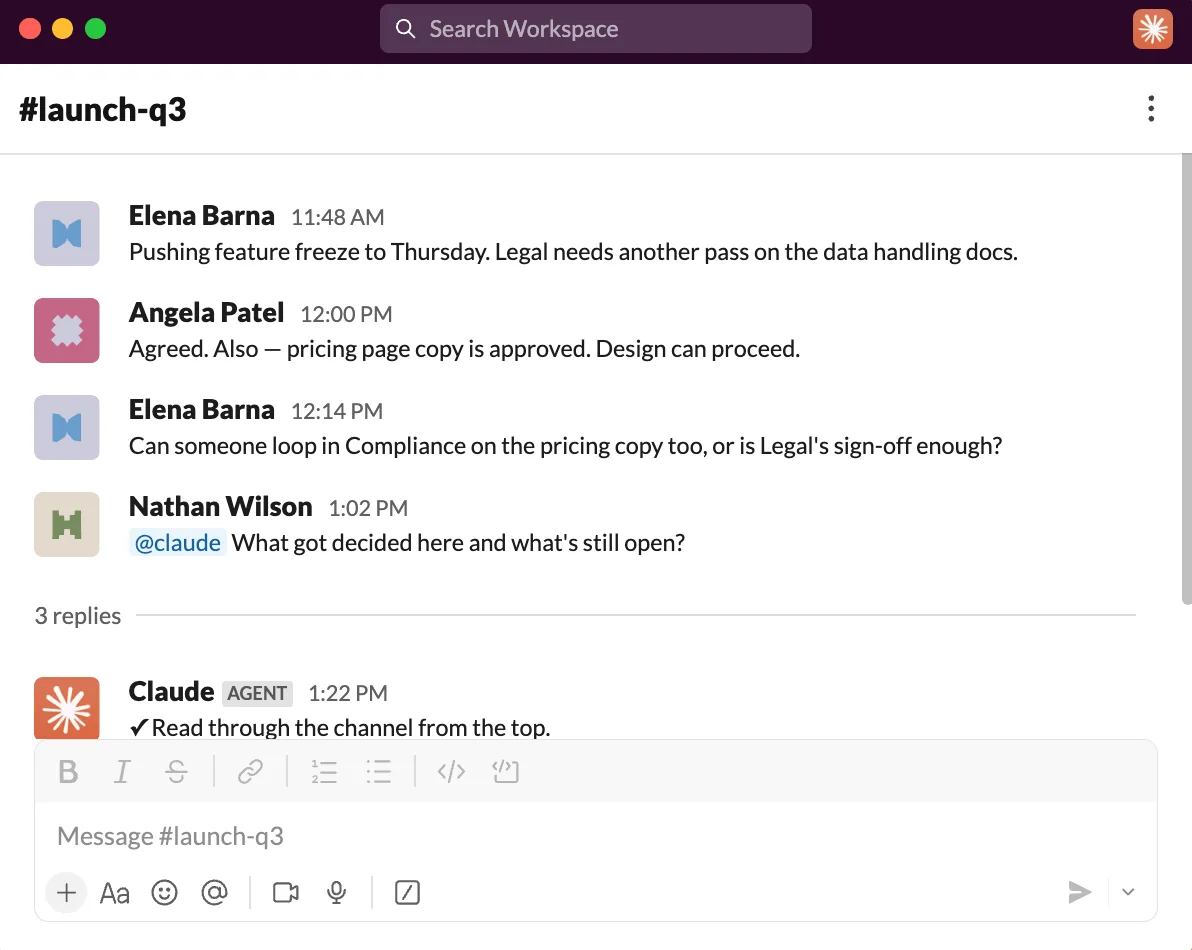
The obvious worry came up fast: what stops a coworker from hijacking your task by replying with a worse idea? An Anthropic engineer answered on HN that Claude distinguishes a thread's initiator from later participants and "patiently waits for a resolution while correcting any misunderstandings", and because it has its own identity, "a coworker cannot enter a thread and commandeer your identity."
It remembers, and it works while you don't
Two things make @Claude feel less like a command line and more like a hire. First, memory: as it follows a channel it "builds more context about the work", so you "don't need to explain things to it from scratch over and over again." The product page's framing is that "what happened in Monday's standup is still there on Thursday, without anyone repeating it."
Second, it's asynchronous. You set a task and move on while it works, and it can "schedule tasks for itself, pursuing a project autonomously over hours or days." Turn on "ambient" mode and it goes further: it proactively flags relevant information and follows up on threads that have gone quiet without being resolved.
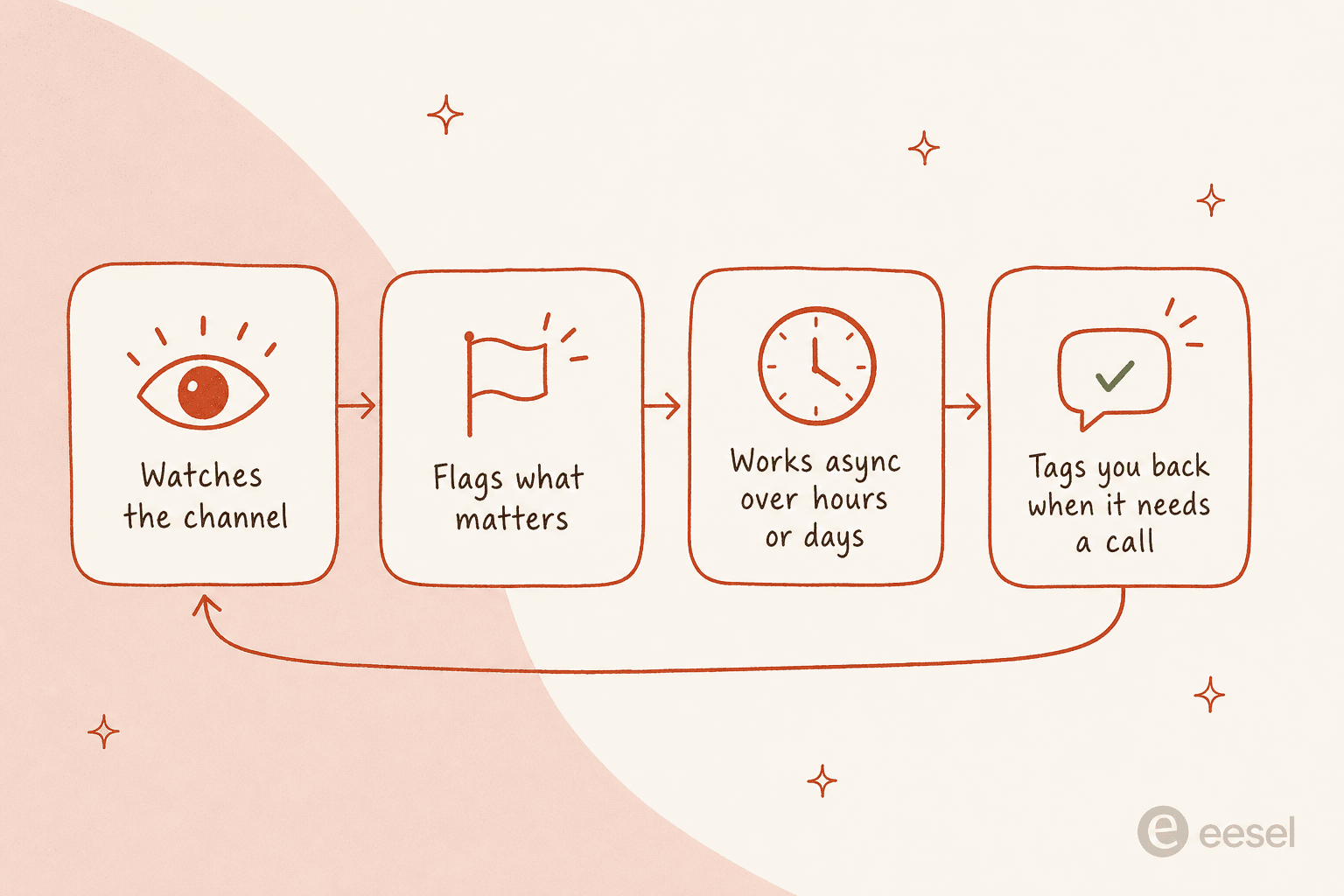
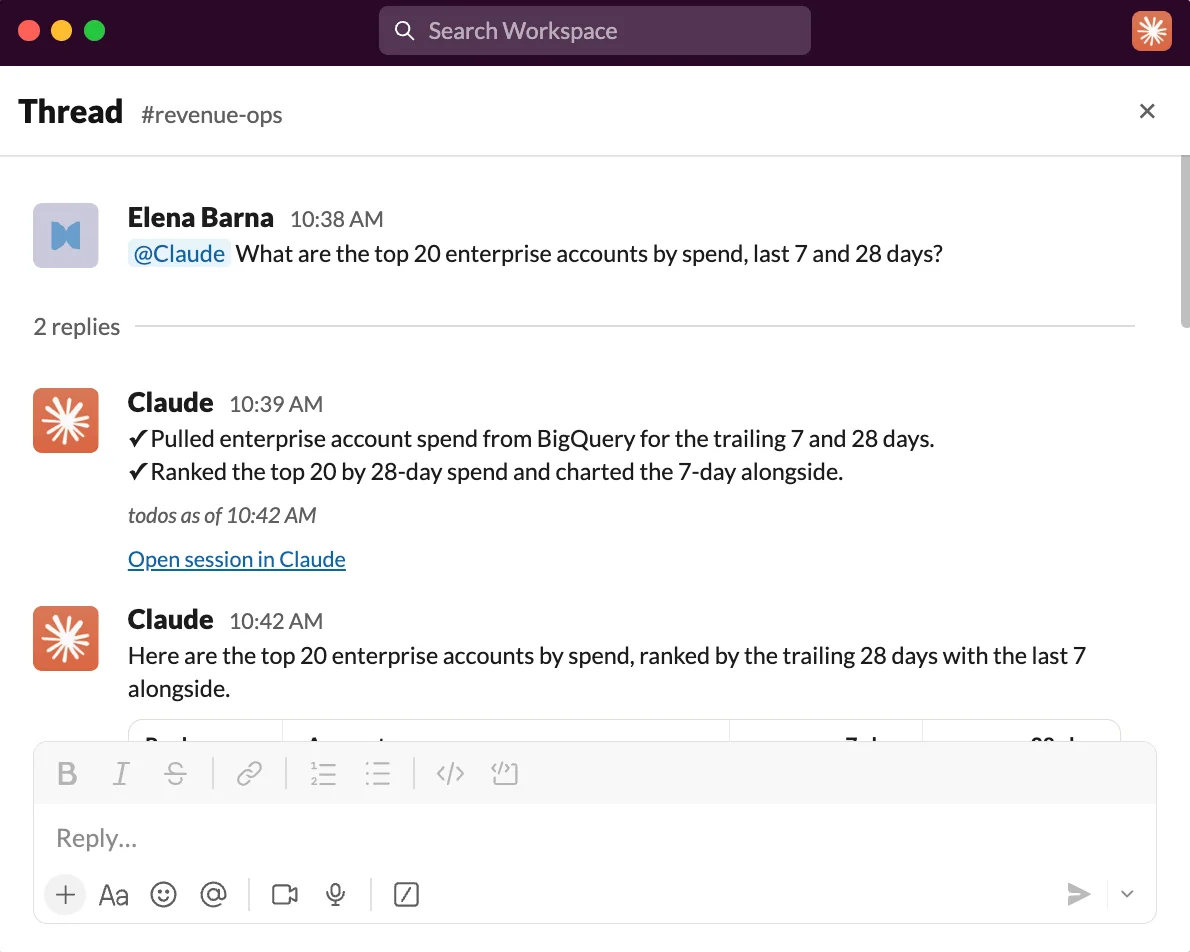
The published examples make it concrete. You can ask it to pull data and chart it in-channel, and it queries the warehouse itself:
Or hand it a bug report and get a draft PR back without leaving the channel:
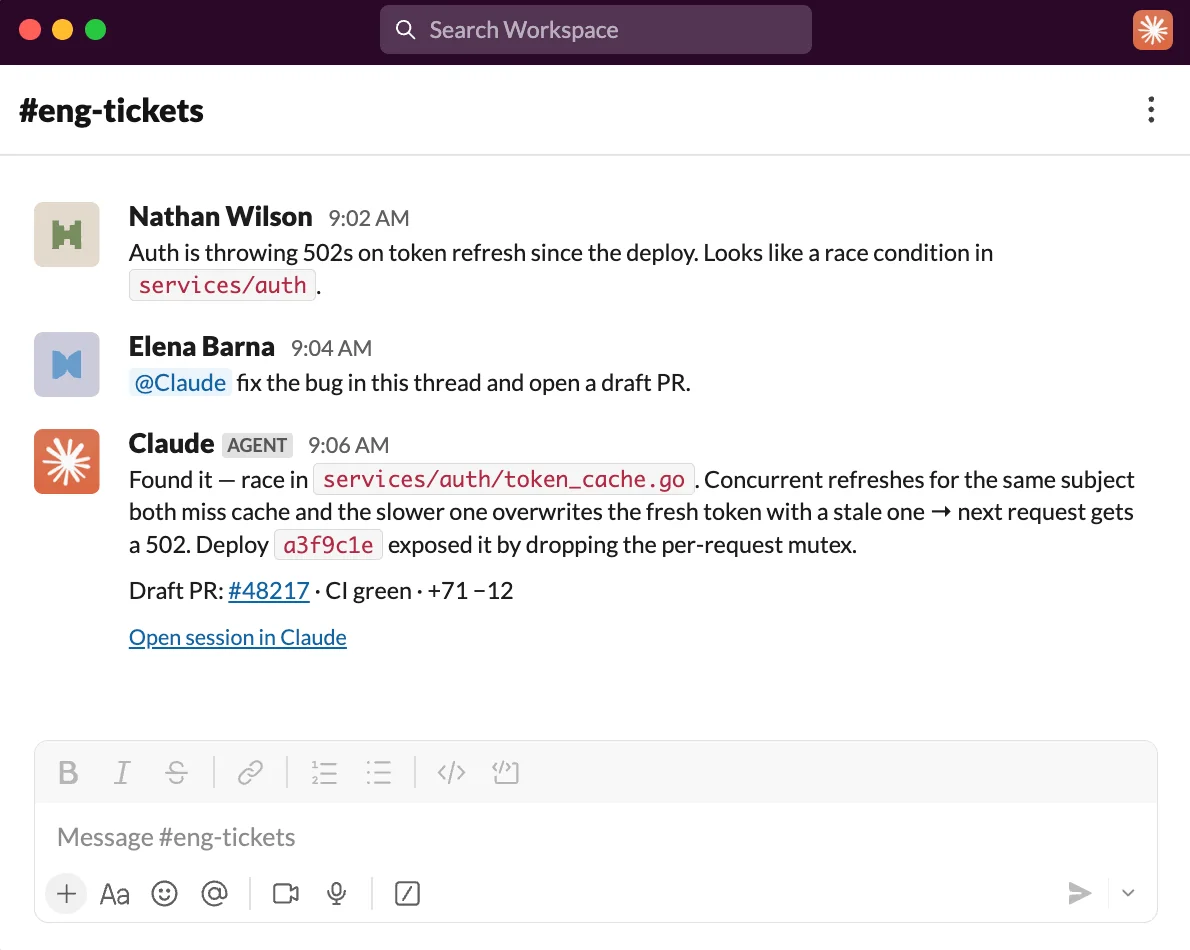
The async, "tag in coworkers and wait for blocking dependencies" behaviour is what makes that 65%-of-the-code claim plausible: this is Claude Code wired into the place engineering decisions actually happen.
It acts under its own identity
Here's the part I find most interesting as someone who wires up integrations for a living. Claude Tag doesn't borrow your credentials. It "acts as itself", posting in Slack as the Claude app, opening PRs as the Claude GitHub App, querying a warehouse under an admin-provisioned service account. Noah Zweben on the Claude Code team summed up the shift to Help Net Security: agent identity replaces "what can this user do?" with "what can this agent do in this compartment?"
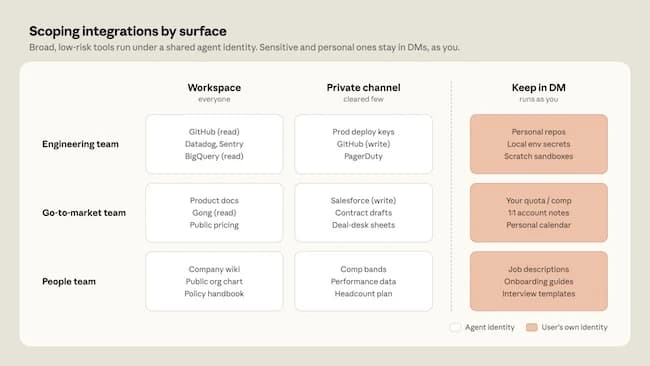
In practice, admins define a baseline identity at the workspace level and override it per channel, so engineering's Claude can reach GitHub and the data warehouse while a sales channel's Claude is confined to the CRM. Private channels get their own identity, and "what Claude learns in a private channel never appears in the wider workspace." Every action, memory write, and network call gets logged. DMs are different again: those run on your personal claude.ai account, the right place for "email drafts or software only you have a license for." It's a thoughtful access model, and it's the kind of confidence and permission scoping any team putting an agent near real systems should be asking about.
What changed from the old Claude in Slack app
Claude Tag replaces the old Claude in Slack app, with a 30-day opt-in migration window. If you only remember the 2025 version as a chat panel, the jump is bigger than it looks:
| Dimension | Old "Claude in Slack" | Claude Tag |
|---|---|---|
| Model of use | Single-player: DMs and an assistant panel | Multiplayer: one shared Claude per channel |
| Memory | Per-user, per-session | Persistent channel memory across days |
| Initiative | Responds when invoked | Ambient mode: monitors, follows up, tags you back |
| Duration | On-demand replies | Async tasks over hours or days, self-scheduling |
| Access | Acts on your credentials | Agent identity: own service accounts, per-channel scope, audit logs |
| Model | - | Claude Opus 4.8 |
VentureBeat reads it as the synthesis of a year of releases, two-way Slack connectivity, interactive Claude apps, Claude Code in enterprise plans, Managed Agents, and then Opus 4.8, all pulled into one product.
What Claude Tag costs
This is the soft spot. Anthropic hasn't published a per-seat or per-token price; Claude Tag runs on token-based spending, with admins setting spend limits at the organization and channel level and an audit log of who asked for what. One HN reader summarized it as "Claude integration to Slack is now billed as API usage", and another replied "nailed it."
There's a generous on-ramp. A launch-credit line quoted on HN puts it at $25,000 per Enterprise org and $2,500 per Team org with at least 10 paid seats, prompting the dry "That's… a lot of credits. Clearly they expect to make it back fast."
And that's the real concern, voiced more sharply than anywhere else in the launch reaction:
Wowza this will be a token guzzler. Assuming Claude is parsing every message posted on multiple slack channels, compacting knowledge etc.

A builder who'd shipped a similar Slack bot pushed back that real sessions tend to be short-lived so cost stays manageable, but the honest answer is nobody knows yet. As VentureBeat put it, for "an agent that monitors channels continuously, builds memory, and works asynchronously over hours or days, the token consumption profile could look very different from traditional AI usage." If you're used to forecasting spend, raw token billing on an always-on agent is the line item to model before you roll it out widely.
What people are saying
The reaction split cleanly. The believers see a new interaction model: Kevin Weil called it "such a good idea," and Anthropic's Alex Albert said it feels "less like using a tool and more like managing a team."
The skeptics aimed at two things. The 65% stat drew the sharpest jab:
Given the reliability and general product quality of the Anthropic product team's code, this doesn't sound like a selling point.
And the "one Claude everywhere" design got a pointed structural critique from Anthropic's own Joanne Jang, who needled the "monotheistic" model of a single shared identity that, by design, partitions what it knows per channel. It's a real tension: the same boundary that keeps a private channel private also means the Claude in #gtm doesn't know what the Claude in #general does. Worth keeping in mind before you assume it has one coherent view of everything.
The memory worry is the one I'd watch most closely, because it's the same failure I see in support:
It's quite bad at distinguishing what it should 'learn' from experimental or just wrong data… It builds and builds on a foundation of sand.
What Claude Tag means for support teams
Here's where I'll be opinionated, because this is the part I actually live in.
Claude Tag is a strong product for internal team work, and it validates a bet eesel made years ago: the right shape for AI at work is a teammate that lives where you already are, remembers your context, and acts on its own. If your need is an internal support chatbot for employees, an IT service desk in Slack, or pulling enterprise search results into a channel, this whole category is moving fast and it's worth watching.
But customer-facing support is a different job, and it's where the general-purpose teammate model hits its limits. The positioning is the easiest way to see it:
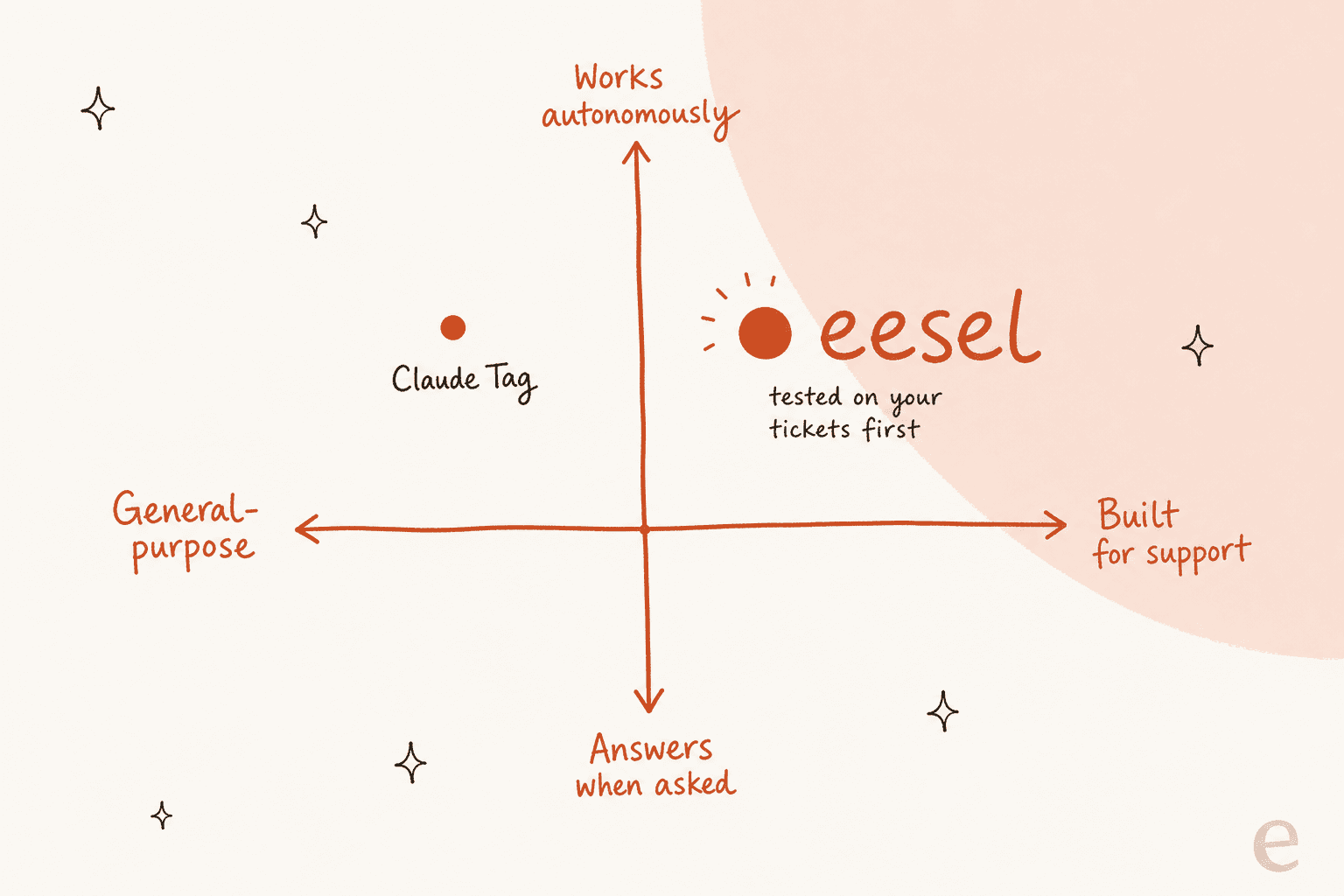
The two loudest worries about Claude Tag, unpredictable token cost and learning from the wrong data, are exactly the two things a customer support deployment cannot tolerate. A bot that quietly learns a wrong answer and repeats it to a customer isn't an internal annoyance, it's a refund, a churned account, or a compliance problem. I've watched confident-sounding bots give wrong answers with total conviction, which is the whole reason we simulate every eesel rollout against a company's real past tickets before it ever replies live. You see the projected resolution rate and the exact answers it would have sent, then you fix the gaps, then you go live.
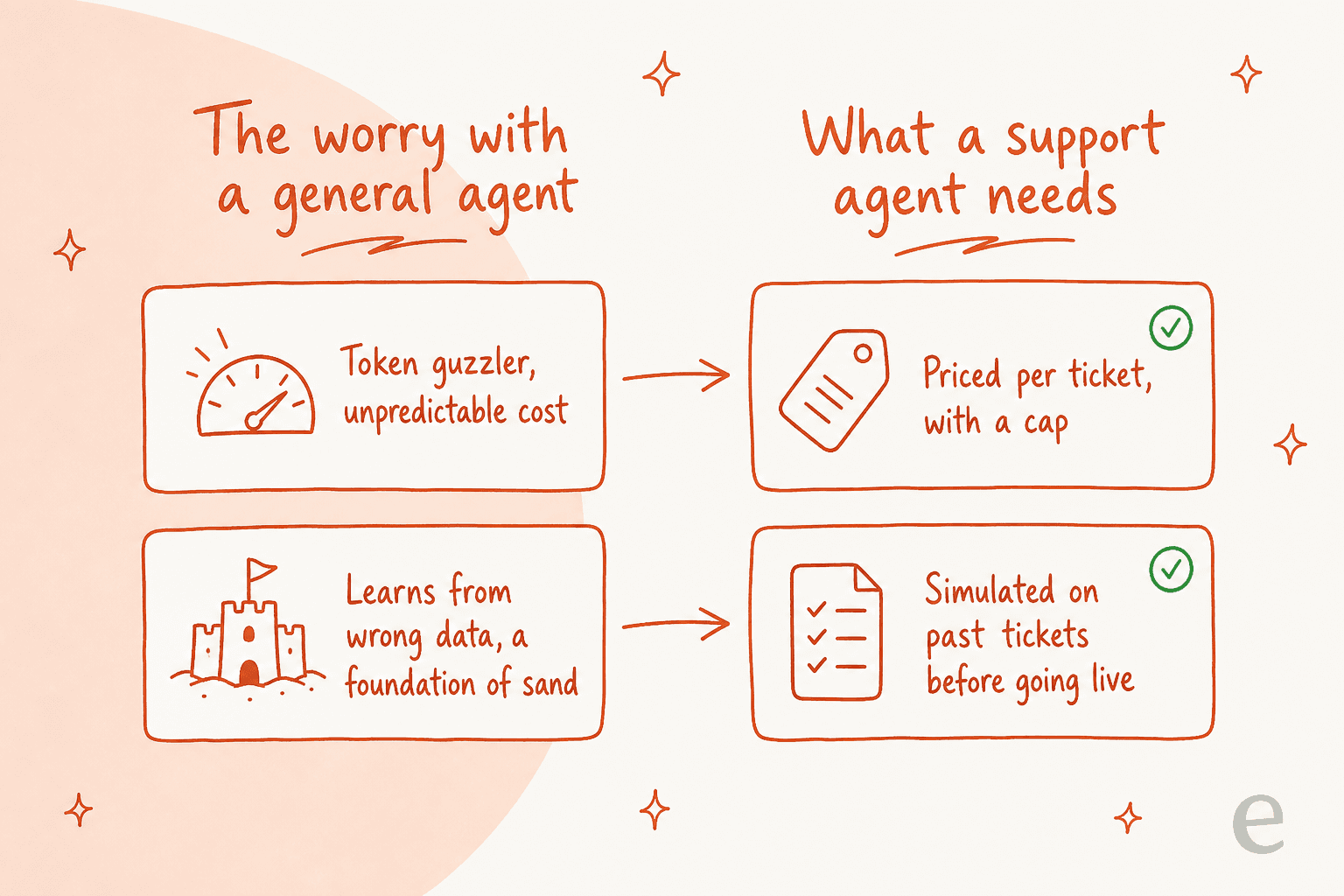
So which do you actually need? It usually comes down to one question:
That's the whole reason a support-built tool exists. eesel is the AI helpdesk agent version of the same teammate idea: it plugs into Zendesk, Freshdesk, Gorgias, Front and Slack, trains on your solved tickets rather than just your help center, routes by confidence so low-certainty cases get drafted instead of sent, and bills per ticket so the cost is something you can actually budget. Gridwise saw it resolve 73% of tier-1 requests in the first month; Smava runs a fully automated agent on 100,000+ German-language tickets a month. Different job, different guardrails.
If you're shopping that category, our guides to the best AI for Slack support, the cheapest AI apps for helpdesk, and AI for agent productivity go deeper than this post can.
Try eesel for customer support
Claude Tag is the right shape for an AI teammate inside your team's Slack. When the audience is your customers, you want that same teammate built for the helpdesk: eesel connects to your existing tools in minutes, learns from your past tickets, and lets you simulate the rollout on real historical conversations before a single reply goes out, so you see the resolution rate before you commit, not after.
It works the same way across your helpdesk, drafting and sending replies, triaging, and escalating, with full oversight while you hand it more autonomy over time:
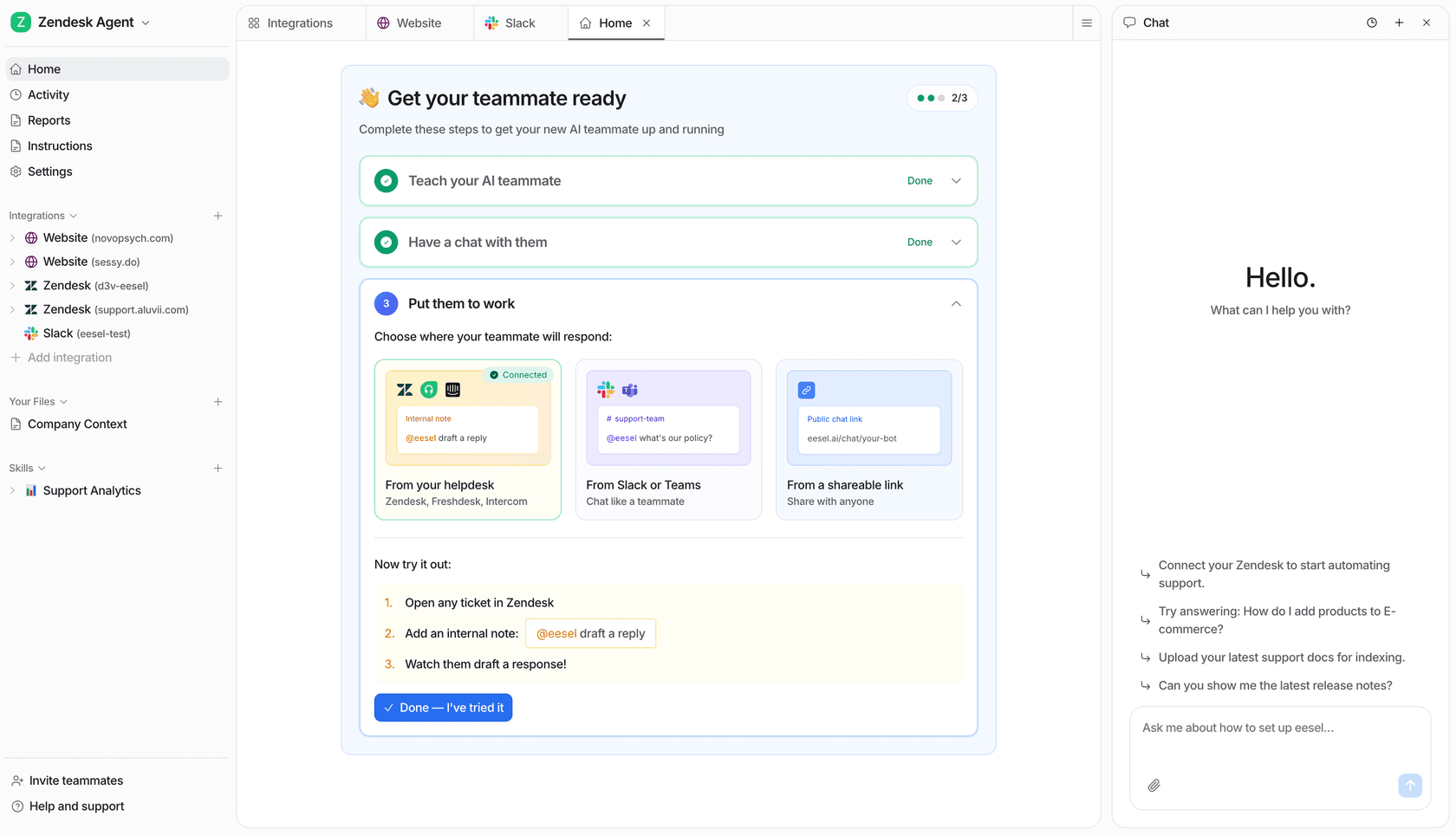
You can try eesel free, no credit card, and run a simulation on your own tickets to see what it would resolve before you turn it on.
Frequently Asked Questions
What is Claude Tag?
@Claude in a channel, hand off a task, and it works through it using the tools it's connected to, then replies in the thread. It launched in beta in June 2026 for Claude Enterprise and Team customers and runs on Claude Opus 4.8. If you're weighing it against other options, our roundup of AI agents and AI for Slack support is a good place to start.How much does Claude Tag cost?
Is Claude Tag the same as the old Claude in Slack app?
Can Claude Tag handle customer support?
What plans is Claude Tag available on?



Article by
Rama Adi
Rama is a software engineer at eesel AI with two years of experience writing about B2B SaaS, AI tools, and customer support technology. Based in Bali, Indonesia, he brings a developer's perspective to product comparisons — cutting through marketing copy to what the integrations and APIs actually do.