Teammates.ai review (2026): is Raya worth it for support?

Kira

Katelin Teen
Last edited July 17, 2026

What Teammates.ai actually is
Before it was Teammates.ai, it was Uktob.ai, a B2C generative-AI platform whose "Faheem" assistant reportedly reached 400,000+ users. In January 2025 the company rebranded, closed a new funding round led by Hustle Fund, and relaunched around a bigger idea: stop selling software seats, start selling outcomes.
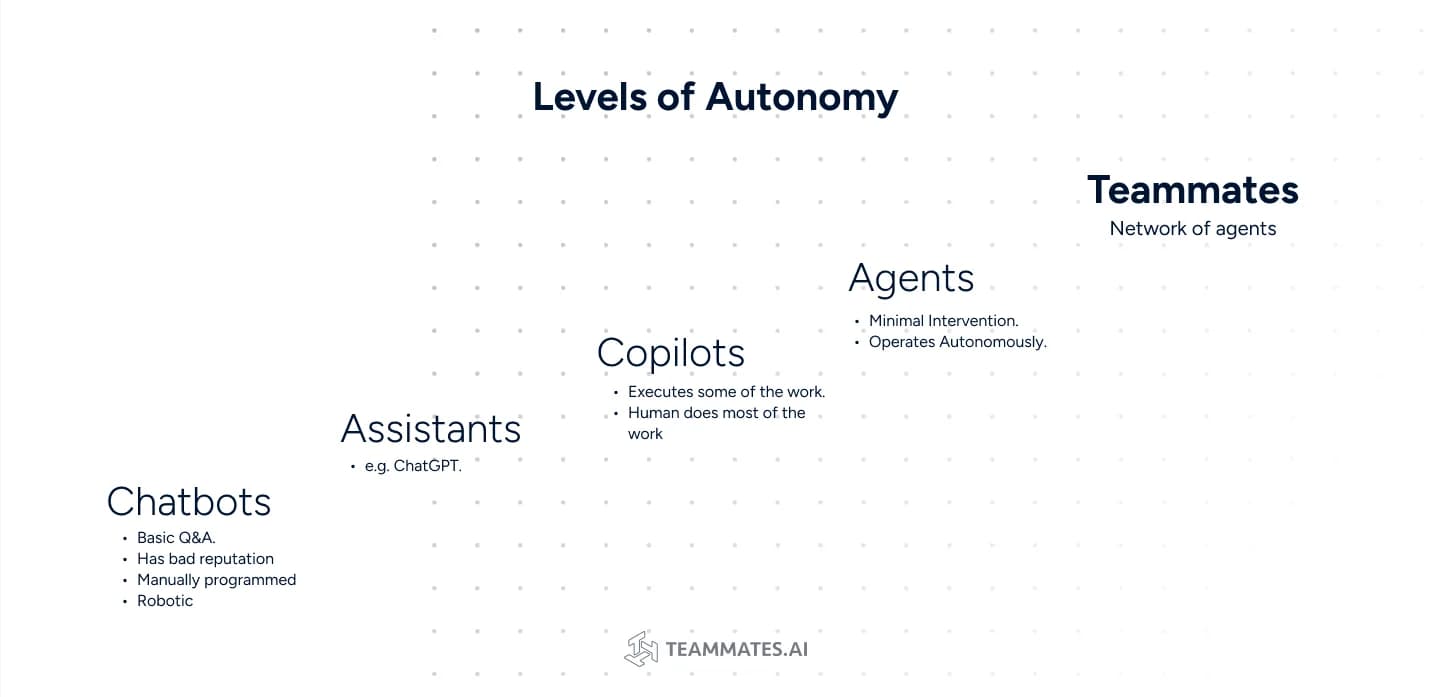
The founding team is the Ayyad family, with Kareem Ayyad as CEO. Their pitch is that a business spends far more on labor than on software, so an "AI employee" that owns a whole job function is aiming at a much bigger budget than a normal SaaS tool. That framing shows up in how they draw their own product: not a chatbot, but the top rung of an autonomy ladder.
There are three named teammates, and they share context in under 10 seconds:
- Raya handles customer service across chat, voice, email, and WhatsApp.
- Adam runs sales: outreach, qualification, and booking meetings.
- Sara runs interviews, scoring candidates on 100+ signals.
One quick housekeeping note, because older write-ups get it wrong: the support agent is named Raya, not "Aya." Every current page uses Raya. There's also an unrelated US company called "Teammates" founded by ex-Twilio people; this review is strictly the UAE Teammates.ai.
The single most interesting differentiator for support is language. Teammates.ai claims 50+ languages with native handling of every Arabic dialect, from Gulf to Levantine to Maghrebi, plus right-to-left support and dialect selection on voice calls. If your customers write in Arabic, that's a rare strength, and most Western AI customer service software treats Arabic as an afterthought.
Meet Raya, the support teammate
Raya is the reason a support leader would look at Teammates.ai, so let's be precise about what it does. It's positioned as "fully autonomous support" that manages your entire support operation: it answers across WhatsApp, email, phone, Slack, Teams, and live chat, and it takes real actions like refunds, order lookups, account changes, and returns, then updates your CRM and escalates when it's stuck.

That "takes real actions" part is what separates a real AI agent from a rule-based chatbot. An old-school bot deflects with a help article; Raya is meant to actually resolve the ticket by doing the thing the customer asked for. Here's the loop it runs on a single conversation:
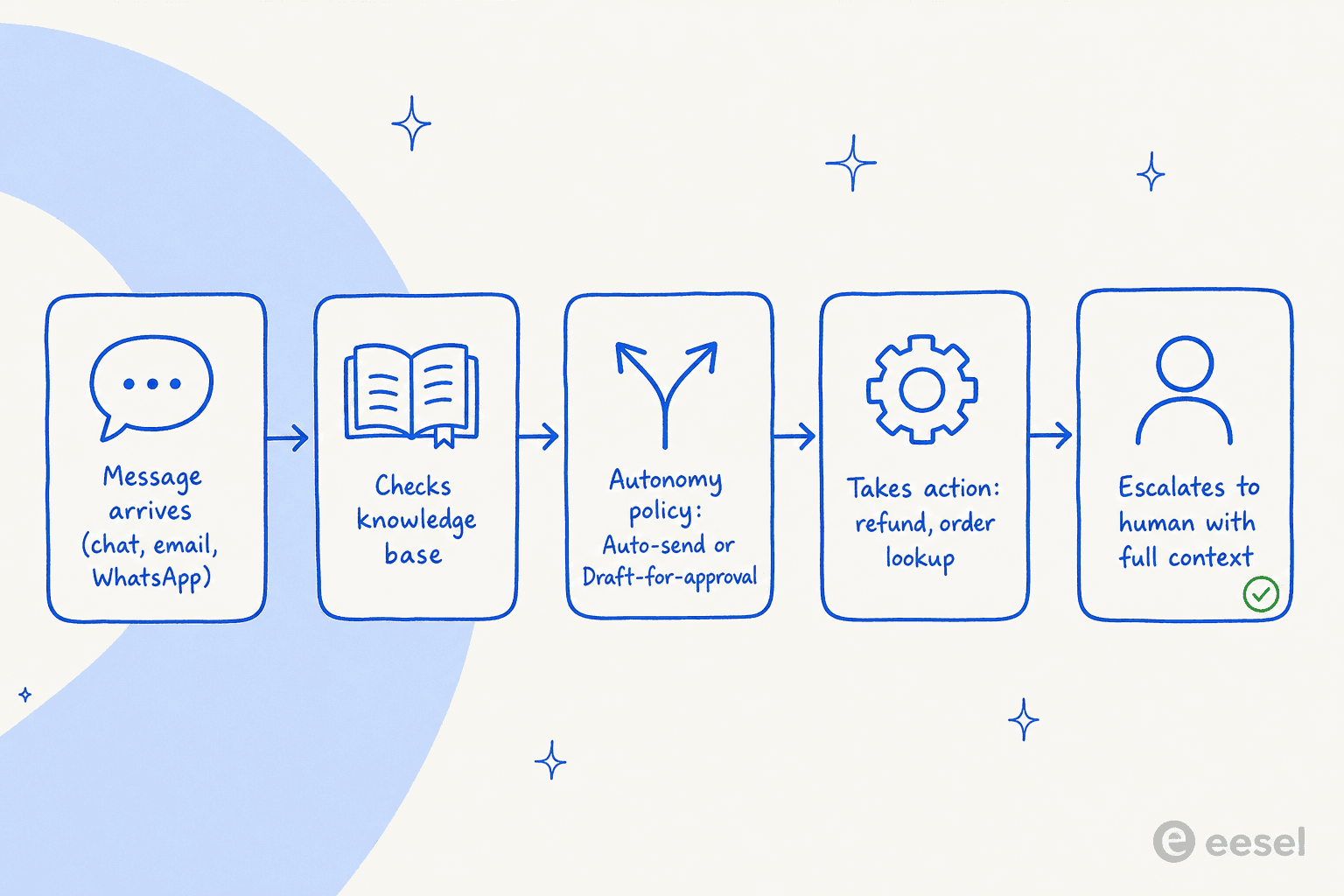
The important nuance sits in step three. Teammates.ai markets "fully autonomous," but the platform actually gives you per-channel autonomy policies with two modes:
- Auto-send: Raya replies immediately with no human review.
- Draft for approval: Raya writes the reply, and a human approves, edits, or rejects it from a pending queue.
You set this per channel, so you can run live chat on auto-send while keeping email on draft-for-approval. That's the sensible way to roll out any support AI, and it quietly contradicts the "fully autonomous" headline. Which is fine, because full autonomy on day one is usually a mistake. As one support lead put it to us:
"The AI will never be able to answer 100% of the questions. I need an AI who is only handling the tickets that it's confident to handle, and all the other ones, leave them alone."
A DTC supplements CX lead (eesel customer interview)
That instinct, hand the AI only what it's sure of, is exactly why draft-for-approval matters more than the autonomy marketing.
How Raya works under the hood
Teammates.ai calls each teammate a "network of agents" rather than a single model call, with an inbox agent, a chat agent, a phone agent, and so on coordinating behind the scenes (that's the diagram at the top of this review). For a support buyer, the practical questions are simpler: what does it learn from, and what can it do?
On knowledge, you upload files and crawl websites to build the base Raya answers from. On actions, you connect tools so it can look up orders, create tickets, and check inventory. Setup is pitched as under 10 minutes, which is realistic for a basic knowledge-base bot and optimistic once you're wiring up real refund and order-management actions.
Integrations are routed largely through Paragon, and the named connectors include Zendesk, Salesforce, HubSpot, Slack, and WhatsApp Business. The marketing says "30+ integrations" on the homepage and "50+ tools" on the Raya page, which is a small tell: when a vendor's own pages disagree on their integration count, verify the specific tool you need is actually supported before you commit.
Oversight looks reasonable on paper: human-in-the-loop approvals, a "constitution" of behavioral rules in the workspace, and audit trails for every action. Third-party listings say it's GDPR compliant and SOC 2 Type II aligned, though "aligned" is not the same as "certified," so ask for the actual trust documentation if you're in a regulated space.
Teammates.ai pricing: the credit wallet
Here's where Teammates.ai earns real credit (pun intended): pricing is fully public and self-serve, which already puts it ahead of the many support-AI vendors that hide behind "book a demo." Every plan includes all three teammates and unlimited team members. You're not buying seats; you're buying a shared monthly wallet of credits.
| Plan | Monthly price | Credits/mo | Team members |
|---|---|---|---|
| Free | $0 (no card) | 10 | 1 |
| Pro | $25/mo | 50 | 1 |
| Business (Popular) | $50/mo | 100 | Up to 5 |
| Scale | $100/mo | 200 | Up to 5 |
| Enterprise | Custom | Custom | Unlimited |
Source: Teammates.ai pricing. Annual billing knocks off about 17%.
The thing to understand is that one credit means very different things depending on which teammate spends it:
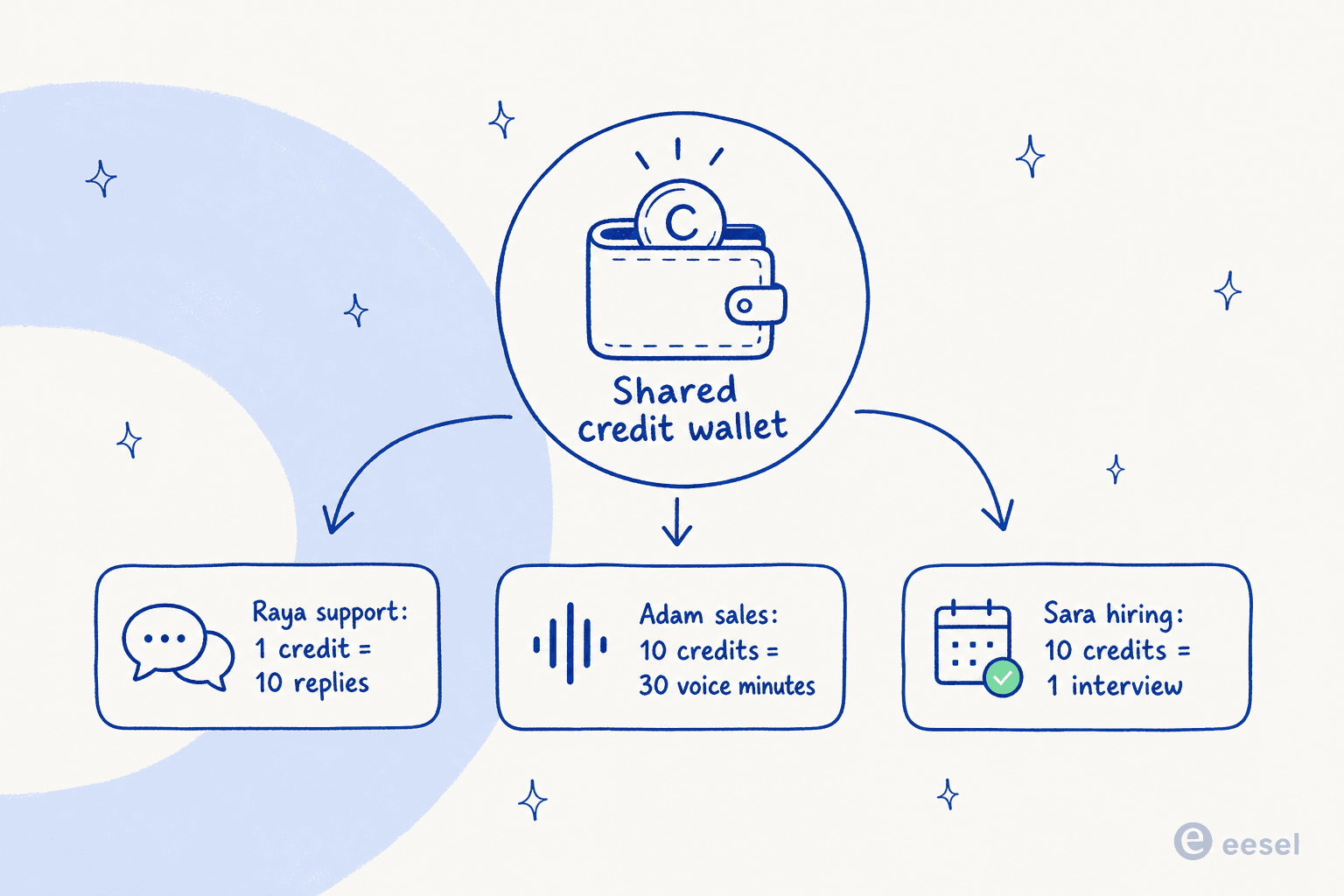
For support, 1 credit buys about 10 replies. So a worked example: the Business plan's 100 credits is roughly 1,000 support replies a month. Sounds like a lot, until you remember a single resolved ticket often takes three to five back-and-forth replies. At five replies per ticket, 100 credits resolves closer to 200 tickets, not 1,000, and if you're also running Adam's sales calls (10 credits per 30 voice minutes) out of the same wallet, that number drops fast.
Run out mid-month and the teammates pause: Raya's chat widget hides and new conversations are blocked until you top up (packs run $0.26 to $0.35 per credit) or renew. That's the real risk with credit models for support: your cheapest month and your busiest month cost wildly different amounts, and your busiest month is exactly when you don't want the AI to switch off. It's the same unpredictability I'd flag on any per-conversation plan versus a fixed monthly price.
What Teammates.ai gets right
Let me be fair, because there's a real product here:
- Public, self-serve pricing. No sales gate on the first four tiers. Rare and welcome.
- Arabic-first, done properly. Native dialect handling is a moat in MENA that almost no competitor matches.
- It's a true agent. Refunds, order lookups, CRM updates, real actions, not just article deflection.
- The bundle is coherent. If you want AI across support, sales, and hiring with shared context, three tools in one wallet is a tidy story.
- Sensible controls. Per-channel draft-for-approval is the right primitive for a careful rollout.
Where it falls short for support teams
Now the honest part, and it's mostly about proof and depth rather than the product being bad.
The numbers are unverified. The 78%-of-tickets-resolved claim, the 26-hours-to-38-minutes stat, the 92% candidate satisfaction, they're all first-party. Worse, the site isn't even internally consistent: the homepage says 78% while the Raya page says up to 85%. When I went looking for outside validation, there was nothing citable on Reddit, G2, Capterra, or Trustpilot. That's not proof it's bad; it's a young company (founded 2025). But it means you're taking the resolution rate on faith, and support leaders have been burned by confident bots before.
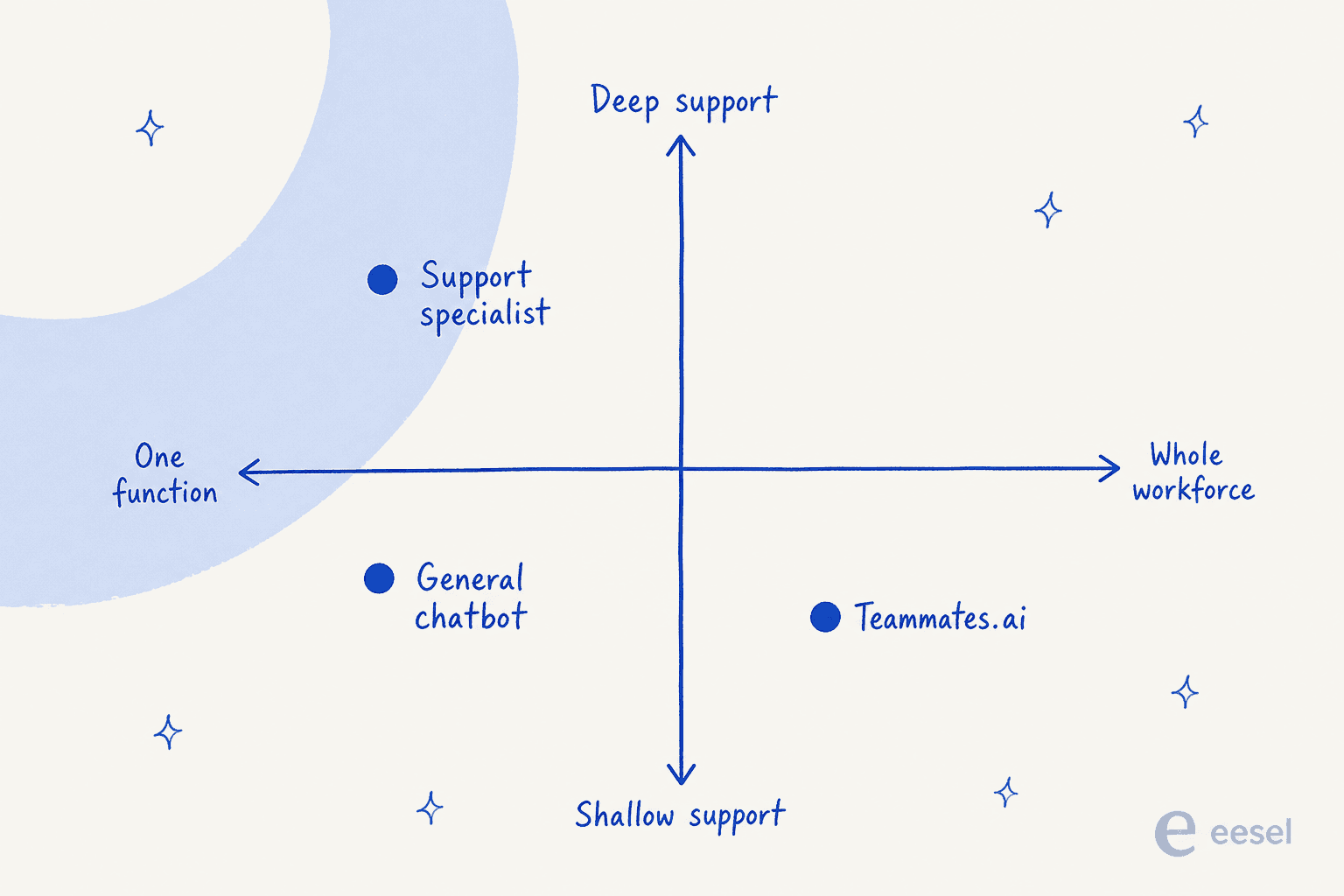
Depth versus breadth. A tool that owns support, sales, and hiring is spreading its attention across three very different jobs. A support specialist spends all of its roadmap on one: better ticket triage, escalation logic, reporting, helpdesk-native workflows. That difference shows up in the long tail of edge cases.
No test-before-you-trust step. The biggest gap for a support buyer is that there's no obvious way to simulate Raya against your real ticket history before it goes live. This is the single most important thing I'd want. At eesel we run every rollout in simulation over thousands of past tickets first, precisely because we've watched confident-sounding bots quietly give wrong answers. A resolution number you measured on your own data beats a number on a marketing page every time.
Credit unpredictability. Covered above, but it belongs on this list. Volume spikes plus a shared wallet is a recipe for surprise top-ups.
Who should use Teammates.ai
Reach for Teammates.ai if: you serve Arabic-speaking customers, you want one bundle for support plus sales plus hiring, and you're comfortable trialing on the Free plan to see the resolution rate for yourself. The public pricing makes that low-risk.
Skip it if: support is your whole job, you already live in a helpdesk like Zendesk or Gorgias, and you want to see a measured resolution number on your own tickets before you trust an agent with customers. That's a specialist's job. If you're weighing options, the full Teammates.ai alternatives roundup and the wider best customer service AI comparison are the next reads.
Try eesel for support
If your job is support and you want to know your real resolution rate before committing, that's the exact gap eesel is built for. eesel is an AI helpdesk agent that layers on top of the tools you already use (Zendesk, Freshdesk, Gorgias, Help Scout, Slack) instead of asking you to move, and it trains on your past tickets and help center so it sounds like your team from day one.
The part Teammates.ai doesn't offer: before eesel answers a single live customer, you run it in simulation over thousands of your historical tickets and see the exact resolution rate and cost. One customer, Gridwise, resolved 73% of tier-1 requests in the first month, a number they saw during a 7-day trial rather than on a slide. Pricing is one fixed monthly price with no per-seat fees, from $299/month for 500 credits (1 credit per ticket or chat), so a busy month doesn't blindside you.

You can try eesel free with 100 credits, no card, and run the simulation on your own tickets before you decide anything.