Maven AGI pricing: what it actually costs in 2026

Kurnia Kharisma

Katelin Teen
Last edited July 15, 2026
How much does Maven AGI cost?
The honest answer is: nobody outside a Maven AGI sales call knows the exact number, and that's by design. There's no price list to quote. I went looking for one the way any buyer would, and the /pricing path just 404s while every other route ends at a demo form.
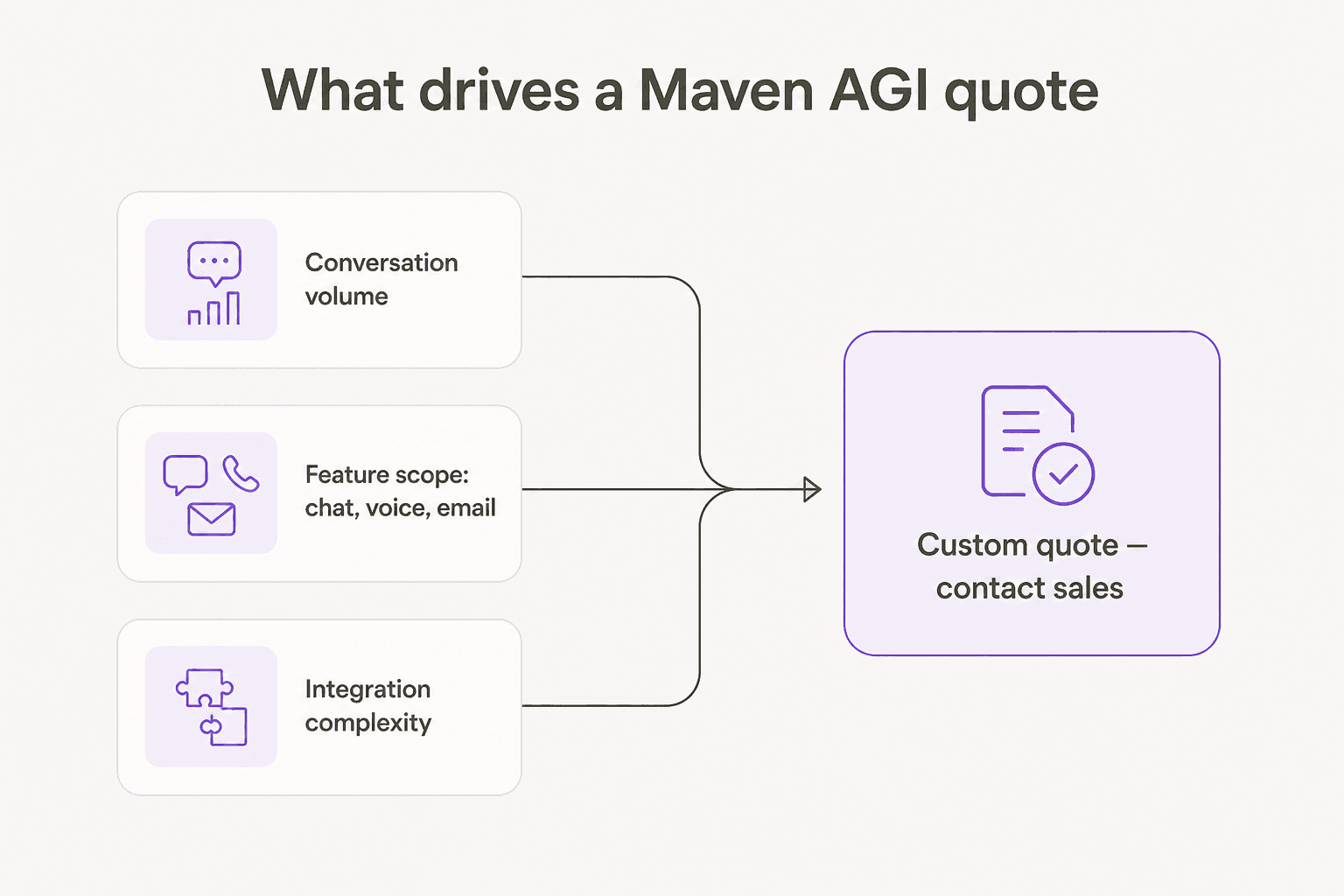
That's not unusual for enterprise CX platforms, but it does mean you can't estimate your spend before investing a few weeks in a sales cycle. The one public signal comes from procurement marketplaces: Vendr lists Maven AGI as custom, contact-sales pricing, with cost driven by conversation volume, features, and integration complexity. There's no published per-resolution rate, no monthly tier, no "starts at $X."
This is the single most common reason teams start hunting for Maven AGI alternatives before they've even seen a demo. When I talk to support leads about AI, the frustration is almost always the same shape. One CX lead at a US healthcare platform, evaluating tools after finding their native helpdesk AI "inadequate and overpriced," put the underlying worry plainly:
"We've kicked the tires on Zendesk AI solutions and found it largely inadequate and overpriced. So we're looking for other options."
That's the mood most people bring to a quote-only vendor: they want to know the cost and see it work, in that order, and a demo-gated price does neither.
Why there's no number on the pricing page
Maven AGI sells to enterprise. Its own about page leads with "publicly traded enterprises," and the whole motion is built for a procurement team, not a support manager with a company card. In that world, custom quotes are the norm because deals are negotiated on volume, term length, and how much of the platform you switch on.
The tradeoff is real, though. A sales-led model gives a big enterprise a tailored contract and a dedicated team, but it puts a wall between a mid-market buyer and a simple yes/no decision. If you can't try the AI agent on your own tickets and can't see the price, you're being asked to trust a slide deck. That's a hard sell for anyone who's been burned by an AI tool that demoed beautifully and underperformed in production.
What actually drives your Maven AGI quote
Since there's no rate card, the useful thing is to understand the levers a Maven rep will price against. Based on how Maven positions the platform and how enterprise CX contracts generally work, these are the dimensions that move your number:
| Pricing lever | What it means | Why it moves the price |
|---|---|---|
| Conversation volume | Total AI-handled conversations per month | The primary meter; more volume, higher spend |
| Channel scope | Chat, voice, and email coverage | Adding the AI Voice Agent expands the contract |
| Integration complexity | Connectors into Zendesk, Salesforce, Freshdesk and internal systems | Deeper, custom integrations add implementation cost |
| Seats and roles | Human agents using the Agent Designer and copilot | Larger teams push the quote up |
| Term and commitment | Annual vs multi-year, minimum volume | Longer commits trade flexibility for a lower rate |
For a sense of scale, published industry benchmarks for autonomous resolution tend to land somewhere around $0.50 to $2.00 per resolved conversation. That's a market range, not Maven's published rate, and I'd treat it only as a rough anchor for the ballpark a per-conversation enterprise contract can reach, not a quote.
What you're paying for
To be fair to Maven, the platform is substantive. This isn't a thin wrapper over a chatbot, and understanding what's in the box is the only way to judge whether a quote is reasonable.
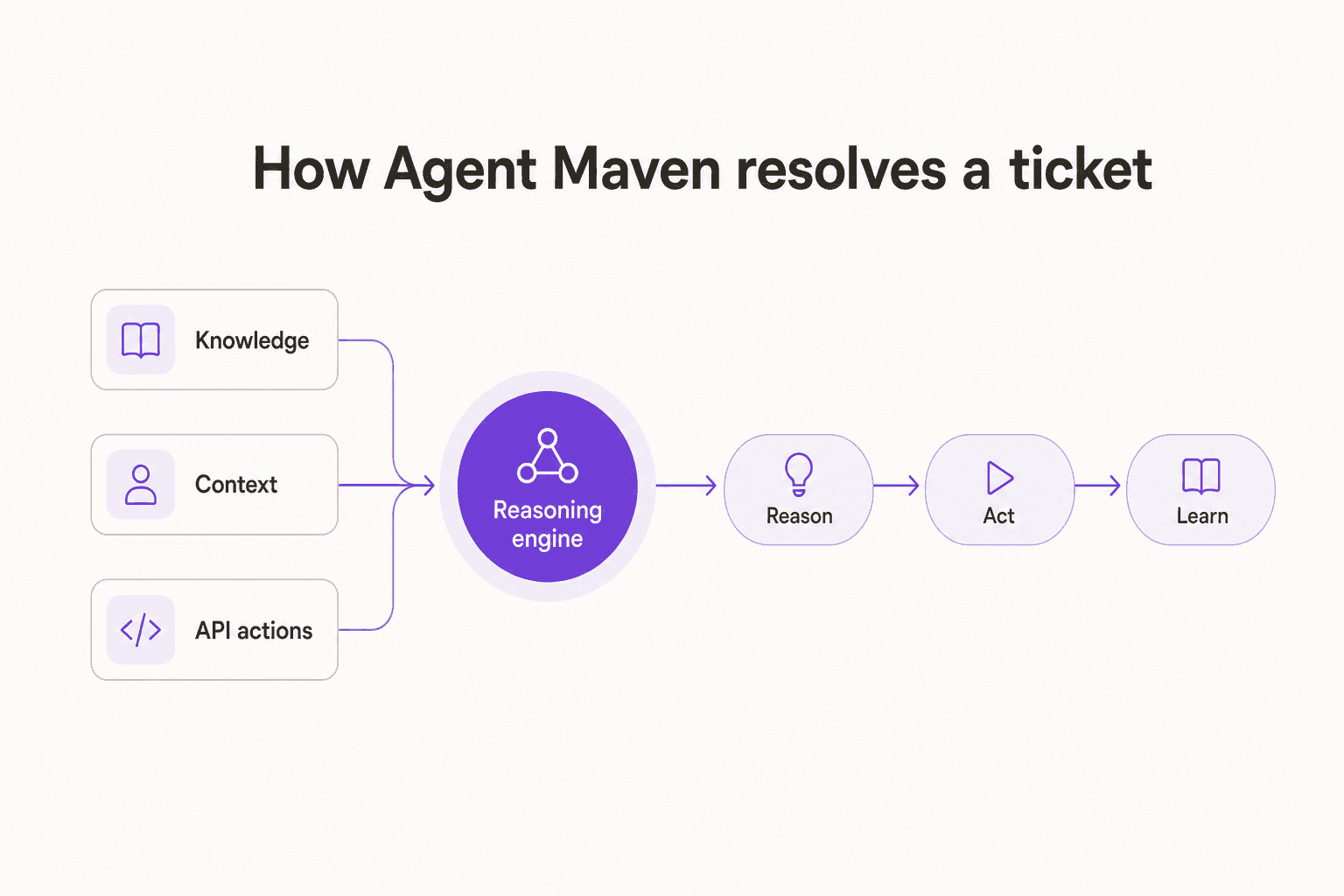
The core is what Maven calls a unified reasoning engine: rather than just deflecting tickets, Agent Maven is built to reason over your knowledge, pull in context, and take real actions through API calls. Maven says it's built on OpenAI's GPT-4, trained to the support context by ingesting knowledge bases and interaction logs.
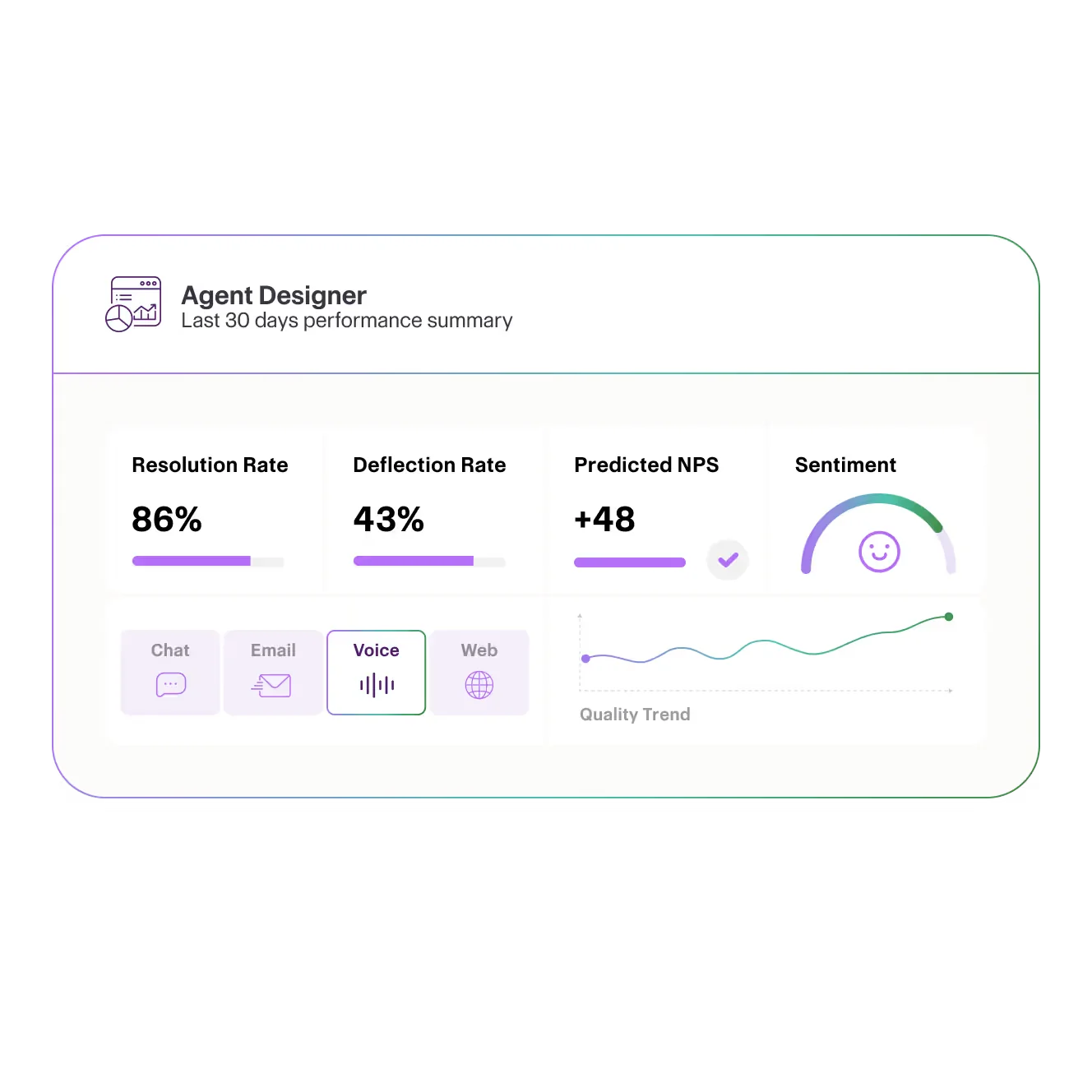
The Agent Designer is where you configure and monitor all of this, with performance metrics like resolution rate, deflection, and predicted NPS surfaced in one view.
There's also an in-app copilot that assists human agents mid-conversation, suggesting answers and next steps rather than only handling front-line deflection.
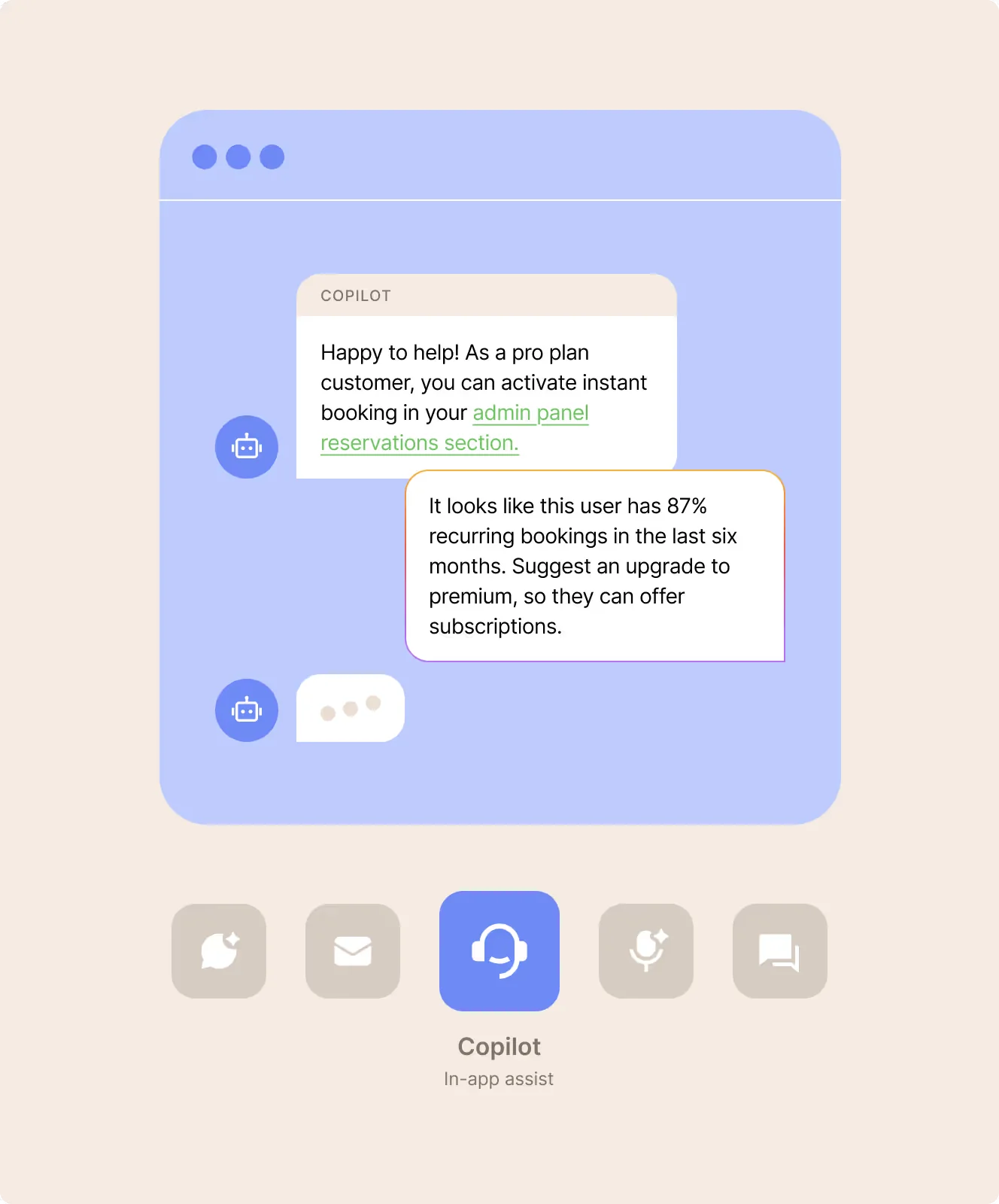
Voice is the newest expansion. The AI Voice Agent rounds out omnichannel resolution across chat, email, and phone, and it's the kind of add-on that meaningfully changes a quote.
On the enterprise checklist, Maven covers the security posture buyers at that scale need: SOC 2 Type 2, ISO 27001, HIPAA, PCI DSS, GDPR, and CCPA attestations. If you're a regulated enterprise, that's real value and part of what the price reflects.
The results Maven publishes are strong, too: Tripadvisor says it autonomously handles 90% of incoming queries, and Exclaimer reported an 18% cut in ticket volume. None of that is free, and none of it is cheap, which is exactly why the total cost deserves a closer look.
The costs that don't show up in the quote
Here's the part that catches teams out. The license fee is the number everyone negotiates, but it's rarely the number that hurts. On an enterprise AI rollout, the license is often the smaller half of what you actually spend in year one.
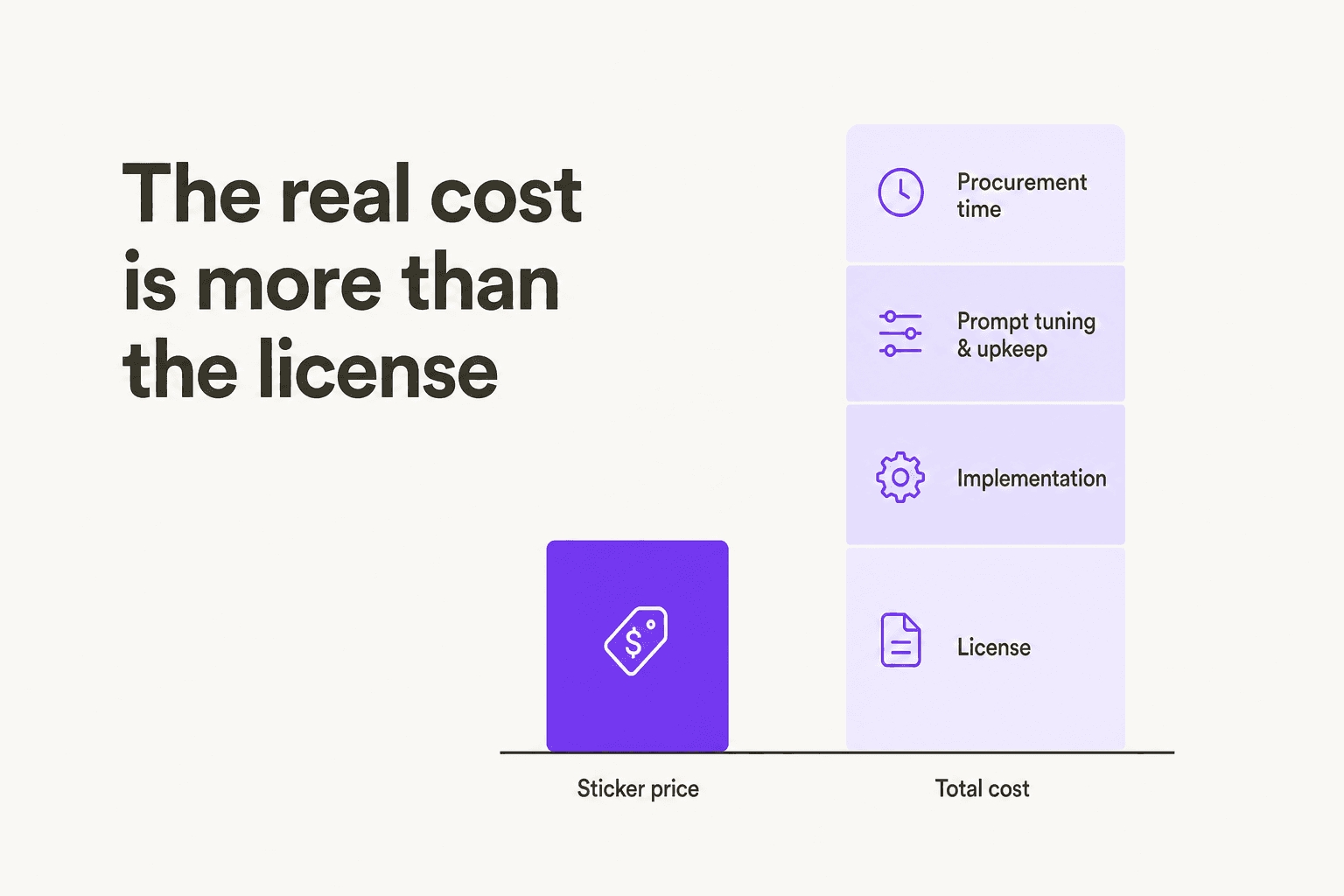
Three costs stack on top of the sticker price:
- Implementation. Deep, custom integrations into your helpdesk and internal systems take engineering and services time. That's real money and real weeks.
- Ongoing tuning. Even happy customers describe improving the agent through targeted prompt training. One reviewer put it bluntly: it "needs continuous maintenance". This isn't set-and-forget.
- Procurement time. The demo-to-contract cycle itself has a cost. Every week your team spends in sales calls and security reviews is a week the AI isn't deflecting tickets.
None of these are unique to Maven, and they don't make it a bad product. But if you're comparing the cost of AI versus human agents, you need the fully loaded number, not the line item on the order form.
Estimate what enterprise AI support really costs
Since Maven won't show you a number, it helps to work backwards from your own volume. Plug in your monthly conversations below to see roughly what a per-conversation enterprise contract might run, next to eesel's published monthly plan for comparison.
The point isn't that the enterprise band is always higher. It's that with a published plan you can see the number and it scales in clear steps with volume, while an opaque contract asks you to negotiate blind.
Is Maven AGI pricing worth it?
For a large, regulated enterprise that wants a dedicated team, deep custom integrations, and voice, chat, and email under one roof, Maven AGI is a credible choice, and the results its customers report back that up. The security attestations alone will matter to a lot of buyers.
But the friction is real, and it's not just me saying it. Maven's public review base is still thin at roughly 16 G2 reviews, and the sentiment that does exist is split. The praise is genuine:
"Maven's implementation is simply impressive. What I like most is that it feels approachable without being overly simplified."
And so is the cost concern:
"Pricing is not good and need continuous maintenance."
My take: if you're an enterprise with a procurement team and a voice use case, get the quote and weigh it honestly. If you're a lean or mid-market support team that wants to know the price, try before you buy, and be live this month rather than next quarter, the sales-led model is working against you, and there are alternatives built for exactly that.
Try eesel AI
I build eesel AI, so treat this as the biased-but-informed part: it's the tool I'd reach for when Maven's biggest problem for you is the pricing wall, not the product. We've spent years putting AI agents on live support queues, and the thing we learned the hard way is that buyers want to see the number and see it work before they sign anything.
So eesel does both. Pricing is one fixed monthly plan from $299 for 500 credits, with 1 credit per ticket or chat, no per-seat fees and no platform fee, and you get 100 free credits with no credit card to start. You connect your helpdesk, whether that's Zendesk, Freshdesk, or Salesforce, in minutes. And before it answers a single live customer, you can run a simulation on your past tickets to see your projected resolution rate. It's the opposite of a demo-gated quote: the number and the proof, up front.

Frequently Asked Questions
How much does Maven AGI cost?
/pricing page 404s. Third-party marketplaces list it as custom, contact-sales pricing driven by conversation volume, feature scope, and integration complexity. For a number you can see without a sales call, a tool like eesel AI starts at $299/month for 500 credits, with 1 credit per ticket or chat.