
Disclosure: This article is published by eesel AI, a competitor of Moveworks (now part of ServiceNow). We encourage you to read ServiceNow's own materials for their perspective.
Moveworks is an AI assistant platform for large enterprises, and since December 2025 it has been part of ServiceNow, which paid $2.85 billion for it. It is still sold on its own, and in February 2026 ServiceNow launched EmployeeWorks, which pairs Moveworks' conversational AI with ServiceNow's workflow platform. Moveworks helps employees find information and automate tasks across IT, HR, and finance.
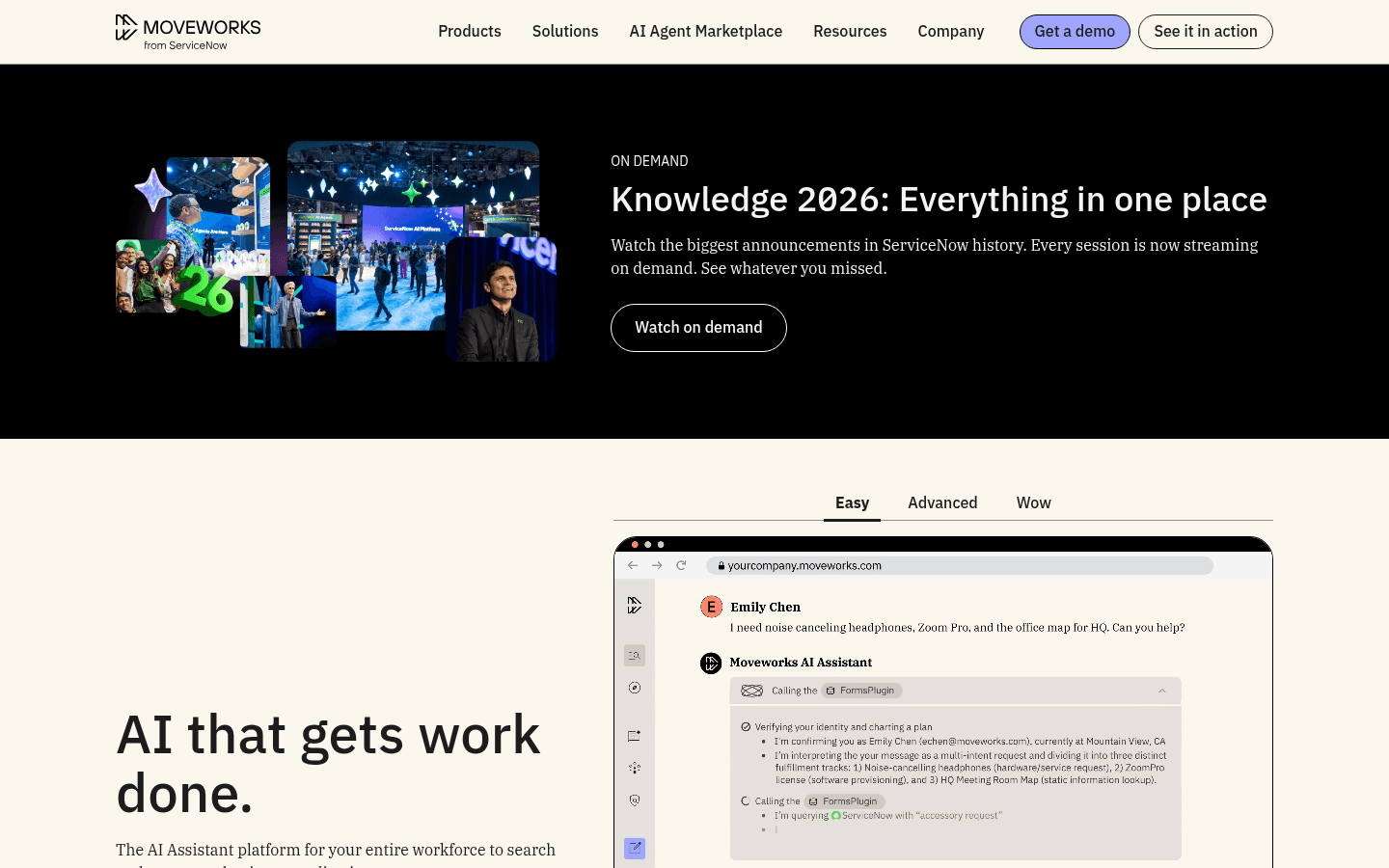
This post takes a direct look at the platform. We'll cover how it works, its main features, what is and isn't publicly known about the price, and what the ServiceNow deal means for anyone evaluating it today.
How does the Moveworks AI assistant work?
At its core, Moveworks is a universal AI assistant. It's designed to understand what an employee needs and then automatically handle the request by connecting to the business applications the company already uses, like Workday, Salesforce, and SharePoint.
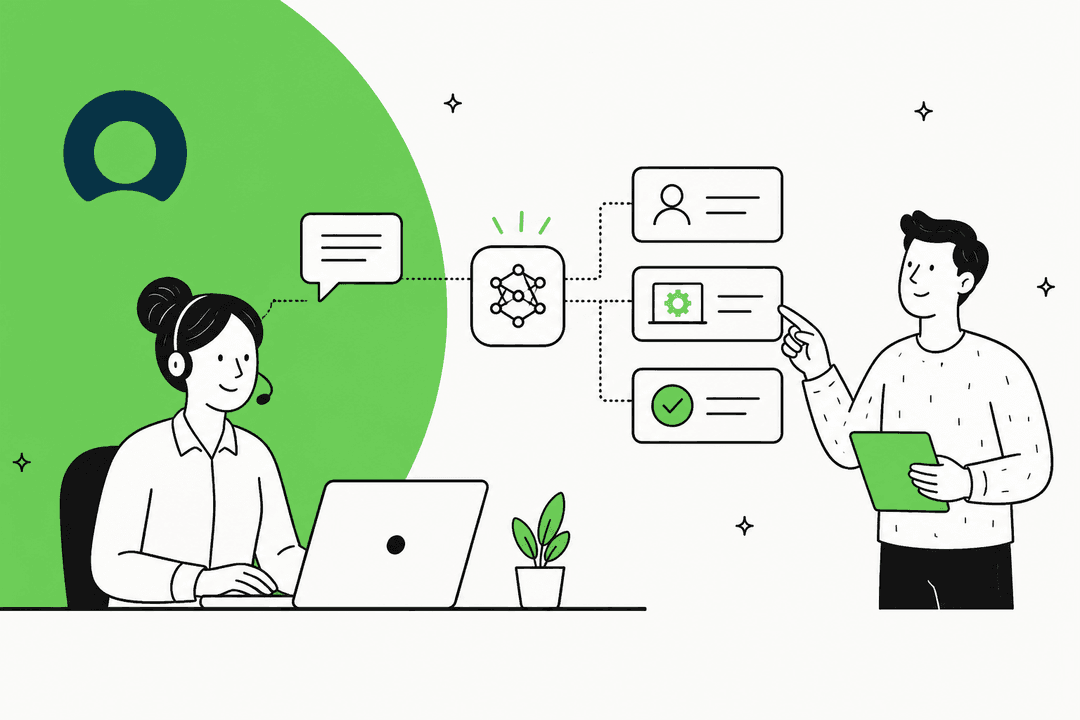
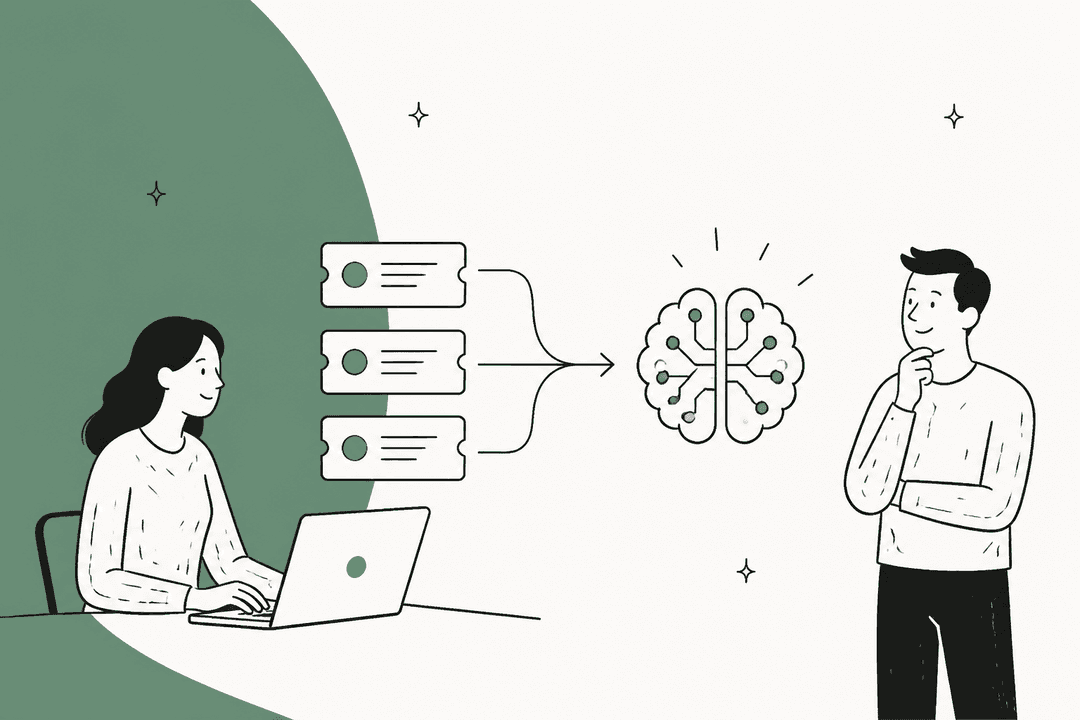
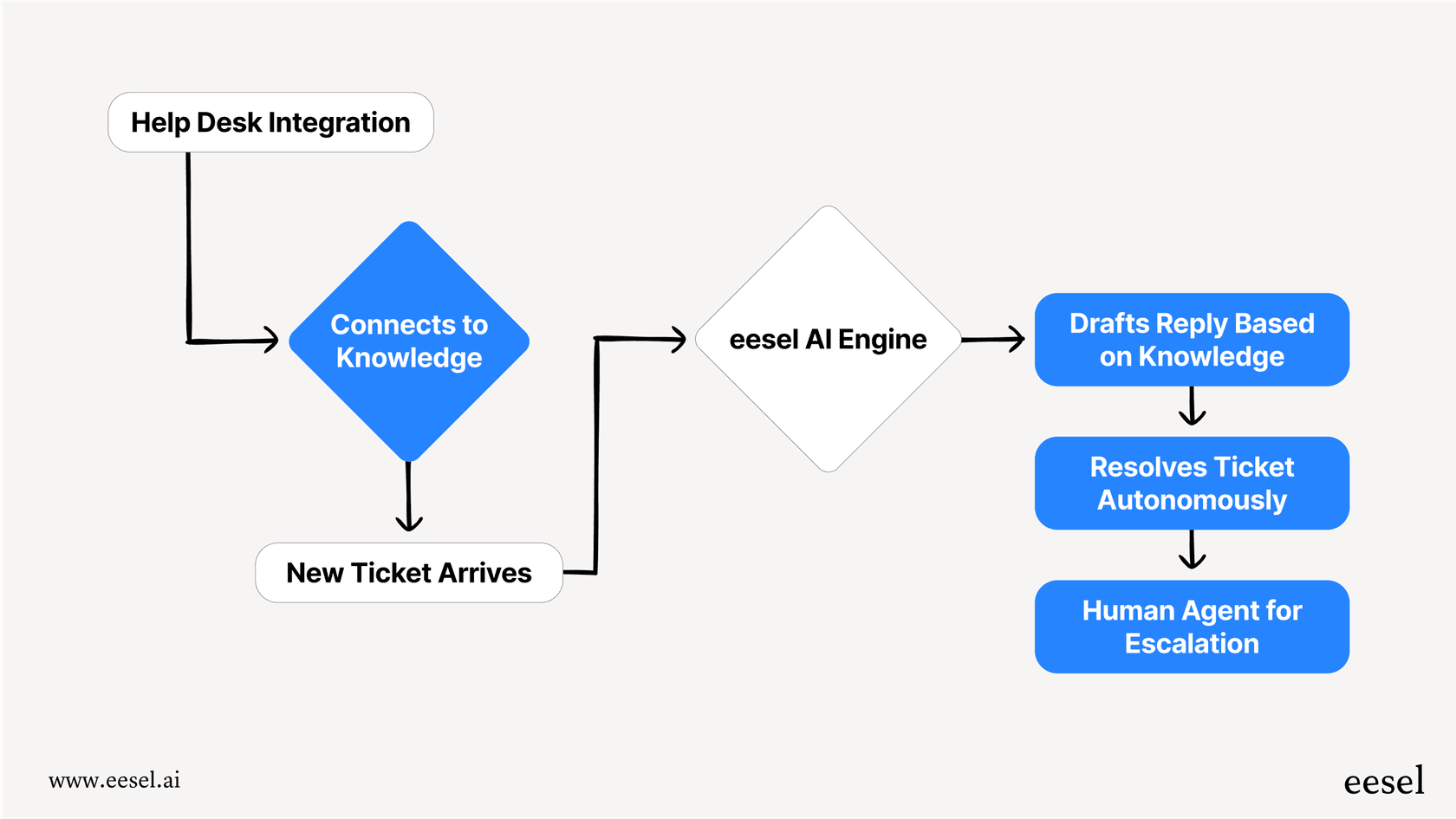
The system runs on what Moveworks calls a "Reasoning Engine." It uses a mix of open-source and proprietary language models to interpret requests, plan out the steps needed to resolve them, and execute those steps, without a human having to get involved. An employee asking to reset a password, check a company policy, or request software access can have the whole process handled start to finish. The diagram below shows how this flow works.
The assistant is available wherever employees work. ServiceNow EmployeeWorks, the product that combines Moveworks' conversational AI with ServiceNow's workflow platform, is available on the web, inside company portals, and natively in Slack, Microsoft Teams, Google Chat, and Webex (source), with support for over 100 languages.
A closer look at Moveworks' core features
The Moveworks platform isn't a single tool; it's a suite designed to help organizations build and manage an AI support system for their entire workforce, going well beyond a simple chatbot.
The agentic reasoning engine
The Reasoning Engine is what makes Moveworks tick. It takes an agentic AI approach: it can break a complex request into smaller, executable steps and carry them out across different systems. It's not just retrieving a link; it understands a request like "give me access to the new sales dashboard," determines the approval process, and makes the permission change in the right application.
Security is built into the platform. Moveworks carries enterprise-level certifications including ISO 27001, SOC 2 Type 2, FedRAMP Moderate Authorization, HIPAA, GDPR, and CCPA.
The creator studio and specialized assistants
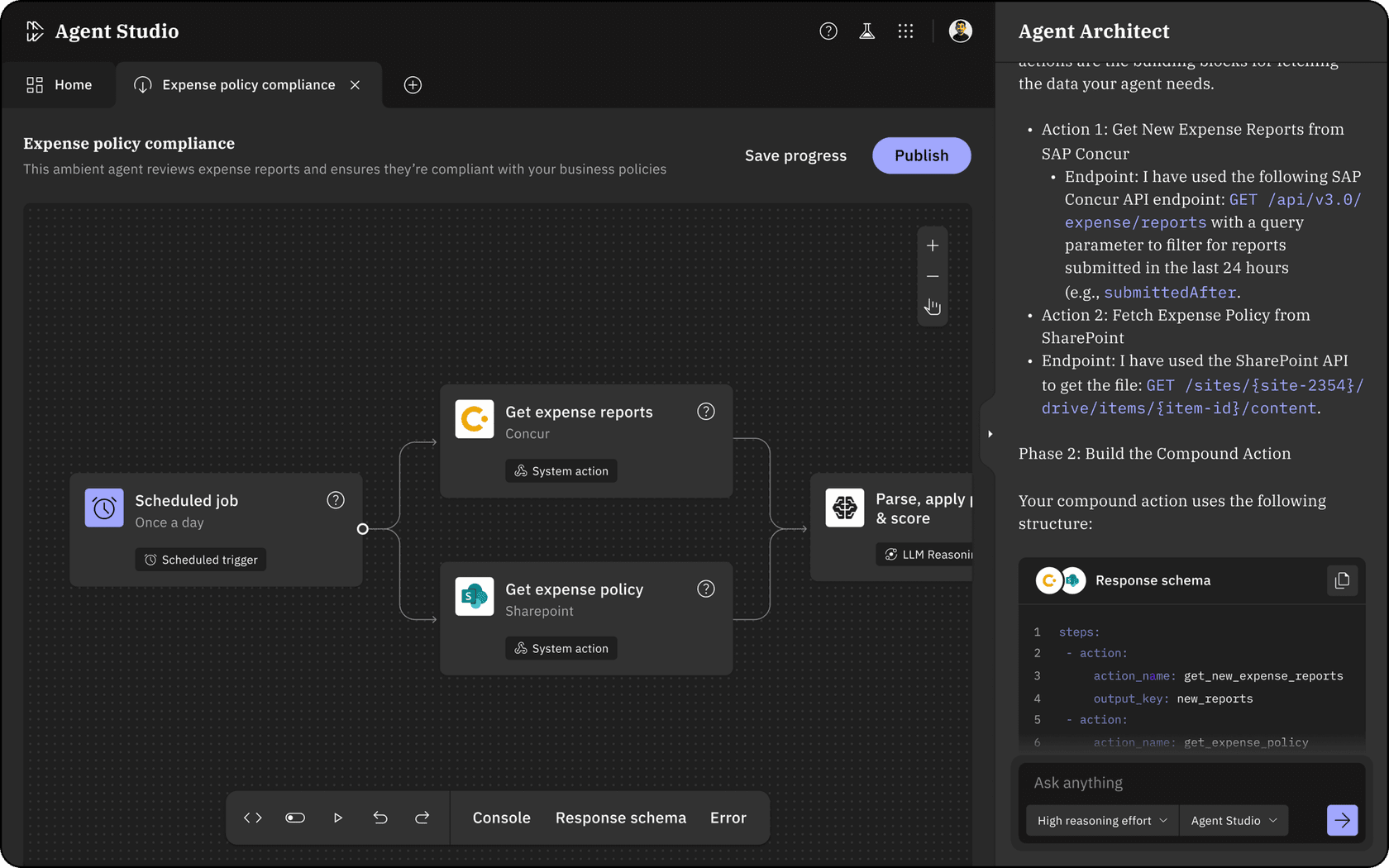
To build and deploy automation, Moveworks provides a Creator Studio, a low-to-pro-code IDE where teams can build custom AI agents. A no-code "Assistant Builder" means you don't need a developer to create a specialized assistant for your department.
If you'd rather not start with a blank slate, there's an AI Agent Marketplace with over 1,000 pre-built agents covering specific jobs, like summarizing a ServiceNow ticket, managing time-off requests in Workday, or running a recruiting intake flow. Moveworks also offers "Scoped Assistants" for specific functions, a "Recruiting Assistant" for HR or a "Prospecting Coach" for sales.
Integrations and what to consider
Moveworks connects to 100+ enterprise systems including ServiceNow itself, Slack, Microsoft Teams, Workday, and Salesforce. The breadth of integrations is a genuine strength.
A few things worth knowing: some users on G2 note that portal embedding can feel less native than deploying through chat channels, and that niche or department-specific queries sometimes return generic results. The platform also doesn't support bringing your own LLM, a constraint for teams that want to choose their own model stack. ServiceNow's broader platform supports Claude and Gemini at the platform level, but that is a separate capability from Moveworks letting customers swap its underlying models.
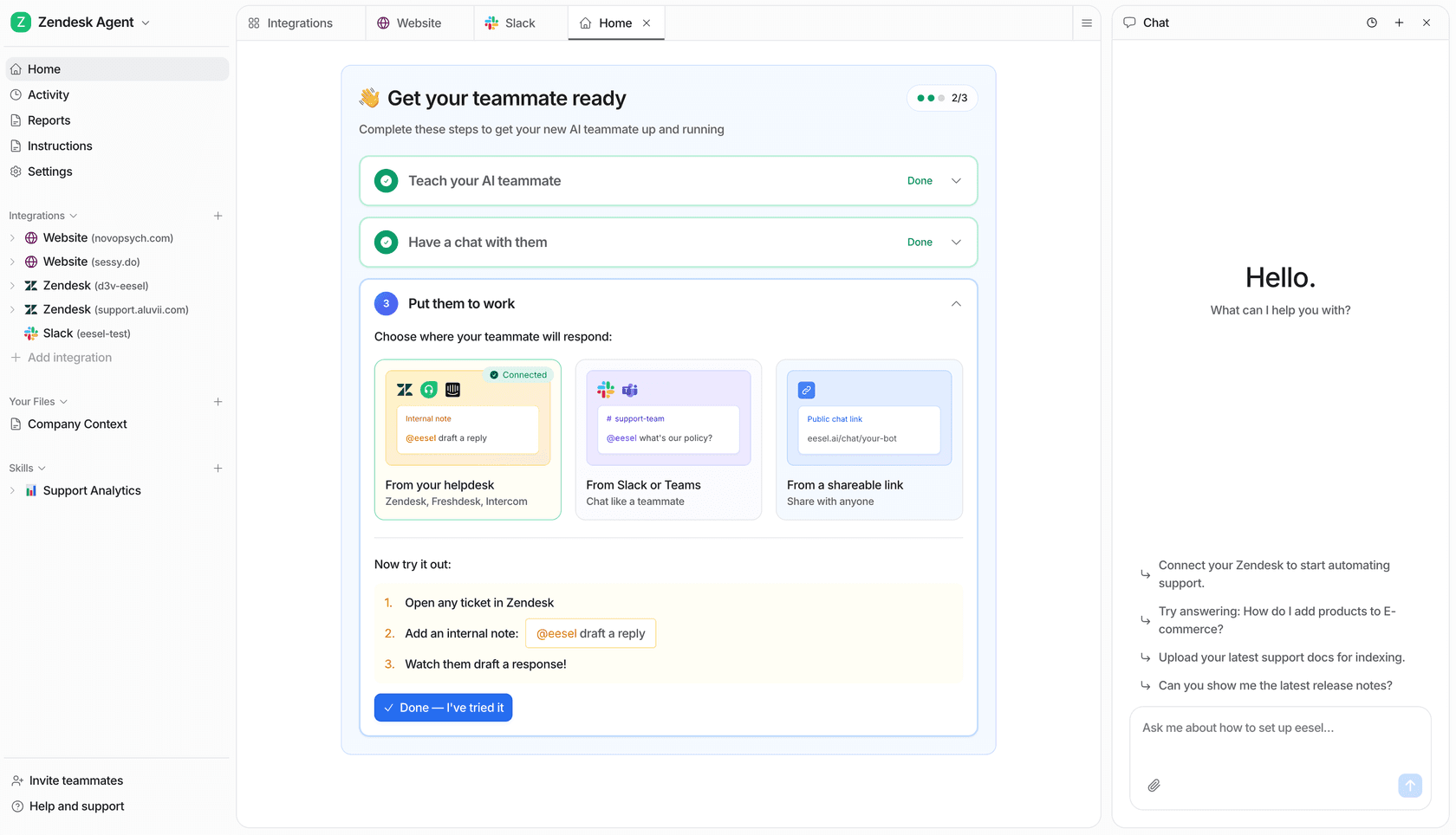
This is where some teams lean toward tools built differently. eesel AI layers on top of the helpdesks you're already using, like Zendesk and even ServiceNow, so you get AI-powered support without reconfiguring your existing setup.
The $2.85 billion ServiceNow acquisition: what it means now
ServiceNow completed its acquisition of Moveworks in December 2025, making Moveworks a ServiceNow product. The platform is still available, but under new ownership and a new product structure.
Why ServiceNow bought Moveworks
ServiceNow's stated rationale was to pair its workflow automation strength with Moveworks' "front-end AI assistant and enterprise search technology." Moveworks becomes the conversational entry point for ServiceNow's AI platform.
ServiceNow community discussion points to a broader strategic motive: acquiring a more advanced conversational AI engine to complement ServiceNow's existing Virtual Agent product, and gaining Moveworks' established enterprise customer base. The deal positions ServiceNow to compete more directly with Microsoft and Salesforce in the enterprise AI assistant space.
What this means for customers today
In February 2026, ServiceNow launched Autonomous Workforce and ServiceNow EmployeeWorks, the Moveworks-powered front door that combines conversational AI and enterprise search with ServiceNow's unified workflows. ServiceNow has confirmed Moveworks continues to be sold as a standalone product, not only as a ServiceNow ITSM add-on.
For existing ServiceNow customers, this is largely positive news: tighter integration and more investment behind the platform. Approximately 250 mutual customers were already using both technologies at the time of the acquisition close.
For organizations not using ServiceNow, the implications are less clear. The product roadmap will naturally prioritize ServiceNow integrations, and the sales motion is enterprise-only. Acquisitions like this tend to create space for more focused tools, platforms that aren't tied to one vendor's ecosystem. eesel AI connects with over 120 tools, including helpdesks like Zendesk and Freshdesk, and doesn't require committing to any single platform stack.
Pricing and setup
No pricing is publicly available for Moveworks. Moveworks' pricing page lists no figures. It offers "scalable packages and pricing options" and a form to "connect with a Moveworks expert to request a custom quote." ServiceNow's pricing pages list no dollar figures for Moveworks as a standalone product or as ServiceNow EmployeeWorks.
What is publicly known
Moveworks operates on an enterprise sales model. Pricing is not publicly listed; contact ServiceNow for a quote. There is no self-serve trial and no published per-user rate.
Moveworks is also bundled into ServiceNow ITSM tiers as "Moveworks for ITSM Foundation," "Moveworks for ITSM Advanced," and "Moveworks for ITSM Prime" add-ons, but the ITSM packages themselves also disclose no dollar pricing publicly.
The "no public pricing" model can be a practical obstacle for teams that want to budget before investing in a sales conversation. By comparison, eesel AI pricing is transparent and credit-based: from $299/month for 500 credits (1 credit per ticket or chat), with 100 free credits on signup and no credit card required.
The setup process
Getting started with Moveworks typically involves a dedicated success team, a configuration phase, and a testing period. The platform cites a typical time to value of eight weeks, with hundreds of built-in use cases available out of the box.
Users on G2 note that getting things fully dialed in may require direct engagement with the Moveworks team for custom scenarios. A fully managed enterprise rollout works well for large organizations that want a hands-off implementation, but it isn't suited to teams that want to move quickly or make changes independently.
Is Moveworks the right choice for your team?
Moveworks, now part of ServiceNow, is a serious platform for large companies, particularly those already invested in the ServiceNow ecosystem. If your organization has complex internal support needs across multiple departments, a large workforce, a meaningful budget, and a preference for a fully managed enterprise rollout, it's worth exploring.
The platform isn't for every team. The enterprise-only sales model means there's no self-serve trial. Pricing is not publicly disclosed. The product roadmap is now driven by ServiceNow's priorities. And the time to value is measured in weeks rather than hours.
Looking for a faster, more flexible AI assistant?
If you want an AI platform that's running in minutes rather than weeks, eesel AI is worth a look.
eesel AI connects directly to your existing helpdesk, like Zendesk or Jira, and your knowledge sources, automating support without requiring you to change how you work. Pricing is transparent, from $299/month for 500 credits (1 credit per ticket or chat), with 100 free credits on signup and no credit card required.
Frequently asked questions
What is Moveworks, and what has changed since its acquisition by ServiceNow?
Moveworks is an AI assistant platform that enables employees to search and take action across business applications through a unified interface. ServiceNow completed its $2.85 billion acquisition of Moveworks in December 2025. Moveworks continues to be offered as a standalone product within the ServiceNow portfolio, and in February 2026 ServiceNow launched ServiceNow EmployeeWorks, a product that combines Moveworks' conversational AI with ServiceNow's workflow automation platform.
How does Moveworks work on a day-to-day basis for employees?
Employees interact with Moveworks through chat apps like Slack or Microsoft Teams, or via a web browser. ServiceNow EmployeeWorks connects Moveworks' conversational AI and enterprise search with ServiceNow's unified workflows. The underlying Reasoning Engine interprets natural language requests, plans the steps needed to resolve them, and executes actions across connected business systems like Workday, Salesforce, and ServiceNow -- without requiring human involvement at each step.
What should organizations outside the ServiceNow ecosystem consider before evaluating Moveworks?
ServiceNow has confirmed that Moveworks can be acquired as an independent AI solution or as part of a ServiceNow deployment -- so non-ServiceNow users are not locked out. That said, the product roadmap is now driven by ServiceNow's priorities, and the sales model is enterprise-only with no self-serve trial. Teams using other helpdesks like Zendesk or Freshdesk may find that platforms designed to layer on top of existing tools offer more flexibility without switching costs.
How does pricing work for Moveworks or ServiceNow EmployeeWorks?
Pricing is not publicly listed -- contact ServiceNow for a quote. There are no published per-user rates or self-serve plan tiers for Moveworks as a standalone product. Moveworks is also bundled into ServiceNow ITSM tiers as "Moveworks for ITSM" add-ons at each tier, but the ITSM packages themselves also disclose no dollar figures. For teams that want transparent pricing, eesel AI starts at $299/month for 500 credits (1 credit per ticket or chat), with a free plan of 100 credits and no credit card required.
Is Moveworks better suited for large enterprises, or can smaller teams benefit from it?
Moveworks is designed for large enterprises. At the time of acquisition close, the platform had 5.5 million employee users and approximately 250 mutual customers with ServiceNow, with nearly 90% of deployments covering 100% of the customer's workforce. The typical time to value is cited as eight weeks, and the setup requires a dedicated success engagement rather than self-serve onboarding. Smaller teams or those wanting faster deployment are generally better served by platforms like eesel AI, which connects to your existing helpdesk and can be running in under 15 minutes.