The 6 best Aisera alternatives for AI support automation in 2026

Stevia Putri

Katelin Teen
Last edited May 7, 2026

Disclosure: This article is published by eesel AI, a competitor of Aisera. We encourage you to read Aisera's own materials for their perspective.
You've probably heard of Aisera. Acquired by Automation Anywhere in November 2025, it's a recognized name in the world of AI for ITSM, and for good reason. It's a seriously powerful platform built for enterprise-level automation across IT, HR, Finance, and beyond (source). But enterprise-grade capability comes with enterprise-grade costs, implementation timelines measured in months, and complexity that exceeds what many teams actually need.
If you're after powerful AI automation but don't have a six-month setup window or a six-figure budget, you've come to the right place. We've looked at the best Aisera alternatives that prioritize flexibility, speed, and working within the tools you and your team already use.
What is Aisera?
At its core, Aisera is an agentic AI platform designed to automate tasks across an entire organization — IT, HR, finance, and customer service (source). It uses its own large language models and a library of pre-built workflows to field service requests, answer questions, and handle repetitive work at enterprise scale. The platform supports 95+ languages and maintains SOC 2, ISO 27001, GDPR, HIPAA, and CCPA certifications.
Think of it as an industrial-scale toolkit for deploying AI agents across a large business. It's built for massive organizations with correspondingly large budgets and dedicated implementation teams.
Why you might need to find Aisera alternatives
While Aisera has plenty of horsepower, its approach isn't a perfect fit for everyone. Many teams start looking for alternatives when they run into a few common roadblocks.
The setup is a marathon, not a sprint
Aisera is positioned as an AI agent builder -- which sounds great on paper. But building takes significant time. Implementation involves custom agent design, workflow mapping, and deep integration with existing enterprise systems (source) -- a process users report takes months before the platform delivers consistent value. That means tying up a dedicated internal team just to manage setup and configuration, with a long wait before you see any return on your investment.
The price tag can make your eyes water
Aisera targets large enterprises, and pricing is undisclosed. There is no self-serve pricing page -- you can't get a number without going through a full sales conversation. That opacity makes it difficult to forecast what you'll actually pay or how costs will scale as your usage grows.
Your AI is stuck in a silo
Some AI platforms work best only when pulling from their own organized knowledge base. For most companies, this is a real constraint. Your team's collective knowledge lives in dozens of places: internal guides in Google Docs, project specs in Confluence, and thousands of past helpdesk tickets. An AI that can't reach all of that is working with an incomplete picture, which leads to partial or inaccurate answers.
Replacing your existing stack is disruptive
The prospect of overhauling your entire helpdesk or ITSM platform to get better AI is a significant undertaking. It pulls teams away from day-to-day support work and creates disruption that can last months. The best AI solutions layer onto the tools your team already uses -- they don't require a full migration as the price of admission.
What to look for in the best Aisera alternatives
When you're evaluating options, a few criteria consistently separate good AI tools from great ones.
-
How fast can you get it working? Can you sign up and run it in an afternoon, or are you looking at a multi-month implementation? Look for a tool that's truly self-serve.
-
Does it play well with others? The best tools don't force you to move your data. They should connect directly to your current helpdesk (like Zendesk, Freshdesk, or Jira Service Management) and chat tools (Slack or Microsoft Teams) with just a few clicks.
-
Can it learn from everything? Your AI is only as smart as the information you feed it. It needs to connect to all your knowledge sources -- old tickets, internal wikis, docs your team relies on -- not just a single help center.
-
Can you trust it? Look for a platform that gives you full control over what gets automated. A safe simulation environment is a big plus: it lets you see exactly how the AI will behave before it ever handles a real customer request.
-
Is the pricing easy to understand? No one likes a surprise at the end of the month. Look for platforms with transparent, predictable pricing -- whether task-based or flat-fee -- where you can calculate costs before you commit.
A quick comparison of the top Aisera alternatives in 2026
| Tool | Best For | Key Differentiator | Pricing Model |
|---|---|---|---|
| eesel AI | Teams wanting fast, flexible AI on their existing stack | Goes live in minutes; unifies all knowledge sources | Task-based ($0.40/regular task, no per-seat fees) |
| Moveworks | Large enterprises needing deep employee support automation | Natural language understanding for internal requests | Not publicly disclosed |
| Freshservice | Teams already invested in the Freshworks ecosystem | Native AI (Freddy AI) integrated into the ITSM | Per agent, per month |
| Jira Service Management | Businesses using the Atlassian suite for IT support | Deep integration with Jira and Confluence | Per agent, per month |
| Kore.ai | Enterprises building custom, multi-channel AI assistants | No-code/low-code platform for building complex bots | Not publicly disclosed |
| Risotto | IT teams looking for a Slack-native helpdesk solution | Purpose-built for Slack-based IT ticket resolution | Not publicly disclosed |
The 6 best Aisera alternatives for IT and customer support in 2026
Let's take a closer look at the platforms that give you powerful AI automation without the enterprise-sized overhead.
1. eesel AI
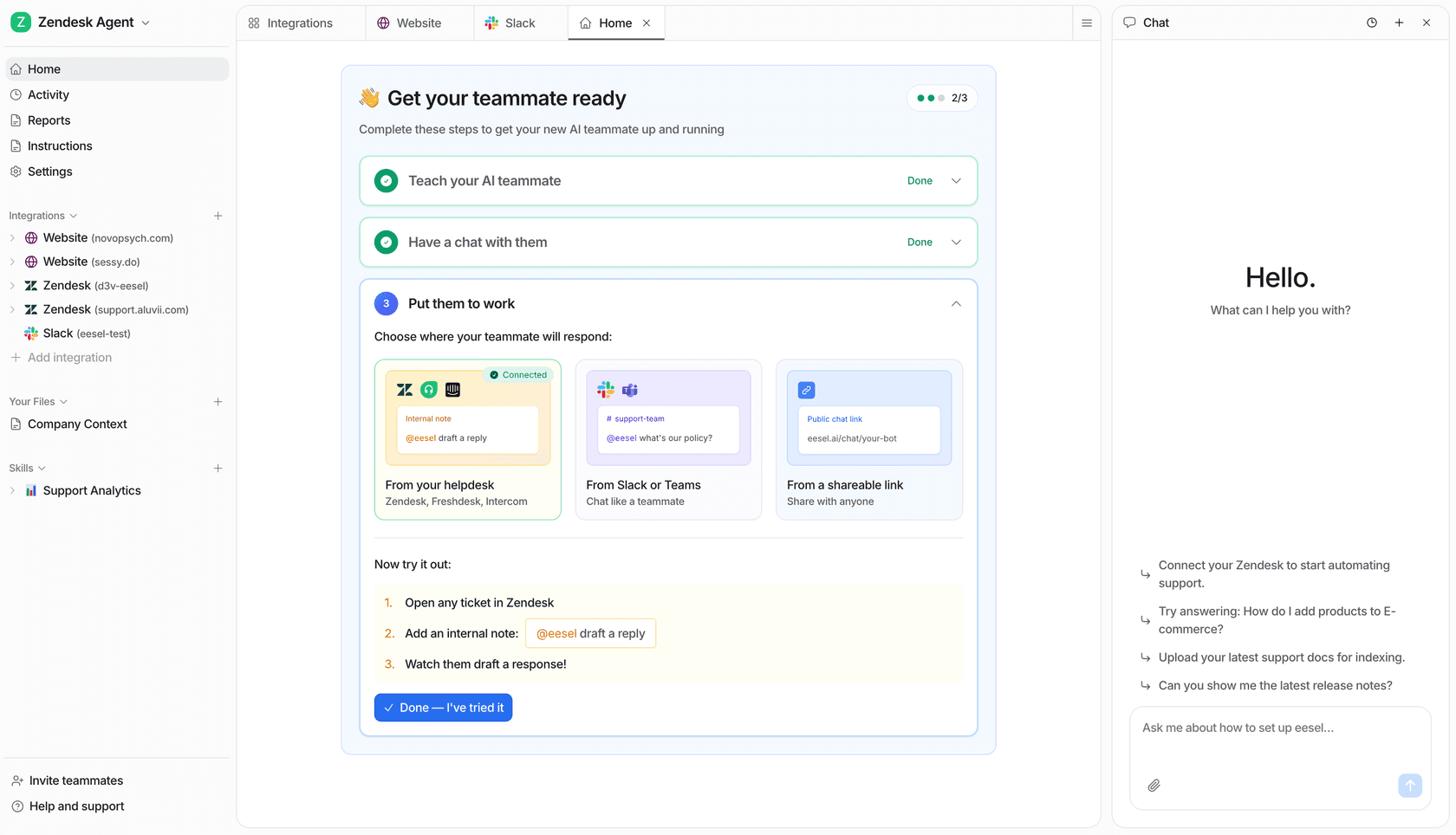
If you're after the power of an enterprise-grade AI agent without the associated costs and complexity, eesel AI is built to layer directly on top of your existing tools. You don't have to replace your helpdesk or migrate your knowledge base; it works with what you've already got.
The setup is straightforward. Unlike platforms that require a sales call just to see a demo, you can sign up for eesel AI and get your first AI agent running in minutes, entirely self-serve. It connects to your helpdesk, Slack, and knowledge sources with simple, one-click integrations.
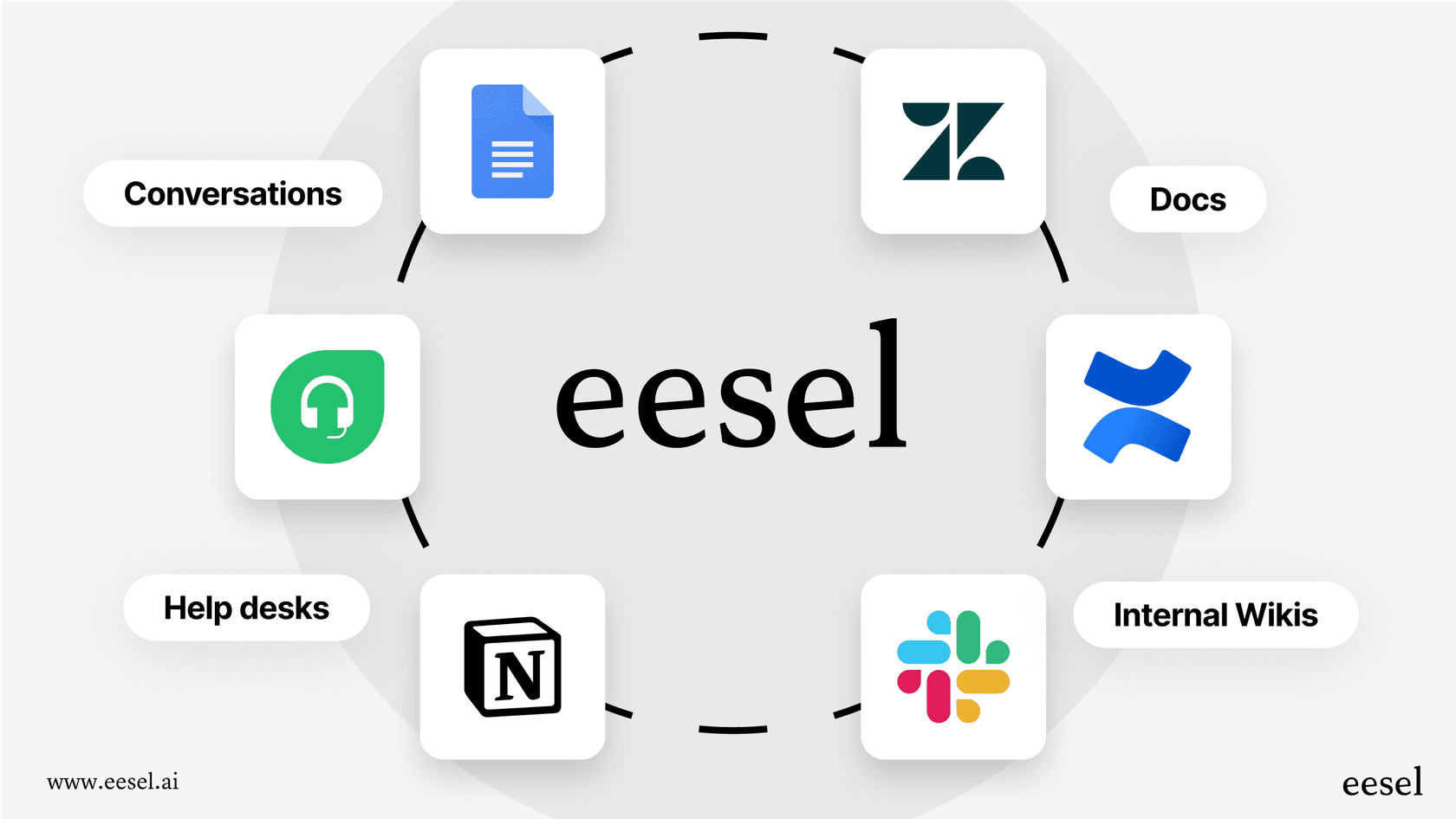
eesel AI's core strength is knowledge unification. It learns from your past support tickets, help center articles, Confluence pages, Google Docs, Notion, and more -- giving it the full context needed to provide accurate, genuinely helpful answers.
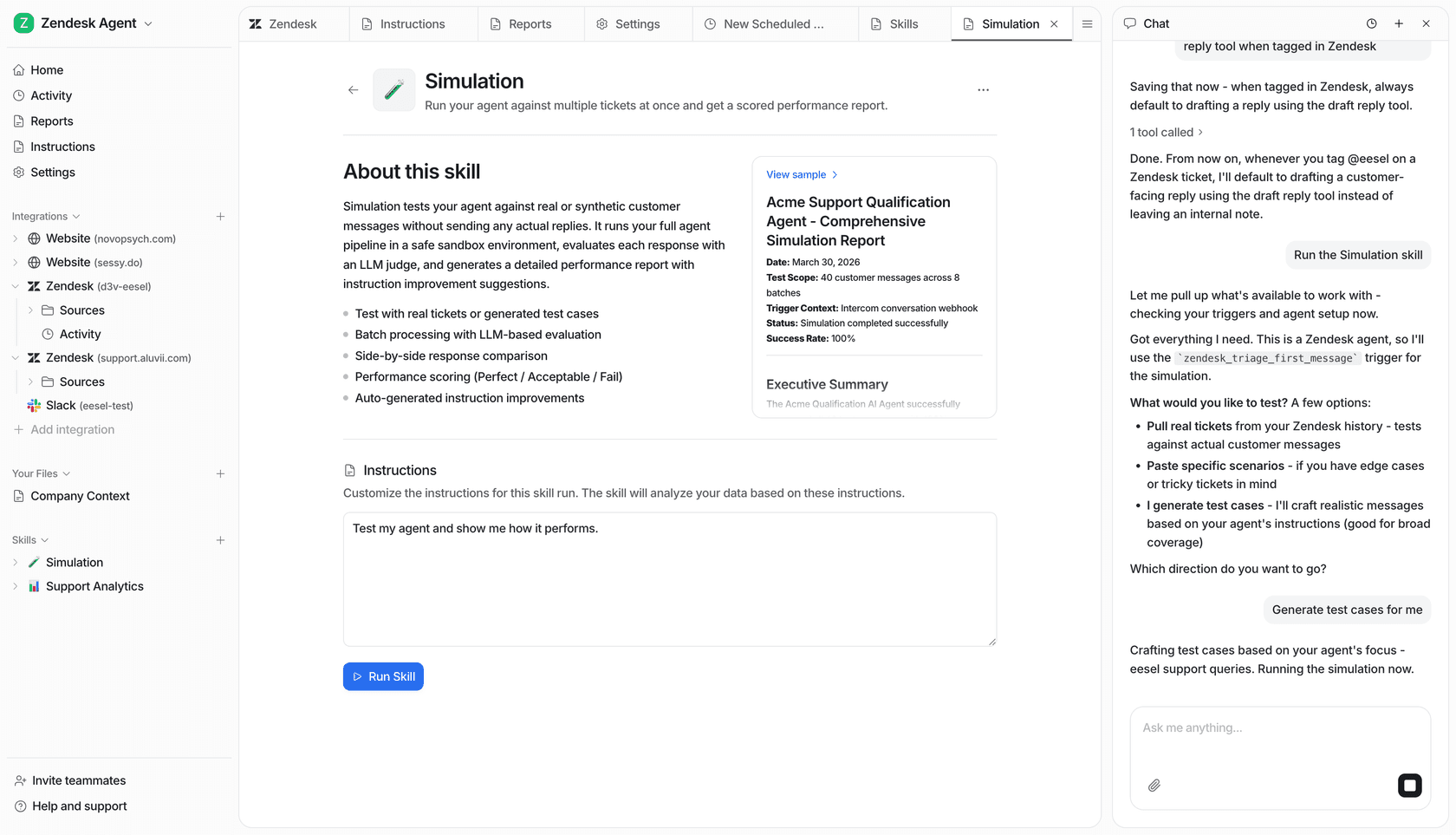
You also get control over what gets automated. The simulation mode lets you test your AI on thousands of your own historical tickets, so you can see exactly how it will perform and forecast your resolution rate before it goes live. A simple prompt editor lets you define tone, set guardrails, and build custom actions -- like looking up order information from Shopify or escalating a ticket to the right person.
Pros:
-
Self-serve setup that goes live in minutes, not months.
-
Connects to all your knowledge sources, not just a single help center.
-
Simulation mode for risk-free testing and resolution rate forecasting before you go live.
-
Transparent, task-based pricing with no per-seat fees.
Cons:
- Newer to the market than legacy enterprise players, with a shorter track record for large-scale ITSM deployments.
Pricing: eesel AI's pricing is task-based -- you pay per interaction rather than per seat. Regular support tasks (tickets, chat sessions) cost $0.40 each. Heavy tasks like long-form content cost $4 each. Light tasks such as simple lookups are free. New accounts start with $50 in free credits, no credit card required, with all features unlocked from day one. A default spending cap of $250/month keeps costs predictable, and committing to $300/month annually earns a 25% discount. An enterprise add-on at $1,000/month adds dedicated support, SSO, HIPAA compliance, and a BAA.
2. Moveworks
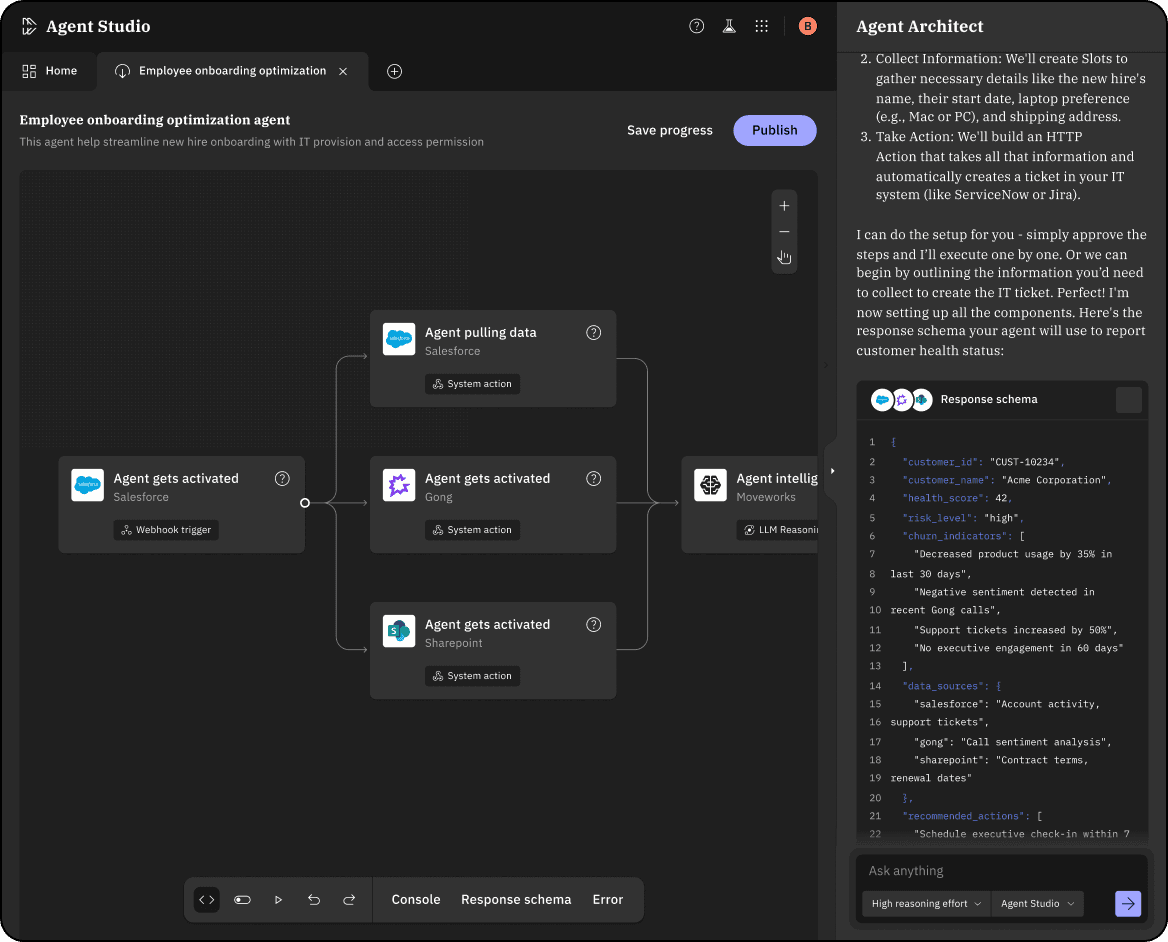
Moveworks is an AI platform focused on automating internal employee support for large organizations. It's capable at resolving common IT, HR, and finance questions through a conversational interface that runs inside tools like Slack and Microsoft Teams. If an employee needs to reset a password or check a vacation balance, Moveworks can handle it without human involvement.
Its key strength is advanced natural language understanding, which lets it parse complex employee requests. It also integrates deeply with major enterprise systems like ServiceNow and Workday.
Pros:
-
Capable at automating internal support at enterprise scale.
-
Achieves high resolution rates for common IT requests like password resets and software access provisioning.
Cons:
-
Built for large enterprises, with pricing to match.
-
Pricing is not publicly disclosed -- you'll need a custom enterprise contract.
-
Implementation can be lengthy for complex configurations.
Pricing: Moveworks does not publish pricing publicly. Contact their sales team for a custom quote.
3. Freshservice
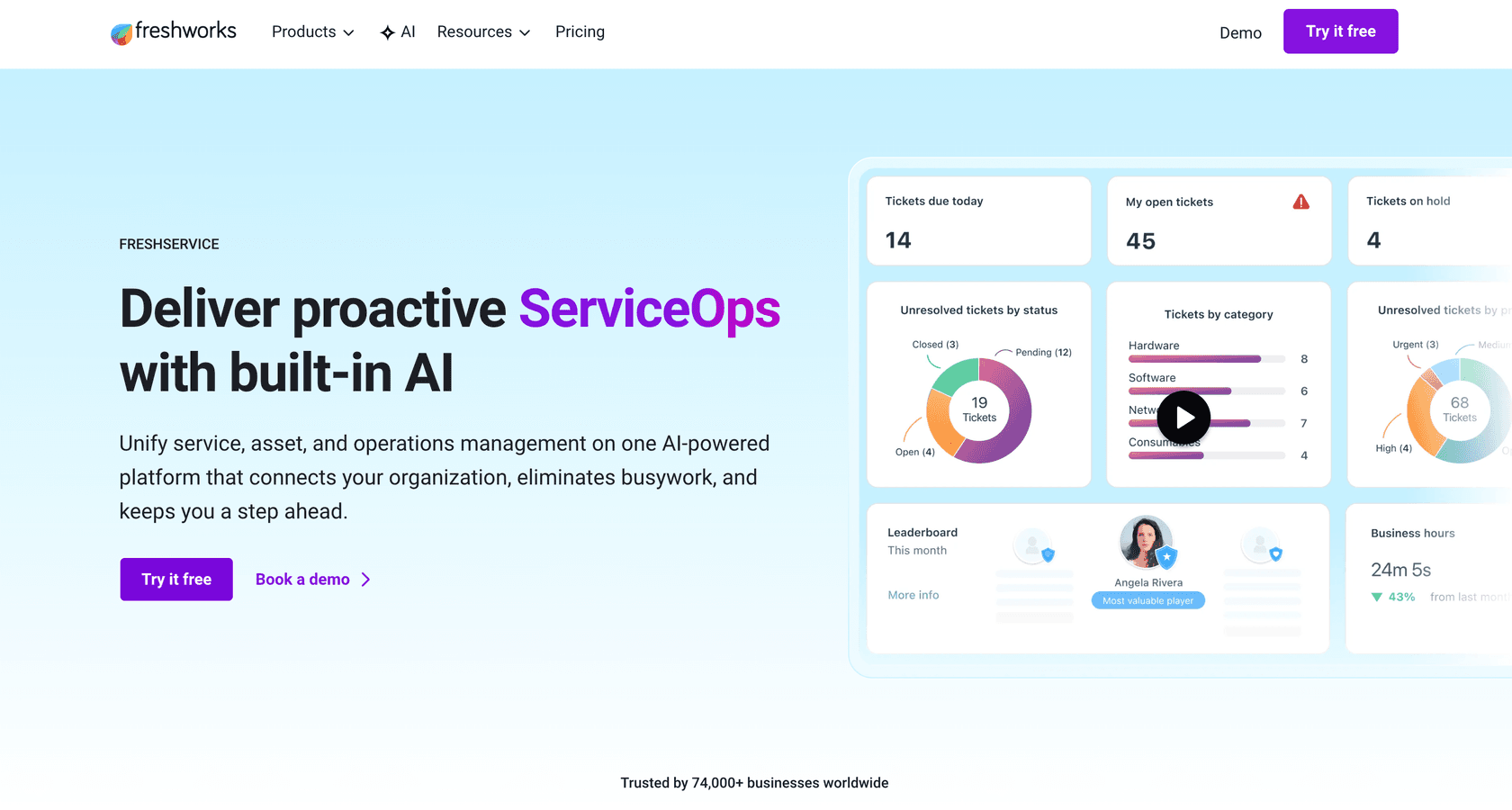
For teams already using Freshworks products, Freshservice is a logical choice. It's a full ITSM platform that includes Freddy AI, Freshworks' native AI layer. Freddy can act as a virtual agent in Microsoft Teams and Slack, suggest responses to human agents, and use predictive intelligence to route tickets more effectively.
If your company's world revolves around Freshworks, it's a solid all-in-one option.
Pros:
-
Integrates smoothly if you're already a Freshworks customer.
-
Strong core ITSM features alongside its AI capabilities.
Cons:
-
Freddy AI draws primarily from Freshworks-native knowledge sources. If your documentation lives in Google Docs, Confluence, or other external tools, those won't be accessible unless manually synced -- which limits the AI's answer coverage in practice.
-
The most capable AI features require the Pro plan or higher. The fully autonomous Freddy AI Agent is available only on the custom-priced Enterprise tier.
Pricing: Freshservice has several tiers. The Starter plan is $19/agent/month (billed annually). The Growth plan is $49/agent/month, and the Pro plan is $99/agent/month. Freddy AI Copilot is an additional $29/agent/month on the Pro plan, while the fully autonomous Freddy AI Agent is available only on the Enterprise plan (custom pricing).
4. Jira Service Management
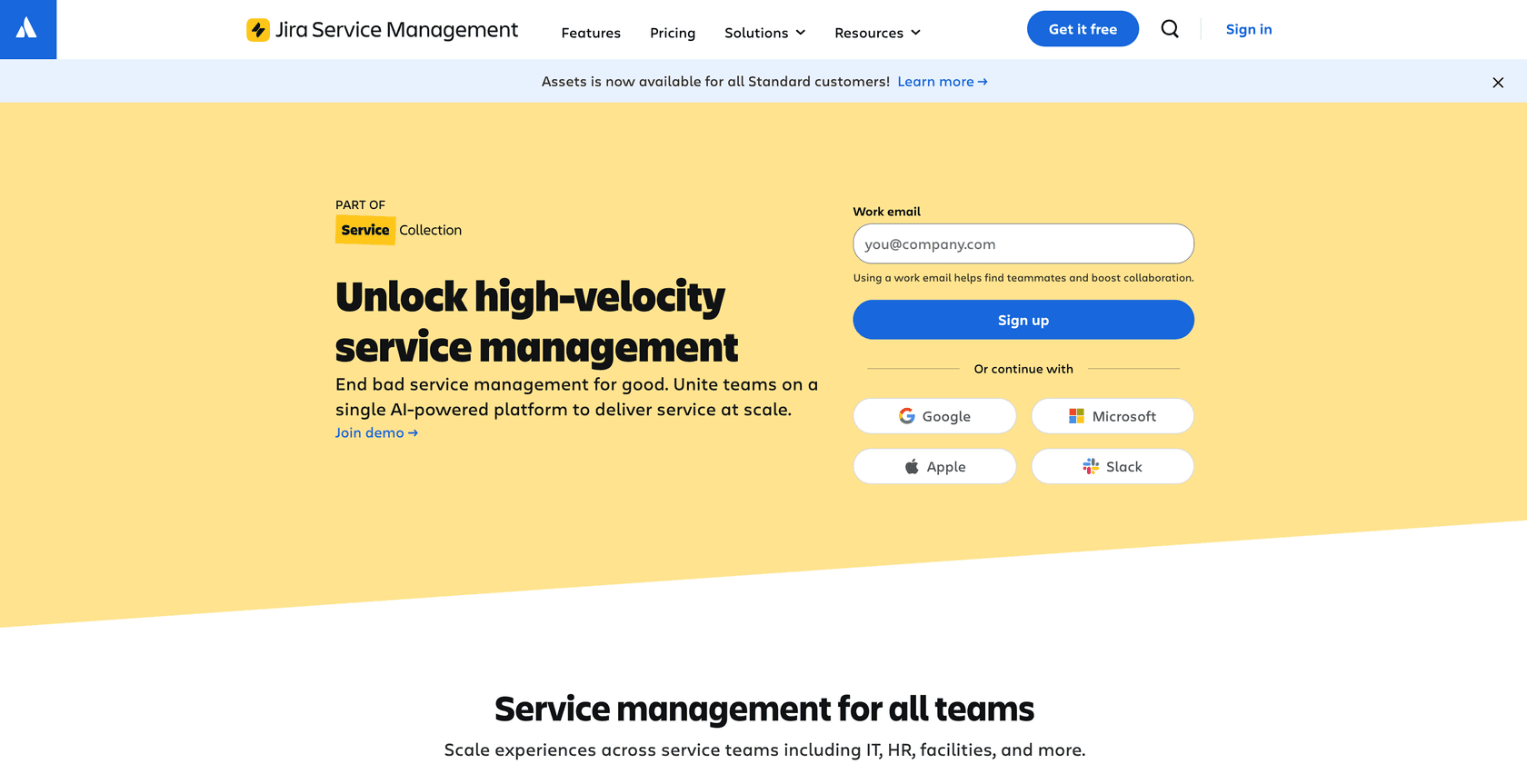
Jira Service Management (JSM) is the default ITSM platform for teams that live and breathe Atlassian. Its AI features, powered by Atlassian Intelligence, are designed to work tightly with Jira and Confluence. The AI virtual agent can summarize tickets, help draft responses, and pull answers from your Confluence knowledge base.
If your IT and development teams are already deep into Jira, JSM is a reliable option because of that tight integration.
Pros:
-
Integrates directly with other Atlassian products.
-
A trusted choice for organizations already centered around Jira and Confluence.
Cons:
-
The AI virtual agent is only available on Premium and Enterprise plans -- not on Standard or Free tiers.
-
Premium caps you at 1,000 assisted conversations per month before additional charges apply.
Pricing: JSM has a Free plan for up to 3 agents. Paid plans start with Standard at $20/agent/month and Premium at $51.42/agent/month. The AI-powered virtual agent is only available on Premium and Enterprise plans.
5. Kore.ai
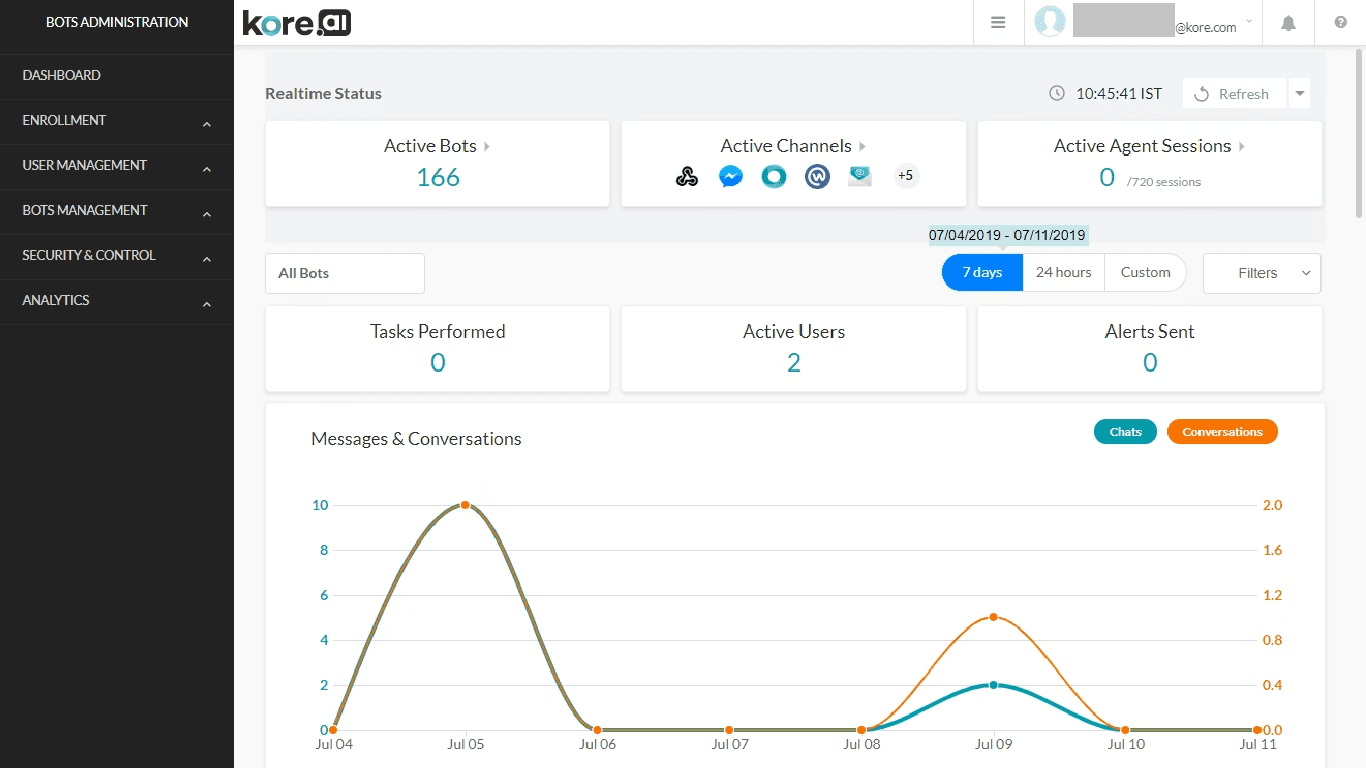
Kore.ai is an enterprise platform for building custom conversational AI assistants from the ground up -- for both customers and employees. It provides a no-code/low-code builder to design complex workflows and deploy them across different channels, including voice, chat, and social media.
This is the right option for teams with the resources and technical capacity to build something highly specific themselves.
Pros:
-
Powerful and customizable for creating very specific AI workflows.
-
Supports omnichannel deployment -- build once, deploy across channels.
Cons:
-
It's a builder's platform, not a ready-made solution. Building and maintaining a custom AI requires a significant ongoing development investment -- a similar commitment to deploying Aisera itself.
-
Pricing is not publicly disclosed and is designed for enterprise contracts.
Pricing: Kore.ai does not list pricing publicly. Contact their sales team for a custom enterprise quote.
6. Risotto
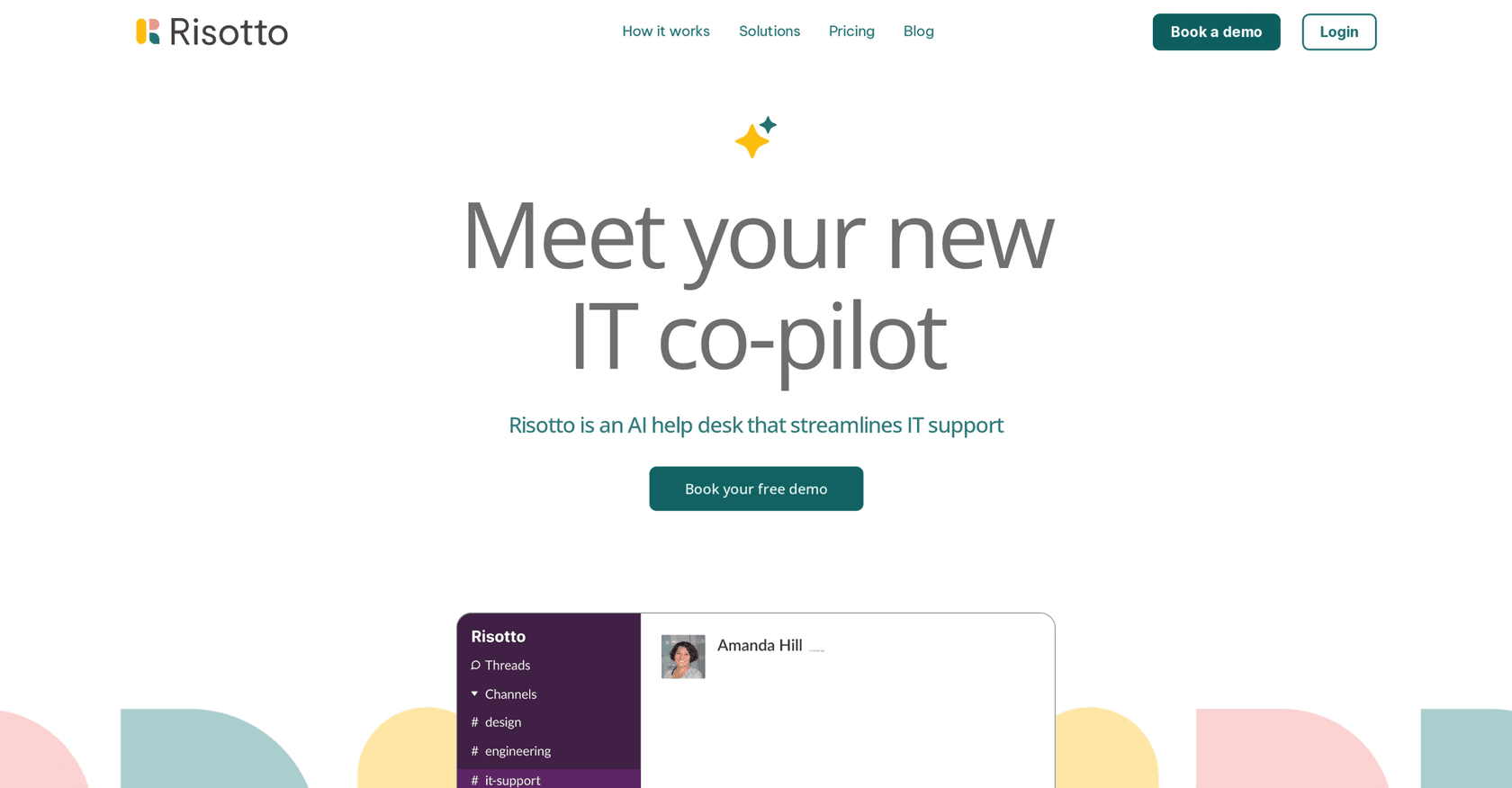
Risotto is a modern AI helpdesk built for one specific job: automating Tier-1 IT support directly inside Slack. It handles that one thing well. It resolves common IT requests, like provisioning software access, and learns from past Slack conversations to get smarter over time.
For companies where Slack is the central hub for internal communication, Risotto is a strong option for IT use cases.
Pros:
-
Well-suited to companies that run all internal support through Slack.
-
Quick to deploy for its specific IT use cases.
Cons:
-
Its tight focus on Slack and IT support makes it a poor fit for customer-facing teams or those using other helpdesks and chat tools.
-
Less versatile than platforms built for broader support automation.
Pricing: Risotto does not publicly list pricing. Contact Risotto for a quote.
How to choose the right Aisera alternatives for your business
Feeling a bit lost in the options? Here's a simple way to cut through the noise and find the right fit.
Look at what you're already using
Choose a solution that fits into the helpdesk, knowledge bases, and chat platforms your team is already comfortable with. Forcing a migration to a new system creates unnecessary costs, complexity, and disruption for your agents.
Focus on speed to value
The promise of AI is only worth something if you can see it working quickly. Ask yourself: can I sign up and start testing today, without a sales call? Can I see a real impact this week? A quick, self-serve setup is a strong signal that the platform is built for agile teams, not for multi-month consulting engagements.
Test your top alternatives before you commit
You wouldn't buy a car without taking it for a spin, so don't commit to an AI platform without seeing how it handles your actual support tickets. Look for a tool that offers a solid simulation mode or a free trial. This lets you check performance, build confidence in the AI's answers, and make a decision based on real results rather than a sales demo.
Get started with one of the best Aisera alternatives today
While Aisera is a strong platform for Global 2000 enterprises, you don't need a massive budget or a year-long implementation project to get capable AI automation. Today's alternatives offer a faster, more flexible path to supporting your customers and employees.
For teams that want to add a powerful AI layer to their existing support stack, eesel AI brings all your knowledge together, puts you in complete control, and starts delivering value from day one.
Ready to see how fast it can be? Sign up free and get your first AI agent live today -- no implementation project required.

Frequently asked questions
Many teams explore Aisera alternatives to avoid the combination of enterprise-scale costs and lengthy implementation timelines that come with a platform built for Global 2000 deployments. Alternatives often provide powerful AI automation that is faster to deploy, cost-transparent, and better sized for mid-market teams.
Prioritize speed of deployment, transparent pricing, seamless integration with your existing tech stack, the ability to learn from all your knowledge sources, and robust testing capabilities like simulation modes. These factors ensure a smooth transition and quick return on investment.
Yes, a key advantage of many Aisera alternatives is their focus on integrating with tools you already use, such as Zendesk, Slack, Google Docs, and Confluence. This avoids disrupting your current workflows and leverages your existing documentation without requiring a full migration.
Many Aisera alternatives are designed for quick deployment, often allowing you to set up and start seeing value in hours rather than months. eesel AI, for instance, offers a self-serve free trial that goes live in minutes. This is a marked contrast to Aisera's enterprise implementation model, which involves custom agent design and deep system integration.
Generally, yes. Many Aisera alternatives offer clear, predictable pricing -- task-based or flat-fee structures -- instead of undisclosed enterprise contracts. Aisera's pricing is not publicly listed, which makes budgeting difficult before you have gone through a full sales process.
Share this article

Article by
Stevia Putri
Stevia Putri is a marketing generalist at eesel AI, where she helps turn powerful AI tools into stories that resonate. She's driven by curiosity, clarity, and the human side of technology.