

Why education support breaks in ways other support doesn't
Before the how-to, it's worth naming why education is its own beast. A typical SaaS team fields nuanced, one-off questions. An education team fields the same questions thousands of times, from three different audiences at once, all crammed into a few brutal weeks a year.
Three things make student support specifically hard to automate, and each one shapes a step below:
- The volume is violently seasonal. Enrollment windows, the start of term, exam week, results day. Your inbox can 5x overnight and then go quiet. You can't hire and fire humans on that curve; automation scales with it.
- The answers are personal and live. "What's my status", "did my payment go through", "what's my grade" need the real record for that person, not a policy page. Get it wrong and you've told a stressed applicant the wrong thing about their future.
- The audience is mixed. Students, parents, and faculty all write in, often about the same event, and they need different answers and different tones.
And there's a fourth thing that hangs over all of it: student data is sensitive, often regulated (think FERPA in the US). An AI that leaks one student's records into another's chat isn't a bug, it's an incident. That's not a reason to avoid automation. It's the reason to do it in the careful order below, with a human in the loop until you trust it.
Keep those in mind. Now let's build the thing.
Step 1: Find the questions worth automating
Don't start by asking "can AI handle this?" Start by asking "what am I answering over and over?" The goal of step one is a ranked list of your highest-volume, most-repetitive question types, because that's where automation pays back fastest and risks the least.
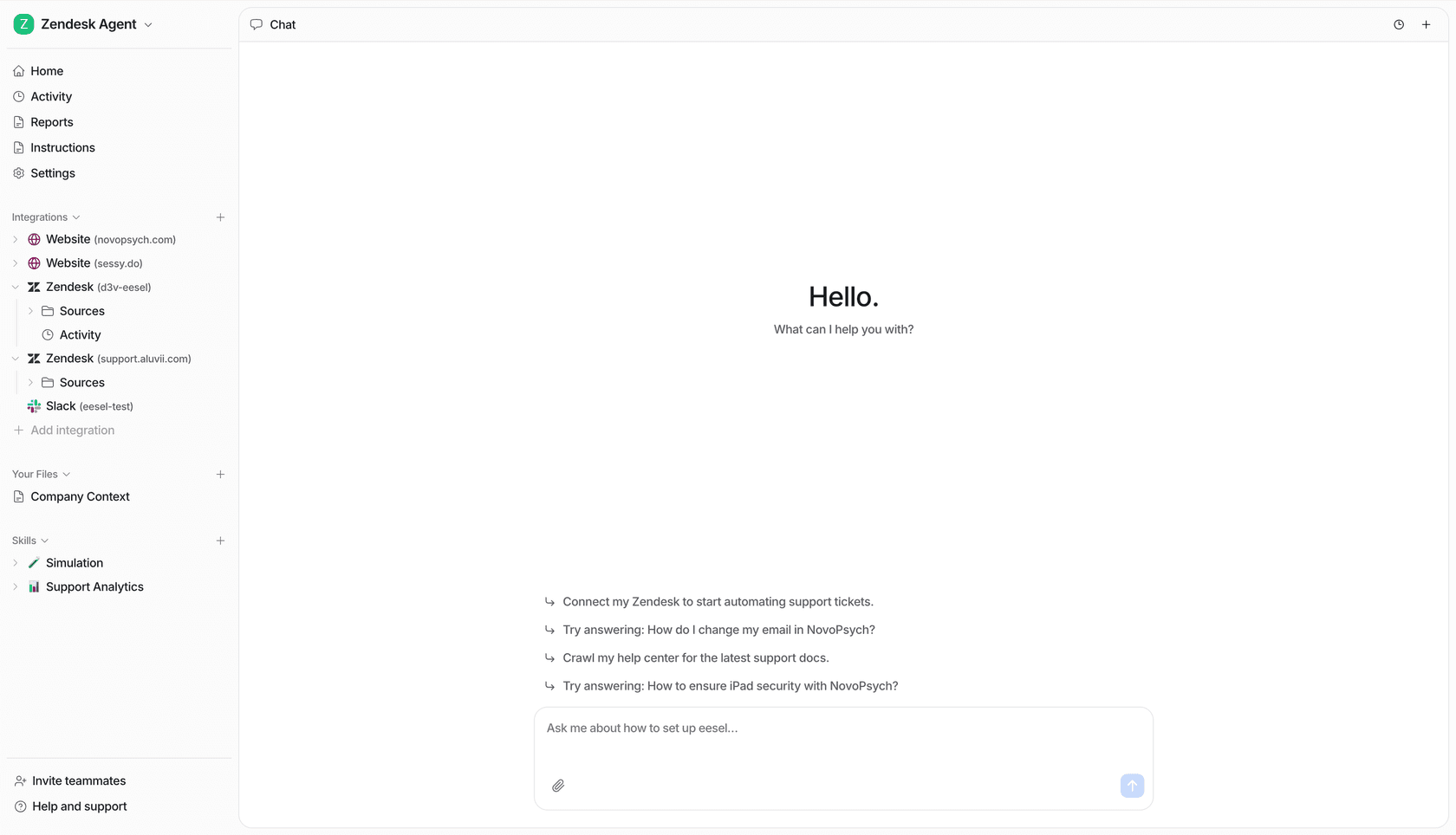
For almost every education team, four categories sit at the top:
- Enrollment and admissions - "did I get in", "what documents do I still need", "when's the deadline". Huge during application season.
- Login and access - password resets, LMS access, "I can't see my course". The single most common day-one question for any online program.
- Course and content questions - schedules, prerequisites, "where do I find the reading", "how do I submit this".
- Billing and certificates - tuition or course fees, refunds, "where's my completion certificate".
You don't have to guess the split. Pull the last few months of tickets and let a theme analysis group them for you. The boring, repetitive stuff is exactly the stuff AI is best at, and it's usually where your team is spending time they'd rather spend on the student who's actually struggling.
The mistake to avoid here: trying to automate the hard 10% first (the anxious appeal, the safeguarding-adjacent message) to "prove" the AI. Do the opposite. Automate the easy 50% and give your humans their time back for the conversations that genuinely need a person.
Step 2: Connect your knowledge, and your live student records
This is the step that separates education automation that works from the demos that embarrass you. Your AI needs two kinds of knowledge, and most tools only give it the first.
Static knowledge is your help center, your course catalog, your policy docs, your past resolved tickets. That's how the AI learns your tone and your rules ("late submissions lose 10% per day").
Live knowledge is the student's own record: application status, enrollment state, payment history, grades. This changes constantly and it's the whole answer to "what's happening with me".
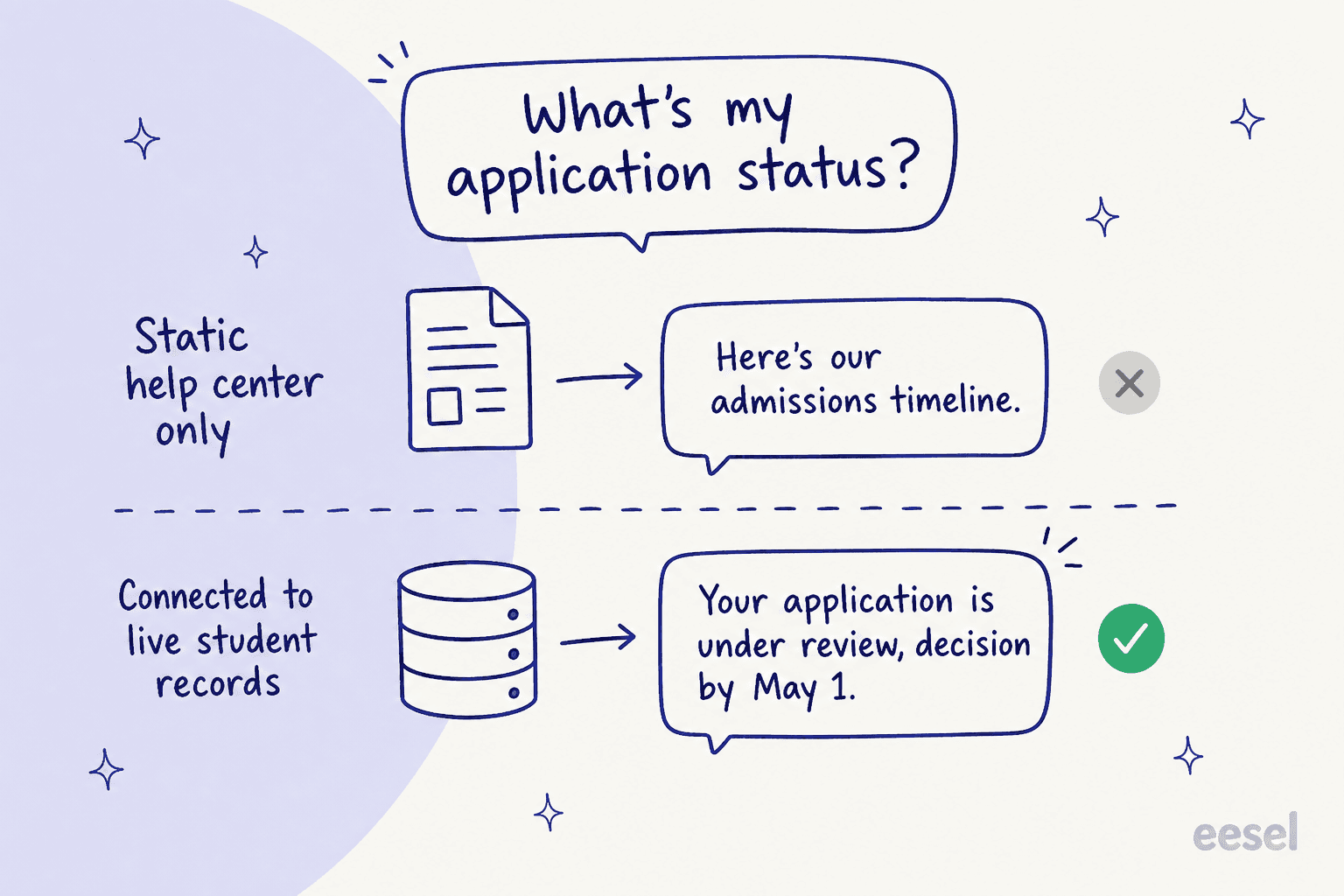
Here's why this matters more than it sounds. An AI answering from your help center alone can tell a student how admissions works. It cannot tell them whether they got in, and that's the question they actually asked. Answer the generic version and you haven't helped, you've just made them ask again, angrier. So when you evaluate tools, the question isn't "can it read my help center" (they all can). It's "can it look up this specific student's record, right now, and can it be trusted not to show it to the wrong person."
With eesel, that means training the AI on your knowledge base and past tickets for tone and policy, while it pulls the live detail from the systems you already run. It reads what's in Confluence, Google Docs, Notion, or a help center, and works alongside the record systems that hold the personal data.
Step 3: Set it up inside the helpdesk you already use
A rule I'd tattoo on every support lead: don't rip out your helpdesk to add AI. The whole point of automation is less work, and migrating platforms mid-term is the most work there is.
Good automation layers on top of your existing stack. Your team keeps the same Zendesk, Freshdesk, or Front inbox they know, and the AI works inside it, drafting and sending replies on the same tickets. Setup is connecting accounts, not re-platforming.

One nice side effect: because the AI reads your existing macros and saved replies, it starts useful on day one. You don't need a giant new knowledge base to begin. You need the one you already have, connected. And if students reach you on chat as well as email, the same agent can sit on your website chat bubble, in Slack, or in Microsoft Teams for internal staff questions, and hand over to a human the moment someone asks.
One edtech customer, Yellowdig, put the "starts useful, stays flexible" experience like this:
"It feels like a partnership, rather than a vendor relationship. A new customer success hire joked that our eesel AI bot was their best friend during onboarding."
Jon Miron, Yellowdig
Step 4: Simulate on past tickets before you go anywhere near a student
This is the step teams skip, and it's the one that saves you from a public mistake with someone's education. Before the AI touches a single live student, run it against tickets you've already resolved.
A simulation replays hundreds or thousands of your past tickets through the AI and shows you what it would have said, next to what your team actually said. You get a real coverage number ("it would confidently handle 47% of these") and, more usefully, a map of where it's weak, so you can fill those gaps before launch instead of finding them in a student's angry follow-up.
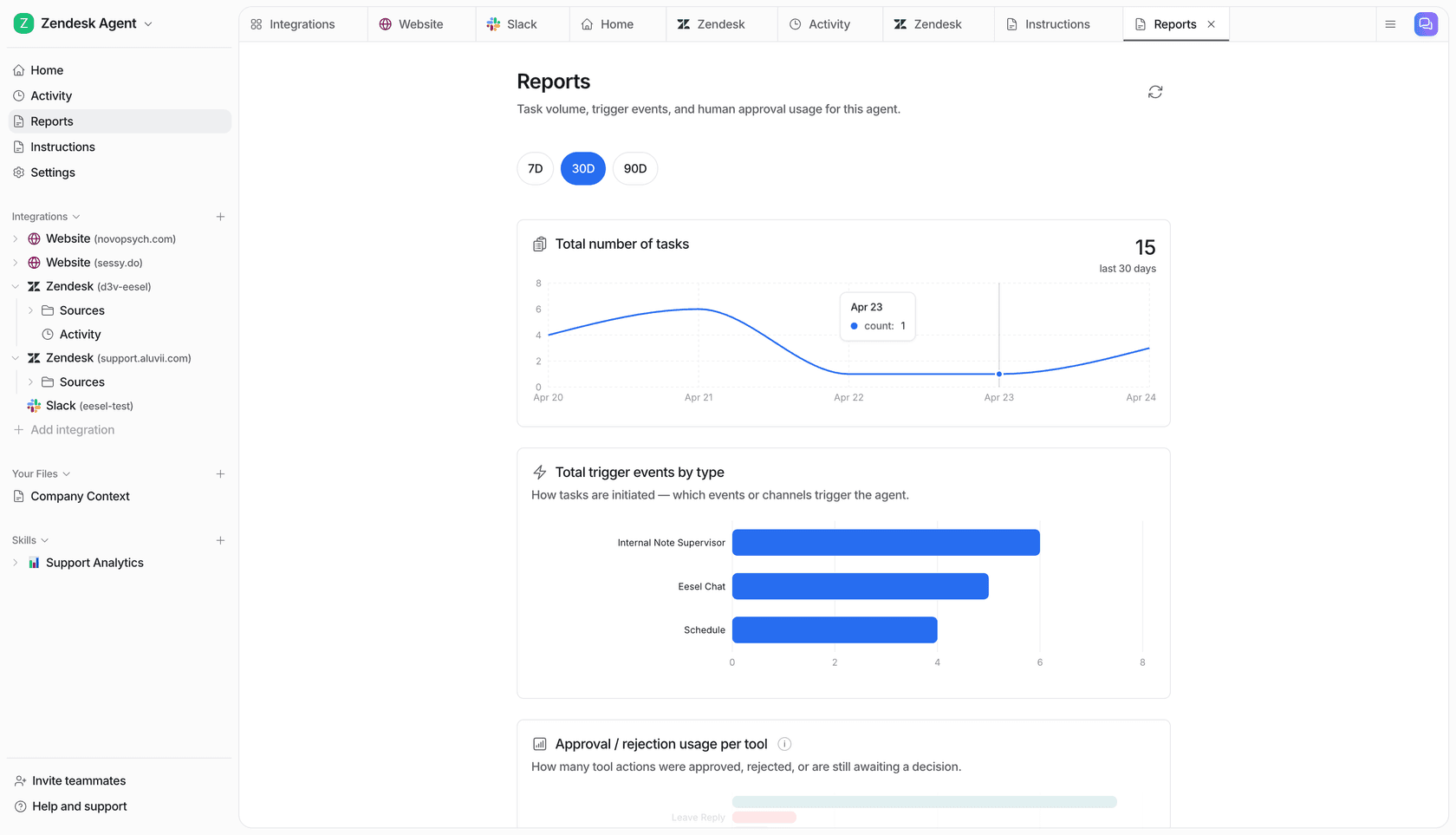
I cannot oversell how much confidence this buys you. Instead of "let's flip it on and hope," you walk into the term already knowing the number, having seen the drafts, and having patched the gaps. That's the whole difference between piloting AI on students and experimenting on them.
Step 5: Start supervised, then hand over the easy questions
Now you go live, but gently. The safe rollout has stages, and you control how fast you move through them.
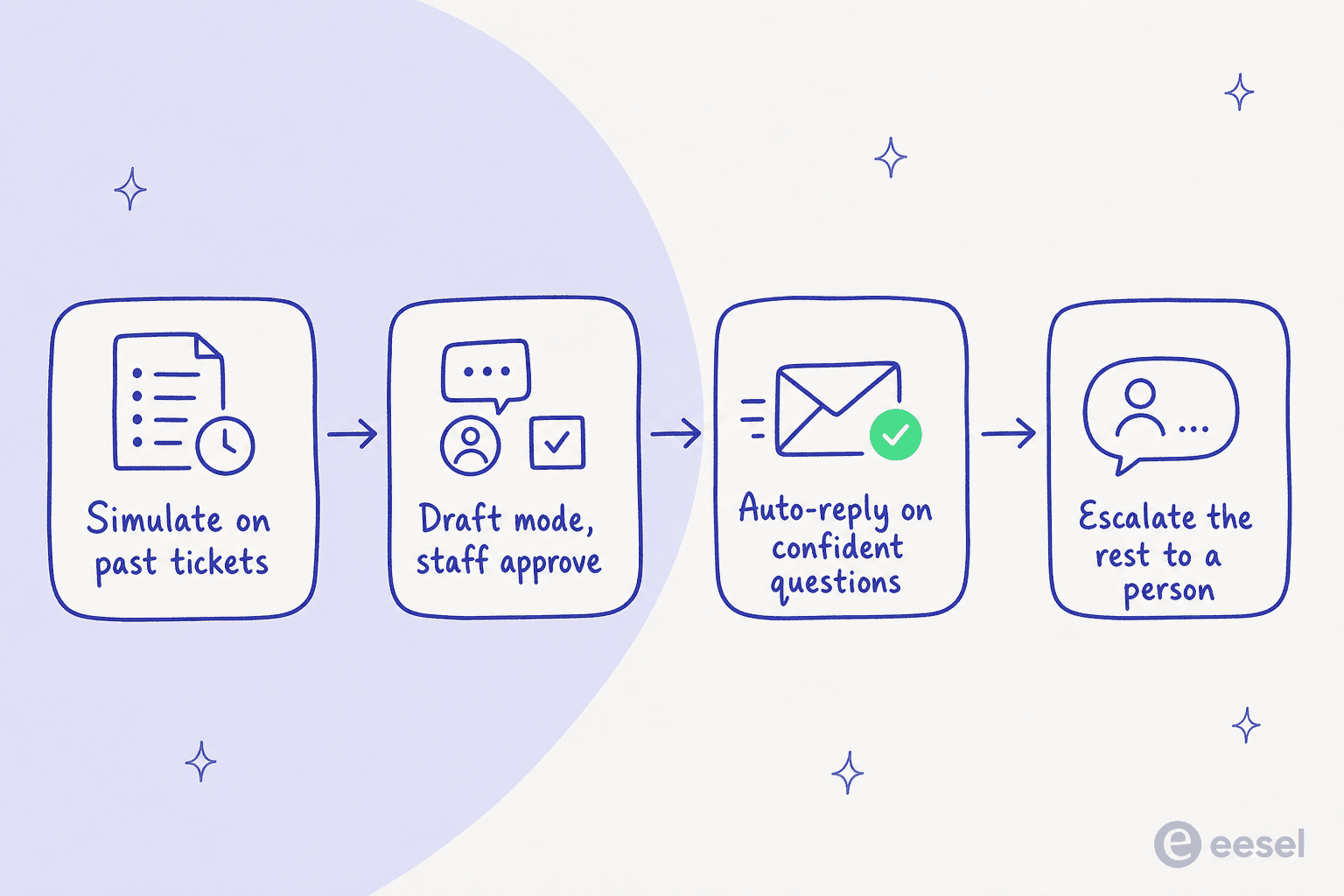
- Draft mode. The AI writes the reply; a person reads it and hits send. You're still fully in control, and every edit teaches it.
- Auto-reply on the confident, low-risk stuff. Once you trust its answers on password resets and "where's the reading" questions, let it send those automatically.
- Escalate everything else. Anything it isn't confident about, anything touching a fee dispute or a personal record, or anything a student explicitly wants a human for, goes straight to your team.
The reason this works is confidence-based routing. The AI only auto-handles questions it's sure about and quietly leaves the rest alone. One CX lead put the requirement perfectly:
"I need an AI who is only handling the tickets that it's confident to handle and all the other ones, leave them alone."
a customer support lead
That's the bar, and it's doubly true in education. An AI that answers everything (including a question about someone's grades or fees that it half-understands) is worse than no AI. An AI that handles the safe half and hands over the rest is a genuine teammate. This is also the honest limit of automation: it should never be closing the anxious, high-stakes, "my whole term depends on this" message. That's your team's job, and it always will be.
Step 6: Watch the numbers and keep coaching it
Automation isn't set-and-forget. The teams that get the most out of it treat it like onboarding a new staff member: check its work, correct the misses, and it gets better.
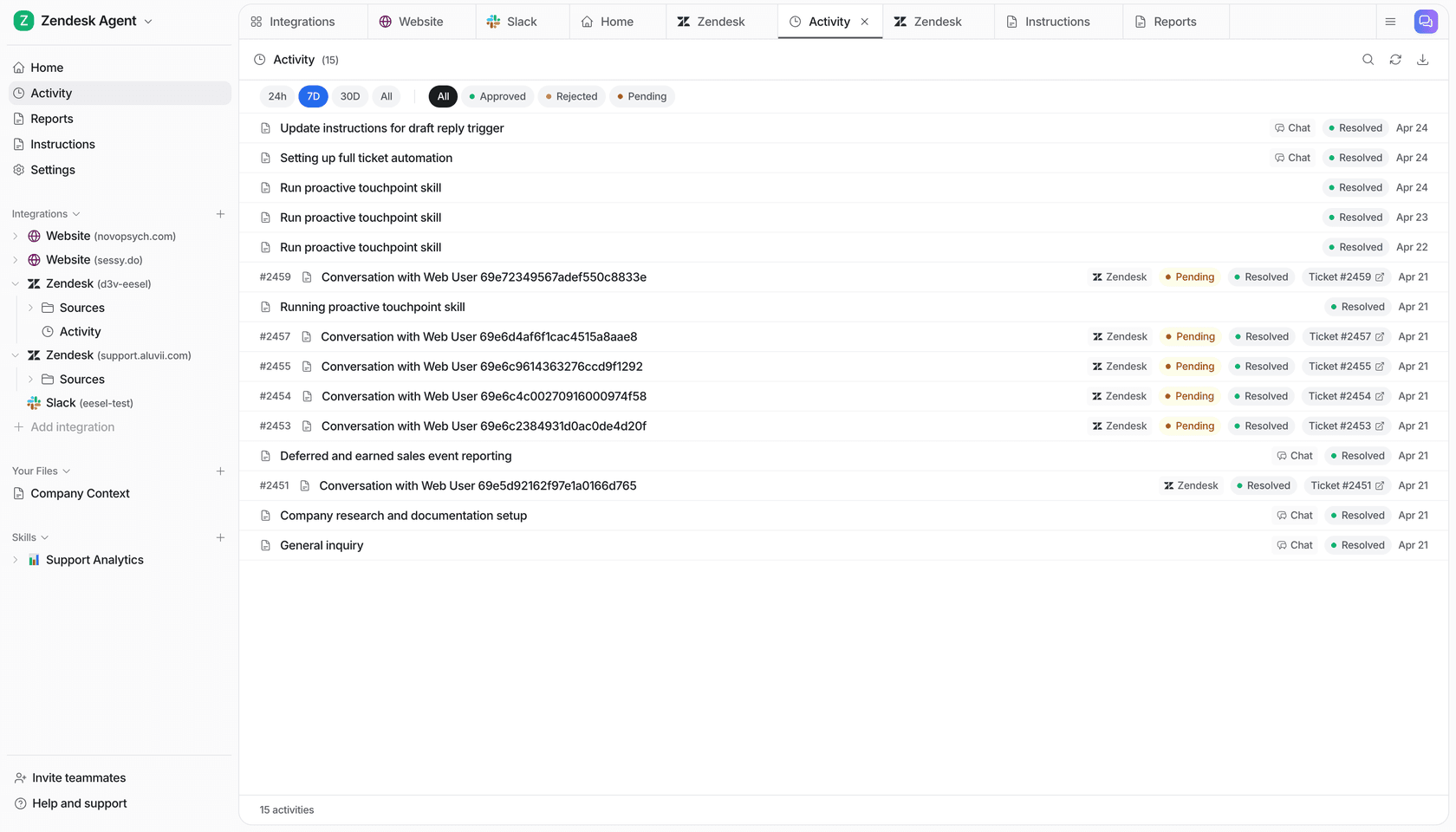
Watch a small set of metrics: resolution rate (what share the AI closed on its own), escalation rate (what it handed off), and student satisfaction on AI-handled tickets. When you spot a category it's fumbling, you don't retrain a model; you correct it in plain language, the same way you'd coach a person. Every edit your team makes to a draft becomes a lesson.
That's the compounding payoff. The more it runs, the more of your repetitive volume it quietly absorbs, so when the next enrollment wave hits, the AI soaks up the "how do I log in" flood and your people are free for the student who actually needs them. As a cross-industry proof point, one team on Zendesk saw the AI resolve 73% of tier-1 requests in the first month, reached during a 7-day trial.
Common mistakes that sink education support automation
I've watched a lot of rollouts. The failures almost always trace back to one of these:
- Automating from docs alone. No live record lookup means generic answers to personal questions. Connect the systems that hold the real detail (step 2).
- Going live without simulating. You find the gaps in front of stressed students instead of in a test. Don't (step 4).
- Letting it answer everything. Confidence routing exists for a reason, and in education it's also your privacy guardrail.
- Ripping out the helpdesk. You don't need a new platform, you need AI on the helpdesk you already run.
- Treating it as done at launch. Coverage trends up over months of coaching, not on day one.
Get those five right and automation stops being a risk and starts being the reason your team isn't buried every enrollment season.
Try eesel for education support
If you want the setup from this guide without the integration headache, that's what eesel does. It connects to your existing helpdesk (Zendesk, Freshdesk, Front), trains on your past tickets and help docs, and handles the repetitive enrollment, access, and billing questions, in 80+ languages if you teach across borders.
The differentiator that matters for schools: you can simulate it on your real ticket history before going live, so you see the coverage number and the actual drafts up front instead of gambling with students' questions. Pricing is one fixed monthly plan (from $299/month for 500 credits, 1 credit per ticket, no per-seat fees), so it scales with your seasonal spikes instead of your headcount. You can try it free with 100 credits and have it drafting replies in your inbox in a few minutes.