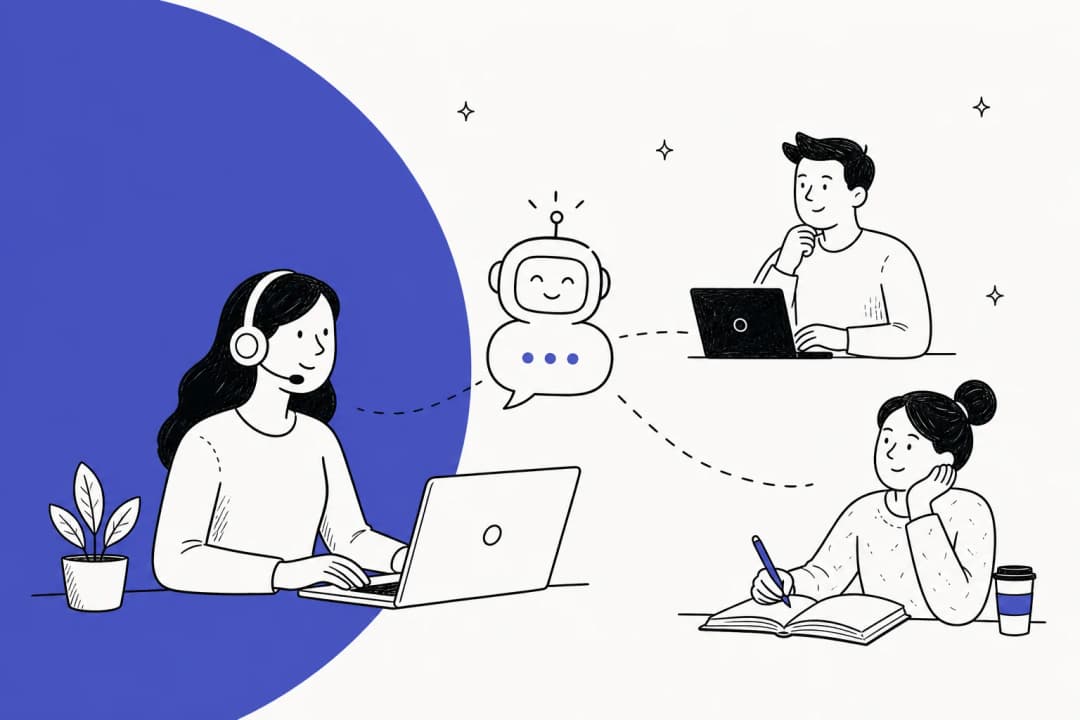

Why education support doesn't look like other support
I spend a lot of time looking at how support keywords map to real buying questions, and "AI customer service for education" is one where the generic advice mostly misses. Most "AI for support" writing quietly assumes a steady-state e-commerce or SaaS queue. Education isn't that. Your volume is seasonal, your audience is fragmented, and a wrong answer can cost someone a deadline or a financial-aid window.
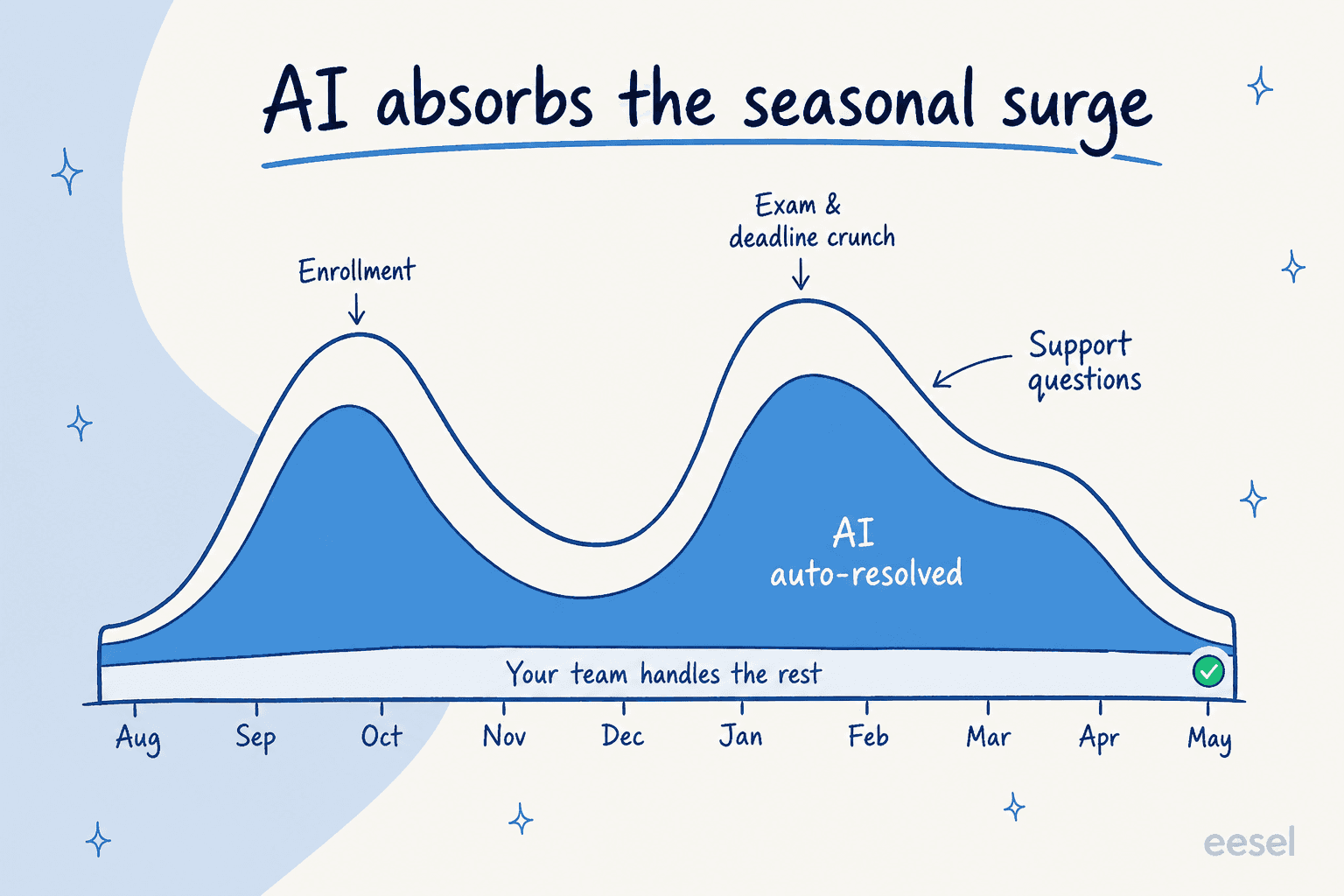
Start with the seasonality. A university help desk in mid-July and the same desk in early September are barely the same job. Enrollment, orientation, add/drop, exam registration, results day, application deadlines, each one is a wall of tickets that arrives on a calendar you can predict but can't really staff for. Hiring three seasonal agents for six weeks, training them, then losing them is its own cost. This is the core reason education teams look at AI before almost any other tooling.
Then there's the team shape. Education support teams are usually small relative to the population they serve, a handful of people covering thousands of students, plus parents, plus staff. A director of support at a fast-growing edtech company, Yellowdig, put the structural problem plainly:
"As a fast-growing startup with a small team, our customers far outnumber our employees. It's crucial that we have robust self-service solutions as well as tools to supercharge the efficiency of our client-facing teams."
Jon Miron, Director of Support & Operations, Yellowdig
That "customers far outnumber our employees" line is the entire education support condition in one sentence. When the ratio is that lopsided, self-service and AI deflection stop being nice-to-haves and become the only way the math works.
The questions AI is actually good at in education
Before you evaluate any tool, it helps to be honest about which questions you're trying to automate. In education, a huge share of inbound is the same small set, asked over and over:
- "When's the deadline for [application / enrollment / fee payment]?"
- "I can't log into [the LMS / student portal / email]."
- "Where do I find my timetable / results / reading list?"
- "What's the status of my financial aid / scholarship / refund?"
- "How do I submit / withdraw / defer?"
- "Who do I contact about [housing / IT / library]?"
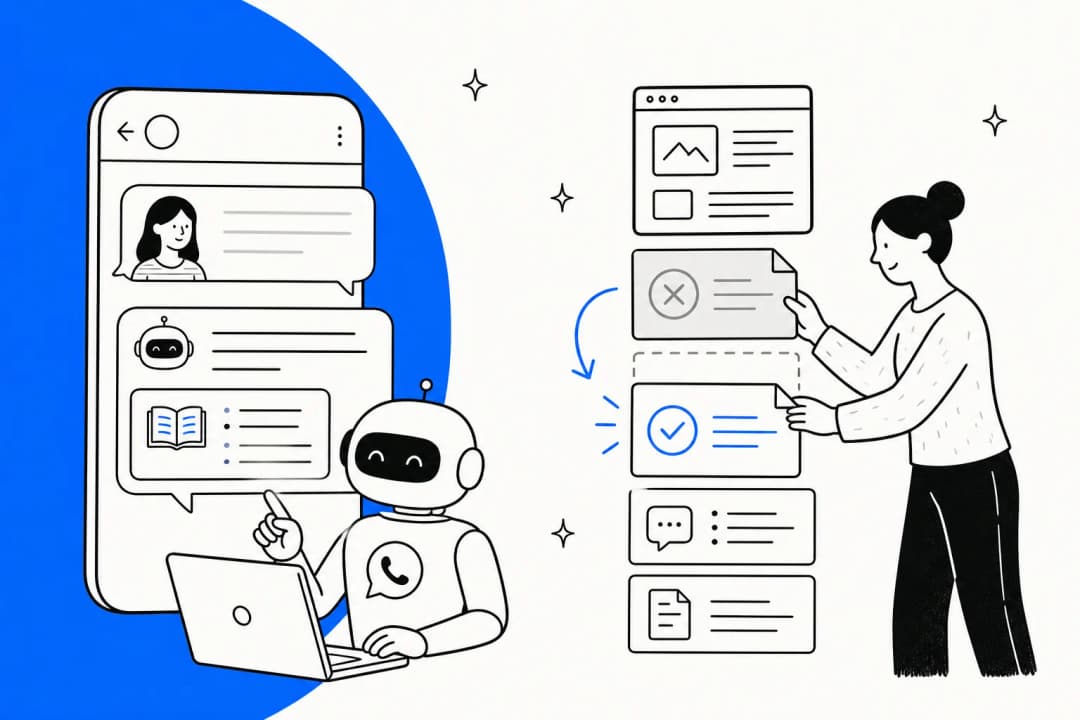
None of these need a human. They need a correct, instant answer pulled from a document that already exists somewhere on your site. This is the sweet spot for an AI helpdesk agent, and it's worth understanding why it beats the old rule-based chatbot you may have tried before: a decision-tree bot needs someone to hand-build a flow for every question, which nobody on a stretched education team has time to maintain. A real AI agent learns from your existing help center and past tickets, so it can answer the long tail without you scripting each branch.
The flip side is just as important: the questions AI is not good at, the distressed student, the genuine exception, the appeal, are exactly the ones you want your human team freed up to handle well. That's the trade, and it's a good one.
Who you're really supporting
The other thing that makes education different is that "the customer" is at least four different people, each with their own knowledge needs and their own tone. Treating them as one undifferentiated queue is how support quality slips.
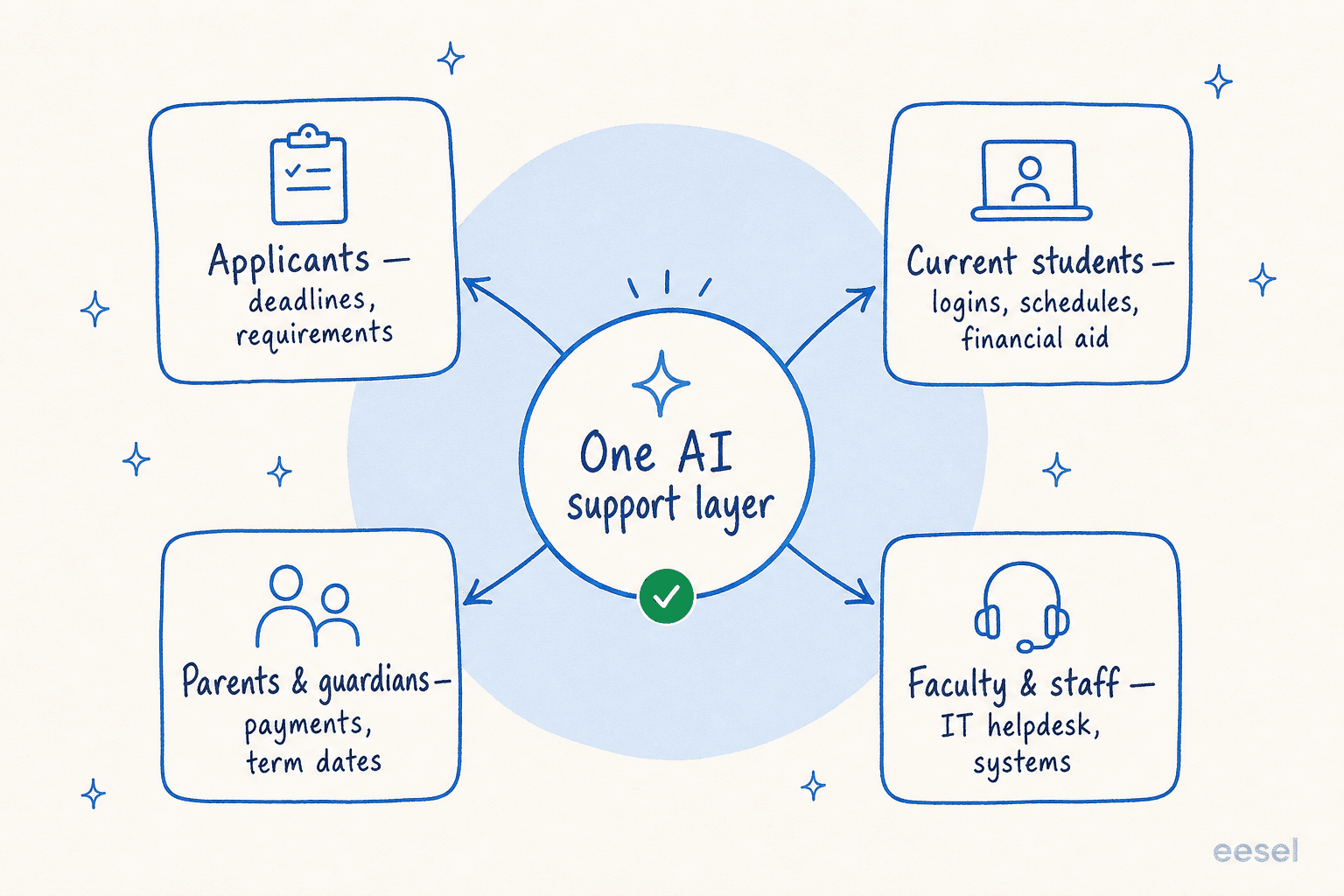
| Audience | What they ask about | Why AI helps |
|---|---|---|
| Applicants / prospective students | Deadlines, requirements, application status | High-volume, deadline-driven, 24/7 across time zones |
| Current students | Logins, schedules, financial aid, submissions | The biggest repetitive tier-1 bucket |
| Parents & guardians | Payments, term dates, policies | Predictable questions, often outside office hours |
| Faculty & staff | IT helpdesk, internal systems, HR | An internal helpdesk use case in its own right |
The practical implication: the AI needs to read from more than one knowledge source, the public help center for applicants, the student portal docs for current students, internal IT runbooks for staff, and know which to answer from. The good news is this is mostly a configuration problem, not a content-writing project, if the tool can ingest the docs and tickets you already have.
Where the AI actually sits
Strip away the marketing and there are three concrete places AI plugs into an education support operation. Most teams sequence them rather than picking one.
- A student-facing chat widget that deflects the repetitive questions before a human ever sees them, on your help center or inside the student portal.
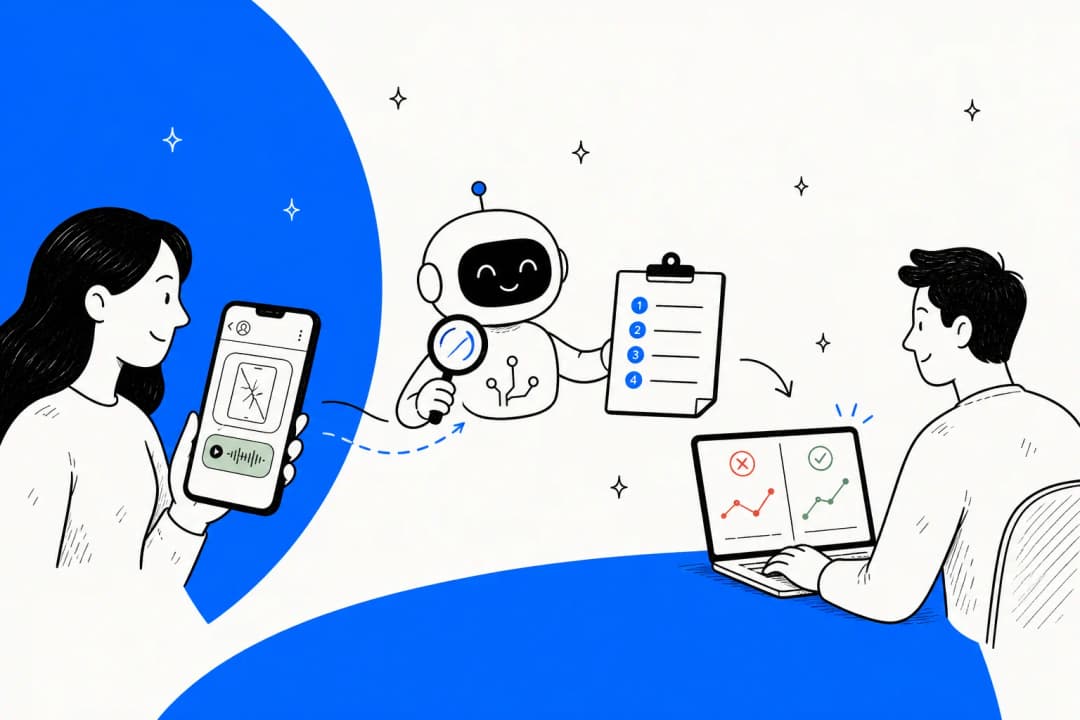
- A copilot for your agents, where the AI drafts a reply from your knowledge base and a person reviews and sends, the AI copilot for customer service pattern. This is the safest place to start.
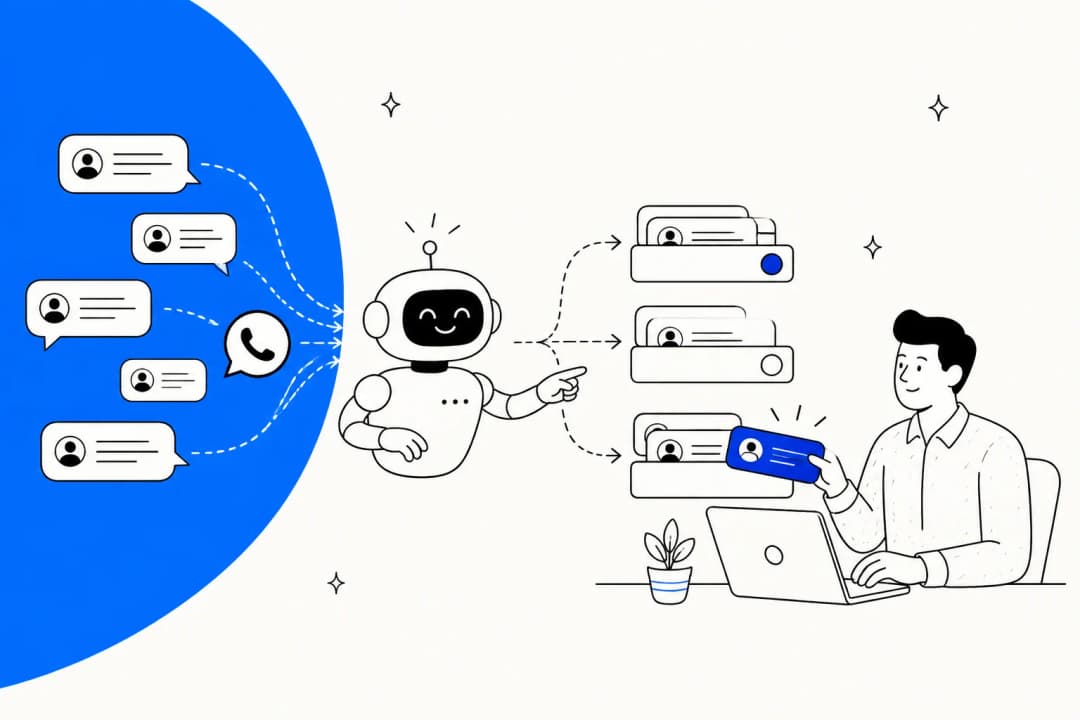
- Triage and routing, where incoming tickets get tagged, prioritized, and routed, with a suggested answer left as an internal note, which is how a lot of AI customer service workflows begin.
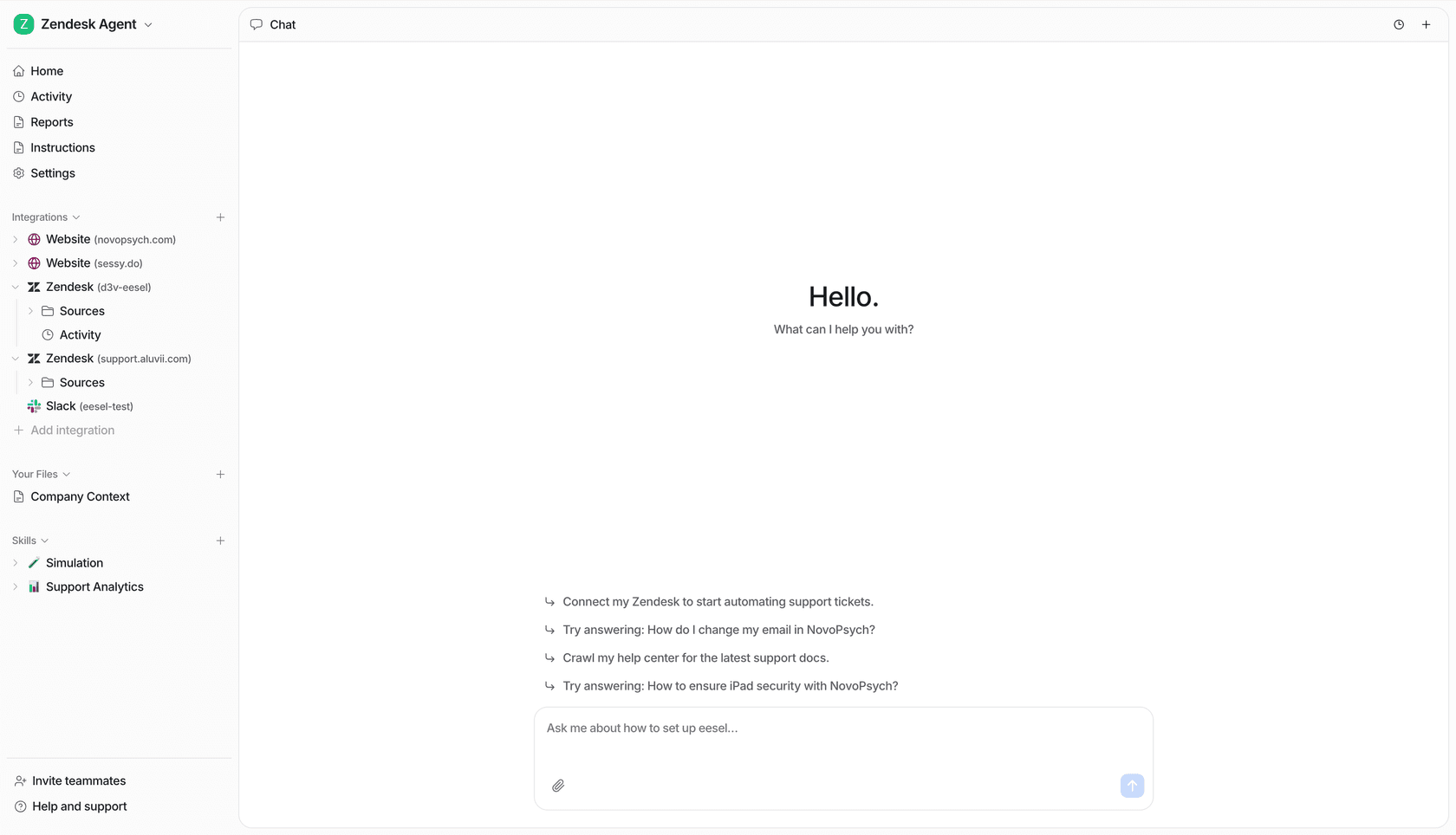
The strongest education teams don't flip to full auto-reply on day one. They start with copilot and triage because they're low-risk, build trust in the answers against real student questions, and only then let the AI answer some categories directly. More on that ladder in the accuracy section below.
Keeping it accurate when the answer touches money and records
This is where education raises the bar. When a generic store's bot gives a slightly-off answer about shipping, it's an annoyance. When an AI tells a student the wrong financial-aid deadline or guesses at a grade-appeal policy, that's real harm, and it's your institution's name on it. So the control story matters more here than almost anywhere.
The principle every experienced support buyer lands on is the same: the AI should answer only what it's confident about, and quietly leave everything else for a human. One CX lead handling thousands of tickets a month put it about as bluntly as it gets:
"The AI will never be able to answer 100% of the questions... I need an AI who is only handling the tickets that it's confident to handle and all the other ones, leave them alone."
a customer-experience lead at a high-volume DTC company (eesel customer interview)
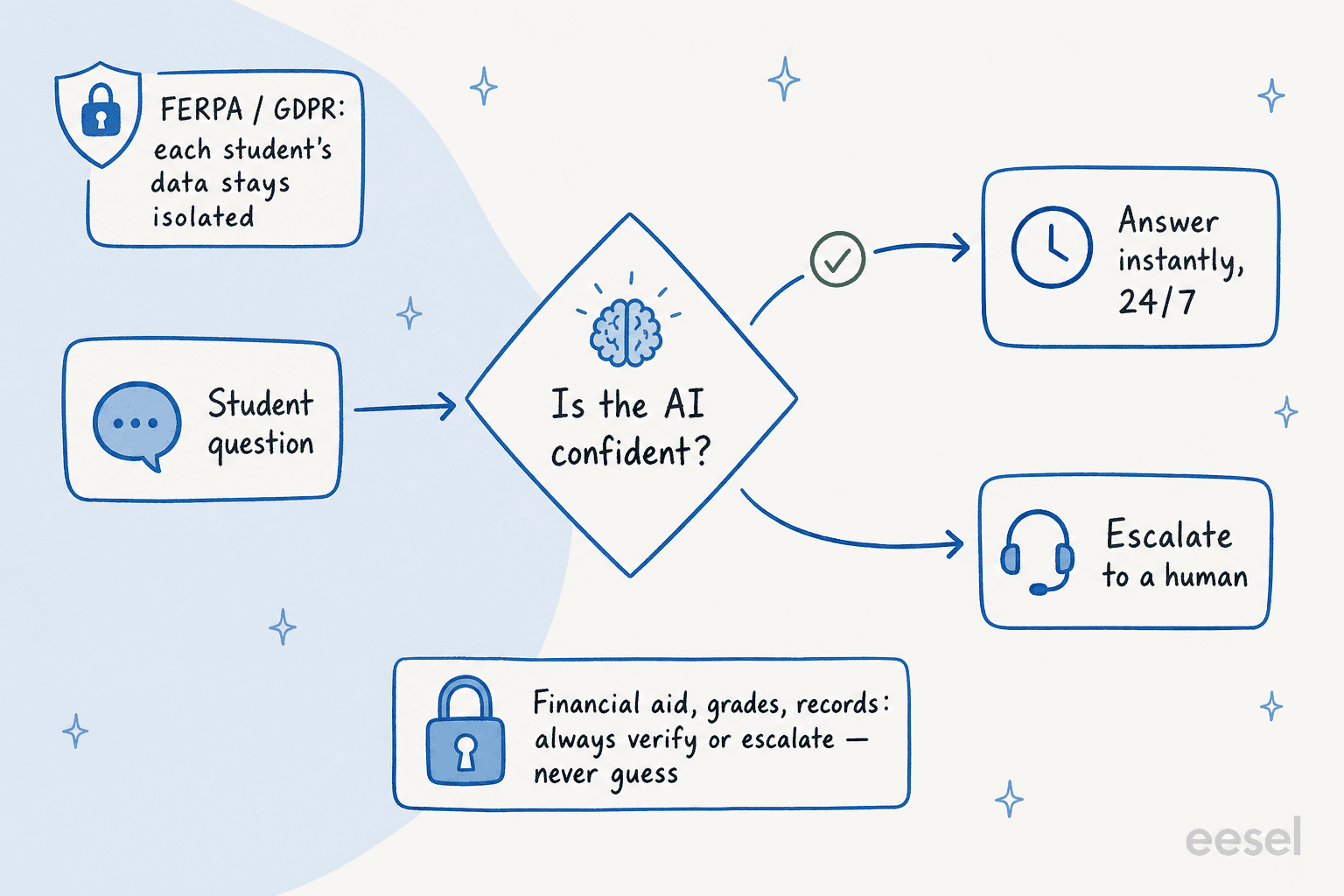
In practice that means three things to insist on:
- Confidence-based routing you control. The AI auto-answers only above a confidence threshold you set, and escalates the rest with a clean hand-off to a human. You can exclude whole categories, financial aid, conduct, appeals, from automation entirely.
- No hallucinating on empty retrieval. If your docs don't cover something, the AI should say so or escalate, never invent a deadline. This is non-negotiable when a student acts on the answer.
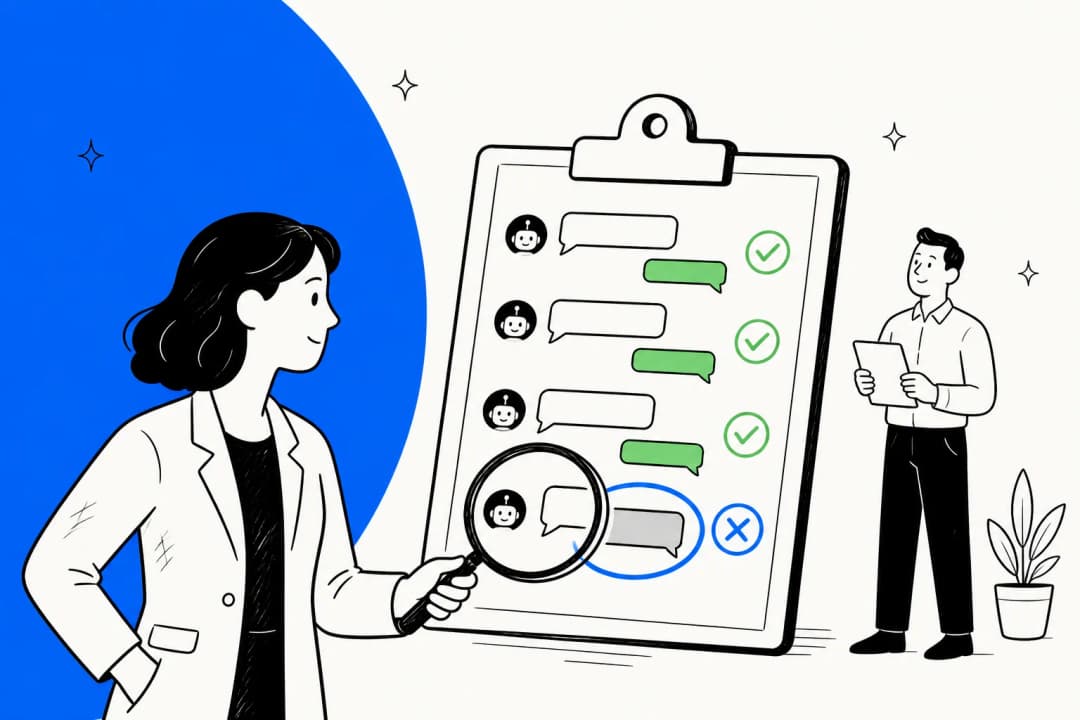
- Test before you go live. The single most valuable thing here is being able to simulate the AI against your past tickets and see its real resolution rate and where it would have gone wrong, before a single student sees it. eesel's simulation mode does exactly that.
On the data side, education has its own compliance weight, FERPA in the US, GDPR for international students. The questions to ask any vendor: is each institution's data isolated, do my tickets train public models (the answer should be no), and what agreements are on offer. eesel keeps data segregated and offers EU data residency and signed DPAs, with enterprise options for stricter requirements.

Multilingual support for international students
If you serve international students, multilingual is not an edge case, it's a daily reality, and it's one of the clearer wins. A student who emails in Portuguese or Mandarin at the start of term should get an answer in that language without you running a separate team per market.
This is something modern AI handles out of the box. eesel answers in the customer's own language across 80+ languages, trained on your multilingual ticket history, so the answer reads naturally rather than like a machine translation bolted on. For a sense of scale, one online-learning platform on eesel has run more than 33,000 support interactions through a single agent, the kind of volume an international student body generates and a small team can't hand-translate.
What it costs, and why the pricing model matters on a fixed budget
Education budgets are usually fixed, often grant- or term-funded, and set well before you know how bad September will be. That makes the pricing model matter as much as the price.
Here's the trap: per-resolution or per-interaction pricing scales your cost up exactly when volume spikes, the enrollment surge, the exam-results day, so your bill peaks the same week your budget is most stretched. Flat, usage-based pricing avoids that. eesel's pricing is $0.40 per ticket with no per-seat platform fee, so a seasonal wave costs what the volume costs and nothing extra.
| Plan | What it covers | Price |
|---|---|---|
| Free trial | $50 of usage + 2 blog generations, no card | Free |
| Usage-based (Regular task) | A handled ticket or chat session | $0.40 per ticket |
| Light tasks | Dashboard lookups / questions | Free |
| Annual commit | Commit to ≥$300/month for the year | 25% off usage |
| Enterprise | SSO, HIPAA, BAA, higher KB limits, dedicated SE + AM | $1,000/month + usage |
Plug in your own term-time numbers, set a conservative auto-resolution rate, and see what the surge actually costs:
The deeper reasoning, and how the savings actually break down, is in eesel's AI customer support cost savings breakdown and the AI vs human agent cost comparison.
What to look for in a tool (the education checklist)
Not every AI customer service platform is built for the realities above. When you evaluate, weight these:
| What to check | Why it matters for education | Red flag |
|---|---|---|
| Trains on your own docs + past tickets | Useful from day one, no flow-building | Generic scripted bot |
| Confidence-based routing you control | Promise "only answers when sure" | All-or-nothing auto-reply |
| Category exclusions | Keep financial aid / appeals human | No way to fence off topics |
| Multiple knowledge sources | Serve students, parents, and staff | One KB only |
| Works on your existing helpdesk | No forced migration mid-term | Single-vendor lock-in |
| Multilingual out of the box | Serve international students | English-only widget |
| Flat / usage-based pricing | Survives the seasonal spike | Per-resolution billing |
| Data isolation + DPAs | FERPA / GDPR posture | Trains public models on your data |
| Simulation against past tickets | Know the resolution rate before go-live | "Just turn it on and see" |
| Self-serve setup | Live before the next enrollment wave | "Talk to sales to start" |
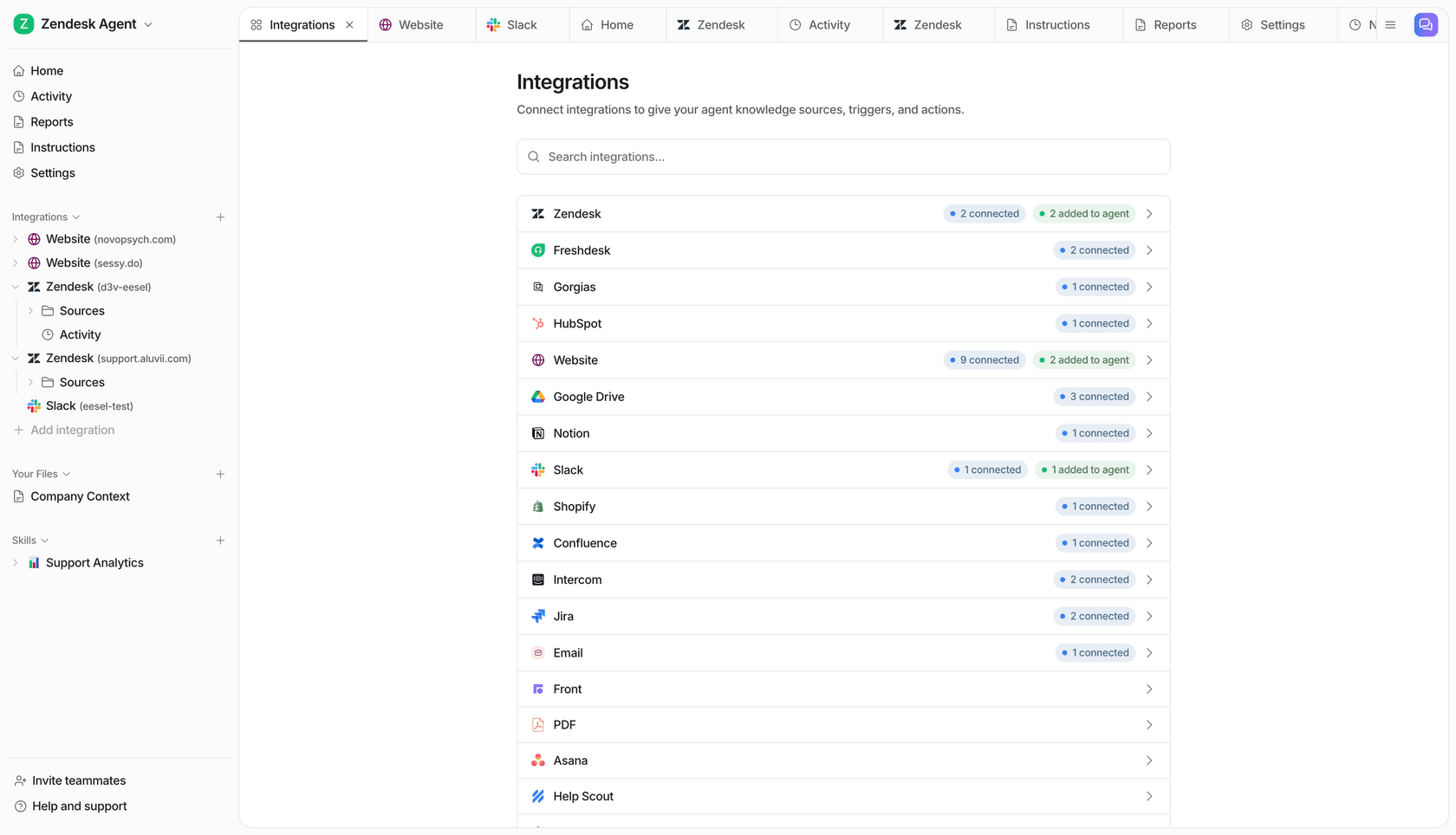
Two of these deserve a flag. Working on your existing helpdesk is underrated, an education team mid-term cannot rip out Zendesk, Freshdesk, Gorgias, or Front to add AI, so the AI layer has to sit on top of whatever you run. And the build-vs-buy question comes up on campus a lot, because there's often an engineering team nearby. As one operator who chose buy over build told us, they didn't want to invest their time in something they'd then have to maintain forever, prompts, retrieval, integrations, all of it. The full case is in our build vs buy guide.
For broader comparisons before you trial anything, eesel's roundup of the best AI helpdesk software is a good place to start. It's also worth scanning which companies use AI for support and how, plus the wider support automation roundup.
Common mistakes education teams make
A few patterns worth skipping:
- Standing it up the week before enrollment. Set it up in the quiet season so it's tested and trusted before the surge, not scrambling during it.
- Flipping to full auto on day one. Start in copilot mode, always. Earn the trust on real questions first.
- Feeding it only a thin help center. Your past tickets are the richest source of how you actually answer. An agent trained only on a sparse FAQ sounds generic and gets corrected constantly.
- Not fencing off the sensitive stuff. Financial aid, grades, conduct, and appeals should route to a human by policy, not by hope.
- Ignoring the pricing model until the bill arrives. Model it against your peak month, not the average. Use the calculator above.
- No knowledge-gap loop. Treat the AI's "I don't know" moments as a to-do list and feed the gaps back into your docs. Track it with proper AI customer service metrics and the KPIs that matter.
If you're scaling support more broadly, the scaling guide for startups and the customer support AI implementation guide both carry over well to the education model.
Try eesel for your students
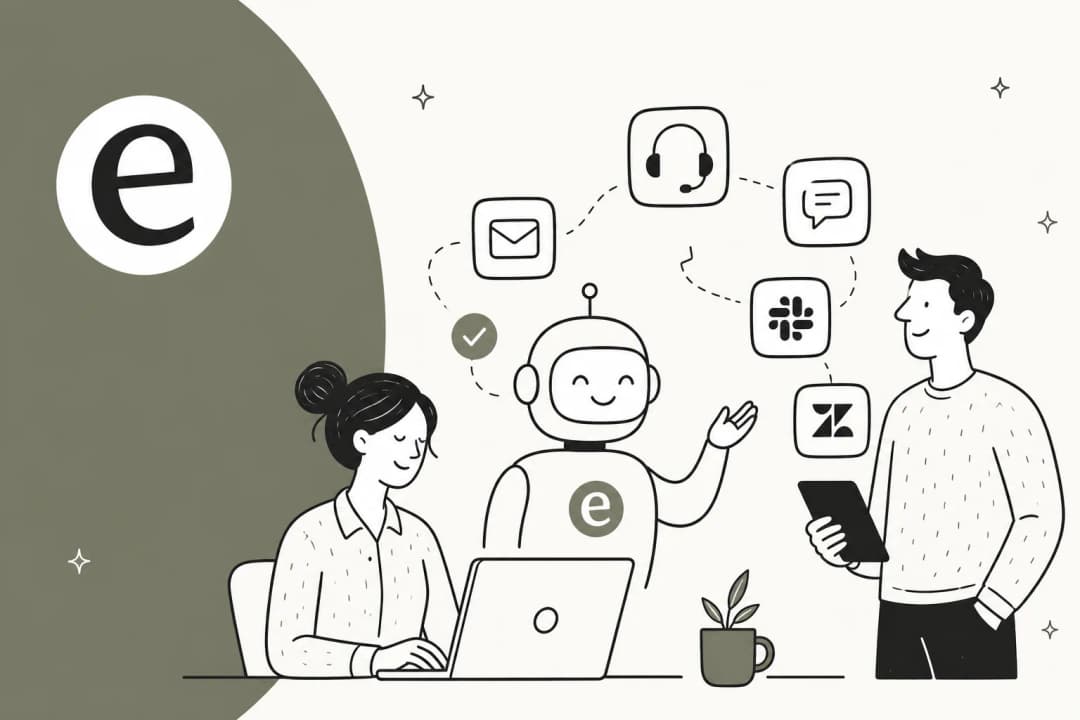
If you run support for a school, university, or edtech product, eesel was built for the shape of problem above. You stand up an AI helpdesk agent trained on your own help center, student portal docs, and past tickets, sitting on top of whatever helpdesk you already use, Zendesk, Freshdesk, Gorgias, Front, or a plain inbox, answering in 80+ languages, around the clock.

The part education teams tend to like most: you can simulate the agent against your past tickets before a single student sees it, so you know the resolution rate and catch the gaps in a trial rather than during enrollment week. Roll it up the trust ladder at your own pace, copilot, then confidence-routed, then autopilot on the question types it's earned, and keep the sensitive stuff with your people. It's free to try, self-serve, and live in minutes rather than a term-long project.
Frequently asked questions
What is AI customer service for education?
How much does AI customer service for education cost?
Is AI customer service safe for student data and FERPA?
Can AI support students in multiple languages?
Will AI customer service replace student support staff?


Article by
Kurnia Kharisma
Kurnia is a software engineer and writer at eesel AI with two years of SEO experience, writing about AI tools, helpdesk software, and customer support. He pairs a developer's understanding of how these products are built with search-driven research into what actually ranks and resonates with the people searching for them.