Search volume
The average number of times people enter a given query into a search engine over a set period, usually expressed as monthly searches.
What search volume means
Search volume is the average number of times people enter a given query into a search engine over a set period, most often reported as average monthly searches. It is an estimate, not a hard count: tools derive it from clickstream samples, search engine data, and modeling, then average the result across roughly twelve months to smooth out seasonal spikes. A query like "tax software" climbs every spring and falls the rest of the year, so the monthly figure you see is a yearly average rather than a snapshot of any single month.
In content marketing and SEO, search volume is one of the first signals used to decide whether a topic is worth writing about. It estimates the size of the audience that could find a page, which is why it sits at the center of keyword and editorial planning.
Why search volume matters
Search volume on its own is just a number. It earns its place in a content plan because it lets you compare opportunities against real cost and intent:
- It sizes the addressable audience. A term with 8,000 monthly searches has a larger ceiling than one with 80, so it tells you how much traffic a top ranking could realistically return.
- It exposes seasonality. Month-by-month volume reveals demand cycles, so you can publish a "year-end review" guide before the search peak rather than after it.
- It pairs with difficulty. Read against keyword difficulty, volume separates winnable topics from head terms that established sites already own.
- It reveals intent shape. A single high-volume term often splits into dozens of lower-volume variants, and those variants usually carry clearer search intent and convert better.
- It informs cluster structure. Volume across related queries shows where to place a pillar page versus a supporting article in a topic cluster.
It also helps to know what is actually shifting the number you read, since the figure itself is a blend of several moving parts:
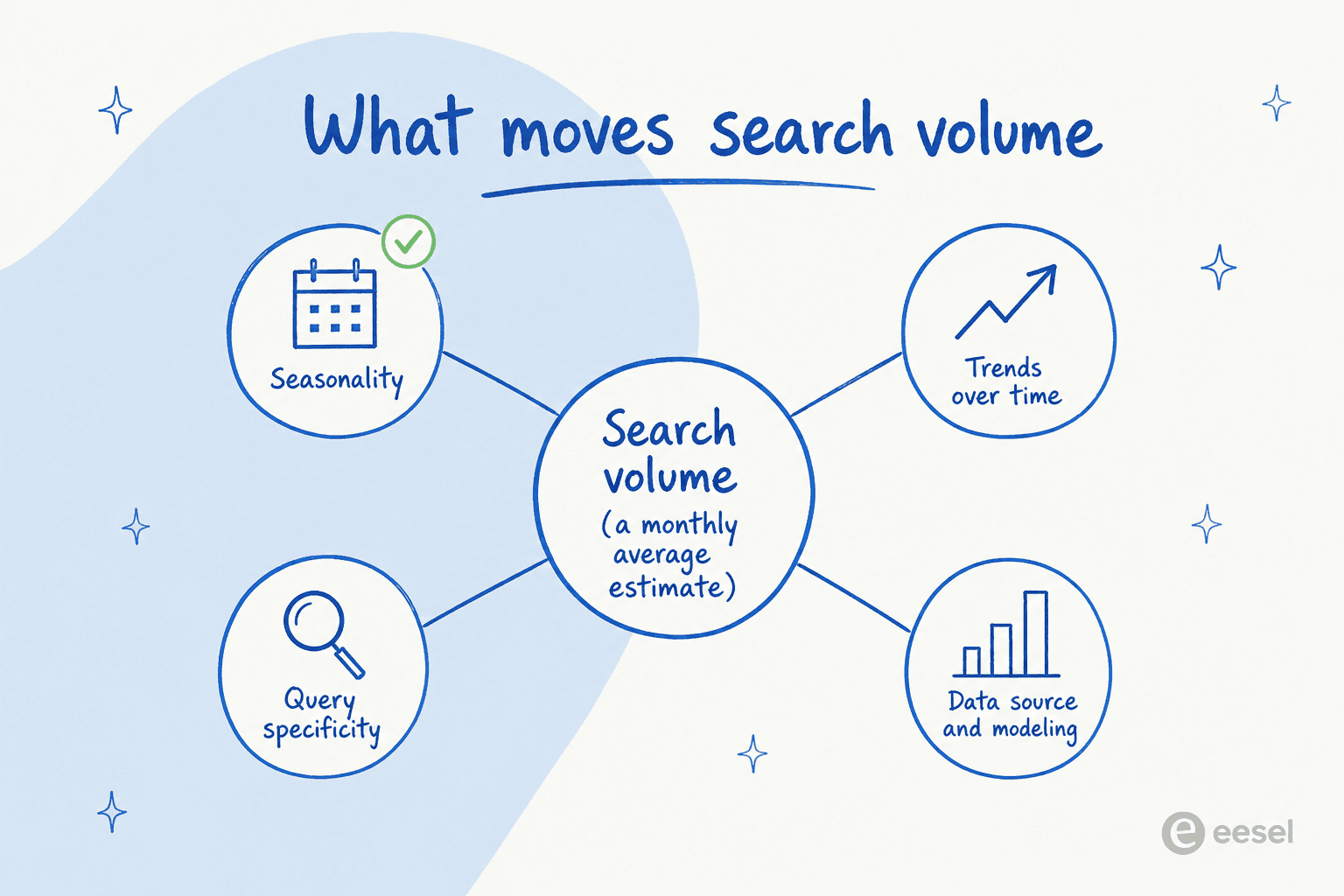
Seasonality and longer-term trends move real demand, query specificity decides how that demand splits across phrasings, and the tool's own data source and modeling shape the estimate you end up seeing. Knowing which of these is in play is what stops you from misreading a seasonal dip or a tooling quirk as a genuine change in interest.
How search volume works in practice
A content team usually moves through the same loop:
- Gather candidate queries from keyword tools, search-engine reports, autocomplete, and the questions buyers actually ask.
- Pull volume and difficulty for each, treating the volume figure as directional rather than exact.
- Group by intent and topic so high- and low-volume variants cluster around the same buyer question.
- Prioritize and brief the topics where volume, difficulty, and intent align, then assign each to a piece of content.
This is where an AI blog writer fits the workflow. A tool like eesel AI takes a target topic, researches it against real sources, and drafts a long-form post shaped around the query and its variants, so the volume you identified during planning turns into a published, source-grounded article instead of another row in a spreadsheet.
Search volume in practice
The common mistake is treating search volume as a goal rather than an input. A page that ranks for a 30,000-volume term but attracts the wrong reader produces traffic that never converts, while a 150-volume query tied to a clear buying decision can drive more pipeline than the head term ever would. Experienced teams weight volume against intent and difficulty together, then accept that the published numbers are estimates. The signal worth trusting is the relative size between two queries, not the absolute figure on either one.
Turn keyword data into published posts
eesel AI researches a topic and drafts a long-form, source-grounded post aimed at the queries your buyers actually search.