


What ZeroClaw actually is
ZeroClaw bills itself as a lightweight, Rust-based alternative to OpenClaw: an autonomous AI agent you run yourself. The whole pitch fits on a bumper sticker the project uses verbatim: "You own the agent. You own the data. You own the machine it runs on."
It ships in two forms, and the difference matters a lot for who it's for:
- ZeroClaw (the open-source runtime) is the self-hosted single binary on GitHub. You clone it, build it, and run it on your own box. It's dual-licensed MIT OR Apache-2.0, so it's fully free, and it's popular: around 32,000 GitHub stars as of the v0.8.3 release on July 16, 2026, up from the 28k an earlier Hacker News thread cited, so it's climbing fast.
- ZeroClaw Cloud (zeroclaw.app) is a managed, hosted tier for people who don't want to run a server. It's the "describe what you want in plain English" version, and it's currently in private beta with a waitlist.
I spent my time in the research with the open-source runtime, its docs, and the launch discussion, so that's where most of this review sits. Think of ZeroClaw less like a product you buy and more like a really well-built engine block. What you bolt onto it is up to you.
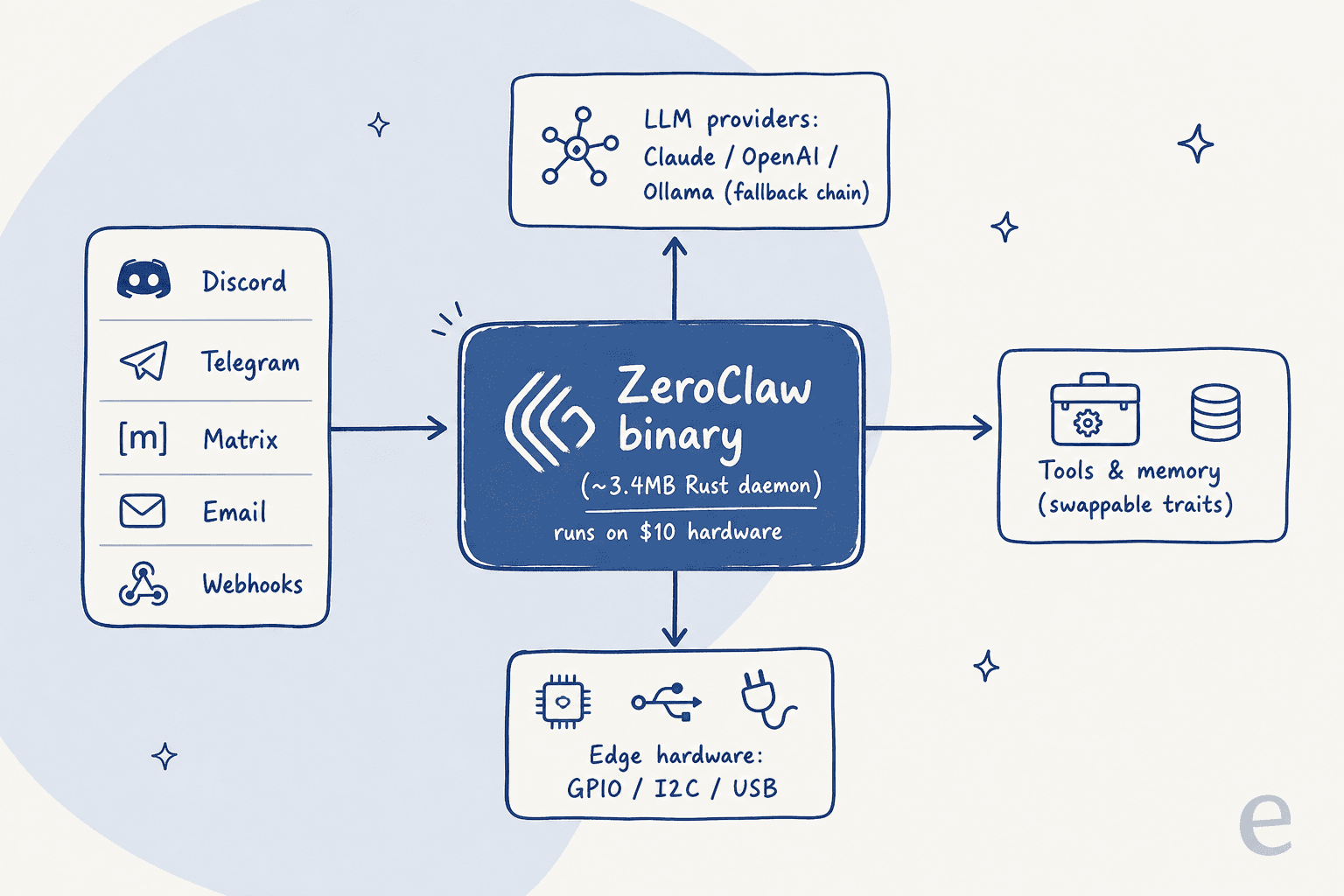
Here's the shape of the runtime at a glance:
The good parts, and they're real
I want to be fair here, because ZeroClaw earns a lot of goodwill on the merits. A few things really stand out.
It's tiny and fast. The runtime is a ~3.4MB daemon with sub-10ms cold start that runs on ~$10 hardware. That's not marketing rounding, that's the kind of footprint that lets you drop an agent on a Raspberry Pi and forget about it. For a category where most "AI platforms" want a container fleet, this is refreshing.
You really do own your data. Because it's fully self-hosted, the data and the machine stay yours. For privacy-sensitive or regulated setups that flat-out refuse SaaS, that's the whole ballgame. Nobody else sees your traffic, and there's no vendor sitting between your agent and your model.
No model lock-in. ZeroClaw is provider-agnostic: Anthropic Claude, OpenAI, Ollama, and around 20 more OpenAI-compatible endpoints, with fallback-chain routing so if one provider dies, it rolls to the next. Swap models whenever you like. This is the kind of thing you appreciate the day your primary provider has an outage.
It can touch the physical world. This one's properly unusual. Through a Peripheral trait, ZeroClaw does GPIO, I2C, SPI, and USB integration on Raspberry Pi, STM32, Arduino, and ESP32. Your agent can flip a relay or read a sensor, not just chat. If you're building a home-automation brain or an edge device, that's a real differentiator few agent frameworks offer.
The architecture is clean. Every subsystem, providers, channels, tools, memory, tunnels, is a swappable trait. As someone who's shipped a fair amount of integration code, I have a soft spot for this. It means you can replace the memory layer or add a channel without forking the whole thing. It runs on Linux, macOS, Windows, FreeBSD, NixOS, or Docker, configured through a single TOML file at ~/.zeroclaw/config.toml.
Put the strengths together and you get a clear picture: this is a developer's agent runtime, built by people who care about owning their stack.
Pricing: free runtime, message-capped cloud
The open-source runtime is free, full stop, under that MIT/Apache license. The pricing conversation only starts if you want the managed ZeroClaw Cloud tier so you don't have to run a server yourself.
Here's the full Cloud breakdown, verified from the pricing page in July 2026:
| Plan | Price | Agents | Channels | Messages/mo | Support | SLA |
|---|---|---|---|---|---|---|
| Free | $0 (free forever) | 1 | 1 | 500 | Community | - |
| Pro (Most Popular) | $29/mo | 5 | Unlimited | 100,000 | Priority | - |
| Team | $99/mo | 25 | Unlimited | Unlimited | Dedicated | SLA guarantee, team management, security & activity logs |
Two things to flag before you read this as "cheap."
First, the Cloud tier bills by message volume, not by outcome. A "message" is a chat message, not a resolved case. That's fine for a personal assistant bot, but it doesn't map to support ROI at all, where the number that matters is tickets deflected, not messages sent. If you're comparing this to a support tool, you're comparing different units. It's worth understanding how AI agent pricing models differ before you assume the cheaper sticker wins.
Second, the free tier's support is community-only, and the managed tier that removes the DIY burden is still behind a waitlist. So today, the version most non-technical buyers actually need isn't something you can just sign up for.
The community verdict: great, but be careful
ZeroClaw is Hacker News-native. It doesn't have a big Reddit or G2 footprint yet, which is normal for a project this new, so the honest read on user sentiment comes from the launch thread. And the sharpest voices there are impressed but cautious, mostly about security.
One commenter, weighing whether to actually install it, put the hesitation plainly:
"I see some things listed here, enough to make me feel this is a more solid app than OpenClaw / Moltbot, but not enough to let me feel okay installing it :) … I'm especially worried about exfiltration or other negative behaviours."

Another was blunter about the depth of the security story:
"I looked at it briefly and all their talk about security is about things like gatekeeping who gets to talk to the bot over Telegram. They've done literally nothing about the actual problems such as the lethal trifecta. The fact that they don't even acknowledge that made me tag the project as naive."
That "lethal trifecta" line matters. ZeroClaw does describe itself as "security-first" with supervised-autonomy defaults and sandboxing options (Landlock, Bubblewrap, Seatbelt, Docker). The dispute isn't that it does nothing; it's whether access control over who can message the bot is the same thing as protecting against an agent that reads untrusted data, has tool access, and can exfiltrate. Those are different problems. For a hobby agent, it's a footnote. For an agent answering your customers, it's the whole question, and this is exactly the class of risk we obsess over in preventing AI hallucinations in support.
Where a support team hits the wall
Here's the scenario I keep picturing, because I've watched teams walk straight into it. Someone technical on the team sees ZeroClaw, thinks "we could put this on our support inbox for basically free," clones the repo, and gets an agent talking on Discord in an afternoon. Great demo. Then the questions start, and the wall arrives fast.
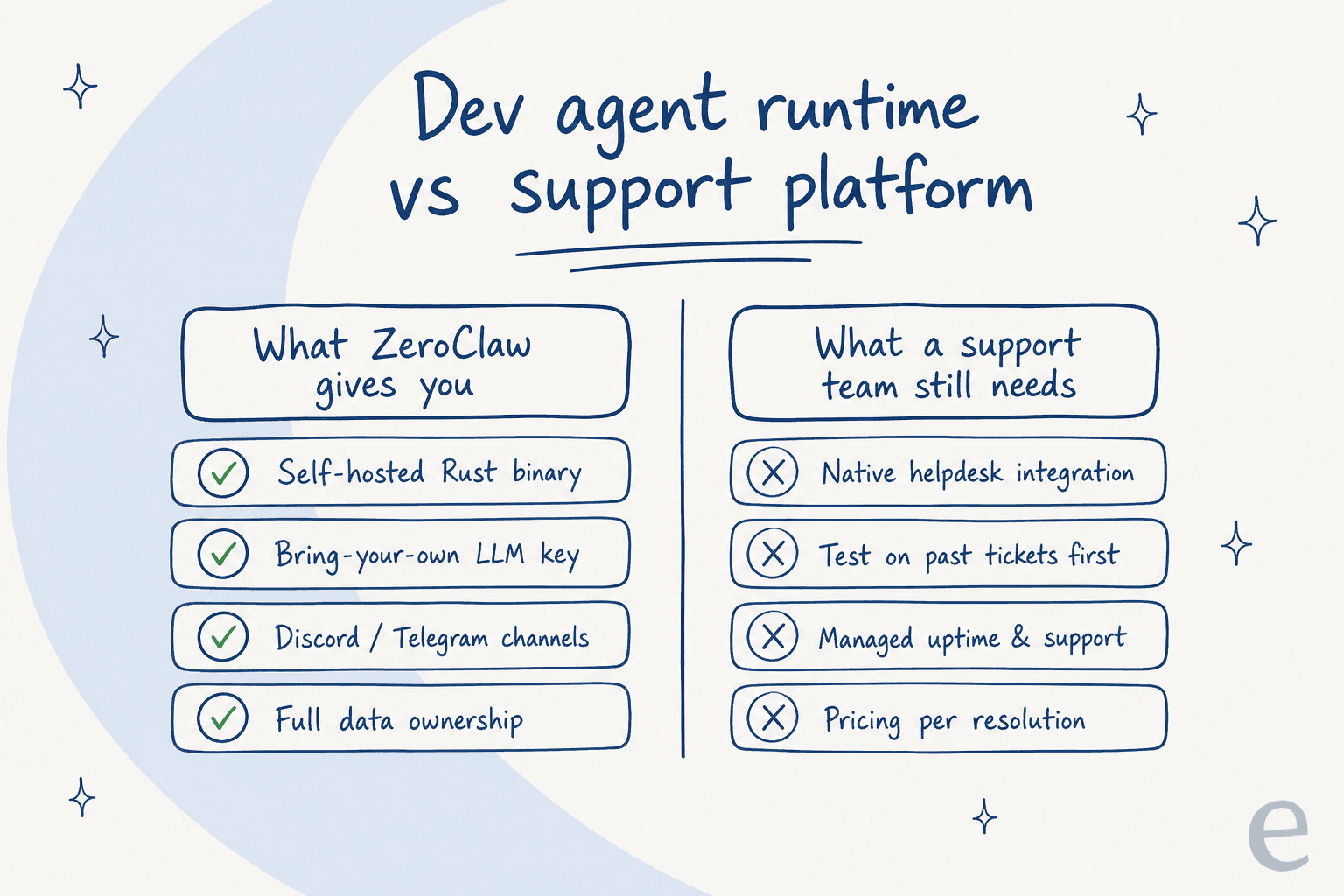
ZeroClaw is a fantastic developer agent runtime. It is not a customer-support platform, and the gap between those two things is bigger than it looks.
The concrete gaps, in the order a support team hits them:
- It's a DIY framework, not a support product. Deploying the runtime is git-clone,
cargo build --release, TOML config, and bring-your-own API key (zeroclaw.net). A support team without a spare engineer can't stand it up, let alone keep it running. Even the launch audience treated it as a tinkerer's tool. - No native helpdesk integration. Its channels are Discord, Telegram, Matrix, email, and webhooks. There's no native Zendesk, Freshdesk, Gorgias, or Front integration. It doesn't sit inside a ticketing workflow, doesn't write back to tickets, and doesn't respect your macros or tags.
- No way to test before it goes live. There's nothing that lets you run the agent against your past tickets to see how it'd have answered. For support, that simulation step is the whole difference between a demo and a safe rollout. Shipping an untested agent at customers is how you get the exact "confident and wrong" failures the HN thread worried about.
- Support for you is community-only on the free tier. You're on your own, or in a Discord, when something breaks. Ironic for a tool you'd use to do support.
- Message-cap pricing doesn't map to support value. Billing by message volume tells you nothing about tier-1 deflection or resolution rate, the numbers a support lead is actually judged on.
- The maintenance burden lands on you. LLM keys, sandboxing config, uptime, upgrades. Fine for a weekend agent, heavy for a function that has to be always-on.
None of this is a knock on ZeroClaw. It's just built for a different job. Positioning it against a support AI is like comparing a car engine to a car: the engine might be gorgeous, but you can't drive it to work.
So who should actually use ZeroClaw?
Let me give you the straight verdict, because a review that won't pick is useless.
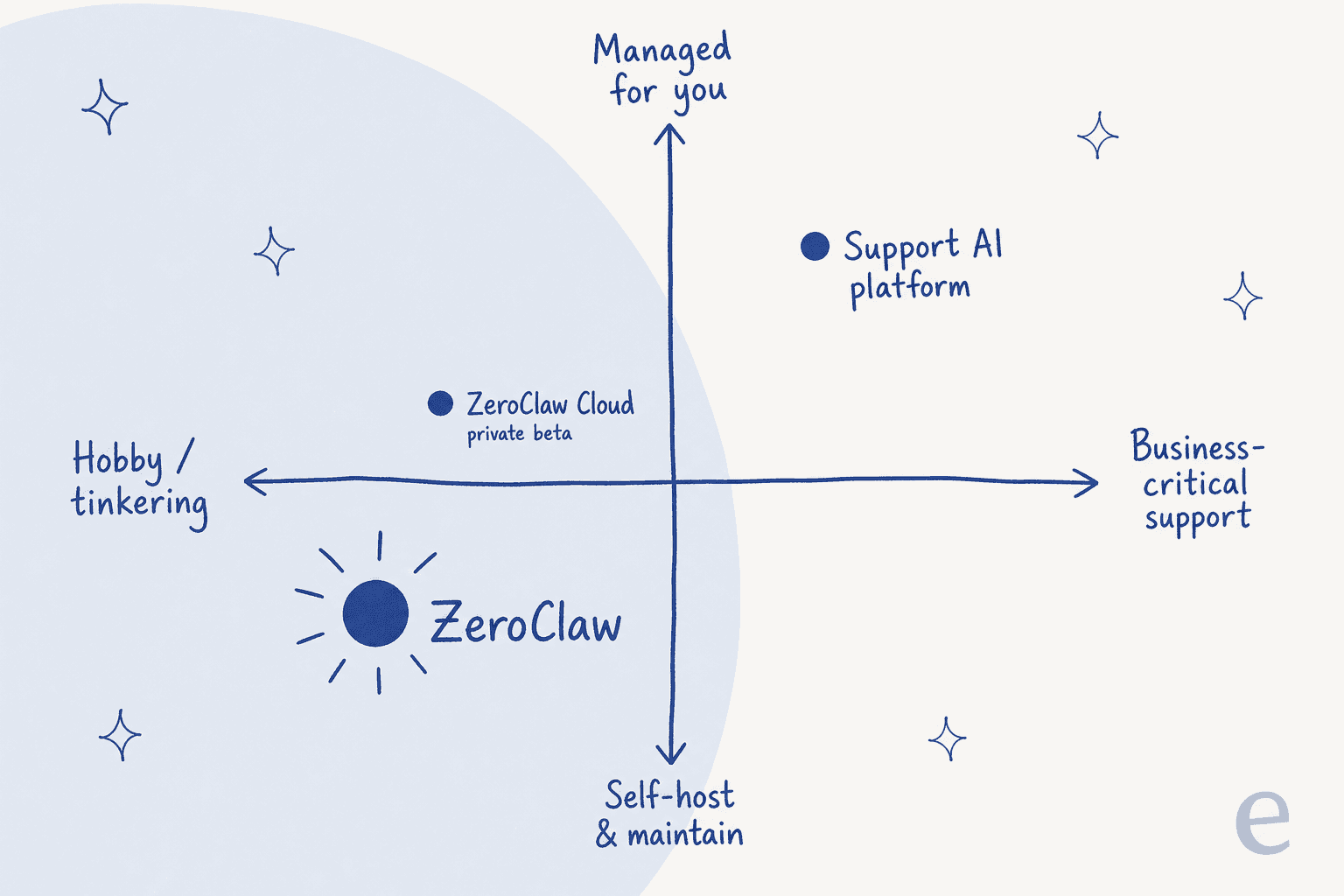
Reach for ZeroClaw if you're a developer or a privacy-first team that wants to own the whole stack, you're comfortable in Rust and on the command line, and your use case is a personal agent, an internal bot, a home-automation brain, or an edge-hardware project. In that world, the tiny footprint, model flexibility, and hardware access are legitimately best-in-class, and the price is unbeatable. Run it, enjoy it.
Skip ZeroClaw if you're a support, IT, or ops team trying to put an AI agent in front of customers. Not because it's bad, but because you'd spend weeks building the helpdesk integration, the testing harness, and the safety rails that a purpose-built AI support agent gives you on day one, and you'd still be maintaining a Rust binary at 2am when a customer-facing agent goes sideways. The "free" tool gets expensive the moment your time is on the line.
The deciding factor is simple: do you want to own an engine, or do you want to get somewhere? Both are valid answers. Just be honest with yourself about which one you're actually shopping for.
Try eesel AI
If you landed here because you want an AI agent on your support queue and ZeroClaw turned out to be the wrong shape, this is the part that's actually for you.
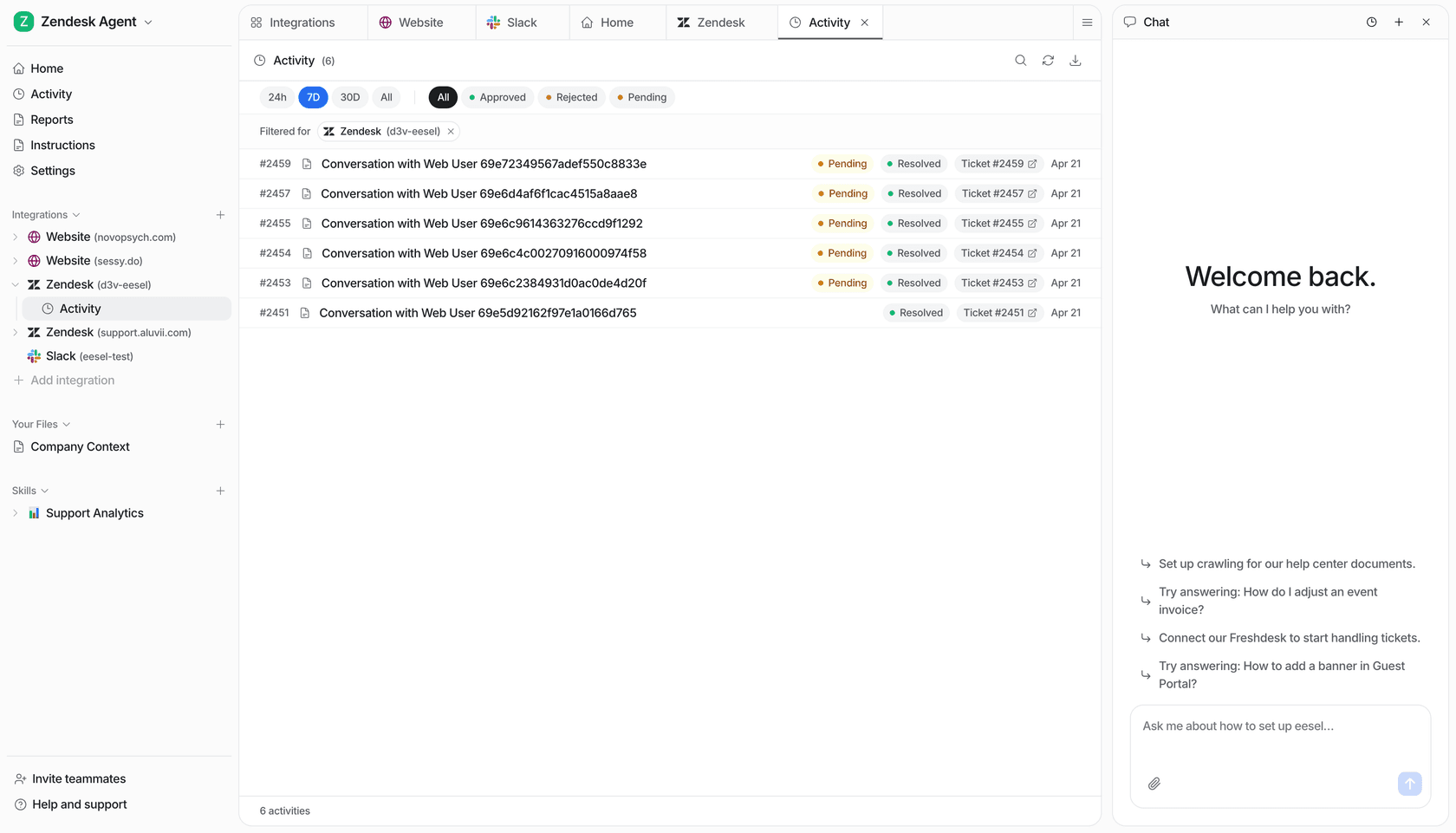
eesel AI is the support-team version of the thing ZeroClaw makes you build yourself. It plugs straight into Zendesk, Freshdesk, Gorgias, Intercom, HubSpot, and Front with no cargo build in sight, learns from your past tickets and help docs on day one, and, the part that matters most, lets you simulate the agent against thousands of your real historical tickets before it ever answers a live customer. That's the safe-rollout step ZeroClaw simply doesn't have.
It's also priced the way support actually works: one fixed monthly price from $299/month for 500 credits (1 credit per ticket or chat), no per-seat fees and no message-cap games, so the bill tracks tickets, not chatter. Gridwise saw eesel resolve 73% of tier-1 requests in the first month. You own the runtime with ZeroClaw; with eesel you own the outcome. For a support team, that's the trade worth making.
Here's eesel handling live Zendesk tickets end to end:
Frequently Asked Questions
What is ZeroClaw and what does it actually do?
How much does ZeroClaw cost?
Is ZeroClaw safe to use for customer support?
What are the best ZeroClaw alternatives for a support team?
Do I need to know Rust to run ZeroClaw?
cargo build --release, a TOML config file, and your own LLM API key, so a Rust toolchain and comfort on the command line help a lot. The managed ZeroClaw Cloud tier removes that requirement but is currently in private beta, which is a real gap versus a hosted AI agent you can sign up for today.