Zendesk conversation handoff to agents: Complete 2026 guide
When a customer reaches the limits of what an AI agent can handle, the transition to a human needs to feel seamless. A clunky handoff frustrates customers and wastes agent time. Done well, Zendesk conversation handoff to agents preserves context, routes to the right team, and keeps resolution times low.
This guide breaks down exactly how Zendesk conversation handoff works, from the basic mechanics to advanced configuration options. Whether you're setting up AI agents for the first time or troubleshooting timing issues, you'll find step-by-step instructions that match your Zendesk tier. Tools like eesel AI can simplify the process further with plain-English escalation rules that skip the dialogue builder complexity.
What is conversation handoff in Zendesk?
Zendesk uses two terms that sound similar but mean different things: handoff and handback. Understanding both is essential for configuring messaging workflows correctly.
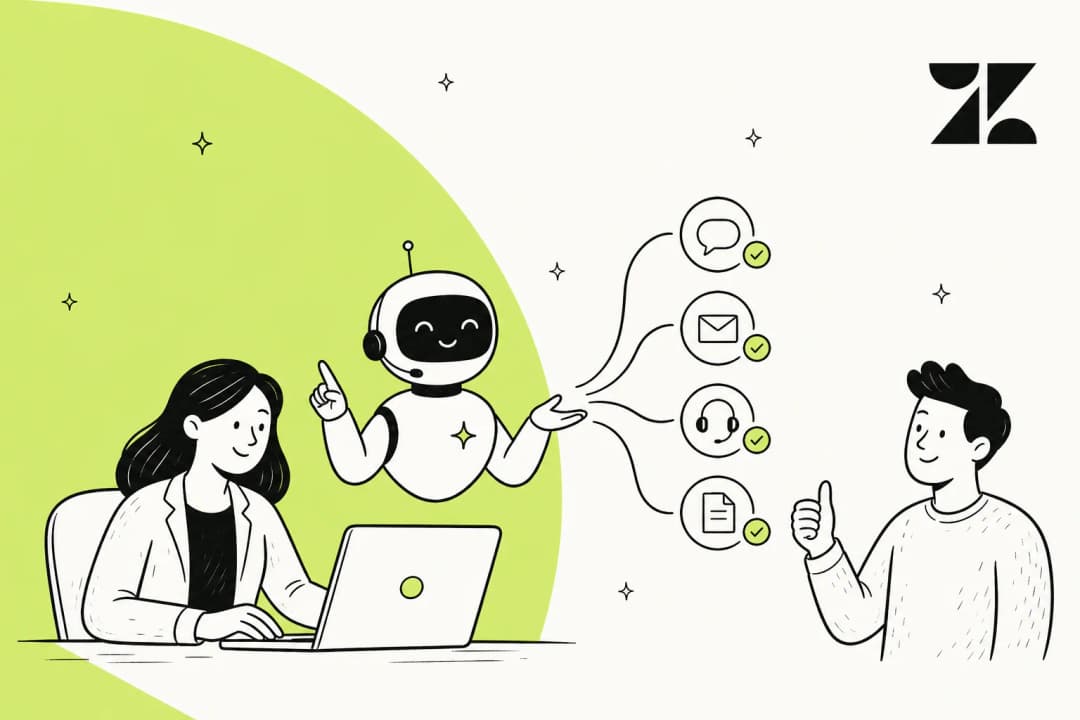
Handoff is the moment an AI agent transfers a customer conversation to a live human agent. The AI agent is removed as the conversation's first responder, and a human takes over. This typically happens when the customer explicitly requests help beyond what the bot can provide, or when the AI detects an issue that needs human judgment.
Handback is the reverse. When a ticket closes, the live agent is removed as first responder. This clears the way for the AI agent to handle any new conversations from that customer. Think of it as resetting the conversation loop.
Here's where things get tricky: an agent remains the first responder until the ticket status changes to Closed, not Solved. By default, Zendesk waits 4 days between Solved and Closed. During that window, if a customer returns to the messaging widget, they can't start a new conversation. Their message goes to the existing ticket instead.
This causes confusion. Customers expect to report new issues, but they're stuck in an old conversation thread. The previous agent remains assigned, and context gets muddled.
The solution involves adjusting your automation timing or creating triggers to close tickets faster. We'll cover both approaches in the configuration section below.
How to configure Zendesk conversation handoff to agents
Configuration depends on which Zendesk tier you're using. AI agents - Essential uses simpler settings, while AI agents - Advanced requires the dialogue builder. Here's how to set up each.
AI agents - Essential configuration
For teams using AI agents without the Advanced add-on, handoff configuration happens in the messaging behavior settings.
- Go to Admin Center > AI > AI agents
- Select your AI agent and open the Messaging behavior tab
- Look for "Talk to a human" options in each response type
- Configure when the option appears (always visible, after failed attempts, etc.)
- Open the Escalation tab to customize the message customers see during handoff
- Click Publish and test in a sandbox environment first
The Essential tier doesn't give you granular control over escalation paths. If you need conditional routing (different teams for billing vs. technical issues), you'll need Advanced or a third-party tool.
AI agents - Advanced with dialogue builder
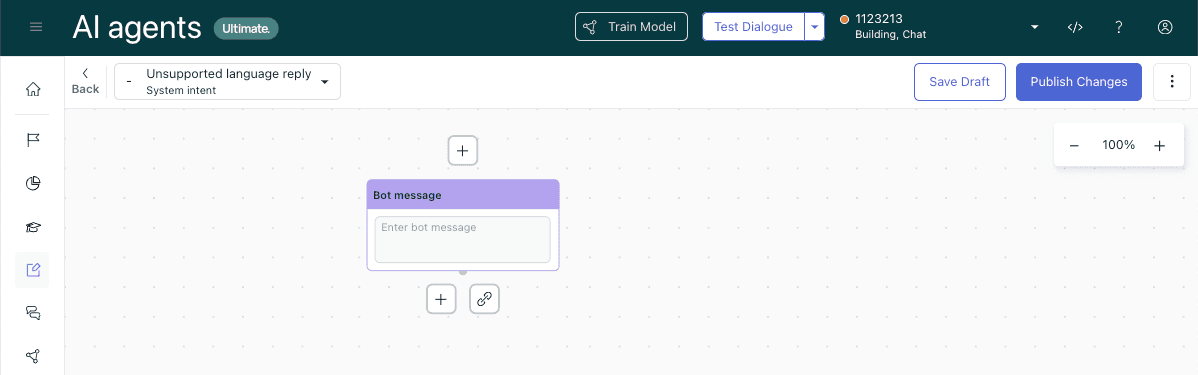
The dialogue builder gives you visual workflow tools for complex escalation logic. This requires the AI agents - Advanced add-on.
- In AI agents - Advanced, select your AI agent
- Navigate to Content > Use cases
- Open the dialogue you want to modify (or create a new reply)
- Add an Escalation block where you want the handoff to occur
- Configure the escalation message and channel (messaging or email)
- Optionally add an Availability block before escalation to check if agents are online
- Use Actions to add tags or populate ticket fields for context
- Click Validate dialogue to check for errors
- Publish when ready
Key blocks you'll use:
| Block Type | Purpose |
|---|---|
| Escalation | Defines the handoff path to human agents (must be last in branch) |
| Availability | Checks business hours and agent status before escalating |
| Conditional | Routes different escalation paths based on parameters |
| Link to | Connects to a reusable escalation flow from other dialogues |
Pro tip: Create one master escalation dialogue and use Link to blocks from other flows. This keeps your escalation logic consistent and easier to maintain.
Setting up triggers for handback timing
The default 4-day gap between Solved and Closed causes the customer confusion we mentioned earlier. There are two ways to fix this.
Option 1: Edit the default automation
Zendesk includes an automation called "Close ticket 4 days after status is set to solved". You can reduce this to 1 hour or even less.
- Go to Admin Center > Objects and rules > Automations
- Find and edit the default close automation
- Change the time condition from 4 days to your preferred duration
- Save and test
Option 2: Create an immediate-close trigger
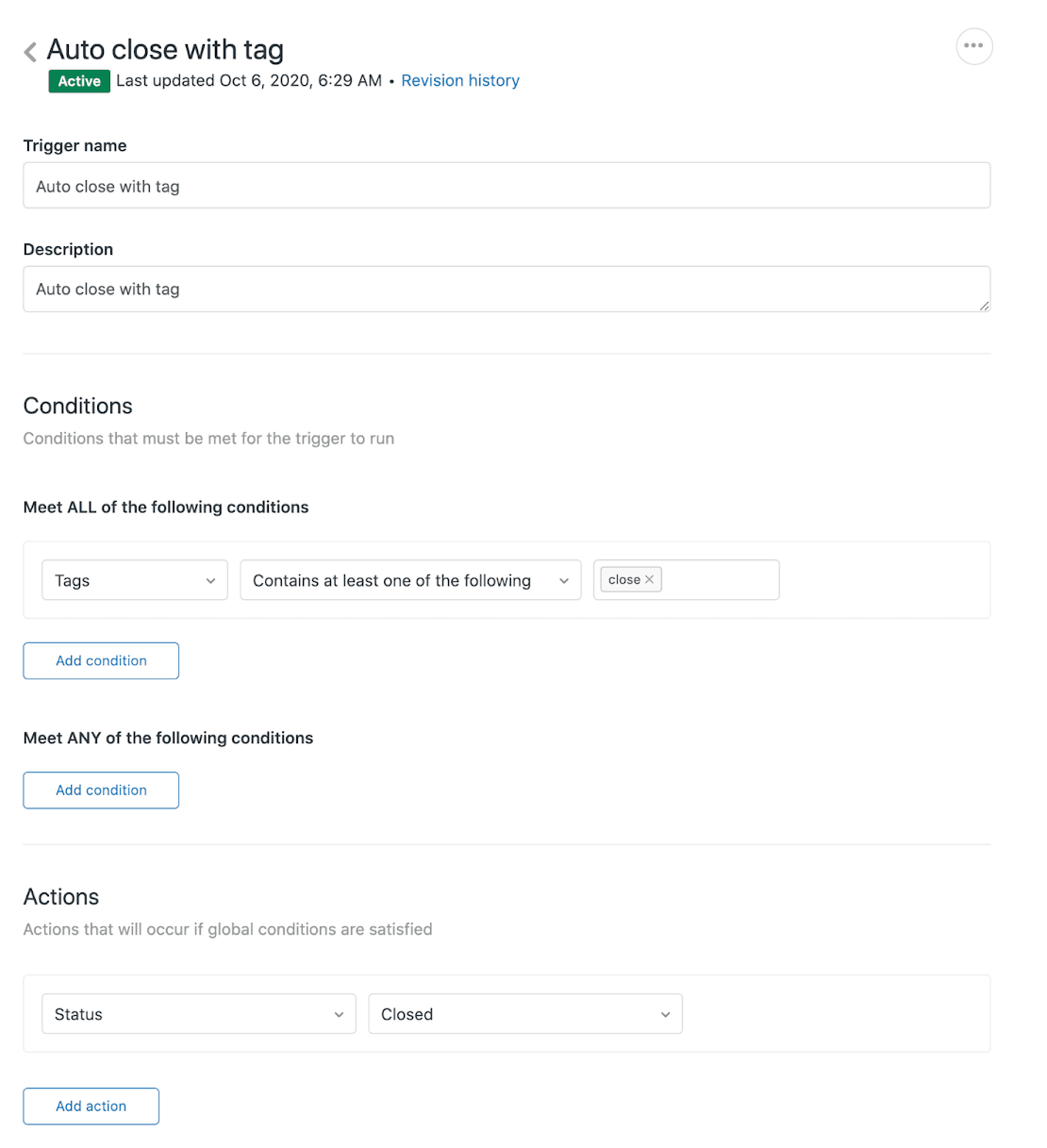
For more control, create a trigger that closes tickets immediately when tagged:
- Condition: Tags | Contains at least one of the following |
close - Action: Status | Closed
Then add the close tag via macro or automation when solving tickets.
One caveat: if you're using CSAT surveys, don't close tickets immediately. The survey sends when the ticket is marked Solved, so closing too fast can conflict with the survey experience. Keep at least a small buffer.
Routing conversations to the right agents
After handoff, the ticket needs to reach the right team or agent. Zendesk offers several routing methods, and your choice depends on team structure and Zendesk tier.
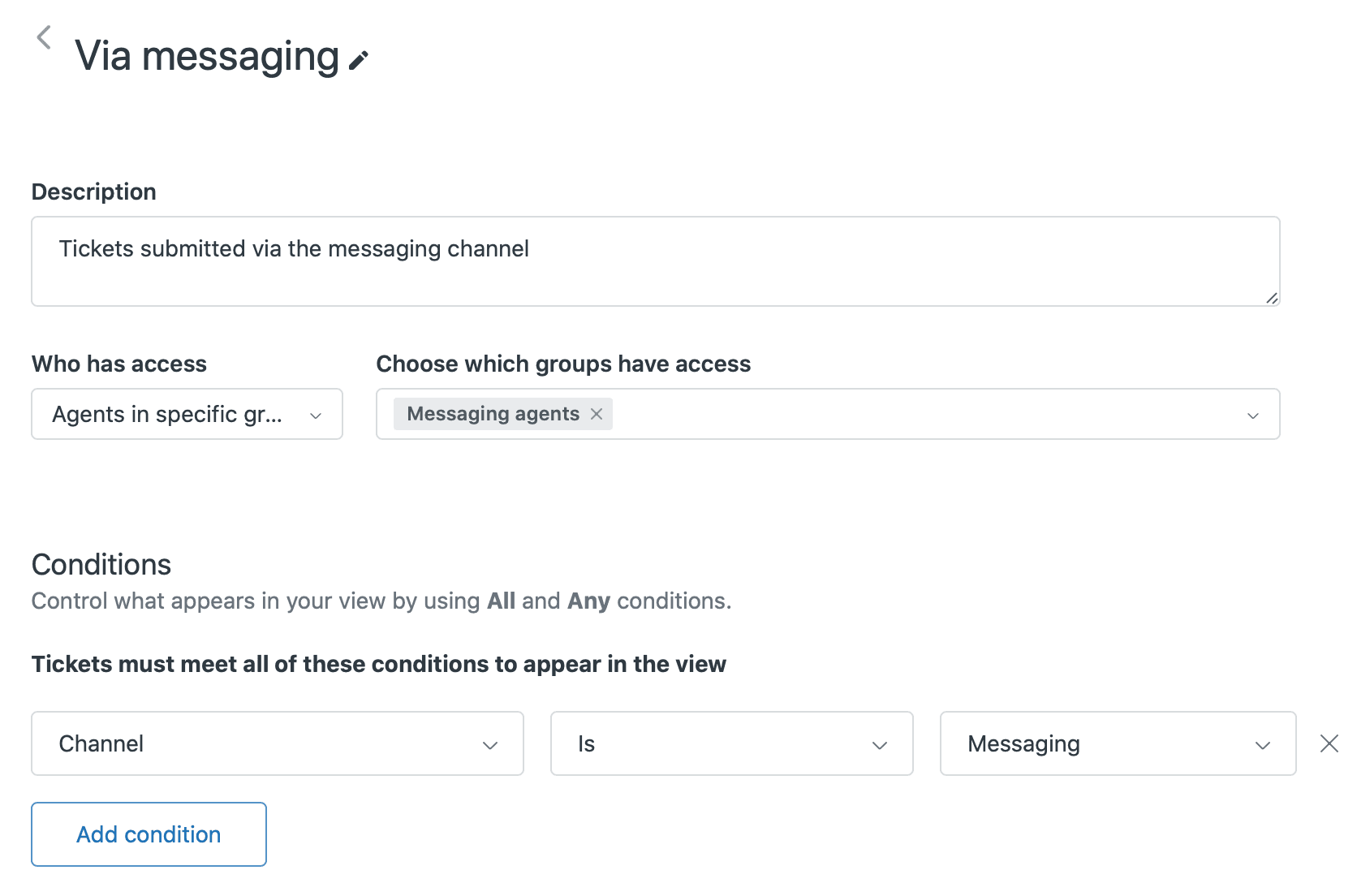
Ticket triggers are the most common approach. Create triggers that fire when a messaging ticket is created and assign it based on conditions like:
- Custom ticket field values (collected during the conversation)
- Tags added by the AI agent
- Channel source
Chat routing rules determine which agents see notifications. You can broadcast to all agents or assign to specific groups. These rules fire after ticket triggers, so the two work together.
Omnichannel routing is available on Professional and Enterprise plans. It routes across email, calls, and messaging based on agent availability and capacity. You can also route by priority and skills on higher tiers. Note that skills-based routing isn't available for messaging tickets specifically.
For teams using Zendesk omnichannel workflows, consider how messaging fits alongside email and phone. Consistent routing rules across channels prevent tickets from falling through the cracks.
In the dialogue builder (Advanced tier), you can also specify a transfer group directly in the escalation block. This sends the ticket to a specific Support group without needing a separate trigger.
Preserving context during Zendesk conversation handoff
Nothing frustrates customers more than repeating information they already shared with the bot. Context preservation is what separates good escalations from painful ones.
Zendesk automatically attaches the full conversation transcript to the ticket. Agents see everything the customer said to the AI agent. But raw transcripts can be long, and busy agents don't always read them thoroughly.
Here's how to pass structured context:
Custom ticket fields let you capture specific data points during the conversation. In the dialogue builder, add "Ask for details" steps that map to ticket fields like order number, product category, or issue type. These appear prominently in the ticket sidebar.
Metadata passing handles technical data like account IDs or session information. This requires code in your chat widget to pass custom data into the ticket. It's more work to set up but valuable for e-commerce or SaaS support.
Internal notes can include AI-generated summaries. Some teams configure the AI to write a brief summary of the customer's issue before escalating. This gives agents the "TL;DR" without digging through transcripts.
The goal is simple: agents should know what the customer needs within seconds of opening the ticket. If they ask the customer to repeat information, you've lost the efficiency gains AI was supposed to provide.
For more on measuring whether your handoffs work, see our guide on deflection rate and how to improve it.
Simplify Zendesk handoff with eesel AI
If the dialogue builder feels like overkill for your team, or you need escalation logic that's easier to maintain, eesel AI offers a simpler approach.
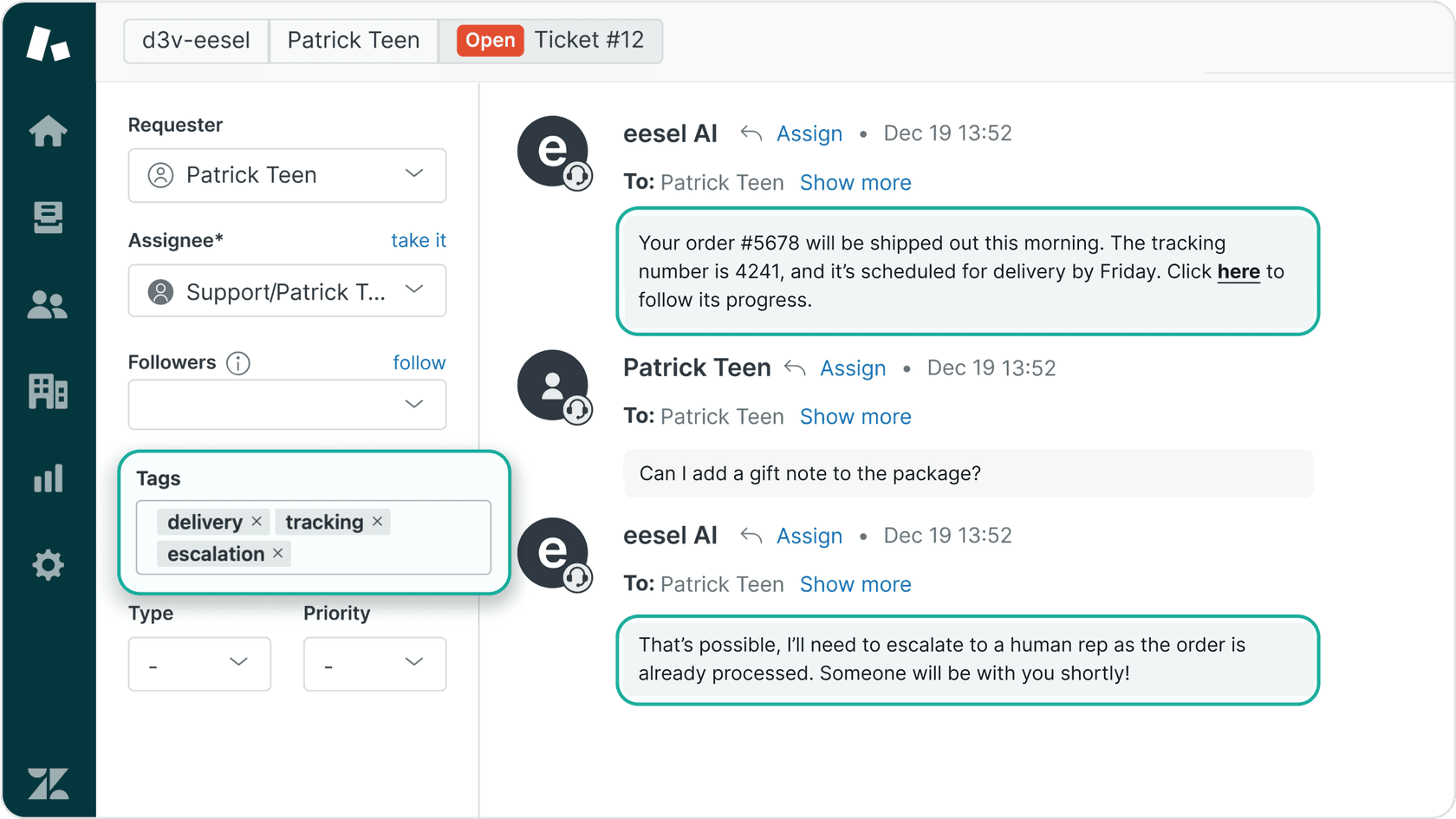
We integrate directly with Zendesk and let you define escalation rules in plain English. Instead of dragging blocks in a visual builder, you write instructions like:
- "If the refund request is over 30 days old, politely decline and offer store credit"
- "Always escalate billing disputes to a human agent"
- "For VIP customers (tagged 'enterprise'), route to the dedicated support team"
The AI interprets these rules and applies them during conversations. No coding, no complex workflows.
Key differences from native Zendesk AI:
| Feature | Zendesk Native | eesel AI |
|---|---|---|
| Escalation configuration | Dialogue builder required | Plain-English rules |
| Knowledge sources | Help Center + macros | 100+ integrations (Confluence, Google Docs, Notion, etc.) |
| Pre-launch testing | Live dashboards only | Historical simulation on past tickets |
| Pricing model | Per resolution | Per interaction |
The simulation feature is particularly useful for Zendesk AI agent escalations. You can run our AI against your historical tickets before going live, see exactly how it would handle each situation, and tune rules until you're confident.
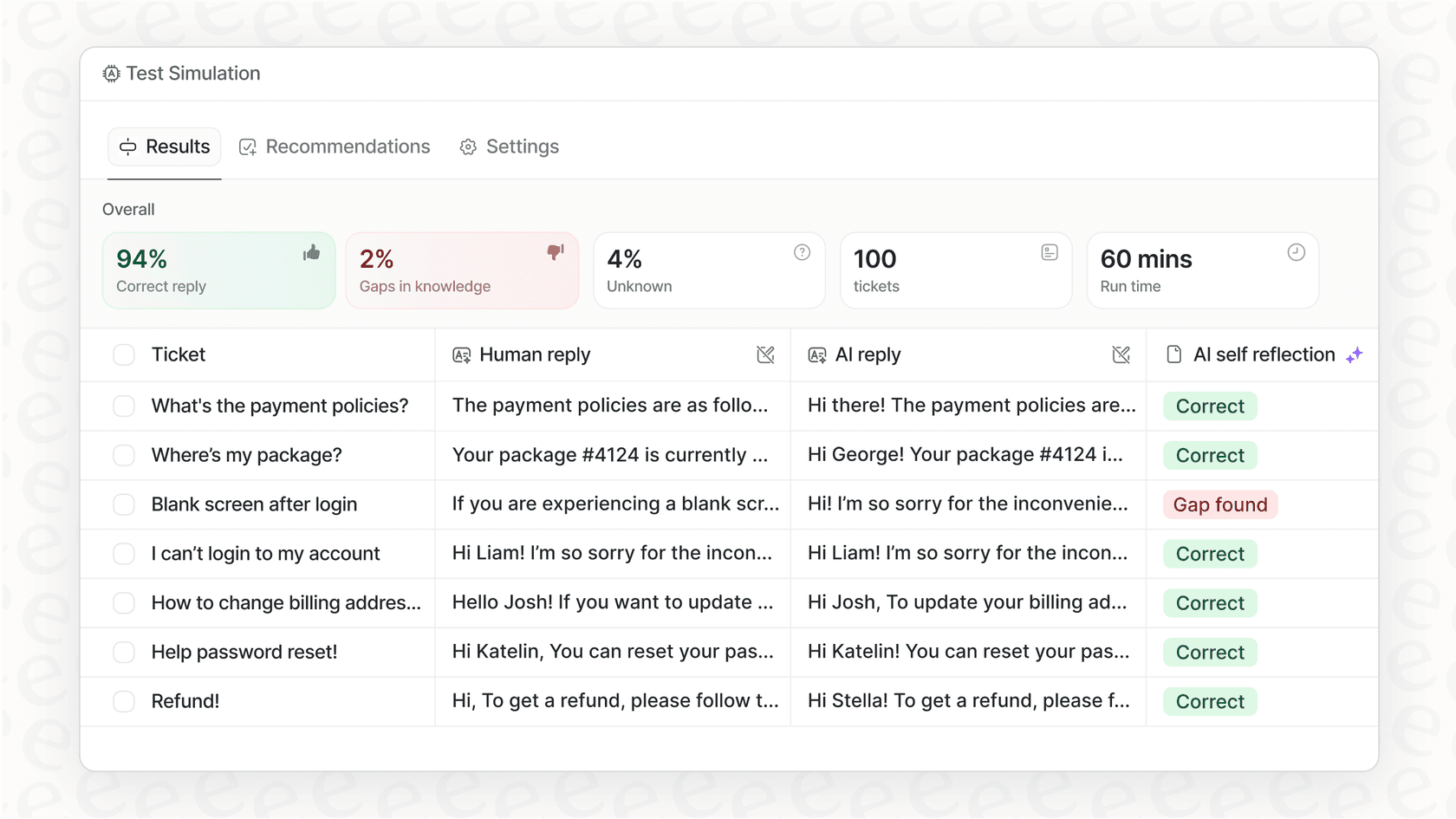
We also pull knowledge from sources beyond Zendesk. If your team documents processes in Confluence or shares policies in Google Docs, eesel learns from those too. The AI agent gets full context, not just help center articles.
Setup takes minutes:
- Connect eesel AI to your Zendesk account
- Train on your existing tickets, macros, and docs
- Define escalation rules in plain text
- Run simulations on past tickets
- Go live with confidence
Try eesel AI free to see how plain-language escalation rules compare to the dialogue builder.
Troubleshooting common Zendesk conversation handoff issues
Even with proper configuration, handoff problems pop up. Here are the most common issues and their fixes.
Customers can't start new conversations
Symptom: A customer returns to the messaging widget but their previous conversation reopens instead of starting fresh.
Cause: The ticket status is Solved, not Closed. Until it's Closed, the customer can't begin a new conversation.
Fix: Reduce the Solved → Closed delay using the automation or trigger methods described earlier. For most teams, 1-4 hours is enough buffer for CSAT surveys without causing confusion.
Agents missing conversation context
Symptom: Agents ask customers to repeat information they already shared with the AI agent.
Cause: Metadata isn't mapped to visible ticket fields, or agents don't know where to find the transcript.
Fix: Configure dialogue builder actions to populate custom ticket fields during the conversation. Train agents on where context appears in Agent Workspace (the conversation pane and sidebar fields). Consider adding an internal note with a summary before escalation.
Wrong team receives escalated tickets
Symptom: Technical issues go to the billing team, or vice versa.
Cause: Transfer group not configured in the escalation block, or triggers aren't firing correctly.
Fix: In the dialogue builder, specify the correct transfer group in each escalation block. Review your ticket triggers to ensure messaging tickets route based on the right conditions (tags, custom fields, etc.). Test by submitting test conversations through each flow.
For teams using Zendesk AI agents Advanced, the dialogue builder's validation feature catches many routing errors before they reach production. Run validation before every publish.
Start handling Zendesk conversation handoff the right way
Handoff is where AI support meets human expertise. Get it right, and customers barely notice the transition. Get it wrong, and you've undermined the efficiency gains AI was supposed to deliver.
The key points to remember:
- Handoff removes the AI agent; handback happens when the ticket closes
- Timing matters: The default 4-day Solved → Closed gap causes customer confusion
- Context preservation is what separates smooth escalations from frustrating ones
- Routing configuration ensures tickets reach the right team, not just any available agent
If native Zendesk configuration feels limiting, tools like eesel AI can simplify the process. We handle handoff with plain-English rules instead of visual workflow builders, learn from your existing tickets and docs, and let you simulate against historical data before going live.
Next steps:
- Audit your current handoff configuration and timing settings
- Review the Solved → Closed automation to prevent customer confusion
- Test escalation flows to ensure context passes correctly
- Consider eesel AI for Zendesk if dialogue builder complexity is slowing you down