What Gradient Labs is
Most AI support tools are horizontal. They sit on any helpdesk, answer questions from a knowledge base, and aim to deflect the easy stuff. Gradient Labs went the other way. It is vertical and deep: AI-native customer operations for financial services, with a tagline that tells you the whole strategy, "we handle what others hand off."
The company was founded in 2023 in London by three ex-Monzo people: Dimitri Masin, who led data and ML there, alongside Neal Lathia and chief scientist Danai Antoniou. That origin matters. They spent years trying to automate bank support from the inside, and built Gradient Labs to do the thing they could not quite reach at Monzo. As Masin put it in an Unite.AI interview, "we weren't building co-pilots, we were building end-to-end automation of customer support."
Investors have backed that thesis. The company raised a $26M Series A, which started as $13M led by Redpoint in mid-2025 and then doubled with another $13M led by Octopus Ventures and CommerzVentures around June 2026. Gradient Labs says its agents now reach more than 32 million end users, with revenue up roughly 10x year over year.
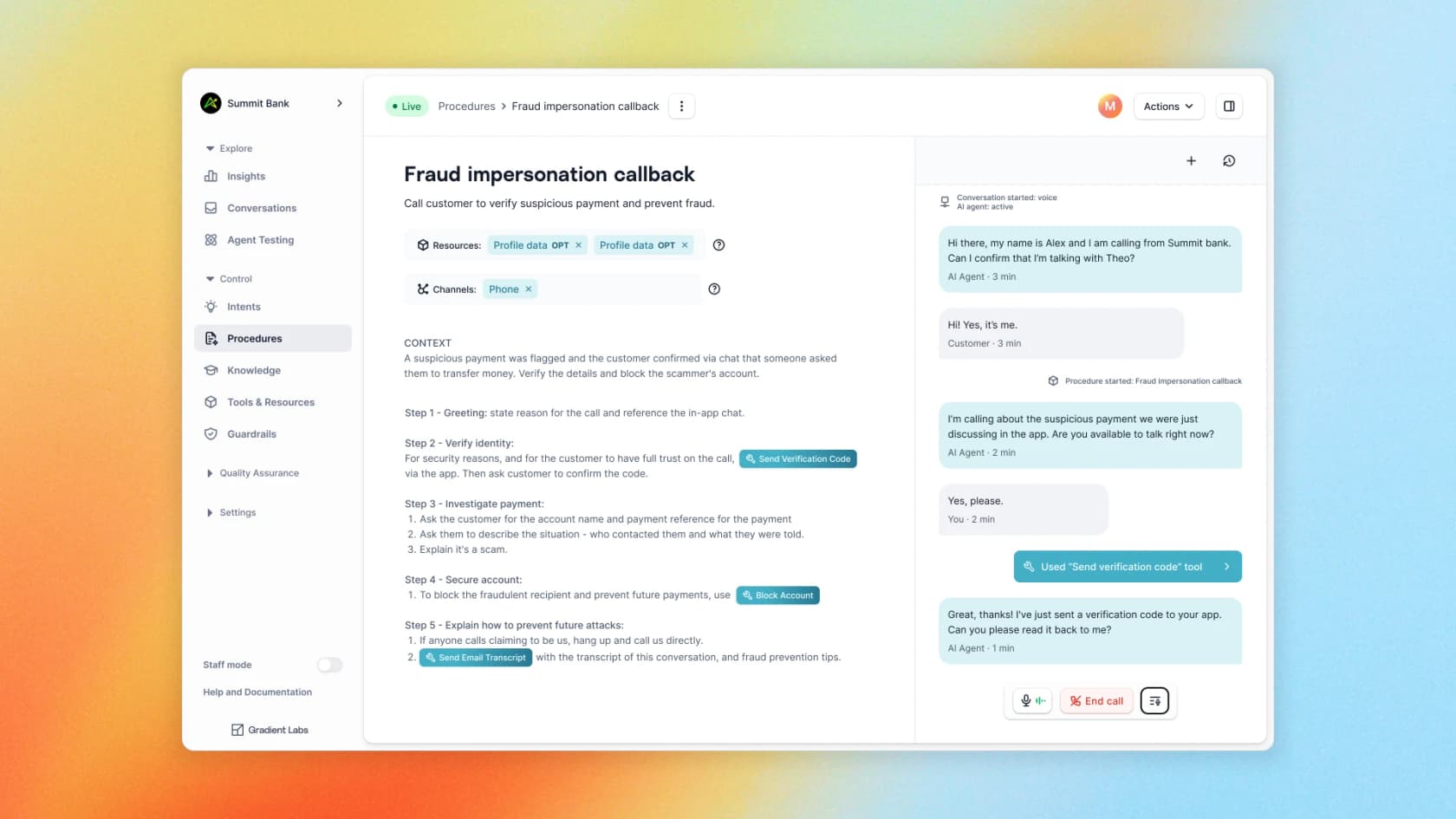
That screenshot is a good summary of the product's personality. On the left is a written procedure ("fraud impersonation callback") with numbered steps the agent must follow; on the right is a live call where the agent verifies identity and sends a verification code. This is not a chatbot answering FAQs. It is an agent executing a regulated process.
How Otto actually works
This is the part I find genuinely interesting, because it is where most "AI agent" products are thin and Gradient Labs is not.
Under the hood, Otto is built as a state machine: a central reasoning agent orchestrates a set of specialized skills, and a case can move across workflows without losing context. Some states are deterministic (do exactly this) and some are agentic (reason about what to do next). It is a hybrid, multi-model system that uses larger models for the hard reasoning steps and smaller, faster models for the deterministic ones, drawing on the latest from OpenAI, Anthropic, and Google rather than betting on a single provider.
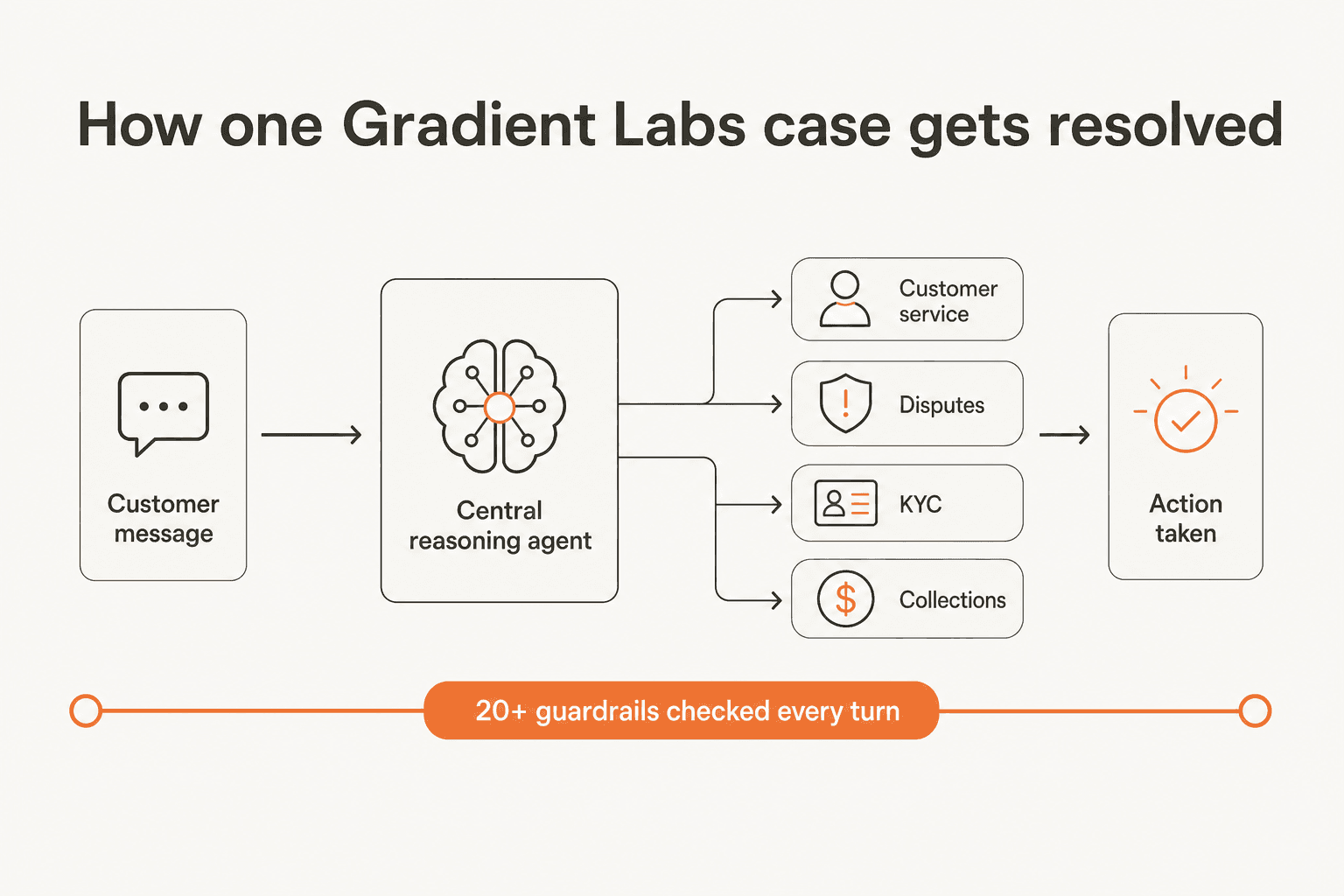
Two design choices stand out.
First, it is trained on your SOPs and your best agents, not just your help center. Gradient Labs makes the argument, correctly in my experience, that your knowledge base is not enough on its own; the real know-how lives in how your best people handle hard conversations. You author procedures in plain language, which is about as close to "support automation as writing a document" as anyone has gotten.
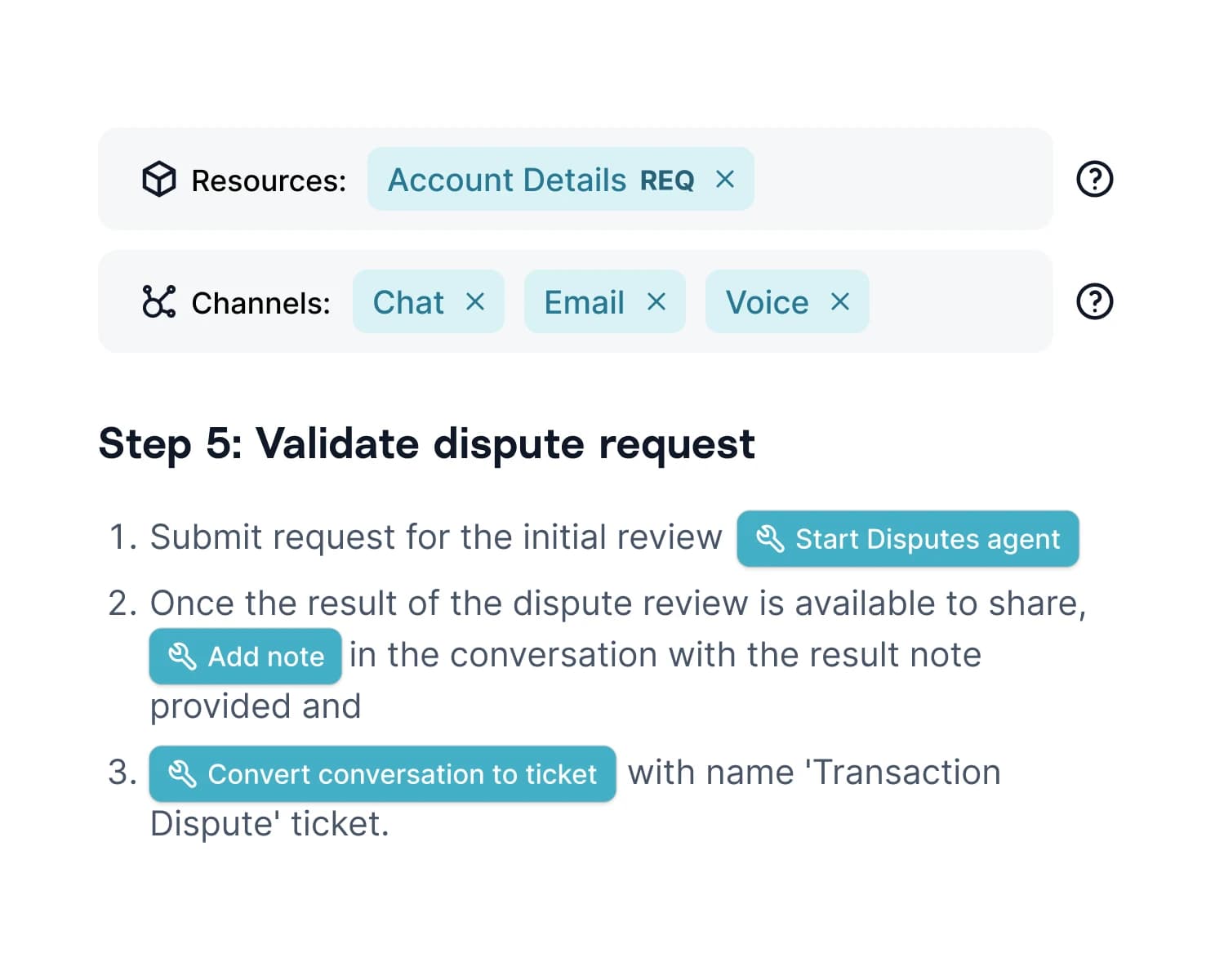
Second, it reasons and takes actions, it does not just answer. When a customer gets in touch, Otto remembers past conversations and does the real work to resolve the issue: freezing a lost card, tracking down a missing payment, filing a chargeback with the card scheme. That is the difference between deflection and resolution, and it is the line Gradient Labs keeps drawing. If you want the background on why this distinction matters, we wrote about the gap between an AI agent vs a rule-based chatbot separately.
There is a real trade-off Masin is refreshingly honest about: the agent is slower because it thinks more. "Our median response time might be 15-20 seconds," he told Unite.AI, "but for financial institutions, that's a fair trade." For a bank, a correct answer in 20 seconds beats a wrong one in two. For an impatient ecommerce shopper, maybe not.
The specialist agents
Rather than one generalist bot, Gradient Labs ships a suite of agents, each tuned to a finance workflow and reporting its own live stats.
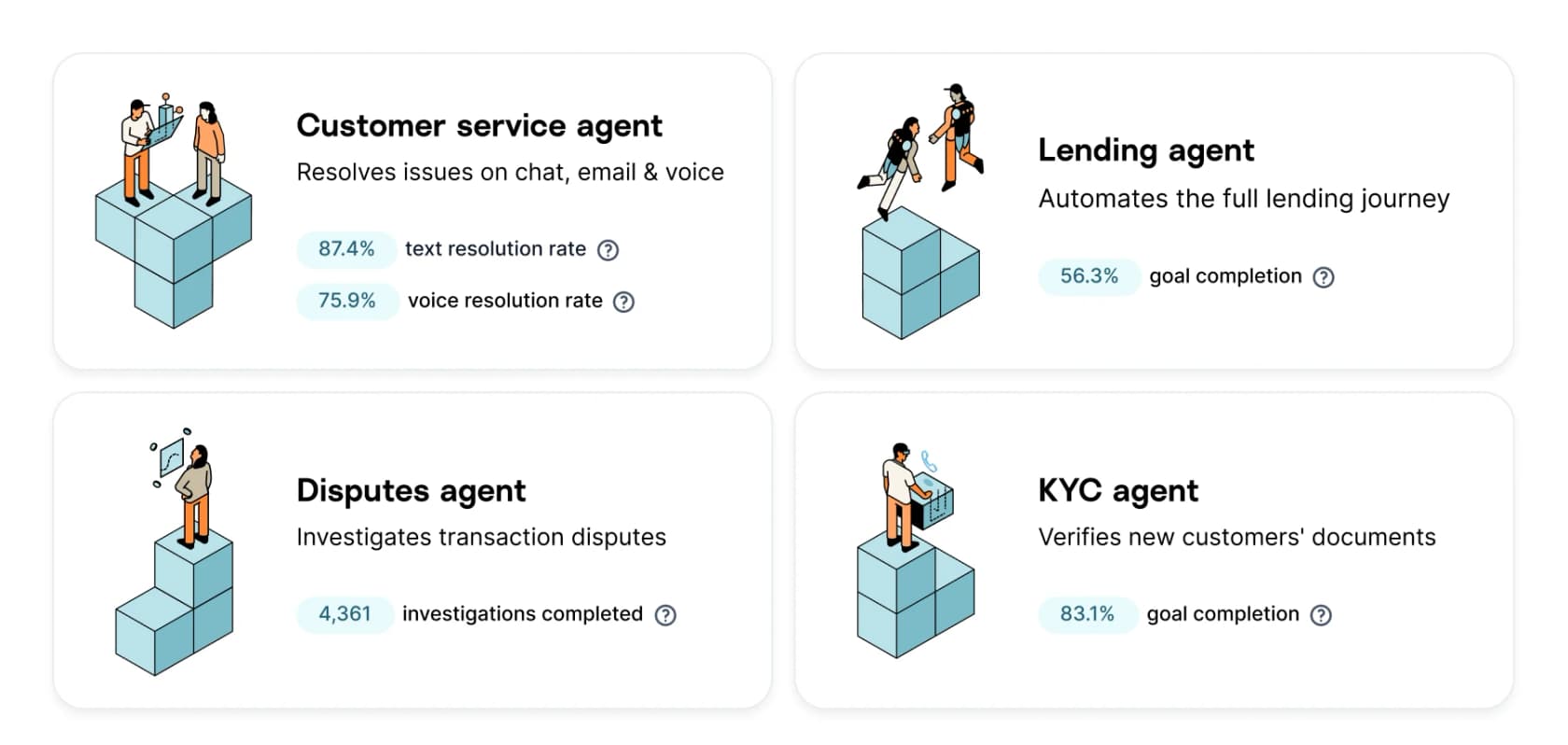
The lineup covers the moments that actually cost a finance team money and risk:
- Customer service resolves issues across chat, email, and voice.
- Disputes gathers and verifies evidence, decides an outcome, escalates to a human for sign-off, and files the chargeback.
- KYC and KYB check documents against policy, request what is missing, and verify a customer or business before onboarding.
- Collections contacts borrowers in arrears at the right time, personalizes from account history, and secures a promise to pay, including over AI voice.
- The newer lending agent automates the whole borrower journey, from application through collections.
Each one is doing real back-office work, not just first-line chat. That is rare, and it is the strongest argument for the product.
Guardrails and compliance
If you are automating support in finance, this section is the one that decides the purchase, and it is where Gradient Labs has clearly spent its effort.
Otto runs 20+ financial-services guardrails on every single turn of a conversation. They check for things like financial-advice detection, customer vulnerability signals, complaints, prompt injection, and attempts to bypass identity verification, and they keep the conversation inside the defined procedure.
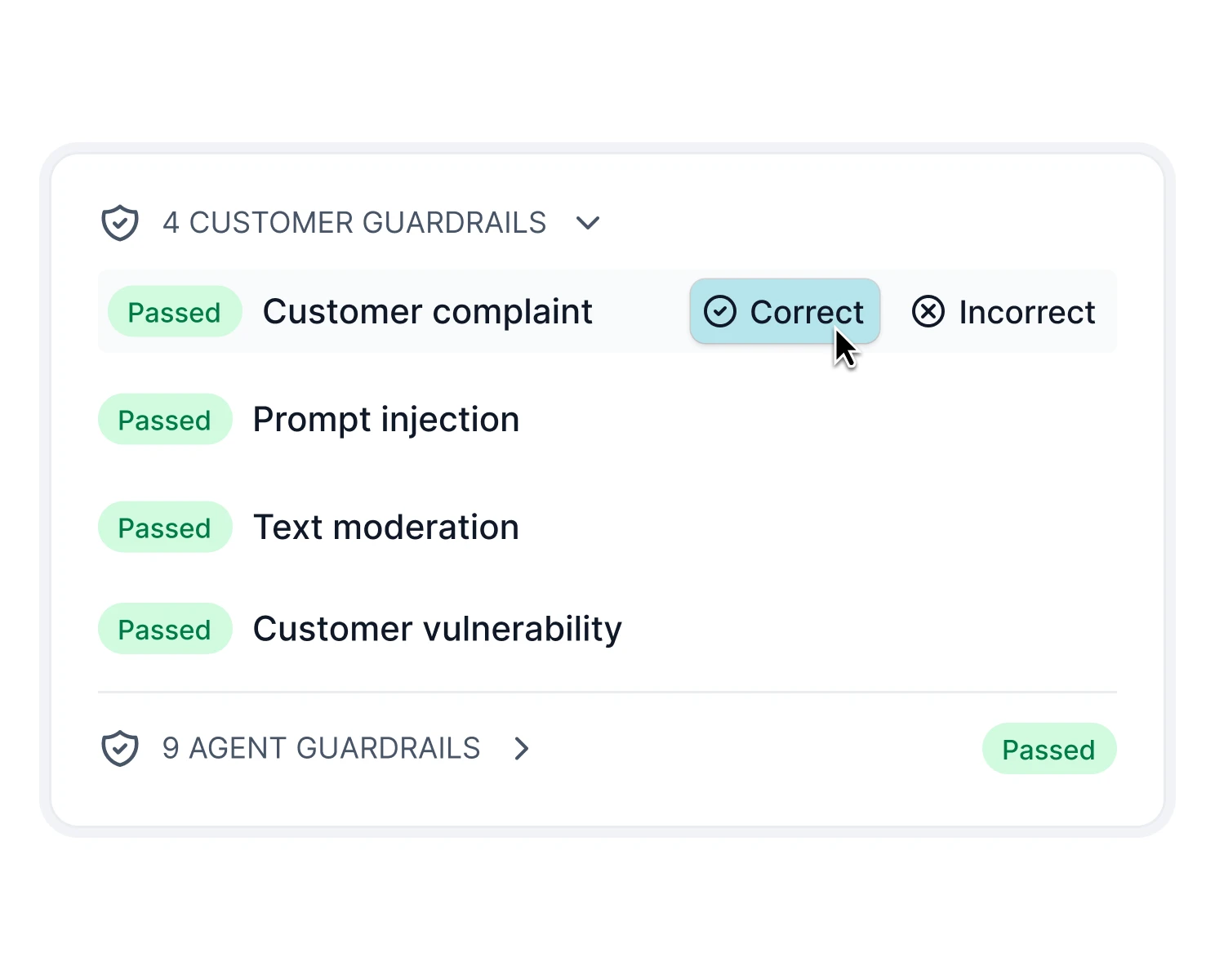
On the compliance side it is pre-configured for FCA Consumer Duty, CONC, Reg E, Reg Z, PSD2, GDPR, and the EU AI Act, with automated QA on conversations. It is SOC 2 Type 2 certified with SSO, audit logs, and role-based permissions.
Chief scientist Danai Antoniou framed the stakes well in the OpenAI case study: "you have to architect from the ground up for no hallucinations. That needs to be the guiding principle as you're building." In finance, she added, the gap between a resolved call and a missed signal "is the difference between resolving a call and creating a compliance incident." The fear of an AI confidently giving a wrong answer is the single biggest objection I hear from regulated teams, and controlling hallucinations in support really is the whole game here.
Ask a Human keeps a person in the loop
Gradient Labs' answer to "what about the cases the AI shouldn't decide alone" is a feature called Ask a Human. The agent keeps chatting with the customer while a human reviewer works the sensitive part behind the scenes, so there is no queue, no second thread, and no asking the customer to repeat themselves.
A nice example: for a disputed transaction over a set threshold (say £1,000), policy requires human review. The agent verifies the account, confirms the charge, asks why it is disputed, then routes a summary to a reviewer over Slack, tells the customer a colleague is looking into it, and keeps the conversation going until the human approves. This is a smarter design than the usual "AI gives up and dumps you in a queue" escalation, and the results back it up.
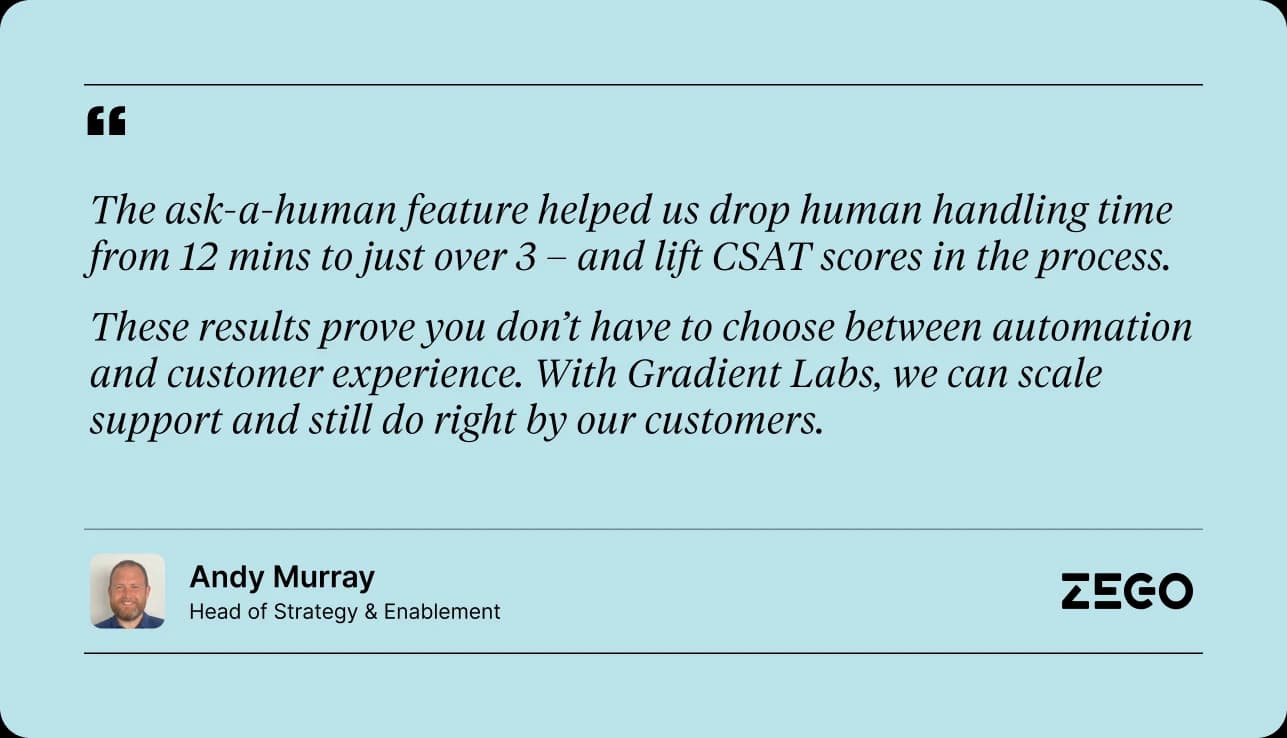
UK insurer Zego, with around 150,000 active customers, reports that Ask a Human cut human handling time from 12 minutes to just over 3, a drop of more than 70 percent, while CSAT went up.
Voice and channels
One thing that genuinely sets Gradient Labs apart is running AI voice in production at scale, not just text. Otto handles chat, email, and voice as one agent across every channel.
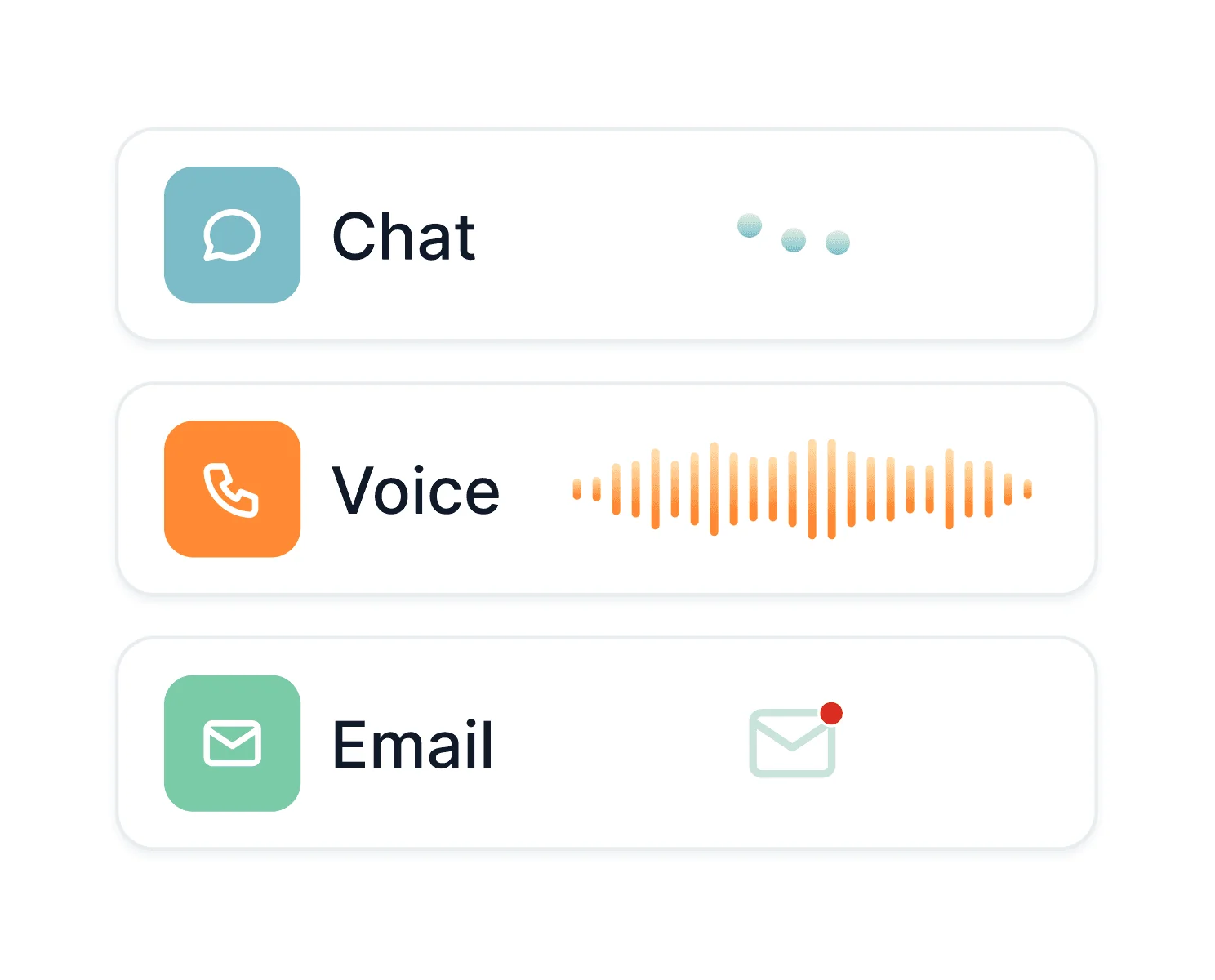
The proof point here is SteadyPay, which runs roughly 33,000 AI voice calls a month for outbound collections, with about a 60 percent success rate among engaged customers. Voice at that volume in a regulated workflow is hard, and most "AI agent" vendors do not attempt it.
Pricing: outcomes-based, but you have to call
Here is the honest version: Gradient Labs publishes no price at all. The pricing page is a lead form. What it does publish is the model, and the model is interesting.
From the company's own FAQ: you have "a simple outcomes based pricing model without platform fees, where you pay only for successful query resolutions." No per-seat charge, no per-conversation charge, no base subscription. You pay when Otto actually resolves something.
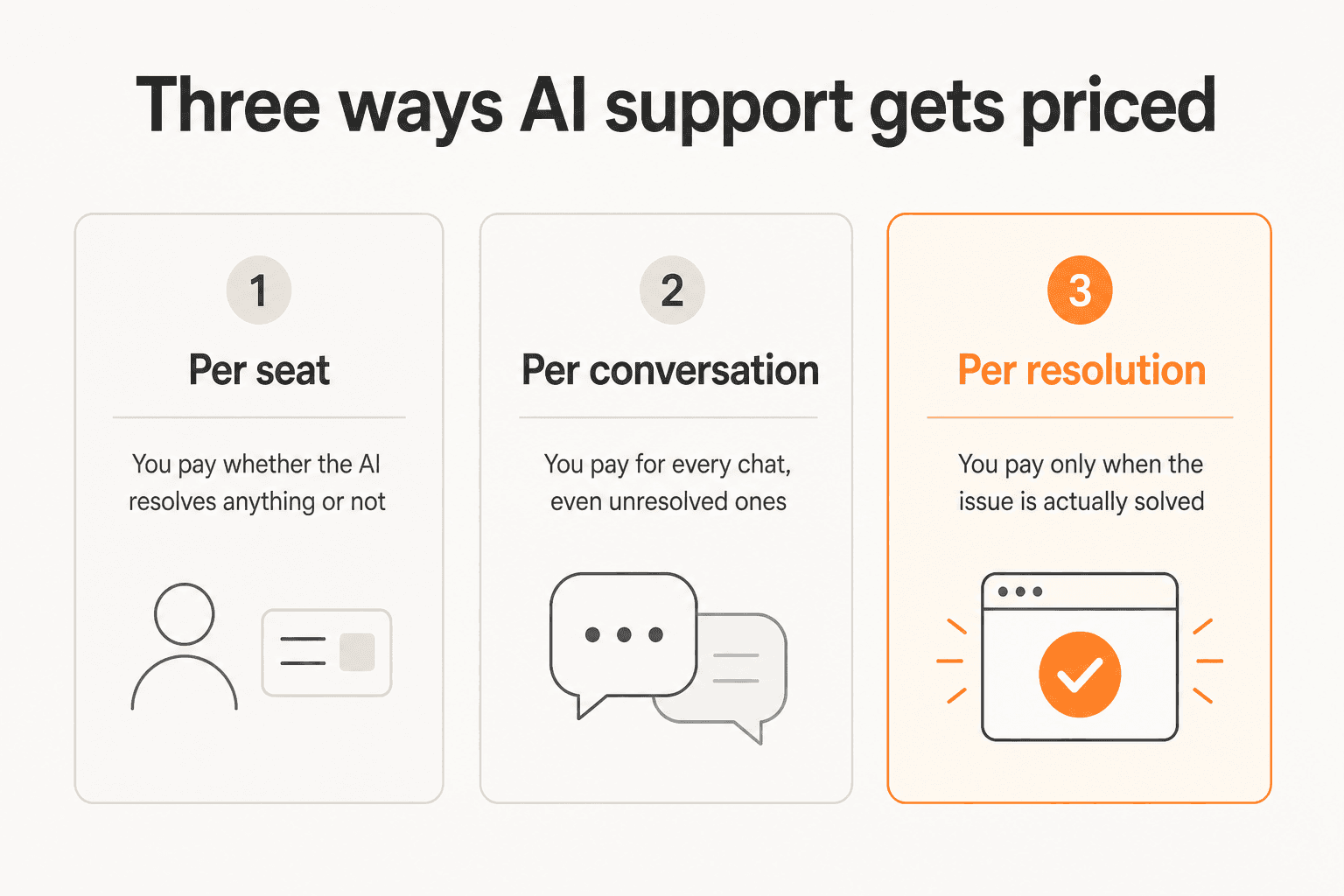
Masin has been pointed about why, telling The Register: "if we don't resolve the issue and you still need to get your human team involved, then you don't need to pay us." He has also taken a direct shot at per-conversation pricing, arguing that charging a flat fee per chat "doesn't create any incentive" for the vendor to make the agent better. I think he is right about the incentive, and outcomes-based pricing is genuinely buyer-friendly when the unit of value is clear.
Here is what is and is not public:
| Pricing question | Gradient Labs |
|---|---|
| Public rate card | None; quote only |
| Billing unit | Per successful resolution |
| Platform / base fee | None stated |
| Per-seat fee | None |
| Free trial | None advertised |
| Self-serve signup | No, sales conversation required |
| Day-one start | 20 to 50 percent of easy queries on Zendesk or Freshdesk with no integration |
| Deeper rollout | Requires defining procedures and integrating data, run as a joint project |
| API access | Yes, via sales |
The thing to weigh is the total cost of ownership versus the speed of getting started. Outcomes-based pricing is attractive, but "talk to sales, scope a project, integrate data" is a months-long motion, not a same-afternoon one. If you want to understand the broader AI agent vs human agent cost math before any sales call, that is worth reading first.
Is Gradient Labs right for you?
The fit question here is unusually binary, so I built a quick way to check where you land. Pick the row that sounds like you.
What real customers say
I want to be straight about the evidence here. There is no real third-party review surface for Gradient Labs yet: no G2 or Capterra scores, no Reddit pile-ons. The Capterra listing exists but carries no reviews. So the numbers below are vendor-stated or from partner case studies, and you should treat them as such, strong, but not independently audited.
That said, the first-party proof is specific, which I respect more than round marketing numbers:
- Pockit reports a 70% resolution rate and 80% CSAT, with a stated goal of 100% automation.
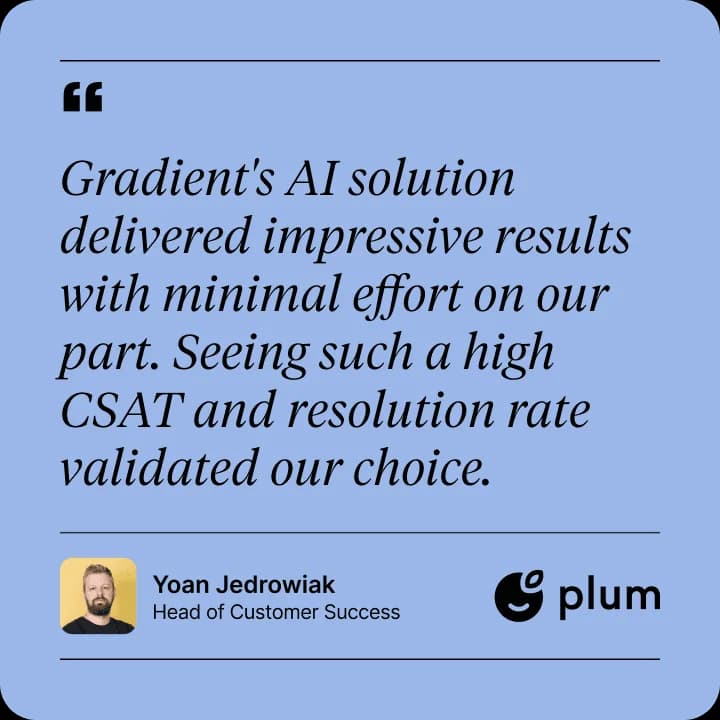
- Plum hit a 98.6% QA score and set up in about 30 minutes with no engineering effort.
- Morse (Sling Money) saw 50% day-one resolution during a growth spike.
"Otto, Gradient Labs' AI agent, has been a game-changer for us. With a 98% CSAT, it delivers superb customer experiences. We especially value how closely Otto matches our tone of voice."
MC Glover, VP of Strategy & Operations, via Gradient Labs
The end-user reactions Gradient Labs quotes are the real tell. A Plum customer wrote, "are you virtual? I thought you were a human," and a Morse customer said, "I did actually think you were a person for the whole conversation." When customers cannot tell, that is the bar.
Where Gradient Labs fits, and where it doesn't
Let me be clear, because I think Gradient Labs is a genuinely good product that most teams should still not buy.
If you run customer operations at a bank, a lender, a neobank, or an insurer, this is one of the most serious tools in the market. The depth on disputes, KYC, collections, and lending, the per-turn guardrails, the SOC 2 and FCA coverage, and real voice at scale add up to something a general-purpose agent cannot match. The outcomes-based pricing is buyer-friendly, and the team has clearly lived this problem, which makes the usual build vs buy question easy to answer in their favor.
If you are anyone else, the same focus works against you. The compliance machinery is overhead you will not use, there is no public price, there is no free trial, and getting to the good resolution rates means a scoped project with the vendor. That is a fine motion for an enterprise finance buyer and a slow one for a 12-person SaaS or ecommerce team that just wants tier-1 deflection handled this quarter.
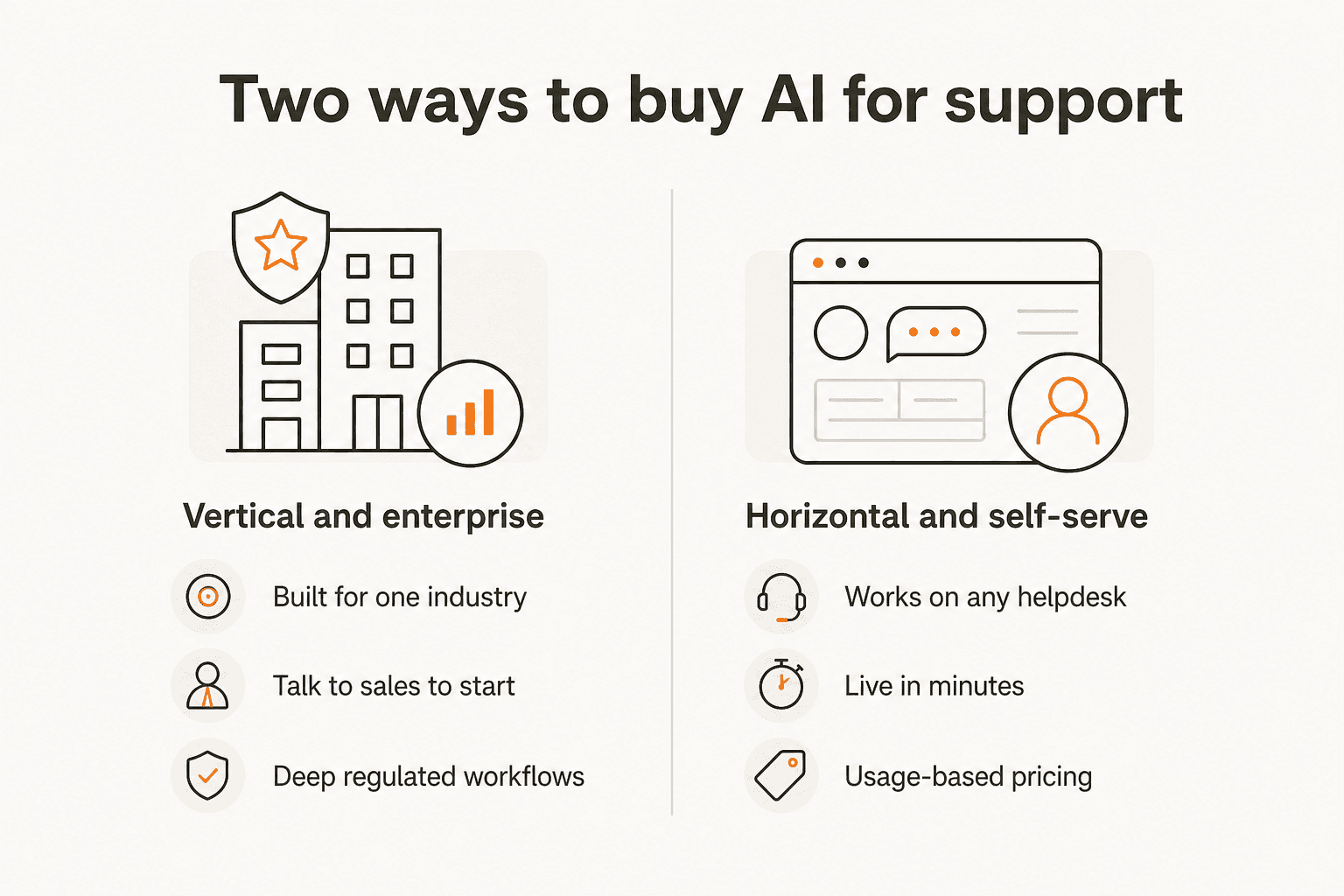
The deeper point is that there are two ways to buy AI for support right now. One is vertical and enterprise: pick a tool built for your exact industry, talk to sales, and run a project. The other is horizontal and self-serve: drop an agent onto the helpdesk you already use, train it on your own tickets, and turn it on. Gradient Labs is the best-known example of the first. The second is where most teams actually live.
Try eesel for everyone outside finance
If you read the fit checker above and landed on "not finance," this is the part for you. eesel is the horizontal version of the idea Gradient Labs proved in banking: an AI agent that resolves real tickets, only built to drop onto the helpdesk you already run.

The differences are the ones that matter when you are not a bank. eesel works like a new hire that plugs into Zendesk or Freshdesk in a few minutes, trains on your past tickets and help center so it sounds like your team from day one, and lets you simulate it against thousands of historical tickets before a single reply goes to a customer. Pricing is public and usage-based, a flat fee per AI interaction with no per-resolution surcharge and no per-seat fee, so you can do the cost math yourself before you ever book a call. And because the biggest worry is always an AI replying when it should not, you control exactly which tickets it handles and route the rest to a person, which is the trust-and-control lever most teams ask for first.
The proof shows up fast precisely because there is no scoped project to wait through. As Kim Simpson at Gridwise put it, "in the first month, eesel is resolving 73% of our tier 1 requests," after seeing results during a 7-day trial. You can try eesel free and run that same simulation on your own tickets today.
Frequently asked questions
What is Gradient Labs?
How much does Gradient Labs cost?
Is Gradient Labs only for financial services?
What resolution rate does Gradient Labs achieve?
How does Gradient Labs handle accuracy and compliance?
What are the best Gradient Labs alternatives?


Article by
Alicia Kirana Utomo
Kira is a writer at eesel AI with a Computer Science background and over a year of hands-on experience evaluating AI-powered customer service tools. She focuses on breaking down how helpdesk platforms and AI agents actually work so that support teams can make better buying decisions.