

What Gradient Labs actually is
I have spent the last few years building AI for the helpdesk, so I read a lot of "autonomous support agent" launch pages. Most blur together. Gradient Labs is one of the few that picked a hard, specific lane and went deep instead of wide.
The company was founded in 2023 in London by three ex-Monzo people: Dimitri Masin (CEO, who led Monzo's data and ML team), Neal Lathia (built Monzo's ML infrastructure), and Danai Antoniou (Chief Scientist). That origin matters, because the whole product reads like people who spent years watching support break inside a real bank. As Masin put it in an interview with The Register, at Monzo they had spent years "typically targeting modest 10% efficiency gains," and the shift to modern models suddenly made it possible to "automate 70-80% of manual, repetitive work completely autonomously."
The market has rewarded that focus. Gradient Labs has raised $26M total in Series A funding, an initial $13M led by Redpoint in July 2025, then a second $13M extension led by Octopus Ventures and CommerzVentures around June 2026. Revenue grew roughly 10x year over year, and its agents now reach 32M+ end users across customers like Wise, Zego, Plum, Current, Stash, and Pockit.
How Otto actually works
This is where Gradient Labs separates itself from a rule-based chatbot. The agent is built as a state machine orchestrating specialized skills: a central reasoning agent decides what the customer needs, then routes the case across deterministic and agentic steps without losing context. It is not retrieving an article and hoping, it is running a procedure.
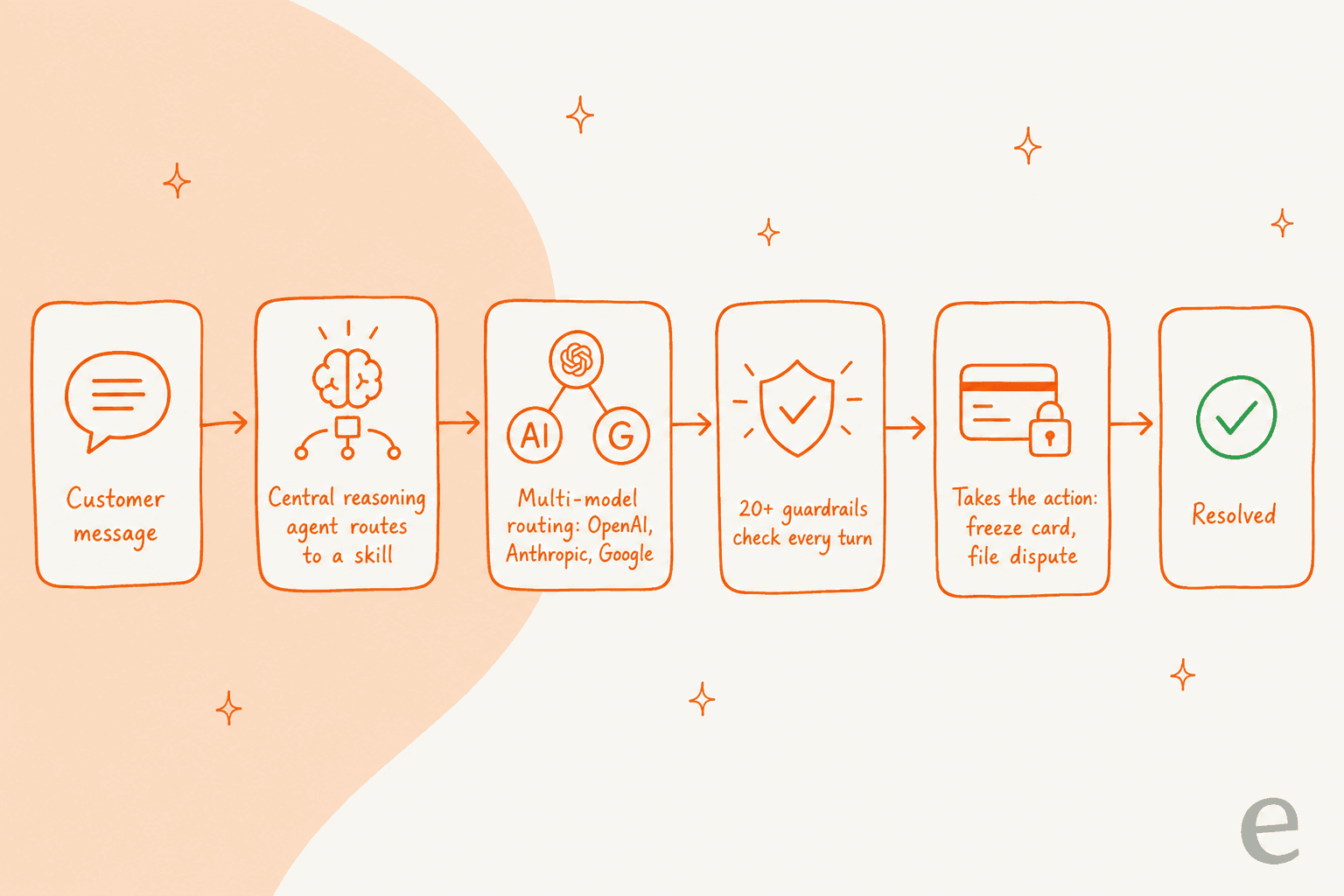
Two design choices stood out to me. First, it is truly multi-model: Gradient Labs routes across OpenAI, Anthropic, and Google, using larger models for reasoning-heavy steps and smaller ones for fast deterministic tasks, with provider failover so a single outage does not take the agent down. Antoniou told the OpenAI case study team they were seeing "500-millisecond latency with GPT-5.4 mini and nano," which is what makes natural voice conversations possible.
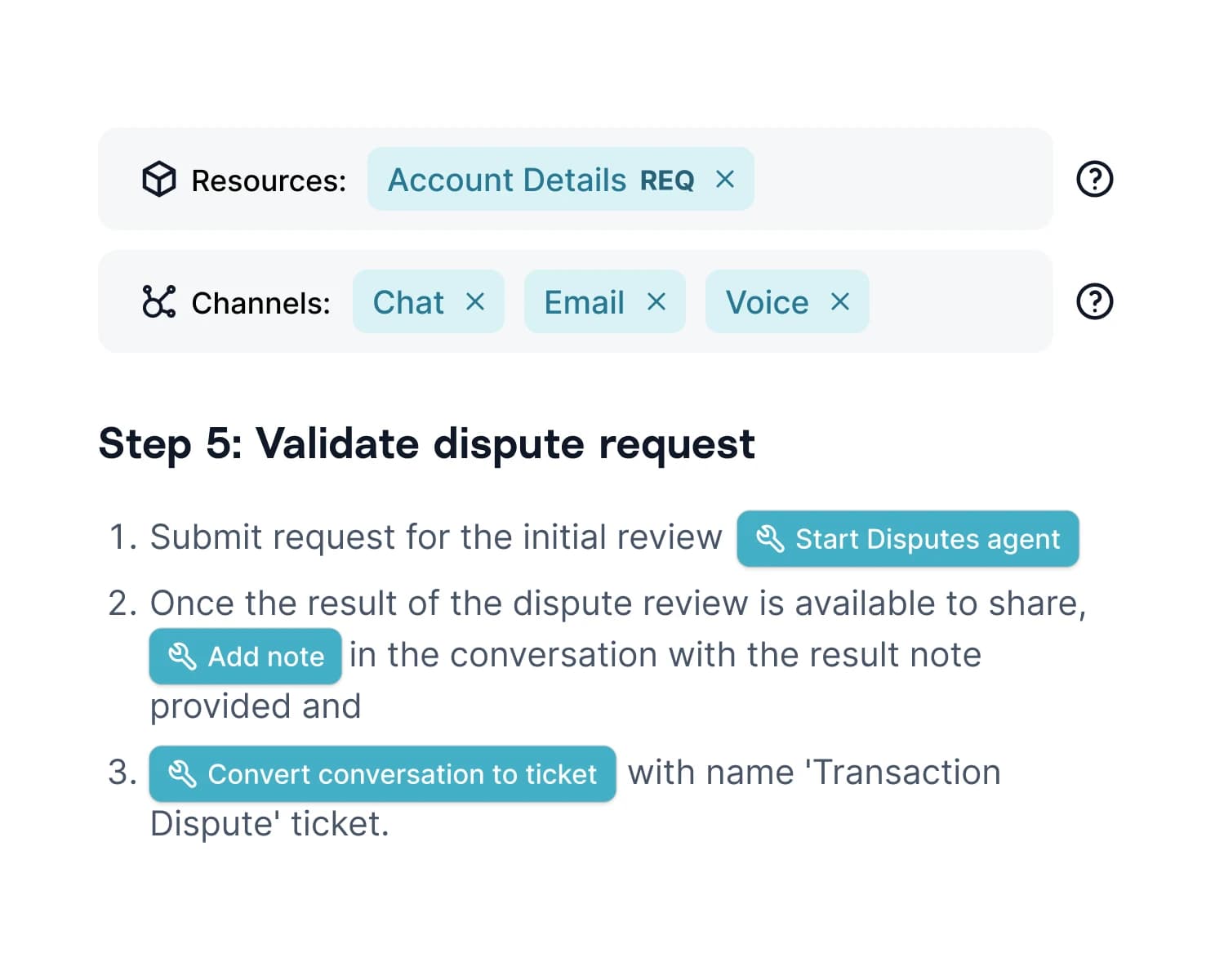
Second, you teach it the way you would teach a new hire. Procedures are authored in plain language, and the agent learns from your real past conversations and SOPs, not just the help center. Their thesis is "support automation as simple as writing a document."
One honest trade-off the founders are upfront about: it is not the fastest agent in a text chat. Masin notes their median response time "might be 15-20 seconds" because the agent takes more time to think, and frames that as a fair deal for financial institutions where a wrong answer is worse than a slow one. Whether that lands depends on your customers' patience.
The specialist agents
Rather than one generalist bot, Gradient Labs ships a roster of role-specific agents, each measured on its own outcome. This is the part that makes it feel built for banking rather than retrofitted.
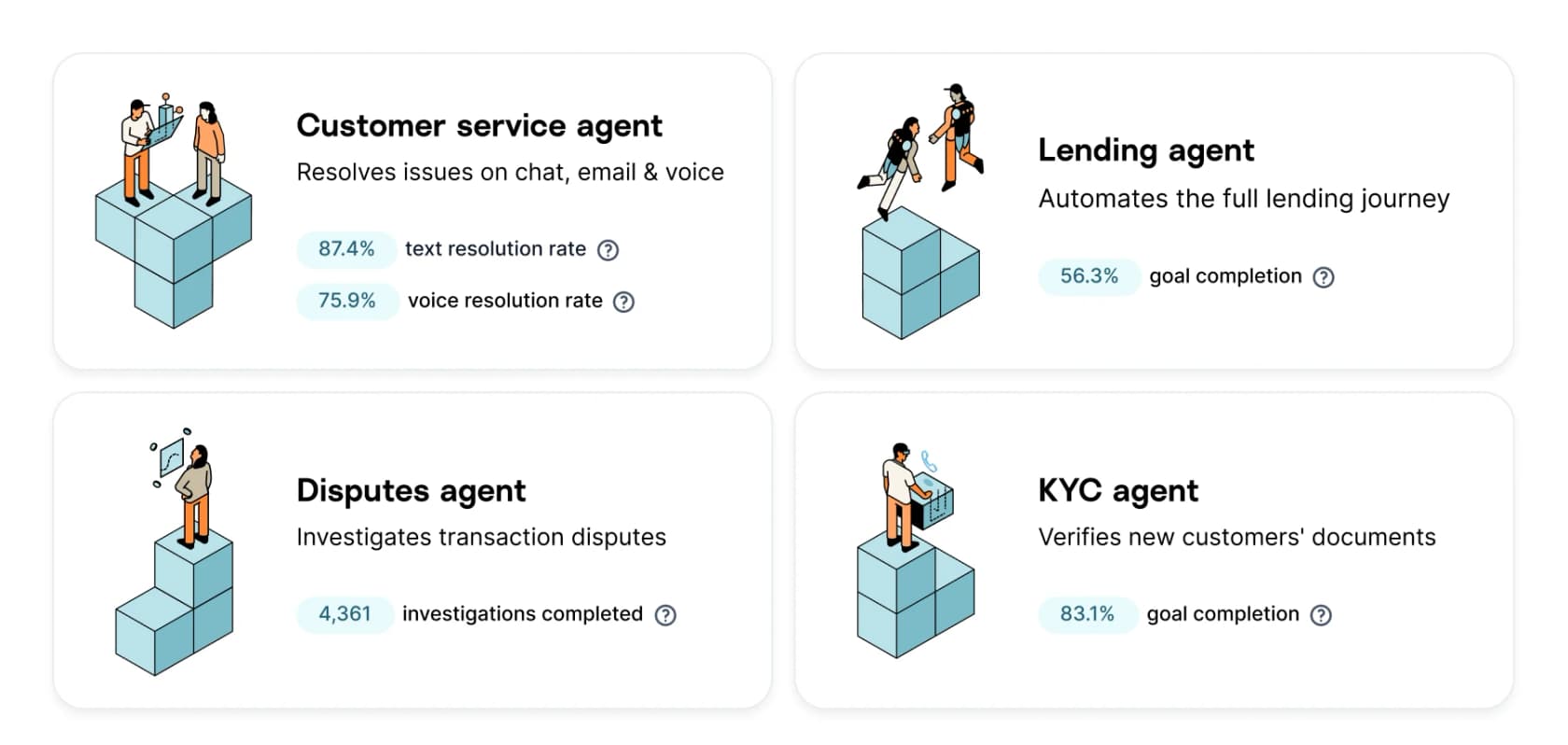
- Customer service agent resolves issues across chat, email, and voice (the demo dashboard shows 87.4% text and 75.9% voice resolution).
- Disputes agent gathers and verifies evidence, decides the outcome, escalates to a human for sign-off, and files the chargeback with the card scheme.
- Collections agent contacts borrowers in arrears at the right time and secures a promise to pay, including over AI voice.
- KYB / KYC agent checks documents against policy and verifies a business or customer before onboarding.
- Lending agent, launched in April 2026, automates the full borrower journey from application to collections.
The breadth here is the moat. A generic support bot can answer "where's my refund," but it is not filing a chargeback with Visa or running a vulnerability check, and those are exactly the workflows a bank needs covered.
Does it actually resolve tickets?
The headline numbers are the reason anyone reads a Gradient Labs review, so let me be precise about them, and flag that they are vendor-reported (no third-party audit exists yet).
The pattern that matters is the ramp. Most deployments start with over 50% resolution on day one, even for complex flows like disputes and account verification. Out of the box with no customization, you are looking at 40-60%. The 80-90% peak comes after 3-5 months of optimization. So the honest read is that this is not an instant-80% tool, it is a climb you invest in.
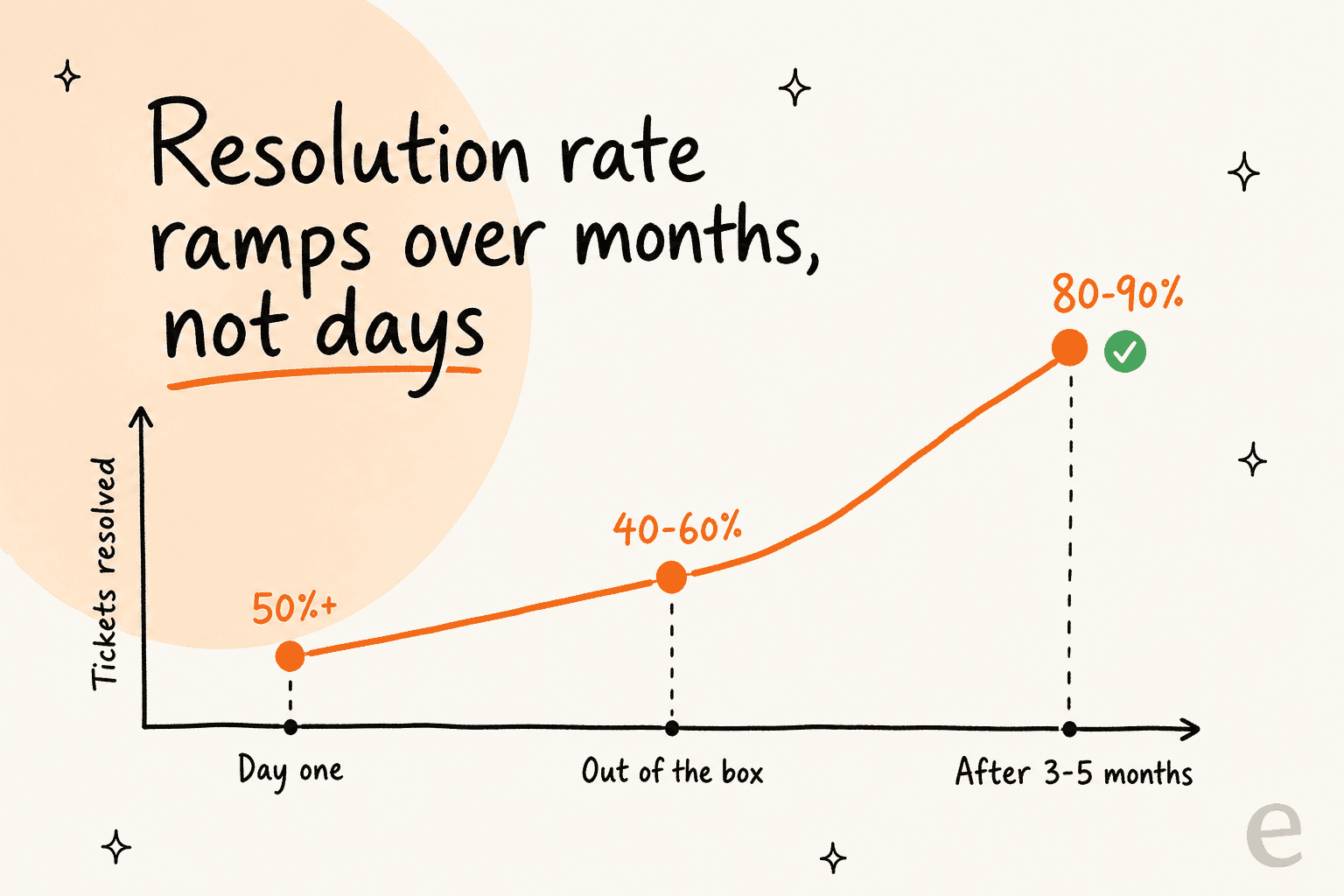
The named customer results back the trajectory up:
| Customer | Headline metric | Result |
|---|---|---|
| Pockit | Resolution rate | 70% (80% CSAT) |
| Plum | QA score | 98.6% (~30 min setup) |
| Zego | Call-volume reduction | 25%, 16% higher CSAT than humans |
| SteadyPay | AI voice volume | 33,000 calls/month |
| Morse | Day-one resolution | 50% |
| Digital bank (unnamed) | CSAT | 84% at scale |
My favorite signal is not a number, it is the end-user reactions Gradient Labs quotes, the kind that are hard to fake. A Plum customer wrote, "are you virtual? I thought u were a human!" and a Morse customer said, "I did actually think you were a person for the whole conversation." When customers cannot tell, you have cleared the bar that most support bots fail at.
Guardrails and compliance
For a regulated buyer, this section is the whole game, and it is where Gradient Labs is strongest. Every turn of every conversation runs through 20+ financial-services guardrails in parallel: financial-advice detection, customer-vulnerability signals, complaint detection, prompt-injection and text moderation, and checks for anyone trying to bypass verification.
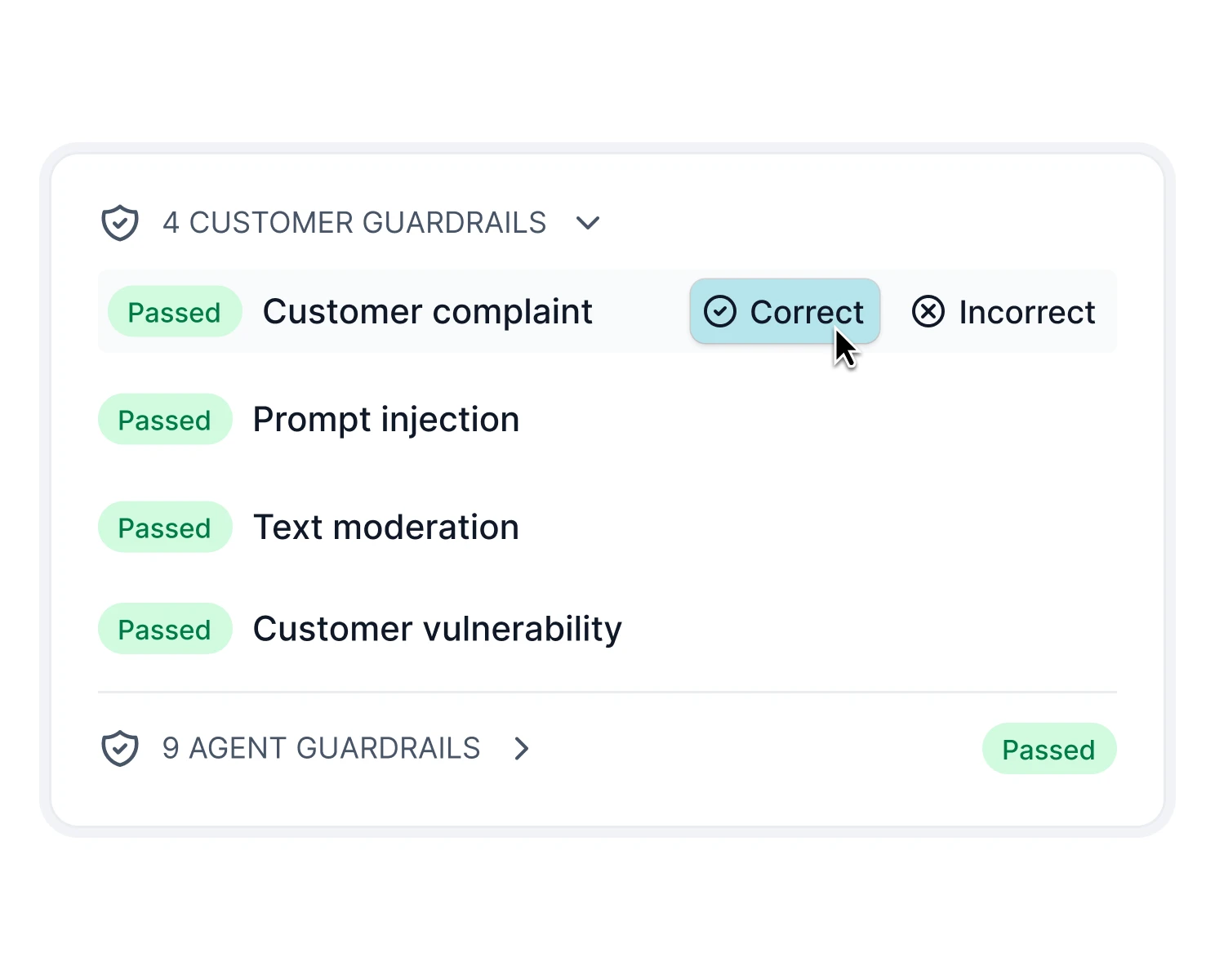
It is SOC 2 Type 2 certified with SSO, role-based permissions, and audit logs, and pre-configured around FCA Consumer Duty, CONC, Reg E, Reg Z, PSD2, GDPR, and the EU AI Act. Antoniou's framing in the OpenAI write-up is the right one: "You have to architect from the ground up for no hallucinations. That needs to be the guiding principle as you're building." In finance, as she puts it, the gap is "the difference between resolving a call and creating a compliance incident." Even the best agent needs hallucination prevention treated as a first-class concern, and this is one of the few tools that clearly does.
Voice, channels, and keeping a human in the loop
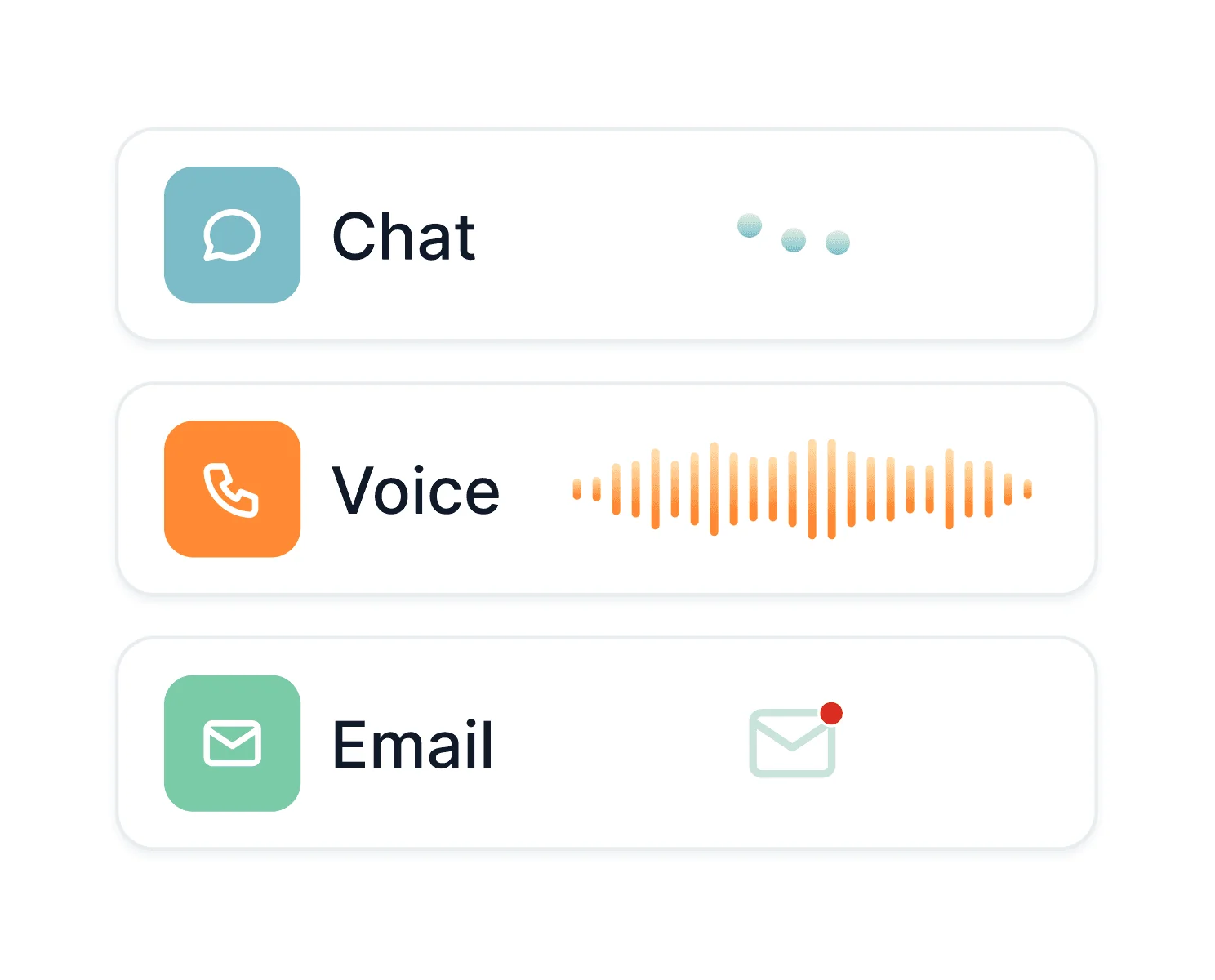
Otto is omnichannel by design, handling chat, voice, email, and SMS as one agent rather than separate bots bolted together. Voice in production at this scale is rare, and it is a real differentiator.
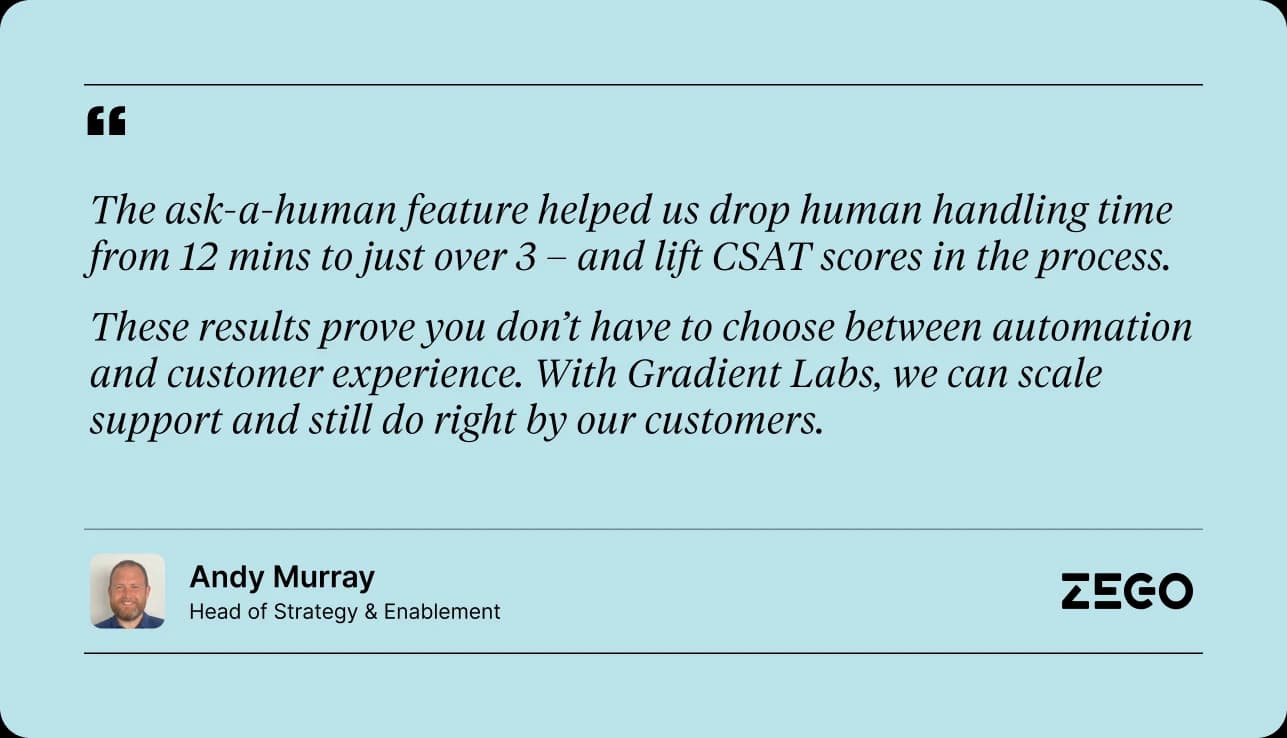
The feature I would highlight to any ops lead is Ask a Human. Instead of a jarring handoff where the customer waits in a queue and repeats themselves, the AI keeps chatting while a human works the sensitive step (say, approving a £2,000 dispute) behind the scenes. The agent then picks up the result and finishes the conversation. It is a smarter take on support escalation than a hard transfer. Zego's results show why it matters:
"The ask-a-human feature dropped human handling time from 12 minutes to just over 3 while lifting CSAT scores."
Andy Murray, Head of Strategy & Enablement, Zego
Pricing: outcomes-based, but you have to call
Here is the most opinionated thing Gradient Labs has done, and the part of this review I most want you to take away. There is no published price anywhere. The pricing page is a lead form. The model, in their words, is "outcomes based pricing without platform fees, where you pay only for successful query resolutions."
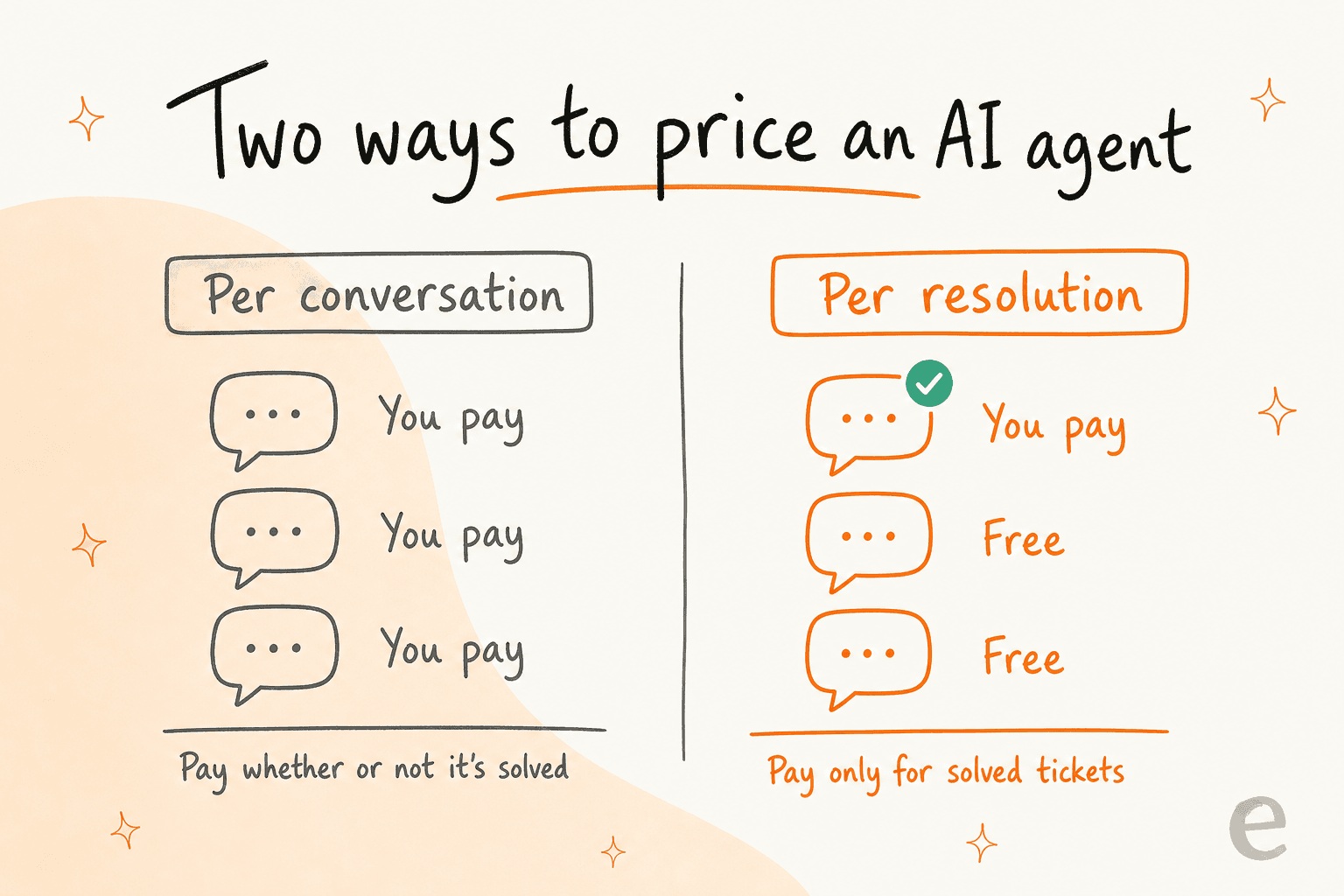
Masin has been refreshingly blunt about why. In The Register he took a direct shot at per-conversation pricing: a competitor charging per conversation gets paid "no matter what it leads to," which "doesn't create any incentive" to actually make the agent better. His line on the model is the clearest pitch for outcome pricing I have seen: "If we don't resolve the issue and you still need to get your human team involved, then you don't need to pay us." He has floated charging roughly 30% of the equivalent human cost, which would imply meaningful cost savings if the resolution rate holds (the AI agent vs human cost math is the lens to judge it against).
I like the philosophy. The practical downside is that you cannot estimate your bill without a sales call, there is no free trial, and the per-resolution rate itself is private, so comparing it against a published per-resolution tool (Zendesk lists $1.50 per automated resolution as a category reference point) is impossible from the outside. If predictable, self-serve budgeting matters to you, that is a real friction. Our full Gradient Labs pricing breakdown digs into the math.
What people actually say about it
This is the honest gap in any Gradient Labs review: there is almost no independent user voice. No substantive G2, Capterra, or Trustpilot scores, no Reddit pile-ons, no third-party benchmark. The public narrative is founder interviews, the company's own posts, and vendor case studies from its model partners. Treat the numbers as credible-but-vendor-reported, not audited.
The most quotable thing in the public record is actually Masin being candid about the category's limits. On where AI agents over-promise, he told The Register that sales and marketing agents "are really in most cases useless." A founder who will say that on the record reads, to me, as more trustworthy on the claims he does make about support.
"What we're building is the agent layer that financial services need to run their customer operations autonomously."
Dimitri Masin, Co-founder & CEO, Gradient Labs
The verdict: who should buy Gradient Labs
After going through the product, here is my straight take.
Buy it if you are a bank, lender, neobank, or insurer with genuine regulatory exposure and the volume to justify a scoped rollout. The specialist agents, the 20+ compliance guardrails, the SOC 2 posture, and production voice are hard to assemble anywhere else, and the outcomes-based pricing means you are not paying for failed conversations. For that buyer, this is one of the most credible AI customer service companies on the market.
Skip it if you are outside regulated finance, want to see pricing before you talk to sales, or need to be live this week. The finance focus that makes it strong for a bank makes it overkill (and inaccessible) for an ecommerce store, a SaaS support team, or an internal IT helpdesk. For those teams, our best AI helpdesk software guide is a better starting point. And the contact-sales-only motion means there is no way to just try it on your own tickets first, which is exactly the build vs buy reassurance most teams want.
Try eesel if you're outside finance
If you read that verdict and landed on "not a bank," this part is for you. eesel AI is the horizontal version of the idea Gradient Labs proved in banking: an AI agent that resolves real tickets, built to drop onto the helpdesk you already run.
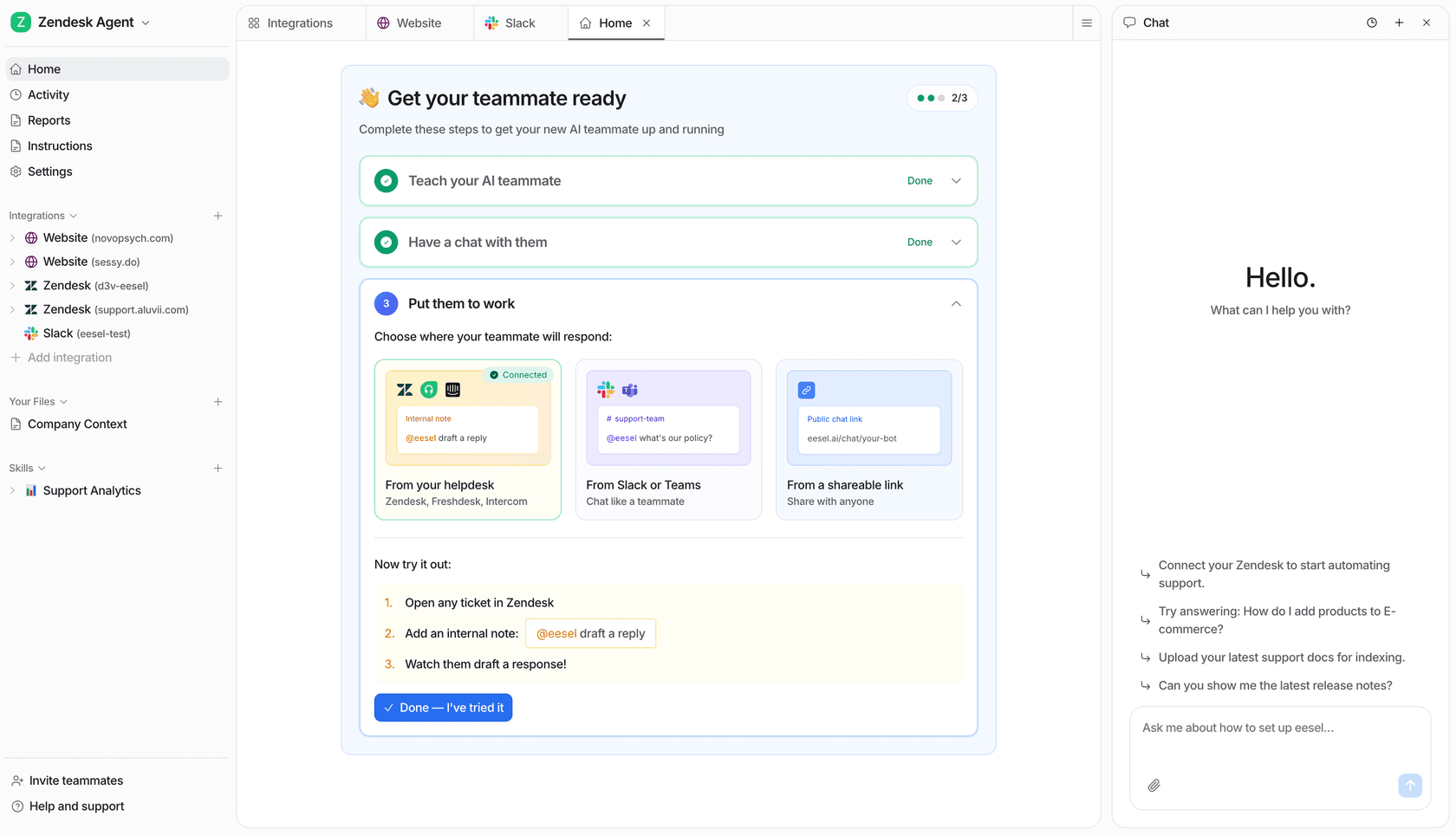
The differences are the ones that matter when you are not running a bank. eesel plugs into Zendesk or Freshdesk in a few minutes, trains on your past tickets and help center so it sounds like your team from day one, and lets you simulate it against thousands of historical tickets before a single reply goes out. Pricing is public and usage-based, so you can do the cost math yourself before you ever book a call, and you control exactly which tickets it handles and route the rest to a person. The proof shows up fast because there is no scoped project to wait through. As Kim Simpson at Gridwise put it, "in the first month, eesel is resolving 73% of our tier 1 requests," after a 7-day trial. You can try eesel free and run that same simulation on your own tickets today.
Frequently Asked Questions
What is Gradient Labs?
How much does Gradient Labs cost?
Is Gradient Labs only for financial services?
Does Gradient Labs hallucinate?
What is the best Gradient Labs alternative for non-finance teams?


Article by
Rama Adi Nugraha
Rama is a software engineer at eesel AI with two years of experience writing about B2B SaaS, AI tools, and customer support technology. Based in Bali, Indonesia, he brings a developer's perspective to product comparisons — cutting through marketing copy to what the integrations and APIs actually do.