What Gemini 3.8 Live Avatar actually is
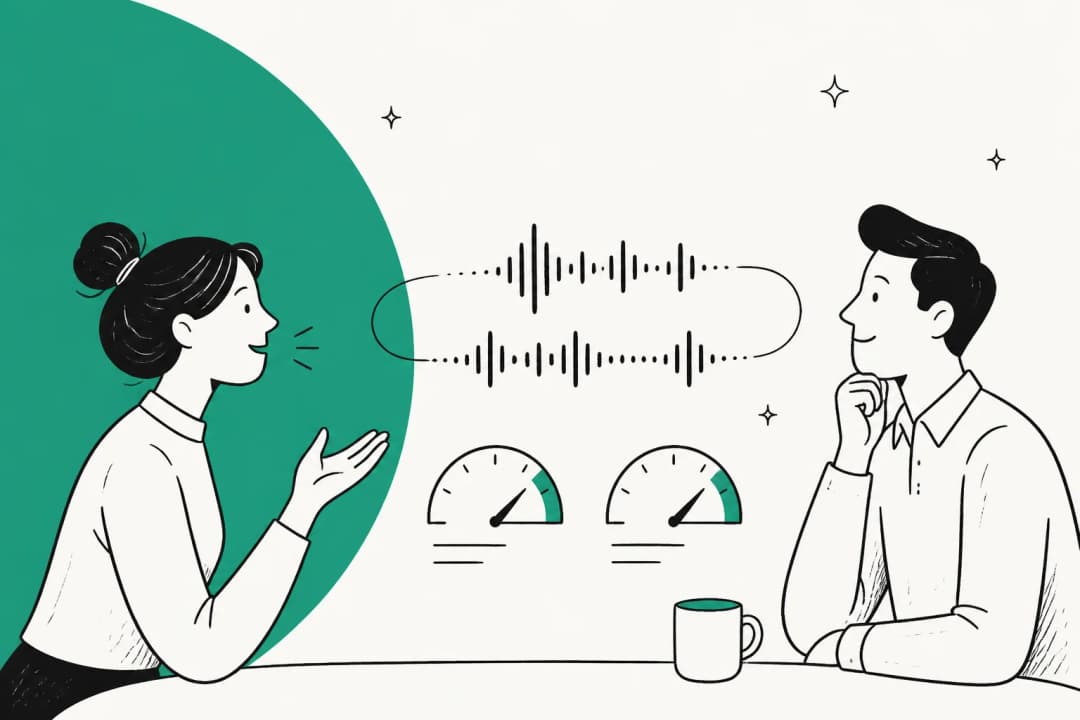
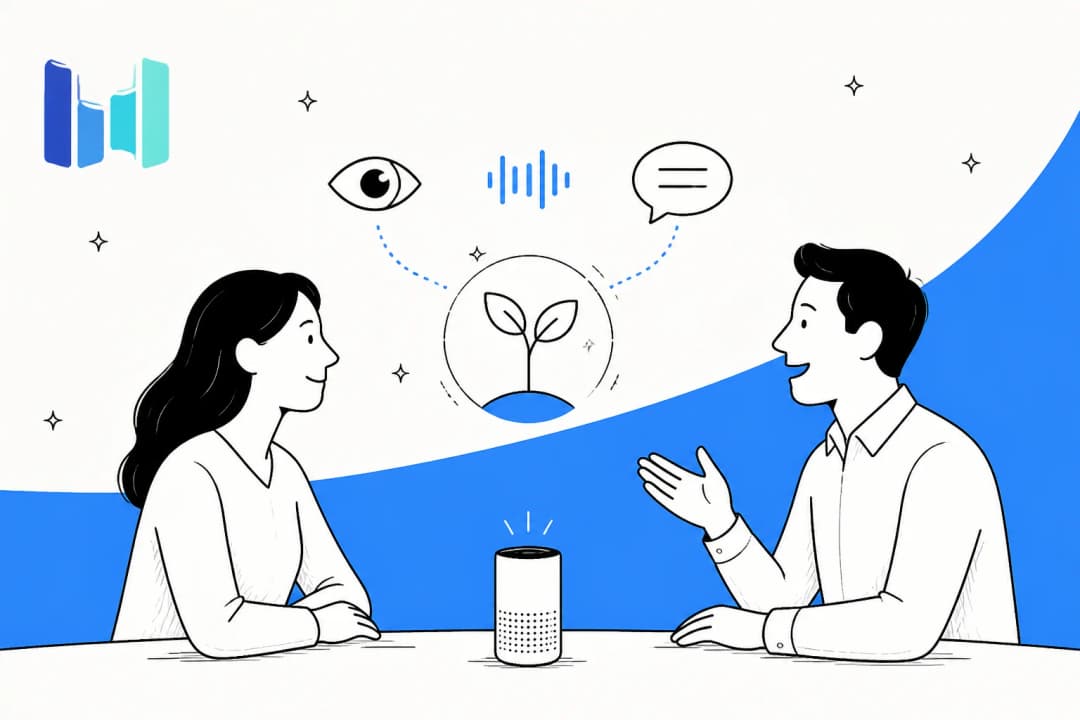
Google first previewed the technology at Google Cloud Next 2026 and shipped it to general availability in Gemini Enterprise on September 24, the week after the base Gemini 3.8 Live and 3.8 Live Extended Thinking models launched. Written by research scientist Shuo-yiin Chang and the Gemini Audio team, the pitch is simple: conversation is multimodal, so an enterprise agent should be able to listen, look, speak, and show a face, all at once.
Concretely, Live Avatar adds five things to a conversational agent:
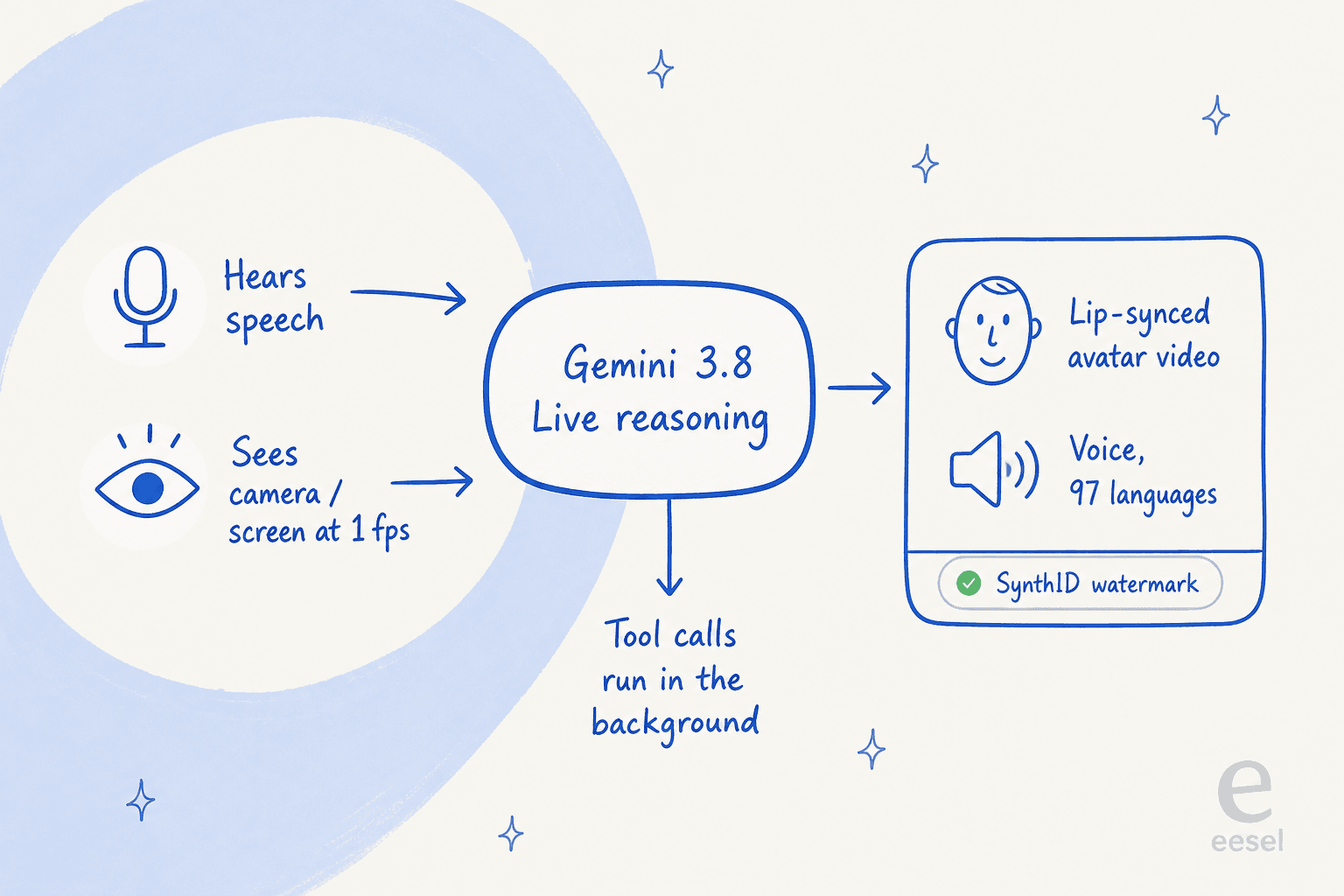
- A talking video face with synchronized lip-syncing and natural expressions, generated in near real time.
- Fluid speech-to-speech dialogue, so interruptions recover naturally without dropping the conversation's context or an in-flight backend transaction.
- Background tool calling, where the agent triggers API calls and fetches data while it keeps chatting, acknowledging your request and continuing the conversation while the task finishes.
- Live visual understanding, processing a camera feed or screen share alongside audio at the same time.
- 97 languages with automatic language detection.
The demo Google leads with is a hotel check-in: you talk to an avatar, it checks you in, and while it's doing that it fires off the background tool calls to actually complete the booking without an awkward silence. That async-tool-calling-while-speaking trick is the cleverest engineering here, and it's more important than the face.
Here's the pipeline in one picture:
One thing to keep straight: this is the same family as the other new Gemini 3.8 audio releases (the text-to-speech models shipped the same week), but Live Avatar is a distinct capability that runs on the Gemini Live API. The related Gemini 3.8 Live Extended Thinking mode, which lets an agent reason and speak at the same time, is still in private preview.
How you actually build with it
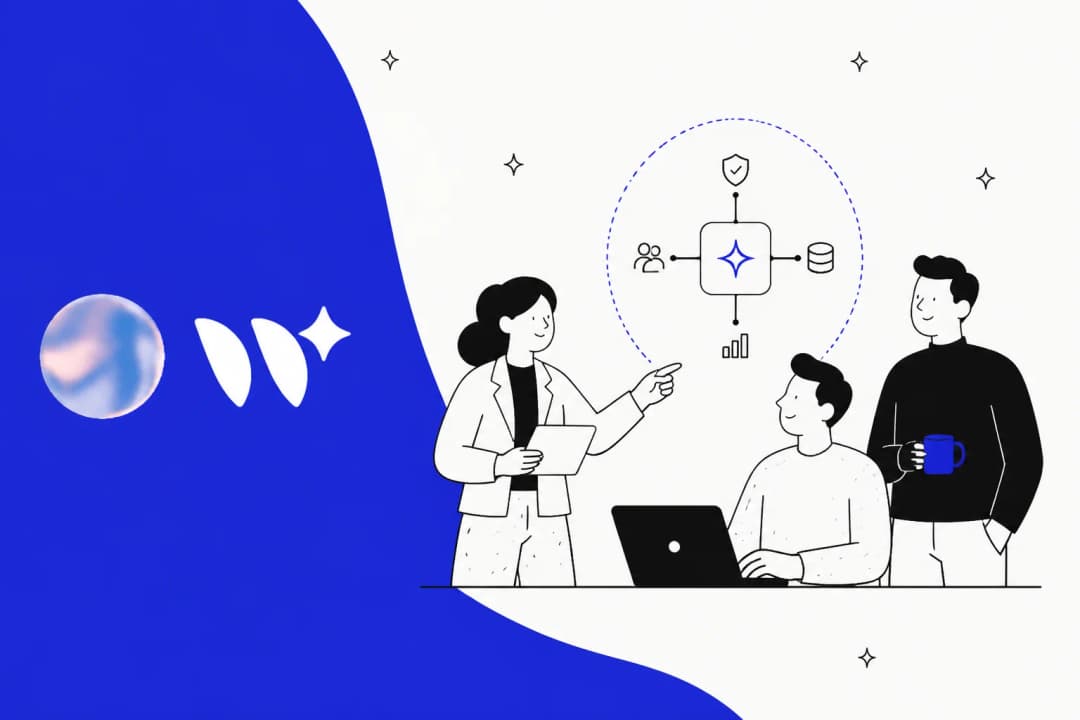
Live Avatar isn't a product you switch on for your support inbox. It's model infrastructure, and you assemble the agent yourself. Google's suggested path is the Agent Development Kit (ADK): you define agents, manage runners and session memory, and stream real-time audio straight to the Gemini Live API without a traditional speech-to-text pipeline in the middle.
Google's own insurance-claims demo is a good tell for the skill level involved: you talk and show damage on camera, a claim notebook fills itself in, and in the background an ADK "agent team" checks the policy, applies intake rules, and builds an adjuster packet. That's a real engineering project, with open-source sample code to start from, not a no-code toggle. If your team ships software, that's an exciting building block. If your team runs a support queue, it means the avatar is the easy 20% and the customer service automation logic behind it is the other 80%.
On the safety side, every audio and video stream carries an imperceptible SynthID watermark so the output stays detectable as AI-generated, and custom avatars are locked behind that verification process. Google is clearly nervous about deepfakes here, and reasonably so.
Availability and access
Gemini 3.8 Live with Live Avatar is available now for enterprise customers, with US and EU endpoints, provisioned throughput, enterprise compliance, and strict data governance. Two access tiers matter:
- Pre-built avatars: a library of curated personas any Gemini Enterprise customer can deploy across web, mobile, and interactive kiosks.
- Custom avatars: generated from a single high-quality reference image (plus an audio sample), preserving likeness and brand styling. This is allowlist-only, gated behind a verification process, and you have to talk to a Google Cloud sales rep to activate it.
So if you want a branded face that looks like your own spokesperson or mascot, budget for a sales conversation and an approval cycle, not a self-serve signup.
What it costs
This is where the "cool demo" meets the invoice. Live Avatar bills per token through the Gemini Live API, and the modalities are metered separately:
| Meter (Gemini 3.8 Live API, non-global) | Price per 1M tokens |
|---|---|
| Input: text | $0.75 |
| Input: video / image | $1.00 |
| Input: audio | $3.00 |
| Output: text (response and reasoning) | $4.50 |
| Output: audio | $12.00 |
| Output: video (the avatar face) | $1.00 |
The number that matters for the avatar is buried in a footnote: avatar video output is charged at 6,192 tokens per second of video, and you're only billed while the avatar is actively speaking, not while it listens. Do the math and the face costs about $0.37 for every minute the avatar is talking (6,192 tokens x 60 seconds x $1.00 / 1M). That's on top of the audio you're generating at $12.00 per 1M output tokens, the reasoning at $4.50 per 1M, and whatever camera or screen video you're feeding in.
To ground it: a five-minute conversation where the avatar talks for about half of it burns roughly 928,800 avatar-video tokens, so a little under a dollar just to render the face, before you count a single word of reasoning, audio, or vision. None of that is outrageous for a premium enterprise experience. But it's a reminder that the face is a real, recurring line item, and it buys presentation, not correctness.
Where it shines, and who's using it
I want to be fair here, because the technology is impressive and the early adopters are not toys.
Cox Automotive built a conversational shopping assistant for Autotrader that uses live screen-highlighting and tool-calling to walk car shoppers through search, comparison, and financing in real time.
"Shoppers increasingly expect to describe what they need in their own words rather than work through filters and menus. Autotrader's new conversational AI Avatar brings that experience to vehicle discovery by matching natural conversation to the right inventory."
Equal AI, which runs over a million live calls a day across nine Indian languages, credited the underlying 3.8 Live model with better interruption handling and tool-call reliability. Salesforce is pairing 3.8 Live with Agentforce, and the voice-AI startup Specs pointed specifically at the improved Voice Activity Detection and lower latency. Those are the parts that make conversational AI feel less like a walkie-talkie and more like a conversation.
Developers are excited too. One early tester summed up the vibe after a hands-on:
"Gemini 3.8 Live Avatar is here !! Watch me having a deep convo with my virtual avatar."
If your use case is a kiosk, a guided walkthrough, a language-tutoring app, or any experience where visible presence and turn-taking are the point, this is a legitimately strong option. The multilingual switching in particular is hard to build and Google made it look easy.
The catch: a better face doesn't fix a wrong answer
Here's the reframe I keep coming back to. Support automation has two problems, and they are not the same size.
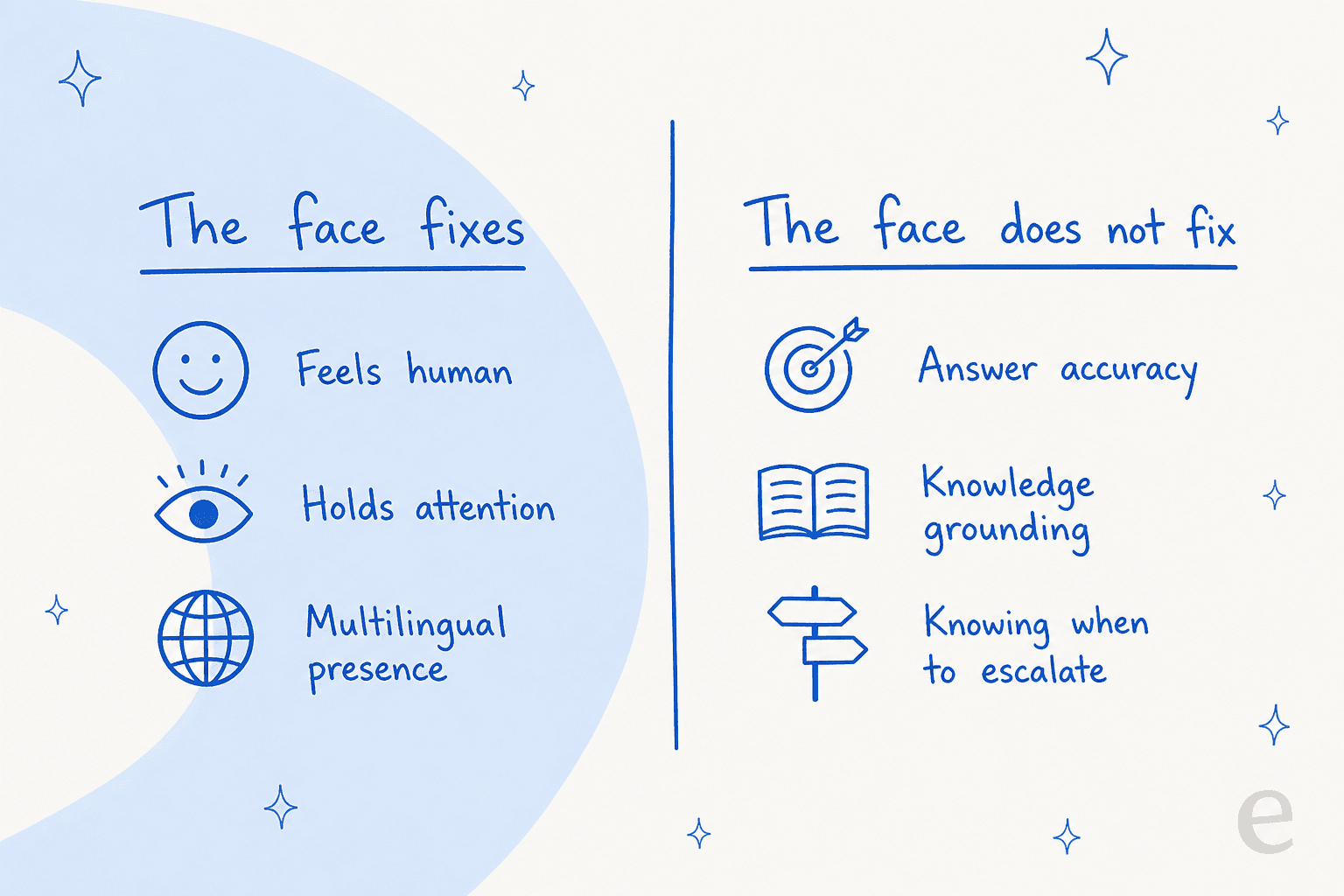
The presentation problem (does the agent feel human, hold attention, work across languages) is largely solved by Live Avatar. The accuracy problem (does the agent give the correct answer and know when it doesn't) is not, and no amount of lip-sync moves it.
We can actually measure how big that second problem is. On τ-bench, the support-agent benchmark, you can hold a single model constant and watch its task-success score collapse the moment the answer lives in documents rather than a clean tool call. Claude Opus 4.5, for example, scores around 92 on telecom tasks and 84 on airline, then drops to roughly 25 on a knowledge-base domain where the answer has to be retrieved from docs. That's a ~68-point fall, from the same model, purely because retrieval got harder.
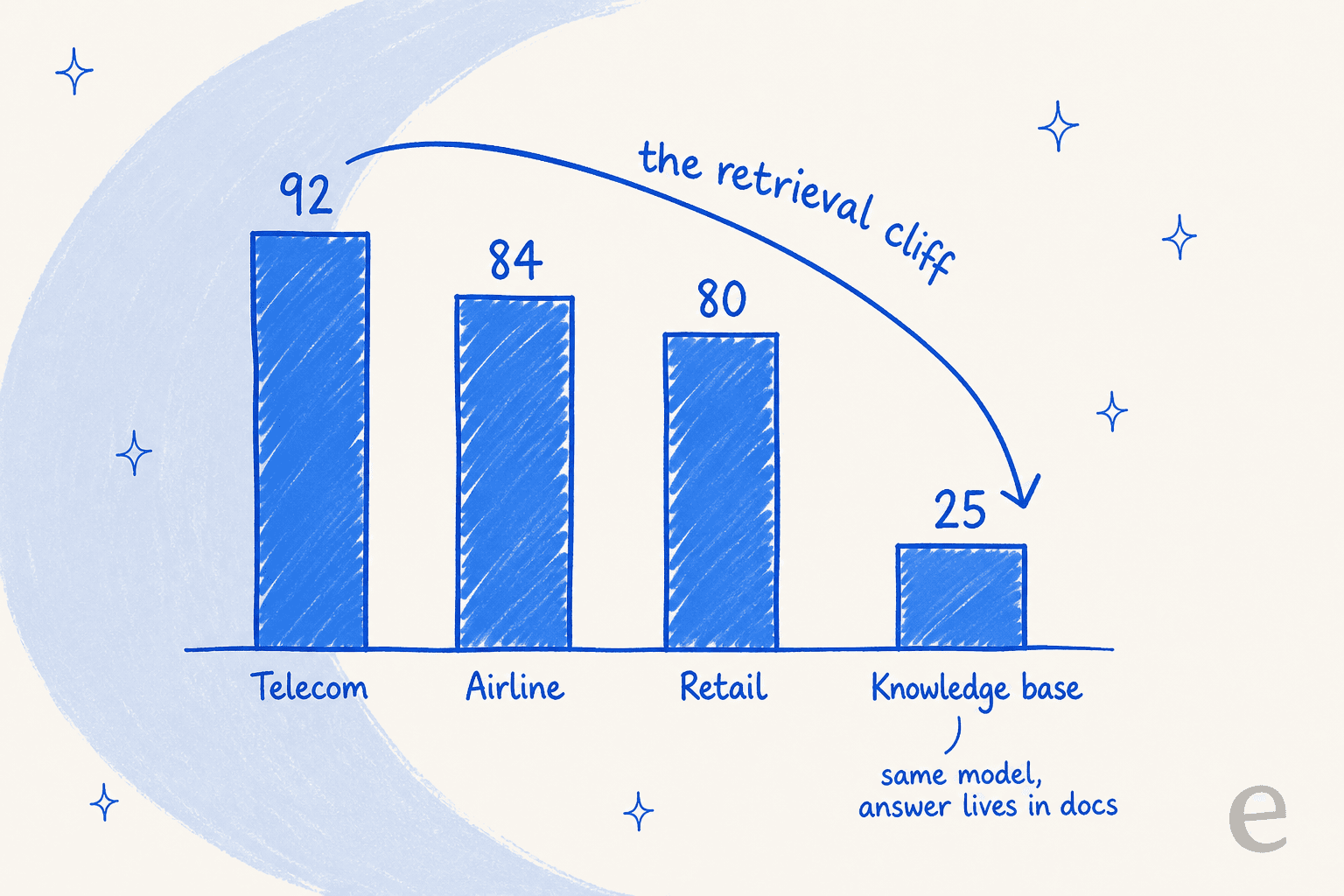
Put differently: on the τ-knowledge banking domain, even the strongest model in the field is reliably right (4 tries out of 4) on only about a third of tasks. That gap is the whole ballgame in support, and it's invisible in a slick demo. A confident, photoreal avatar that delivers a wrong answer is more dangerous than a plain text box, not less, because everything about it says "trust me."
This is the objection every serious support buyer already has. As one CX lead put it to us during a sales call:
"The AI will never be able to answer 100% of the questions. I need an AI who is only handling the tickets that it's confident to handle, and all the other ones, leave them alone."
a DTC supplements CX lead
An avatar doesn't answer that concern. Confidence-based routing, grounding, and knowing when to escalate do. Which is the whole reason choosing the right model is only step one, and the harder work is everything wrapped around it.
What this means for a customer support team
If you lead a support or CX team and you're wondering whether to chase this, here's my honest read.
You almost certainly should not go build a custom avatar agent from ADK to answer your tickets. The engineering lift is real, the allowlist adds a sales cycle, and at the end of it you've solved the easy problem (presentation) and inherited the hard one (accuracy, grounding, escalation) with no tooling to manage it. For a phone or voice channel specifically, it's worth reading up on AI phone support before committing, because the economics and the accuracy ceiling both bite there.
For the vast majority of teams, the win isn't a face. It's an AI agent that quietly resolves the tickets it's confident about, escalates the rest cleanly, and gets more accurate the more of your history it sees. That's a text-and-email job first, and it doesn't need a talking head to do it well.
Try eesel
If the goal is deflecting more customer service tickets correctly, this is where I'd point you. Gemini Live Avatar is infrastructure you build with. eesel is the finished teammate you hire: an AI helpdesk agent that plugs straight into Zendesk, Freshdesk, Gorgias, Front, Help Scout, HubSpot, Salesforce, and Jira Service Management, learns from your past tickets and knowledge, and can go live in about 30 minutes.
The part that actually addresses the retrieval cliff: before eesel replies to a single customer, its simulation replays your real historical tickets and scores the AI's proposed answers against what your team actually sent, so you see the gaps and tune the instructions with confidence-based control over exactly which tickets it handles. And because it's usage-based at $0.40 per resolution with no per-seat fees, you're paying for correct answers, not for a rendered face. (One honest note: eesel is a text-and-ticket teammate, not a voice or avatar product. If a talking head is the requirement, Gemini Live Avatar is the tool. If a correct answer is the requirement, that's us.)
Frequently Asked Questions
What is Gemini 3.8 Live with Live Avatar?
How much does Gemini 3.8 Live Avatar cost?
Can I create a custom Gemini Live Avatar?
What languages does Gemini 3.8 Live Avatar support?
Is Gemini 3.8 Live Avatar good for customer service?
How is Gemini Live Avatar different from an AI helpdesk agent?


Article by
Alicia Kirana Utomo
Kira is a writer at eesel AI with a Computer Science background and over a year of hands-on experience evaluating AI-powered customer service tools. She focuses on breaking down how helpdesk platforms and AI agents actually work so that support teams can make better buying decisions.