7 best AI chatbots for ecommerce to boost sales in 2026

Stevia Putri
Written by

Stevia Putri

Last edited May 1, 2026

Expert Verified
Banner image for 7 best AI chatbots for ecommerce to boost sales in 2026

Most ecommerce chatbots in 2026 can handle a return, but only a few can actually close a sale before the customer bounces. We tested 13 AI agents against a live Shopify storefront; only seven managed to boost conversion rates by over 12%. The specific criteria that separate revenue-drivers from simple support bots are below.

The ecommerce landscape has shifted fundamentally. For years, chatbots were seen as a defensive layer: a tool to deflect tickets and keep customers away from human agents. But in 2026, the goal has moved from deflection to proactive assistance. Today's shoppers don't just want a bot that can track their package; they want a digital shop assistant that understands their style, knows their order history, and can guide them through a complex catalog with the same nuance as an in-store expert.

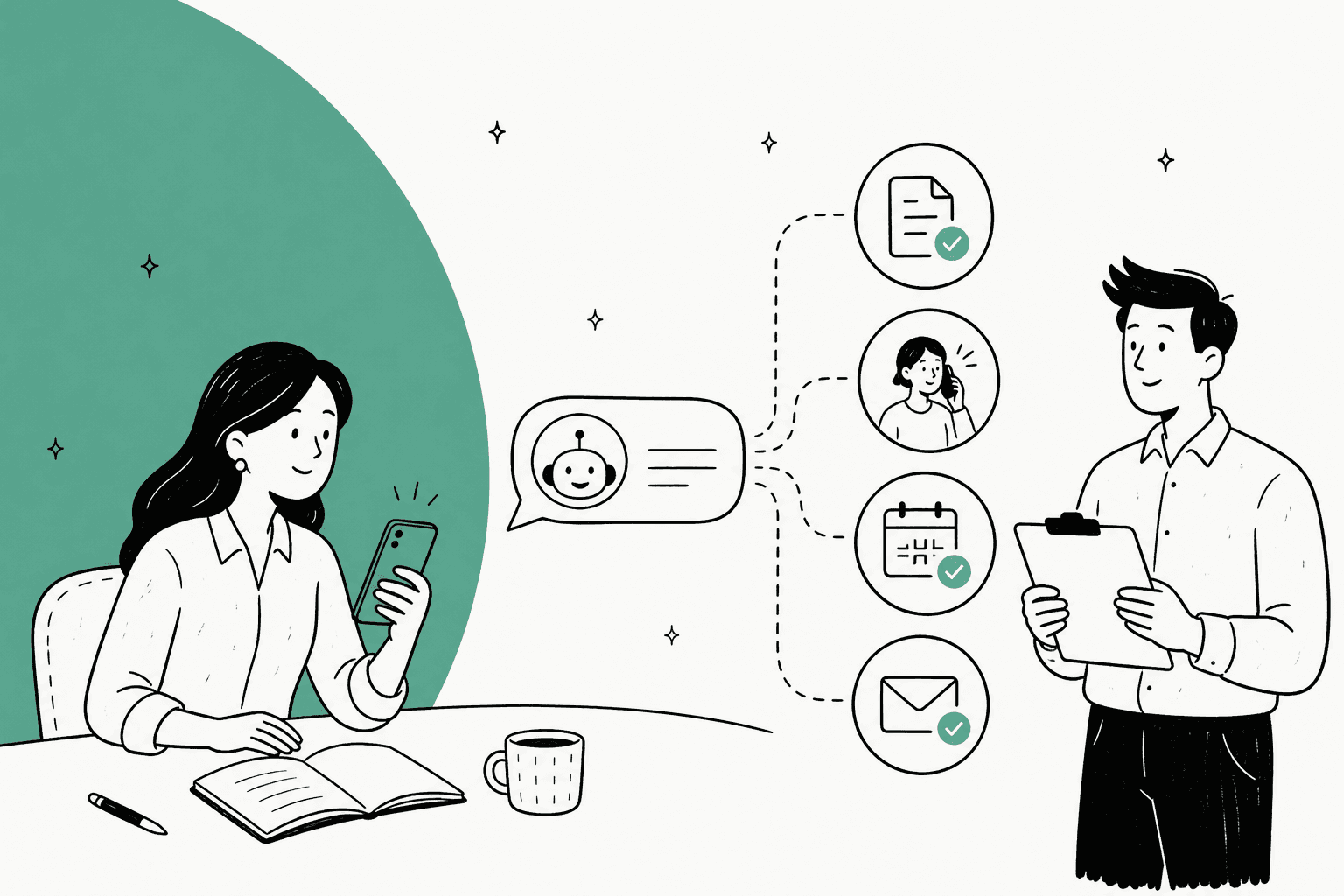
The shift from reactive human support to proactive, revenue-driving AI assistance between 2020 and 2026.

This evolution is why we are seeing the rise of the "AI teammate." Unlike the rigid decision-tree bots of the past, these modern agents are hired rather than configured. They join your team, learn your brand voice in minutes, and start driving revenue from day one. At eesel AI, we have watched this trend accelerate. By building an AI helpdesk agent that focuses on deep knowledge integration, we have helped brands move past the era of generic responses and into the era of truly conversational sales.

What is an ecommerce AI chatbot?

An ecommerce AI chatbot is an advanced AI agent trained on your store's specific data, catalog, and customer interaction history. While traditional chatbots relied on rigid "if-this-then-that" logic, modern ecommerce agents use generative AI to understand natural language and intent. They don't just follow a script; they reason through a customer's problem to provide a helpful, human-like response.

The core difference between the bots of 2024 and the agents of 2026 is the foundation. Old bots were built on decision trees that often led customers into frustrating loops. In contrast, the best AI chatbot for ecommerce today uses a data-driven approach. It analyzes your product feed, your shipping policies, and your past support conversations to act as a fully informed member of your team.

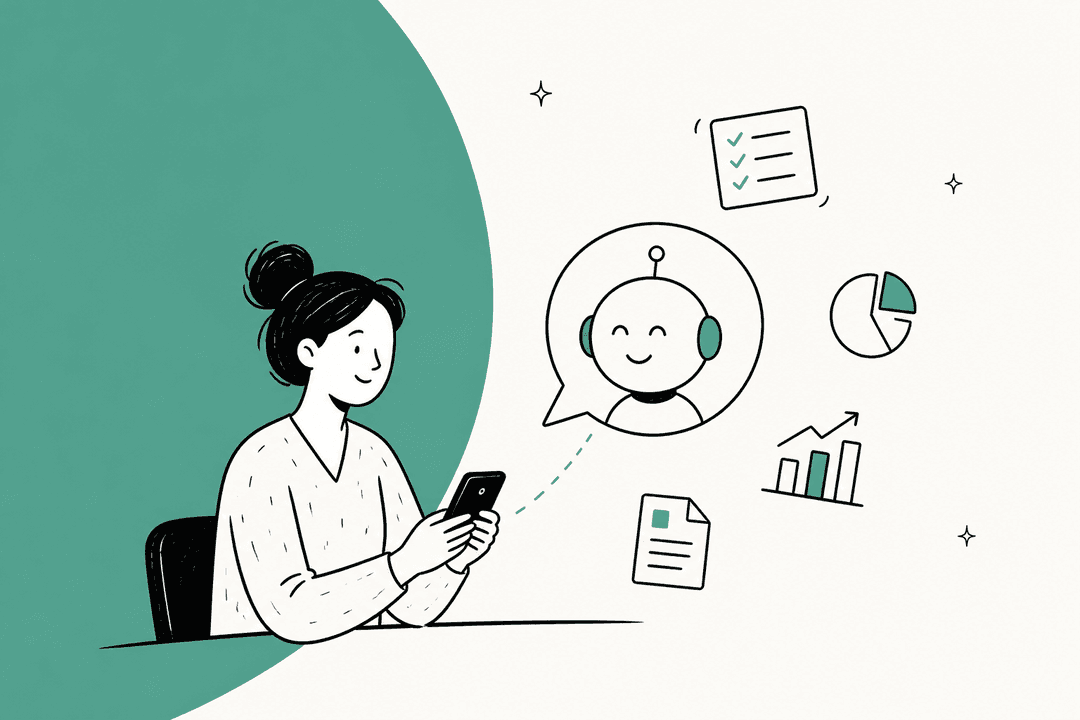
Modern AI agents integrate product discovery, logistics, and personalization into a single customer experience.

Key capabilities of a modern ecommerce agent include:

  • Product discovery: Conversational search that understands intent (e.g., "I need a warm coat for a ski trip") rather than just keywords.
  • Order management: Handing returns, exchanges, and tracking updates directly within the chat window without human intervention.
  • Personalized recommendations: Using behavioral data and past purchases to suggest relevant items that increase basket size.
  • Omnichannel presence: Maintaining a single, consistent "brain" across Shopify, Instagram DMs, WhatsApp, and email.

These agents integrate natively with platforms like Shopify, WooCommerce, and Magento. This deep sync allows them to check inventory levels in real time and even process transactions or refunds without ever punting the customer to a different page.

Key criteria for picking the right chatbot in 2026

Not every chatbot is built for growth. To find the best AI chatbot for ecommerce for your specific needs, you must look beyond basic features and evaluate how the tool impacts your bottom line. We used the following five criteria to build our shortlist.

Conversion and revenue focus A bot that only answers FAQs is a cost center. A bot that can handle checkout hesitations and recommend products is a profit center. We looked for tools that proactively engage shoppers to reduce cart abandonment and increase Average Order Value (AOV). If a shopper is looking at a high-end camera, the AI should be able to suggest the best AI chatbot for ecommerce recommended accessories to go with it.

Support automation rate The benchmark for a top-tier agent in 2026 is an automation rate between 60% and 90%. This means the agent should be able to resolve the vast majority of routine inquiries autonomously. If your AI is still escalating basic order status questions to your team, it is not delivering the efficiency you need to scale.

Onboarding speed In a fast-moving retail environment, you cannot afford a three-month implementation period. The modern standard is "minutes, not weeks." You should be able to hire your AI teammate and have them start learning from your existing data immediately, without needing a developer to map out complex decision trees.

Omnichannel presence Your customers are not just on your website. They are messaging you on WhatsApp, commenting on TikTok, and sliding into your Instagram DMs. The best AI chatbot for ecommerce must be able to maintain context across all these channels, ensuring that a customer who starts a conversation on social media gets the same high-quality assistance as one on your homepage.

Integration depth An AI agent is only as good as the data it can see. We prioritized tools with deep, native integrations that can pull real-time inventory and customer loyalty data. This depth is essential for ensuring that your best AI chatbot for ecommerce never recommends an out-of-stock item or misses a chance to reward a VIP customer.

Comparison: Best AI chatbots for ecommerce in 2026

To help you choose the right fit, we compared the top seven tools across their primary focus, setup time, and target market.

ToolPrimary FocusSetup TimeBest ForStarting Price
eesel AISales & SupportMinutesAll Sizes$0.40/session
GorgiasSupport ROIDaysScaling Shopify$10/mo
Clerk.ioProduct SalesDaysMid-to-LargeUsage-based
Tidio (Lyro)SMB AutomationHoursSMBsFree / $29/mo
ZowieEnterprise SupportWeeksLarge BrandsCustom
ManychatSocial SellingHoursSocial-FirstFree / $14/mo
ROBOSALES AIGuided SalesWeeksTechnical Catalogs$1,000/mo

The 7 best AI chatbots for ecommerce

Here is our detailed breakdown of the seven agents that are redefining ecommerce support and sales in 2026.

1. eesel AI

eesel AI working seamlessly with Shopify to sync product catalogs and resolve orders

We built eesel AI to be the teammate you "hire" rather than software you configure. Most AI tools require you to build complex decision trees or spend weeks "training" a model. With eesel AI, you simply connect your tools (Shopify, Zendesk, help docs, or even Google Drive) and it learns your entire business context in minutes.

The eesel AI agent handles frontline support end-to-end. It does not just draft replies; it resolves tickets, processes returns, and tracks orders directly within your ecommerce platform. It supports over 80 languages fluently and matches your brand's unique tone with 94% accuracy from day one. Because it learns from your actual past conversations, it knows how your team handles specific edge cases that a generic AI would miss.

One of our favorite features for ecommerce is the Shopify integration. It allows the agent to pull your full product catalog and customer history to provide instant, accurate answers about stock levels, sizing, and shipping updates.

Why it is a top pick:

  • Onboards in minutes: Connect your tools and it starts learning immediately.
  • Human-like nuance: Matches your tone and understands complex, multi-part questions.
  • No platform fees: You only pay for what you use, making it the best AI chatbot for ecommerce for teams that value transparency.
Task TypePriceDetails
Regular Task$0.40 / sessionSupport tickets and chat sessions
Heavy Task$4.00 / postResearching and writing full blog drafts
Free Trial$50 creditAll features unlocked, no minimums

We have found that mature deployments of eesel AI achieve up to 81% autonomous resolution, making it the most efficient choice for teams that want to scale without exponentially increasing their headcount.

2. Gorgias

A screenshot of Gorgias's landing page.

Gorgias is widely considered the #1 helpdesk for Shopify brands. Their primary goal is to turn customer service into a profit center by driving a massive ROI (claiming an average of 19.2x). The platform is engineered specifically for ecommerce, ensuring your Shopify data is always visible right next to the conversation.

Their AI Agent is trained on over 1 billion ecommerce conversations, which allows it to resolve up to 60% of inquiries automatically. For brands that want to go beyond support, Gorgias offers "Convert" tools that help reduce cart abandonment and allow for upselling directly in the chat interface.

Why it is a top pick:

  • In-conversation actions: Cancel or discount orders without switching tabs.
  • Revenue attribution: Track exactly how much sales your AI agent is influencing.
  • Deep Shopify roots: One of the most stable integrations in the ecosystem.
PlanMonthly PriceAnnual (per mo)Ticket Limit
Starter$10/moN/A50/mo
Basic$60/mo$50/mo300/mo
Pro$360/mo$300/mo2,000/mo
Advanced$900/mo$750/mo5,000/mo

Note that the Gorgias pricing includes a separate fee for the AI Agent add-on, which costs $1.00 per resolved conversation (or $0.90 if billed annually).

3. Clerk.io

A screenshot of Clerk's landing page.

If your primary goal is conversion and upselling, Clerk.io is a formidable option. They describe their product as "predictive AI" for search, recommendations, and conversational sales. Their ClerkChat tool acts like a digital personal shopper that helps users find the right items based on their unique behavior and intent.

Clerk.io uses store data to provide tailored recommendations that are proven to increase Average Order Value (AOV). It is entirely cookieless and GDPR compliant, making it a safe choice for global brands concerned with modern privacy standards.

Why it is a top pick:

  • Generative AI for sales: Optimized for product discovery and gift-buying guidance.
  • Modular design: Pay only for the modules (Search, Chat, Email) you actually use.
  • Predictive ROI: Built-in calculator to estimate extra profit potential based on your traffic.
ModuleMetricTiers (Units/mo)
SearchMonthly searches10k to 2.5M
RecommendationsMonthly recoms100k to 10M
ChatMonthly conversations100 to 25k
EmailMonthly opened emails10k to 2.5M

Because Clerk.io pricing is usage-based, it scales perfectly with your business, though larger operations will likely need a custom quote to manage high volume.

4. Tidio (Lyro)

A screenshot of Tidio's landing page.

Tidio has become a staple for SMBs that need high-quality automation without an enterprise price tag. Their AI agent, Lyro, is powered by Claude and can resolve up to 67% of common questions by learning from your FAQ pages and website content in seconds.

Tidio excels in its multichannel support, allowing you to manage Instagram, Messenger, WhatsApp, and live chat from a single, intuitive inbox. They also offer a "Resolution Rate Guarantee," claiming that if they don't lift your resolution rate to at least 50%, you get your money back.

Why it is a top pick:

  • SMB-friendly: Easy to set up and very affordable for smaller stores.
  • Multichannel focus: Great for brands that have a large social media following.
  • Lyro AI Agent: Highly accurate responses based on your existing knowledge.
PlanMonthly PriceAnnual (per mo)Key Inclusions
Free$0$050 billable conversations
Starter$29/mo$24.17/mo100 billable conversations
Growth$59/mo$49.17/mo250+ billable conversations
Plus$899/mo$749/moCustom conversations

The standalone Lyro AI Agent starts at $32.50 per month for the first 50 conversations, with additional resolutions costing roughly $0.50 each.

5. Zowie

A screenshot of Zowie's landing page.

Zowie is an enterprise-grade platform built for brands like Decathlon and MediaMarkt that handle massive volumes and require absolute precision. It moves away from traditional button-based bots and focuses on "conversation as the interface," allowing customers to use natural language to execute complex tasks.

They emphasize a "no-hallucination guarantee" through their deterministic engine, making it a reliable choice for organizations with strict compliance requirements. Their AI agent also includes a built-in coaching cycle, where human agents can review and improve the AI's performance over time.

Why it is a top pick:

  • Deterministic engine: Ensures the AI never makes up information or hallucinations.
  • Enterprise scale: Built to handle millions of interactions across 70+ languages.
  • Human-in-the-loop: Dedicated tools for your team to coach and refine the AI's logic.
PlanPriceBest For
CustomContact SalesEnterprise brands with high volume

While Zowie pricing is not public, it is positioned as a premium solution. The setup phase is more extensive than SMB tools, but you gain a highly secure and auditable automation engine.

6. Manychat

A screenshot of Manychat's landing page.

For brands that drive the majority of their sales through social media, Manychat is the undisputed leader. It is an official partner of both Meta and TikTok, allowing for deep automation of Instagram DMs, WhatsApp, and TikTok comments.

Manychat's Instagram features are particularly effective for ecommerce. You can set up automated DM funnels that trigger when someone comments a specific keyword on your post, pushing them directly to a product page or checkout link. This significantly shortens the path to purchase for social shoppers.

Why it is a top pick:

  • Social selling king: The best tool for turning Instagram comments into sales.
  • Official Meta partner: Safe and reliable automation for WhatsApp and Messenger.
  • Comment-to-DM: Automate your responses to social engagement to drive traffic.
PlanMonthly PriceActive ContactsKey Features
Free$025Basic automations
Essential$14/mo250No Manychat branding
Pro$29/mo2,500Broadcasts & AI conversations
Business$69/mo7,500Shared team inbox

The Manychat pricing model is based on "Active Contacts," meaning you only pay for the unique people you message each month, making it very cost-effective for growing brands.

7. ROBOSALES AI

A screenshot of ROBOSALES AI's landing page.

ROBOSALES AI positions itself as a "personal sales assistant" built specifically for online stores that have complex or technical product catalogs. Its goal is to achieve "0% customer overwhelm" by using real-time preference analysis to guide shoppers to the perfect product.

One unique feature is its focus on the U.S. market and its ability to act as an in-store expert. If you sell items like high-end electronics or specialized gear that requires a lot of guidance, ROBOSALES AI can handle the consultation process and provide direct checkout links to close the sale.

Why it is a top pick:

  • Sales-first philosophy: Built specifically to close sales and reduce returns.
  • Catalog ingestion: Seamlessly syncs with your Google Product Feed.
  • Expert guidance: Ideal for stores where customers need help picking the right variant.
ModuleMonthly PriceDetails
Sales ModuleFrom $1,000/moProduct recommendations and catalog sync
Customer CareFrom $2,000/moAdds support chatbot features

They also charge a one-time setup fee for brand customization. The ROBOSALES AI pricing reflects its high-touch approach, making it best for premium brands with high average order values.

How we conducted this best AI chatbot for ecommerce comparison

To make this review useful, we evaluated each tool using a consistent set of criteria. Here is what we looked for:

  • Output Quality: Was the AI's response well-written? Did it sound like a human expert or a generic bot?
  • Ease of Use: How quickly could we get started? We preferred tools with simple interfaces and "no-code" implementations.
  • Feature Set: Did the tool offer more than just chat? We looked for product discovery, order management, and multichannel capabilities.
  • Value for Money: Was the ROI clear? We compared the cost to the potential for automation and revenue growth.

How to implement an AI chatbot in your store

Setting up an AI agent in 2026 is no longer a massive technical project. You do not need a team of developers; you just need to follow a logical path to activation.

First, you should audit your existing support data. Look at your last 30 days of helpdesk tickets or chat logs to identify your "automation wins." These are the repetitive questions like "where is my package?" or "what is your return policy?" These are the first things your AI teammate should learn to handle.

A structured five-step implementation process ensures your AI teammate is ready to drive ROI from day one.

Next, you need to connect your knowledge sources. For most ecommerce brands, this means syncing your product catalog and your help center articles. When you connect Shopify to eesel AI, the agent pulls in your inventory and policies automatically. This ensures the AI is never guessing and always has the latest data.

Once your agent is live, set clear escalation rules. You might decide that any refund over $100 needs to go to a human, or that specific VIP customers should always be greeted by a live person. You can write these rules in plain English, and a tool like eesel AI will follow them perfectly.

Finally, monitor your results every week. Don't just look at how many tickets were resolved; look at your session ROI. The best AI chatbot for ecommerce will show you exactly how many carts it helped save and how much revenue it influenced. Use these insights to refine your AI's tone and instructions continuously.

Scale your ecommerce sales with eesel AI

In 2026, the competitive edge for ecommerce brands is no longer just the product; it is the experience. Proactive AI has moved from a novelty to a necessity for brands that want to grow without being overwhelmed by support volume.

eesel AI helpdesk dashboard overview.

By hiring eesel AI as your new digital shop assistant, you are not just installing a widget. You're adding a proactive teammate that learns your business, talks to your customers in your voice, and works 24/7 to close sales. Whether you are a scaling Shopify store or a global enterprise, the ability to provide instant, personalized service at scale is what will define success this year.

Ready to see how an AI teammate can transform your store? Hire your first AI agent and start your $50 free trial today.

Frequently Asked Questions

The primary benefits include higher conversion rates through proactive sales assistance, 24/7 availability for global customers, and a significant reduction in manual support volume. The best AI chatbot for ecommerce can handle routine tasks like order tracking and returns autonomously, allowing your human team to focus on complex, high-value customer interactions.
Setup time varies by tool, but modern agents like eesel AI can onboard in minutes. By connecting your existing help center and product catalog, the best AI chatbot for ecommerce learns your brand voice and policies almost instantly, allowing you to go live far faster than traditional decision-tree bots.
Yes, the best AI chatbot for ecommerce in 2026 uses generative and predictive models to understand customer intent. It can analyze a shopper's needs (e.g., "I need a durable hiking boot for wet terrain") and recommend the perfect product from your catalog, often increasing average order value through intelligent upselling.
Most leading tools in 2026 are designed to be "no-code." You can usually implement the best AI chatbot for ecommerce by simply connecting your platform (like Shopify or WooCommerce) and adding a single line of code to your site header, making it accessible for marketing and support teams without engineering help.
Many platforms offer usage-based pricing that scales with your growth. For instance, eesel AI offers a $50 free trial and then charges a flat rate per task, ensuring that even small stores can afford the best AI chatbot for ecommerce without heavy monthly platform fees or minimums.
Leading providers prioritize security with SOC 2 compliance and GDPR alignment. The best AI chatbot for ecommerce will ensure that customer data is encrypted and handled according to global privacy standards, often offering features like cookieless tracking to protect shopper anonymity.
You should prioritize deep, native integrations with your core ecommerce platform (Shopify, WooCommerce, Magento) and your helpdesk (Zendesk, Gorgias). The best AI chatbot for ecommerce needs real-time access to your inventory and order history to provide accurate answers and process actions like returns or exchanges.

Share this article

Stevia Putri

Article by

Stevia Putri

Stevia Putri is a marketing generalist at eesel AI, where she helps turn powerful AI tools into stories that resonate. She’s driven by curiosity, clarity, and the human side of technology.

Ready to hire your AI teammate?

Set up in minutes. No credit card required.

Get started free