XML sitemap
An XML sitemap is a structured file that lists the URLs on a site and helps search engines discover and crawl them efficiently.
What an XML sitemap means
An XML sitemap is a structured file, written in XML, that lists the URLs on a website so search engines can discover and crawl them. Each entry is a page address, optionally accompanied by metadata such as when the page was last modified and how often it changes. The file is submitted to search engines or referenced in robots.txt, where crawlers read it as a directory of the pages a site wants found.
Search engines normally discover pages by following links from one URL to the next, but that process can miss pages that are new, deeply nested, or weakly linked. An XML sitemap supplements link-based discovery with an explicit list, so a crawler does not have to stumble onto every page by chance. In content marketing, it is the mechanism that gets a freshly published post in front of a search engine within hours rather than waiting for the crawler to find it organically: large, fast-growing content libraries depend on it precisely because new URLs appear faster than internal links accumulate.
Why an XML sitemap matters
- It speeds up discovery. New and updated pages get surfaced to crawlers directly, instead of waiting to be found through internal links.
- It helps large and deep sites. Pages buried many clicks from the homepage, or sites with thousands of URLs, rely on the sitemap so nothing is left undiscovered.
- It carries useful metadata. The
lastmodfield signals when a page changed, which can prompt a recrawl after a content refresh. - It guides crawl priorities. A clean sitemap of only the pages worth indexing helps a search engine spend its crawl budget where it counts.
- It exposes coverage problems. Submitting a sitemap in Search Console reveals how many of its URLs are actually indexed, surfacing gaps that would otherwise stay hidden.
Think of it as a directory you hand straight to the crawler:
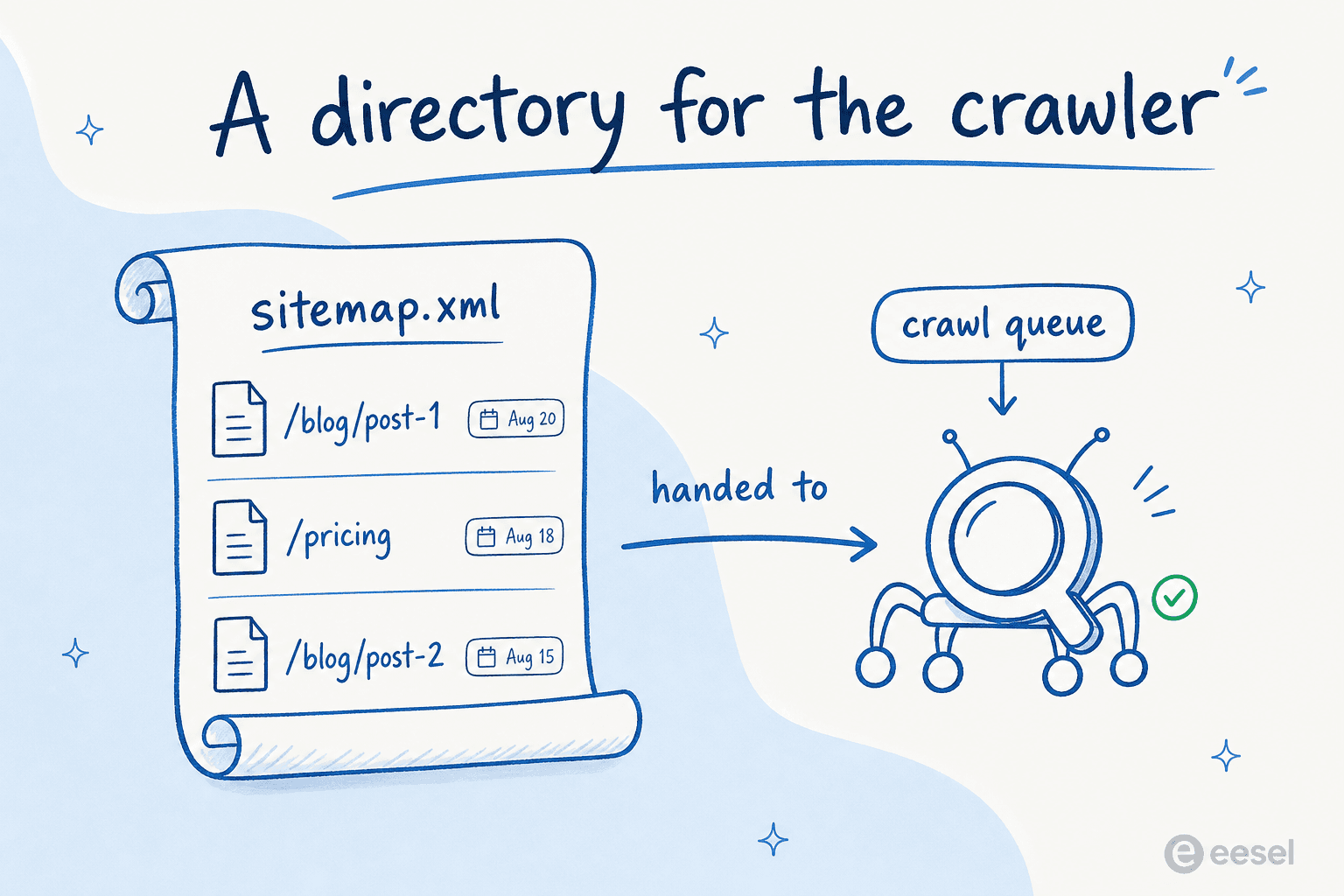
Instead of waiting for a crawler to stumble onto each page through links, the sitemap lists every URL you want found, with a lastmod date so the engine knows what changed and queues it for a revisit.
How an XML sitemap works
- List the URLs. The site generates a file containing the canonical address of each page it wants crawled, usually automatically from the CMS.
- Add optional metadata. Each entry can include a last-modified date and, on some setups, hints about update frequency.
- Submit or reference it. The sitemap is submitted in a search engine's webmaster tools and listed in
robots.txtso any crawler can find it. - Crawlers read and queue. Search engines parse the file, add the listed URLs to their crawl queue, and revisit pages flagged as recently changed.
For a content-led site, the sitemap is housekeeping rather than strategy, but it is the housekeeping that makes new content visible. Every post eesel's AI blog writer publishes is one more URL the sitemap can hand to a crawler, so the page enters the discovery queue without waiting for links to build up around it.
XML sitemaps in practice
The frequent mistake is a sitemap that lists URLs the site does not actually want indexed: redirected pages, noindex pages, parameter variants, or 404s. A bloated, inaccurate sitemap teaches a crawler to trust it less and wastes crawl effort on dead ends. The teams that get value from it keep the sitemap dynamic and clean, listing only canonical, indexable URLs, and treat the Search Console coverage report as the feedback loop that tells them whether the pages they submitted are the pages search engines actually kept.
More pages worth listing in a sitemap
eesel's AI blog writer keeps your content library growing, and every new post is a URL your XML sitemap can hand to search engines.